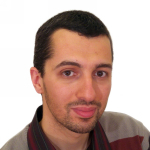
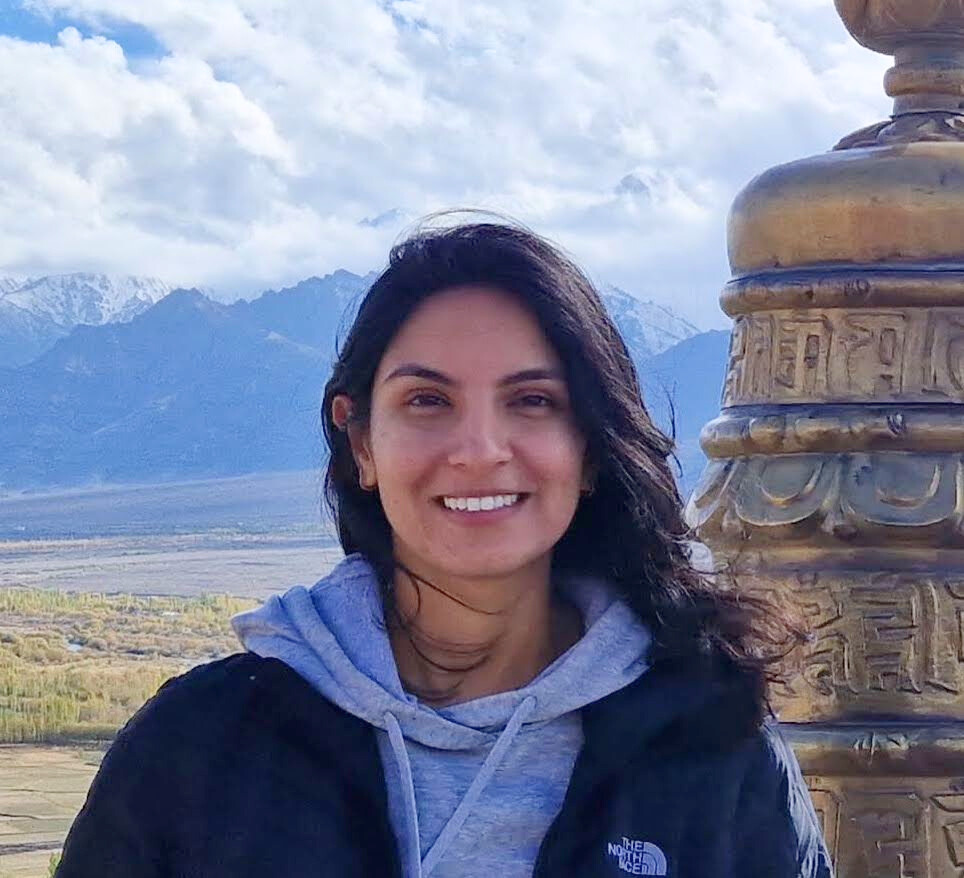
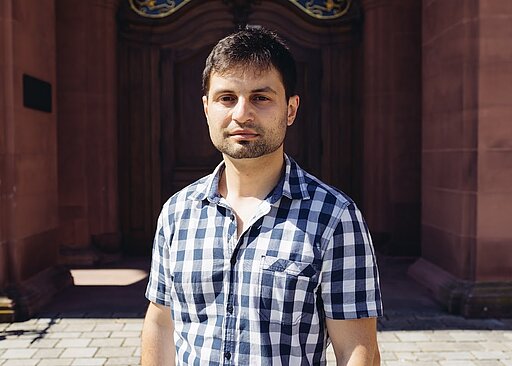
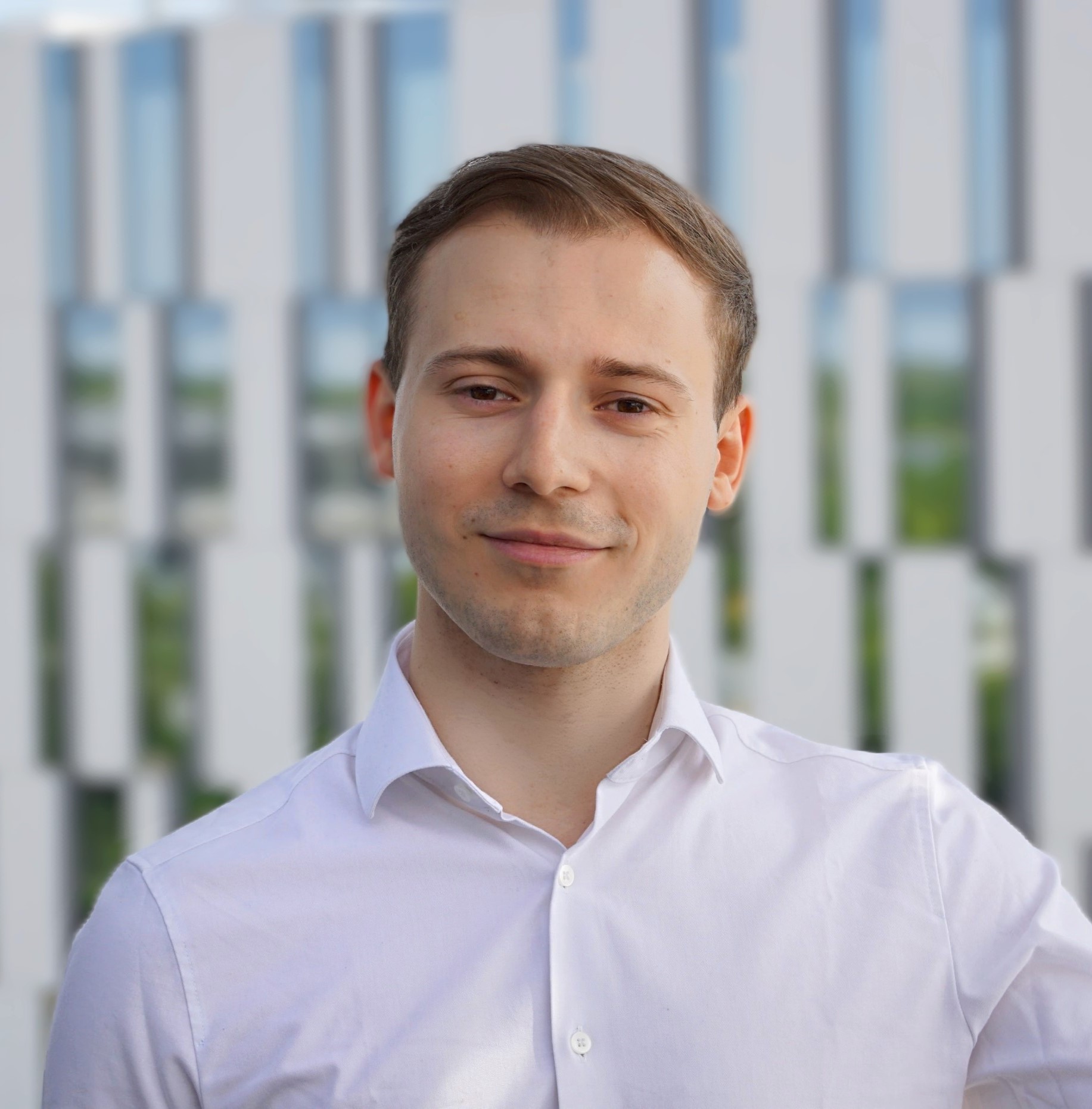
Dr. sc. hum. Richard Zowalla is a researcher at the Faculty of Computer Science, Heilbronn University, specializing in health informatics and software engineering. He works at the Interdisciplinary Center for Machine Learning (ZML) and focuses on health web analysis, text mining, and open source software. Education: Doctorate in human sciences (Dr. sc. hum.), dissertation on German health web data analysis (2022) Research interests include health information systems, focused web crawling, text mining, and software quality management in agile environments. His work bridges healthcare and computer science through data-driven analysis of online medical resources. Publication trends show expertise in health web readability, multilingual health data comparison, and AI-driven service innovation. His articles emphasize practical applications of machine learning and data visualization in healthcare contexts. Teaching: Software Lab (2016-2025), Advanced Programming Techniques (2020-2024), Database Internship (2014-2025), Distributed Systems (2016-2017) Labs & Teams: Active member of the Interdisciplinary Center for Machine Learning (ZML) at Heilbronn University, contributing to collaborative research in health data analysis.
Maurizio Leotta is an Assistant Professor in Computer Science at the University of Genova, Italy, where he has been employed since 2018. He is a member of the Department of Computer Science, Bioengineering, Robotics, and Systems Engineering (DIBRIS) within the School of Mathematical, Physical and Natural Sciences. Additionally, he serves on the School Council and the Department Board of DIBRIS. Dr. Leotta received his PhD in Computer Science from the University of Genova in 2015, with a thesis on Automated Web Testing under the supervision of Prof. Filippo Ricca. His doctoral work was revised by Prof. Massimiliano di Penta (Università del Sannio, Italy) and Prof. Ali Mesbah (University of British Columbia, Canada). Before his academic career, he worked as an IT Technician in various companies and participated in research and industrial projects funded by organizations such as Finmeccanica S.p.A. and the Italian Space Agency. Dr. Leotta's primary research focuses on Software Engineering, with particular emphasis on Test Automation, which is his main research topic. He collaborates with Prof. Paolo Tonella from USI, Switzerland on this area. His other significant research interests include Empirical Software Engineering, Requirements Engineering, Business Process Modelling, and Model-Driven Software Engineering. His work often addresses practical challenges in web and mobile application testing, with a growing interest in applying AI and gamification techniques to improve software testing processes. His recent publications demonstrate a strong trend toward integrating artificial intelligence with traditional software testing methodologies, particularly in end-to-end web testing. He has made significant contributions to improving test robustness, addressing flakiness in test execution, and developing tools for better test maintenance. His work also shows increasing interest in gamification approaches to engage developers and students in software testing activities, as well as applications of large language models to enhance test automation. Dr. Leotta has received multiple prestigious awards for his research, including: Best Paper Award at ICST 2025 (Short Papers, Vision and Emerging Results) Distinguished Paper Award at ICST 2023 (Industry Papers) Best Paper Award at QUATIC 2022 (Full Papers) Best Paper Award at ICST 2022 (Demo and Testing Tool Papers) Best Paper Award at QUATIC 2020 (Full Papers) Best Student Paper Award at ICWE 2016 (Full Papers) Dr. Leotta has advised numerous graduate students, including three PhD candidates who have completed their degrees (Andrea Fasciglione in 2024, Dario Olianas in 2023, and Diego Clerissi in 2020). He currently supervises multiple Master's students working on topics related to software testing, web accessibility, and AI applications in software engineering. He has also served as a postdoctoral advisor for researchers including Diego Clerissi and Dario Olianas. Beyond advising, Dr. Leotta has secured research funding through collaborations with industry partners and has been involved in multiple research projects focused on software testing and verification. He co-directs the Software Engineering for Healthcare (SEH) Laboratory, which has been partially supported by Janssen Italia (previously by Actelion Pharmaceuticals Italia). The lab focuses on applying software engineering techniques to healthcare applications, particularly in the areas of wearable technology for patient monitoring and medical data analysis. Dr. Leotta is also active in the Gamify research community, organizing workshops on gamification in software development, verification, and validation.
Maria Teresa Abad Soriano is affiliated with the Universitat Politècnica de Catalunya (UPC), specifically within the Faculty of Computer Science (FIB), Department of Computer Sciences. She is a researcher in the GPLN - Natural Language Processing Group and the TALP Research Center, contributing to both educational technologies and computational linguistics. Her work spans decades, showing sustained academic engagement. Her research interests focus on educational technology, higher education internationalization, computer-supported collaborative learning, distance learning systems, knowledge representation, and academic mentorship . These are reflected in her long-term involvement in projects related to e-learning platforms, tutoring systems, and institutional development in computing education. The analysis of her recent publications (2019–2024) reveals a strong trend towards the internationalization of higher education in computing, with detailed studies on mobility, academic policies, and institutional impact. Earlier works (1990s–2000s) center on algorithmic education, groupware modeling, and intelligent tutoring systems, showcasing a career that evolved from technical AI and educational software to broader educational policy and management. She has contributed to competitive R&D+i projects such as OPENMT and SKATeR, and has co-authored technical reports, conference papers, and indexed journal articles. Her collaborations include key figures like Nuria Castell, Juan Antonio Pastor, and Maria Felisa Verdejo. Scientific Awards: No scientific awards were mentioned in the provided text. She has supervised or contributed to the Doctoral Program in Business Administration and Management, and her technical and educational outputs suggest an advisory role in research, though specific students are not listed. She has participated in multiple competitive research projects funded under Spain’s National Research Plans, indicating success in grant acquisition. Her work with open datasets and technical documentation supports open science and institutional transparency. She is actively involved in research groups such as GPLN and TALP, which focus on natural language processing and language technologies, contributing to both theoretical and applied advancements in the field.
Sruti Modekurty is a PhD candidate at the Helmholtz Centre for Environmental Research - UFZ , specializing in urban climate adaptation through computational methods. Her work bridges Natural Language Processing (NLP) , machine learning , and climate justice , focusing on how cities respond to extreme climate events. She is supervised by Mariana de Brito and Christian Kuhlicke. Education : MSc in Urban Climate and Sustainability (Erasmus Mundus Joint Degree, 2021-2023) BSc in Electrical and Computer Engineering (Carnegie Mellon University, 2012-2018) Research Focus : Urban climate resilience and equity Text-as-data approaches to climate governance Open data infrastructure for environmental justice Professional Background : Former software engineer at OpenAQ (air quality data) Developer of tools for housing affordability and civic technology Her interests emphasize collective action against unsustainable growth models, with fieldwork experience in Germany and international collaborations. Non-academic pursuits include hiking, traveling, and vocal performance.
Dr. Onet-Marian Zsuzsanna is a Lecturer in the Department of Computer Science at Babes-Bolyai University in Cluj-Napoca, Romania. Her research focuses on applying machine learning techniques to software engineering challenges, particularly software defect prediction and restructuring. Academic Rank: Lecturer Affiliation: Babes-Bolyai University Department: Computer Science Email: zsuzsanna.onet@ubbcluj.ro Research Interests : Dr. Marian specializes in developing machine learning models (clustering, association rules, reinforcement learning) for software defect detection, package-level restructuring, and test order optimization. She also explores applications of Formal Concept Analysis in text summarization and music pattern discovery. Recent Publications highlight her work in source-code embeddings, unsupervised learning for software analysis, and comparative studies of online/traditional learning environments. Her methods often integrate domain-specific metrics and AI-driven optimization. Contact : zsuzsanna.onet@ubbcluj.ro | Office: Teodor Mihaly street, Room 440
Goran Glavaš is a Professor at the University of Würzburg's Faculty of Mathematics & Computer Science, holding the Chair for Natural Language Processing (Computer Science XII) and affiliated with the Center for Artificial Intelligence and Data Science (CAIDAS). His research focuses on computational semantics, multilingual/low-resource representation learning, and democratizing language technologies through fairness and sustainability. Former Assistant Professor at University of Mannheim (2017-2021) Interim Associate Professor at LMU Munich (2021-2022) Doctorate in 2014 at University of Zagreb under Jan Šnajder Recent research trends emphasize cross-lingual learning, multilingual knowledge integration, and ethical AI frameworks. His group contributes to robust multilingual models, vision-language systems, and sustainable NLP applications in social sciences. Outstanding Paper Award at ACL 2024 (IRCoder) Outstanding Paper Award at EACL 2024 (Kardeş-NLU) Extensive publications in EMNLP, ACL, NAACL, EACL, and TACL Advises a team of researchers at the University of Würzburg's NLP Chair, including Benedikt Ebing, Gregor Geigle, and Fabian David Schmidt. Leads the WüNLP group within CAIDAS, focusing on democratizing language technologies.
Oliver Wardas is a Research Associate at the Chair of Software Engineering for Business Information Systems (sebis) at the Faculty of Informatics, Technische Universität München , joining in November 2022. He holds a Bachelor's and Master's degree in Computer Science from RWTH Aachen, where his Master's thesis focused on the explainability of Deep Learning models for DGA detection. His research interests span Natural Language Processing , Large Language Models , Retrieval-Augmented Generation , Legal Tech , and Agentic AI . He has prior experience as a Research/Student Assistant at Utimaco and RWTH Aachen, along with academic mentorship and involvement in the Google Developer Student Club.
Dr. Bassam Al-Shargabi serves as a Senior Lecturer in Software Engineering at Cardiff School of Technologies, Cardiff Metropolitan University. His academic credentials include a PhD in Computer Information Systems (2009) and an MSc in Computer Information Systems from AABFS (2004). His research focuses on critical intersections of technology and security: Lightweight encryption methods for resource-constrained IoT healthcare devices Innovative DNA-based cryptographic techniques Blockchain technology applications in auditing systems E-learning platform adoption in educational contexts Dr. Al-Shargabi's scholarly contributions demonstrate a consistent trajectory in developing secure, efficient solutions for emerging technological challenges, particularly in healthcare environments. His work bridges theoretical computer science with practical implementations to address real-world security concerns in increasingly connected systems. He actively participates in the academic community as a guest editor and technical program committee member for international conferences and leading journals. His publications appear in prestigious venues from major publishers including Elsevier, IEEE, Springer, and ACM, reflecting the quality and relevance of his research contributions.
Dr. Bogumiła Hnatkowska serves as Assistant Professor at the Institute of Informatics within the Faculty of Computer Science and Management at Wrocław University of Science and Technology. Her academic career spans software engineering research and education with emphasis on model-driven approaches and quality assurance methodologies. Her research interests include: Software Engineering Analysis and Design of Information Systems Software Development Methodologies Model-Based Software Development Domain-Specific Languages Software Quality Recent publications (2021-2025) reveal concentrated research in model-driven engineering, business rules processing, and ontology integration. Key trends involve textual specification languages for use-cases, automated test generation mechanisms, and formal transformations for ontologies – demonstrating consistent application of theoretical rigor to practical software development challenges across agile and model-based contexts. Scientific Awards: No scientific awards were mentioned in the provided text Dr. Hnatkowska has served as principal investigator for multiple State Committee for Scientific Research grants including UML extensions for multimedia systems (2000), real-time systems analysis (2005), and model-driven database design (2008). Her teaching portfolio includes Software Engineering, Software System Development, and Advanced Programming Techniques courses where she supervises team projects providing students with hands-on development experience. She actively participates in partner programs including Visual Paradigm's Academic Training Partner Program (providing UML/BPMN/agile tools) and IBM Academic Initiative, supporting her research in software engineering methodologies and educational tool development.
Simone Bianco is an Associate Professor at the Department of Informatics, Systems and Communication (DISCo) of the University of Milano-Bicocca, Italy. His academic and research contributions span computer vision, artificial intelligence, machine learning, and optimization algorithms applied to multimodal and multimedia systems. His educational background includes a PhD in Computer Science (2010) and BSc/MSc degrees in Mathematics (2003/2006), both from the University of Milano-Bicocca. Bianco’s research focuses on color constancy, deep learning for video restoration, neural architecture search, and computational color imaging, with a strong emphasis on practical applications like biometric recognition, medical imaging, and environmental monitoring. The 15 most recent articles (2025–2020) highlight trends in computer vision, including uncertainty estimation in color constancy, portable material appearance modeling, temporal consistency in low-light videos, and advanced deep learning architectures for image and video processing. His work often integrates photogrammetry, sensor technology, and multimodal data analysis. Scientific accolades include recognition on Stanford University’s World Ranking Scientists List for achievements in artificial intelligence and image processing. Bianco also serves as R&D Manager for the University of Milano-Bicocca spin-off Imaging and Vision Solutions and contributes to international conferences and workshops.
Dr. Sven Klaaßen serves as a Research Fellow at the University of Hamburg's Hamburg Business School within the Professorship for Statistics with Application in Business Administration, collaborating closely with Prof. Dr. Martin Spindler since 2021. His research focuses on developing advanced statistical methodologies for complex data environments. His academic credentials include: Ph.D. in Statistics from Hamburg Business School (2020) Visiting Scholar at MIT Department of Economics (2022) M.Sc. in Business Mathematics from University of Hamburg (2016) BSc in Business Mathematics from University of Hamburg (2014) Dr. Klaaßen's research program centers on Machine Learning, Causal Inference, Deep Learning, and High-Dimensional Statistics, with particular emphasis on developing robust inference techniques for modern data challenges. His work bridges theoretical statistics with practical applications in business analytics and econometrics, often addressing the complexities of high-dimensional datasets where traditional methods fail. Analysis of his recent publications reveals a clear trajectory toward integrating machine learning with causal inference frameworks, exemplified by his leadership in the DoubleML software ecosystem. His research increasingly tackles multimodal data challenges while maintaining rigorous statistical foundations, with applications spanning economics, operations research, and business decision systems. As an active member of Prof. Spindler's research group, Dr. Klaaßen contributes to collaborative projects developing open-source statistical tools and advancing methodological frontiers in causal machine learning. The team maintains strong industry and academic partnerships focused on translating theoretical innovations into practical analytical solutions.
Lingjia Tang is an Assistant Professor in Computer Science with expertise in artificial intelligence, machine learning, big data, and no-code automation. Her research focuses on developing machine learning algorithms for medical data analysis and advancing no-code automation tools to democratize technology access. Research Interests Artificial Intelligence & Machine Learning Big Data Analytics & Graph-Based Retrieval No-Code Automation & User-Centric Systems Data Quality & Ethical AI Considerations Scientific Contributions With over 20 publications in prestigious journals, Dr. Tang's recent work explores: Graph-based retrieval frameworks (GraphRunner, TOBUGraph) LLM calibration and evaluation (SLMEval) Memory subsystem optimization in datacenters Meaning-typed programming paradigms Multi-agent conversational AI systems Awards 2023 Award for contribution to machine learning technologies Teaching Dr. Tang teaches courses in artificial intelligence, algorithms, and computational theory with a dynamic interactive approach. Current Projects Machine learning algorithms for medical diagnosis No-code automation tools for non-technical users
Dr. Tiantai Deng is a Lecturer in Electronics and Digital Systems at the School of Electrical and Electronic Engineering , University of Sheffield (since 2021). His industrial background includes a senior research engineer role at HiSilicon/Huawei , where he focused on hardware architecture design for CNN, GEMM, and image/video processing on FPGAs/ASICs. Education: BEng, MSc, PhD Research interests span FPGA-based hardware acceleration , sparse processing architecture for CNN/GEMM, number system design , approximation computing , and high-level design environments . His work integrates algorithm-hardware co-optimization for efficiency in AI and mathematical computing. Recent publications emphasize neurodynamic systems for opinion modeling, parallel processing elements for ODE/AI acceleration, and low-power FPGA implementations for clustering/modulation classification. Earlier work addressed combustion dynamics and image processing pipelines. Contact: t.deng@sheffield.ac.uk | Office: G108, Sir Frederick Mappin Building, Sheffield S1 3JD | ORCID 0000-0003-4507-5746
Paolo Monti is a Professor and Head of the Optical Networks Unit at Chalmers University of Technology's Department of Communications, Antennas and Optical Networks. With extensive expertise in optical communication infrastructures, he leads research focusing on energy efficiency, network resiliency, programmability, automation, and techno-economics of optical networks. His work spans multiple international collaborations with funding from major research bodies across EU, USA, and Asia. Professor Monti's research interests center around next-generation optical networking technologies. His work explores the integration of artificial intelligence and machine learning with optical networks, quantum-classical network convergence, 6G infrastructure development, and network automation. His research addresses critical challenges in network energy consumption, reliability under failure conditions, and cost-effective deployment strategies for emerging communication technologies. The research group under his leadership develops frameworks for optical network monitoring, security, and resource optimization using advanced computational techniques. Analysis of his recent publications reveals a strong trend toward AI/ML integration with optical networking, with significant focus on quality of transmission estimation, network automation, and 6G readiness. His work increasingly combines quantum technologies with classical optical networks while addressing practical implementation challenges in multi-band elastic optical networks. The publications demonstrate a progression from theoretical network design to practical implementations with real-world validation. Professor Monti has received recognition as a Senior Member of IEEE, highlighting his contributions to the field of communications and networking. As an academic leader, Professor Monti has been involved as Principal Investigator, co-PI, and main technical leader in numerous national and international projects. His educational contributions include teaching courses at undergraduate, Master's, and PhD levels, as well as developing ICT-focused education programs. His research has been supported by major funding bodies including the European Commission, VINNOVA, and Wallenberg Centre for Quantum Technology. The Optical Networks Unit under Professor Monti's leadership operates as a vibrant research environment focusing on both theoretical and experimental aspects of next-generation optical communications. The unit maintains strong collaborations with industry partners and academic institutions worldwide, participating in multiple EU-funded projects and national initiatives focused on quantum communications and 6G infrastructure.