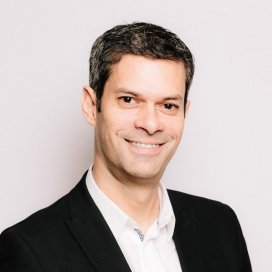
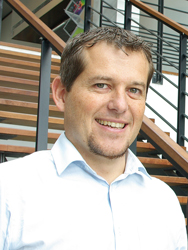
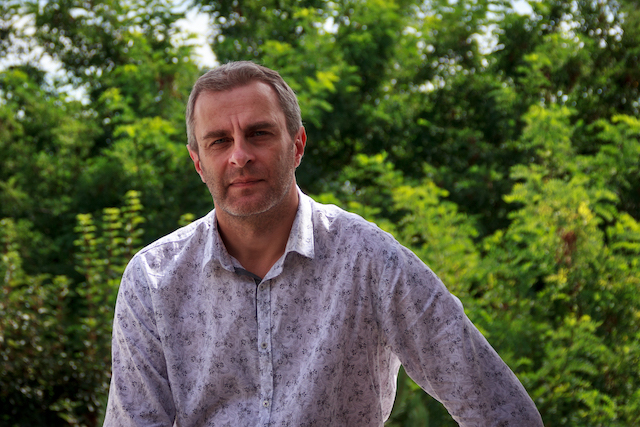
Arno De Caigny is an Associate Professor at IÉSEG School of Management in France, specializing in Marketing Analytics. He holds a Ph.D. in Sales and Marketing from the University of Lille and Masters in Economics/Mathematics and Finance from Ghent University. His professional experience includes work as a Business Analyst at Deloitte. His primary research interests include customer churn prediction, AI applications in marketing, explainable AI for business, and life event-based marketing. He develops advanced machine learning models for customer behavior prediction and retention strategies. De Caigny's recent publications demonstrate strong focus on developing interpretable machine learning models for business applications, particularly in customer churn prediction and financial decision support. His work increasingly incorporates deep learning and natural language processing techniques.
Nils Holzenberger is an Assistant Professor at Télécom Paris, France, since February 2023, affiliated with the Data Intelligence Graphs (DIG) research team within the Information Processing and Communication Laboratory (LTcI). His work bridges artificial intelligence, natural language processing, and legal domains through neuro-symbolic approaches to statutory reasoning, particularly in tax law. Education: PhD in Computer Science, Johns Hopkins University (2017-2022) Master's in Engineering, Mines ParisTech (2013-2017) Preparatory Classes, Lycée Louis-le-Grand (2011-2013) Holzenberger's research centers on legal artificial intelligence with emphasis on statutory reasoning limitations in large language models. He pioneered the SARA dataset for tax law reasoning and LegalBench benchmark, developing hybrid symbolic-neural frameworks that expose LLMs' shortcomings in precise legal interpretation. His work integrates Prolog solvers with NLP techniques to create executable tax code mappings and contract analysis tools, establishing foundational methods for verifiable legal AI systems. Analysis of his 15 most recent publications (2019-2024) reveals three dominant research thrusts: (1) Tax law reasoning benchmarks exposing LLM hallucinations, (2) Neuro-symbolic integration for statutory interpretation, and (3) Low-resource template extraction for legal documents. His work consistently demonstrates that pure neural approaches fail at precise legal reasoning, necessitating symbolic grounding for reliable legal AI applications. The DIG research team at Télécom Paris, where Holzenberger leads legal AI initiatives, is actively hiring faculty for neuro-symbolic projects. While specific grant details aren't public, his collaborations with HEC Paris, Copilex startup, and featured podcast appearances indicate substantial industry-academia engagement in legal tech development. Holzenberger directs the legal AI vertical within LTcI's DIG team, focusing on data intelligence for statutory reasoning. His group develops tools for tax minimization strategy discovery, contract analysis, and legal information extraction, maintaining close ties with legal practitioners through projects like the Prolog-based tax code interpreter. The team's infrastructure supports both academic research and startup partnerships in computational law.
Benoît Sagot is a Senior Researcher in Natural Language Processing and Computational Linguistics at Inria , currently holding the 2023-2024 Informatics and Digital Sciences Annual Chair at Collège de France. He directs the ALMAnaCH research team and contributes to the PRAIRIE Institute for AI research. Research Focus: His work spans neural language models, machine translation, text simplification, multimodal NLP, and lexical resource development for French and low-resource languages. He explores computational morphology, etymology, and historical linguistics, with applications in opinion mining and computational oenology. Recent Articles emphasize language model interpretability, cross-lingual transfer, and multimodal integration (speech, image). Tools & Resources: He has developed morphological lexicons (Le fff, Alexina), corpora (OSCAR, CAMEMBERT), and parsing pipelines (SxPipe). Projects: Involved in initiatives like ANR BASNUM (Furetière's dictionary digitization) and 3IA PRAIRIE (AI research). His career combines foundational work in syntactic analysis with evolving deep learning approaches.
Michalis Vazirgiannis is a Professor at LIX, École Polytechnique in France, where he leads the Data Science and Mining group (DaSciM). He holds a degree in Physics and a PhD in Informatics from Athens University (Greece), and a Master's degree in AI from Heriot Watt University, Edinburgh (UK). His academic career spans multiple prestigious institutions including Fraunhofer and Max Planck MPI in Germany, INRIA/FUTURS in Paris, AUEB in Greece, Telecom-Paristech, ENS in France, Tsinghua and Jiaotong Shanghai in China, and Deusto University in Spain. Professor Vazirgiannis's research focuses on machine and deep learning methods for graph analysis, including community detection, graph clustering, node embeddings, and influence maximization. His work in text mining encompasses Graph of Words, word embeddings with applications to web advertising and marketing, event detection, and summarization. He has active collaborations with industrial partners in analytics and machine learning for large-scale data repositories across various application domains such as recommendations, meeting summarization, influence metrics for scientific and social networks, and predictive maintenance. His recent publications demonstrate a strong emphasis on Graph Neural Networks, multilingual NLP (particularly for French and Arabic), and applications of deep learning to diverse domains including social networks, legal text, and biomedical data. There's a clear trajectory toward developing more efficient, explainable, and specialized models that address real-world challenges in data analysis. ERCIM fellowship Marie Curie EU fellowship Tencent "Rhino-Bird International Academic Expert Award" (2017) Best Paper Award at IJCAI 2018 Best Paper Award at CIKM 2013 Professor Vazirgiannis has supervised 29 completed PhD theses and has attracted significant R&D funding from national and international sources, including research agencies and industrial partners such as Google, Airbus, Huawei, Deezer, BNP, and LVMH. He leads or has led several academic research chairs including DIGITEO (2013-15), ANR/HELAS (2020-25), and AXA (2015-2018). The DaSciM research group, which he leads at École Polytechnique, has extensive experience in real-world R&D projects involving large-scale data mining. The team maintains active collaborations with major industrial partners including AIRBUS, Google, BNP, Tencent, and Tradelab, working on cutting-edge machine learning projects. The group has co-organized major conferences such as ECML PKDD 2011 and ECML/PKDD 2017 and participates in the senior organization of AI and data mining events like AAAI and IJCAI.
Raphaël Troncy is an Assistant Professor at EURECOM's Data Science Department, specializing in Semantic Web technologies, Knowledge Graphs, and Natural Language Understanding. He teaches courses like 'Human-computer interaction for the Web' and 'Semantic Web technologies.' His research focuses on semantic data integration, knowledge graph applications, and recommender systems. Notable projects include DOREMUS (musical work graph), entity2rec (knowledge graph-based recommendations), and 3cixty (city exploration knowledge bases). He actively contributes to semantic web challenges and conferences, winning multiple awards including the 2018 Best Poster Award at ESWC and 2015 First Prize in the Semantic Web Challenge. Troncy's work spans cultural heritage digitization (e.g., Odeuropa olfactory data modeling), cybersecurity anomaly detection (NORIA-O ontology), and interdisciplinary projects like SILKNOW's silk textile knowledge graph. He leads development of tools like DAGOBAH for semantic table interpretation and KG Explorer for knowledge graph exploration. Education: Not explicitly stated in text Labs/Teams: Active in EURECOM's Data Science group, collaborating on projects involving knowledge graphs, AI, and semantic technologies
Emmanuel Morin is a Full Professor in Computer Science at the University of Nantes, France. He is affiliated with the Computer Science Department of Nantes Institute of Technology (IUT) and leads the Natural Language Processing (TALN) team at the Digital Sciences Laboratory of Nantes (LS2N UMR CNRS 6004). His research focuses on computational linguistics with particular emphasis on multilingualism and multimodality. His academic leadership includes serving as Head of the NLP team (2017-present), Co-responsible for the ATAL (Machine Learning and Natural Language Processing) option of the Computer Science Master (2017-present), and Director of the Nantes computer science training department (2014-present). He also co-edits the Traitement Automatique des Langues (TAL) journal and serves on the steering committee of ATALA since 2004. Current projects: Atlantic 2020, ALALA Project (2019-present), ANR ADDICTE (2017-present), and Atlanstic 2020 RAPACE Project (2016-present) Past projects: Labex CominLabs LIMAH (2014-2019), ANR CRISTAL (2012-2016), and European FP7-ICT TTC project (2010-2012) Professor Morin's research spans natural language processing with a focus on bilingual terminology extraction and comparable corpora analysis. His recent work (2020-2022) shows strategic expansion into medical informatics applications like FrenchMedMCQA, while maintaining his foundational work on domain adaptation of language models using graph-based networks. His publications demonstrate a consistent trajectory from early terminology extraction methods to contemporary applications in specialized language processing. He has supervised numerous PhD students, with current advisees including Kévin Espasa, Martin Laville, Merieme Bouhandi, and Antoine Caubrière. His past students have made significant contributions to the field of natural language processing, continuing his research legacy in academia and industry.
Emmanuel Giguet is a Researcher at the French National Centre for Scientific Research (CNRS), affiliated with the GREYC Laboratory (Computer Science Department) at the University of Caen, Normandy, France. He holds an HDR (Accreditation to Supervise Research) from the University of Caen (2011) and a PhD in Computer Science (1998), both focusing on multilingual natural language processing and document analysis. Roles: Cybersecurity Researcher, Communication and Scientific Mediation Adviser (GREYC Lab), Former Computer Forensics Legal Expert (2005–2015). Expertise: Digital Forensics, Natural Language Processing, Document Structure Analysis, Open Source Intelligence, Competitive Intelligence. His research spans cybersecurity, digital forensics, and NLP applications in document analysis. He co-founded Semiotime (2012), a Competitive Intelligence startup, and has contributed to tools like the GREYC Digital Investigation Platform (G'DIP). He teaches cybersecurity modules at the University of Caen, emphasizing digital forensics and information retrieval. Key Projects: Development of open-source digital investigation tools (e.g., G'DIP). Analysis of deepfake videos and forensic video forgery detection. PDF document structure extraction for financial narrative processing (FinTOC). Affiliations: GREYC Lab (CNRS UMR 6072), University of Caen. Institute for Information Sciences, University of Caen. Communication: Advises GREYC on branding and media presence, including logo guidelines, virtual backgrounds, and scientific mediation resources.
Paolo Papotti is an Associate Professor in the Data Science department at EURECOM, France, since 2017. He previously worked as a scientist at QCRI (Qatar) and as an Assistant Professor at Arizona State University (USA). His research focuses on scalable data management, NLP, and enabling Large Language Models (LLMs) to process structured data effectively. Contact: papotti@eurecom.fr | Website
Marie Candito is a Lecturer at the School of Linguistics, Paris Cité University. She serves as Deputy Director of the Laboratoire de Linguistique Formelle (LLF, CNRS) since January 2025 and Head of the M2 Computational Linguistics program at Paris Cité University. Her research focuses on natural language processing, computational linguistics, and linguistic abilities of large language models. Current Projects : Co-PI of ANR SELEXINI (2021-2025) and scientific coordinator for LLF in ANR PANTAGRUEL (2023-2025) Past Projects : PI of ANR ASFALDA-French FrameNet (2013-2016), scientific coordinator for ANR PARSEME-FR (2015-2019), and member of ANR SEQUOIA (2010-2013) Her work involves measuring and mitigating biases in language models, inducing semantic lexicons from corpora, and studying human vs. LLM word associations. She supervises PhD students including Maria Andueza Rodriguez, Anna Mosolova, and David Kletz.
Sébastien Fournier is a researcher affiliated with the University of Aix-Marseille, focusing on natural language processing, multimodal data analysis, and agent-based systems. He has contributed to projects like ANR GUIDANCE, ADNvideo, CoPains, and PhysSocial, emphasizing dialogue-assisted information access, video fingerprinting, persuasive health agents, and psychophysiological foundations of social behavior. Research areas: Aspect-Based Sentiment Analysis, Contradiction Detection in Reviews, Multimodal Data, Recommendation Systems Projects: ANR GUIDANCE (Workpackage 3 Leader), ADNvideo (2014-2016), CoPains (2019-2022), PhysSocial (2018-2021) His work extends to evaluating interactions in serious crisis management games, with supervision of PhD students like Ismail Badache and Adrian-Gabriel Chifu. He collaborates with institutions including LIS, LSIS, and ILCB (Institute of Language, Communication and the Brain).
Julien Ah-Pine is a lecturer at Laboratoire d'Informatique, de Modélisation et d'Optimisation des Systèmes (LIMOS) under Université Clermont Auvergne , with affiliations at Institut national polytechnique Clermont Auvergne and École des Mines de Saint-Étienne . He also holds a Researcher position at CNRS. Research Interests His work spans machine learning , information fusion , aggregation functions , and multi-criteria decision support , with a focus on complex data types like graphs , functional data , and multi-view datasets . Recent publications emphasize anomaly detection in spectral data streams , online learning , and interpretable AI for industrial applications. Selected Publications 2025 work on OnlineBootKNN introduces a novel framework for real-time spectral anomaly detection, while 2024 research explores multiple kernel methods in functional data classification. Earlier studies cover graph-based clustering , relational data mining , and linguistic network models for NLP tasks. Laboratory & Collaborations Works within LIMOS laboratory at Université Clermont Auvergne, collaborating with institutions like Mines Saint-Étienne and CNRS. Key partnerships include Nicolas Rojas Varela and Engelbert Mephu Nguifo on data stream analysis projects.
Kristof Coussement is a Full Professor and Academic Director of the MSc in Big Data Analytics for Business at IÉSEG School of Management. He holds a HDR in Business Administration from University of Paris Dauphine and Ph.D. in Applied Economics from Ghent University. He directs the IESEG Center for Marketing Analytics (ICMA). His research focuses on big data analytics, machine learning applications in marketing, and explainable AI. He develops advanced analytical frameworks for customer behavior prediction, financial forecasting, and algorithmic decision-making. Coussement's recent work shows strong emphasis on ethical AI development, algorithmic bias mitigation, and industry-specific language modeling. His publications increasingly address the intersection of AI technology and business decision-making processes.
School for Advanced Studies in the Social SciencesFrance
Ken Satoh is a full Professor at the National Institute of Informatics (NII) and Sokendai (The Graduate University of Advanced Studies), Japan. He leads the Center for Juris-Informatics within the Joint Support-Center for Data Science Research (ROIS-DS). Previously, he worked at Fujitsu (1981-1995) and was an Associate Professor at Hokkaido University until 2001. He holds a law degree from the University of Tokyo (2006-2009) and passed the Japanese bar exam in 2017. Roles: Director of Center for Juris-Informatics, Principal Investigator in multiple AI/Law projects Research Focus: Juris-informatics (merging informatics and law), logical foundations of AI, legal debugging, and compliance mechanisms for AI systems His work bridges AI and legal systems, including developing the PROLEG framework for legal reasoning and organizing international workshops like JURISIN. Key contributions include applying logical inference to detect legal conflicts in algorithmic governance systems and advancing AI ethics through compliance checks with regulations like GDPR. He has authored over 130 publications, including works on legal norm reasoning, multi-agent systems, and formal methods in law. His research group collaborates globally, hosting competitions like COLIEE to advance legal AI technologies.
Juan-Manuel Torres Moreno is an Associate Professor (Maître de Conférences HDR HC) at the University of Avignon (UAPV), where he conducts research in Natural Language Processing at the Laboratoire Informatique d'Avignon (LIA). His academic position includes the HDR (Habilitation à Diriger des Recherches), a post-doctoral qualification in France that enables supervision of PhD students. His primary research interests focus on Natural Language Processing, with particular emphasis on automatic text summarization, sentence generation, and phrase compression algorithms. His work spans both theoretical and applied aspects of NLP, incorporating machine learning techniques and artificial intelligence approaches. His research has significant applications in multilingual processing, text mining, and information extraction systems. Torres Moreno's publication record demonstrates a consistent trajectory in advancing text summarization techniques, with recent work exploring cross-lingual approaches, multimedia content processing, and deep learning applications. His research often bridges the gap between theoretical linguistic concepts and practical implementation, with publications spanning from fundamental NLP algorithms to applied systems for video summarization, speech processing, and multilingual document analysis. He actively collaborates with researchers across multiple institutions including École Polytechnique de Montréal (with 50 joint publications), Laboratoire Informatique d'Avignon (83 publications), and Universidad Nacional Autónoma de México. His work appears in reputable journals such as Computer Speech and Language, Data and Knowledge Engineering, and Pattern Recognition Letters. Within the Laboratoire Informatique d'Avignon, Torres Moreno contributes to the Language Processing research theme, working with colleagues on projects related to multilingual information access, opinion mining, and text analysis. His research group has participated in several evaluation campaigns including DEFT (Défi Fouille de Textes) challenges, focusing on information retrieval and sentiment analysis tasks.
Dr. Paul Lerner is a researcher at the Institute for Intelligent Systems and Robotics (ISIR), affiliated with Sorbonne University (formerly Université Pierre et Marie Curie). His work focuses on machine translation, multimodal learning, and knowledge-based visual question answering systems. Research Interests: Machine translation for scientific neologisms and inclusive French Cross-modal retrieval in visual question answering Integration of knowledge bases into multimodal systems Development of NLP datasets for emerging tasks Publications: Active in top venues like COLING, ECIR, and SIGIR since 2019, with recent 2025 work on BPE segmentation limitations in LLMs and scientific translation challenges. Projects: Creator of datasets including ViQuAE (visual QA), Bazinga! (dialogue structuring), and INCLURE (inclusive translation toolkit).