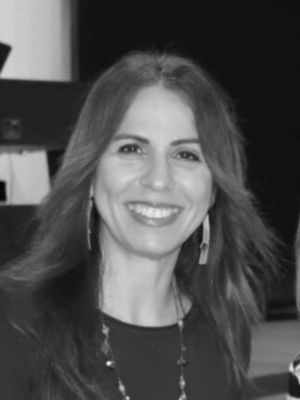
Cutcha Risling Baldy is an Associate Professor and Program Leader of the Environment & Community Masters Program at California Polytechnic State University, Humboldt. She holds a Ph.D. from the University of California, Davis. Her work focuses on Indigenous feminisms, decolonization, California Indian politics, environmental justice, and community-based research. She co-directs the Rou Dalagurr Food Sovereignty Lab & Traditional Ecological Knowledges Institute. Dr. Baldy has received the 2025 James Irvine Foundation Leadership Award for her contributions to Indigenous education and activism. Her research emphasizes revitalizing Indigenous traditions, particularly through women’s coming-of-age ceremonies and ceremonial practices. She is affiliated with the Native American Studies department and collaborates with the Native Women's Collective. Her articles address topics like Indigenous STEM education, social media activism (#NoDAPL movement analysis), and decolonizing pedagogy. She advocates for integrating Traditional Ecological Knowledge (TEK) into academic and community frameworks while challenging colonial policies impacting Indigenous communities. Dr. Baldy’s book We Are Dancing for You explores Native feminisms through the lens of Yurok coming-of-age ceremonies, emphasizing cultural survivance and community knowledge. She also co-leads the Food Sovereignty Lab, advancing Indigenous food systems and ecological stewardship.
Judith Maxwell is Professor of Anthropology at Tulane University, specializing in linguistic anthropology with primary focus on Mayan languages (Kaqchikel, Chuj, Nahuatl) and discourse analysis. Her work bridges theoretical linguistics and applied language revitalization, particularly through the Tunica-Biloxi language project since 2010. Education PhD in Anthropology, University of Chicago (1982) Research Focus : Maxwell investigates discourse structures in Mayan languages regarding artistry canon, cultural constructs, coherence mechanisms, and societal relationships. Her colonial manuscript analysis explores language change in Kaqchikel/Nahuatl, while contemporary work examines bilingual education, language shift, and gender performance across English and Indigenous varieties. She pioneered the revival of Tunica language through community-academic collaboration. Publication Trends : Recent works (2014-2024) demonstrate consistent focus on Mayan language documentation ( Kaqchikel chronicles , Chuj Narratives ), revitalization pedagogy ( Maja'il Kaqchikel ), and sociopolitical dimensions of language ( Mayan Languages and Guatemala Law ). Key themes include decolonizing methodologies, Indigenous knowledge systems, and practical applications for endangered language communities. Advising & Grants : Maxwell leads the Tunica-Biloxi Language Revitalization Project training Tulane students in documentation techniques. Her collaborative model integrates tribal knowledge with academic research, securing sustained community engagement despite specific grant details being unreported. Research Teams : Directs the Tunica-Biloxi collaborative team comprising Tulane students, tribal scholars, and native speakers, developing e-learning tools like the Q'anil Kaqchikel lessons filmed in Guatemala with native instructors.
Jennifer L. Smith is a Professor and Associate Chair in the Department of Linguistics at the University of North Carolina, Chapel Hill. Her research focuses on phonology, particularly the interplay between phonological constraints, morphosyntactic categories, and experimental methods. Key areas include lexical-category effects (e.g., noun/verb phonological privilege), loanword adaptation, blend phonology, and intonation patterns in Fukuoka Japanese. She has pioneered experimental approaches using artificial-language learning and surfeit-of-the-stimulus experiments to test hypotheses about constraint interaction and phonological universals. Smith’s work bridges formal phonology and phonetics, addressing questions like how phonetic naturalness influences phonological constraints and whether category-specific phonology reflects innate biases. Recent projects include investigating positional effects in phonology (e.g., salient positions) and the role of core-periphery structures in loanword nativization. She has collaborated extensively with researchers like Elliott Moreton and Katya Pertsova on blend phonology and experimental phonology. Her teaching includes foundational courses like Linguistics 60: How Reading Works , emphasizing interdisciplinary connections between language, cognition, and literacy. Smith maintains key resources for the field, including a widely referenced Phonetics resources page with curated materials for teaching and research. Her office is located in Smith Building 309, and she holds regular office hours via Zoom.
Dr. Olive Nabukeera is a Lecturer in English for Academic Purposes (EAP) at the Language Centre, Faculty of Arts, Humanities and Cultures, University of Leeds, where she has been teaching since September 2023. Her teaching supports foundation year, pre-sessional, and in-sessional students, particularly in the School of Sociology and Social Policy, focusing on academic literacies and writing development. Her research lies at the intersection of race, language, and identity in English language teaching, with a focus on Blackness, critical literacies, and decolonial pedagogies. She critically examines the representation and positioning of Black educators in TESOL and ELT contexts, challenging systemic inequities and native speakerism. Her recent and forthcoming publications (2022–2025) explore themes such as the invisibility of Black educators, teaching while Black, and racial performativity. These works appear in respected outlets including the CATESOL Journal, Patterns of Practice, and a Bloomsbury-published volume on Language Teacher Agency. She is currently writing her first monograph, Race, English and Blackness , to be published by Palgrave Macmillan. Dr. Nabukeera holds a Doctorate in TESOL from Alliant International University (USA), a Master's in TESOL from the University of Bath, a Master's in International Educational Management from the University of Leeds, and a Bachelor's in Education, English & Literature from Makerere University, Uganda. She is an active member of key professional associations: TESOL International Association British Association of Lecturers in English for Academic Purposes (BALEAP) American Association of Applied Linguistics (AAAL) British Association of Applied Linguistics (BAAL) While no formal advisees or grant projects are mentioned, her scholarship demonstrates a strong commitment to equity, inclusion, and transformative pedagogy in language education.
Candace Kaleimamoowahinekapu Galla is an Associate Professor in the Department of Language and Literacy Education at the University of British Columbia's Faculty of Education, with a cross-appointment in the Institute for Critical Indigenous Studies within the Faculty of Arts. Her work centers on Indigenous language revitalization, decolonizing methodologies, and the integration of digital technology in language education and cultural practices, grounded in her Kanaka Hawaiʻi identity and commitment to community-centered approaches. Her educational background includes a B.A. in Linguistics, M.A. in Native American Linguistics, and Ph.D. in Language, Reading and Culture from the University of Arizona, preceded by secondary education at Kamehameha Schools Kapālama. She previously served as Program Coordinator for the American Indian Language Development Institute and as a Visiting Assistant Professor at Ka Haka ʻUla O Keʻelikōlani College of Hawaiian Language, University of Hawaiʻi Hilo. Galla's research focuses on Indigenous Language Revitalization and Reclamation, Indigenous Literacy and Education, Decolonizing Pedagogies, and the role of digital technology in language preservation, emphasizing community-driven frameworks and traditional cultural practices like hula. Her scholarship bridges academic rigor with community engagement to support Indigenous well-being through language reclamation. Her recent publications (2023-2025) demonstrate a cohesive trajectory exploring community-centered language revitalization, relational accountability to Indigenous languages, and innovative pedagogical materials. She examines the intersection of language, technology, and cultural practices while advocating for systemic decolonization within academic institutions to create space for Indigenous knowledge systems. Galla has secured funding for significant projects including 'Building Indigenous Language Teacher Proficiency and Fluency for Hawaiian and CHamoru Language Medium Education' and 'Digital Technology Use for First Nations Language Education and Revitalization in British Columbia.' She actively organizes community events such as the 'Living Our Indigenous Languages' workshops at UBC's First Nations Longhouse, fostering collaboration between language advocates, educators, and community members. She maintains strong connections with the First Nations and Endangered Languages Program at UBC and continues collaborative work with the American Indian Language Development Institute, demonstrating sustained commitment to Indigenous language communities across North America and the Pacific.
Dr. Pao-chen Tang is an Assistant Professor in Film Studies at the University of Sydney, affiliated with the School of Arts and Social Sciences. He holds a Joint PhD in Cinema and Media Studies & East Asian Languages and Civilizations from the University of Chicago. His research focuses on the intersection of film aesthetics and ecopolitics, particularly in East Asian cinema, exploring animism, nonhuman agency, and environmental humanities. Education: PhD (University of Chicago), Joint PhD in Cinema and Media Studies & East Asian Languages and Civilizations. Research Interests: Ecocinema, animal studies, transnational cinema, film production culture, health humanities, and East Asian media. Current projects include studies on neo-industrialization in Chinese cinema and the aesthetics of technology in genres like martial arts and sci-fi. Recent Articles: Recent works include Producing a Future on a Wandering Earth (2023), analyzing the sci-fi film The Wandering Earth , and Cinema Wears the Mask (2023), exploring animism in French documentary. His 2025 book The Animist Imagination in East Asian Cinema theorizes animist filmmaking modes. Awards: Includes the Nexus Asia Travel Grant (2025), Overseas Pioneers Grants (2024), and multiple fellowships. Shortlisted for the Screen Award (2024) and BAFTSS Best Journal Article (2024). Teaching & Grants: Teaches courses like FILM1000 and supervises Chenlei Xiao. Grants include the USyd-NTU Ignition Grant (2024) and Franke Institute Dissertation Fellowship (2019). Labs/Teams: Member of the China Studies Centre and Sydney Environment Institute, collaborating on interdisciplinary projects.
Marie Tejero Hughes is a Professor in Special Education at the University of Illinois at Chicago , focusing on graduate literacy instruction for educators in urban communities. Her work centers on comprehension strategies for culturally/linguistically diverse students and Latino family engagement . PhD in Reading and Learning Disabilities MSEd in Elementary Education BSEd in Early Childhood/Elementary Education Her research examines: Spanish literacy interventions for English learners Teacher leadership in special education MTSS/PBIS implementation in high-need schools Latinx family perspectives on autism education Coaching models for literacy development Recent publications highlight: Teacher leadership frameworks Bilingual literacy outcomes Latinx family expertise in math education Parent training programs in Colombia Technology-enhanced play interactions She has directed multiple US Department of Education grants focused on special education teacher recruitment and retention, and frequently collaborates with Colombian researchers on autism family support systems.
Oliver Winkler, PD Dr., is a German sociologist of education based at Martin Luther University Halle-Wittenberg (MLU). Since 2021 he heads the BMBF-funded junior research group "EDIREG" on the educational integration of refugee children and youth; in 2024 he was awarded the venia legendi and now teaches as a private lecturer in the Institute of Sociology. Parallel to this he works (2025-) as research associate at the Leibniz Institute for Educational Trajectories evaluating the federal "Startchancen" programme. Education 2004-2010: Diploma studies in Sociology, University of Leipzig & Université Pierre-Mendès-France (Grenoble) 2016: Doctorate (Dr. phil.), Martin Luther University Halle-Wittenberg 2016-2019: Fellow, College for Interdisciplinary Educational Research (CIDER) 2024: Habilitation (venia legendi), MLU – Private Lecturer Research interests Winkler investigates how social and spatial contexts produce educational inequality, with a current focus on refugee integration, transitions to vocational education, and the role of regional opportunity structures. His work combines large-scale administrative data with contextual and policy analysis to explain variation in educational participation and attainment. Recent publication trends Between 2018 and 2025 Winkler published extensively on three inter-related themes: (1) educational transitions and aspirations of refugee youth in Germany, (2) social-structural and regional determinants of participation in vocational and higher education, and (3) comparative stratification of higher-education systems. His 2025 monograph Ungleichheit und Raum synthesises findings on spatial inequality in education and labour markets. Scientific awards & honours No specific prizes or medals are mentioned in the supplied material. Advising & grants Winkler currently supervises three early-career researchers (Dr. Melanie Olczyk, Franziska Meyer, Hannah Glinka) within the EDIREG group. He has continuously acquired third-party funding, most notably the BMBF grant for EDIREG (2021-2025) and earlier DFG funding for the Franco-German project on university choice (2015-2018). Labs & teams He leads the Junior Research Group "EDIREG" hosted by the Institute of Sociology at MLU and is an associate member of the Center for School and Educational Research (ZSB) at the same university.
Zabitgil Gülseren, Özlem is an academic at Istanbul Sabahattin Zaim University specializing in English Language Teaching (ELT) and Second Language Acquisition . Her work focuses on integrating technology into language instruction, analyzing learner anxiety, and evaluating pedagogical methods. Research Themes : Technology-enhanced learning, vocabulary acquisition, formative assessment. Key Collaborations : Co-authored studies with Sıla Selver Akar, Enes Atay, and others. Article Trends : Recent works (2024) examine authentic video-based vocabulary instruction, while 2022–2020 studies explore online collaborative writing, digital storytelling, and formative assessment practices. Earlier works (2015–2019) analyze anxiety, gender factors in strategy use, and classical teaching methods. Advising and Grants : Supervised research on topics like digital tools in ELT and L1 usage in classrooms. No specific grant details provided in the text.
Tony Cookson is a Professor of Finance and the Michael A. Klump Endowed Professor at the Leeds School of Business , University of Colorado Boulder, where he has served since 2013. His research spans empirical finance , household and corporate financial decision-making , and the impact of social media and legal institutions on financial behavior. He has published in top journals like the Journal of Finance , Journal of Financial Economics , and Management Science , focusing on topics from investor disagreement to fracking-induced debt repayment . Education : Ph.D. in Economics (University of Chicago), M.S. in Statistics and Applied Economics (Montana State University), B.S. in Economics (Montana State University) His research interests include: How social media shapes investor sentiment and trading patterns The economic consequences of fracking and casino policy Legal institutions and their role in credit market development Behavioral finance through LLM-driven investor personas His scientific awards include the Best Paper in Investments and Asset Pricing (MFA 2023) , NASDAQ Best Paper in Asset Pricing (WFA 2021) , and Finalist for TIAA Paul A. Samuelson Award (2021) . He serves as Editor at the Review of Corporate Finance Studies and Associate Editor at multiple top journals.
Professor Maria Economidou Kogetsidis is a Professor of English and Applied Linguistics at the University of Nicosia, serving as Coordinator of the MA TESOL Programme in the Department of Languages and Literature. She has been affiliated with the University of Nicosia since 2002. Her expertise spans interlanguage pragmatics, cross-cultural communication, and e-politeness in digital contexts. Education: PhD in Cross-cultural Pragmatics (University of Nottingham) MA in TESOL and Applied Linguistics (University of Leicester) BA in Humanities (University of Bedfordshire) Her research focuses on pragmatic performance of Greek/Greek Cypriot learners of English, e-requests, and methodological comparisons of request data. She has published extensively in journals like Journal of Pragmatics , Intercultural Pragmatics , and ELT Journal , and co-edited the 2012 volume Interlanguage Request Modification . She serves as a reviewer for multiple prestigious journals and is an Editorial Board member of Intercultural Communication Education . Her work emphasizes the intersection of theory and practice, bridging pragmatic research with classroom application. Her studies explore how learners navigate pragmatic challenges in academic and digital communication, particularly in cross-cultural contexts. Recent research highlights longitudinal studies of Japanese learners in UK study abroad contexts and the role of pedagogical intervention in enhancing pragmatic awareness. Despite no formal awards listed, her impactful contributions to the field are evident through her prolific publications and editorial roles. She actively engages in curriculum development, mentoring, and academic administration, contributing to the MA TESOL Programme’s structure and pedagogical innovation.
Assoc. Prof. Hana Vančová, PhD., is a dedicated academic at Trnava University's Faculty of Education, where she has served as an Associate Professor in the Department of English Language and Literature since 2013 (promoted from Assistant Professor following her 2022 habilitation). Currently Deputy Head of Department for Education, she oversees curriculum development and serves as study advisor for single-subject and combined English language teacher education programs at bachelor's, master's, and doctoral levels. Her institutional commitment spans over a decade with full-time employment since 2013. Education: 2004–2009: Master of Arts (Mgr.) in English Language and Literature – Slovak Language and Literature, Faculty of Education, Trnava University 2009–2012: Doctor of Philosophy (PhD.) in Pedagogy, Faculty of Education, Trnava University 2019: Professional Development: "Teaching languages in the digital era: the best apps, web platforms and ICT solutions for learning languages", Institute for Training, Employability and Mobile Learning Hana Vančová's scholarly work centers on English pronunciation pedagogy , with pioneering research in technology-enhanced instruction . Her primary domains include phonetics and phonology , lexicology , and digital language learning tools , investigating how AI, mobile applications, and multimedia resources optimize pronunciation acquisition. She bridges theoretical linguistics with practical classroom applications through ergonomic educational design, emphasizing learner-centered methodologies that address sociolinguistic factors like accent identity and intelligibility. Her habilitation thesis established her as a key innovator in pronunciation technology. Analysis of Vančová's publication trajectory (2014-2024) reveals a decisive shift from foundational studies on Slovak learners' pronunciation errors toward cutting-edge research on AI-driven pronunciation training. Her recent work explores karaoke-based methods and ethical AI implementation in CALL (Computer-Assisted Language Learning), highlighting human-AI interaction dynamics. The consistent thread is her commitment to making pronunciation instruction accessible through technological innovation, with publications increasingly addressing inclusivity, ethical considerations, and ergonomic design in digital language learning environments. While no specific scientific awards are documented beyond her academic promotion, Vančová's habilitation procedure—evaluated by an international committee including scholars from Poland, Czech Republic, and Slovakia—represents significant scholarly recognition. Her work has received 36 citations (14 foreign, 22 domestic) as of 2021. As study advisor for English language teacher training programs, Vančová mentors students across bachelor's, master's, and doctoral studies, guiding curriculum development for profile subjects in phonetics, lexicology, and digital language education. She maintains structured consultation hours (Wednesdays 10:00-11:30, study advising 11:30-13:00 via MS Teams) and demonstrates sustained research productivity through monographs, textbooks, and peer-reviewed articles. Though specific grant funding isn't detailed, her habilitation thesis exemplifies capacity for substantial scholarly projects with practical pedagogical impact. No dedicated laboratories or formal research teams are documented; Vančová's academic activities operate within the Department of English Language and Literature framework, focusing on individual research initiatives and departmental leadership in educational technology integration.
Vanessa Leonardi serves as an Associate Professor in the Department of Methods and Models for Economy, Territory and Finance at Sapienza University of Rome. She teaches English language courses across multiple degree programs including Geographic Sciences and Technologies for the Environment and Health (3rd year), Modern Philology (2nd year), Sustainable Tourism Sciences (1st/2nd year), Literature Music Entertainment (1st year), and Linguistics (1st year). Her research centers on the ideological dimensions of language and translation, with particular emphasis on gender representation in legal and medical texts, corpus-based analysis of academic discourse, and pedagogical innovations for English language instruction. She investigates how power structures manifest in translated materials through linguistic choices and cultural adaptation strategies. Recent publications (2024-2025) demonstrate sustained focus on corpus-driven legal translation studies, intralingual translation in children's literature, and digital communication challenges including emoji translation. Her work consistently examines the intersection of gender ideology with translation practices across diverse text types from EU legal documents to children's books. Dr. Leonardi maintains Wednesday office hours by appointment and is contactable at vanessa.leonardi@uniroma1.it . No scientific awards or student advising information appears in the available records.
Univ.-Prof. Dr. Katja Heim is a prominent academic in the field of English Didactics, currently serving at the Institute of English Philology (WE6) at Freie Universitaet Berlin . With extensive experience in primary and secondary English education, her work focuses on social inclusion , learner autonomy , and hybrid/digital learning environments . She has held various academic positions including Freie Universitaet Berlin since 2024, after roles at Duisburg-Essen and other institutions. PhD in English Didactics Specializes in project-based teacher education Expert in bilingual learning in primary schools Her research emphasizes democratic classroom practices , multimodal texts , and technology integration in language teaching. Notable contributions include coordinated projects on digital media in teacher training and publications on inclusive education strategies. While her recent articles highlight hybrid learning and learner autonomy frameworks, her career spans over two decades of academic development in English education. Key research trends include: Blended learning implementation Bilingual education models Action research methodology
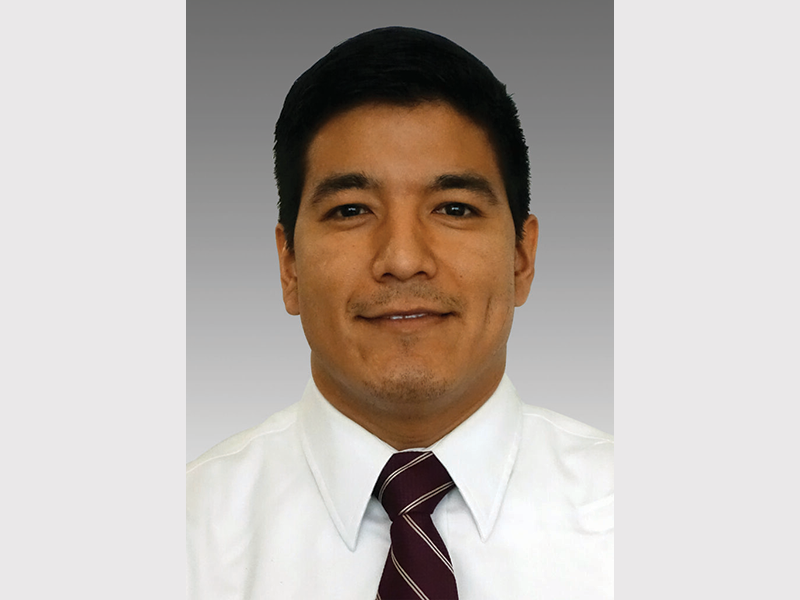
Dr. Adrian Rodriguez is a full-time Lecturer in the Walker Department of Mechanical Engineering at The University of Texas at Austin. He also works as an Engineering Content Developer for zyBooks (a Wiley brand), focusing on interactive textbook development. Research Focus Multibody Dynamics and Contact Mechanics Nonlinear Dynamics of Mechanical Systems Electro-Mechanical System Modeling Innovative Engineering Education Methods Accessibility in STEM Materials His publications reveal a strong emphasis on educational technology, with 12/15 articles addressing interactive learning tools, DEI initiatives, and accessibility solutions for EFL and visually impaired students. This aligns with his professional development work in modern teaching practices. Academic Journey B.S. in Mechanical Engineering from UT Austin M.S. and Ph.D. in Mechanical Engineering from UT Arlington Prior teaching roles at University of Texas at Arlington (2014-), Austin Community College (Adjunct Professor), and outreach programs Specialized Expertise Dr. Rodriguez bridges mechanical engineering research (notably in frictional contact dynamics) with educational innovation through his dual roles in academia and zyBooks content development.