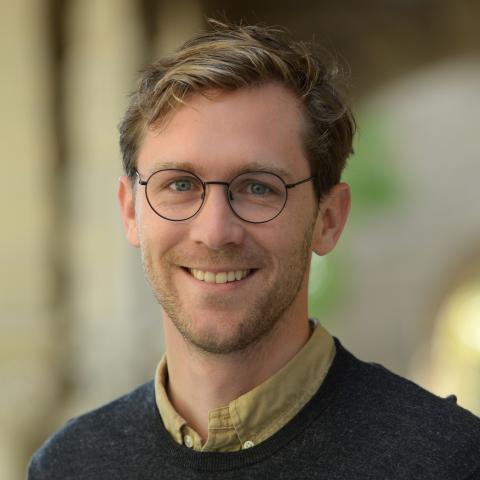
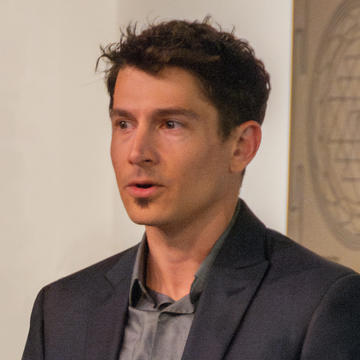
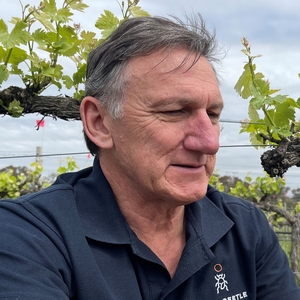
Professor Linda Slack-Smith is a leading social epidemiologist at the University of Western Australia's School of Population and Global Health, specializing in oral health disparities, child health, and Aboriginal health. She holds significant international roles including Editor Emerita of Gerodontology, Vice-President of the IADR Geriatric Oral Health Research Group, and Co-Chair of the 2021 Melbourne World Congress of Epidemiology. Her research emphasizes policy translation and addressing health inequities through mixed-methods approaches. Expertise: Social determinants of health, dental geriatrics, child oral health, Indigenous health systems Leadership: 40+ national/international board positions, $5.7M+ grant leadership Awards: IADR Giddon Award (2018/2024), Mentoring Excellence (2019) Research focuses on: Aboriginal oral health equity via volunteer programs like the Kimberley Dental Team Geriatric oral health workforce development Social practices influencing child oral hygiene Grant achievements include $5M+ in major initiatives like NHMRC Indigenous Capacity Building Grants and APHCRI Oral Health Research Excellence Centres. Active in policy advocacy through organizations like the Australian Epidemiological Association and Network for Integrated Oral Health.
Professor Ali Abbas is a leading academic and researcher in chemical engineering and sustainable systems, currently serving as Professor and Acting Head of the School of Chemical and Biomolecular Engineering at the University of Sydney. He also directs the Waste Transformation Research Hub and serves as Deputy Director for Industry, Innovation & Commercialisation at Sydney Nano. His research focuses on advancing circular economy principles, waste-to-value technologies, and sustainable energy solutions, with expertise in carbon capture, biomass gasification, nanotechnology, and materials science. He recently became Australia’s first Chief Circular Engineer at Circular Australia, driving national transition to a circular economy by 2030. Professor Abbas has pioneered innovations in solar-powered carbon capture systems, phase change material applications, and bio-based materials. He collaborates closely with industry and government to integrate circular economy principles into infrastructure and industrial processes. His work emphasizes eliminating waste, maximizing material reuse, and regenerating natural systems through interdisciplinary approaches combining chemical engineering, materials science, and policy frameworks. Key roles: Chief Circular Engineer (Circular Australia), Acting Head of School (University of Sydney), Director of Waste Transformation Research Hub Research themes: Circular economy frameworks, carbon neutral energy systems, sustainable materials, waste valorization Notable projects: Solar-driven carbon capture, biomass gasification systems, DNA origami nanomaterials, recycled construction materials His interdisciplinary approach bridges academia, industry, and policy to address global challenges in sustainability, with a focus on scalable solutions for decarbonization and resource efficiency.
Professor Michael Templeton is a leading academic in Public Health Engineering at Imperial College London , affiliated with the Faculty of Engineering and the Department of Civil and Environmental Engineering . He also holds the Royal Academy of Engineering Research Chair in Global Sanitation Technology , working closely with organizations like Oxfam , Water For People , and the International Worm-Based Sanitation Association . His work addresses critical issues in water supply , sanitation , and public health , particularly in regions affected by schistosomiasis and water scarcity . Professor Templeton earned a Bachelor's degree with honours in Engineering Science and a PhD in Civil-Environmental Engineering , both from the University of Toronto . He is a chartered civil engineer , Fellow of the Institution of Civil Engineers , and elected Fellow of the African Academy of Sciences . His professional experience includes advisory roles for the World Health Organization , Ethiopian Federal Ministry of Health , and various research councils. Environmental Engineering : Water treatment Infectious Diseases : Schistosomiasis control Global Health : Sanitation in low-income settings Climate Resilience : Cold region sanitation Waste Valorization : Biochar from faecal sludge Diagnostic Innovation : Biosensors for pathogens His most recent research explores stormwater odorants , UV disinfection , and smartphone-based water quality monitoring . He has also advanced tiger worm toilets and citizen science approaches in data-scarce regions. His work spans 15 countries including Ghana , Sierra Leone , India , and Ethiopia . Scientific awards and honors include: Fellow of the Institution of Civil Engineers Elected Fellow of the African Academy of Sciences Royal Academy of Engineering Research Chair Professor Templeton has no listed students in the provided data but has contributed extensively to sanitation innovation , waterborne disease prevention , and capacity-building in developing nations. He has led field projects and published on vermifiltration systems , biochar production , and disinfection byproducts .
Dr. Yang Yi, a researcher at the National University of Singapore (NUS), has a multidisciplinary background in civil engineering, sustainability, and biomedical device development. He earned his BEng (1st Class Honours) and PhD in 2013 and 2017 respectively from NUS, focusing on lightweight sustainable construction materials and dynamic responses under blast loading. PhD, National University of Singapore, 2017 BEng (1st Class Honours), National University of Singapore, 2013 His research spans two distinct domains: sustainable construction and flexible bioelectronic devices . At NUS, he contributes to advancing implantable and wearable technologies for neuroscience applications, while previously driving sustainability initiatives at JTC Corporation and structural design at Meinhardt. The 15 most recent publications highlight his work on implantable optogenetic devices , flexible bioelectronics , and neural interfaces . These studies integrate materials science, neuroscience, and wireless engineering for applications in neuromodulation and biomedical systems. Scientific Awards: IES Sustainability Awards (Engineering Projects, 2023) Public Sector Engineering Innovation Challenge Award (2022) Silver Prize, ACI Singapore Chapter (2022) President Graduate Fellowship (2013-2017) Class of 1977 Silver Medal (2013) Multiple book prizes and medals (2010-2012) Contact: yangyi@nus.edu.sg
Professor Sean Ervin is a Teaching Professor and Architecture Coordinator in the School of Design at South Dakota State University (SDSU). With 35 years of professional experience, he bridges architectural theory and practical application, emphasizing collaborative design and sustainable practices. His work includes high-profile projects like the SDSU American Indian Student Center and Columbus Wellness Center. Education: B.A. in Architecture, Iowa State University M.S. in Architecture, Washington University-St. Louis M.S. in Construction Management, Washington University-St. Louis Research & Interests: Focuses on holistic design integration, innovative materials, craftsmanship, and sustainable building practices. Advocates for balancing creative design with material and process realities. Awards: AIA South Dakota Honor Awards (202X) National Wood Design Competition Winner (202X) Friends of Iowa Best Development Award (202X) Advising & Grants: No formal advisees listed, but actively coordinates the architecture program. Engaged with professional organizations like AIA and LEED/WELL certifications. Labs/Teams: Leads architecture program operations and participates in institutional committees. Office located in Chicoine Hall, Room 364.
Khaleel Malik is a Professor of Innovation Management and Senior Lecturer at the Department of Innovation, Strategy and Sustainability within the Alliance Manchester Business School at The University of Manchester. He has been affiliated with the university since 2000 and served as Head of the Innovation, Strategy & Sustainability Group (2014–2019). Prior to his academic career, he worked in engineering and industrial marketing roles for six years. His research focuses on strategic management of technology, university-industry linkages, digitalization of R&D, and innovation policy. He leads the Manchester Institute of Innovation Research (MIoIR) and advises PhD/DBA researchers. Education & Professional Background: PhD from PREST (Policy and Economic Research Unit), University of Manchester (1996). Previous roles: Engineering design/development and industrial marketing (pre-1996). Research Interests: Strategic innovation management, technology transfer mechanisms, digital transformation of R&D processes, and policy frameworks for fostering innovation. His work emphasizes multi-helix collaborations, sustainability transitions in energy sectors (e.g., Orsted’s fossil-to-renewables shift), and innovation ecosystems in developing economies like Thailand, Sri Lanka, and Pakistan. Recent Research Trends: His publications highlight challenges in digitalizing R&D (e.g., fast-moving consumer goods sectors), partnership portfolios for sustainability, and university-industry collaboration frameworks. He explores how digital tools and social media reshape innovation processes and graduate employability. Awards & Grants: No explicitly mentioned awards. However, he has secured grants for projects such as 'University-Industry Interactions in Developing Countries (Sri Lanka)' (2014–2017) and 'Impacts of Higher Education on Regional Economies' (2006). Labs & Collaborations: Part of the Manchester Institute of Innovation Research (MIoIR), collaborating internationally on innovation policy, sustainability transitions, and technology adoption. His work contributes to UN Sustainable Development Goals (SDGs) related to economic growth and climate action.
Laura Garófalo is an Associate Professor at the School of Architecture, Carnegie Mellon University. Her work bridges ecological design, material innovation, and architectural systems, focusing on ceramics, lightweight structures, and hydrological building systems. She has held prior academic roles at the University at Buffalo (SUNY) and North Carolina State University. Recognized for design excellence, her awards include the ACSA Faculty Design Award and Gold Spark Award. Her research explores material processes and environmental stewardship, supported by grants from SMART and Boston Valley Terra Cotta. Education: BArch from University of Miami School of Architecture (first professional degree), MArch from Yale University. Professional practice includes co-founding Liminal Projects, exhibited at the Architectural League of New York and National Building Museum. Teaching emphasizes material production and ecologically centered design. Recent studios include 'Enchanted Skins: Ornament, Interface and Expression' (Spring 2025) and 'Architecture Biome and Climate' (Fall 2024). She has also held visiting roles at the Tasmanian College of Arts and residencies at the European Ceramic Work Center. Research collaborations span academic and industry partnerships, with publications in leading journals and edited volumes on bioclimatic ceramics and sustainable architectural practices.
Nicholas Kuipers is an Assistant Professor of Politics at Princeton University. Prior to this role, he served as an Assistant Professor in the Department of Political Science at the National University of Singapore. His research focuses on comparative politics, political economy, and public policy, with a regional specialization in Southeast Asia, particularly Indonesia. He investigates the consequences of bureaucratic and political selection institutions, emphasizing their impact on governance and societal attitudes. Kuipers has secured grants from the Institute for International Studies, National Science Foundation (NSF), Singapore Ministry of Education (AcRF), Southeast Asia Research Group (SEAREG), and Weiss Family Fund. He is also a non-resident research associate at the Center on the Politics of Development. Kuipers holds academic credentials including a Bachelor of Arts (BA) from Oberlin College and a Doctor of Philosophy (PhD) in Political Science from the University of California, Berkeley. His research interests prioritize the interplay between bureaucracy and policy outcomes in Southeast Asia. Key themes include the socio-political effects of standardized examinations, the historical foundations of modern governance structures, and the dynamics of electoral integrity and clientelism. He frequently employs mixed-method approaches, integrating historical analysis with contemporary policy evaluations, and collaborates on large-scale surveys such as the Indonesian DPRD-II Candidate Study. His work addresses pressing issues like climate policy inaction and the implications of pandemic-era governance measures in Indonesia. Recent articles highlight his exploration of bureaucratic reform's representational consequences, the gendered backlash from civil service exams, and the long-term impacts of colonial policies. His research also examines municipal governance, electoral behavior, and the nuances of印尼 (Indonesian) political systems. Though no scientific awards are explicitly mentioned, his grants and collaborations underscore sustained recognition. Kuipers has secured funding from notable institutions, including: Institute for International Studies National Science Foundation (NSF) Singapore Ministry of Education (AcRF) Southeast Asia Research Group (SEAREG) Weiss Family Fund In advising and grants, he has led research projects supported by the listed institutions but does not have explicitly stated advisees. His courses include Bureaucratic Politics (Fall 2025), CP Graduate Research Seminar (Fall 2025), and Politics of Southeast Asia (Spring 2025), reflecting his expertise in governance and regional studies. No specific labs or teams are documented, though his non-resident role at the Center on the Politics of Development indicates active involvement in cross-institutional research networks.
Matthew D. Segall serves as Associate Professor in the Philosophy, Cosmology, and Consciousness program at California Institute of Integral Studies' School of Consciousness and Transformation. His transdisciplinary work applies process-relational philosophy across religious studies, philosophy of nature, philosophy of mind, and social theory. His academic credentials include: Ph.D., California Institute of Integral Studies (2016) Segall's research centers on Process Philosophy and German Idealism , with pioneering contributions to Psychedelic Studies , Philosophy of Mind , and Philosophy of Nature . His investigations extend into Theoretical Biology, Media Theory, and Social-Political Theory, consistently exploring intersections between Whiteheadian thought and contemporary crises. Key themes include etheric imagination, ecological civilization, and the cosmological context of consciousness. Analysis of his 2022-2025 publications reveals three dominant trajectories: (1) AI ethics examining human flourishing in technological societies, (2) decolonial ecological frameworks integrating Indigenous wisdom with process cosmology, and (3) astrophilosophical inquiries bridging cosmic religion with extraterrestrial life theories. His work consistently reinterprets Whitehead and Schelling for urgent planetary challenges.
Karen Viskupic is an Associate Professor in the Department of Geosciences at Boise State University. She holds a Ph.D. from MIT (2003) and a B.A. from Washington University in St. Louis (1997). Her research focuses on geoscience education, particularly curriculum design, workforce development, and student retention strategies. She actively collaborates with the National Association of Geoscience Teachers (NAGT), leading workshops and contributing to Teach the Earth initiatives. Dr. Viskupic teaches courses including GEOL 101, GEOS 104, and graduate-level courses on research program development. She emphasizes career exploration through courses like GEOS 301 and mentors students in geoscience education research projects. Her work bridges academia and industry, addressing skill gaps and promoting inclusive career pathways for geoscience graduates. Education: Ph.D. in Geosciences, Massachusetts Institute of Technology, 2003 B.A. in Geosciences, Washington University in St. Louis, 1997 Research Interests: Curriculum innovation to enhance student learning and retention Workforce skills alignment with industry needs Employer expectations and hidden curricula in graduate training Teaching Contributions: Developed career-focused courses (e.g., GEOS 301, GEOS 519) Integrated active learning practices in geoscience education Authored TIDeS teaching modules on plate tectonics, flooding, and science practices Professional Activities: Chair of NAGT's Professional Development Planning Committee Facilitator for the Traveling Workshops Program Leadership in Earth Educators Rendezvous conferences
University Lecturer Mikaela Svanbäck-Laaksonen at Åbo Akademi University's Faculty of Education and Welfare Studies specializes in early childhood education with particular focus on pedagogical leadership and fundamental motor skill development in preschool settings. Her work bridges practical implementation and policy analysis in educational contexts. Active Projects : Principal Investigator in national initiatives like Framtidens småbarnspedagogik ledarskap Peer Review : Currently serving as reviewer for Journal of Early Childhood Education Research and Nordisk barnehageforskning Research Themes : Motor skills development in early childhood education Environmental design for educational spaces Leadership practices in preschool organizations Teacher training and professional development Curriculum implementation challenges Collaborations : Works with Finnish National Board of Education, Svenska kulturfonden, and international educational networks.
Professor Geoff Gurr is a leading academic in Applied Ecology at Charles Sturt University's School of Agricultural, Environmental and Veterinary Sciences. He holds a distinguished position as a Professor specializing in Agriculture, with extensive leadership experience including former roles as Associate Dean Research and Director of the Rural Management Research Institute at the University of Sydney. His academic journey began with a BSc (Hons) from Plymouth, followed by a PhD from London, DIC from Imperial College, GradCert from Sydney, and DSc from Charles Sturt University. Professor Gurr's research focuses on developing ecologically-based strategies to harmonize agriculture with the environment. His work spans biological control of insect pests, plant defense mechanisms, insect-vectored plant pathogens, and chemical and molecular ecology. He has pioneered approaches for promoting natural enemies of pests while delivering additional ecosystem services that build resilience in farming systems. These methods have been adopted across tens of thousands of farms in Australia and internationally, with companion cropping becoming nationally-recommended policy in Chinese rice agriculture. His research portfolio demonstrates consistent high-impact output across entomology, sustainable agriculture, and ecological engineering. Professor Gurr has published over 200 scientific papers in prestigious journals including Nature Plants, Nature Genetics, Nature Communications, PNAS, and Annual Review of Entomology. His work shows strong interdisciplinary connections between agricultural science, ecology, and molecular biology, with particular emphasis on translating research into practical farming applications that benefit both producers and the environment. Engagement Australia's excellence award for Outstanding Research Engagement (2020) Thousand Talents fellowship for work in China Fellow of the Royal Society NSW Fellow of the Royal Entomological Society Nation's top researcher for 'Insects & Arthropods' in The Australian special reports (2020, 2021) Professor Gurr has successfully supervised 43 HDR students (38 as principal supervisor) and has secured nearly $20 million in research funding from diverse sources including the Australian Research Council, Australian Centre for International Agricultural Research, rural research and development corporations, CRCs, and international donors like the McKnight Foundation. His current projects on vineyards, regenerative agriculture, beneficial insect ecology, sesame, and hazelnuts are funded by Wine Australia, the Drought Innovation Hub, the Gulbali Institute, and Agrifutures. He maintains extensive international collaborations, with over 91% of his publications co-authored with international researchers, reflecting his significant global research network.
David M. Kennedy serves as Professor of Criminal Justice at John Jay College of Criminal Justice, City University of New York, and directs the National Network for Safe Communities. His work bridges academic research and practical implementation of violence reduction strategies across multiple jurisdictions. His research interests focus on violence prevention through focused deterrence frameworks , where he pioneered the Operation Ceasefire model in Boston. Kennedy's work emphasizes procedural justice and police legitimacy as foundational elements for sustainable crime reduction. His approach integrates community engagement with law enforcement strategies to address group violence, drug markets, and intimate partner violence while minimizing unnecessary arrests. Key awards include multiple Ford Foundation Innovations in Government Awards, Herman Goldstein Awards for Problem-Oriented Policing, and the 2011 Hatfield Scholar Award. His publications reveal consistent focus on translating research into actionable strategies, particularly through his development of group violence intervention models drug market disruption frameworks police-community reconciliation processes Kennedy's advisory work spans federal initiatives including the Treasury Department's Youth Crime Gun Interdiction Initiative and the Department of Justice's National Initiative for Building Community Trust and Justice. He founded John Jay's Institute for Innovation in Prosecution and maintains active partnerships with law enforcement agencies nationwide through the National Network for Safe Communities.
Joanna Schreiber is an Associate Professor in the English Department at Georgia Southern University, where she has been teaching since 2013. Her academic work focuses on the intersection of technical communication, accessibility, and user experience, with research that contributes to the United Nations Sustainable Development Goals related to quality education and reduced inequalities. Her research interests include: Technical & Professional Communication Usability & User Experience (UX) Business & Management Communication Workplace Studies Technical and Professional Editing Project Management Accessibility Rhetoric Professional Identity Dr. Schreiber's scholarly work demonstrates an evolving trajectory from foundational technical communication studies toward increasingly specialized research on inclusive editing practices and disability studies. Her recent publications (2021-2025) show a strong emphasis on accessibility frameworks and advocacy in technical communication, examining how editing practices can better serve diverse users. She has also made significant contributions to understanding sustainability models for technical and professional communication programs and exploring the integration of project management principles within communication workflows. With 29 research outputs documented between 2010-2025 and an h-index of 7 (94 citations), Dr. Schreiber maintains an active scholarly profile that bridges theoretical frameworks with practical applications in technical communication education and practice.
Dr. Paul N. Gorman serves as Thread Director for Health Systems Sciences and Assistant Dean for Rural Medical Education at Oregon Health & Science University's School of Medicine. With over 30 years of clinical experience spanning rural primary care internal medicine, geriatrics, and urban hospitalist practice, he integrates systems thinking into medical education through the OHSU YourMD curriculum and expands rural physician workforce development via the Campus for Rural Health. His educational foundation includes: B.S. from University of Illinois at Chicago Circle (1975) M.D. from Rush Medical College (1980) Internal Medicine Internship & Residency at Rush Presbyterian-St. Luke's Medical Center Chief Residency (1983-84) and General Internal Medicine Fellowship at Portland VA Medical Center (1990-92) Dr. Gorman's research examines clinician information seeking behaviors, distributed cognition in clinical settings, and naturalistic decision making with emphasis on human factors in healthcare systems. His work bridges medical informatics and practical clinical workflows to enhance healthcare delivery through systems-based practice education. Current scholarship focuses on health systems science curriculum development, clinical decision support optimization, and rural healthcare access. His publication trajectory demonstrates evolving expertise from foundational human factors research toward healthcare system transformation, with recent work emphasizing cost-conscious care integration, clinical workflow modeling, and sociotechnical system design. Key themes include optimizing decision support while mitigating alert fatigue, understanding team process variations, and developing context-aware educational interventions. Honors include: Fellow of the American College of Physicians Fellow of the American College of Medical Informatics Dr. Gorman actively advocates for universal healthcare access through Physicians for a National Health Program and Health Care for All Oregon. His leadership in rural medical education expansion addresses critical physician workforce shortages while maintaining board certification in Internal Medicine. Current initiatives focus on implementing health systems science threads across medical education continuums and strengthening academic-community partnerships for equitable care delivery.