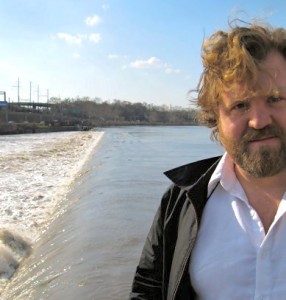
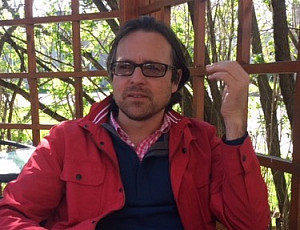
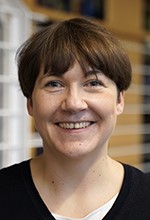
Jonathan P. Eburne is a Professor of Comparative Literature, English, and French and Francophone Studies at Pennsylvania State University, serving as Director of Undergraduate Studies in Comparative Literature. He holds a Ph.D. from the University of Pennsylvania and an A.B. from Dartmouth College. His research explores experimental artistic movements, 20th/21st-century literature, transnational intellectual relations, and literary/cultural theory. He is author of Outsider Theory (2018), which won the MLA’s James Russell Lowell Prize, and Surrealism and the Art of Crime (2008). Eburne co-edits books such as Leonora Carrington and the International Avant-Garde (2017) and serves as series editor for 'Refiguring Modernism' and 'International Surrealism.' His editorial roles include founding co-editor of ASAP/Journal and former President of ASAP and ISSS. He collaborates on interdisciplinary projects, including the nonprofit bookstore The Print Factory. Key awards include the 2020 James Russell Lowell Prize. His work bridges avant-garde studies, cultural theory, and surrealist scholarship, emphasizing speculative inquiry and marginalized intellectual traditions.
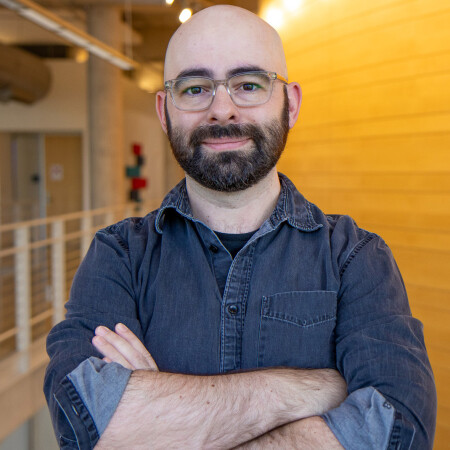
Kevin Sweet is an Assistant Professor of Design and Interactive Arts: Immersive Experience at the University of Texas at Dallas, affiliated with the Harry W. Bass Jr. School of Arts, Humanities, and Technology. His work bridges art, science, and technology to explore possibilities for social transformation through creative play. Sweet's practice spans digital media, performance, virtual reality, and community-based projects that address social justice issues and interdisciplinary collaboration. Education PhD in Emergent Technologies and Media Art Practices, University of Colorado Boulder (2022) MFA in Film/Video, Massachusetts College of Art and Design (2012) BA in Film Studies, Keene State College (2009) Research Focus Sweet's research centers on narrative refiguration through embodied creative play at intersections of art, science, and technology. His work explores how digital media can address systemic inequities, preserve cultural heritage, and create new communal storytelling forms. Recent projects focus on community media labs, ancestral land rights, and speculative methodologies challenging anthropocentric narratives. He investigates how virtual and augmented reality can be leveraged for social justice and community empowerment, as evidenced by his ongoing work with high school students in San Luis, Colorado. His practice demonstrates a commitment to using art and technology as tools for community engagement and historical preservation. Publication Trends Sweet's creative output shows a clear trajectory from traditional film and video toward increasingly complex interdisciplinary projects. His early work focused on material properties of analog media (like 'Intervals'), while recent projects integrate virtual reality, AI, and community-based practices. His publications reveal a pattern of ambitious cross-disciplinary collaborations, from partnerships with astrophysicists in 'Sound Planetarium' to community-based projects like 'La Sierra' addressing systemic inequities. There's a consistent evolution toward more socially engaged work addressing land rights, historical memory, and non-human agency. Professional Activities Faculty board member, UTD Student Media Operating Board President of the Board of Directors, Denver Digerati 501(c)(3) (2022-2024) Co-Principal Investigator, Sound Planetarium (astrophysics and art collaboration) Head of Creative Development, JoyceStick (VR adaptation of James Joyce's Ulysses) Former Director of Media, Guestbook Project (international peacebuilding organization) First Artist in Residence, Institute of Liberal Arts at Boston College Labs and Community Engagement Sweet has developed community media labs, partnering with History Colorado to build a local media lab in San Luis, Colorado. This initiative creates critical digital arts curriculum for high school students, empowering them to become authors of their community's history. His collaborative work involves interdisciplinary teams spanning artists, scientists, community organizers, and educators working on issues of land rights, historical memory, and cultural preservation.
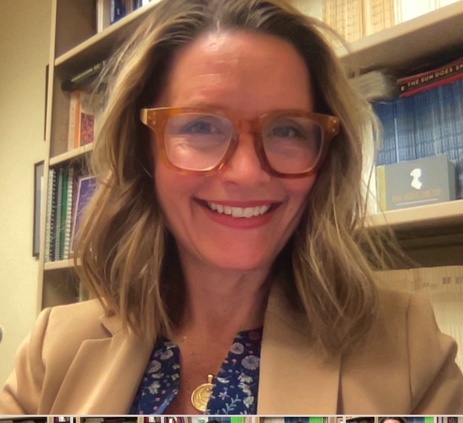
Jessica Enoch is a Professor of English and Director of the Academic Writing Program at the University of Maryland’s College of Arts & Humanities. Her research focuses on feminist rhetorics, spatial rhetorics, and the intersections of gender, memory, and activism. She has authored and co-edited multiple influential books, including Domestic Occupations and Refiguring Rhetorical Education , and her current work examines the suffrage centennial through an intersectional lens. Enoch’s scholarship bridges historical analysis and contemporary activism, emphasizing marginalized voices in rhetorical education and spatial practices. Her academic leadership includes directing the Academic Writing Program, fostering innovative pedagogical approaches. Enoch’s research also explores archival methods and students’ revision practices, further enriching the field of composition studies. She collaborates with the Indigenous Futures Lab, advancing interdisciplinary work on Indigenous rhetorics and spatial narratives.
Barbara Holdrege is Professor and Chair of the South Asian Studies Committee at the University of California, Santa Barbara, where she is affiliated with the Department of Religion. Holding a Ph.D. from Harvard University, she has established herself as a leading comparative historian of religions specializing in South Asian and Jewish traditions. Her educational foundation at Harvard University has enabled her extensive scholarly work focused on historical and textual studies of Hindu and Jewish traditions while engaging with broader theoretical issues surrounding analytical categories such as the body, space, scripture, and ritual. Professor Holdrege's research spans several interconnected fields. Her work on the politics of comparison emphasizes how comparative study of 'Hinduisms' and 'Judaisms' serves as critical interrogation to dismantle dominant Eurocentric paradigms. Her scholarship on Hindu discourses of the body challenges the application of Western theoretical models to non-Western traditions, advocating instead for theory parity that recognizes Hindu contributions to embodiment theories. Her research on bhakti traditions explores connections between devotion and embodiment, particularly in Krishna bhakti, while her work on sacred spaces in South Asia examines how religious communities represent, experience, and shape their landscapes through architecture, ritual, and narrative. Her scholarly output reveals a trajectory from textual studies toward more embodied and spatial approaches to religious traditions, with increasing attention to comparative methodology and postcolonial critique. Her publications consistently demonstrate methodological innovation while maintaining deep textual expertise in South Asian religious traditions. Professor Holdrege has made significant contributions through her editorial work, including special issues on 'Refiguring Bodies That Matter' and 'Ritual and Power.' As former Director of the Center for the Analysis of Sacred Space (CASS), she pioneered the application of geographic information systems (GIS) to the humanities by developing geospatial digital models for mapping cultural and historical data. She teaches a diverse range of courses including Introduction to Judaism, Christianity, and Islam; Hindu Myth and Image; Consciousness and the Body in Hindu Traditions; and numerous advanced seminars on South Asian religious studies, Vedic traditions, bhakti traditions, and South Asian discourses of the body.
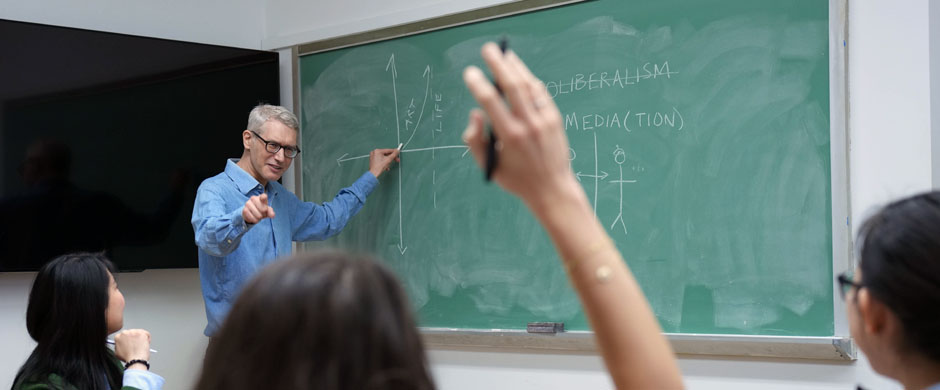
Robert Slifkin is the Edith Kitzmiller Professor of the History of Fine Arts, Deputy Director, and Director of Graduate Studies at New York University’s Institute of Fine Arts. His research focuses on modern and postwar American art, emphasizing the intersection of artistic practices with broader cultural, political, and social contexts. He holds a PhD in Art History from Yale University (2007), an MA from Williams College (2002), and a BA from the University of North Carolina, Chapel Hill (1995). Slifkin’s scholarship explores the role of art within cultural networks, redefining narratives of modernism through interdisciplinary approaches. His publications include seminal works like *Out of Time: Philip Guston and the Refiguration of Postwar American Art* (2013) and *The New Monuments and the End of Man* (2019). Current projects include a critical biography of photographer Chauncey Hare and a study on Hollywood cinema’s relationship with conceptual art. His awards include the Hauser and Wirth Institute Fellowship (2018) and the Phillips Book Prize (2012). He teaches courses on photography, land art, and the theoretical frameworks of contemporary art, advocating for rigorous archival analysis in art historical practice.
Eric Selbin is a Professor of Political Science at Southwestern University and holds the Lucy King Brown Chair. He specializes in resistance, rebellion, revolution, and socio-political change, particularly in Latin America and the Caribbean. His research explores theories of revolution, international relations, and political sociology. Selbin has authored several influential books, including *Revolution, Resistance, and Rebellion: The Power of Story* and *Modern Latin American Revolutions*. He has received numerous accolades, including the Exemplary Teaching Award and recognition as one of Southwestern’s “Fav Five” Faculty. His academic career includes extensive contributions to international studies, editing series like *New Millennium Books in International Studies*, and serving on editorial boards. Recent engagements include participation at Harvard’s David Rockefeller Center and presentations on resistance studies in Sweden and Sweden. Selbin’s work bridges theoretical scholarship with practical pedagogy, emphasizing storytelling and global perspectives. His publications span articles on revolutionary imaginaries, contentious politics, and the intersections of music and resistance. Current projects focus on refiguring revolution in the context of authoritarian revanchism and global inequities. Selbin remains active in mentoring doctoral candidates at institutions like the University of Cambridge and the University of Virginia.
Agustín Zarzosa is an Associate Professor of Cinema Studies and Chair of the Cinema and Television Studies program at Purchase College, State University of New York, where he has been a faculty member since 2007. His academic work bridges film studies and philosophy, with a strong emphasis on melodrama and affect. BA, Universidad Iberoamericana (Mexico) MA, New York University PhD, University of California, Los Angeles His research focuses on the philosophical dimensions of cinema, particularly how melodrama functions as an emotional and structural mode across film and television. He explores concepts such as suffering, affect, and spectatorship through a theoretical lens, drawing from continental philosophy and critical theory. His scholarship contributes to ongoing debates about genre, emotion, and meaning in visual media. Zarzosa is the author of the book Refiguring Melodrama in Film and Television: Captive Affects, Elastic Sufferings, Vicarious Objects (2012), and his essays have appeared in respected journals including New Review of Film and Television , Scope , Discourse , Cinema: Journal of Philosophy and the Moving Image , and Angelaki: Journal of the Theoretical Humanities . While specific article titles are not listed in the source text, his body of work demonstrates a sustained engagement with theoretical and philosophical approaches to moving-image media. His scientific recognition includes being named the Juanita and Joseph Leff Distinguished Professor for 2022–2023, a testament to his scholarly impact and teaching excellence. As Chair of the Cinema and Television Studies program, Zarzosa plays a key role in academic leadership, curriculum development, and faculty coordination. Though no formal advising or grant information is provided, his position and publication record suggest active mentorship and research supervision. He is likely involved in shaping the intellectual direction of the program and fostering interdisciplinary dialogue within the School of Film and Media Studies. Zarzosa is affiliated with the Cinema and Television Studies unit within the School of Film and Media Studies, contributing to a vibrant academic environment that emphasizes critical analysis, transnational perspectives, and theoretical rigor in the study of screen media.
Vivien Sommer is a sociologist and Head of the Junior Research Group 'The Socio-Spatial Memory of European Borders: Devices of Remembering and Forgetting' at the Leibniz Institute for Research on Society and Space (IRS). She is also an associated member of the Collaborative Research Center 1265 'Re-Figuration of Spaces' at the Technical University of Berlin. Her work bridges sociology, spatial research, and memory studies with a focus on European border regions and socio-spatial transformations. Dr. Sommer's educational background includes: Sociology, philosophy, journalism, and communication studies at the Free University of Berlin (2002-2008) Doctorate from Chemnitz University of Technology with a media sociological study on 'Memory Practices in Online Discourses' (2016) Vivien Sommer's research centers on the powerful interplay of knowledge, space, memory, and communication. She specializes in developing and adapting qualitative approaches for spatial research, with a focus on theory-generating procedures, discourse analysis, visual and multimodal methods, and innovative mapping approaches. Her work examines how disruptive historical events shape contemporary border regions in Europe, particularly focusing on memory practices and spatial transformations. She investigates the socio-spatial memory of European borders, exploring how remembering and forgetting processes influence current border configurations and European integration, with particular attention to how communities experience and narrate border changes. Analysis of Dr. Sommer's recent publications reveals a strong methodological innovation trajectory, with increasing focus on hybrid mapping techniques to analyze complex socio-spatial phenomena. Her work demonstrates a clear evolution from studying online memory practices (particularly regarding the Demjanjuk case) toward broader investigations of spatial refiguration in European border regions. Current research increasingly integrates multimodal approaches to examine urban spaces, club culture, and digital transformations of memory practices, with growing attention to the relationship between spatial conflicts and social transformations in border regions. Dr. Sommer leads an Emmy Noether Research Group funded by the German Research Foundation (DFG), a prestigious program supporting early-career researchers in establishing independent research groups as a pathway to professorship. Her current project (2023-2026) investigates 'The Socio-Spatial Memory of European Borders,' examining how past disruptive events have shaped current border configurations across four European border regions. As Head of the Emmy Noether Research Group, Dr. Sommer leads a dedicated interdisciplinary team exploring memory practices in European border regions through innovative qualitative methodologies. Her research methodology emphasizes the development of new approaches including diffractive mapping and multimodal analysis to examine how communities remember and forget historical border changes. The group maintains strong collaborative relationships with multiple institutions across Europe, particularly through the Collaborative Research Center 1265 at TU Berlin, and conducts fieldwork in four European border regions to understand the complex interplay between spatial transformations and collective memory.