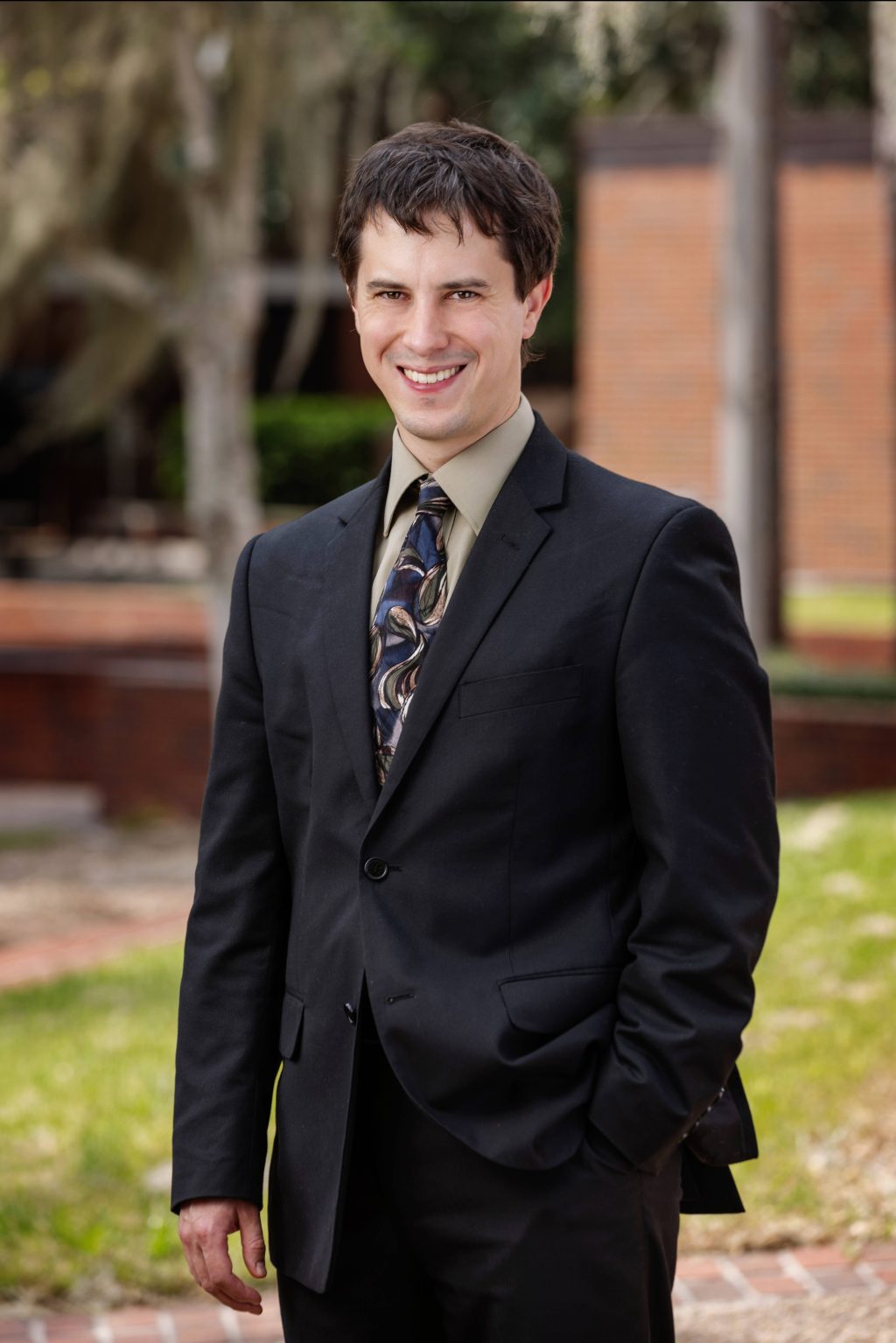
Mattias Gassman is an Assistant Professor of Humanities at the University of Florida's Hamilton School for Classical and Civic Education. His research focuses on the transformation of Roman religious ideas by Christianity, particularly in late antiquity. Previously, he held postdoctoral fellowships at the University of St. Andrews and the University of Oxford. He earned a PhD in Classics from the University of Cambridge (2017), and prior degrees from Oxford, Minnesota, and Iowa State University. His research emphasizes critical analysis of modern concepts like 'paganism' and 'secularity' through ancient lenses. His first monograph, Worshippers of the Gods (Oxford, 2020), examined fourth-century Roman religious debates. His current book project, Citizens of the Earth , analyzes Augustine's engagement with Roman religion across his works. He also co-authored a general-audience textbook on fourth- and fifth-century theological controversies. His articles explore topics such as Augustine's anti-pagan rhetoric, late antique preacher techniques, and the reception of classical texts. Recent publications appear in Journal of Early Christian Studies , Historia: Zeitschrift für Alte Geschichte , and Augustinian Studies . He teaches courses on ancient texts and religious history, including Immortality (Quest 1) and Great Books of the Ancient World .
Professor Qing Cao is Professor, Director of Studies, and Director of the Centre for Comparative Modernities at Durham University's School of Modern Languages and Cultures. His research examines Chinese media, communication, and modern intellectual history through three interconnected strands: the role of media in China's modernization, the impact of media language on social perceptions, and mutual China-West representations shaping identity politics. His research interests encompass China's modern intellectual history, Chinese politics, mass media dynamics, Western reporting on China, Chinese linguistics, and translation studies. Current projects include a book on Chinese state media's construction of alternative modernity and editorial work for the Routledge Research Encyclopaedia on Chinese Studies. Previously funded by AHRC and British Academy, his work explores the discursive transformation of Chinese society. Professor Cao's publications demonstrate sustained focus on discursive constructions of modernity and identity across historical periods, with recent work examining late Qing intellectual transformations through linguistic analysis. His supervision includes PhD students researching Western media representations of China, diplomatic language, and gender discourses in Chinese newspapers.
Maria K. E. Lahman is a Professor in the Department of Applied Statistics and Research Methods within the College of Education and Behavioral Sciences at the University of Northern Colorado. She holds a Ph.D. in Child Development from Virginia Polytechnic Institute and State University (2001) and serves as Co-Chair of the Institutional Research Board at UNC. Her academic work bridges qualitative methodology with ethical research practices and creative representation. Dr. Lahman's research focuses on culturally responsive qualitative research, research ethics, early childhood education, and the aesthetic representation of research through poetry and other creative forms. Her scholarship addresses creating ethical solutions for culturally complex methodological situations, diversity issues, young children, mothering experiences, and qualitative writing representation. As a Mennonite, she integrates social justice and peacebuilding into her pedagogy and scholarship. Her recent publications show a clear trajectory toward innovative research representation, with a particular emphasis on research poetry and culturally responsive methodologies. The 15 most recent articles reveal a consistent focus on ethical research practices, creative representation forms, and culturally responsive approaches to qualitative inquiry, with increasing attention to poetry as a legitimate research method and representation form. Outstanding Advisor Award, College of Education and Behavioral Sciences, UNC (2008-2009) Outstanding Scholar Award, College of Education and Behavioral Sciences, UNC (2007-2008) Service Provider Award, University of Northern CO (2006-2007) Outstanding Teacher Award, College of Education, UNC (2002-2003) Dr. Lahman has advised numerous graduate students in qualitative methodology and has been recognized for her exceptional mentorship. Her research program has generated multiple textbooks including Ethics in Social Science Research: Becoming Culturally Responsive (2017) and Writing and Representing Qualitative Research (2021), which have become influential resources in the field. She maintains an active research agenda focused on advancing ethical research with diverse groups and developing innovative methods for representing qualitative findings. Her work centers around creating spaces for culturally responsive research practices, with particular attention to vulnerable populations and ethical dilemmas in fieldwork. Dr. Lahman's scholarship challenges traditional research boundaries through her exploration of research poetry and other aesthetic forms of representation that maintain academic rigor while embracing creative expression.
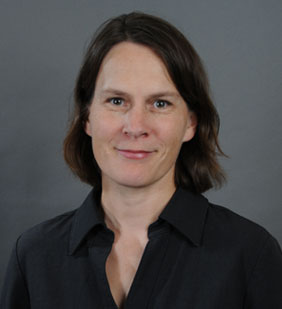
Regina Fabry is a Lecturer in the Department of Philosophy at Macquarie University, Australia, affiliated with the School of Humanities Ethics and Agency Research Centre. Previously, she held positions at Ruhr University Bochum (Lecturer, 2018–2021) and Justus Liebig University Giessen (Postdoctoral Researcher, 2016–2018). Her research focuses on situated cognition, affectivity, and the socio-cultural influences on self-narration and grief, particularly in the context of emerging technologies like deathbots. She holds a PhD in Philosophy (summa cum laude) from Johannes Gutenberg University Mainz (2015), awarded the Barbara Wengeler Prize for her work on enculturated predictive processing. Fabry’s research is funded by grants including an ARC DECRA (2021–2024) and explores interdisciplinary themes in AI ethics, cognitive science, and literary studies. **Education**: PhD in Philosophy, Johannes Gutenberg University Mainz (2012–2015) MA in Comparative Literary Studies, Philosophy, and Theatre Studies, Johannes Gutenberg University Mainz (2007–2012) **Research Interests**: Combines empirical cognitive science with feminist theory to study narrative practices, grief, and AI ethics. Current projects include analyzing deathbots’ impact on grief dynamics and the socio-cultural situatedness of self-narration as tools of oppression or resistance. Her work bridges philosophy, psychology, and technology studies. **Articles Trends**: Recent publications address grief in digital contexts (deathbots), narrative ethics (e.g., gaslighting), and cognitive frameworks like predictive processing. Her work frequently intersects with technology’s role in shaping human experiences. **Awards**: Barbara Wengeler Prize 2016 for doctoral dissertation on enculturated cognition. **Teaching & Grants**: Teaches courses on AI ethics, including PHIL8400 (Rights, Responsibilities, and AI). Supervises postgraduate research in philosophy of mind and AI. Leads projects like “Living to tell, telling to live” (2021–present) and co-leads “A lone or lonely life?” (2025–2028) on autism and loneliness. **Labs/Teams**: Engaged in interdisciplinary collaborations on grief, narrative theory, and AI ethics, leveraging her background in philosophy, psychology, and literary studies.
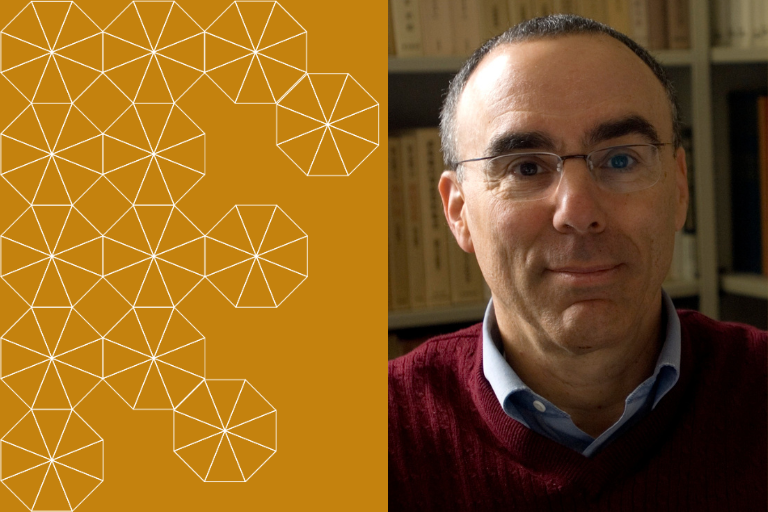
Robert Sharf is the D.H. Chen Distinguished Professor of Buddhist Studies in the Department of East Asian Languages and Cultures at the University of California, Berkeley . He also serves as Chair of the Numata Center for Buddhist Studies and Head Graduate Advisor for the Group in Buddhist Studies . With a PhD in Buddhist Studies from the University of Michigan (1995), he previously taught at McMaster University (1989-1995) and the University of Michigan (1995-2003). Research Interests: Medieval Chinese Buddhism (especially Chan) Japanese Buddhism Buddhist Art and Archaeology Ritual Studies Buddhist Modernism Philosophical Paradoxes Methodology in Religious Studies Critical Buddhist Discourse Publications & Collaborations: Author of Coming to Terms with Chinese Buddhism: A Reading of the Treasure Store Treatise (2002) Co-editor of Living Images: Japanese Buddhist Icons in Context (2001) Co-author of What Can’t Be Said: Contradiction and Paradox in East Asian Thought (2021) Co-author of How to Lose Yourself: An Ancient Guide to Letting Go (2025) Editor of Chinese translations of his works: Xiafu Chanxue zixuan ji and Xiafu Mijiao Yanjiu zixuan ji (2022) Academic Leadership: Director of the Group in Buddhist Studies Director of Religious Studies Chair of the Center for Buddhist Studies
Tor Hernes is a Professor at the Department of Organization, Copenhagen Business School, and directs the Centre for Organization and Time (COT). His research focuses on organizational continuity, temporal dynamics in organizing processes, and narrative theory. He holds adjunct professorships at the University of South-Eastern Norway and has been a visiting professor at Université Paris-Dauphine. His research explores how organizations navigate time through event-based perspectives, distant future goal setting, and temporal trajectories in resilience. Key themes include the interplay between organizational processes and natural environments, particularly in sustainability contexts. Hernes has authored influential works such as Organization and Time (2022) and A Process Theory of Organization (2014). His recent articles analyze temporary organizing structures, environmental framing, and resilience frameworks. He actively supervises master’s theses and PhD students in organizational studies. Hernes also contributes through academic leadership roles, including editing research agendas on organizational continuity. His work bridges theoretical insights with practical challenges like climate change adaptation and strategic innovation.
Jeff Sahadeo is a Professor of Russian and Eurasian History at Carleton University, affiliated with the Department of History within the Faculty of Public and Global Affairs. He specializes in contemporary Central Asia and the Caucasus, with a strong focus on empire, migration, and nationalism. BA, Simon Fraser University MA, Carleton University PhD, University of Illinois at Urbana-Champaign His research explores the intersections of empire and identity in Russia and Central Asia, with particular attention to diaspora, migration, and comparative colonialisms. He investigates how historical memory shapes ethnic relations, especially in post-Soviet contexts like Kyrgyzstan and the Ferghana Valley. His work often employs oral history and interdisciplinary methods to understand the lived experiences of marginalized groups in Soviet and imperial Russia. Jeff Sahadeo's recent scholarly output reflects a deep engagement with themes of race, urban life, and empire. His publications analyze the racialization of southern migrants in Soviet cities, the imperial administration of Tashkent, and the geopolitical dynamics of contemporary Central Asia. The articles span disciplines including history, sociology, political science, and memory studies, with recurring subfields such as postcolonial theory, urban marginality, and historical trauma. His current research projects—funded by SSHRC—include studies on rivers and societies in Soviet Georgia and the multinational character of Soviet cities like Moscow and Leningrad. Committee Member, Reginald Zelnik Prize for Best Book in History, ASEEES (2018–2019) He has advised various research initiatives and leads the Migration Research Laboratory at South Ural State University, Russia. His public engagement includes media appearances on CBC, CTV, ABC News, and CFRA, particularly during the Ukraine crisis and on issues related to Russian foreign policy. He has also contributed to policy discussions through the Global Centre for Pluralism and the Kyrgyz Presidential Commission on Historical Science. Jeff Sahadeo teaches core courses in European, Russian, and Eurasian Studies, including graduate seminars on research methodology, imperialism, and Soviet culture. He co-teaches a course on Nazism and Stalinism, reflecting his broader interest in totalitarian regimes and comparative history.
Paul D. Halliday is the Julian Bishko Professor of History and Professor of Law at the University of Virginia, jointly appointed in the Department of History within the College of Arts and Sciences and the Law School . He is a leading scholar in legal history, with a focus on British, imperial, and global legal developments from 1500 to 1850. BA, Wesleyan University, 1983 MA, University of Chicago, 1988 PhD, University of Chicago, 1993 His research centers on the history of legal institutions, particularly habeas corpus, judicial authority, and the role of law in empire. Halliday challenges traditional narratives by emphasizing how judicial power evolved from royal prerogative rather than as a check on monarchy. His work bridges legal doctrine, archival practice, and material culture, with current projects exploring the sensory and spatial dimensions of law, including courthouse architecture and archival procedures. His publications reveal a consistent engagement with themes of liberty, authority, and legal continuity across time and space. Notably, his book Habeas Corpus: From England to Empire (2010) has had a profound impact, influencing the U.S. Supreme Court in Boumediene v. Bush (2008), and reshaping scholarly understanding of habeas corpus as a tool of imperial governance. His recent work extends into South Asian and Caribbean legal histories, emphasizing global legal interconnectedness. Inner Temple Book Prize (2011) for Habeas Corpus: From England to Empire Sutherland Prize, American Society for Legal History (2009) for co-authored Virginia Law Review article At UVA, Halliday teaches courses such as History of English Law , Law’s Empire , and Global Legal History . He advises graduate students in legal history and is a core member of GLH@UVA (Global Legal History at the University of Virginia), an interdisciplinary community that includes faculty and students from history and law. This group fosters collaborative research, professional development, and regular discussions on works in progress, contributing to a vibrant intellectual environment.
Shona McIntosh is a Senior Lecturer in the Department of Education at the University of Bath, affiliated with the Centre for Qualitative Research. She holds a PhD in Education and is actively supervising doctoral students. Her work bridges theory and practice in education, with a strong commitment to social and epistemic justice. Research Interests: Climate and Sustainability Education Decolonising Education and Research Methods Global Citizenship and International Education Teacher and Professional Learning Participatory and Feminist Qualitative Research Teaching-Research Nexus in Higher Education Her research is grounded in decolonial, feminist, and sociocultural theories, emphasizing co-construction of knowledge with participants. She employs experimental and mixed methods to explore equity in educational contexts. Recent Research Trends: Her recent publications (2022–2025) reflect a sustained focus on justice-oriented education, particularly in climate change, teacher development during crises (e.g., school closures), and methodological innovation in collaborative and reflexive research. There is a clear trajectory toward developing frameworks for epistemically-just and equitable research practices, often in international and interdisciplinary contexts. Scientific Awards: Jeff Thompson Research Award from the International Baccalaureate Organization (2017) Grants and Supervision: She has secured funding from the British Academy and the British Council for projects on the teaching-research nexus and youth climate concerns. She is Principal Investigator (PI) on multiple projects and a Co-Investigator on international collaborations. She currently accepts doctoral students and has supervised several research outputs and theses. Labs and Research Groups: She is a core member of the Centre for Qualitative Research at the University of Bath, where she contributes to advancing innovative qualitative methodologies and fostering equitable research practices.
Nancy Odendaal is a Professor in Urban Studies at the Department of Social Sciences, Faculty of Humanities and Social Sciences, University of Basel. She is based in Basel, Switzerland, and holds a prominent role in the Critical Urbanisms program. Her academic expertise lies at the intersection of urban planning, digital technologies, and urban life in the Global South, particularly African cities. Institution: University of Basel Faculty: Faculty of Humanities and Social Sciences Department: Department of Social Sciences Field: Urban Studies Email: nancy.odendaal@unibas.ch Her research focuses on the interplay between urban livelihoods and the appropriation of new technologies and infrastructure in the urban South. She is particularly interested in how digital platforms are reshaping urban spatialities, governance, and everyday life in African cities. Her 2023 book, Disrupted Urbanism: Situated initiatives in African cities , published by Bristol University Press, is a key contribution to this field. She also investigates themes such as the governmentality of local government digitization, the impact of global tech companies like Google on urban spaces, and the role of hybrid storytelling as a method for knowledge co-production. Her recent publications reveal a strong trend in critical urbanism, with a focus on rethinking smart city narratives from Southern perspectives. The articles emphasize digital inclusion, resistance, and the social implications of technology in unequal urban contexts. Her work bridges urban planning, critical geography, and science and technology studies, advocating for more situated and participatory approaches to urban research and practice. Nancy Odendaal is actively involved in the academic community through editorial and review roles: Editorial Board Member, Urban Geography Editorial Board Member, Journal of the American Planning Association Editorial Board Member, Progress in Planning Permanent Member, Review Panel, Swiss National Science Foundation SPIRIT Programme Member, Interdisciplinary Research Review Panel, Swiss National Science Foundation Member, Urban and Rural Areas Review Panel, Swedish Research Council for Sustainable Development She is committed to experiential and situated pedagogy, integrating her research into her teaching on the Critical Urbanisms degree. She has published on case study methods in African urban planning education and continues to develop methodological frameworks with her students. While specific advisees are not listed, her leadership in the program suggests active mentorship of graduate students. Nancy Odendaal’s work is central to advancing critical perspectives on urbanization, technology, and planning in the Global South, contributing significantly to both academic discourse and practical urban governance debates.
Sara Schaefer, MD, MHS, FAAN is an Associate Professor of Neurology at Yale School of Medicine, where she serves as Program Director for the Movement Disorders Fellowship and Adult Neurology Residency Program Director. She specializes in treating patients with movement disorders including Parkinson's disease, tremors, chorea, dystonia, and Huntington's disease, and evaluates patients for deep brain stimulation surgery. Dr. Schaefer is also deeply involved in medical education innovation, having designed interactive video-based curricula used worldwide. Dr. Schaefer's educational background includes: ScB from Brown University (2007) MD from The Ohio State University College of Medicine (2012) Internship in Medicine at Yale-New Haven Hospital (2013) Residency in Neurology at Yale-New Haven Hospital (2016) Chief Residency in Neurology at Yale-New Haven Hospital (2016) MHS with focus on medical education from Yale University (2019) Dr. Schaefer's primary research interests center on movement disorders and medical education. She has a particular focus on developing innovative educational tools for neurology training, including video-based curricula and podcasts. Her work aims to improve how movement disorders are taught to medical students, residents, and practicing physicians, with the goal of reducing diagnostic delays and improving patient care. She has designed an interactive, video-based online training curriculum in movement disorders that is used by learners worldwide and co-founded the MDS podcast. She also founded The Grey Matter Project, a virtual high school neuroscience club engaging students globally. Dr. Schaefer's scholarly work demonstrates a clear trajectory from clinical research in movement disorders toward an increasing focus on medical education innovation. While her early publications addressed specific movement disorder conditions and treatments, her more recent work centers on educational methodology, curriculum development, and assessment in neurology training. Her research bridges clinical neurology with educational science, creating practical tools that have been implemented across multiple institutions. Dr. Schaefer has received numerous honors and awards for her work: Fellowship Director of the Year from American Academy of Neurology (2025) Burton A. Sandok Visiting Professor of Neurologic Education from Mayo Clinic Department of Neurology (2024) Attending of the Year from Yale Department of Neurology (2023) Education Innovation Poster Award at Yale Medical Education Day (2018) Creative Expression of Human Values in Neurology award from American Academy of Neurology (2016) Alpha Omega Alpha Honor Medical Society (2012) Gold Humanism Honor Society (2012) As an educator and program director, Dr. Schaefer has mentored numerous neurology residents and fellows. She serves as co-founder and deputy editor of the MDS podcast, launched in January 2019, and founder and producer of the Neurology Nuts and Bolts: Constructing your Career podcast, launched in February 2022. She is the Movement Disorders Section Head of the Annual Academy of Neurology Resident In-Service Training Examination (RITE) Committee and CME editor for the Movement Disorders Journal. Her educational initiatives have received institutional support through Yale's educational infrastructure, though specific grant funding isn't detailed in the provided text. Dr. Schaefer founded The Grey Matter Project, a virtual high school neuroscience club that engages students worldwide with lectures, career panels, and projects related to neurology. She is also actively involved with the Movement Disorders Society Education Committee and has contributed to developing educational resources through this professional organization.
Sarah Keller is a Professor in the Art Department at UMass Boston, specializing in Cinema and Media Studies. Her research bridges experimental film, feminist theory, and queer aesthetics, with a focus on historical and contemporary intersections of cinema, affect, and spectatorship. Books: Maya Deren: Incomplete Control , Anxious Cinephilia: Pleasure and Peril at the Movies , and Barbara Hammer: Pushing Out of the Frame . Edited Works: Co-edited Jean Epstein: Critical Essays and New Translations . Her scholarship explores cinephilia as a cultural and emotional phenomenon, analyzing films through lenses of anxiety, desire, and technological change. She has contributed to journals like Camera Obscura , Cinema Journal , and Studies in French Cinema , often connecting experimental filmmaking to broader socio-political contexts. Keller founded the Boston Cinema/Media Seminar, fostering academic discourse on film and media. Her work frequently engages with directors such as Maya Deren, Barbara Hammer, and Jean Epstein, emphasizing the enduring relevance of avant-garde practices in contemporary media landscapes.
Mátyás Mervay is a Research Fellow at New York University's Center for European and Mediterranean Studies. He holds a PhD in East Asian and Modern European History (2024) from NYU, an MA in Modern and Contemporary Chinese History (2017) from Nankai University, and a BA in History and East Asian Cultures (2012) from Eötvös Loránd University. His research bridges Habsburg Central Europe and China, focusing on Transnational and Global History Refugee and Migrant Diasporas History of the Habsburg Empire in East Asia European Imperialism and Colonialism in China Republican-Era Chinese History Recent publications analyze Austro-Hungarian refugee soldiers in China (2018) Shanghai’s Hungarian Jewish rescuer Paul Komor (2023) Interwar Shanghai migrant communities (2024) with upcoming work on the Oxford Handbook of Global Habsburg History (2025). Scientific awards include R. John Rath Prize (2025) University of Vienna GLORE Fellowship (2023) Jewish Culture Fellowship Grant (2023)
Alison Liebling is Professor of Criminology and Criminal Justice at the University of Cambridge and Director of the Institute of Criminology’s Prisons Research Centre. Her work focuses on prison quality, moral performance, and staff-prisoner dynamics. Current Leverhulme Major Research Fellowship (2020-2023) on moral rules in prison Fellow of the British Academy Research Interests: Prison moral climate and legitimacy Comparative studies of public/private sector prisons Trauma-informed practices and rehabilitation programs Prison officer roles and professional discretion Key Publications: Prisons and their Moral Performance (2004, OUP) The Effects of Imprisonment (2005, Willan Publishing) Legitimacy and Criminal Justice (2013, OUP) Crime, Justice and Social Order (2022, OUP) Scientific Contributions: Developed international moral climate survey tool Co-editor of the Oxford Handbook of Criminology Evaluated therapeutic interventions like music and reading programs
Gerald Postema is the Cary C. Boshamer Distinguished Professor of Philosophy and Professor of Law at the University of North Carolina at Chapel Hill. He has held these positions since 2002 and 1982 respectively, with a distinguished academic career spanning several decades. BA from Calvin College (1970-74) MA and PhD from Cornell University (1973-74) Recognised Student and Tutor in Jurisprudence at Queen's College, Oxford (1975-80) Assistant Professor in Law at Johns Hopkins University (1980) Professor Postema's research focuses on legal philosophy, jurisprudence, and the philosophy of law, with particular expertise in utilitarianism and Bentham studies. His work explores the intersection of law, morality, and political philosophy, examining how legal systems evolve through custom and normative practices. He has made significant contributions to understanding the temporal dimensions of law, the role of sympathy in moral psychology, and the foundations of legal positivism. His scholarly output shows consistent engagement with both historical and contemporary legal theory, with recent work addressing custom as normative practice, legal positivism's early foundations, and the relationship between conflict and consensus in the rule of law. His publications span prestigious journals in philosophy, law, and interdisciplinary studies. George J. Johnson Prize for Distinguished Achievement in the Art and Humanities (2012) John Simon Guggenheim Foundation Fellowship (2005-06) Distinguished Teaching Award for Post-Baccalaureate Instruction (2005) Arthur L. Goodhart Distinguished Visiting Professor of Legal Science at Cambridge University (2013-14) Fellow, Rockefeller Foundation, Bellagio Center (2001) Professor Postema has held numerous visiting positions at prestigious institutions worldwide, including Cambridge University, Yale University, the University of Athens, and the European University Institute. His international recognition is evident through invitations to deliver distinguished lectures such as the Boutwood Lecture at Cambridge University (2014) and the Alf Ross Lectures in Copenhagen and Aarhus (1990). His scholarly influence extends through his editorial work on major publications including the Treatise of Legal Philosophy and General Jurisprudence.