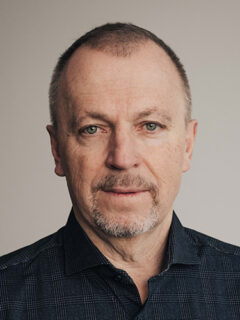
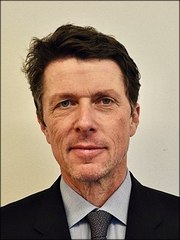
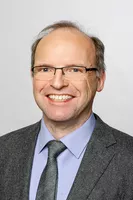
Prof. Dr. Andreas Hirsch is a Professor in the Department of Chemistry and Pharmacy at Friedrich-Alexander University Erlangen-Nürnberg (FAU) . His research focuses on organic chemistry , graphene functionalization , carbon nanomaterials , and molecular solar thermal systems , with significant contributions to 2D material engineering and supramolecular chemistry . Chair of Organic Chemistry II (FAU Erlangen-Nürnberg) ResearchGate: Profile Google Scholar: Profile His work spans graphene patterning via laser writing , black phosphorus stabilization using perylenediimides , and covalent functionalization of 2D materials like MoS 2 and carbon nanotubes . Recent studies include non-covalent passivation of BP nanosheets and electroswitchable catalysis for solar thermal energy storage . His scientific awards include the Second Place Poster Award (2023) and Robert C. Haddon Research Award (2021) . Collaborative projects highlight smart nanoparticle systems for radiation therapy and environmental remediation applications.
Markus Koller is a faculty member at Ruhr-Universität Bochum, affiliated with the Center for Religious Studies (CERES). His research focuses on Ottoman history, South-East European studies, and religious historiography. He holds an academic rank of Researcher and has been active in multiple projects, including the CERES Research Department. His work spans Ottoman military expansion, religious policies, and cultural exchanges. Notable contributions include studies on Atatürk's political biography, Ottoman-European diplomatic relations, and the historiography of the Ottoman Empire. Koller's publications cover books, edited volumes, and articles in peer-reviewed journals, reflecting his expertise in interdisciplinary historical research. He currently serves as a member of the CERES Research Department and has contributed to collaborative projects such as the 'Ottoman Europe' research initiative. His email is Markus.Koller@ruhr-uni-bochum.de .
Prof. Dr. Nabeel Aslam is a Full (W3) Professor in Physics at the Felix Bloch Institute for Solid State Physics , Leipzig University, Germany, since September 2023. He previously held a Tenure Track W1 Juniorprofessor position at TU Braunschweig (2022–23) and was a Feodor Lynen Fellow at Harvard University (2018–22). His research focuses on quantum sensing, spin qubits, and nanoscale nuclear magnetic resonance (NMR). Education: Dr. rer. nat. in Physics (2018), University of Stuttgart Diplom in Physics (2012), Johannes Gutenberg University Mainz Bachelor of Science in Economics (2012), Johannes Gutenberg University Mainz Research Interests span quantum information, solid-state physics, and nanotechnology. His work leverages nitrogen-vacancy (NV) centers in diamond for high-resolution quantum sensing, probing spin dynamics in 2D materials, and developing programmable quantum processors with mechanically mediated interactions. Recent efforts include biomedical applications of quantum sensors and enhancing NMR capabilities at the nanoscale. Publication Trends highlight advancements in quantum sensing technologies, spin-mechanical systems, and nanoscale spectroscopy. Key themes include NV center optimization, 2D material analysis, and quantum memory engineering for biomedical and quantum computing applications. Scientific Awards Quantum Futur group funding (2022) Bruker Thesis Prize (2020) Finalist in Quantum Futur Award (2019) Feodor Lynen Fellowship (2019) Exchange Program Fellowship by SFB/TRR 21 (2017) Advising & Grants include mentorship under Prof. Mikhail Lukin and Prof. Hongkun Park during his postdoc at Harvard. His current lab at Leipzig University investigates quantum information processing and biomedical sensing, supported by the Quantum Futur grant. Labs & Teams involve the Quantum Information Group at Leipzig University, focusing on quantum sensors, spin qubits, and related technologies.
Prof. Dr. Gert-Ludwig Ingold is a Professor of Theoretical Physics at the Institute of Physics, Faculty of Mathematics, Natural Sciences, and Materials Engineering, University of Augsburg. His research spans multiple areas of theoretical physics with emphasis on quantum phenomena in nanoscale systems. His work on the Casimir effect explores interactions between various geometries including spheres, plates, and dielectric materials, with applications in nanotechnology and biophysics. His research on dissipative quantum systems investigates thermodynamic anomalies and quantum Brownian motion. In mesoscopic physics, he studies charge transport through nanoscale structures and quantum interference effects. His work on quantum systems in phase space connects classical and quantum dynamics, while his semiclassical research examines quantum revival patterns and phase-space trajectories. Prof. Ingold's publications reveal a strong focus on the Casimir effect, with numerous papers examining interactions between different geometries and materials. His work demonstrates expertise in both theoretical modeling and numerical methods, as evidenced by his development of the CaPS software for Casimir effect calculations. He frequently collaborates with international researchers, particularly with Paulo A. Maia Neto, Tanja Schoger, and Benjamin Spreng. Prof. Ingold has made significant contributions to physics education through textbooks and popular science books, including Quantentheorie: Grundlagen der modernen Physik and Die 101 wichtigsten Fragen: Moderne Physik . He has co-authored the Python-based educational resource Numerische Physik mit Python and maintains extensive online teaching materials including lecture notes and video tutorials.
Prof. Dr.-Ing. Andreas Thiede is a faculty member at the University of Paderborn , affiliated with the Faculty of Electrical Engineering, Computer Science and Mathematics and the Institute of Electrical Engineering and Information Technology . He serves as director of the High-frequency electronics (HFE) research group. Research Interests: High-frequency electronics and optoelectronics Quantum dots and exciton qubits Nonlinear photonics and ultrafast control Semiconductor device engineering Key Projects: Participates in TRR 142: Tailor-Made Nonlinear Photonics , focusing on functional structures for quantum and ultrafast systems. Teaching Roles: Analog CMOS circuits (does not apply) Analog CMOS ICs (cancelled) Contact Details: Email: andreas.thiede@uni-paderborn.de Phone: +49 5251 60-3040 Office: Pohlweg 47-49, 33098 Paderborn Space: P1.402.1
Prof. Dr. Robert Blick is a faculty member at the University of Hamburg , leading the Institute for Nanostructure and Solid State Physics under the Faculty of Mathematics, Informatics, and Natural Sciences. He serves as Director of the Center for Hybrid Nanostructures (CHyN) and Head of the Board of Examiners of Nano-Science. Research Focus: Atomic Layer Deposition (ALD), quantum dots, superconducting thin films, biomaterials, and nanomechanical devices. Key Collaborations: Deutsches Elektronen-Synchrotron (DESY), molecular-beam epitaxy groups, Forschungslabor Mikroelektronik Deutschland. His academic contributions span nanoscience, materials growth, and biomedical applications. Current funding includes support from the Deutsche Forschungsgemeinschaft (DFG), Exzellenzcluster CUI, and the Joachim Herz Foundation. The CHyN research group operates a state-of-the-art clean room facility for electron-beam and focused-ion-beam lithography, enabling 8nm feature definition on 6-inch wafers. Applications of his work include memristor technology, quantum devices, and advanced biosensors. His PhD students include Ahmed Alshaikh, Kristian Deneke, Daniel Hensel, Marianna Brede, Daniel Schmidt, Malte Siegmund, and Jan Stelzner. Senior researchers Dr. Stefanie Haugg and Dr. Robert Zierold contribute to materials growth and atomic layer deposition.
Dr. Svyatoslav Kondrat is a Research Fellow at the Institute for Computational Physics, University of Stuttgart, working in the group of Prof. Holm. His research focuses on computational studies of ionic systems, nanopores, and energy storage materials, utilizing large-scale molecular dynamics simulations to investigate electrolyte behavior under confinement and in bulk solutions. His primary research interests include: Electrolyte physics and ionic transport mechanisms Nanopore design for supercapacitors and energy applications Solvent effects in confined electrochemical systems High-performance computing for molecular simulations Kondrat's publications (2017-2024) demonstrate a consistent focus on optimizing ion transport and screening in nanoporous materials, with applications in energy storage. His work bridges theoretical electrochemistry, computational physics, and nanomaterials engineering, frequently exploring charge dynamics using advanced simulation techniques. He collaborates extensively within Prof. Holm's research group on projects involving confined electrolytes and decay length phenomena in concentrated ionic systems.
Prof. Roland A. Fischer is a Full Professor at the Chair of Inorganic and Metal-Organic Chemistry at Technical University of Munich (TUM). Previously, he held a Full Professorship at Ruhr University Bochum (1997–2015). His research focuses on multifunctional metal-organic frameworks (MOFs), clusters, and composites for energy conversion, catalysis, gas storage, and environmental applications. He leads the Catalysis Research Center and has pioneered advancements in MOF-based catalytic systems and stimuli-responsive materials. Education: 1981–1986: Diplom in Chemistry (TUM) 1989: PhD, Dr. rer. nat. (TUM) 1995: Habilitation (TUM) Research Interests: His work integrates molecular and extended catalytic systems, including: - Design of MOFs for photocatalytic fuel production - Nanoparticle encapsulation in robust frameworks - Redox-switchable materials and photochromic systems - Cluster chemistry and superatom complexes - Applications in energy storage, environmental remediation, and biomedical technologies. Major Achievements: Over 680+ publications, h-index 101 (Scopus 2025) Coordinator of EU projects (SURMOF, ENHANCE, DEFNET) Recipient of Heinz-Maier-Leibnitz Award (1993) and Alfried Krupp Award (1996) Editorial roles: Angewandte Chemie , Chemical Vapour Deposition Grants & Teams: He has secured major grants including DFG Priority Programs (CVD-Materials, COORNETs) and led interdisciplinary teams in EU initiatives. His lab collaborates globally, including visiting professorships at Kyoto University and IIT Bombay. Labs & Facilities: His research uses advanced facilities like the Catalysis Research Center and contributes to platforms such as the Munich Catalysis Alliance. Key tools include atomic layer deposition, in situ characterization, and MOF-based device fabrication.
Prof. Steffen Hardt serves as Professor and Head of the Institute for Nano- and Microfluidics at the Technical University of Darmstadt, where he leads research in fluid dynamics at micro and nanoscales. His work bridges engineering, physics, and applied sciences within the university's technical framework. His research focuses on: Microfluidics: Precision manipulation of fluids in micrometer-scale channels Nanofluidics: Behavior and control of liquids at the nanometer level Fluid Mechanics: Fundamental principles of flow dynamics Nanotechnology: Development of nanoscale fluidic systems Engineering: Design of lab-on-a-chip devices and biomedical applications These areas drive innovations in point-of-care diagnostics, chemical synthesis, and energy-efficient fluid handling. No scientific awards are documented in the available information. As institute head, Prof. Hardt oversees a multidisciplinary team advancing experimental and theoretical frameworks in micro/nanofluidics, with infrastructure supporting high-precision fabrication and testing of fluidic systems.
Sarah Köster is a Full Professor at the University of Göttingen’s Institute for Cellular and Molecular Physiology of the Brain. She earned her PhD from the University of Göttingen under Prof. Stephan Herminghaus and completed postdoctoral research at Harvard University with Prof. David Weitz. Her career includes appointments as Junior Professor (2008-2011), Associate Professor (2011-2017), and Full Professor (since 2017). Research focuses on cellular biophysics, particularly cytoskeletal mechanics and intermediate filament dynamics. Key investigations include keratin plasticity, vimentin network mechanics, cytoskeletal crosstalk, and DNA organization during cell division. Her publications demonstrate expertise in nanoscale biomechanics, utilizing techniques like nanoindentation, X-ray diffraction, and advanced microscopy to probe cellular structures. Recent work emphasizes multiscale mechanical properties of cytoskeletal networks and their functional implications.
University Medical Center Hamburg-EppendorfGermany
Thomas Beikler serves as a Professor in the Department of Periodontology, Preventive Dentistry and Dental Conservation at the University Medical Center Hamburg-Eppendorf (UKE), which operates under the Faculty of Medicine. His academic credentials include dual doctoral degrees as indicated by his title 'Univ.Prof.Dr.Dr.' Dr. Beikler's research spans multiple dimensions of periodontal science and oral-systemic health connections. His work investigates the relationship between periodontal disease and various systemic conditions including hypophosphatasia, liver cirrhosis, depression, and neurological changes. He has made significant contributions to understanding oral health literacy, particularly among German adult populations with migration backgrounds through the MuMi Study. His research methodology frequently employs large population-based studies like the Hamburg City Health Study to establish epidemiological connections between oral and general health. His publication record demonstrates a strong interdisciplinary approach, bridging dentistry with neurology, hepatology, psychiatry, and public health. Notable research directions include microbiome-based therapies for periodontitis, the role of biomarkers in oral health assessment, and the development of innovative dental education models in Germany. Dr. Beikler has led significant research projects including the 'Transplantation of a healthy oral donor microbiome for periodontal therapy' (2016-2019), which explored cutting-edge approaches to treating periodontal disease. He has also contributed to dental education reform through the iMED DENT program, Germany's first model dental study program.
Professor Emiliano Cortés is a faculty member at the Ludwig Maximilian University of Munich (LMU), where he leads research in Plasmonic and Photonic Chemistry at the Nano-Institute Munich. His work bridges the fields of nanotechnology, physical chemistry, and materials science, focusing on light-matter interactions for energy conversion applications. Dr. Cortés' research focuses on plasmonics , photocatalysis , and electrocatalysis at the nanoscale. His group investigates how the dynamics of photons, plasmon-polaritons, carriers, phonons, and molecular states influence chemical reactivity. A key aspect of his work involves developing techniques to study plasmonic systems at the single particle level and designing rational synthesis approaches for plasmonic colloidal photo and electrocatalysts. His research has significant implications for sustainable energy technologies, environmental remediation, and advanced sensing applications. Analysis of Professor Cortés' recent publications reveals a strong focus on energy conversion processes, with particular emphasis on CO2 reduction, ammonia synthesis, and hydrogen production. His work integrates plasmonic effects with catalytic processes to enhance reaction efficiencies, often through innovative interface engineering and nanostructure design. The research spans fundamental studies of charge carrier dynamics to practical applications in energy storage and environmental technologies. Professor Cortés actively mentors doctoral candidates and postdoctoral researchers, currently advertising open positions for projects on Single particle photo and electrocatalysis and Synthesis of hybrid colloids . His research group, the Hybrid Plasmonics Lab (www.hybridplasmonics.org), receives funding from various sources to support their work on plasmon-mediated chemistry for sustainable applications. The Cortés research group operates within the Nano-Institute Munich, utilizing state-of-the-art facilities for nanomaterial synthesis, characterization, and testing. Their work combines experimental approaches with theoretical modeling to understand and harness light-matter interactions at the nanoscale for practical applications in energy conversion and environmental technologies.
Max Planck Institute for Chemical Energy ConversionGermany
Dr. Sebastian Beil is a Research Fellow and Group Leader at the Max Planck Institute for Chemical Energy Conversion (MPI CEC) in Mülheim an der Ruhr, Germany, leading the 'Electrosynthesis and Photocatalysis' group since 2024. He holds a B.Sc. and M.Sc. from Christian Albrechts University of Kiel (2010–2015), a Ph.D. from Johannes Gutenberg University Mainz (2015–2019), and completed postdoctoral research at the University of Ulm (2019–2020) and Princeton University (2020–2021). He was an Assistant Professor at the University of Groningen (2021–2024) before joining MPI CEC. His research focuses on developing sustainable redox transformations using visible light or electrodes, combined with transition metal catalysis to synthesize complex molecules efficiently. The lab’s work bridges organic chemistry and electrochemistry, emphasizing green solvents and scalable methods. Recent research highlights include advancements in nickel-photocatalytic reactions, functionalization of carbon nanotubes, and mechanistic studies of energy transfer in photocatalytic systems. The team collaborates across disciplines, addressing challenges in catalyst design and reaction efficiency. Key team members include PhD students Annemijn van Koten (Unilever Prize awardee), Rani Kumari, Tim Stamp, Berjan Stouwie, Ning Wei, and Mahdi Samapour, along with postdoc Zeyu Feng. The lab is part of the broader Waldvogel Lab network, fostering interdisciplinary innovation in electrosynthesis.
Prof. Jürgen Rühe is a Full Professor of Chemistry and Physics of Interfaces at the Institute of Microsystems Technology, Albert Ludwigs University of Freiburg, within the Faculty of Engineering. He serves as Deputy Coordinator of Research Area C and Principal Investigator for Research Areas A, B, C, and D. His expertise spans polymers at interfaces, metamaterials, biomedical surfaces, and self-healing materials. He leads the Cluster of Excellence liv MatS, focusing on adaptive and energy-autonomous materials systems. Education: Not explicitly stated in text. His research emphasizes programmable materials, 4D printing, and bioinspired design, with projects funded by the German Research Foundation (DFG). Notable contributions include anti-fog coatings, magnetic microactuators for cell stimulation, and hygromorphic materials for adaptive architecture. He supervises doctoral and postdoctoral researchers, advancing fields like tribology and surface functionalization. Key scientific achievements include developing C,H-insertion cross-linking (CHic) for durable polymer networks and exploring smart materials for biomedical and environmental applications. His work bridges fundamental polymer chemistry with practical applications in energy, healthcare, and sustainable architecture. He advises over ten doctoral students and collaborates with industry partners. His lab, part of the Institute of Microsystems Technology, focuses on micro- and nanostructuring, with projects funded by the Cluster of Excellence.
Professor Bjoern Braunschweig is a W2 Professor for Physical Chemistry at the Institute of Physical Chemistry within the Faculty of Chemistry and Pharmacy at the University of Muenster. His research group focuses on fluid interfaces, hierarchical materials, and responsive systems, utilizing advanced nonlinear optical spectroscopy techniques such as sum-frequency generation (SFG) and second-harmonic scattering (SHS) to investigate molecular structures at interfaces. He leads the ERC-funded SUPERFOAM project, which aims to establish molecular-level understanding of foam formation and stability. His research interests span across interface science, soft matter physics, electrocatalysis, and responsive materials. Braunschweig's work particularly emphasizes molecular self-assembly at fluid interfaces, electrode/electrolyte interfaces in ionic liquids, and the development of light- and temperature-responsive materials. His group investigates how molecular building blocks like surfactants, polymers, and proteins determine macroscopic properties of soft materials such as foams and emulsions. The research group has published extensively on photoswitchable arylazopyrazole surfactants, thermoresponsive polymer systems, CO 2 electrocatalysis in ionic liquids, and ion-specific effects at interfaces. Their recent publications demonstrate a strong focus on molecular-level understanding of interface phenomena with applications in energy conversion, smart materials, and environmental processes. ERC Starting Grant (2014) BASF fellowship (2014) Max Buchner research fellowship (2012) DAAD Travel Grant (2012) Feodor Lynen fellowship (2009) Dissertation award (2009) Professor Braunschweig supervises multiple PhD students and postdoctoral researchers, including Billura Shakhayeva, Tim Blinzer, Tan Phat Pham, and Zugang Cong. His former students include notable researchers such as Natalia García Rey, Marco Schnurbus, and Eric Weißenborn. The group maintains strong collaborations with researchers across Europe, particularly with Michael Ryan Hansen, Andreas Heuer, and Monika Schönhoff at the University of Muenster, as well as international partners in Poland and the United States. Their research combines experimental approaches with theoretical modeling to develop fundamental understanding of interface phenomena with practical applications in materials science and energy technologies.