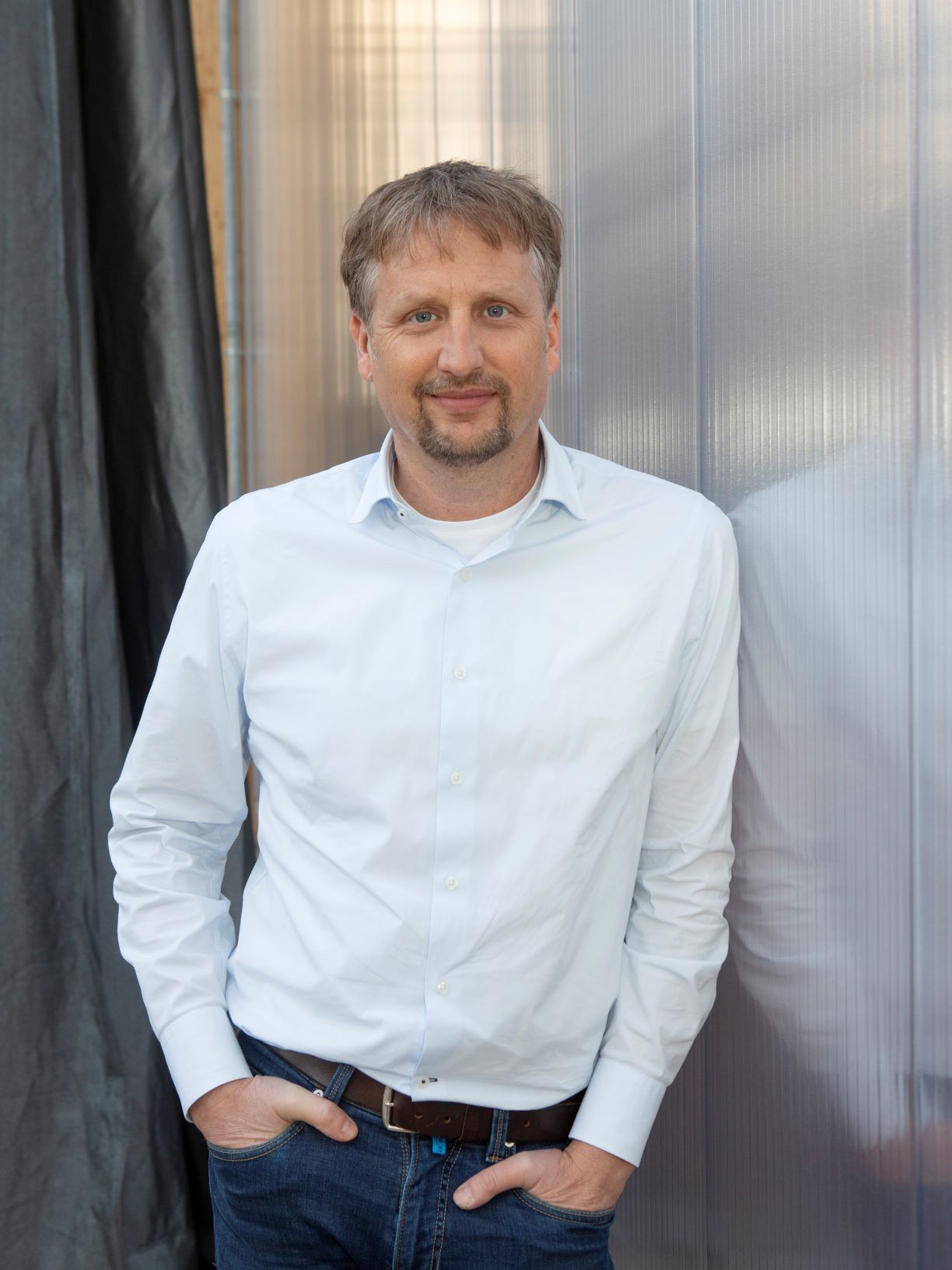
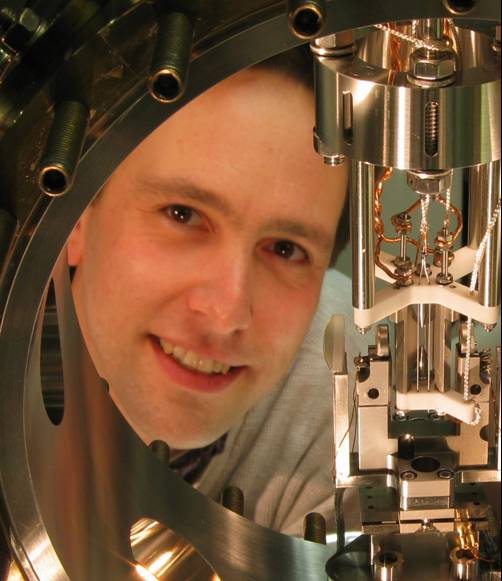
Prof. Alexander Holleitner leads the Chair of Nanotechnology and Nanomaterials at the Department of Physics, Technical University of Munich , under the Walter Schottky Institute. His research focuses on ultrafast optoelectronics, quantum optoelectronics, and excitonic systems in nanoscale circuits. Research Directions : Ultrafast optoelectronics, quantum optoelectronics, excitonic systems, THz time-domain spectroscopy, and nanofabrication of mixed organic/inorganic systems. Publications : Recent work spans hyperbolic polaritons, interlayer excitons, graphene nano-gap dynamics, and defect engineering in 2D materials. Collaborations include interdisciplinary projects with groups studying semiconductor heterostructures and quantum technologies. His lab welcomes students and researchers interested in experimental physics, quantum electronics, and nanofabrication.
Wolfgang Porod is a Professor of Electrical Engineering and holder of the Frank M. Freimann Chair at the University of Notre Dame. He is also a Hans Fischer Senior Fellow at the TUM Institute for Advanced Study (TUM-IAS) since 2009, affiliated with the Nanoimprint and Nanotransfer Focus Group led by Paolo Lugli. His research focuses on nanoelectronics and quantum devices, notably co-inventing the Quantum-Dot Cellular Automata (QCA) framework, a molecular-scale information processing paradigm. Porod earned his Diplom (M.S.) and Ph.D. from the University of Graz, Austria, and held postdoctoral roles at Colorado State and Arizona State Universities before joining Notre Dame in 1986. He directs Notre Dame’s Center for Nano Science and Technology, advancing interdisciplinary nanotechnology research. His academic accolades include Fellowships from the AAAS (2005) and IEEE (2001), and teaching awards such as the Kaneb Teaching Award (2005) and the Ruth and Joel Spira Award (2000). Porod’s work bridges quantum physics and engineering, with applications in low-power computing, spintronics, and nanoscale device fabrication. At TUM-IAS, he collaborates on nanoimprint lithography and nanotransfer technologies, advancing scalable nanomanufacturing methods.
Markus Schmidt is a Professor of Fiber Optics at Friedrich Schiller University Jena and serves as Head of the Research Department of Fiber Photonics at the Leibniz Institute for Photonic Technologies (IPHT), where he leads the Hybrid Fibers work group. He previously held a team leadership position at the Max Planck Institute for the Science of Light (2006–2012) and conducted research at Imperial College London (2011). His research integrates fiber optics and photonics for applications in biophotonics, optofluidics, plasmonics, and nonlinear optics. Key innovations include 3D nanoprinted holograms for remote focus control, liquid-core fibers for stable supercontinuum generation, and fiber-integrated platforms for nanorheology and quantum spectroscopy. His work bridges materials science and applied photonics , enabling advancements in telecommunications, environmental monitoring, and bioanalytics. Scientific awards and student mentorship details are not explicitly mentioned in the provided texts. His email is markus.schmidt@leibniz-ipht.de .
Prof. David Hunger leads the Cavity Quantum Optics Group at the Physics Institute (PHI) of Karlsruhe Institute of Technology (KIT). His research focuses on optically addressable spins in condensed matter, cavity-enhanced light-matter interactions, and quantum photonics with applications in sensing, spectroscopy, and quantum computing. The group develops fiber-based microcavities for coherent spin-photon interfaces, rare-earth ion qubits, and cavity-enhanced imaging of nanoscale systems. Notable projects include the BMBF-funded NEQSIS and SPINNING initiatives for quantum communication and diamond-based quantum computing. The group also pioneered Qlibri , a spin-off company commercializing optical fiber microcavities for quantum optics and microscopy. Recent breakthroughs include record spin coherence in SnV centers and ultra-stable nanopositioning platforms for cryogenic experiments. Affiliations: Faculty of Physics, KIT; Max Planck School of Photonics Grants: BMBF Grand Challenge (Quantum Communication), BMBF SPINNING (Diamond Qubits) Labs/Teams: Cavity Quantum Optics Group, Qlibri spin-off Students and postdocs in the group work on topics like collective cavity effects, molecular spin platforms, and cavity-enhanced sensing of liquid-phase nanosystems.
Prof. Dr. Gert-Ludwig Ingold is a Professor of Theoretical Physics at the Institute of Physics, Faculty of Mathematics, Natural Sciences, and Materials Engineering, University of Augsburg. His research spans multiple areas of theoretical physics with emphasis on quantum phenomena in nanoscale systems. His work on the Casimir effect explores interactions between various geometries including spheres, plates, and dielectric materials, with applications in nanotechnology and biophysics. His research on dissipative quantum systems investigates thermodynamic anomalies and quantum Brownian motion. In mesoscopic physics, he studies charge transport through nanoscale structures and quantum interference effects. His work on quantum systems in phase space connects classical and quantum dynamics, while his semiclassical research examines quantum revival patterns and phase-space trajectories. Prof. Ingold's publications reveal a strong focus on the Casimir effect, with numerous papers examining interactions between different geometries and materials. His work demonstrates expertise in both theoretical modeling and numerical methods, as evidenced by his development of the CaPS software for Casimir effect calculations. He frequently collaborates with international researchers, particularly with Paulo A. Maia Neto, Tanja Schoger, and Benjamin Spreng. Prof. Ingold has made significant contributions to physics education through textbooks and popular science books, including Quantentheorie: Grundlagen der modernen Physik and Die 101 wichtigsten Fragen: Moderne Physik . He has co-authored the Python-based educational resource Numerische Physik mit Python and maintains extensive online teaching materials including lecture notes and video tutorials.
Prof. Dr. Robert Blick is a faculty member at the University of Hamburg , leading the Institute for Nanostructure and Solid State Physics under the Faculty of Mathematics, Informatics, and Natural Sciences. He serves as Director of the Center for Hybrid Nanostructures (CHyN) and Head of the Board of Examiners of Nano-Science. Research Focus: Atomic Layer Deposition (ALD), quantum dots, superconducting thin films, biomaterials, and nanomechanical devices. Key Collaborations: Deutsches Elektronen-Synchrotron (DESY), molecular-beam epitaxy groups, Forschungslabor Mikroelektronik Deutschland. His academic contributions span nanoscience, materials growth, and biomedical applications. Current funding includes support from the Deutsche Forschungsgemeinschaft (DFG), Exzellenzcluster CUI, and the Joachim Herz Foundation. The CHyN research group operates a state-of-the-art clean room facility for electron-beam and focused-ion-beam lithography, enabling 8nm feature definition on 6-inch wafers. Applications of his work include memristor technology, quantum devices, and advanced biosensors. His PhD students include Ahmed Alshaikh, Kristian Deneke, Daniel Hensel, Marianna Brede, Daniel Schmidt, Malte Siegmund, and Jan Stelzner. Senior researchers Dr. Stefanie Haugg and Dr. Robert Zierold contribute to materials growth and atomic layer deposition.
Özüm Asirim is a Researcher at the Technical University of Munich (TUM) under the Associate Professorship of Computational Photonics led by Prof. Christian Jirauschek. Her work focuses on computational photonics , quantum optics , and nonlinear optical phenomena , particularly in micro-resonators and semiconductor devices. Education: Ph.D. in Electrical Engineering from Middle East Technical University (Ankara, Turkey). Research spans optical parametric amplification , Fourier domain mode-locked lasers , self-phase modulation , and machine learning applications in photonics . Her studies include optimizing gain factors, enhancing harmonic generation, and modeling supercontinuum sources via carrier injection. Recent publications (2019–2023) highlight interdisciplinary approaches, merging photonics with computational finance and nonlinear dynamics . She contributes to EU Project QOMBS and teaches courses like Python for Engineering Data Analysis and Quantum Engineering and Machine Learning seminars. Collaborations include Prof. Christian Jirauschek (TUM), Prof. Mustafa Kuzuoğlu (Middle East Technical University), and teams in computational photonics and quantum optics. Her work impacts semiconductor physics , laser technology , and adaptive optical systems .
Professor Emiliano Cortés is a faculty member at the Ludwig Maximilian University of Munich (LMU), where he leads research in Plasmonic and Photonic Chemistry at the Nano-Institute Munich. His work bridges the fields of nanotechnology, physical chemistry, and materials science, focusing on light-matter interactions for energy conversion applications. Dr. Cortés' research focuses on plasmonics , photocatalysis , and electrocatalysis at the nanoscale. His group investigates how the dynamics of photons, plasmon-polaritons, carriers, phonons, and molecular states influence chemical reactivity. A key aspect of his work involves developing techniques to study plasmonic systems at the single particle level and designing rational synthesis approaches for plasmonic colloidal photo and electrocatalysts. His research has significant implications for sustainable energy technologies, environmental remediation, and advanced sensing applications. Analysis of Professor Cortés' recent publications reveals a strong focus on energy conversion processes, with particular emphasis on CO2 reduction, ammonia synthesis, and hydrogen production. His work integrates plasmonic effects with catalytic processes to enhance reaction efficiencies, often through innovative interface engineering and nanostructure design. The research spans fundamental studies of charge carrier dynamics to practical applications in energy storage and environmental technologies. Professor Cortés actively mentors doctoral candidates and postdoctoral researchers, currently advertising open positions for projects on Single particle photo and electrocatalysis and Synthesis of hybrid colloids . His research group, the Hybrid Plasmonics Lab (www.hybridplasmonics.org), receives funding from various sources to support their work on plasmon-mediated chemistry for sustainable applications. The Cortés research group operates within the Nano-Institute Munich, utilizing state-of-the-art facilities for nanomaterial synthesis, characterization, and testing. Their work combines experimental approaches with theoretical modeling to understand and harness light-matter interactions at the nanoscale for practical applications in energy conversion and environmental technologies.
Rupert Huber is a Professor at the Department of Experimental and Applied Physics, University of Regensburg, where he has held a chair since 2010. His research focuses on ultrafast quantum phenomena, terahertz science, and lightwave electronics, with a strong emphasis on nanoscale imaging and quantum materials. He leads the Huber group, which has launched the ERC project 'Orbital Cinema' and produced numerous high-impact publications in journals like Nature and Nano Letters . Chair for Experimental and Applied Physics, University of Regensburg (2010–present) Emmy Noether Group Leader, University of Konstanz (2007–2010) Alexander von Humboldt Fellow, UC Berkeley/Lawrence Berkeley National Lab (2004–2006) His research explores terahertz spectroscopy , quantum materials , and ultrafast nanoscopy , often combining experimental innovation with theoretical insights. Recent work includes groundbreaking studies on exciton dynamics in van der Waals magnets and subcycle imaging of electron wave motion. The group’s publications frequently appear as coverstories in Nature Photonics and Nano Letters . Huber has received prestigious awards such as the Gottfried Wilhelm Leibniz Prize (2019) , ERC Starting Grant (2012) , and OSA Fellowship (2018) . He has supervised numerous Ph.D. and Master’s students, including recent awardees like Joshua Mornhinweg (faculty dissertation prize, 2024) and Josef Riepl (best tutor award, 2024).
Max Born Institute for Nonlinear Optics and Short Pulse SpectroscopyGermany
Prof. Stefan Eisebitt is a Director at the Max-Born-Institut für Nichtlineare Optik und Kurzzeitspektroskopie and holds a Professorship in Experimental Physics at the Technische Universität Berlin. His research focuses on ultrafast magnetization dynamics, nanoscale structure analysis, and novel imaging techniques using coherent XUV/X-ray spectroscopy. He leads the Transient Electronic Structure and Nanoscience group and is involved in cutting-edge projects involving femtosecond laser-driven X-ray sources and spintronic materials. Education and Career: He obtained his Diplom (1992) and Ph.D. (1996) from Cologne University, followed by postdoctoral research at the University of British Columbia and Forschungszentrum Jülich. He became a Privatdozent at Humboldt-Universität Berlin (2005) and held professorships at TU Berlin (2008–2015) and Lund University (2012–2015) before his current role since 2015. He leads the Functional Nanomaterials joint research group between Helmholtz-Zentrum Berlin and TU Berlin. Research Interests: His work spans transient electronic structure, ultrafast optical manipulation of magnetization, nanoscale material characterization, and advanced coherent imaging methods. Key techniques include XUV/X-ray spectroscopy, laser-driven plasma sources, and femtosecond time-resolved studies. Professional Roles: He chairs the Physikalische Gesellschaft zu Berlin and the Elettra Scientific Advisory Council. He has held leadership roles in the European XFEL Scientific Advisory Committee and the Komitee für Forschung mit Synchrotronstrahlung (KFS). His lab develops state-of-the-art setups for ultrafast X-ray scattering and holography.
Prof. Dr. Sven Höfling is the Head of Chair and leader of the '2D Materials' Group at the Department of Technical Physics, University of Würzburg. His research focuses on semiconductor nanostructures, photonic systems, and quantum materials, with expertise in low-dimensional systems and light-matter interactions. He leads projects in the Cluster of Excellence ct.qmat and collaborates on EU, DFG, and industry-funded initiatives in quantum technology and nanophotonics. Affiliations: Chair of Technical Physics, University of Würzburg Address: Am Hubland, P1 Building (Room AU26), 97074 Würzburg, Germany Research highlights include topological polariton lasers, quantum dot photonics, and mid-infrared optoelectronics. His work spans experimental physics with strong ties to theoretical models, emphasizing applications in quantum computing and optoelectronic devices. Recent advances include room-temperature polariton lasers and strain-tunable single-photon sources. Key projects include the Würzburg-Wroclaw Nanophotonics Center and collaborations with KAIST-JMU on quantum technology. His lab employs advanced fabrication techniques like circular Bragg gratings and resonant tunneling diodes.
Prof. Dr. Uwe Hartmann is a faculty member and Chair Holder at Saarland University, affiliated with the Institute of Experimental Physics within the Faculty of Natural Sciences and Technology. His research group specializes in nanostructure research and nanotechnology, with a strong focus on instrumentation, nanofabrication, and quantum systems. He is based in Building C6.3, Saarbrücken, Germany. His research interests lie at the intersection of physics and engineering, particularly in nanotechnology , scanning probe microscopy , quantum device characterization , and nanofabrication . His work spans fundamental investigations of nanostructures to applied developments in microsystem technology and industrial nanomanufacturing. He has contributed significantly to cleanroom technologies, surface physics, and the transition from micro- to nanoscale systems. The recent publications highlight a strong thematic focus on enabling technologies for nanoscale science, including instrumentation (e.g., atomic force microscopy), fabrication methods, and analysis of quantum and metallic nanostructures. The research demonstrates a consistent trajectory toward understanding and manipulating matter at the nanoscale for both scientific and industrial applications. Scientific Awards: No awards explicitly mentioned in the provided text. Prof. Hartmann actively supervises doctoral and diploma students, indicating a strong commitment to academic mentoring. His group includes PhD students and scientific staff, suggesting ongoing research projects and potential grant funding, although specific grants are not listed. He has led a long-standing research group with technical staff supporting experimental work, indicating a well-established laboratory infrastructure focused on experimental physics and nanotechnology development. Laboratory and Team: The working group includes scientific staff (e.g., Dr. Haibin Gao), PhD and diploma students, and technical staff (electronics engineers, mechanics, workshop heads), forming a multidisciplinary team capable of both theoretical and hands-on experimental research in nanotechnology. The presence of a dedicated workshop and technical personnel underscores the practical, device-oriented nature of the research.
Lukas Seitner is a researcher at the Technical University of Munich (TUM), affiliated with the School of Computation, Information and Technology and the Department of Electrical Engineering. He operates within the Associate Professorship of Computational Photonics led by Prof. Christian Jirauschek, focusing on advanced modeling of quantum cascade devices and terahertz photonics systems. His research spans quantum cascade lasers (QCLs), terahertz frequency combs, optical solitons, and computational photonics. Seitner has developed sophisticated simulation frameworks including Maxwell-Bloch and density matrix approaches to study nonlinear dynamics in optoelectronic devices. Key contributions involve passive mode-locking mechanisms in THz QCLs, graphene-integrated saturable absorbers for pulse generation, and backscattering effects in ring-cavity soliton formation. His work bridges theoretical modeling with practical device engineering for next-generation terahertz sources. As an educator, Seitner serves as assistant lecturer for multiple courses including Computational Photonics Laboratory (5 PR), Partial Differential Equations for Electrical Engineering (4 VI), and Simulation of Quantum Devices (4 VI). He actively participates in doctoral candidate seminars and specialized courses on quantum engineering, demonstrating strong commitment to academic training in photonics and quantum device physics. His teaching integrates cutting-edge research concepts into practical computational exercises. Seitner maintains active collaboration within the EU Project QOMBS and contributes to TUM's Computational Photonics group research infrastructure. His technical expertise encompasses numerical methods for partial differential equations, semiconductor device simulation, and nonlinear optical modeling. Current projects focus on optimizing THz comb sources for spectroscopic applications and extending quantum walk models for novel frequency comb generation mechanisms.
Dr. Frank Hennrich is a Project Leader at the Institute of Nanotechnology (INT), Karlsruhe Institute of Technology (KIT), Germany, within the Research Unit for Physical Chemistry of Nanoscale Systems. His research focuses on the synthesis, separation, and functionalization of carbon nanotubes and related nanomaterials. His primary research interests include nanomaterials, particularly carbon nanotubes and fullerenes, with an emphasis on their physical chemistry, spectroscopic characterization, and optoelectronic properties. His work spans synthesis, separation techniques, defect engineering, and applications in photonics and electronics. Recent publications highlight investigations into electroluminescence from quantum-defect-engineered nanotubes, ion mobility of metalated complexes and superatoms, and advanced separation methods for nanotubes. The trend in his recent publications shows a strong focus on the fundamental physical and chemical properties of low-dimensional carbon materials. His work integrates advanced spectroscopic and separation techniques such as trapped ion mobility spectrometry, Raman spectroscopy, and dielectrophoresis to understand and manipulate nanotube chirality, electronic type, and defect states. There is a clear trajectory toward optoelectronic applications, particularly in quantum light sources and integrated photonic devices operating in the telecom band. Dr. Hennrich has not been mentioned to have received any specific scientific awards in the provided text. He has collaborated extensively with leading researchers such as R. Krupke, M. M. Kappes, P. Weis, and others across numerous publications, indicating a strong network in the nanomaterials research community. While no specific grants are listed, his sustained publication record in high-impact journals suggests ongoing research funding. He has contributed significantly to the development of methods for sorting and functionalizing carbon nanotubes, which are foundational for their technological applications. His research is conducted within the Institute of Nanotechnology at KIT, a prominent institution for nanomaterials research, where he leads a group focused on the physical chemistry of nanoscale systems, particularly carbon-based nanostructures.
Christoph Becher is a Professor in the Department of Physics at the University of Saarland, Faculty of Natural Sciences and Technology. He leads the Research Group for Quantum Optics, focusing on experimental quantum technologies. He is actively involved in major national and interdisciplinary research centers including the Collaborative Research Center TRR 306 QuCoLiMa and the newly established Center for Quantum Technologies (QuTe) funded by the Transformationsfonds. His research lies at the intersection of quantum optics, solid-state physics, and quantum information science. Key areas include quantum photonics with diamond color centers (especially SiV centers), nanophotonic integration, quantum frequency conversion, and quantum communication using quantum repeaters. His group employs advanced laser spectroscopy and nanofabrication techniques to manipulate single quantum emitters and develop building blocks for quantum networks. The recent publications reflect a strong trend in quantum technologies, particularly in coupling quantum emitters to nanophotonic structures, quantum networking over fiber, and nonlinear quantum optics with single photons. His work frequently appears in high-impact journals such as Nature Communications , Physical Review Letters , and Nature Nanotechnology . Scientific Awards: Member of acatech (German Academy of Science and Engineering), elected 2020 Advising and Grants: Prof. Becher supervises a dynamic team of PhD students and postdoctoral researchers. He leads and participates in major funded projects including the BMBF-funded Quantenrepeater.Net (QR.N) (20 million Euro, 42 partners), the DFG-funded Collaborative Research Center QuCoLiMa , and the state-funded Center for Quantum Technologies (QuTe) at Saarland University. Labs and Teams: He heads the Quantum Optics research group at Campus E2 6, Saarbrücken, housing experimental setups for low-temperature spectroscopy, quantum frequency conversion, and quantum networking. His team includes doctoral researchers, postdocs, technical staff, and student assistants, working collaboratively on advancing quantum technologies.