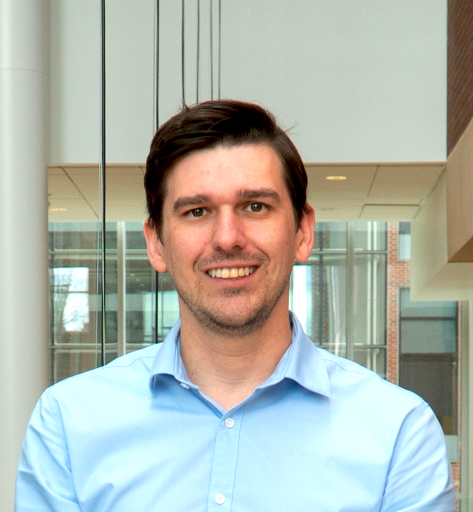
Institute for Bioengineering of Catalonia (IBEC)Spain
Javier Gomez Fernandez is a researcher at the Nanobioengineering Group within the Institute for Bioengineering of Catalonia (IBEC), affiliated with the University of Barcelona. His work bridges nanotechnology and biomedical applications, focusing on advanced bioimaging and sensor development. Research Focus: Nanoscale bioelectrical characterization, smart nano-bio-devices, and molecular imaging Technological Impact: Development of low-power gas sensors and nanoscale membrane analysis tools His interdisciplinary approach contributes to fields like biomedical signal processing, biomaterials, and precision medicine. Recent projects highlight collaborations with clinical institutions and industrial partners to address challenges in muscular dystrophy and antimicrobial therapies. Key contributions include: 2020 IEEE Access paper on energy-efficient gas sensors 2010 PNAS study on nanoscale cell membrane characterization
Ryan M. Pearson is an Associate Professor in the Department of Pharmaceutical Sciences at the University of Maryland School of Pharmacy, where he also serves as Director of the Bio- and Nano-Technology Center. He holds an adjunct appointment in the Department of Molecular Microbiology & Immunology at the University of Maryland School of Medicine. PhD in Biopharmaceutical Sciences, University of Illinois at Chicago Postdoctoral Research, Biomedical Engineering, University of Michigan Dr. Pearson's research lies at the intersection of nanotechnology and immune engineering, focusing on developing nanoparticle-based strategies to treat dysregulated immune responses in conditions such as sepsis, cancer, autoimmunity, and allergy. His lab investigates three primary areas: (1) metabolite-based polymers and nanoparticles for inflammation modulation, (2) protein- and mRNA-delivery systems for antigen-specific immunomodulation, and (3) the role of disease-specific biomolecular coronas in immune responses. His recent publications reveal a strong trend in designing tunable nanoparticles that precisely control immune cell behavior—particularly macrophages, dendritic cells, and B cells—using physicochemical properties and corona engineering. These innovations aim to shift immune responses from pro-inflammatory to tolerogenic states, offering promising translational pathways for chronic inflammatory diseases. American Association of Colleges of Pharmacy New Investigator Award National Institute for Pharmaceutical Technology and Education Rising Star Award Shock Society Faculty Research Award NIGMS Maximizing Investigators’ Research Award (R35 MIRA) Dr. Pearson actively mentors PhD, MS, and postdoctoral researchers and has secured major NIH funding, including an R01 from NIAID for sepsis immunotherapy. He serves on the editorial boards of Pharmaceutical Research and Drug Delivery & Translational Research , and has advised student chapters of AAPS. His lab, the Pearson Lab for Immunomodulatory Biomaterials, fosters a multidisciplinary team integrating immunology, polymer chemistry, and nanobioengineering.
Icahn School of Medicine at Mount SinaiUnited States
Sarah A Stanley, MBBCh, PhD is a faculty member at the Icahn School of Medicine at Mount Sinai, where she leads the Stanley Laboratory. Her research spans multiple disciplines at the intersection of neuroscience, diabetes, and molecular biology, with significant contributions to understanding the neuroendocrine regulation of metabolism. Education: BA, University of Cambridge BChir, University of Cambridge MB, University of Cambridge PhD, Imperial College, London University Dr. Stanley's research focuses on three primary areas: pioneering the use of radio waves and magnetic fields to stimulate individual cells and neurons (radiogenetics and magnetogenetics); developing nanoparticles in bioengineered murine models for preclinical applications; and advancing understanding of the interaction between central and peripheral systems in appetite control and diabetes. Her work represents a unique integration of engineering approaches with fundamental neuroscience and metabolic research. Her publications demonstrate a strong trajectory in neuroendocrine research with applications to diabetes treatment, showing increasing sophistication in techniques from molecular biology to advanced neural modulation approaches. The research shows particular strength in translating basic science discoveries into potential therapeutic applications. Scientific Awards: 2016 Alexander and Alexandrine Sinsheimer Scholar Award 2016 Dr. Harold and Golden Lamport Research Award 2015 Cell Symposia: Engineering the Brain International Travel Award Darwin Prize in Experimental Natural Sciences Arthur Burrows Prize (Dermatology) James Anderson Prize (Medicine and Surgery) Dr. Stanley's laboratory is currently funded by The National Institutes of Health and American Diabetes Association, working in close collaboration with colleagues across Mount Sinai and partnerships with Professor Jeffrey Friedman at Rockefeller University and Professor Jonathan Dordick at Rensselaer Polytechnic Institute. Her research program demonstrates strong institutional support and strategic collaborations that enhance the impact of her work. The Stanley Laboratory operates across multiple facilities at Mount Sinai, including locations in the Annenberg Building and Atran Berg Laboratory Building, reflecting the interdisciplinary nature of her research that bridges neuroscience, engineering, and metabolic medicine.
Institute for Bioengineering of Catalonia (IBEC)Spain
Anna Lagunas Targarona is a researcher in the Nanobioengineering department, focusing on interdisciplinary applications of nanotechnology in biomedical contexts. Her work spans biosensor development, drug delivery across the blood-brain barrier, and engineering nanotopographic substrates for cell studies. Research Interests: Nanotechnology, Alzheimer's disease, biosensors, stem cell differentiation, regenerative medicine, and mechanobiology. Key Projects: Development of BBB-on-a-chip systems, functionalized nanoparticles for neurodegenerative therapies, and nanoscale ligand patterning to study cell communication. Her recent publications (2025-2022) highlight innovations in nanoparticle design, microfluidic devices, and molecular gradients for cell adhesion studies. Collaborations with institutions like IBEC and projects such as Fibrosens (funded by AFM-Telethon) underscore her translational focus. She employs advanced techniques including nano-emulsion templates, TEER monitoring, and 3D bioprinting to address challenges in neurodegenerative disease modeling and musculoskeletal regeneration.
Institute for Bioengineering of Catalonia (IBEC)Spain
Marina Rovira Mañé is a Research Fellow affiliated with the Institute for Bioengineering of Catalonia (IBEC), where she contributes to the Smart Nano-Bio-Devices research group. Her work aligns with IBEC’s mission to advance interdisciplinary research at the intersection of engineering and life sciences. Research Interests: Nanobioengineering Biosensors for bioengineering Molecular Imaging for Precision Medicine Key Affiliations: Institute for Bioengineering of Catalonia (IBEC) Smart Nano-Bio-Devices group
Institute for Bioengineering of Catalonia (IBEC)Spain
Valerio Di Carlo is a researcher at the Institute for Bioengineering of Catalonia (IBEC), actively contributing to cutting-edge interdisciplinary research at the intersection of bioengineering, nanotechnology, and medical applications. His work focuses on developing innovative nanobot systems for targeted therapies, particularly in overcoming physiological barriers like mucus for drug delivery, with recent breakthroughs in bladder cancer treatment and antimicrobial resistance. Institution: Institute for Bioengineering of Catalonia (IBEC) Research Groups: Smart Nano-Bio-Devices His research spans Nanotechnology , Bioengineering , and Biomedical Applications , with a strong emphasis on Enzymatic Nanobots for Cancer Therapy , Gene Delivery , and Mucosal Barrier Penetration . Recent publications highlight collaborations with institutions like Antoni Muntadas and clinical partners under IBEC's Open Innovation Lab initiatives. Key trends in his publications include Nanobot propulsion using enzymatic catalysis (urease, catalase), radionuclide delivery for cancer therapy , and overcoming antimicrobial resistance via hyaluronic acid systems. Earlier work explores epigenetic regulation in developmental disorders and RNA biology in neurodegenerative diseases. Valerio collaborates extensively with researchers such as Samuel Sánchez, Celia Prado-Morales, and Maria Serra-Casablancas, contributing to multidisciplinary projects like Fibrosens (muscular dystrophy sensors) and CHEMTUBIO (enzymes with therapeutic potential). His work bridges fundamental research and translational applications through IBEC's technology transfer initiatives. Current projects at IBEC include collaborations with hospitals and industry partners, aiming to translate nanobioengineering advancements into clinical solutions. His affiliations extend to thematic networks and visiting researcher programs, reflecting IBEC's commitment to open innovation and societal impact.
Abdennour Abbas is an Associate Professor in Bioproducts and Biosystems Engineering at the University of Minnesota, affiliated with the Minnesota Invasive Terrestrial Plants and Pests Center. His research focuses on nanotechnology applications in diagnostics and environmental solutions, including rapid pathogen detection systems and antiviral materials. He has led numerous grants from USDA, NSF, and industry partners like Claros Technologies. Recent projects include developing functional antiviral face masks for pandemic response and sorbent technologies for eDNA-based pathogen detection in aquaculture. Key research interests include nanosensors, biosensors, and bionanotechnology with applications in water treatment and medical diagnostics. His work contributes to UN Sustainable Development Goals related to clean water, sustainable agriculture, and health innovations. Abbas has supervised multiple collaborative projects involving interdisciplinary teams and has published over 48 peer-reviewed articles, focusing on molecular diagnostics, nucleic acid purification, and nanoassembly-based detection methods.
Institute for Bioengineering of Catalonia (IBEC)Spain
Armando Cortés Reséndiz is a Researcher at the Institute for Bioengineering of Catalonia (IBEC), leading the Biosensors for Bioengineering department. His work focuses on interdisciplinary research at the interface of engineering and life sciences, with a particular emphasis on bioengineering applications. He is contactable via +34 934 039 735. Research interests include advanced biosensor development, nanobioengineering, and translational technologies for healthcare. His projects bridge fundamental research with industrial applications, emphasizing innovation in areas like antimicrobial therapies, biomaterials for neural regeneration, and clinical diagnostics. He collaborates with industry and clinical partners through IBEC’s Open Innovation Lab and contributes to initiatives like the LUMIRIS spin-off. His involvement in thematic networks and visiting researcher programs underscores his commitment to collaborative science.
Salvador Ventura is Chair Professor of Biochemistry and Molecular Biology at Universitat Autònoma de Barcelona (UAB) and Group Leader of the Protein Folding and Conformational Diseases research group at Institut de Biotecnologia i Biomedicina (IBB). He has held continuous academic positions at UAB since 1992, progressing from PhD student to full Professor in 2012, and served as Director of IBB from 2017-2020. His research focuses on the fundamental mechanisms of protein misfolding and aggregation, with applications in understanding conformational diseases and developing nanobiomaterials. Ventura's multidisciplinary approach combines computational and experimental methods to study amyloid formation, protein design, and self-assembly processes. His work bridges basic science with therapeutic development and nanotechnology applications, particularly through his co-founded company Eureka Nanobioengineering (2022). Narcís Monturiol Medal, Generalitat de Catalunya (2022) ICREA-ACADEMIA Award in Life and Medical Sciences (three times: 2009, 2015, 2020) Bruker Prize "Manuel Rico" from Spanish Biophysical Society (2020) Research Excellence Award, UAB (2008) Ventura has directed 18 PhD theses (13 since 2012), including the SEBBM prize-winning thesis in 2021, with 7 additional PhD projects currently funded. His research group has secured 47 competitive projects and 11 industry contracts with companies including SOM Biotech, SERVIER, and Grifols. As coordinator of the Protein Structure and Aggregation group (12 doctors, 31 members), he leads a consolidated research team recognized by Generalitat de Catalunya. The Protein Folding and Conformational Diseases group operates within IBB, collaborating with international institutions including Harvard Medical School, Karolinska Institutet, and Tor Vergata University. Ventura serves on the Direction Council of Catalonia's Reference Network in Biotechnology and has organized 10 international congresses since 2015.
Institute for Bioengineering of Catalonia (IBEC)Spain
Valentino Barbieri is a Researcher at the Institute for Bioengineering of Catalonia (IBEC), where he leads the Molecular Bionics research group. His work bridges nanotechnology and biomaterials to develop advanced bionic systems for biomedical applications, operating within IBEC's ecosystem of cutting-edge bioengineering research groups. His research centers on Molecular Bionics, Nanotechnology, and Biomaterials with specific expertise in molecular-scale engineering and plasmonic applications. He investigates synthetic cellular systems and responsive nanomaterials, particularly focusing on creating functional artificial structures that mimic biological processes for therapeutic use. His recent ACS Nano publication demonstrates innovative work in thermoplasmonic polymersome membranes, revealing trends toward precision-controlled nanoscale drug delivery systems. This research integrates in situ synthesis techniques with plasmonic energy conversion, advancing the field of stimuli-responsive nanomedicine for targeted therapeutic applications. No scientific awards were documented in the provided institutional profile. While specific student supervision details are unlisted, as a research group leader at IBEC he likely mentors early-career scientists within the institute's doctoral and postdoctoral programs. No grant information appears in the current profile excerpt. Barbieri directs the Molecular Bionics group within IBEC's research structure, collaborating across thematic networks including Nanobioengineering, Biomaterials for Regenerative Therapies, and Smart nano-bio-devices. His team operates within IBEC's core facilities ecosystem including BioSpace and MicroFabSpace, contributing to the institute's mission of translating fundamental research into medical applications.
Institute for Bioengineering of Catalonia (IBEC)Spain
Thomas Wilson is a researcher at the Institute for Bioengineering of Catalonia (IBEC) and leads the Integrative Cell and Tissue Dynamics group. His work bridges interdisciplinary research at the frontier of engineering and life sciences, focusing on fundamental and applied bioengineering challenges. Research interests include: Biomaterials for neural and regenerative therapies Nanobioengineering and smart nano-bio-devices Cellular and molecular mechanobiology Biosensors and biomedical signal processing Protein phase transitions in disease Targeted therapeutics and spatial biotechnology
Institute for Bioengineering of Catalonia (IBEC)Spain
Chiara Ninfali is a Researcher leading the Biosensors for bioengineering group at the Institute for Bioengineering of Catalonia (IBEC) . Her work focuses on integrating bioengineering principles with advanced biosensing technologies to address challenges in healthcare and regenerative medicine. Her research interests include the development of innovative biosensors, nanobioengineering applications, and the molecular mechanisms underlying muscle regeneration and inflammatory processes. Her scientific contributions span interdisciplinary fields such as biomaterials, cellular engineering, and molecular oncology. She explores how transcription factors like ZEB1 regulate critical biological processes, including muscle atrophy, inflammation-driven carcinogenesis, and stem cell differentiation. Her studies utilize mouse models and human embryonic stem cells (hESCs) to uncover pathways with translational potential. Chiara’s collaborative projects aim to bridge fundamental research with clinical applications, emphasizing translational bioengineering solutions. Her work has been published in high-impact journals, with recent studies addressing ZEB1’s role in atherosclerosis, mitochondrial function in macrophages, and fasting-induced muscle atrophy mechanisms. Despite no explicit mention of awards in the text, her active research group and multiple publications reflect her contributions to bioengineering and molecular biology. Her lab’s focus on biosensors and regenerative therapies underscores her commitment to advancing healthcare technologies.
SALVADOR VENTURA is a Chair Professor of Biochemistry and Molecular Biology at Universitat Autònoma de Barcelona (UAB) and Group Leader at the Institute of Biotechnology and Biomedicine (IBB). He has held academic roles since 1997, including Director of IBB (2017–2020). His research focuses on protein folding, aggregation mechanisms, and their link to conformational diseases. He has directed 18 PhD theses and co-founded Eureka Nanobioengineering to develop nanobiomaterials. Education: PhD in Biology (1998, UAB), postdoctoral training at EMBL-Heidelberg (1999–2001), and visiting scientist roles at Harvard Medical School and Karolinska Institutet. Research emphasizes anti-aggregation drug discovery and bioinformatics-driven approaches to combat amyloid diseases. Research Interests: Mechanisms of protein misfolding and aggregation Design of anti-aggregation therapies Applications of protein self-assembly in nanotechnology Structural biology of amyloid fibrils Awards: Three-time recipient of the ICREA-ACADEMIA Award (2009, 2015, 2020) Narcís Monturiol Medal (2022, Catalonia) MAP EADA-ACCIÓ Award (2015) Grants & Industry Collaborations: 47 competitive projects and 11 industry contracts with companies like Servier and Grifols Coordinator of Catalonia’s Protein Structure and Aggregation group (31 members) Labs/Teams: Leads a multidisciplinary lab at IBB and coordinates a consolidated research group in Catalonia. Active in international conferences as keynote speaker and organizer.
Institute for Bioengineering of Catalonia (IBEC)Spain
Zahra Saeidikia is a Researcher at the Institute for Bioengineering of Catalonia (IBEC) in Barcelona, Spain, affiliated with the Molecular Bionics research group. IBEC operates as a consortium between the University of Barcelona, Polytechnic University of Catalonia, and Pompeu Fabra University within the Barcelona Science Park ecosystem. Her research focuses on molecular-scale bionic systems at the intersection of nanotechnology and bioengineering. Primary interests include biomimetic protocellular systems, molecular neurotechnology, and nanoscale bioelectrical characterization. This work contributes to IBEC's broader mission in developing bioinspired materials for regenerative therapies and targeted nanodevices. As part of IBEC's active research community, her work aligns with institutional priorities in open science, sustainable research practices (evidenced by My Green Lab certifications), and clinical translation through hospital partnerships like the recent framework agreement with ICS.
Institute for Bioengineering of Catalonia (IBEC)Spain
Lokesh Kumar Sahu is a Researcher at the Institute for Bioengineering of Catalonia (IBEC) , specializing in the Molecular Bionics group. His work aligns with IBEC's mission to bridge engineering and life sciences, focusing on cutting-edge advancements in biomaterials, nanobioengineering, and biomedical signal processing. Research Interests: Molecular bionics involves developing bioinspired materials and systems for medical applications, including antimicrobial therapies, regenerative medicine, and smart nano-bio-devices. His interdisciplinary projects aim to address societal challenges through bioengineering innovations. IBEC's commitment to technology transfer and collaborations with hospitals and industry partners highlights the practical impact of his research. Recent institutional developments, such as the Fibrosens Project receiving funding from AFM-Telethon, underscore the relevance of his work in translational bioengineering.