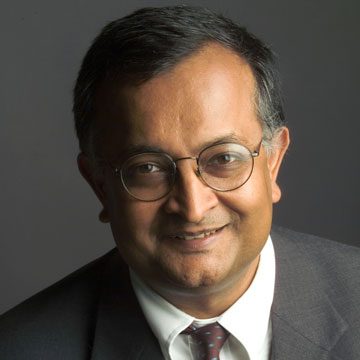
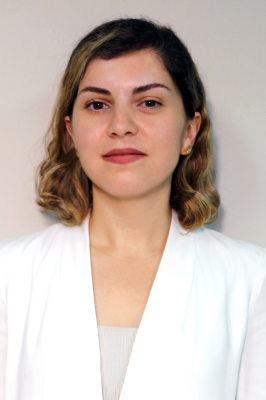
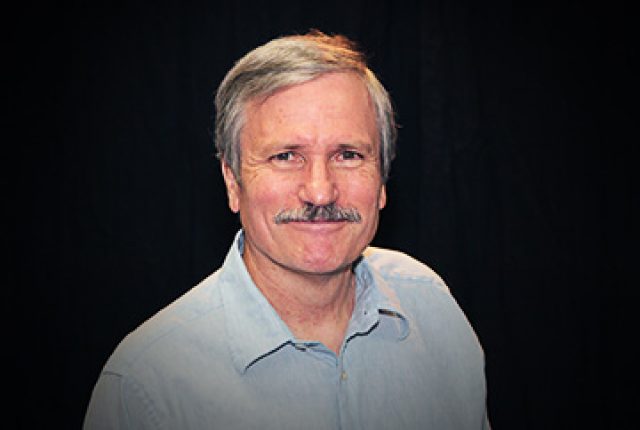
Sandip Tiwari is the Charles N. Mellowes Professor in Engineering at Cornell University, leading the School of Applied and Engineering Physics. He holds a B.Tech in Electrical Engineering from IIT Kanpur (1976), M.Eng from Rochester Institute of Technology (1977), and a Ph.D. in Electrical Engineering from Cornell (1980). His research bridges semiconductor electronics/optics and nanotechnology, emphasizing cross-scale integration of devices and systems. He directs the U.S. National Nanotechnology Infrastructure Network (NNIN) and has held visiting roles at Stanford, Harvard, Columbia, and the University of Paris-Sud. Notable honors include the IEEE Cledo Brunetti Award, APS Fellowship, and IIT Kanpur's Distinguished Alumnus Award. Education: IIT Kanpur (B.Tech), Rochester Polytechnic Institute (M.Eng), Cornell (Ph.D.) Affiliations: NNIN Director, IEEE Transactions on Nanotechnology (founding editor), multiple visiting professorships Research focuses on nanoscale device physics, quantum phenomena in electronics, and societal applications of nanotechnology. His work integrates engineering principles with physical sciences to address challenges in scalable electronic systems and MEMs. Awards highlight his contributions to semiconductor physics and nanotechnology, including recognition from IEEE, APS, and IIT Kanpur. He also promotes global scientific collaboration through education initiatives and NNIN.
University of Illinois Urbana-ChampaignUnited States
Songbin Gong is an Associate Professor in the Department of Electrical and Computer Engineering at the University of Illinois at Urbana Champaign, where he has been a faculty member since August 2013. He was promoted from Assistant Professor to Associate Professor in August 2019 and holds the Intel Alumni Fellowship. His research is centered at the Micro and Nanotechnology Lab, where he leads the Integrated RF Microsystems research group. Professor Gong's research focuses on RF and microwave photonics, microwave acoustics, and Micro-Electro-Mechanical Systems, with particular expertise in lithium niobate-based devices. His work spans the development of acoustic resonators, filters, and transducers operating from VHF to Sub-THz frequencies. Recent publications demonstrate significant advances in high-frequency acoustic devices, including GHz resonators with high electromechanical coupling and low loss characteristics. His research has direct applications in 5G communications, wireless sensing, and imaging systems. Gong has established himself as a leader in the field of RF MEMS and acoustic devices, with numerous high-impact publications in top journals including IEEE Transactions on Microwave Theory and Techniques, Journal of Microelectromechanical Systems, and Optics Express. His work shows a clear progression toward higher frequency operation, improved device performance, and novel integration approaches for next-generation communication systems. Among his notable achievements is the development of thin-film lithium niobate devices that overcome traditional frequency limitations of MEMS resonators, enabling operation beyond 10 GHz. This work addresses critical challenges in 5G and future wireless technologies where conventional approaches face scaling limitations. IEEE Ultrasonics Early Career Investigator Award DARPA Young Faculty Award 2014 NASA Early Career Faculty Award 2017 Intel Alumni Fellow 2017-present Multiple Best Paper Awards at major conferences including International Ultrasonic Symposium and International Microwave Symposium Professor Gong actively mentors graduate and undergraduate students, with several of his PhD students achieving notable success, including Ruochen Lu who joined UT Austin as a tenure-track assistant professor. His research group has secured significant funding from agencies including DARPA and NASA, supporting cutting-edge work in RF microsystems. The group maintains strong industry connections, particularly with Intel, reflecting the practical relevance of their research to commercial communication technologies. The Gong Research Group leverages micro/nano electro mechanical systems (N/MEMS), integrated photonic, and compound semiconductor technologies to develop chip-scale hybrid microsystems for RF communication, sensing, and imaging applications. Their current work focuses on pushing the boundaries of acoustic device performance while maintaining compatibility with standard semiconductor manufacturing processes.
Roozbeh Tabrizian is an Associate Professor in the Department of Electrical & Computer Engineering at the University of Florida, holding the Nelms Rising Star Endowed Professorship. His research focuses on RF micro- and nano-electro-mechanical systems (RF N/MEMS), nonlinear and nonreciprocal systems, and ferroelectric materials for sensing and information processing. He has received prestigious awards including the NSF CAREER Award (2018) and DARPA Young Faculty Award (2019). Education: PhD in Electrical Engineering from Georgia Tech (2013), BS from Sharif University of Technology (2007). Research interests include developing temperature-stable acoustic resonators, ferroelectric transducers, and novel materials for high-frequency applications. His work bridges nanotechnology, materials science, and MEMS to create innovative devices for communication and sensing. Key scientific awards include the HWCOE Innovation Award (2025), DARPA Director’s Fellowship (2021), and multiple best paper awards at international conferences. His grants include the NSF CAREER Award supporting nano-acoustic waveguide research. He advises on advanced MEMS fabrication techniques and collaborates on CMOS-compatible resonators. His lab develops nanoelectromechanical tags for anti-counterfeiting and high-precision frequency control systems.
Azadeh Ansari is an Associate Professor in the School of Electrical and Computer Engineering at Georgia Institute of Technology, holding the Sutterfield Family Early Career Professorship. She received her B.S. from Sharif University of Technology (2010), and M.S. and Ph.D. from the University of Michigan (2013, 2016), followed by a postdoctoral fellowship at Caltech (2016–2017). Her research focuses on nano/micro-electro-mechanical systems (N/MEMS), with emphasis on III-V semiconductors and piezoelectric materials. Key areas include resonant devices for RF applications, nonlinear devices, and integrated microsystems. Ansari leads projects in microscale robotics, phononic frequency combs, and III-V electro-acoustic devices. Research Interests: Resonant devices for timing, sensing, and RF applications III-V mm-wave acoustic filtering Microscale robot design and control Nonlinear resonators and phononic frequency combs III-V electro-acoustic devices and HEMTs Her recent work includes collaborations with NASA JPL on extraterrestrial micro-swimmers and DARPA-funded projects on inertial sensors and high-temperature pressure sensors. Ansari has secured grants from DARPA DSO and presented at IEEE Transducers 2025 with four papers. She advises graduate students such as Zhijian (Chris) Hao, who defended his PhD in 2024. Ansari’s awards include the 2017 ProQuest Distinguished Dissertation Award and the University of Michigan Towner Prize (2016). She serves on the IEEE Sensor’s Young Professional Committee and technical committees for IEEE IFCS 2018. Lab and Collaborations: The Ansari Lab is part of Georgia Tech’s Institute for Electronics and Nanotechnology. Collaborators include Prof. Kimberly Hoang (PBS-featured neurosurgery micro-drillers) and teams at Penn State University. Current projects include DARPA-funded frequency comb inertial sensors and underwater micro-robot sensor development for ICRA 2025.
Po Hao Huang is an Associate Professor at the Department of Mechanical Engineering within the College of Engineering at the University of Arkansas. He holds degrees in Aerospace Engineering from UCLA, including a Ph.D. in MEMS Aerospace Engineering. B.S., Aerospace Engineering, UCLA M.S., Aerospace Engineering, UCLA Ph.D., MEMS Aerospace Engineering, UCLA His research focuses on Nano/Micro-electro-mechanical Systems (N/MEMS), miniaturization technologies for aerospace systems, biologically-inspired artificial systems, and pico/nano-satellites. Teaching interests include CAD, Introduction to Flight, and Fundamentals of Aerodynamics. Dr. Huang received the Best Paper Award at the ASME IMECE Micro/Nano Systems conference in 2017. Contact details include phone number 479-575-4054 and email phuang@uark.edu .
Po Hao Adam Huang is an Associate Professor in the Department of Mechanical Engineering at the University of Arkansas and affiliated with the Arkansas Center for Space and Planetary Sciences. His research focuses on miniaturization technologies for aerospace systems, biologically-inspired artificial systems, and pico/nano-satellites. Education: B.S., Aerospace Engineering, UCLA M.S., Aerospace Engineering, UCLA Ph.D., MEMS Aerospace Engineering, UCLA Research Interests: Huang specializes in Nano/micro-electro-mechanical systems (N/MEMS) , developing miniaturization technologies for aerospace applications. His work explores biologically-inspired artificial systems for advanced functionality and pico/nano-satellites for cost-effective space missions. Scientific Awards: Best Paper Award, ASME IMECE Micro/Nano Systems (2017) Contact: Office located in the Edward Durell Stone House - North (STON), 332 N. Arkansas Ave., Fayetteville, AR 72701. Phone: 479-575-4054.
John N. Randall serves as Adjunct Professor at the University of Texas at Dallas' Jonsson School of Engineering since 2012, concurrently holding CEO roles at Zyvex Labs and Executive VP positions at Teliatry and NanoRetina. With 40+ years in micro- and nano-fabrication, his industry leadership has attracted $48M in research contracts and generated $750M+ in product revenues through innovations in semiconductor manufacturing and quantum technologies. Dr. Randall earned his academic foundation at the University of Houston: PhD in Electrical Engineering (1981) MS in Electrical Engineering (1977) BS in Electrical Engineering, Cum Laude (1975) His research spans semiconductor lithography (optical, e-beam, ion-beam, x-ray, STM-based) and quantum devices/circuits, with significant contributions to MEMS, atomic layer epitaxy, and metrology. This interdisciplinary work bridges fundamental nanofabrication with quantum electronic applications, driving advancements in nanoscale device manufacturing for semiconductor and computing industries. Analysis of his publication history reveals a clear evolution from 1980s foundational work in ion beam lithography and quantum dot structures toward 1990s applications in optical proximity correction and MEMS. The consistent focus on precision nanofabrication techniques demonstrates a trajectory from theoretical quantum phenomena to industrial semiconductor manufacturing solutions. Dr. Randall's scientific recognition includes IEEE and AVS Fellowships, University of Houston's Distinguished Engineering Alumni Award, and leadership honors as Conference Chairman for premier nanotechnology forums. His early career accolades encompass National Collegiate Judo Championships and academic distinctions. Fellow of the IEEE (2015) Disinguished Engineering Alumni Award – University of Houston (2010) Fellow of the AVS (2009) Elected Distinguished Member of Texas Instruments’ Technical Staff (2000) Conference Chairman roles for Gordon Conference (1998) and EIPB Conference (1995) National Collegiate Judo Champion (1974-1975) His $48M research funding at Zyvex directly enabled commercially successful nanotechnology products, while his advisory roles with University of North Texas, Girl Scouts of NE Texas, and UT Dallas demonstrate commitment to education and industry collaboration. Though student mentoring isn't explicitly documented, his academic appointments and conference leadership indicate substantial field guidance. As Zyvex Labs CEO, Randall leads atomic-precision manufacturing initiatives building on his MIT/TI-era nanofabrication breakthroughs. His current focus on quantum computing applications extends his legacy of transforming fundamental research—like room-temperature quantum circuits and 80nm lithography—into industry-shaping technologies across semiconductor, medical, and computing sectors.
Po-Hao Huang is an Associate Professor in the Department of Mechanical Engineering at the University of Arkansas. He holds a B.S., M.S., and Ph.D. in Aerospace Engineering from UCLA. His academic responsibilities include teaching courses such as CAD, Introduction to Flight, and Fundamentals of Aerodynamics. His research focuses on: Nano/micro-electro-mechanical systems (N/MEMS) Miniaturization technologies for aerospace systems Biologically-inspired artificial systems Pico/nano-satellites development He received the Best Paper Award at the ASME IMECE Micro/Nano Systems conference in 2017 for his contributions to the field.