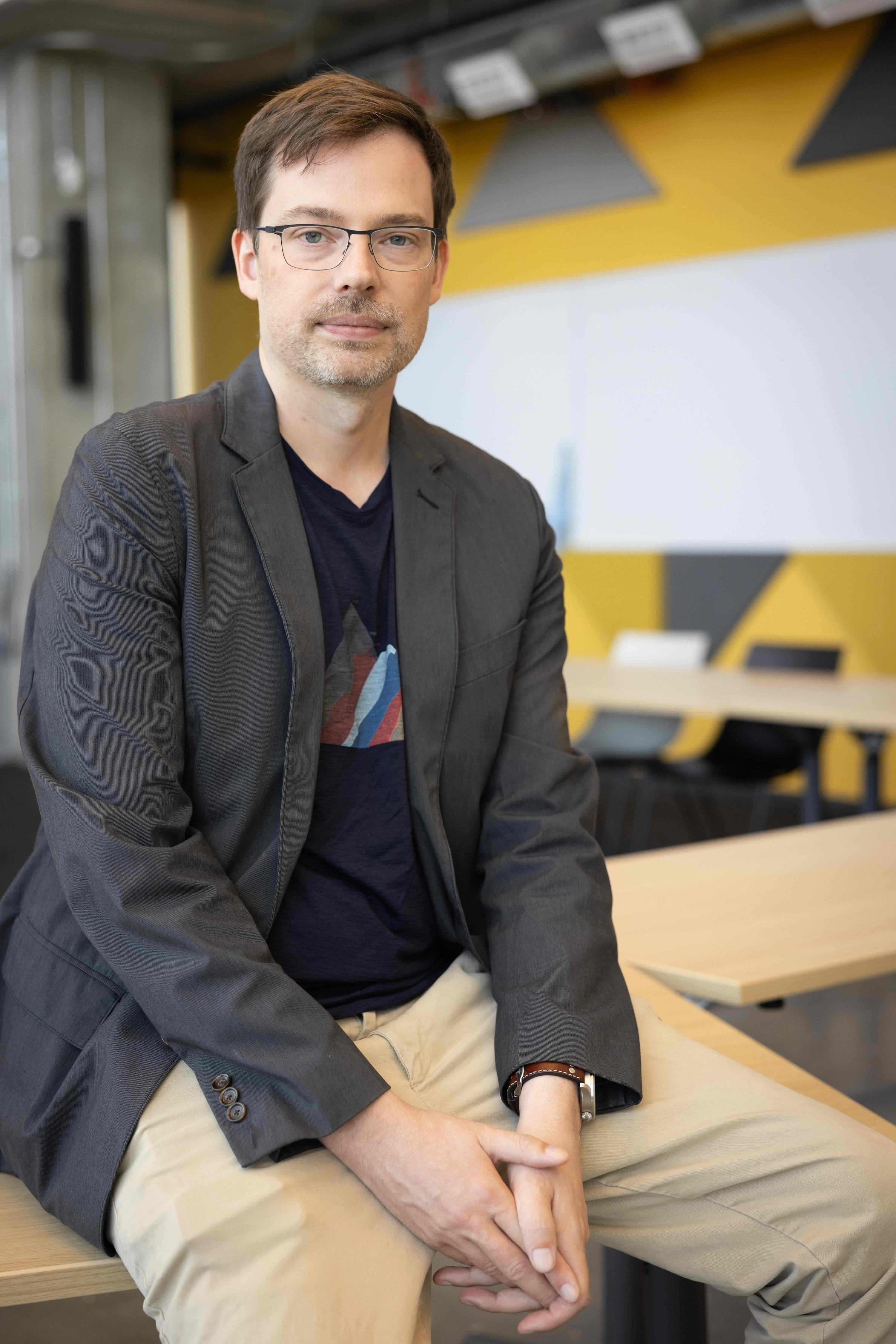
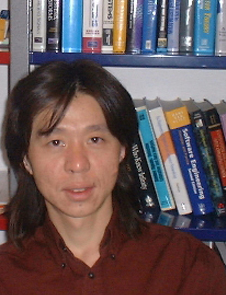
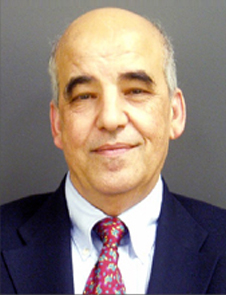
Alan Ritter is an Associate Professor at the School of Interactive Computing , Georgia Institute of Technology, with additional affiliation to the Machine Learning Center . His research focuses on Natural Language Processing , particularly robust models across domains/languages with fewer labels and efficient resource use, plus data-driven dialogue agents for open-topic conversations. Research Interests : Robust NLP models, cross-lingual transfer, resource-efficient learning, dialogue systems, cultural bias measurement, and privacy-aware language models Students : Mentors Ph.D. students in Georgia Tech's ML and CS programs, including Junmo Kang, Yang Chen, and Duong Minh Le. Alumni include Fan Bai (Ph.D. 2023), Yang Chen (Ph.D. 2024), and Andrew Li (M.S. 2024). Awards : NSF CAREER Award, Amazon Research Award, ACL 2024 Best Social Impact Paper, IUI 2009 Best Student Paper. Recent Work : Studies training budget allocation between supervised and preference-based finetuning, cross-lingual information extraction, cultural bias in LLMs, and privacy risk mitigation in social media disclosures. Service : Served as Program Chair for NAACL 2025, Area Chair for multiple top-tier conferences (COLM, EMNLP, ACL, EACL, AAAI). Email : alan.ritter@cc.gatech.edu
Maja J Matarić is the Chan Soon-Shiong Chaired and Distinguished Professor of Computer Science at the University of Southern California's Viterbi School of Engineering, with courtesy appointments in Neuroscience and Pediatrics. She serves as founding director of the USC Robotics and Autonomous Systems Center, co-director of the USC Robotics Research Lab, and Principal Scientist at Google DeepMind. Previously, she held leadership roles as USC's interim Vice President of Research (2020-2021) and Vice Dean for Research (2006-2019). Her educational background includes: PhD in Computer Science and Artificial Intelligence from MIT (1994) MS in Computer Science from MIT (1990) BS in Computer Science from University of Kansas (1987) Matarić pioneers Socially Assistive Robotics (SAR) , a field her lab named, focusing on human-robot interaction that provides assistance through social rather than physical support. Her research targets critical health and wellness challenges including post-stroke rehabilitation, autism spectrum disorder therapy, cognitive exercises for Alzheimer's patients, ADHD academic support, and mental health interventions. She develops systems modeling user engagement, personality, and motivation, with extensive real-world deployments in schools, rehabilitation centers, and homes. Analysis of her recent publications reveals dominant themes in cognitive health robotics (2025 CHI paper on LLM-powered elder care), pediatric assistive technology (2025 IDC speech therapy review), and adaptive preference modeling (2025 HRI contrastive learning work). Her research consistently bridges machine learning with human-centered design for vulnerable populations. Major scientific recognition includes: ACM Athena Lecturer Award (2024) ACM Eugene L. Lawler Humanitarian Award (2024) ACM Fellow (2020) Presidential Mentoring Award (2011) Multiple society fellowships (AAAS, IEEE, AAAI) As a dedicated mentor, Matarić has championed underrepresented groups through CRA-W, placing numerous women in faculty positions. She leads USC Viterbi's K-12 STEM Outreach Program serving low-income Los Angeles schools and authored The Robotics Prime for student education. Her research has secured significant funding enabling real-world technology transfer, with documented impact in rehabilitation centers and homes through deployable SAR systems. Her Robotics Research Lab at USC drives innovation in embodied AI, with current projects spanning LLM-integrated elder care robots, ADHD academic companions, and autism therapy systems. The lab emphasizes co-design with end-users and rigorous real-world validation across diverse populations.
Tim G. J. Rudner is an Assistant Professor in the Department of Statistical Sciences at the University of Toronto, a Faculty Member at the Vector Institute, and a Title A Fellow at Trinity College, University of Cambridge. He was previously an Assistant Professor and Faculty Fellow at New York University. University: University of Toronto School: Faculty of Arts and Science Department: Department of Statistical Sciences Affiliation: Vector Institute, Trinity College (Cambridge) He holds a PhD in Computer Science and an MSc in Statistics from the University of Oxford, where he was advised by Yee Whye Teh and Yarin Gal, and a BS in Applied Mathematics and Economics from Yale University. PhD: Computer Science, University of Oxford MSc: Statistics, University of Oxford BS: Applied Mathematics and Economics, Yale University His research focuses on building robust, transparent, and trustworthy machine learning systems, particularly for high-stakes applications. He develops probabilistic models that improve generalization under distribution shifts, provide reliable uncertainty estimates, and enable fair and interpretable predictions. His work spans generative models, large language models, healthcare, and biomedical discovery. The recent publications highlight a strong trend toward function-space modeling, Bayesian regularization, and AI safety. Tim's work emphasizes principled uncertainty quantification, robustness to subpopulation and semantic shifts, and the development of frameworks for AI governance and specification. His research bridges theoretical advances with real-world applications, especially in safety-critical domains like medicine and defense. Tim has received numerous accolades including being named a Rhodes Scholar, Qualcomm Innovation Fellow, and 2024 Rising Star in Generative AI. He was awarded a $700,000 Foundational Research Grant and a $30,000 Apple Seed Grant for improving LLM trustworthiness. Rhodes Scholar Qualcomm Innovation Fellow AISTATS Notable Paper Award (2024) Outstanding Paper Award, ICLR GenAI4DM Workshop (2024) Apple Seed Grant ($30,000) Foundational Research Grant ($700,000) NeurIPS Spotlight Talk 2024 Rising Star in Generative AI He actively mentors students, particularly first-generation and low-income scholars, and has contributed to major policy frameworks including the OECD AI Classification Framework and a series of CSET issue briefs on AI safety. His work demonstrates a strong commitment to responsible AI development, combining technical rigor with societal impact. Tim leads research efforts at the intersection of machine learning theory and practical deployment, with ongoing projects in generative modeling, reliable LLMs, and AI governance. His lab produces high-impact work regularly published at top-tier conferences such as NeurIPS, ICML, and AISTATS.
Mikhail (Misha) Belkin is a Professor at the Halicioglu Data Science Institute (HDSI) at the University of California San Diego , with an affiliated appointment in the Department of Computer Science and Engineering . He is also an Amazon Scholar , reflecting his impactful industry collaboration. Since January 2024, he has served as the Editor-in-Chief of the SIAM Journal on Mathematics of Data Science (SIMODS) . Research Interests: Belkin's research centers on the theoretical foundations of machine learning, particularly the mathematical understanding of modern deep learning. His work investigates interpolation , over-parameterization , and feature learning in neural networks. He is renowned for introducing the double descent risk curve, which reconciles classical bias-variance trade-offs with the success of overfitted models. His recent work identifies the Average Gradient Outer Product (AGOP) as a fundamental mechanism of feature learning, applicable across architectures like CNNs and transformers. Scientific Contributions and Trends: His recent publications, appearing in Science , PNAS , and NeurIPS , demonstrate a strong trend toward unifying theories of generalization and optimization in over-parameterized systems. He explores how interpolating models can be statistically optimal, how gradient descent converges in non-convex landscapes via the PL* condition, and how kernel methods can be enhanced to perform feature learning. ACM Fellow (2023) Editor-in-Chief, SIAM Journal on Mathematics of Data Science (2024–present) Advising and Grants: Belkin actively mentors students and collaborators such as Adityanarayanan Radhakrishnan , Daniel Beaglehole , and Chaoyue Liu , who are frequent co-authors. He is a Principal Investigator (PI) in the Collaboration on the Theoretical Foundations of Deep Learning , funded by the NSF and Simons Foundation. He is also an external collaborator with the Eric and Wendy Schmidt Center at the Broad Institute and part of the NSF-funded TILOS AI Institute . Laboratories and Teams: While not explicitly named, his research group at UCSD is deeply involved in theoretical machine learning, focusing on the intersection of statistics, optimization, and deep learning. His work often involves large-scale collaborations and is closely tied to initiatives like SIMODS and TILOS.
Xiaohui Yu is a Professor and Graduate Program Director in the School of Information Technology at York University. He holds a BSc from Nanjing University, an MPhil from the Chinese University of Hong Kong, and a PhD from the University of Toronto. His research focuses on the intersection of data management and machine learning, including ML-based database systems, large-scale machine learning, and spatio-temporal data analysis in contexts like intelligent transportation systems and social networks. Supported by grants from NSERC and industry partners, his work has been published in top venues such as SIGMOD, VLDB, and TKDE. He serves as an Associate Editor for journals like IEEE TKDE and ACM TKDD, and actively participates in conference program committees. Education: BSc (Nanjing University), MPhil (Chinese University of Hong Kong), PhD (University of Toronto). Research Interests: Big data management, database systems, machine learning, spatio-temporal data analytics, and video query processing. Recent articles emphasize ML-driven database components, efficient video query optimization, and scalable algorithms for large-scale data. His work addresses challenges in query processing, indexing, and real-time systems. Service: Serves on editorial boards (e.g., Information Systems), and chairs/workshops (e.g., Symposium on Data Markets). Active in program committees for SIGMOD, ICDE, and other leading conferences. Advising & Grants: Directs graduate programs and leads research groups. Collaborates with industry on data marketplaces and AI model integration. No specific student names listed, but actively recruits PhD/Master’s candidates.
Ahmed E. Hassan is a Professor and Canada Research Chair in Software Analytics at the School of Computing, Queen's University. He serves as NSERC RIM Industrial Research Chair and leads the Software Analysis and Intelligence Lab (SAIL). Dr. Hassan pioneered the Mining Software Repositories (MSR) conference and co-edited special issues in the IEEE Transactions on Software Engineering and the Journal of Empirical Software Engineering on MSR topics. Education Ph.D. in Computer Science, University of Waterloo (2005) MMath in Computer Science, University of Waterloo BMath in Computer Science, University of Waterloo His research focuses on software analytics, mining software repositories, and systems engineering. Projects at SAIL include analyzing version control systems, predicting software defects, and improving software quality through empirical methods. The lab's work spans software evolution, architecture analysis, and debugging of distributed systems. Dr. Hassan has taught courses like CISC 322: Software Architecture and CISC 880: Mining Software Engineering Data at Queen's University, University of Victoria, and University of Waterloo. His teaching philosophy emphasizes hands-on learning with tools like WEKA and R, and includes project-based assignments using MSR Challenge datasets. Scientific Awards NSERC RIM Industrial Research Chair in Software Engineering Canada Research Chair in Software Analytics He has industrial experience from RIM (Blackberry platform), IBM Research (Almaden Lab), and Nortel Networks. Dr. Hassan is a named inventor on patents in the US, Europe, Canada, Japan, and India. SAIL lab is funded by NSERC, ORF, CFI, and industry partners.
Brian Leung is an Associate Professor at McGill University, jointly affiliated with the Department of Biology and the Bieler School of the Environment . He holds the prestigious UNESCO Chair for Dialogues on Sustainability and serves as Director of the McGill Neotropical Environment Option (NEO) , a collaborative program with the Smithsonian Tropical Research Institute. His work bridges ecological theory, computational modeling, and environmental policy. Dr. Leung earned his PhD in Biology from Carleton University and completed postdoctoral research at the University of Cambridge and the University of Notre Dame. His academic journey at McGill began in 2004 as an Assistant Professor, advancing to Associate Professor in 2010. His research centers on predictive ecology , particularly modeling biological invasions and sustainability challenges . He develops and applies mathematical, statistical, and computational models to understand invasion dynamics across terrestrial, aquatic, and marine systems. His recent work includes the Panama Research and Integrated Sustainability Model (PRISM) , a spatially explicit framework for sustainability science in the Global South. His research spans scales from local to global and integrates ecological, economic, and social factors. His recent publications show a strong focus on invasion risk assessment , species distribution modeling , economic costs of invasions , and ecological forecasting . He frequently publishes in top journals such as Nature , Ecology Letters , and Global Ecology and Biogeography , emphasizing data-driven decision-making and policy relevance. Dr. Leung has received significant recognition through invitations to contribute to major reports and has co-edited influential works on invasive species economics. While specific named awards are not listed, his leadership roles and publication record reflect high scientific esteem. He actively mentors a dynamic research group, supervising multiple Ph.D. and M.Sc. students on projects related to invasion modeling, mangrove conservation, forest pest dynamics, and urban ecology. His lab emphasizes quantitative skills and interdisciplinary collaboration. He has secured research funding to support these projects, though specific grants are not detailed in the text. He leads the Leung Lab , which focuses on predictive modeling in ecology and sustainability. The lab collaborates with institutions such as the Smithsonian Tropical Research Institute and environmental firms like Habitat. Current projects include multi-species connectivity modeling, mangrove ecosystem services, and forecasting forest pest outbreaks.
Dr. Jason Gibbs is an Associate Professor in the Department of Entomology at the University of Manitoba, Faculty of Agricultural and Food Sciences. He also serves as the Curator of the J. B. Wallis / R. E. Roughley Museum of Entomology (WRME), a significant center for the study of bee biodiversity. His work is central to advancing knowledge in wild bee systematics, phylogenetics, and conservation. PhD in Biology, York University, Canada MSc in Botany, University of Toronto, Canada BSc in Biological Sciences, University of Toronto Scarborough, Canada His research focuses on the diversity, taxonomy, and conservation of wild bees , particularly halictid and panurgine bees. He employs integrative taxonomic approaches , combining morphological, molecular, and ecological data to resolve species boundaries and evolutionary relationships. His work extends to pollinator ecology , examining how habitat management, agricultural practices, and landscape changes affect bee communities and pollination services. He is deeply involved in bee conservation , including the rediscovery of rare species and the development of habitat strategies to support pollinators in human-modified landscapes. The trends in his recent publications reveal a strong emphasis on systematics and alpha-taxonomy , with numerous revisions of bee genera and checklists of regional faunas. He frequently uses DNA barcoding and phylogenomics to address taxonomic challenges. Additionally, his work explores pollination dynamics in agricultural systems , particularly in blueberry and other crops, assessing the roles of wild versus managed bees. There is a consistent theme of habitat enhancement and conservation across his research, with studies on floral strips, prairie restoration, and the impacts of land-use change. Dr. Gibbs is actively involved in mentoring and training the next generation of entomologists. His lab includes several graduate students and highly qualified personnel who contribute to his diverse research projects, as indicated by the asterisked names in his publications. He leads the Gibbs Wild Bee Lab, which is dedicated to understanding bee diversity and evolution. The lab combines field research with molecular and morphological analyses, and maintains close ties with the WRME museum, which serves as a vital resource for specimen-based research and education.
Golnoosh Farnadi is an Associate Professor at the Department of Computer Science and Operational Research at the University of Montreal and an Assistant Professor at the School of Computer Science at McGill University. She holds a Canada-CIFAR Chair in Artificial Intelligence and serves as a Senior Academic Member at Mila - Quebec Institute for Artificial Intelligence. Her interdisciplinary work bridges computer science, operations research, and ethical AI considerations. Her educational background includes a Ph.D. in Computer Science from KU Leuven and Ghent University (2017), followed by postdoctoral positions at the University of Montreal/MILA (2018-2020) and the University of California, Santa Cruz (2017-2018). Her research focuses on algorithmic fairness, responsible AI, deep learning, and probabilistic models, with applications spanning healthcare, recommender systems, and public policy. Farnadi's recent publications demonstrate a strong emphasis on addressing fairness in machine learning systems, with particular attention to cultural diversity in recommender systems, fairness in healthcare optimization (particularly kidney exchange programs), and mitigating hallucinations in large language models. Her work consistently combines theoretical rigor with practical applications, often employing novel mathematical frameworks to tackle complex ethical challenges in AI. Among her notable recognitions are the Google Scholar Award (2021), Facebook Research Award (2021), Google Award for Inclusion Research (2023), and being named one of the 100 Brilliant Women in AI Ethics (2023). She was also recognized as a Rising Star in AI Ethics in 2021. Farnadi supervises numerous graduate students through her EQUAL Lab (EQuity & EQuality Using AI and Learning algorithms), which focuses on developing AI systems that promote fairness and equity. Her teaching includes courses on Responsible AI, Machine Learning, and Trustworthy Machine Learning at both McGill University and HEC Montreal.
Jimmy Huang is a Full Professor and Tier 1 York Research Chair in Big Data Analytics at the School of Information Technology, York University. His research focuses on information retrieval, AI, NLP, and big data analytics in healthcare and web systems. He has published 360+ papers in top venues like SIGIR and ACL, and leads grants totaling $4M+. Huang chairs IEEE's Technical Community on Intelligent Informatics and serves on numerous conference committees. Education: PhD in Information Science (City, University of London), M.Eng and B.Eng in Computer Science Roles: Chair of IEEE TCII, General Chair of SIGIR 2020 and CIKM 2008 Research interests span task-oriented IR, conversational search, healthcare analytics, and graph-based models. His work on hypergraph collaborative filtering (SIGIR 2022) was named a top influential paper. Current projects include NSERC Discovery Grants ($384K) and ADERSIM CREATE ($1.65M). Award highlights include Fellowships from ACM, IEEE, and Canadian Academy of Engineering. Supervised over 90 students, currently mentoring 12 PhD/MSc candidates and 3 postdocs. Active in surgical safety checklist research and medical data analytics. Labs include the IRLab focused on IR and NLP innovations. Major grants include ORF-RE ($3.5M), NSERC CREATE, and multiple CRD partnerships with industry.
Yongyi Mao is a Professor at the School of Electrical Engineering and Computer Science, University of Ottawa. He holds a Ph.D. in Electrical Engineering from the University of Toronto and has a multidisciplinary background in medical biophysics and engineering. His research focuses on communications and machine learning, with notable contributions to federated learning, information theory, and adversarial robustness. Professor Mao has held academic roles since 2003, advancing from Assistant to Full Professor by 2012. Education: B.Eng., Southeast University, 1992 M.D., Nanjing Medical University, 1995 M.S., University of Toronto (Medical Biophysics), 1998 Ph.D., University of Toronto (Electrical Engineering), 2003 Research interests span machine learning frameworks, federated learning, adversarial attacks, and domain adaptation. His work often bridges theoretical foundations (e.g., generalization bounds) with practical applications in text classification and watermarking. Publications reflect a strong emphasis on machine learning theory and NLP applications, with recent trends toward improving model robustness and generalization. No scientific awards are explicitly listed, though his prolific output suggests significant recognition in the field. Advising and grants: While specific student names or grant details are not provided, his position as a Full Professor indicates active research supervision and likely grant involvement. His lab focuses on advancing AI and communication technologies through interdisciplinary approaches.
Karen Mundy is a Professor of Educational Leadership and Policy at the University of Toronto's Ontario Institute for Studies in Education (OISE), cross-appointed to the Munk School of Global and Public Affairs. She holds the distinction of being a former Canada Research Chair (2002-2012) and has served as Associate Dean of Research and Innovation (2012-2014) and Director of the Comparative, International and Development Education Centre (CIDEC) at OISE (2002-2011). Dr. Mundy's research interests focus on education in the developing world , the global politics of 'education for all', educational policy and reform in Sub-Saharan Africa, and the role of civil society organizations in educational change. Her scholarly work bridges academic research with practical policy implementation, making significant contributions to both theoretical understanding and real-world educational challenges globally. Her recent publications demonstrate a strong focus on foundational learning challenges, particularly literacy and numeracy in low-income countries, as well as responses to educational disruptions like the COVID-19 pandemic. Her influential 2021 article 'Why Do We Keep Failing to Universalize Literacy?' critically examines global education architecture and challenges prominent actors like the Gates Foundation to rethink their approaches to educational reform. Two-time winner of the Bereday award for best article in the Comparative Education Review (1998, 2015) Named among Canada's 10 best educators by Time Magazine (2002) President of the Comparative and International Education Society (2014-2015) Dr. Mundy has supervised more than two dozen PhD students to completion and has received research funding from major organizations including the Gates Foundation. Her practical policy work includes serving as Chief Technical Officer at the Global Partnership for Education (2018-2022), where she led the development of strategic frameworks and built the Education Policy and Performance Team from one person to a group of 25 technical experts. She has advised numerous international organizations including the World Bank, UNESCO, UNICEF, and the Mastercard Foundation.
Jonathan Edmondson is Distinguished Research Professor in the Departments of History and Humanities at York University's Faculty of Liberal Arts & Professional Studies. His research focuses on Roman history, epigraphy, and cultural interactions in the Iberian Peninsula, particularly in Lusitania. He co-directs the ADOPIA project, a digital atlas of personal names from Roman Spain. Education includes: Ph.D. in Classics (Ancient History), Cambridge University M.A. in Classics, Cambridge University B.A. in Classics, Cambridge University Research interests span Roman Spain's society and economy, gladiatorial spectacles, the Roman family, and the historiography of Cassius Dio. His work employs epigraphic analysis and digital methods to explore cultural identity in provincial contexts. Recent publications demonstrate sustained focus on Lusitanian onomastics, epigraphic habits, and imperial cults. Articles utilize digital humanities approaches to reconstruct social structures and cultural dynamics in Roman colonies like Augusta Emerita. Awards and honors: Corresponding Member, Real Academia de la Historia (2002) Fellow, Royal Historical Society (2009) Genio Protector de la Colonia Augusta Emerita (2011) Award of Merit, Classical Association of Canada (2014) Dean’s Research Award, York University (2016) Distinguished Research Professor (2017) Edmondson mentors graduate students and leads international collaborations, including the CIL II Mérida inscriptions project. As co-director of ADOPIA, he oversees digital mapping of anthroponymic patterns to analyze cultural change in Roman Spain.
Paul Van Oorschot is a Professor at the School of Computer Science, Carleton University. He has held the Canada Research Chair in Authentication and Computer Security from 2002 to 2023. His expertise spans authentication, applied cryptography, and network security. He co-authored the seminal Handbook of Applied Cryptography and led the NSERC Internetworked Systems Security Network (2008–2013). His research focuses on enhancing security in systems, software, and web authentication, including methods to augment passwords with geolocation and device recognition. He holds a Ph.D. from the University of Waterloo and was awarded the J.W. Graham Medal (2000) and Fellowship in the Royal Society of Canada (2011). Education: Ph.D. in Computer Science from the University of Waterloo (1988) His research interests include authentication systems, public-key infrastructure, smartphone security, and usability challenges in security design. He has contributed to frameworks like OWL for password-based key exchange and SLV for server location verification. His work addresses both technical and human factors in securing modern computing environments. Key contributions include analysis of TLS interception, memory safety in programming languages, and evaluating IoT security best practices. He has published extensively on topics ranging from side-channel attacks to cryptographic protocol vulnerabilities. Awards: J.W. Graham Medal in Computing and Innovation (2000), Fellow of the Royal Society of Canada (2011) His academic leadership includes roles in shaping cybersecurity education and policy, emphasizing the need for rigorous scientific approaches in security research. His research group, the Carleton Computer Security Lab (CCSL), drives interdisciplinary projects in software security and system administration tools.
Professor Ahmed Karmouch is a faculty member at the University of Ottawa's School of Electrical Engineering and Computer Science. He holds a Ph.D. and specializes in advanced networking research, including Network Slicing, Software Defined Networks (SDN), Named Data Networking (NDN), and Cloud Computing. His IMAGINE Lab focuses on developing innovative solutions for autonomic and cognitive networks, emphasizing programmable data planes and in-network computing. Research Interests: Network Slicing Software Defined Networking Named Data Networking Programmable Data Plane Intelligence In-Network Computing Ambient Intelligence & IoT Publications reflect a focus on SDN, NDN, and cloud infrastructure optimization. His work often bridges theory and practical implementation, addressing challenges in network efficiency, reliability, and scalability. Supervised over 30 graduate students, contributing to advancements in edge computing, virtual networks, and autonomic systems. Labs/Teams: Leads the IMAGINE Lab, dedicated to research in mobile autonomic networks, context-aware systems, and future broadband infrastructure. Projects include WiMAX security, policy-based overlay networks, and semantic resource discovery.