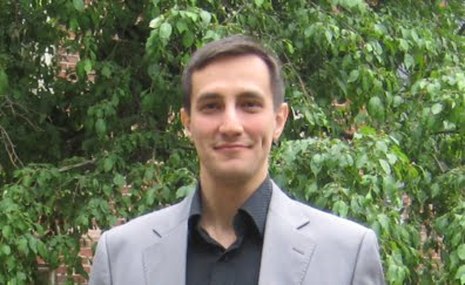
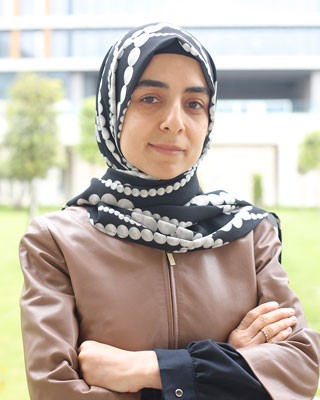
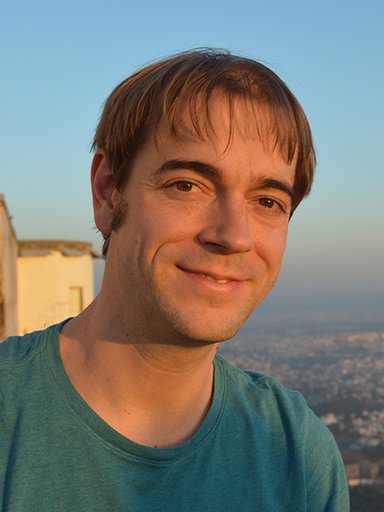
Selçuk Köse is a Full Professor in the Department of Electrical and Computer Engineering at the University of Rochester. Previously, he held positions at the University of South Florida as an Assistant Professor (2012-2018) and Associate Professor (2018-2019). He earned his B.Sc. from Bilkent University (2006), M.S. and Ph.D. from the University of Rochester (2008 and 2012, respectively). His research focuses on hardware security (side-channel attacks, fault injection, PUFs), on-chip power delivery, cryogenic electronics, graphene nanoribbon transistors, and nature-inspired computing (e.g., Ising machines). He has received prestigious awards including the NSF CAREER Award (2014) and Cisco Research Awards (2015–2017). His recent work emphasizes security in quantum computing interfaces, power delivery networks, and covert channel mitigation. Research funding comes from NSF, DARPA, DoE, and industry partners. He serves as an associate editor for IEEE and Springer journals.
Professor Mieczysław Wodecki is affiliated with the Faculty of Information and Communication Technology at Wrocław University of Science and Technology, where he is a member of the Department of Telecommunications and Teleinformatics. He holds a DSc and PhD and is actively engaged in research and teaching. Research Interests: His work centers on discrete optimization, scheduling problems, and methods for solving NP-hard problems. He applies parallel computing and probabilistic models to challenges in project management and automation in construction. His research bridges theoretical computer science with industrial engineering applications, particularly in manufacturing and production systems. The recent publications highlight a strong focus on cyclic job shop and flow shop scheduling, with an emphasis on parallel algorithms and metaheuristics. These works contribute to the optimization of manufacturing processes, especially in cyclic and flexible production environments. Scientific Contributions: While no specific awards are listed, his extensive publication record in reputable journals such as Computers & Industrial Engineering and Bulletin of the Polish Academy of Sciences: Technical Sciences reflects sustained scholarly impact. Advising and Grants: Information on students advised or research grants received is not available in the provided text. Laboratories and Teams: He collaborates closely with researchers including W. Bożejko, J. Pempera, and A. Gnatowski, contributing to a research group focused on discrete systems and scheduling optimization. His work appears in special issues dedicated to discrete systems, indicating active participation in thematic research initiatives.
Siegfried Nijssen is a Professor at the Department of Computer Science within the Faculty of Engineering Science at KU Leuven. He is a core member of the Declarative Languages and Artificial Intelligence (DTAI) research group at the Arenberg campus and affiliated with Leuven.AI, the university-wide Institute for Artificial Intelligence. His academic position is designated as 'professor BOF', reflecting a specialized research-focused appointment. Nijssen's research centers on the integration of declarative programming paradigms with machine learning, particularly through constraint programming frameworks. Key focus areas include interpretable rule learning, neural-symbolic integration, and constraint-based optimization for combinatorial problems. His work bridges theoretical computer science with practical applications in bioacoustics, pandemic response modeling, and network analysis, emphasizing transparency and reliability in AI systems. Analysis of his 2021-2024 publications reveals a strong trajectory toward interpretable AI, with significant contributions like RL-Net (combining neural networks with rule-based reasoning) and novel approaches to NP-hard optimization using structured perceptrons. His research consistently targets the intersection of symbolic reasoning and statistical learning, addressing critical challenges in constraint imposition, model explainability, and stochastic optimization. Nijssen currently leads two major research initiatives: 'Declarative Languages for Imposing Constraints on Machine Learning Models' (2025-2027) and the long-term 'Declarative Programming for Machine Learning (DeclaLearn)' project (2025-2035), demonstrating sustained leadership and funding in his specialized domain. These projects extend his foundational work on constraint-based machine learning frameworks. Based at the DTAI research group, Nijssen contributes to KU Leuven's AI ecosystem through collaborative research in logic programming, constraint solving, and data mining. His work with Leuven.AI positions him at the forefront of institutional efforts to advance trustworthy and constraint-aware artificial intelligence systems.
Deeksha Adil is a Junior Fellow at the Institute for Theoretical Studies in ETH Zurich since January 2023. Her research focuses on designing fast algorithms with provable guarantees for problems in optimization, machine learning, and theoretical computer science. In August 2026, she will transition to an Assistant Professor (Reader) position in the School of Technology and Computer Science at the Tata Institute of Fundamental Research in Mumbai. Ph.D. in Computer Science from University of Toronto (2022), supervised by Prof. Sushant Sachdeva BS-MS in Mathematics from Indian Institute of Science Education and Research, Pune (2017) Visiting Researcher at Simons Institute for Theory of Computation (2023) Research Associate at University of Michigan (2022) Visiting Student at Institute for Advanced Study, Princeton (2019) Dr. Adil's research program centers on algorithm design for optimization problems, particularly lp-norm regression and related challenges. She develops methods that leverage optimization theory and continuous analysis to create efficient algorithms with theoretical guarantees. Her work spans theoretical computer science, machine learning, and numerical analysis, with applications in network optimization and statistical learning. Her publication record shows consistent progress in developing faster algorithms for fundamental optimization problems. Recent work extends into non-convex optimization, covariate shift adaptation, and dynamic algorithms for linear algebra problems. She publishes regularly in top-tier venues including Journal of ACM, NeurIPS, ICALP, and SODA. At the University of Toronto, she served as Teaching Assistant for multiple advanced courses including Algorithm Design, Algorithmic Game Theory, Theory of Computation, and Numerical Analysis, demonstrating strong pedagogical skills alongside her research excellence.
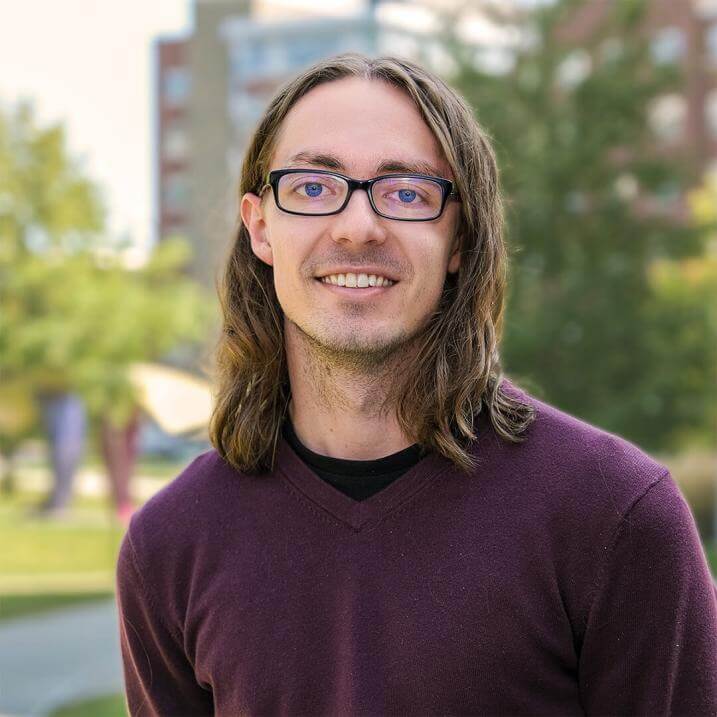
Brian Lavallee is a Lecturer in the Department of Computer Science at the University of Vermont , joining in 2024. His research bridges structural graph theory , parameterized complexity , and approximation algorithms to solve real-world computational problems. At UVM, he teaches foundational courses in programming, automata theory, and computational complexity. Education : Ph.D. in Computing (University of Utah, 2023), B.S. in Computer Science (Duke University, 2017) Brian's research focuses on developing efficient algorithms for NP-hard problems through structural graph analysis and complexity-based approaches. His work on structural rounding and vertex cover approximation has advanced scalable solutions for graphs near tractable classes. Recent publications highlight his expertise in hypergraph clustering, gerrymandering complexity, and generalized coloring hardness. In teaching, he emphasizes core computer science principles through courses like CS 1210 - Computer Programming I and CS 2250 - Computability and Complexity . His office is located in Innovation Hall, Room E322, at UVM's Burlington campus.
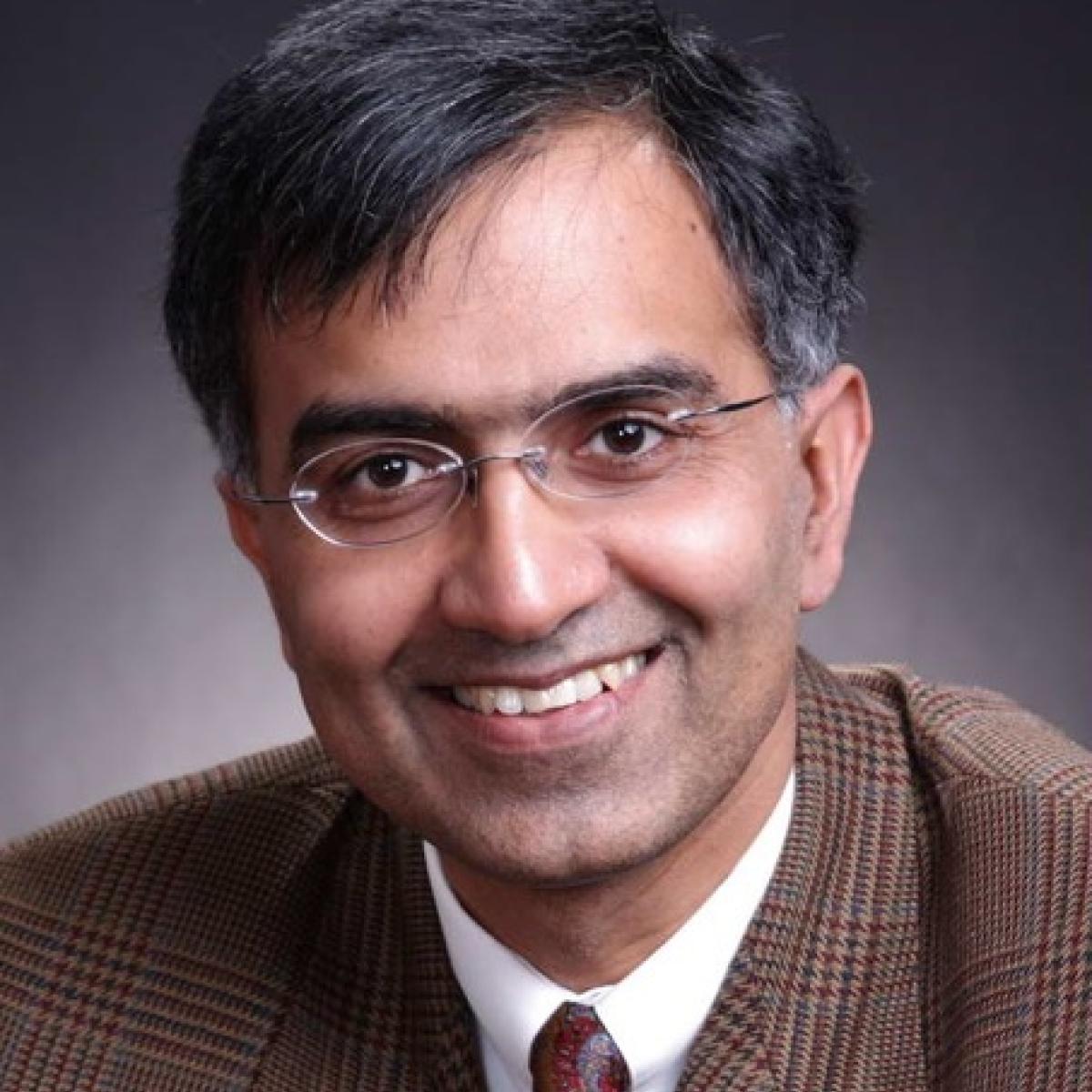
Jiawei Zhang is the Michael Armellino Professor in Business and Professor of Information, Operations and Management Sciences at the Leonard N. Stern School of Business, New York University. He chairs the Department of Technology, Operations, and Statistics and serves as Academic Director of the Master of Science in Data Analytics & Business Computing program. He joined NYU Stern in September 2004 and held a joint position at NYU Shanghai from 2014 to 2017. PhD in Management Science and Engineering, Stanford University, 2004 MS in Operations Research, Tsinghua University, 1999 BS in Applied Mathematics, Tsinghua University, 1996 Professor Zhang's research centers on business analytics, optimization, and operations management. His work integrates machine learning, robust optimization, and stochastic modeling to solve complex problems in supply chain management, healthcare operations, pricing, and revenue management. He investigates decision-making under uncertainty, online learning, and algorithmic approaches to resource allocation. His recent publications reveal a strong focus on theoretical and applied aspects of stochastic optimization, prophet inequalities, assortment optimization, and process flexibility. These works appear in top journals such as Operations Research , Management Science , and Mathematics of Operations Research , reflecting deep contributions to both methodological innovation and practical applications in operations. His editorial service highlights scholarly leadership: Associate Editor, Management Science (2014–present) Associate Editor, Manufacturing & Service Operations Management (2021–present) Associate Editor, Mathematics of Operations Research (2009–present) Associate Editor, Operations Research (2006–present) Professor Zhang teaches a range of courses from undergraduate to PhD levels, including Decision Models and Analytics, Convex Optimization, and Dynamic Programming. He advises PhD students and contributes to executive education programs, including in Risk and Decision Analytics and FinTech. His research is supported by theoretical rigor and real-world applicability, with implications for technology, finance, and healthcare operations.
William Cook is a University Professor in the Department of Combinatorics and Optimization at the University of Waterloo. His research focuses on combinatorial optimization, computational discrete optimization, and the traveling salesman problem (TSP). He is renowned for co-developing the Concorde TSP Solver , a leading software for solving TSP instances. Cook has held editorial roles in top journals such as Mathematical Programming Computation and Mathematical Programming , and served as Chair of the Mathematical Optimization Society and Vice Chair of INFORMS Computing Society. His research interests include algorithm design, operations research, graph theory, and computational methods for NP-hard problems. Notable contributions include advancing cutting-plane methods, branch-and-bound algorithms, and hybrid optimization techniques. Cook has authored influential books like In Pursuit of the Traveling Salesman and The Traveling Salesman Problem: A Computational Study . Awards include membership in the National Academy of Engineering, SIAM Fellowship, INFORMS Fellowship, and the $100,000 Amazon Last Mile Routing Research Challenge prize (2021). He has advised numerous projects in computational optimization, including studies on deep learning applications and combinatorial algorithm development. His work bridges theoretical advancements with practical software tools like QSopt and QSopt_ex .
Sanjeev Arora is the Charles C. Fitzmorris Professor of Computer Science at Princeton University , where he has been since 1994. He earned a B.S. in Math with Computer Science from MIT in 1990 and a Ph.D. in Computer Science from UC Berkeley in 1994. Education MIT (B.S. 1990) UC Berkeley (Ph.D. 1994) His research spans theoretical computer science , computational complexity , and machine learning theory . Recent work focuses on mathematical frameworks for AI, including skill-based training, model interpretability, and synthetic data pipelines. Key article trends include automated theorem proving , LLM instruction tuning , topic modeling unlearning , and visual reasoning evaluation . Awards span the ACM-EATCS Gödel Prize , Simons Investigator Award , and ACM Infosys Foundation Award . He advises 18 Ph.D. students and directs the Princeton Language and Intelligence center.
Victor Lagerkvist is an Associate Professor at the Department of Computer Science (IDA) , Linköping University, Sweden. He is affiliated with the Theoretical Computer Science Laboratory (TCSLAB) and the Artificial Intelligence and Integrated Computing Systems (AIICS) division. His research focuses on the algebraic method for analyzing computational complexity , particularly in constraint satisfaction problems (CSPs), SAT, and graph homomorphism problems. PhD in Computer Science (2016, Linköping University) Habilitation (2020, Linköping University) His recent work investigates fine-grained complexity , twin-width , and universal algebra to improve algorithms for NP-hard problems. Publications span topics like propositional abduction, Allen's interval algebra, and semiring-based dynamic programming. His scientific awards include the Swedish Research Council Starting Grant (2020) and the 2017 Young Researcher Prize from the Ruth and Nils-Erik Stenbäck Foundation. He supervises PhD students such as Leif Eriksson and serves as a secondary supervisor for others at Linköping University and Université de Lorraine.
Sundar Vishwanathan is a Professor in the Department of Computer Science and Engineering at Indian Institute of Technology Bombay (IIT Bombay), where he has established himself as a leading researcher in theoretical computer science. His academic career spans over three decades with consistent contributions to algorithms, combinatorics, and complexity theory. His research interests form a cohesive body of work focused on theoretical foundations of computing: Algorithms (particularly approximation algorithms, online algorithms, and randomized algorithms) Combinatorics and extremal set theory Complexity theory and circuit lower bounds Graph theory and graph algorithms Combinatorial optimization problems Vishwanathan's publication record demonstrates remarkable consistency and depth, with publications spanning from 1990 to 2024. His recent work focuses on graph algorithms (particularly maximum matching problems), approximation algorithms for combinatorial optimization, and circuit complexity. He has developed innovative techniques using linear algebra, combinatorial methods, and probabilistic analysis to solve challenging theoretical problems. His approach often bridges theoretical insights with practical algorithmic considerations. His collaborative work spans multiple research groups, with frequent co-authorships with researchers such as Ashish Chiplunkar, Sumedh Tirodkar, and Sreyash Kenkre. His research has evolved from foundational work in online graph coloring in the 1990s to more specialized topics in combinatorics and recently to circuit lower bounds, showing both depth in core areas and adaptability to evolving research landscapes.
Dr. Zeynep ADAK serves as a full-time Lecturer at 29 Mayis University, specializing in computational optimization and industrial systems. Her academic foundation includes doctoral research in multiprocessor scheduling and master's work in computational wave modeling. Her educational journey features: Bachelor of Science in Industrial Engineering, Marmara University (2007) Master of Science in Computational Science and Engineering, Boğaziçi University (2011) Doctor of Philosophy in Industrial Engineering, Marmara University (2020) ADAK's research bridges theoretical optimization with industrial applications, focusing on job shop scheduling and metaheuristic methods. Her work extends to artificial intelligence in production management and smart manufacturing systems, demonstrating strong interdisciplinary connections between operations research and practical engineering solutions. Recent investigations include disaster response network analysis during the 2023 Kahramanmaraş earthquakes. Publication trends reveal consistent contributions to scheduling theory since 2013, with accelerating output after her 2020 doctorate. Her work spans operations research, computer science, and industrial engineering domains, increasingly incorporating real-world applications in digital manufacturing and crisis management while maintaining core expertise in combinatorial optimization.
Sean Hallgren is a Professor in Computer Science and Engineering, specializing in quantum algorithms and computational complexity. His research spans both theoretical and applied aspects of quantum computing, cryptography, and mathematical optimization. Research Interests Hallgren's work focuses on: Quantum algorithm design and complexity Cryptographic reductions under quantum models Number-theoretic problems in cryptography Quantum linear algebra techniques Computational complexity of combinatorial problems Recent Publications Hallgren's 15 most recent articles (5 shown) demonstrate expertise in quantum algorithm limitations, cryptographic hardness reductions, and isogeny-based cryptography. His 2023 study in Quantum analyzed the Macaulay matrix approach for solving polynomial systems using quantum linear solvers. Grants & Projects Current and past projects include: Exponential Speedups and Limitations of Quantum Computation (U.S. Navy, 2018–) NSF Convergence Accelerator: Scalable Quantum Artificial Intelligence for Discovery (2020–2023) SaTC: CORE: Small: Classical and quantum algorithms for number-theoretic cryptography (2020–2025) AF: Small: Quantum Algorithms and Complexity (2016–2020, PI)
Corinne LUCET-VASSEUR is a University Professor at Université de Picardie Jules Verne (UPJV), leading Research Unit UR 4290 (OCIA - Optimisation Combinatoire, Images et Applications). Her office (Room 302, Tel: 5900) serves as the hub for her research group focused on combinatorial optimization and artificial intelligence applications. Her research spans: Combinatorial Optimization : Developing metaheuristics for NP-hard problems Healthcare Logistics : Patient flow optimization, facility location, simulation training Logistics Engineering : Parcel distribution, vehicle routing with time windows Algorithm Design : Ant Colony Optimization, Adaptive Large Neighborhood Search, portfolio methods She applies these methodologies to solve complex real-world problems, particularly in healthcare systems where resource constraints and scheduling complexity demand innovative optimization approaches. Her work bridges theoretical advances with practical implementation through industrial partnerships. Current research projects include: SMILE PICK UP (CIFRE industrial partnership) Simusanté (healthcare simulation) LORH (logistics optimization) These projects secure ongoing funding and provide doctoral training opportunities through industry collaboration. Her publication record demonstrates consistent methodological innovation applied to healthcare and logistics challenges across multiple European conferences and journals. Professor Lucet-Vasseur actively mentors junior researchers through co-authorship on conference papers and journal articles. Her supervision style emphasizes practical problem-solving with industry relevance, preparing students for both academic and industrial careers in optimization. The OCIA research unit provides a collaborative environment for tackling complex combinatorial problems with real-world impact. The OCIA laboratory serves as UPJV's center for combinatorial optimization research, specializing in metaheuristic development for healthcare and logistics applications. The lab maintains strong industry connections through CIFRE contracts and applied projects, ensuring research relevance while providing students with exposure to real business challenges. Current focus areas include adaptive algorithm selection using reinforcement learning and fitness landscape analysis for optimization problems.
Thomas Rothvoss is a Professor at the University of Washington with a joint appointment in the Mathematics and Computer Science departments, conducting pioneering research at the intersection of theoretical computer science and discrete mathematics. His work has fundamentally advanced multiple subfields through breakthrough algorithmic developments. Rothvoss is renowned for solving longstanding problems including exponential lower bounds for extension complexity of combinatorial polytopes, optimal approximation algorithms for Steiner tree and bin packing, and efficient discrepancy minimization techniques. His recent focus on integer programming culminated in the first major running-time improvement in over 30 years, resolving a conjecture by Kannan and Lovász that had stood since 1988. His publication trajectory demonstrates consistent innovation in leveraging geometric and number-theoretic methods to solve NP-hard optimization problems, with recent work bridging lattice theory and algorithmic design to achieve breakthrough complexity results in integer programming. Professor Rothvoss has received top honors in theoretical computer science: Delbert Ray Fulkerson Prize (2018) Gödel Prize (2023) Best Paper Award at FOCS 2023 While specific advising relationships aren't detailed in available sources, his sabbatical collaborations—like the May-June 2025 engagement with CWI's Networks & Optimization group—reflect active mentorship within international research communities. His work continues to attract significant funding, evidenced by support for extended research visits from institutions like CWI. Rothvoss maintains strong ties with European research groups, particularly through his ongoing collaboration with CWI's Networks & Optimization team during sabbatical periods, where he develops lattice-based approaches to combinatorial optimization problems.