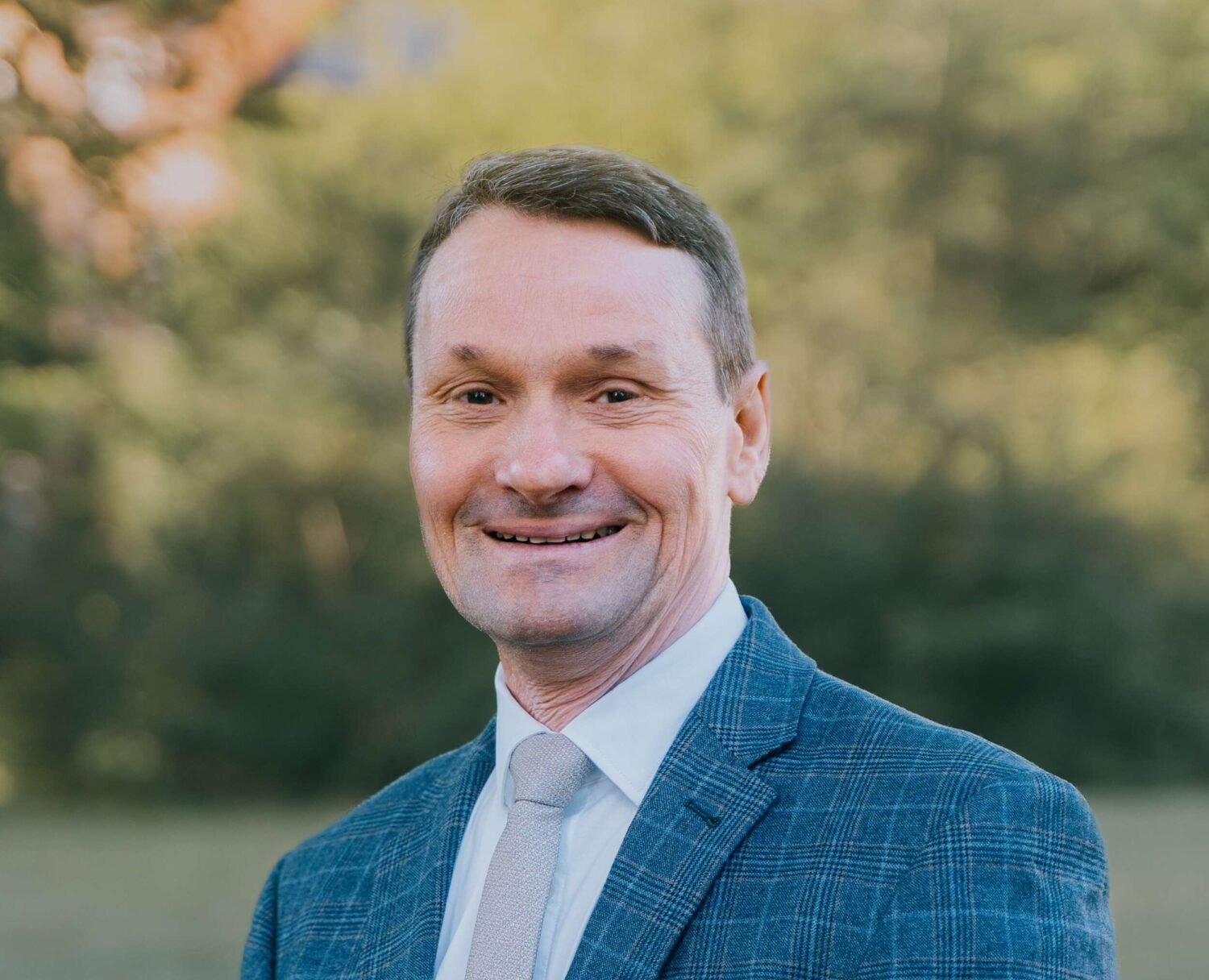
Prof. Dr. Kianoosh Rezania is a Professor of West Asian Religious History and Director of the Käte Hamburger Kolleg Dynamics of Religious History at Ruhr University Bochum. His research focuses on Zoroastrianism, Iranian religions, and the history of religions, with a particular emphasis on ancient Iranian languages and interreligious dynamics. He holds a Ph.D. from Georg-August University Göttingen and has conducted extensive research on topics such as Zoroastrian cosmology, Sasanian-Zoroastrian interactions, and the transmission of religious texts. His work combines philological analysis with historical and cultural studies approaches. Rezania's academic career includes roles as a research associate at Göttingen University and his habilitation project on spatial concepts in early Zoroastrianism. He has directed major research initiatives like the Graduate School of Metaphor and Religion (GSMR) and the Käte Hamburger Kolleg. His publications span monographs, edited volumes, and peer-reviewed articles exploring themes such as religious economics, Middle Persian lexicography, and cross-cultural exchanges between the Safavid and Mughal empires. His current projects include the 'Zoroastrian Middle Persian: Digital Corpus and Dictionary' initiative and studies on Pahlavi literature's interreligious context. He collaborates internationally, leading interdisciplinary teams and contributing to digital humanities efforts in religious studies.
Rhenish Friedrich Wilhelm University of BonnGermany
Prof. Dr. Julia A. B. Hegewald is a Professor of Oriental Art History at the University of Bonn, Germany, affiliated with the Institute of Oriental and Asian Studies (IOA) and the Department of Asian and Islamic Art History (AIK). Her research focuses on artistic expressions of dependency in Asian art, particularly South Asian, using 're-use' theory to explore cultural integration and creativity under adversity. She holds a Ph.D. from SOAS, University of London, and a Habilitation from RWTH Aachen. Key academic roles include founding the Cam-Kar Research Institute in Mysore (since 2002) and serving on editorial boards for journals like the Journal of Global Archaeology and Veranda . She has led major projects, including the Emmy Noether Junior Research Group on Jainism in Karnataka (2005–2014). Awards include the DFG Emmy Noether extension (2011–2014) and the Prix en études indiennes (2010). Hegewald has authored over 3 books, edited 6 volumes, and published 77 academic articles. Her work bridges art history with cultural studies, addressing themes like Jaina temple architecture, Indo-Islamic syncretism, and modern Indian urban planning. She actively contributes to global academic networks, including the European Association for Asian Art and Archaeology (EAAA).
Dr. Carola Lorea is a Junior Professor at the Institute for Religious Studies, Faculty of Philosophy, University of Tübingen (since 2023) and former Senior Research Fellow at NUS's Asia Research Institute (2022-2023). Her work bridges religious studies, cultural anthropology, and digital humanities with a focus on South/Southeast Asian borderlands. PhD in South Asian Studies (2015, La Sapienza University of Rome) 2023 Habilitation Venia Legendi in religious studies and cultural anthropology Research centers on Matua traditions , Baul oral cultures , religion and pandemics , and sensory scholarship . She pioneered the CoronAsur research blog (2020) and leads the MANTRAMS project with ERC Synergy Grant (2023). Key contributions include: Digital Archive of Baul Songs (EAP1247 PI) Theoretical work on bricolage thinking in borderland communities Critical analysis of caste dynamics in post-Partition Andaman settlers Sonic approaches to religious studies Teaching includes courses on Religious Sounds (Tübingen 2024), Religion and South Asian Society , and Bengali language instruction. She founded the Digital Archive 'Songs of the Old Madmen' and co-edits volumes on global religious sound studies.
Dr. Alexandra von Lieven is a Senior Lecturer in the Department of Egyptology at the Free University of Berlin , specializing in Ancient Egyptian mythology, religious studies, and cultural history. She held a fellowship at the Lichtenberg-Kolleg (University of Göttingen) from October 2010 to July 2011. Her research focuses on divine norm transgression in Egyptian myths, analyzing hierarchies, gender roles, and legal frameworks. She explores comparative phenomena in other ancient mythologies to distinguish Egyptian-specific traits from cultural universals. Education : Egyptology and Comparative Religious Studies, with additional studies in Ancient Near Eastern Archaeology, Classical Archaeology, and Indology at the University of Tübingen. Research Highlights : Compiling a comprehensive inventory of deities involved in norm transgression; identifying mythemes related to rape, hierarchies, and gender in the Osiris myth; comparative analysis with other ancient mythologies. Key Publications : Studies on celestial mythology, Thoth's role in cross-cultural traditions, Seth cult sites, divine manifestations in nature, and rituals for goddesses.
Prof. Dr. Michael Schramm serves as an Extraordinary Professor of Classical Philology at the University of Göttingen's Faculty of Humanities. His academic journey spans prestigious institutions including Heidelberg, Jena, Leipzig, and Bielefeld, with doctoral and habilitation degrees establishing his expertise in ancient philosophical traditions. Research interests center on Neoplatonism, Greek tragedy reception, and Late Antique political-religious dynamics, particularly focusing on Julian the Apostate's theological works and Euripides' influence in imperial philosophy. His publications demonstrate rigorous engagement with textual criticism, philosophical exegesis, and intercultural dialogue between pagan and early Christian thought. Current research includes DFG-funded projects on Julian's religious philosophy (2015-2019) and Euripidean tragedy's relationship to providence (2020-2021), alongside a Gerda Henkel Foundation research fellowship (2020-2021). His editorial leadership in volumes like Euripides-Rezeption in Kaiserzeit und Spätantike (2020) shapes contemporary scholarship in classical reception studies. Advisory roles include postdoctoral mentoring through DFG research groups, with institutional service comprising temporary professorships at Bamberg, Bonn, Tübingen, and Jena since 2012. His methodological approach integrates philological precision with philosophical analysis across monographs, critical editions, and interdisciplinary handbooks.
Professor Shervin Farridnejad is a faculty member at the Asia-Africa Institute of the University of Hamburg, where he holds the Professorship of Iranian Studies since September 2022. He also serves as the Head of the MA program 'Manuscript Cultures' at the Centre for the Study of Manuscript Cultures (CSMC) within the Cluster of Excellence 'Understanding Written Artefacts'. PhD in Ancient and Middle Iranian Philology and Zoroastrian Studies (2014) - Georg-August University Göttingen MA in Ancient Iranian Studies (2007-2009) - Georg-August University Göttingen MA in Fine Arts and Art History (2003-2006) - Tarbiat Modares University Tehran BA in Fine Arts (Painting) (1998-2002) - Tehran University His research focuses on Zoroastrianism , particularly examining its cultural and religious history from antiquity to the early Islamic period. He investigates the dynamics between Zoroastrians and non-Zoroastrians, Zoroastrian art and iconography, and manuscript cultures. His work also extends to Judeo-Persian literature , Ancient Iranian philology , and Persian calligraphy . Recent publications highlight ritual practices in Zoroastrianism, including sacrificial food traditions and gift-exchange theology. The 2024 article on canine roles in Zoroastrian meat ethics and 2023 works on Safavid manuscript iconography demonstrate his interdisciplinary approach combining textual analysis with visual culture studies. 2022-2024: Editorial board member for Sasanian Studies series 2020-2023: Book Review Editor of the journal Iranian Studies 2016-2022: Co-editor of Ancient Iran Series 2015-2024: Contributor to Bibliographia Iranica and DABIR journals As an active academic leader, he serves as Sustainability Officer of the Asia-Africa Institute, member of the CSMC Steering Committee, and deputy member of the Faculty Council of Humanities at University of Hamburg. His teaching spans from introductory courses on Iranian history to specialized seminars on Zoroastrian rituals and Persian manuscript cultures.
Dr. Alexander Heinemann is a Lecturer and curator at the University of Tübingen's Institute of Classical Archaeology. Previously, he held a lecturer position at Freiburg University (2006-2017) and participated in archaeological projects across Turkey, Greece, and Italy. His work centers on Roman state monuments, visual narratives, and classical reception studies. PhD in Classical Archaeology (Heidelberg, 2003) Magister Artium in Classical Archaeology (Heidelberg, 1999) Research focuses include Roman Imperial topography , Greek vase painting , and visual culture analysis . His monograph on Dionysian imagery and co-edited volumes on symposion culture and visual narration highlight interdisciplinary approaches. Recent publications analyze Roman imperial iconography, Hellenistic ivory art, and Dante's archaeological engagement. Key themes involve political symbolism , ritual practices , and artifact contextualization . Traveling Fellow, German Archaeological Institute (2004/5) Gerda Henkel Foundation Fellow (2003/4) Active in public outreach through exhibitions like 'Vom Trinken und Bechern' and collaborative editorial projects, he serves as co-founder of das Rollpodest platform for archaeological collections.
Guido Sprenger is a full professor at the Institute of Anthropology, Heidelberg University since 2010, previously holding positions at Academia Sinica (Taipei) and the University of Münster. He specializes in Southeast Asian anthropology, focusing on rituals, animism, sociality, and human-environment relationships. His research includes over two and a half years of fieldwork with highlanders in Laos, particularly the Rmeet and Jru’ communities. Education: Studied Social Anthropology at the University of Münster (1988–1996), with an ERASMUS exchange in Leiden (Netherlands). Earned his M.A. (1996) and Ph.D. (2004) in anthropology, both from Münster. His doctoral thesis, Die Männer, die den Geldbaum fällten , received the 2004 Frobenius Institute Research Award. Research Interests: Southeast Asia, ritual practices, gift exchange, animism, cultural identity, gender, and environmental anthropology. He explores how local theories of sociality and cosmology intersect with broader academic and societal frameworks. Grants & Projects: Led multiple funded initiatives, including the German Research Council’s SFB 1671 'Heimat(en)', the 'Plural Ecologies in Conflict' network, and the DORISEA project on religious dynamics. He has also supervised numerous PhD students, focusing on topics like ritual dynamics, ecological ethics, and transnational identity. Awards: Recipient of the 2004 Frobenius Institute Research Award for his doctoral work. His publications include influential monographs, edited volumes on animism and Southeast Asian ecologies, and peer-reviewed articles in top journals like SOJOURN and Paideuma . Media & Outreach: Active in public discourse, with interviews on topics like gift exchange, ritual practices, and cultural relativism. Featured in radio programs and podcasts, including SWR Kultur and Weitblick Poducation.
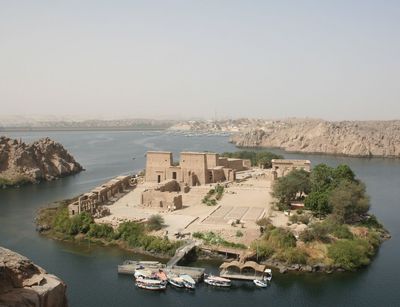
Holger Kockelmann is a Professor at the University of Leipzig, serving as Director of the Egyptological Institute and Egyptian Museum - Georg Steindorff. He also holds the position of Dean of Studies within the Faculty of History, Arts and Regional Studies. His academic career spans multiple institutions including the University of Bonn, Trier, Tübingen, Würzburg, and Ain Shams University. Education: Magister Artium in Egyptology (1994-2000) from the University of Trier, Master of Studies in Oriental Studies at Oxford (2000-2001), Habilitation at Tübingen (2014) Research Interests focus on hieroglyphic temple inscriptions, hieratic and demotic texts, cultural history of Greco-Roman Egypt, comparative Egyptian religious phenomena, and Egyptian onomastics. He leads the Edition of the Temple Inscriptions of Philae project funded by Gerda Henkel Stiftung since 2021. Article Trends show specialization in Philae temple epigraphy, religious text analysis, and visual-textual discrepancies in temple art. His work spans 2016-2021 with co-authorship on collaborative projects. Notable Memberships: International Association of Egyptologists (since 2010), Egypt Exploration Society (since 2006), ICOM (since 2023) Collaborative Efforts include partnerships with institutions like Fondazione Museo delle Antichità Egizie di Torino, Austrian Academy of Sciences, and projects involving digital humanities (e.g., Digital Rosetta Stone). His work integrates archaeological, philological, and computational approaches to ancient Egyptian studies.
Thomas Blank is a Professor of Ancient Cultural History at Johannes Gutenberg University Mainz (JGU) since August 2016, affiliated with the Department of History. Previously, he held positions as Junior Professor of Greek History at Saarland University (2013-2016) and served as Acting Chair of Ancient History at the University of Münster (2019-2020). His academic trajectory includes research assistantships in Tübingen and Mainz. Education: Dr. phil. in Ancient History (summa cum laude) from Eberhard Karls Universität Tübingen (2012) State Examination in History, Latin, and Greek from Eberhard Karls Universität Tübingen (2007) Undergraduate studies in History, Latin, and Greek at Eberhard Karls Universität Tübingen (2001-2007) Research Focus: Blank's work centers on ancient rhetoric's intersection with political philosophy (especially in Classical Athens), Roman religious practices, and cultural communication mechanisms. He investigates how social 'third spaces' form through religious secrecy, neighborly relations, and theatrical performance. Current projects include urban foreignness studies and the cultural role of Graeco-Roman rhetoric. Publication Trends: His 15 most recent articles demonstrate consistent focus on Isocratean rhetoric, political communication in Athenian/Roman contexts, and reception of antiquity in modern media. Methodologically, they blend historical analysis with literary criticism and cultural theory, frequently examining power dynamics through rhetorical frameworks. Awards & Fellowships: Research Scholarship from Friedrich-Ebert-Stiftung (2008-2010) Study Grant from Friedrich-Ebert-Stiftung (2002-2007) Academic Leadership: Blank directs doctoral candidates in projects ranging from Athenian legal systems to Ptolemaic athletic competitions. He leads the DFG-funded graduate program 'Urban Difference' and co-leads subprojects in the LOEWE Center 'DynaRel' and MSCA-DN 'TheSPIS'. As liaison lecturer for the Friedrich-Ebert-Stiftung since 2015, he mentors scholarship recipients. Professional Engagement: Secretary General of the International Society for the History of Rhetoric (ISHR) and founding president of Societas Isocratica. He has held administrative roles including Managing Director of JGU's History Department (2022-2023) and serves on multiple academic committees.
Prof. Martin Klingbeil is a theologian and biblical scholar affiliated with the Theologische Hochschule Friedensau , where he serves as Professor für Altes Testament . His research focuses on the Old Testament , Hebrew Poetry , Biblical Archaeology , and Ancient Near Eastern Iconography , often bridging textual analysis with material evidence. Klingbeil holds a D.Litt. from Stellenbosch University and has contributed extensively to peer-reviewed journals and edited volumes. He is a co-editor of Khirbet Qeiyafa Excavation Reports and serves as Consulting Editor for Davar Logos . His work frequently examines the interplay between biblical texts and their archaeological contexts, particularly through sites like Khirbet Qeiyafa and Lachish . As an active member of academic societies such as the Society of Biblical Literature and American Schools of Oriental Research , Klingbeil has organized and presented at numerous international symposia. His editorial and fieldwork contributions underscore his dedication to interdisciplinary biblical studies.
Rhenish Friedrich Wilhelm University of BonnGermany
Prof. Ludwig D. Morenz is a Professor of Egyptology at the University of Bonn and Director of the Egyptian Museum Bonn. He holds positions as a Principal Investigator in archaeological research and leads excavations in Egypt. His academic journey includes a Habilitation from the University of Tübingen (2001), a PhD from Leipzig (1994), and extensive postdoctoral fellowships across Europe. His research focuses on Pharaonic socio-economic systems, particularly dependency relationships between state expeditions and Canaanite populations. He examines ancient Egyptian economy, religion, and cultural interactions through material and textual evidence. Key areas include the origins of alphabetic writing, solar deity symbolism, and Roman-Egyptian cultural hybridity. Morenz has secured over €1 million in third-party funding from institutions like the German Research Foundation (DFG) and Gerda Henkel Foundation. He supervises numerous doctoral and master's students, reviewing over 30 theses and international PhDs. His editorial roles include founding journals like Studia Sinaitica and Bonner Ägyptologische Beiträge . Major excavations under his leadership include the Elite Necropolis of Qubbet el Hawa and the Serabit el-Chadim Hathor temple project. He participates in consortia such as the DFG Research Training Group 'Archeology of Pre-Modern Economies' and the International Congress of Egyptologists. Awards: Heisenberg Fellowship (DFG), Feodor Lynen Fellowship (Humboldt Foundation), Herzog-Ernst Scholarship Exhibitions: Curated annual special exhibitions at the Egyptian Museum Bonn, including a landmark show on alphabetic writing origins at Cairo's National Museum Publications: 13 monographs, 4 edited volumes, and over 100 articles
Prof. Dr. Miloš Řezník is a prominent historian and Professor of European Regional History at the Faculty of Philosophy, Chemnitz University of Technology. He has held this position since 2009 and served as Pro-Dean of the Faculty. From 2014 to 2024, he was Director of the German Historical Institute in Warsaw. His academic career spans institutions in Prague, Liberec, Leipzig, and Chemnitz, reflecting a deep engagement with Central and Eastern European history. PhD and Habilitation in General History, Palacký University Olomouc Extensive research on collective identities, nationalism, borderlands, and elite transformations in Central Europe Expertise in Polish, Czech, Galician, and Habsburg history Longstanding leadership roles in German-Czech and German-Polish historical commissions His research interests center on the cultural and political dynamics of regional identities in Central and Eastern Europe, especially in border regions such as Silesia, Bohemia, Pomerania, and Galicia. He explores how historical memory, nationalism, and elite strategies have shaped regional consciousness from the 18th to the 20th century. His work bridges historiography, cultural studies, and political history, with a strong focus on transnational and comparative perspectives. The 15 most recent publications reveal a consistent thematic trajectory: the interplay between regionalism, ethnicity, memory, and state formation in Central Europe. Key sub-themes include the Kashubian movement, Habsburg provincial governance, German-Czech-Polish relations, and the symbolic politics of historical figures and events. His scholarship increasingly engages with theoretical frameworks such as retrotopia, ethnoregionalism, and the institutionalization of historical science. Scientific Awards and Honors: Foreign Member, Polish Academy of Arts and Sciences (2023) Member, Scientific Advisory Board, Federal Foundation for the Study of Communist Dictatorship in East Germany (2025) Member, Scientific Council, Bundeskanzler-Helmut-Kohl-Stiftung (2022) Member, Johann Gottfried Herder Research Council (2011–present) Prof. Řezník has supervised numerous academic projects and dissertations, particularly through collaborative EU and DFG-funded initiatives focused on cross-border history. He has served as editor for multiple academic series and journals, including Journal of Modern European History (2019–2024). His institutional roles include membership in evaluation committees for the European Research Council, DFG, and Czech Science Foundation. He leads or has led several major research initiatives, including the Interreg Project: Cultural Heritage of the Vogtland and Egerland , and has organized numerous international conferences on Central European history, memory, and regionalism. His work is deeply embedded in transnational academic networks, particularly through the German Historical Institute in Warsaw and the Kompetenzzentrum Mittel- und Osteuropa Leipzig.
Susanne Marschall is a Professor of Media Studies (focus: audiovisual media, film and television) at the University of Tübingen , where she also serves as Director of the Center for Media Literacy and editor of the open journal "Colour Turn" . Her research bridges historical hermeneutics, media culture, and interdisciplinary studies of color and visual perception, with a strong empirical focus on film, television, and photography. Doctoral supervision across diverse topics (AI interaction, AR for environmental issues, Bollywood representations, health communication) Founded Tübingen Research Center for Animation and Emerging Media (2013) Interdisciplinary collaborations with neuroscience, cultural studies, and educational initiatives Recent publications explore cinematic color theory, animation aesthetics, and transcultural narratives. Her practical projects (e.g., Lotte Reiniger - Tanz der Schatten documentary, AR applications for social issues) demonstrate her commitment to connecting academic research with media practice. Awards include the 2003 Senate Teaching Prize and 2012 "Professor of the Year" (UNICUM BERUF).
Bettina Kümmerling-Meibauer is a Full Professor of German Literature and Literary Didactics at the Eberhard Karls University of Tübingen, specializing in children's literature, picturebook research, and intermedial studies. With a habilitation from Tübingen (2001) and a PhD from Cologne (1990), she has held guest professorships in Sweden and Austria, declined a chair at the Free University of Bolzano (2014), and led EU-funded projects like Canon Constitution and Canon Change in Children's Literature (2017) and The Digital Literacy and Multimodal Practices of Young Children (2015–2019). Her research spans avant-garde children's literature, Jewish children's books, and early literacy. Education : PhD in German Philology (University of Cologne, 1990); Habilitation in Children's Literature (Tübingen, 2001). Her research interests focus on intersections between children's and adult literature, avant-garde aesthetics in picturebooks, and the political dimensions of children's media. She has co-edited The Routledge Companion to Picturebooks (2018) and Canon Constitution and Canon Change in Children's Literature (2017). Recent publication trends highlight her work on cognitive challenges in picturebooks, the impact of digital media on young adult literature, and the legacy of classical myths in contemporary children's works. She has also explored topics like propaganda in GDR photographic books and multilingual children's literature. Scientific awards include the 2017 ChLA Edited Book Award for Children’s Literature and the Avant-Garde (co-edited with Elina Druker). She serves on editorial boards for journals like International Research in Children’s Literature and Libri & Liberi . Advising includes completed doctorates on topics like Swedish fantasy reception in Germany, initiation novels in 20th-century children's literature, and gender discourse in Erich Kästner adaptations. She has advised on international doctoral projects in the UK, Belgium, South Africa, Portugal, Sweden, and Spain.