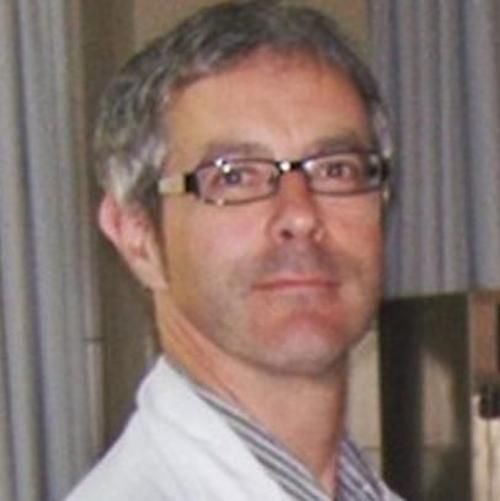
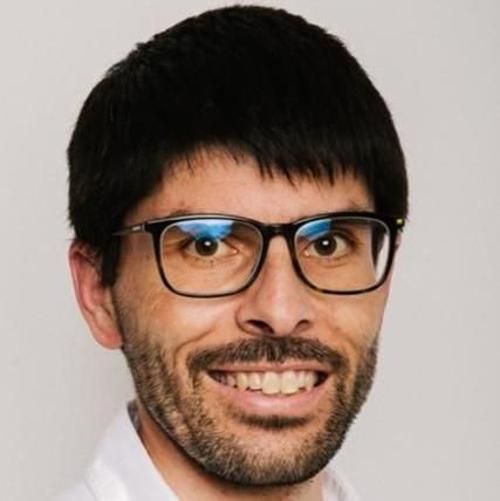
Rufino Mateo Castro is a Professor at the Universitat de València in the Department of Analytical Chemistry . His work focuses on mycotoxin analysis , fungal contamination control , and analytical methods for cultural heritage . Research Interests: Development of advanced analytical techniques (mass spectrometry, electrochemical methods) Mycotoxin detection in food and feed Application of bioactive compounds (e.g., essential oils) for toxin prevention Archaeometric studies of artworks and ancient materials Publications highlight his contributions to mycotoxin mitigation in cereals, environmental risk factors for fungal growth, and chromatographic/electrochemical methodologies . He has collaborated extensively on food safety and cultural heritage projects.
Ana Maria Lopez Beceiro is a contracted professor at the Faculty of Veterinary Medicine , University of Santiago de Compostela , specializing in the Department of Anatomy, Animal Production and Veterinary Clinical Sciences . Her research focuses on Animal Medicine and Surgery within the MIV Veterinary Internal Medicine and Experimental Surgery groups. She earned a PhD in 1997 for her thesis on pharmacological agents in inhalation anesthesia for common voles. Her work spans Veterinary Hematology Infectious Disease Diagnostics Ruminant Health Reproductive Pathophysiology Toxicology . Her recent publications analyze: Canine Leishmaniosis diagnostics Rifampicin efficacy in monocytic ehrlichiosis Hematologic impacts of zearalenone Diagnostic cytology techniques Postpartum metabolic disorders Reproductive activity stress in rams .
Beatriz Isabel Vazquez Belda is a university professor at the University of Santiago de Compostela, affiliated with the Faculty of Veterinary Medicine and the Department of Analytical Chemistry, Nutrition and Bromatology. She is associated with the Strategic Grouping in Sustainable Management and Production of Bioresources (BioReDes) and the LHICA-USC research group focused on Food Hygiene, Inspection and Control. Doctorate: University of Santiago de Compostela (1996), thesis on mycotoxin production in Galician cheeses and development of analytical methods Her research spans food safety, analytical chemistry, and nutritional sciences, with a focus on mycotoxin detection and sustainable bioproduction systems. She contributes to strategic R&D&I initiatives through her work in food hygiene and chemical analysis. Labs/Teams: Strategic Grouping in Sustainable Management and Production of Bioresources (BioReDes) LHICA-USC: Food Hygiene, Inspection and Control research group
JESÚS ÁNGEL SANTOS BUELGA is a Professor at the Universidad de León , affiliated with the Faculty of Veterinary in the Department of Hygiene and Food Technology . He leads the SAMA (Food Safety and Food Microbiology) research group, focusing on microbial safety of dairy and meat products. Research Interests: Antimicrobial resistance in foodborne pathogens Biofilm formation in food processing environments Microbiological safety of dairy and meat products Role of Aeromonas and Enterobacter in food contamination Natural antimicrobial agents for food preservation Recent Article Trends: Investigations into ESBL-producing Enterobacteriaceae in fresh produce Studies on Shiga toxin-producing E. coli in dairy systems Development of bacteriophage-based interventions for antibiotic-resistant pathogens Analysis of antimicrobial resistance dynamics across food chains Exploration of traditional Spanish cheeses as reservoirs for pathogenic microbes
Maria RaqueL Dominguez Gonzalez serves as a University Professor in the Department of Analytical Chemistry, Nutrition and Bromatology at the Faculty of Chemistry, University of Santiago de Compostela (USC). She maintains active affiliations with the Materials Institute (iMATUS) and Strategic Grouping in Materials (AEMAT), leading the GETEE research group focused on trace elements, spectroscopy, and speciation. Her academic foundation includes a 1996 Doctorate from USC with the thesis "Speciation of Fe, Cu and Zn in milk by liquid chromatography-atomic spectrometry," supervised by Dr. Pilar Bermejo Barrera and Dr. Adela Bermejo Barrera. This early work established her expertise in nutritional trace element analysis. Dr. Dominguez Gonzalez's research program centers on advanced analytical methodologies for nanoparticle characterization and bioaccessibility assessment. Her work develops innovative techniques including spICP-MS, HPLC, and microextraction methods to evaluate titanium dioxide and silver nanoparticles in food matrices (seafood, dairy, aquaculture products) and environmental samples. Key contributions address EFSA nanomaterial risk assessment guidelines through in vitro models like Caco-2 cells for gastrointestinal exposure studies. Recent publications (2020-2025) reveal consistent focus on nanoparticle behavior in biological systems, with significant output on aflatoxin detection in aquaculture and speciation analysis of arsenic, selenium, and heavy metals. Her methodological innovations bridge analytical chemistry with food safety regulation and toxicology. As principal investigator of the GETEE group, she directs infrastructure for trace element speciation using atomic spectrometry and chromatography. The team actively collaborates within USC's Materials Institute on projects addressing nanoparticle risk assessment and contaminant bioavailability in nutritional contexts.
Elena Lizarraga Pérez is a Professor at the University of Navarra, affiliated with the School of Pharmacy and Nutrition and the Department of Pharmaceutical Sciences. She is a member of the MITOX Mycotoxins research group and the Institute for Biodiversity and the Environment (BIOMA). PhD in Pharmaceutical Sciences (1997) from the University of Navarra. Her research focuses on mycotoxins , encompassing food safety, toxicology, and biochemical analysis. Her expertise extends to thermal analysis techniques like thermogravimetry and differential scanning calorimetry for studying organic compound stability. No scientific awards were explicitly mentioned in the provided text. Information about students or advising roles was not detailed in the available text. She collaborates with the MITOX research group and is affiliated with the Institute for Biodiversity and the Environment (BIOMA) at the University of Navarra.
Natalia Campillo Seva is a Professor in the Department of Analytical Chemistry at the University of Murcia's Faculty of Chemistry. Since completing her PhD in 1996 with a thesis titled Nuevos procedimientos analíticos mediante espectrometría de absorción atómica en modo no convencional , she has specialized in instrumental analytical methods, particularly for environmental and food safety applications. Her research focuses on advanced microextraction techniques (e.g., dispersive liquid-liquid microextraction, magnetic solid-phase extraction), chromatography, and spectrometry for detecting contaminants like mycotoxins, pharmaceutical residues, and microplastics. Her work spans environmental monitoring, food authentication, and biomarker discovery for diseases such as inflammatory bowel conditions. Recent publications highlight trends in environmental pollutant analysis (microplastics, pesticides), food metabolomics (fruit volatile profiling), and clinical applications of ion mobility spectrometry. She leads the Instrumental Methods Applied research group, contributing to method development for complex matrices including biological samples, agricultural soils, and marine ecosystems.
Dr. Iván Mateos Álvarez is an Assistant Professor in the Department of Animal Production at the University of León, Spain. His research focuses on ruminal fermentation dynamics, microbial ecology of ruminants, and mitigation of methane emissions through feed additives. He earned a Veterinary Medicine degree (2008) and Master's in Research in Veterinary Medicine and Food Science (2010) from the University of León, followed by a PhD in Animal Production (2016) with a thesis on ruminal fermentation analysis. His research explores feed alternatives like Moringa, Leucaena, and agricultural by-products (broccoli, cauliflower, olive cake) for ruminant diets, while also investigating mycotoxin impacts on swine microbiota. He has developed expertise in 16S DNA sequencing analysis during a postdoctoral stint at INRAe, France (2017-18), and gained practical experience in methane measurement techniques during training at AgResearch, New Zealand. Publishing 20 peer-reviewed articles with first-authorship in 5, Dr. Mateos Álvarez contributes to ruminant nutrition research through experimental studies in RUSITEC systems. His work spans methane reduction strategies, microbial community analysis, and feed efficiency optimization. He has received the prestigious XI Premio Andrés Pintaluba for his innovative research on alternative feed ingredients. As an educator, he supervises undergraduate veterinary students, co-tutors final degree projects, and participates in training international postgraduate researchers through dolphin programs. He holds ANECA accreditation for Contract Professor with PhD and experimental animal research authorization (functions a,b,c) since 2020.
Alessandra Cimbalo is a researcher affiliated with the Faculty of Pharmacy and Food Sciences at the Universitat de València, where she earned her PhD in 2022. Her work is centered in the Department of Preventive Medicine, and she actively contributes to two research groups: BiotechLab (Biotech Agrifood Laboratory) and COAL (Contamination of Food), focusing on food safety and toxicological analysis. Her research interests lie at the intersection of food science and molecular biology, particularly in the transcriptomic and proteomic responses to mycotoxins . These naturally occurring toxins in food products pose significant health risks, and her work contributes to understanding their mechanisms and impacts. Key areas include food contamination analysis , molecular toxicology , proteomics , transcriptomics , and preventive health strategies in the agrifood sector. The available information does not include recent publications, preventing a trend analysis of her scholarly output. There are no listed scientific awards or honors at this time. Alessandra Cimbalo has not supervised any named students according to the provided data. There is no mention of research grants or funding projects. She is actively engaged in research but without indication of formal teaching or administrative roles. She is a member of two key research teams: BiotechLab – Biotech Agrifood Laboratory, focusing on biotechnological applications in food science COAL – Contamination of Food, dedicated to studying chemical and biological contaminants in the food chain These groups support her work in food safety and toxicological assessment.
Laura Escriva Llorens is an Associate Professor in the Faculty of Pharmacy and Food Sciences at the Universitat de València, where she is affiliated with the Department of Preventive Medicine. Her academic work is centered in the field of Nutrition and Food Science, with a strong emphasis on food safety and toxicology. She is an active member of two research groups: BiotechLab (Biotech Agrifood Laboratory) and COAL (Contamination of Food), both focusing on food quality and safety assessment. Her research interests lie primarily in the toxicological and transcriptomic effects of mycotoxins—naturally occurring food contaminants. These interests align with her doctoral training and current research activities, which aim to evaluate the health impacts of foodborne contaminants using in vitro and in vivo models. Her expertise contributes to advancing scientific understanding of food safety mechanisms and preventive strategies. While no publications are listed in the current data, her research profile suggests a focus on molecular toxicology, food contamination, and agrifood biotechnology. These areas reflect ongoing challenges in public health and food security. She completed her doctoral studies at the Universitat de València in 2018 with a thesis titled Toxicological study in vitro, in vivo, and transcriptomic of mycotoxins , supervised by Dr. Guillermina Font Pérez and Dr. Lara Manyes Font. She advises students in the field of food science, though no specific advisees are listed. Laura Escriva Llorens is actively involved in research teams dedicated to food safety and contamination analysis. Her work in the BiotechLab and COAL groups supports collaborative, multidisciplinary efforts to detect, assess, and mitigate risks associated with foodborne toxins.
JESÚS MARÍA GONZÁLEZ JARTÍN is an Assistant Professor at the Faculty of Pharmacy of the University of Santiago de Compostela , affiliated with the Department of Pharmacology, Pharmacy and Pharmaceutical Technology . His research focuses on mycotoxin detection, nanotechnology-based detoxification strategies, and marine toxin mitigation. He earned his doctorate in 2020 with a thesis titled The application of the nanotechnology in the elimination of phycotoxins and mycotoxins and implementation of mass spectrometry for their detection . Key research areas include: Development of analytical methods using UHPLC-MS/MS Design of magnetic nanostructures for toxin removal Neurotoxicity assessment of emerging mycotoxins Mycotoxin occurrence in food matrices (cheese, yogurt, plant-based beverages) Environmental impacts of toxin contamination in agricultural systems His work frequently explores toxin-receptor interactions, mitochondrial dysfunction pathways, and the application of green nanotechnology solutions. Notable contributions include the NeuroTorp lateral flow test for cyclic imine toxins and multi-toxin detection methods in dairy products. He has collaborated on EU-regulated marine toxin analysis and pioneered QuEChERS-based extraction protocols for mycotoxins in beer and dairy products. His research also extends to fungal pathogen studies, including chestnut brown rot mechanisms and toxin-producing fungi in silage. Current projects emphasize: Optimization of detoxification nanoparticles for food safety Understanding synergistic effects of co-occurring toxins Environmental toxicology implications of global warming
Francesc Albert Esteve Turrillas is a Professor at the Department of Analytical Chemistry, Faculty of Chemistry, University of Valencia. His work focuses on green analytical chemistry, environmental monitoring, and bioanalysis. Education: PhD in Analytical Chemistry, University of Valencia (2006) His research interests include sustainable sample preparation, illicit drug detection, and food safety. He develops methods using ion mobility spectrometry, LC-MS/MS, and molecularly imprinted polymers for environmental and biological matrices. Recent publications highlight trends in green extraction techniques, wastewater-based drug monitoring, and food contaminant analysis. He contributes to education through tools like DrogoFinder and Socrative-based pedagogy.
Olga Pardo Marín is a Professor in the Department of Analytical Chemistry at the Universitat de València's Faculty of Chemistry. As a member of the SOLINQUIANA research group (Solutions & Innovation in Analytical Chemistry), her work focuses on developing advanced analytical methodologies for food and environmental safety. She holds a doctorate from Universitat de València (2009) for research on organic additives and contaminants in food safety. Academic Rank: Professor Department: Analytical Chemistry Research Group: SOLINQUIANA Email: olga.pardo@uv.es Her research spans multiple critical areas of analytical toxicology, including: Environmental pollutant analysis (alkylphenols, PAHs, dioxins) Food contaminant detection (acrylamide, mycotoxins, citrinin) Human biomonitoring of chemical exposure Risk assessment of environmental and dietary pollutants Green analytical chemistry techniques Bioavailability studies of toxins and bioactives Recent publications demonstrate expertise in magnetic solid-phase microextraction nanocomposites, urinary biomarker analysis for European human biomonitoring initiatives, and computational thinking integration in chemistry education. Her work often employs advanced chromatographic and mass spectrometric techniques (LC-MS/MS, LC-Orbitrap HRMS) for contaminant analysis in food and environmental samples.
María Elena González Peñas serves as a Professor at the University of Navarra within the Faculty of Pharmacy and Nutrition's Department of Pharmaceutical Sciences. She maintains dual affiliations with the Institute of Biodiversity and Environment (BIOMA) and leads the MITOX Micotoxinas research group. Her research centers on mycotoxin analysis and mitigation in food systems, spanning critical subfields including fungal toxin detection, food safety protocols, agricultural contaminant control, and analytical toxicology methodologies. This work directly addresses public health risks from fungal metabolites in pharmaceutical and nutritional contexts. The MITOX Micotoxinas group operates under the university's research infrastructure, focusing on real-world applications for food chain safety through advanced biochemical analysis and environmental monitoring frameworks.
Ana Gloria Gil Royo serves as a Researcher at the Department of Pharmaceutical Sciences within the Faculty of Pharmacy and Nutrition at the University of Navarra. She is an active member of the MITOX Micotoxins research group, focusing on toxicological analysis of biological compounds. Her research specialization centers on toxicology with particular emphasis on mycotoxins and pharmaceutical safety assessment. Her foundational doctoral work examined preclinical toxicity profiles of combined adenoviral vector-ganciclovir treatments in hepatocarcinoma models, establishing her expertise in cancer-related toxicology and drug safety evaluation. Current investigations within the MITOX group extend to food contaminant toxicology and risk assessment methodologies. Dr. Gil Royo maintains active research collaboration through the MITOX group, contributing to institutional toxicology initiatives and interdisciplinary pharmaceutical research at the University of Navarra.