Angela D. R. Smith is an Assistant Professor at The University of Texas at Austin, specializing in human-computer interaction (HCI), computer supported cooperative work, and information sciences. Her research focuses on designing equitable sociotechnical interventions for homeless young adults in shelter networks, employing community-based participatory research and participatory design methods. She draws on critical race theory, intersectionality, and asset-based approaches to address systemic inequities in technology. Before her academic role, Angela worked as an IT Consultant, Cybersecurity Analyst, and UX Researcher at Airbnb and startups. Her interdisciplinary background bridges technical expertise with social justice advocacy. She holds a Ph.D. in Technology & Social Behavior from Northwestern University. Her work emphasizes ethical AI frameworks, culturally informed design, and social justice in computing education. Key themes include algorithmic equity, marginalized community engagement, and reimagining technology’s role in fostering social change.
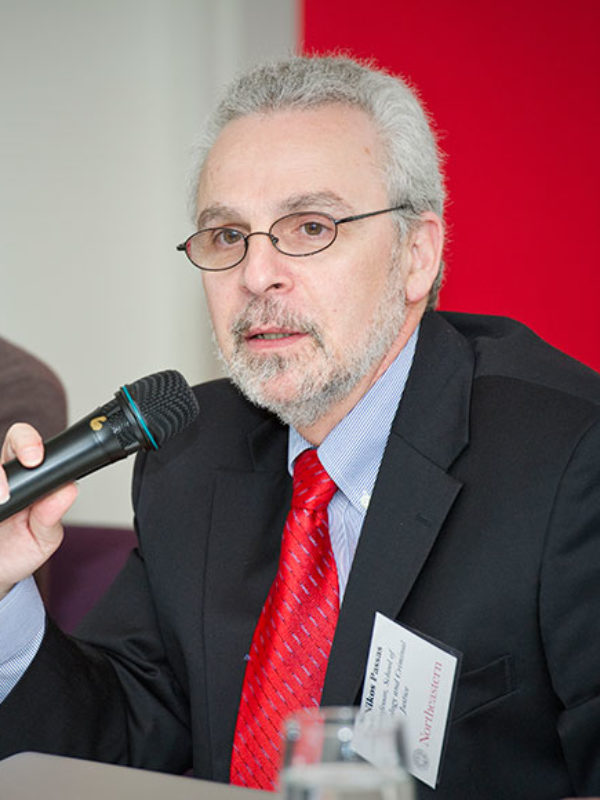
Nikos Passas is a Professor of Criminology and Criminal Justice at Northeastern University's College of Social Sciences and Humanities, where he serves as Co-Director of the Institute for Security and Public Policy. He holds multiple international appointments including Co-Chair of the Steering Committee for the University of Geneva Anti-Corruption Academy (GENACA), Distinguished Visiting Professor at Beijing Normal University, Distinguished Lecturer in Financial Integrity at Case Western Reserve Law School, and Chair of the Academic Council of the Anti-Corruption Academy in India. His work bridges academic research and practical policy implementation across global institutions. His educational background includes a PhD in Sociology of Deviance from the University of Edinburgh (1988), an LLB from the University of Athens, and a DEA from the University of Paris II. These foundations support his interdisciplinary approach to complex crime issues. Passas specializes in corruption, illicit financial flows, terrorism financing, white-collar crime, and transnational organized crime. His research examines institutional corruption mechanisms, anti-corruption academic frameworks, trade-facilitated crime, and the intersection of debt crises with corruption—particularly in Greece. Current projects include NSF-funded research on Financial Network Disruptions in Illicit and Counterfeit Medicines Trade (FIND-M), analysis of serious crimes during the COVID-19 pandemic, and criminological theory development. His work consistently addresses the practical implementation challenges of global crime control frameworks. Analysis of his 230+ publications across 15 languages reveals an evolving focus from foundational criminological theory and organized crime structures toward contemporary financial crime systems and regulatory challenges. Early works established frameworks for understanding transnational crime economics, while recent scholarship targets terrorist financing mechanisms, identity-related cybercrime, and the operational realities of anti-corruption implementation. His publications consistently emphasize practical policy applications and cross-institutional coordination requirements. Dr. Jean Mayer Global Citizenship Award (2017) from Tufts University’s Institute on Global Leadership INSPIRE Fellow at Tufts University Institute of Global Leadership Passas has secured significant research funding including the NSF FIND-M planning grant and has consulted for major international bodies including UNODC (designing the UNCAC legal library and review mechanism software), OECD, IMF, World Bank, OSCE, European Union, and Financial Crimes Enforcement Network (FinCEN). He regularly provides expert testimony in legal proceedings and develops specialized training for law enforcement, intelligence agencies, and financial institutions worldwide. His advisory roles span the Centre for Crime Justice and Policing at the University of Birmingham, Global Risk Profile in Geneva, and Compliance and Capacity Skills International in New York. He leads Northeastern's Institute for Security and Public Policy while directing international initiatives including the University of Geneva Anti-Corruption Academy and India's Anti-Corruption Academy. His work with UNODC established critical infrastructure for global anti-corruption monitoring, and he currently chairs academic councils that coordinate anti-corruption research across multiple continents. These roles position him at the nexus of academic research, policy development, and operational crime prevention strategies.
Yang Sun is an Assistant Professor of Finance at the Brandeis International Business School, Brandeis University. His research focuses on household finance, financial institutions, and corporate finance, particularly examining how retail investors allocate savings across investment products and the impact of financial advice. He holds a Ph.D. from the Massachusetts Institute of Technology and a B.S. from the University of Pennsylvania. Key research interests include mutual fund governance, investor behavior, and the dynamics of capital flows. His work analyzes how innovations in financial products and conflicts of interest influence market outcomes. Recent studies explore topics like target date funds as market stabilizers and the role of employee representation in executive compensation decisions. Awards: Joseph Wharton Scholar (2005-2008), MIT Sloan Fellowship, and Beta Gamma Sigma membership. Grants/Advising: No students listed, but his research has been supported by institutional affiliations at Brandeis. He is affiliated with Brandeis University’s finance department and contributes to academic discussions on asset pricing, corporate governance, and behavioral finance.
Matthew Hutchinson is an Assistant Professor in the Department of Life & Environmental Sciences at the University of California, Merced , affiliated with the School of Natural Sciences . He leads the Hutchinson Lab , which focuses on understanding foraging decisions of animals and their broader ecological consequences. His work integrates behavioral ecology, community ecology, and ecosystem dynamics, with research sites in African savannas and Californian grasslands. Research interests include: Behavioral mechanisms underlying dietary choices Effects of herbivory on plant communities Ecosystem engineering by large herbivores Climate change impacts on species interactions Recent studies highlight how herbivore foraging shapes plant-pollinator networks, suppresses liana infestation, and mediates community resilience to extreme events like cyclones. His work bridges theoretical and applied ecology, with implications for conservation and rewilding strategies. Advising includes graduate students Luca Kuziel and Sean Lyon, and undergraduates Geneva Easton and Selina Nguyen. Research grants likely support fieldwork in Africa and California, though specific funding details are not provided here. The lab collaborates on large-scale projects such as the HERD Lab , exploring trophic interactions and biodiversity dynamics. Future work may expand into parasitism patterns in herbivore communities and long-term climate adaptation strategies.
Sarah Tarshis is an Assistant Professor at McGill University's School of Social Work, specializing in trauma-informed practice, intimate partner violence (IPV), and simulation-based social work education. She holds a PhD from the University of Toronto and an MSW from New York University, with over ten years of clinical and programmatic experience in social work across Montreal, Toronto, and New York. Her research focuses on two core areas: 1) improving IPV service delivery through trauma-informed approaches and 2) advancing social work education via simulation-based methods. She co-leads SSHRC-funded projects addressing economic abuse among IPV survivors and uncertainty in clinical practice, totaling over $695K in funding. Her work bridges critical social work theory with clinical practice, emphasizing anti-oppressive frameworks. Teaching includes courses on mental health, anti-oppressive practice, and clinical skills at the undergraduate level. She maintains a private clinical social work practice and collaborates with the SIM Social Work Research Lab at Carleton University. Key contributions include developing ethical guidelines for virtual IPV supports and analyzing employment barriers faced by IPV survivors. Grants: SSHRC Gender-Based Violence Research Initiative: $695,772 (2023-2027) SSHRC Explorer Grant: $156,213 (2023-2025) SSHRC Insight Grant: $229,899 (2022-2027) Labs & Teams: Collaborates with Carleton University's SIM Lab and McGill's interdisciplinary IPV research network.
Michael Grinthal serves as an Adjunct Professor of Law at Brooklyn Law School and as a Supervising Attorney at TakeRoot Justice, a nonprofit dedicated to advancing social, racial, and economic justice through community-driven legal strategies. His dual roles bridge academic scholarship with on-the-ground advocacy in marginalized communities. His educational background includes: A.B. from Brown University M.P.A. from John F. Kennedy School of Government J.D. from Harvard Law School Professor Grinthal's research and teaching focus on social justice lawyering, emphasizing collaborative models where legal professionals partner with grassroots movements. He teaches "Lawyering & Organizing for Social Change," which trains students in integrating legal advocacy with community organizing to dismantle systemic barriers in housing, labor, and immigrant rights. His work prioritizes co-creating strategies with directly affected communities to build collective power against structural inequities. At TakeRoot Justice, he supervises attorneys providing direct legal support to community organizations fighting for housing justice, fair labor practices, and immigrant rights. This movement-centered approach rejects traditional top-down legal services, instead fostering reciprocal relationships where community knowledge shapes legal strategy. His practice exemplifies how academic theory and frontline activism mutually inform transformative social change.
Jennifer Coats is a Senior Clinical Professor in the Department of Finance and Real Estate at Colorado State University's College of Business, serving as Academic Director of the Master of Finance Program. She teaches Financial Markets and Methods in the Global Social and Sustainable Enterprise (GSSE) MBA program and International Finance. Her research employs experimental methodologies to investigate microfinance systems, private provision of public goods, and common property resource management. With publications in Economic Inquiry and the Journal of Public Economics , her work bridges behavioral finance, public economics, and environmental sustainability. She was a 2011-2012 Resident Research Fellow at Colorado State University's School of Global Environmental Sustainability. Analysis of her recent publications reveals consistent focus on behavioral aspects of economic decision-making, including financial well-being interventions, insurance choice anomalies, budgeting processes, and public goods dynamics. Her experimental approach provides empirical insights into how institutional structures shape individual and group financial behaviors across diverse contexts. Her scientific recognition includes: Resident Research Fellow, School of Global Environmental Sustainability, Colorado State University (2011-2012) Dr. Coats actively contributes to academic service through the First Generation Awards Committee, supporting initiatives for first-generation college students. She volunteers with the Poudre School District and maintains an active research agenda with publications spanning 28 years, including 2024 work on financial well-being improvement strategies.
Jeffrey MacIntosh is a Professor at the University of Toronto Faculty of Law , specializing in Corporation Law, Corporate Finance, Securities Regulation, Venture Capital, and Small Firm Financing. He holds law degrees from Harvard and the University of Toronto, along with a Bachelor of Science from MIT. Education : Harvard Law School (LL.M./J.D.) University of Toronto Faculty of Law (LL.B.) Massachusetts Institute of Technology (B.Sc.) Research Interests Professor MacIntosh's work bridges corporate law and finance, focusing on venture capital exit strategies, securities regulation, and the impact of government policy on innovation. His research explores interjurisdictional competition in shaping Canadian corporate law, governance issues in dual-class share structures, and the role of institutional shareholders in capital markets. Publication Trends His publications, often co-authored with Douglas J. Cumming, span empirical studies on venture capital cycles, regulatory barriers for small firms, and comparative analyses of Canadian and U.S. corporate law. Recent work addresses high-frequency trading, prospectus exemptions, and damages quantification in securities litigation. Scientific Awards John M. Olin Fellow, Yale Law School (1988-89) Leadership & Affiliations He served as the Toronto Stock Exchange Chair in Capital Markets Law and directed U of T's Capital Markets Institute (now the Johnston Centre). He contributed to the Ontario Securities Commission Task Force on Small Business Financing and advised on policy papers for the Bank of Canada and Canadian Ministry of Finance.
Carolina Castro-Sanguino is a marine ecologist at the Marine Spatial Ecology Lab within the University of Queensland . Her research focuses on coral reef dynamics, particularly the ecological roles of calcareous algae and herbivory impacts. She combines field experiments , laboratory studies , and mechanistic modeling to understand reef carbonate budgets under climate change. PhD in Marine Ecology (University of Queensland, Australia) Prior affiliations: Global Change Institute, Australian Institute of Marine Science Her research interests include: Quantifying Halimeda contributions to reef sediment production Assessing impacts of temperature , light , and herbivory on algal growth Analyzing COTS control strategies for reef conservation Evaluating marine reserve effectiveness in northern GBR Key findings from her work: Demonstrated 3x higher carbonate production in Acropora refuges Developed individual-based models for predicting sediment budget trajectories Quantified herbivory-driven Halimeda depletion rates (up to 50%) Current work at MSEL involves creating a decision-support system for COTS management. She has received funding from the PADI Foundation and Australian Coral Reef Society, with research permits from GBRMPA. Collaborations span institutions including AIMS and Khaled bin Sultan Living Oceans Foundation.
Ronald Kanterman serves as Adjunct Faculty in Fire Science and Professional Studies within the Henry C. Lee College of Criminal Justice and Forensic Sciences at the University of New Haven. With 47 years of fire service experience, he currently holds the position of Executive Inspector for the FDNY Bureau of Fire Prevention while teaching at the university. His research interests span multiple critical areas of fire science and emergency management. Kanterman specializes in fire prevention strategies , occupational safety and health protocols for firefighters, and hazardous materials response . His work emphasizes practical applications in fire service administration and emergency management systems, with particular focus on leadership development and organizational resilience within fire departments. His scholarly output demonstrates consistent contribution to fire service literature, with publications spanning fire officer safety, hazardous materials response, and fire service leadership. The articles reveal a strong emphasis on practical applications with theoretical underpinnings in fire science, showing evolution from technical firefighting procedures toward broader organizational and leadership concerns in later publications. Over 180 published works in fire service literature Regular contributor to Fire Engineering magazine and Fireengineering.com Author of multiple textbooks including "Fire Officer's Guide to Occupational Safety and Health" (2019) Kanterman has taught for 32 years at various two and four-year colleges at undergraduate and graduate levels, including serving as an Adjunct Instructor at the National Fire Academy. He has been instrumental in fire service education through his long-standing involvement with the Fire Department Instructors Conference (FDIC), where he has taught for 25 years and served on the Educational Advisory Committee. Beyond academia, he volunteers with the National Fallen Firefighters Foundation and serves as an Instructor for the Local Assistance State Teams program.
Professor Adam Bodnar is an Associate Professor of Law at SWPS University's Faculty of Law in Warsaw, specializing in constitutional law and human rights. From July 2021 to December 2023, he served as Dean of the Faculty of Law. He was appointed Minister of Justice of Poland in December 2023. Previously, he held the role of Commissioner for Human Rights of Poland (2015–2021) and Vice-President of the Helsinki Foundation for Human Rights (2010–2015). His career includes extensive NGO engagement, including leadership roles in the Panoptykon Foundation and ClientEarth Poland. Professor Bodnar's research focuses on constitutional law, human rights, judicial independence, and the rule of law. He has authored numerous publications, including his post-doctoral dissertation on the implementation of European Court of Human Rights rulings in Poland. His awards include the 2018 Rafto Prize and the 2019 Rule of Law Award. He teaches human rights, constitutional standards, and legal case analysis at SWPS University. Education: Ph.D. and habilitation (post-doctoral degree) from the University of Warsaw. Awards: 2018 Rafto Prize, 2019 World Justice Project Rule of Law Award, 2020 Legion of Honor (France). Grants/Projects: Advisor to multiple memorial museums (e.g., Auschwitz-Birkenau), member of EU Fundamental Rights Agency committees, and leader of implementation projects on memorial site management. His work emphasizes defending democratic values and human rights in Poland and globally, with a focus on EU legal frameworks and international accountability mechanisms.
Kinnon MacKinnon is an Assistant Professor in the School of Social Work at York University, specializing in transgender medicine and healthcare access for sexual/gender minorities. Their research examines social and structural dimensions of care delivery through critical theoretical frameworks. MacKinnon holds a PhD in Public Health Sciences from the University of Toronto, an MSW from Toronto Metropolitan University, a BSW from York University, and a BA in Gender Studies from Saint Mary's University. Their practice background includes facilitating support groups for gender-affirming surgery, queer/trans youth, and eating disorders. Research interests center on gender-affirming healthcare ethics, health equity for LGBTQ2S+ populations, and community-driven care models. Recent work investigates detransition experiences, mental health service accessibility, and peer support systems in gender-diverse communities. Publications demonstrate strong focus on qualitative methodologies, policy analysis, and community-engaged research addressing healthcare inequities. Trends include examinations of clinical decision-making, patient autonomy in gender care, and systemic barriers affecting LGBTQ+ populations across healthcare, employment, and social services. Scientific Awards: Research Leaders Award, York University (2023) MacKinnon's work emphasizes lived experience as practice knowledge in social work and advocates for structural reforms in gender-affirming care systems.
Lawrence Duke is a Clinical Professor in the Department of Marketing at LeBow College of Business, Drexel University. He serves as a faculty advisor for the MS Marketing and LeBow Digital Marketing Certificate programs, and has held advisory roles for Net Impact and the Drexel Investment Group. His professional experience spans academia, finance, and public service. Education: MBA, Harvard Business School Ed.D., Temple University His research and teaching focus on marketing strategy, digital marketing, global marketing, marketing ethics, and finance , informed by over two decades of senior management roles in international finance at Citibank/Citigroup, Nomura, State Street, and the International Monetary Fund (IMF), as well as service as a U.S. Navy officer. His work bridges academic rigor with real-world application in global capital markets and emerging economies. The recent publications reflect a consistent trajectory in global investment strategies, emerging market development, and digital marketing analytics . His scholarly contributions emphasize practical frameworks for equity fund management, risk mitigation through derivatives, and the strategic use of analytics in modern marketing. The integration of finance and marketing is a recurring theme across his research. Scientific Awards and Recognition: 2013 Teaching Excellence Award (LeBow College of Business) 2013 ArchiTech Technology and Teaching Finalist 2012 President’s Award Nominee for Civic Engagement (Drexel University) Distinguished Teaching Fellow (2008–2011) 2007–2008 Teaching Excellence Award Dr. Duke has made significant contributions to academic service, including serving as Associate Editor of The Journal of Investing (2017–2023) and as a member of its Editorial Review Board since 1992. He has advised multiple student organizations and corporate boards, including Market Atlas, LLC and Tech2Educate. His grants and funding are not explicitly detailed, but his sustained research output and editorial leadership suggest strong institutional and professional support. While no formal lab or research center is mentioned, Dr. Duke leads initiatives in digital marketing education and advises on analytics-driven marketing strategy. His work with the LeBow Digital Marketing Certificate program underscores his commitment to integrating technology and pedagogy. His ongoing advisory roles in academia and industry reflect an active, collaborative research and teaching network.
Christina Jerne is an Assistant Professor in the Department of Anthropology at the University of Copenhagen, Faculty of Social Sciences. Her research explores economic diversity, focusing on informal, illicit, and alternative economies such as organized crime, gangs, anti-mafia activism, and slow-living movements. She is affiliated with the Centre for Global Criminology and leads research within the project 'RE-ANIMATE: Designs for Life-Enhancing Economies in Anthropological Perspective'. BA in Political Science and International Relations, Universitá di Pisa MSc in Human Security, Aarhus University PhD in Experience Economy, Aarhus University Her research interests include organized crime, political economy, social movements, diverse economies, and post-conflict livelihoods. She employs theoretical frameworks such as affect theory, phenomenology, feminist political economy, and action research, with fieldwork conducted in Italy, Denmark, Sweden, and Uganda. Her current work examines de-urbanization and slow-living in rural Italy, analyzing how individuals leaving urban environments reshape rural economies. The recent scholarly output of Christina Jerne reflects a strong focus on the intersections of crime, economy, and resistance. Her publications explore anti-mafia activism, the branding of rural revival, telework policy, and the moral economies of organized crime. Collectively, her work contributes to critical understandings of alternative economies, challenging normative assumptions about productivity, legality, and value. She has received prestigious awards including the Carlsberg Post-doctoral Scholarship and the Julie Graham Community Economies Research Fund Fellowship. Carlsberg Post-doctoral scholarship Julie Graham Community Economies Research Fund Fellowship Christina Jerne actively supervises and teaches in anthropology, emphasizing critical approaches to economy and politics. She also works as a consultant in experiential design for museums, heritage sites, and public spaces. Her collaborations include work with the Centre for Global Criminology and interdisciplinary research networks. She is affiliated with the Centre for Global Criminology, which conducts ethnographically grounded research on transnational crime and criminal economies. Her work often bridges academic research with public engagement, as seen in media contributions and policy consultations.
Edward Tower is a Professor in the Department of Economics at Duke University, Trinity College of Arts & Sciences. His research is centered on financial economics, particularly mutual fund performance, indexation strategies, and labor market policies. He has published extensively through the Economic Research Initiatives at Duke (ERID), with a strong focus on evaluating major fund families like Vanguard, Fidelity, DFA, and GMO. Department: Department of Economics Institution: Duke University School: Trinity College of Arts & Sciences His research interests span financial economics, investment management, active versus passive investing, asset allocation, and labor economics, particularly minimum wage policy. Tower has made significant contributions to understanding the efficiency and performance of index funds, ETFs, and enhanced indexing strategies, often comparing real-world fund outcomes against benchmarks. The trend in his recent publications reveals a sustained focus on investment fund performance, cost structures, and market efficiency. His work frequently analyzes Vanguard and Fidelity funds, investigates the value added by active management, and assesses the predictive power of financial metrics like CAPE and Tobin’s Q. He also explores broader economic issues such as trade deficits, tariff policy, and wage taxation. Edward Tower has collaborated with numerous students and colleagues, including Yang Wang, Chong Li, Rhona Zhang, and Zhang Yichong. His work has been supported by academic initiatives such as ERID, and he has contributed to handbooks and policy analyses. While no formal grants are listed, his research output suggests sustained institutional and academic support. He has co-authored papers with students and professionals across institutions, indicating active mentorship and collaborative research. Though no formal lab or research team is mentioned, his prolific output through working paper series suggests a structured research agenda, likely involving graduate and undergraduate researchers.