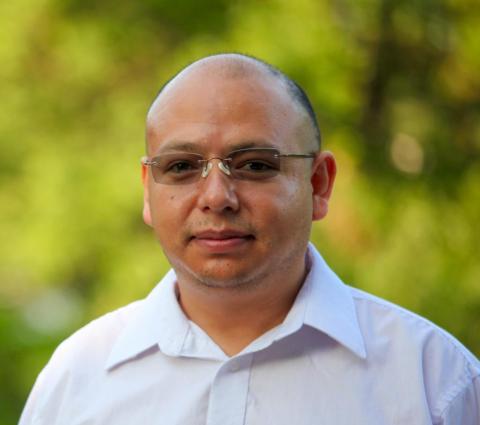
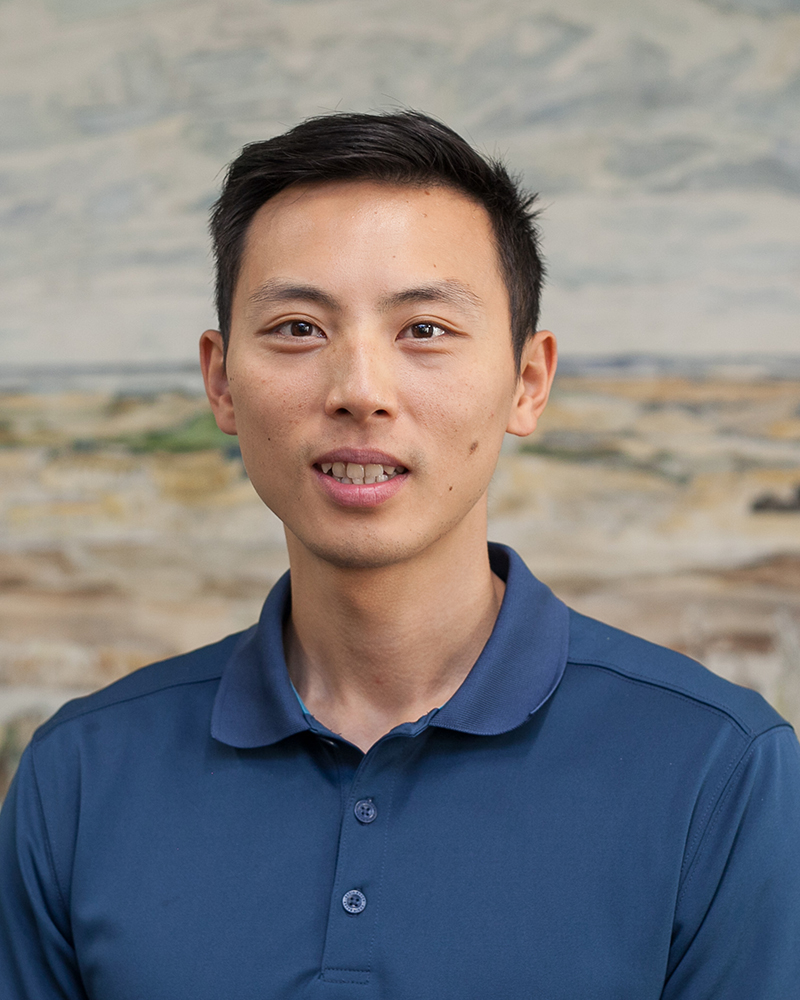
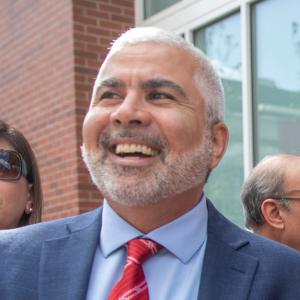
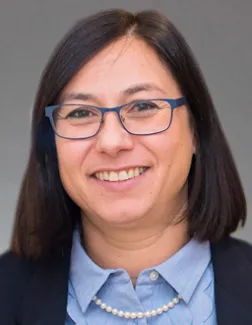
Dr. Blessing Ogbuokiri is an Assistant Professor in the Department of Computer Science at Brock University, Canada. He holds a PhD in Computer Science from the University of the Witwatersrand (South Africa) and has held roles including Postdoctoral Researcher at York University and Instructor in AI/infectious diseases modeling. His expertise spans machine learning, NLP, responsible AI, multi-modality, and theoretical computing. Education: BSc (Hons) from University of Nigeria, Nsukka; MSc (Cloud Computing) from University of Nigeria; PhD (Theoretical Computing/Machine Learning) from Wits University. Research focuses on AI applications in healthcare, including disease prediction, NLP for public health surveillance, and ethical AI frameworks. He has secured 5+ research grants and 5+ academic awards. Recent activities include guest lecturing on machine translation at the University of Johannesburg.
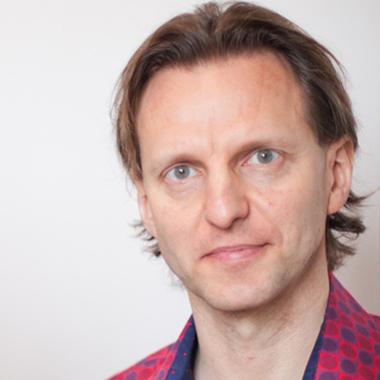
Prof. Frederic Fol Leymarie is a Professor in the Department of Computing at Goldsmiths, University of London. He specializes in AI, robotics, and computer graphics, with a focus on creative systems and their applications in art and biosciences. His work includes developing robots capable of artistic skills, interactive platforms like FoldSynth for molecular visualization, and projects like Mutator VR. He co-leads the MSc in Computer Games & Entertainment and teaches advanced topics in graphics and game design. His research spans shape understanding, AI-driven art, and interdisciplinary collaborations with bioscience specialists. Education: PhD in Computer Science from Brown University (2003) Key Projects: Mutator VR (2016–2020): An artistic VR project FoldSynth: Interactive tool for visualizing molecular structures Bioblox: Educational game for protein docking Research Interests: AI creativity, human-robot interaction, computer vision, and art-technology interfaces Prof. Leymarie leads London Geometry , a consulting group applying geometric algorithms to solve complex problems. His work bridges computational methods with artistic and scientific domains, emphasizing interdisciplinary innovation.
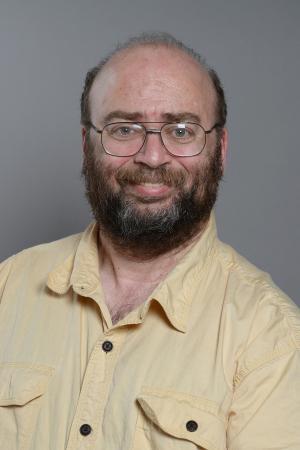
Stephen Montgomery-Smith is a Professor in the Department of Mathematics at the University of Missouri. His research spans fluid mechanics, functional analysis, numerical methods, and probability theory. He develops mathematical models for complex physical systems, including fiber suspensions in fluids, robotic kinematics using dual quaternions, and stochastic processes in biological contexts like the Luria-Delbrück experiment. His work combines theoretical rigor with practical applications in engineering and science. Recent publications feature innovations in motion simulation filters, instability analysis of non-Newtonian fluids, and dual quaternion applications in robotics. He tackles challenging problems such as the Navier-Stokes existence conjecture, employing diverse approaches from spectral analysis to computational algebra. His interdisciplinary collaborations extend to battery technology and materials science.
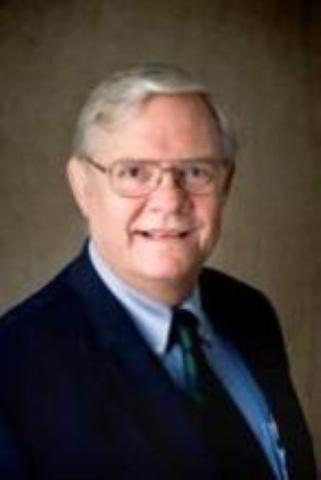
Dr Rich Boden is an Associate Professor of Microbial Physiology and Taxonomy at the University of Plymouth’s School of Biological and Marine Sciences (Faculty of Science and Engineering). He has held roles including Associate Head of School (2017–2019), Academic Staff Representative to the University Alumni Board, and Faculty of Science and Engineering Recruitment and Marketing Lead. His research focuses on microbial physiology, bioremediation, and sulfur metabolism, with contributions to cadmium-contaminated water remediation and microbial taxonomy. Teaching responsibilities include leading modules such as Cells: The Building Blocks of Life , Microbial Physiology and Biochemistry , and Aquatic Microbial Ecology . He actively mentors doctoral students and contributes to training programs for PhD students and postdocs, emphasizing laboratory record-keeping and conference presentation skills. Research interests span microbial adaptation to heavy metals, sulfur-oxidizing bacteria, and environmental biotechnology. Recent work highlights include cadmium-resistant bacterial strains (e.g., Brevibacillus agri C15 CdR) and their applications in water decontamination. His studies on sulfur-cycling microbes, such as Thiomicrorhabdus species, advance understanding of chemolithoautotrophic processes in aquatic environments. Dr Boden’s publications emphasize bioremediation strategies for cadmium-contaminated groundwater and the environmental impact of nanomaterials. His work bridges fundamental microbial physiology with applied solutions for ecological challenges. He has supervised numerous PhD students, including those exploring cadmium bioaccumulation, nanomaterial toxicity, and landscape biodiversity.
Gabriel Valiente is an accredited Full Professor in the Department of Computer Science at Universitat Politècnica de Catalunya - BarcelonaTech (UPC). His research focuses on algorithms, bioinformatics, and combinatorial pattern matching with applications in computational biology. He is affiliated with the Algorithms, Bioinformatics, Complexity and Formal Methods Research Group and the Institute of Mathematics of UPC. Valiente has authored influential books like Algorithms on Trees and Graphs and Combinatorial Pattern Matching Algorithms in Computational Biology . His work spans phylogenetic network analysis, graph algorithms, and metagenomic sequence analysis. Key contributions include methods for comparing phylogenetic trees (e.g., generalized Robinson-Foulds distance), aligning biological networks (e.g., virus-host protein interaction networks via ILP), and taxonomic classification in metagenomics (e.g., MetaShot). His research integrates algorithm design with applications in microbiology, virology, and systems biology. Valiente’s publications demonstrate expertise in tree-based algorithms, graph theory, and bioinformatics tool development. His recent work addresses challenges in virus-host interaction modeling and scalable analysis of large biological networks.
S. Michal Jazwinski is the John W. Deming, MD Regents Chair in Aging and Professor of Medicine and Biochemistry at Tulane University School of Medicine. He directs the Tulane Center for Aging, focusing on the genetics of aging, molecular genetics, and population genetics. His career includes postdoctoral training at The Rockefeller University and prior roles at Louisiana State University. Research interests span yeast replicative lifespan mechanisms, mitochondrial dysfunction, and human aging biomarkers. Key contributions include studies on the retrograde response, inflammaging, and the role of microbiome-immune interactions in aging. Jazwinski has edited books on circadian rhythms and aging and authored over 150 peer-reviewed articles. Education: PhD in Biochemistry, Stanford University (1975) Key Roles: Director of Tulane Center for Aging, Member of Tulane Cancer Center's Cancer Biology Program Affiliations: Tulane Cancer Center, Tulane Center for Aging, Biochemistry (adjunct), Geriatrics Division His work integrates genetics, epigenetics, and systems biology to explore aging mechanisms in both model organisms and humans. Current projects include frailty index development, biological age measurement, and mitochondrial signaling pathways in cancer. Major findings include the role of Th17 immunity in aging-related inflammation, gut microbiome impacts on healthspan, and novel mouse models for prostate cancer research.
Dr. Franck Vidal is a Senior Lecturer and Acting Director of Research at the School of Computer Science & Electronic Engineering at Bangor University, where he is also a member of the Visualization and Medical Graphics (VMG) Group and the Research Institute of Visual Computing (RIVIC). His educational background includes: PhD in Computer Science from Bangor University (2008) Postgraduate Certificate in Higher Education (2016) Diplôme d'études approfondies Images et Systèmes from Institut National des Sciences Appliquées de Lyon (2003) Master of Science in Computer-Aided Graphical Technology Applications from Teesside University (2002) Dr. Vidal's research focuses on X-ray imaging and simulation, non-destructive testing by ionising radiation, inverse problems, optimisation and artificial evolution, high performance computing, computer vision, image analysis and machine learning, and image-based simulation. His work has significant applications in medical imaging and medical physics, including X-ray, CT, MRI, PET and radiotherapy. He applies evolutionary algorithms to solve complex inverse problems in medical imaging. His recent publications demonstrate a strong focus on GPU-accelerated X-ray simulation technologies, particularly through the gVirtualXRay library, which enables real-time simulation of X-ray images and CT volumes. His work bridges the gap between computational physics, medical imaging, and practical clinical applications, with significant contributions to PET reconstruction algorithms using the Fly algorithm. Among his notable achievements: 2nd place in the Eurographics 2009 Medical Prize for ImaGINe-S David Duce Prize for the Best Short Paper (2019) Best Poster Presentation award (2022) Development of the gVirtualXRay open source library Multiple publications on evolutionary algorithms for medical imaging Dr. Vidal has supervised multiple research students including Julien Lavauzelle and Adrien Dutertre from ENSTA ParisTech. He has secured funding for significant projects including Fly4PET (focused on PET reconstruction for radiotherapy) and RAMPVIS (visualization for pandemic response). He actively collaborates with institutions worldwide, including INRIA in France and the University of California, San Diego. He leads the development of several innovative projects including gVirtualXRay (a GPU-based X-ray imaging library), Fly4Arts (evolutionary art using the Fly algorithm), and RASimAs (a regional anaesthesia simulator and assistant), demonstrating his ability to translate theoretical research into practical applications across medical and non-medical domains.
David Murrugarra is an Associate Professor in the Department of Mathematics at the University of Kentucky, within the College of Arts & Sciences. His research focuses on Mathematical Biology, with emphasis on Systems Biology and Computational Biology. He holds a PhD in Mathematics from Virginia Tech and completed a postdoctoral fellowship at the School of Mathematics at Georgia Tech before joining UK in 2014. His contact information includes murrugarra@uky.edu and an office at 771 Patterson Office Tower. Education: PhD in Mathematics, Virginia Tech Postdoctoral Research, School of Mathematics, Georgia Tech Research Interests: Dr. Murrugarra develops theoretical and computational tools for modeling gene regulatory networks, optimal control of probabilistic models using Markov decision processes, and RNA secondary structure prediction via machine learning. His funded projects include an NSF grant on modularity in biological systems and a UK Pilot Grant on RNA structure predictability. Recent Research Trends: His work bridges abstract mathematical frameworks with biological applications, emphasizing modularity, network control, and systems-level analysis. Key themes include modular decomposition of biological networks, intervention strategies for cancer systems, and the integration of machine learning into biological modeling. Grants & Projects: NSF grant: Mathematical Theory of Biological Modularity UK Pilot Grant: RNA Secondary Structure Prediction Labs & Collaborations: He leads a weekly Applied and Computational Mathematics seminar and co-organizes the Mathematics Community and Ethics (MCE) Working Group at UK. His research group actively engages in interdisciplinary projects combining mathematics, biology, and computational science.
Michael Wu is an Associate Professor in the Department of Veterinary Biomedical Sciences at the University of Saskatchewan. His research focuses on molecular mechanisms of cellular responses to environmental stress, particularly using the nematode Caenorhabditis elegans . He holds a BSc and PhD in Biology from Carleton University and completed postdoctoral training at the University of Florida's Biology and Genetics Institute. His lab investigates how genetic factors interact with environmental stressors to influence development, aging, and stress resistance. Key research areas include environmental toxicology, molecular genetics, stress biology, and aging. Techniques employed include classical genetics, molecular biology, and animal physiology. Recent work highlights advancements in understanding RNA processing errors, stress response pathways, and toxicity of environmental chemicals. His lab's website is www.usaskwormlab.ca . Publications span topics such as mTOR signaling in metabolic stress adaptation, oxidative stress-inducing chemicals, and neuron-specific toxicity of acrylamide. While no scientific awards are listed, his research contributes to toxicology, aging, and environmental health. He mentors students at undergraduate, graduate, and postdoctoral levels, emphasizing hands-on training in stress biology and molecular genetics.
Ulrike Stege is an Associate Professor and Director of the Master of Engineering in Applied Data Science (MADS) at the University of Victoria's Faculty of Engineering and Computer Science. She holds a PhD from the Swiss Federal Institute of Technology (ETH Zurich). Her research spans computational biology, parameterized complexity, algorithm design, graph theory, and cognitive psychology. She leads initiatives in quantum computing frameworks and educational tools, including projects like SCOOP (quantum optimization) and QGrover (quantum algorithm visualization). Her work also addresses RNA pseudoknot structure prediction and the integration of quantum computing into combinatorial optimization software. Key educational contributions include developing browser-based quantum learning tools (e.g., QNotation and QuantumCrypto) and promoting computational thinking in K-12 education. Her research bridges theoretical computer science with practical applications in biology and quantum systems, emphasizing algorithmic innovation and interdisciplinary collaboration. Her publications focus on advancing quantum computing frameworks, optimizing bioinformatics algorithms, and creating accessible educational resources. Recent work addresses quantum annealing for constrained optimization, structural biochemistry of viral RNA, and hybrid quantum-classical problem-solving methods.
Marta Biagioli is a Researcher in Genetics at the Department of Cellular, Computational and Integrative Biology (CIBIO) , University of Trento. Her work focuses on Huntington's disease and neurodevelopmental disorders , combining molecular genetics , RNA biology , and translational research . Her research investigates RNA biogenesis defects in Huntington’s disease, including circular RNAs (circHTT) and SINEUP antisense RNAs . She explores how CAG repeat expansions alter splicing dynamics and neuronal vulnerability , with implications for biomarker development and RNA-based therapies . Key trends in her publications reveal expertise in non-coding RNA , neurogenetic mechanisms , and epigenetic regulation . Her work spans model systems , transcriptomic analysis , and therapeutic design for diseases like Huntington’s and autism. Marta’s laboratory at CIBIO integrates interdisciplinary approaches to decode complex disease phenotypes. She actively engages in science communication , bridging academic research with public understanding through platforms like #UniTrentoStories.
Song Wu is Associate Professor in Applied Mathematics and Statistics at Stony Brook University, leading the Wu Lab focused on statistical genomics and bioinformatics. His research integrates statistics with genetics to analyze complex traits using next-generation sequencing data, microarray technologies, and longitudinal analysis methods. His recent publications highlight research in: Statistical methods for RNA-seq and isoform expression analysis Cancer risk modeling and biomarker discovery Neurovascular regulation of hippocampal neurogenesis High-throughput barcode clustering algorithms Multi-locus genetic mapping approaches
Azmy S. Ackleh is a Professor of Mathematics and Dean of the Ray P. Authement College of Sciences at the University of Louisiana at Lafayette. He holds the R.P. Authement Endowed Chair in Computational Mathematics. His research focuses on Mathematical Ecology and Epidemiology, with expertise in structured population models, computational methods, and parameter estimation. He has authored over 160 peer-reviewed articles and a graduate-level textbook. Education: Ph.D. (1993), M.S. (1990), and B.S. (1988) in Mathematics from the University of Tennessee-Knoxville, University of the Cumberlands. Research Interests: Development of deterministic/stochastic population models, age/size-structured populations, invasive species, phenotypic selection-mutation, epidemiological models. Tools include PDEs, difference equations, and Markov chain models. He has directed 18 Ph.D. students and secured over $9M in grants from NSF, NIH, and GoMRI. Awards: Rollie Lamberson Research Award (2019), Distinguished Professor (2007), and multiple summer research awards. His work integrates mathematical modeling with ecological and biomedical applications.
Nate Lord, PhD, is an Assistant Professor at the University of Pittsburgh. He holds a PhD in Systems Biology from Harvard University. His research focuses on understanding the robustness of embryonic development, particularly how embryos maintain precise patterning and correct errors despite genetic and environmental challenges. Lord employs optogenetic manipulation, quantitative microscopy, computational modeling, and classical embryology to explore signaling dynamics and cell behavior across scales. His work bridges molecular mechanisms and tissue-level morphogenesis, aiming to uncover principles of developmental reliability. Education: PhD in Systems Biology, Harvard University Research Interests: Lord’s lab investigates how developing systems achieve robustness through multi-scale mechanisms. Key themes include Nodal signaling dynamics, optogenetic control of developmental processes, and stochastic regulation of cell fate decisions. By combining synthetic biology tools with quantitative analysis, his work addresses fundamental questions about error tolerance in embryogenesis, such as how signaling gradients stabilize patterns and how morphogenetic movements are coordinated despite perturbations. Publications: Recent work (2025–2013) highlights Lord’s focus on Nodal signaling pathways, optogenetic regulation of developmental processes, and stochastic mechanisms in microbial systems. His studies on human retinal organoids (e.g., DIO3’s role in photoreceptor development) demonstrate translational potential in modeling human tissue formation. Older studies (e.g., bacterial cell fate switching) reveal foundational insights into stochastic processes in cellular decision-making. Lab & Future Work: Lord’s lab integrates experimental and computational approaches to engineer synthetic systems that mimic developmental reliability. Ongoing projects aim to map feedback mechanisms that stabilize morphogen gradients and to design optogenetic tools for real-time embryonic signaling control.
Michela Fagiolini, PhD, is a researcher affiliated with Boston Children's Hospital and Harvard Medical School. She holds academic appointments in the Department of Neurology and the F.M. Kirby Neurobiology Center, focusing on neurodevelopmental disorders. Her work bridges molecular, electrophysiological, and behavioral analyses to study cortical plasticity mechanisms in conditions like Rett Syndrome and autism spectrum disorders (ASD). Education: She earned her M.S. in Biological Sciences from the University of Pisa, Italy, and her Ph.D. in Neurobiology from Scuola Normale Superiore, Italy. After a postdoctoral fellowship at UCSF under Dr. Michael P. Stryker, she joined the Laboratory for Neuronal Circuit Development at Japan's Brain Science Institute, collaborating with Dr. Takao K. Hensch. Research Interests: Dr. Fagiolini explores how sensory experiences shape early brain development and critical periods. Her lab investigates Excitatory/Inhibitory (E/I) circuit dysregulation in neurodevelopmental disorders, leveraging mouse models and human cerebral organoids. Recent studies emphasize therapeutic strategies to restore cortical function by targeting E/I circuit imbalances. She also develops novel biomarkers like fNIRS and transparent microelectrode arrays to assess neural deficits non-invasively. Publications Trends: Her work spans 30+ years, with recent focus on Rett Syndrome biomarkers, autism subtypes via fMRI, and CDKL5 deficiency mechanisms. Earlier contributions include foundational studies on NMDA receptor regulation, critical period plasticity in visual cortex, and the role of epigenetic factors in neurodevelopmental processes. Advising & Grants: While no formal advisees are listed, her research has been supported by grants exploring therapeutic interventions and biomarker development. She collaborates widely, including with the FANTOM consortium for large-scale transcriptomic studies. Labs & Teams: She leads projects within the Intellectual and Developmental Disabilities Research Center and F.M. Kirby Neurobiology Center, which integrate multidisciplinary approaches to neurodevelopmental disorder research.