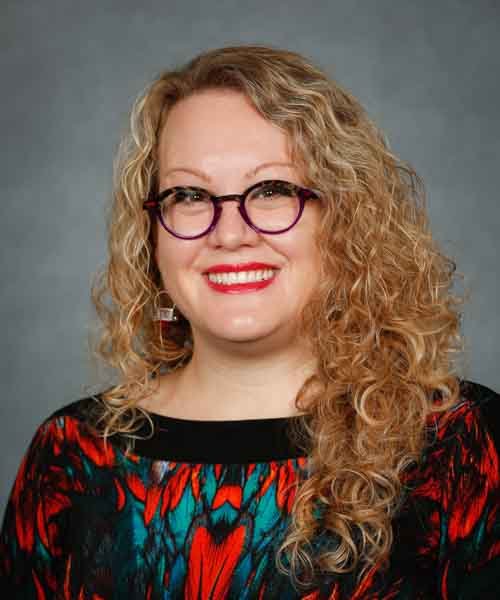
Zachary Wright is Associate Dean for Faculty Affairs and Professor in Residence in the Liberal Arts Program at Northwestern University in Qatar, with joint appointments in History and Religious Studies. He holds a PhD from Northwestern University, an MA in Arabic Studies/Middle East History from the American University in Cairo, and a BA in History from Stanford University. His research focuses on Islamic intellectual history in West and North Africa, emphasizing Sufism, legal traditions, and the interplay between Islam and African decolonization. Wright's fieldwork spans Senegal, Morocco, and Mauritania, utilizing Arabic, French, and Wolof sources. He is affiliated with Northwestern’s Program of African Studies (PAS), Institute for the Study of Islamic Thought in Africa (ISITA), and the Middle East and North Africa (MENA) program. Teaching includes courses on Islam in Africa, medieval Muslim empires, and African liberation struggles. Notable awards include the 2020 Northwestern University Provost Grant and a 2008-2009 Fulbright-Hays Dissertation Research Grant. Wright’s publications include Realizing Islam: The Tijaniyya in North Africa and the Eighteenth-Century Muslim World (2020) and Living Knowledge in West African Islam (2015). His research explores Islamic revivalist networks, medieval West African empires, and the role of Sufi scholars in shaping African history. Recent work addresses transcontinental Islamic scholarly exchanges and the evolution of esoteric knowledge systems.
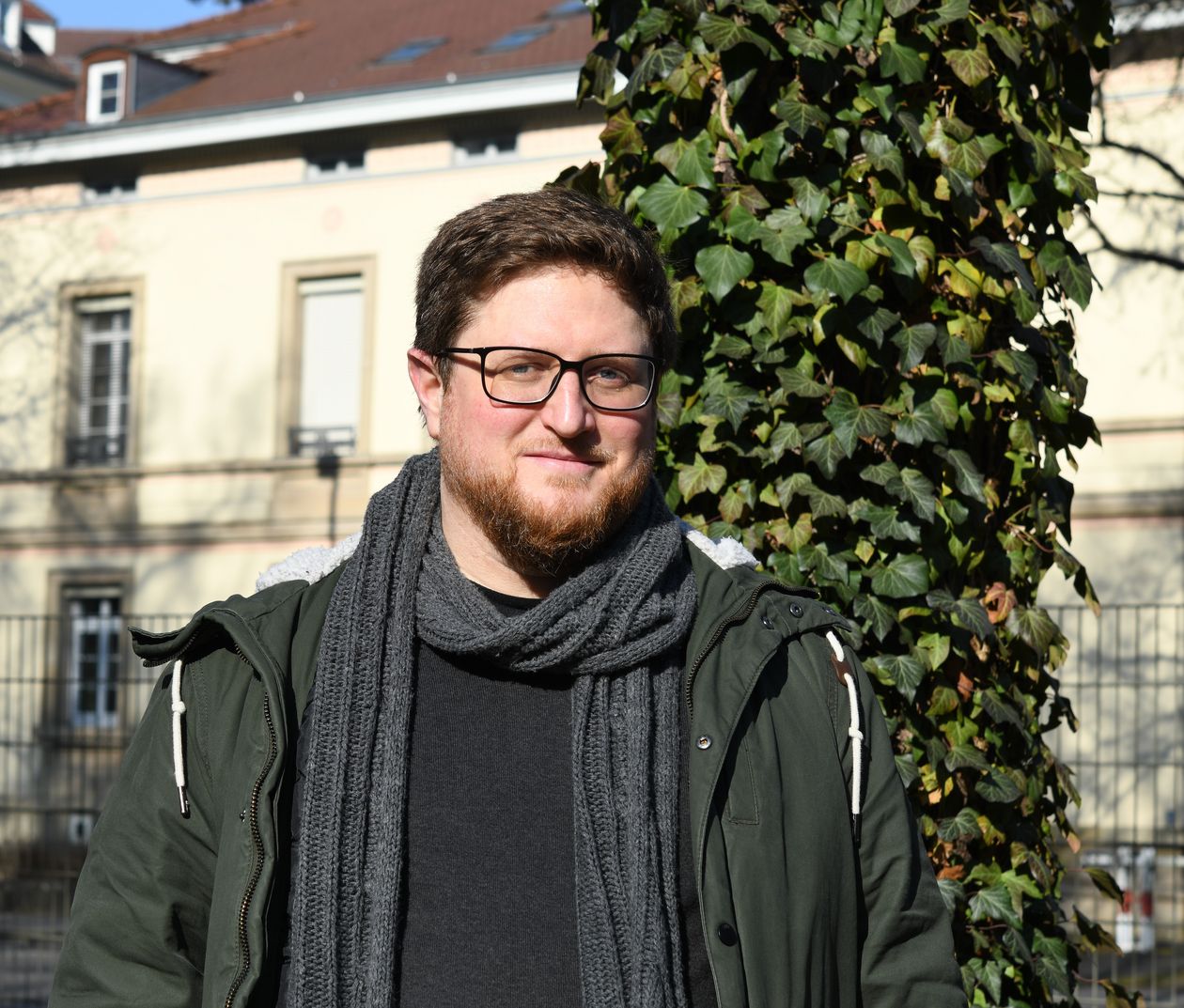
Besnik Sinani is a Research Fellow at the Center for Muslim Theology at Tübingen University. He holds a PhD in History and Islamic Studies from Freie Universität Berlin (Summa Cum Laude, 2020) and has held fellowships at institutions including the Leibniz-Zentrum Moderner Orient Berlin and New York University. His research focuses on contemporary Islamic movements, Saudi religious policy, transnational Sufi networks, and Sharia implementation in Europe. Current Position: Research Fellow (since 2022) Previous Affiliations: Leibniz-Zentrum Moderner Orient Berlin (2021) Research interests include post-Salafism evolution, religious reform in Saudi Arabia, transnational Sufi orders, and the intersection of Islamic law with modern European contexts. His work analyzes how political changes shape religious discourse in authoritarian regimes and explores the cultural dimensions of religious revival in post-communist Southeast Europe. His publications include studies on Saudi Salafism's transformation, debates over prophetic veneration, and the role of Sufi orders in shaping Islamic futures. He has received prestigious awards including the DAVO Dissertation Award (2021) and German Federal Excellence Program funding (2016–2020).
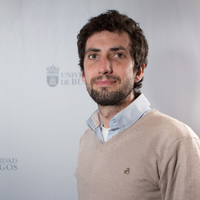
Dr. German Gamero Igea is an Assistant Professor at the Department of Economics and Business Administration, Faculty of Economic and Business Sciences, University of Burgos. His research focuses on Medieval and Political History, particularly Iberian court dynamics, economic governance, and minority integration during the reign of Ferdinand the Catholic. He leads the research group ERGO Accounting, Change and Society and has published extensively on topics such as royal livery practices, religious service in courts, and material culture in diplomacy. Education: PhD in History from Universidad de Valladolid (2020), thesis on 'Rey y reinos en la corte de Fernando el Católico' supervised by Dr. María Isabel del Val Valdivieso and Dr. John Hamilton Edwards. Key Research Areas: Medieval Court Culture, Political Integration in Iberia, Economic Dispossession Mechanisms, and Royal Governance Structures. His academic work explores the 15th-16th century Iberian Peninsula , analyzing how royal households managed power through gift exchanges, administrative reforms, and minority inclusion. Notable publications include studies on Ferdinand the Catholic’s court practices, Aragonese fiscal policies, and the role of non-elite servants in dynastic transitions. Awards and Collaborations: No specific awards mentioned. Collaborates with institutions like the University of León, Universidad de Alicante, and the research group EMICAL.
Mohammad Ataie is a Visiting Lecturer of History at the University of Massachusetts Amherst, affiliated with the Department of History within the College of Humanities and Fine Arts. His research focuses on the transnational dimensions of the Iranian Revolution (1978-79), exploring how revolutionary ideas spread through clerical networks and the Islamic Revolutionary Guard Corps (IRGC). He is currently completing a book manuscript titled 'Clerics In Revolt: Exporting the Iranian Revolution and the Transnationalization of the Revolutionary Guards.' Ataie holds a PhD in History from UMass Amherst, preceded by degrees in journalism (Tehran University), sociology (Allameh-Tabatabie University), and Middle Eastern Studies (American University of Beirut). His career includes diplomatic reporting at the UN and work in documentary filmmaking across Afghanistan, Pakistan, Lebanon, and Syria. His research specialties include modern Iranian and Lebanese history, transnational Islamic movements, and Muslim clerical networks. He has published extensively in journals like International Journal of Middle East Studies and Middle East Policy, focusing on topics such as Hezbollah's evolution, Iran's regional strategies, and the geopolitical impact of revolutionary ideologies. Ataie advises graduate student Eric Ross and teaches courses including 'Iran Revolution in Global Perspective' and 'Modern Middle East History.' He has received no explicitly mentioned awards but has been a postdoctoral fellow at Brandeis University's Crown Center for Middle East Studies.
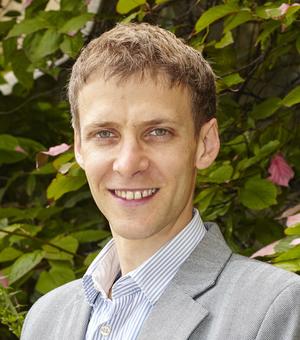
Justin Jones is an Associate Professor in the Study of Religion at the University of Oxford, affiliated with the Faculty of History and the School of Global and Area Studies. He specializes in modern Islamic religious, social, and legal transformations, particularly in South Asia. Prior to Oxford, he held roles at the University of Cambridge and University of Exeter. Education & Background: Research Fellow at the Centre for South Asian Studies, University of Cambridge Lecturer in Global History, University of Exeter Research Interests: Jones focuses on Shi‘i Islam in South Asia, including clerical revivalism, legal practices, and Islamic feminist thought. His work explores Islamic family law adjudication, Muslim women’s rights activism, and comparative legal frameworks in minority contexts like the UK. Recent Research Projects: Leading the ‘Religion and the Frontier Challenges’ postdoctoral research program at Pembroke College, Oxford. Current projects include studies on shari‘ah -based legal forums, Islamic feminist discourse, and transnational legal dynamics. Awards: None explicitly listed in text. Teaching & Affiliations: Teaches undergraduate and postgraduate courses in contemporary Islam, world religions, and South Asian studies. Coordinates cross-disciplinary programs linking history, law, and religious studies.
Febe Armanios is a Professor of History at Middlebury College, specializing in the history of Christian communities in the Middle East, particularly Egypt’s Copts, food history, and media studies. She holds a BA, MA, and Ph.D. from The Ohio State University. Her research focuses on religious practices, Ottoman history, and modernization processes in the Middle East. She serves as Founding Co-Director of Middlebury’s Axinn Center for the Humanities and has held editorial roles at the International Journal of Middle East Studies , Oxford Research Encyclopedia of Food Studies , and Journal of Religious Minorities under Muslim Rule . Notable awards include the Best Book Award 2019 for Halal Food: A History . Her teaching spans courses on Early Islam, Ottoman history, and the modern Middle East. Current research projects include a book on Christian television in the Middle East (1981–present) and another on Christian food practices in Ottoman and post-Ottoman regions. Armanios has been a Visiting Fellow at Harvard Law School and the Bennett Boskey Distinguished Visiting Professor of History at Williams College (2021–22). She actively engages with food studies, media history, and religious minority dynamics.
Royal Holloway, University of LondonUnited Kingdom
Julian Weiss is a Professor of Medieval and Early Modern Spanish at King’s College London. After earning his DPhil at Oxford in 1984, he held academic positions at the Universities of Liverpool, Virginia, and Oregon (where he served as Head of Romance Languages) before joining King’s in 2001. He is an affiliated member of the Programme in Comparative Literature and co-leads the Travelling Concepts strand of the Language Acts and Worldmaking project. Research Interests: Medieval and Early Modern Iberian Literatures Manuscript Studies and Early Printed Book History Interfaith Relations and Historical Legacy in Iberia Gender Theories and Literary Form Cultural Production in Medieval Spain Transhistorical Literary Evolution Key Projects: Current monograph on Flavius Josephus’s early modern Hispanic reception , analyzing Jewish-Christian identity negotiations across Europe and the Americas (1492–17th century) The French Connection : Epic rivalries between Spain and France in reshaping Iberian historiography Conference papers on Romantic visions of Al-Andalus (Chateaubriand, Irving) and Sephardic balladry Publications & Impact: Co-edited Al Andalus in Motion: Travelling Concepts and Cross-Cultural Contexts (2021), addressing the modern reconfiguration of medieval Iberia as a global metaphor Locating the Middle Ages: Spaces and Places of Medieval Culture (2012), an interdisciplinary exploration of medieval spatial identity 1990 monograph The 'Mester de Clerecía': Intellectuals and Ideologies in Thirteenth-Century Castile , redefining clerical narrative’s role in societal change Teaching: Developed modules like Writing Women in Premodern Spain , Muslim Spain: A European Fantasy , and Language Acts and Worldmaking in Medieval and Early Modern Spain Co-created Global Iberias , a first-year core module exploring the Spanish and Portuguese-speaking worlds
Sean Oliver-Dee is a Tutor in Religion & Religions at the University of Oxford, affiliated with the Oxford Centre for Religion & Culture and Oxford House Research. His academic career includes roles as Interreligious Advisor for the Church of England’s Diocese of Peterborough and Researcher on Inter-Religious issues for the Archbishop of Canterbury’s EU office. He specializes in Western policy engagement with Islam, religious minorities’ citizenship dynamics, and international religious trends. Oliver-Dee has contributed to parliamentary publications on religious liberty and strategic defense analyses, reflecting his focus on policy-relevant scholarship. Research interests include historical and contemporary Western engagement with Muslim communities, religious minorities’ identity struggles, and the role of religion in international affairs. His work bridges academic theology with public policy, addressing modern challenges like counter-extremism strategies and the EU’s religious freedom engagement. Notable publications include Courting Islam (2020), analyzing government perceptions of Islam, and The Caliphate Question (2009), exploring British colonial-era policies. His 2023 article on post-Christian Europe examines institutional decline in Western churches. Oliver-Dee serves as an expert advisor to the European Commission’s ‘Science of Values’ project, demonstrating his influence in EU-level policy discussions. He holds Fellowships from the Royal Historical Society and Royal Asiatic Society, recognizing his contributions to historical and cultural studies. Current projects explore interfaith dynamics in globalized contexts and the evolving role of religion in public life. Oliver-Dee’s work frequently intersects with governance strategies, making him a key figure in religion-policy interface studies.
Professor Phil Booth is the A.G. Leventis Associate Professor in Eastern Christianity at the University of Oxford, split equally between the Faculty of Theology and Religion and the Faculty of History. He is a Research Fellow at St Peter's College and serves as Director of the Oxford Centre for Late Antiquity. His expertise lies in the history of eastern Christianities within the eastern Roman, Sasanian, and Islamic caliphate empires from the 4th to 10th centuries. Booth holds a BA, MPhil, and PhD in Classics from the University of Cambridge. Before joining Oxford in 2012 as Lecturer in Eastern Christianity, he held a Leverhulme Post-doctoral Fellowship at Churchill College, Cambridge. His research explores ecclesiastical institutions, imperial interactions, and religious identity formation in late antiquity. Publications span topics such as Sasanian Egypt, non-Chalcedonian Christians under Khusrau II, and the cultural dynamics of early Islamic Egypt. He contributes to academic discourse through editorial work for Translated Texts for Historians (Liverpool University Press) and maintains an active profile in international conferences and scholarly networks.
Dr. Thomas W. Smith serves as Keeper of the Scholars and Head of Oxbridge Admissions (Arts and Humanities) at Rugby School, where he teaches history. A distinguished scholar of medieval ecclesiastical history, Smith has established himself as a leading expert on the crusade movement, papal letters, and manuscript transmission. His research bridges academic scholarship with secondary education, maintaining an active presence in historical research communities while shaping the next generation of historians. Smith's research interests focus on medieval ecclesiastical history and the crusade movement, with particular emphasis on letters, diplomatic practices, and the transmission and reception of manuscripts and texts. His work explores how medieval communities engaged with crusading through textual production, examining both the authentic documents and later confections created by monastic communities. He investigates how papal authority was communicated and contested across medieval Christendom, with special attention to the nuances of crusade rhetoric and the conceptualization of sacred space in papal encyclicals. His scholarship reveals the complex interplay between institutional power, textual production, and religious motivation in the medieval world. Smith's extensive publication record demonstrates evolving trends in his research, moving from close analysis of specific papal letters and crusade narratives toward broader investigations of ecclesiastical authority structures and manuscript transmission networks. His work consistently employs innovative methodological approaches, including quantitative analysis of papal registers and comparative manuscript studies, revealing new dimensions of medieval communication practices. The interdisciplinary nature of his research connects diplomatic history with literary analysis, religious studies, and material culture studies. Highly Commended in the British Records Association Janette Harley Prize (2018) for Curia and Crusade: Pope Honorius III and the Recovery of the Holy Land, 1216–1227 Elected Fellow of the Royal Historical Society (2017) Elected Fellow of the Royal Asiatic Society (2021) As Keeper of the Scholars and Head of Oxbridge Admissions at Rugby School, Smith oversees the academic development of students pursuing higher education at Oxford and Cambridge, particularly in Arts and Humanities disciplines. His leadership extends beyond classroom teaching to shaping institutional approaches to university preparation. While specific grant information isn't detailed in the available materials, his Leverhulme Trust Early Career Fellowship (2017-2020) at the University of Leeds supported significant research on papal provision in thirteenth-century Britain. Smith collaborates extensively with other scholars, notably Dr. Susan Edgington, with whom he is preparing a new edition and translation of a neglected First Crusade chronicle. Smith's scholarly activities connect him to wider academic networks through his editorial work on significant collections including Communicating Papal Authority in the Middle Ages (Routledge, 2023) and Chronicle, Crusade, and the Latin East (Brepols, 2022). His research engages with international scholarly communities, particularly through his work with Japanese and European historians on ecclesiastical authority structures. While not leading a formal laboratory, Smith participates in scholarly teams focused on crusade studies, medieval manuscript analysis, and papal history, contributing to collective projects that advance understanding of medieval religious and political culture.
Oliver Scharbrodt is a Professor of Islamic Studies at the Centre for Theology and Religious Studies (CTR) , Lund University. He is affiliated with the Joint Faculties of Humanities and Theology and contributes to the MECW: The Middle East in the Contemporary World research network. Specializes in modern, classical, and contemporary Islam Focuses on Shia Islam, Sufism, Islamic messianism, and Muslim presence in Europe Employing historical and ethnographic methods His research investigates transnational Shia networks (e.g., 'Karbala in London' project), European Muslim diversity, and the interplay between Islamic reform and mystical traditions. Projects include a €2M ERC Consolidator Grant on Shii communal identity transformation. Key publications analyze: Religious space construction in diasporic Shia communities Clerical authority in modern Shii Islamism Contemporary European Islam as a contested space He serves as supervisor for PhD projects and co-organizes academic events like the Swemena Annual Conference . Teaching includes courses on religious behavior, Middle East history, and Europe's religious roots.
Michael Wuthrich is an Associate Professor of Political Science at the University of Kansas, serving as Associate Director of the Center for Global & International Studies and Director of the GIST Interagency Studies MA Program. His work focuses on authoritarianism, comparative politics, and religious politics in Muslim-majority societies. He examines topics such as electoral dynamics in Turkey, the role of Islamist parties, and the interplay between religion and democracy. His research spans regions including the Middle East, North Africa, and Eurasia, with a particular emphasis on Turkey’s political evolution and institutional challenges. His research interests include electoral systems, political parties, and the impact of cultural and religious factors on political outcomes. He has written extensively on topics such as Turkish election dynamics, the AKP’s influence on political representation, and the strategic behavior of religious parties. His work often bridges comparative politics with case studies in Muslim-majority countries, analyzing how religious identities shape political preferences and institutional frameworks. Notable trends in his articles include analyses of authoritarian regimes’ resilience, the transformation of party systems, and the role of media in shaping electoral strategies. He has contributed to debates on populism, polarization, and the challenges of democratic consolidation in hybrid regimes. While no scientific awards are explicitly mentioned, his scholarly output reflects a commitment to rigorous comparative analysis. His professional roles highlight interdisciplinary engagement in global studies and international policy education.
Jessalynn Bird is Associate Professor of Humanistic Studies at Saint Mary's College, Notre Dame, Indiana, and a regional fellow of the Medieval Institute at Notre Dame. She earned her D.Phil. in Medieval History from Oxford University and holds dual BA degrees in History and English from the University of Pennsylvania. Expertise in Christian-Muslim Relations Specialist in Crusade History and Pilgrimage Focus on Medieval Sermons and Pastoral Care Contributor to Medieval Moral Theology and Heresy Studies Her research explores Parisian-trained reformers' influence on crusade ideology, interfaith polemics, and the impact of the Fourth Lateran Council (1215). Recent publications address liturgical responses to disasters, OER-based classical education reform, and global networks in crusade preaching. Key article trends (2021-2025) examine: Crusade-sermon mediation between papal and local agendas Environmental symbolism in crusade narratives Gendered and economic dimensions of medieval reform Manuscript evidence for inquisitorial practices Comparative studies of Albigensian and Fifth Crusade rhetoric Professional affiliations include: Medieval Academy of America International Medieval Sermon Studies Society Society for the Study of the Crusades and the Latin East Illinois Medieval Association Her educational innovations focus on open-access resources, including OER editions of classical texts with critical introductions addressing modern issues like gender, race, and economic inequality.
Dr. Ashley E. Leinweber is an Associate Professor in the Political Science and Philosophy Department at Missouri State University. She holds a PhD in Political Science (2011, University of Florida), an MA (2008, University of Florida), and a BA in Political Science and French (2001, Millsaps College). Her research focuses on African politics, nonstate actors, and Muslim minority communities in conflict zones. She is affiliated with the Reynolds College of Arts, Social Sciences, and Humanities and the School of Humanities and Social Sciences. Her work examines the intersection of international organizations, domestic governance, and religious minority mobilization, particularly in the Democratic Republic of Congo (DRC). She investigates how Muslim communities navigate post-conflict environments through education and civil society initiatives. Key themes include the role of NGOs in weak states and the impact of colonial legacies on contemporary political systems. Leinweber serves as faculty advisor for the MSU Model United Nations and contributes to regional academic networks like the Mid America Alliance for African Studies (MAAAS) and the African Politics Conference Group (APCG). Her research has analyzed Islamic education systems across Africa, highlighting their adaptive strategies in postcolonial contexts. Her publications span topics from DRC's 'Africa Rising' narrative to the socio-political dynamics of Muslim communities in Maniema. She also explores historical educational practices, such as Qur'anic transmission methods in Mauritania and colonial-era Islamic schooling in Northern Nigeria.
Eleni Gara is an Associate Professor in Ottoman History at the Department of Social Anthropology and History, University of the Aegean. She holds a PhD from the University of Vienna and has conducted postdoctoral research at Princeton University. Her expertise spans the social and political history of the Ottoman Balkans, early modern Greek society, interreligious relations, and popular protest movements. Education: Bachelor’s in History and Archaeology, University of Athens Postgraduate studies at University of Vienna’s Institute for Byzantine and Modern Greek Studies and Institute for Oriental Studies PhD in History, University of Vienna (2001) Research Interests: Focus on Ottoman social dynamics, including interfaith interactions, rural and urban economies, legal frameworks, and popular uprisings. Her work analyzes the lived experiences of diverse communities under Ottoman rule, emphasizing gender, class, and religious identity. Teaching and Affiliations: Teaches courses on Ottoman history, Balkan studies, and early modern social transformations. Active in research networks such as the Comité International d’Études Pré-ottomanes et Ottomanes and the Historiography in Ottoman Europe project (Ruhr-University Bochum). She contributes to interdisciplinary research initiatives, including ethnographic studies of language history and kinship dynamics. Recent Research Trends: Recent articles explore Ottoman governance structures (e.g., Sultan-vizier relations), interfaith marriage practices, and the socio-political context of 17th-18th century revolts. Her work bridges micro-historical analysis with macro-structural shifts in the empire. Labs/Teams: Participates in the Research Laboratory for Ethnographic Approaches, Family and Kinship Studies Lab, and Ethnography Lab at the University of the Aegean.