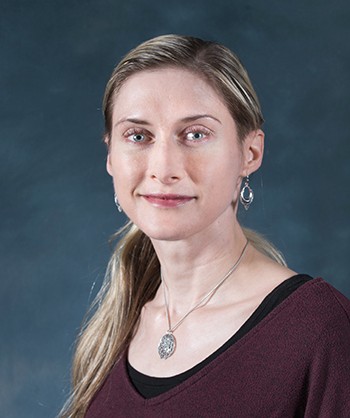
Roseen Giles is an Assistant Professor of Music at Duke University, affiliated with Trinity College of Arts & Sciences. She also serves as Curator of the Duke University Musical Instrument Collections (DUMIC). Her expertise lies in early modern Italian musical culture, particularly the intersections between poetry and music in the 17th century. Giles holds a Ph.D. and B.Mus. from the University of Toronto. Her research explores the aesthetic, professional, and personal relationships between poets and musicians, with a focus on Claudio Monteverdi and Giambattista Marino. Key works include her monograph Monteverdi and the Marvellous: Poetry, Sound, and Representation (2023) and the forthcoming Lettera amorosa Musical Love-Letters in Early Modern Italy (2025). She has been recognized with the 2025 Bass Chair award. Teaching spans courses on music history, Baroque studies, and interdisciplinary topics. Recent courses include Music History I/II , Focus Seminars , and Analysis of Early Music . Outreach activities include leadership in Duke’s Story+ program, fostering collaborative research projects. Awards: 2025 Bass Chair Publications: Over 20 scholarly works, including books and chapters on Monteverdi, Marino, and Baroque aesthetics Grants/Advising: Not explicitly detailed in provided texts Labs/Teams: Curator of DUMIC, engaged in musicological curation and public outreach
Professor Anna Reid is Dean and Head of School at the Sydney Conservatorium of Music (University of Sydney). Her research focuses on music education sustainability, professional preparation, and creative research practices. She leads initiatives including internship programs, regional conservatorium collaborations, and equity-focused curricula. Key publications include Creative Research in Music (2020) and Educating Musicians for Sustainability (2022). She co-edited Becoming a Mathematician (2012) and From Expert Student to Novice Professional (2011). Her work emphasizes cultural heritage preservation and international pedagogical exchanges. Reid holds a B.Mus (Performance) from Sydney Conservatorium, an M.Ed.Admin from the University of New England, and a PhD from UTS. She chairs the Sydney Southeast Asia Centre and has secured grants like the 2013 'Musical Creativities in the C21st Conservatoire' project. Notable institutional contributions include reviving the Footbridge Theatre, launching the Sydney Vietnam Institute partnership, and establishing the Royal Botanic Gardens music amphitheatre. Her research explores how artistic research transcends disciplinary boundaries, with studies on pre-professional musical identities and reflexivity during internships. She advocates for equitable access in music education through institutional equity strategies and peer learning frameworks.
Rachel Adler is an Associate Professor at the University of Illinois, affiliated with the School of Information Sciences, National Center for Supercomputing Applications (NCSA), Beckman Institute for Advanced Science and Technology, and the Siebel Center for Design. Her research focuses on accessibility in technology, particularly for individuals with disabilities and cancer survivors, alongside computational thinking and multitasking behavior. Her work emphasizes inclusive design, mHealth interventions, and educational approaches to accessibility. Notable projects include developing apps for cancer survivors and co-designing peer navigation systems. She has collaborated on studies analyzing occupational performance measures for survivors and assessing usability of health technologies. Research Highlights: Accessibility in software, health informatics, and educational technology. Key Collaborations: Beckman Institute, NCSA, Siebel Center for Design. Adler’s publications address topics like music experiences for the deaf community, digital inaccessibility challenges, and family workshops for accessibility education. Her interdisciplinary approach bridges computer science, healthcare, and education.
David Hedgecoth is a Professor of Music Education and Associate Director/Chair of Undergraduate Studies at The Ohio State University's School of Music. He holds a PhD from OSU and teaches courses in brass pedagogy, instrumental methods, and qualitative research. His administrative roles include curriculum committee work and advising for Phi Mu Alpha and Collegiate NAfME. He directs the Brazilian Experience education abroad program and mentors in the Sophomore Transformational Experience Program (STEP). Education: BME and MA from Florida State University (Tallahassee), PhD in Music Education from The Ohio State University. Research focuses on charter school music programs, educational policy, teacher education, and international music education. Key interests include curriculum design in alternative schools, social impact of music education, and LGBT inclusivity. Over 20 peer-reviewed and editor-reviewed publications address topics like self-guided rehearsals, post-recession curriculum recovery, and advocacy in music education journals. Awards include National Board Certification, Fulbright Scholarship, and Teacher of the Year. Serves on boards for Chamber Music Columbus, ProMusica Chamber Orchestra, and OSU's Center for Latin American Studies advisory board. Coordinates the IMMERSE sensory concert series with WOSU Public Radio. Advising includes directing education abroad programs and mentoring graduate students. Grants and partnerships involve collaborative projects with schools, orchestras, and international institutions. Maintains active roles in both classroom innovation and large-scale educational policy analysis. Labs/Teams: Brazilian Experience Abroad Program leadership, IMMERSE sensory concert coordination, and collaborative work with WOSU Public Radio.
Robert N. Watson is a Distinguished Professor of English at the University of California, Los Angeles , affiliated with the Department of English within the College of Letters and Science . He has held significant leadership roles including Chair of the Department of English , Chair of the Faculty of the UCLA College of Letters and Science , and Associate Vice-Provost for Educational Innovation . Education : B.A., summa cum laude , Yale University (1975) Ph.D., Highest Honors , Stanford University (1979) Professor Watson’s research focuses on William Shakespeare and Ben Jonson , literature and the environment , cultural evolution , and the U.S. in the 1960s . His work in ecocriticism explores intersections between environmental ethics and early modern literature , while his interdisciplinary research on cultural memeplexes investigates self-replicating cultural systems that parasitize human cognition. His recent publications apply algorithmic analysis to Shakespearean texts, revealing computational patterns in Elizabethan dramatic structure . Scientific Awards : Guggenheim Fellowship NEH Senior Research Fellowship Thomas J. Wilson Prize (1984) Elizabeth Dietz Memorial Prize (2007) ASLE Prize for Ecocriticism (2005-07) UCLA Distinguished Teaching Prize (2001) Gold Shield Prize (2006-08) As a humanities educator , he has created interdisciplinary courses on the 1960s cultural era and served as Head Scholar at the Teaching Shakespeare Summer Institute . His editorial work includes New Mermaids Series editions of Jonson’s plays and the forthcoming Arden edition of Measure for Measure . With publications spanning Shakespearean fear of death to Japanese cinema analysis , he remains a prominent figure in humanistic responses to cultural crises .
Simon Mills is Professor of Ethnomusicology in Durham University's Department of Music, specializing in Korean shaman music and ritual performance traditions. His research combines ethnographic fieldwork with musical analysis of Korean ritual practices. Key research domains: Korean shaman ritual music Instrumental performance traditions Music's role in healing practices Musical transcription methodologies Publications extensively document Korean musical heritage, including studies of Buddhist temple chanting, shamanic artistry, and folk traditions. Recent work focuses on performance style transmission and cultural preservation. Supervises five doctoral students researching Asian music traditions. Maintains active performance practice on Korean percussion instruments including changgo drum and tanso flute.
Dr. Kelly Fitzgerald is a Lecturer/Assistant Professor and Head of the School of Irish, Celtic Studies and Folklore at University College Dublin (UCD). She also served as Vice-Principal (International) at UCD from September 2020 to August 2023. Fitzgerald holds a BA and PhD from UCD, focusing on folklore and early Irish studies. Her research emphasizes the intellectual history of Irish folkloristics, archives, and oral history, with notable contributions to journals like Béaloideas . She chairs ANU Productions and directs oral history initiatives, including projects for Dublin’s Tenement Museum and social housing communities. Her teaching spans modules such as Folklore and Folkloristics , Healers and Healing , and Oral Text Interpretation . Fitzgerald has held leadership roles, including Head of Irish Folklore & Ethnology (2019) and Head of School (2021). She contributes to professional activities like committee memberships (e.g., The Royal Society of Antiquaries) and public engagements, including talks on Irish cultural traditions and folklore. Her research outputs include analyses of aging discourse, cultural heritage preservation, and interdisciplinary studies. Fitzgerald’s work bridges academic and public spheres, advocating for inclusive cultural narratives and policy-informed research on aging.
Dr. Francis Summers is an Associate Lecturer in Photography at Camberwell College of Arts. His work spans photography, video, and interdisciplinary research, focusing on appropriation, time-based media, and subjectivity. He holds degrees from Wimbledon School of Art, the Courtauld Institute, and the Royal College of Art in Fine Art, Art History, and Photography. Research interests include photography’s role as a communicative tool across social and aesthetic practices, queer theory in fashion (e.g., Hood By Air), and digital anomie. Collaborating as lmfs with Louisa Minkin, he explores banner forms and experimental writing. Recent publications address Jenn Nkiru’s Afrofuturist film aesthetics, Linder’s feminist collage, and fashion’s performative dimensions through queer theory. Publications and talks include a 2022 Palgrave Macmillan chapter on transgressive fashion, a 2021 Screen Conference paper on Black digital histories, and a 2020 conference presentation on Linder at the University of Cambridge. His work intersects art, theory, and critical practice, emphasizing interdisciplinary dialogue between visual media and cultural critique.
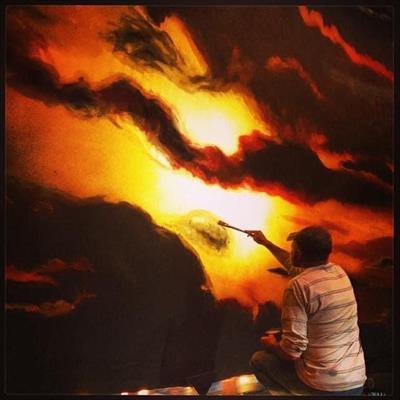
Ted Simpson is a Distinguished Senior Lecturer in the Department of Theatre, Dance, and Performance Studies at Tufts University. He holds an MFA in Set and Lighting Design from Brandeis University. His professional career spans over 100 theatre productions across the northeast, including work at the George Street Playhouse, Arena Stage, and Broadway-related projects. He has also served as a resident designer at the Brevard Music Center and contributed to the Late Show With David Letterman and Paper Mill Playhouse. Education: MFA in Set and Lighting Design, Brandeis University, United States Research and Practice: Simpson specializes in set and lighting design for theatre, opera, and musicals. His work emphasizes technical precision and artistic innovation, with notable projects in New York, New England, and North Carolina. He has also contributed extensively as a scenic artist, painting scenery and backdrops for major institutions. Awards and Recognition: No scientific awards listed, but his body of work reflects significant industry recognition. Advising and Grants: No formal advising or grant details provided in the text. Labs and Teams: Active collaborations with theatre companies and design teams across multiple states, though specific lab affiliations are not mentioned.
Dr. Bill Baker is a Senior Lecturer in Drama, Visual Arts & Music Education at the University of Tasmania's School of Education, College of Arts, Law and Education (CALE). With a career spanning 35 years, he specializes in arts education, technology-enhanced learning (TELT), and the scholarship of teaching and learning (SoTL). His research focuses on youth resilience through arts participation, particularly in community youth orchestras, and the preparation of pre-service teachers in arts pedagogy. Dr. Baker holds a Doctor of Education (RMIT, 2002), a Master of Education (Arts Administration, RMIT, 1997), and a Bachelor of Music Education (University of Melbourne, 1988). He has received multiple awards, including Senior Fellow of the Higher Education Academy (2019) and Honorary Life Member of the Australian Society for Music Education (2021). His funded projects include the Tasmanian Community Fund Grant and Australia-ASEAN Council grants for youth orchestra research. His peer-reviewed publications (over 40) address arts education, online teaching methodologies, and the social impacts of music participation. Current research collaborations include partnerships with the Tasmanian Youth Orchestra and institutions like University of Southern Queensland and The University of Melbourne. Dr. Baker supervises HDR students in arts participation, leadership, and teacher education reforms. Scientific Awards: Vice Chancellor's Teaching Excellence Award Vice Chancellor’s Citation for Outstanding Contribution to Student Learning CALE Teaching Excellence Award Senior Fellow, Higher Education Academy (UK) Honorary Life Member, Australian Society for Music Education Supervision & Teaching: Dr. Baker has supervised numerous HDR students, including completed PhDs on contemporary music pedagogy and Masters theses on visual arts education. He coordinates units in the Master of Teaching and Bachelor of Education degrees, emphasizing technology integration and reflective practice.
Richard Scott is a Lecturer in Creative Writing at Goldsmiths, University of London, specializing in poetry and queer theory. He holds a BMus in Music & Performance (Opera) from the Royal College of Music (2004) and an MA in Creative & Life Writing from Goldsmiths (2012). His research explores queer poetics, ekphrasis, art history, and London's Soho district. Key publications include Soho (Faber & Faber, 2018), shortlisted for the T.S. Eliot Prize, and Wound (Rialto, 2016), winner of the Michael Marks Poetry Award. His work has been translated into German and French. Recent articles engage with queer ekphrasis (e.g., 'Still Life with Cup...'), mineral symbolism ('Red Jasper'), and urban queer narratives ('from Coy'). He has collaborated with institutions like Southwark Park Galleries and BBC Radio 4. Awards include the Poetry London Competition (2017) and residencies at Edwin Morgan Trust and Resonance FM. His teaching focuses on creative writing and life writing at the MA level.
Professor Barley Norton is a distinguished ethnomusicologist and filmmaker at Goldsmiths, University of London, where he serves as Director of the Asian Music Unit (AsMU), convenor of the MA in Music (Ethnomusicology), and leader of the Goldsmiths Gamelan Group. His academic career focuses on the music and culture of Southeast Asia, particularly Vietnam, where he has conducted extensive field research. His research interests span ethnomusicological filmmaking and theory, the cultural politics of musical practice, discourse on cultural heritage and music revival, music and religious experience, music and emotion, music and gender theory, music censorship, improvisation, and performance and modal theory. Norton's academic work is deeply informed by his practical musical engagement; during his field research in Vietnam, he learned to play the dan day and dan nguyet lutes, and he also performs Sundanese music from Indonesia on the kacapi zither and in the gamelan degung orchestra. Norton's scholarly output reveals significant trends in Southeast Asian music studies, particularly focusing on the intersection of traditional musical practices with contemporary political and social contexts. His work consistently examines how musical traditions navigate processes of canonization, heritage safeguarding, and creative innovation within rapidly changing cultural landscapes. A notable thread throughout his research is the relationship between music, ritual, and identity in Vietnamese cultural contexts, with increasing attention to environmental concerns and climate change impacts on musical heritage in his most recent work. American Musicology Society's 2014 Ruth A. Solie Award for 'Music and Protest in 1968' Commendation - Intangible Culture Film Prize at the Royal Anthropological Institute's 12th International Festival of Ethnographic Film for 'Hanoi Eclipse: The Music of Dai Lam Linh' Professor Norton has supervised numerous doctoral students including Christopher Hanby (Applied Ethnomusicology and Jèrriais language revitalization), Lin Lin (Creative Realization in the Compositional Process), Clare Salaman (Reimagining the trumpet marine), and Jasmine Hornabrook (Transnational networks in London's Tamil diaspora). His research has been generously funded by the Getty Foundation, Arts and Humanities Research Council, British Academy, and ASEASUK, supporting projects on Vietnamese music revival and audiovisual archiving. He has also undertaken consultancy work with UNESCO, the British Council, and Vietnamese cultural institutions on music heritage projects. As a key figure in the field, Norton directs Goldsmiths' Asian Music Unit, which serves as a hub for research, performance, and teaching focused on Asian musical traditions. The unit facilitates cross-cultural musical dialogue and supports field research in Asia, while the Goldsmiths Gamelan Group provides hands-on experience with Indonesian musical traditions. His leadership extends to international scholarly organizations, having served as Chair of the British Forum for Ethnomusicology (2015-2018) and as a member of the Society for Ethnomusicology Council (2017-2020).
Daisy Asquith is Professor and Head of the School of Media, Communications & Cultural Studies at Goldsmiths, University of London. She is a documentary filmmaker with 25 director credits for BBC, Channel 4, Irish Film Board and the BFI over the last two decades. She convenes the MA Filmmaking: Screen Documentary and Experimental Film programs and teaches the theory module Representing Reality. PhD Creative and Critical Practice, University of Sussex (2018) MA Cultural History, Memory & Identity, University of Brighton (2013) As a scholar-practitioner, Daisy's work bridges documentary filmmaking theory and practice. Her research focuses on documentary storytelling, with particular reference to new forms and hybrids, autobiographical film, gender, sexuality and class in film and television, representation, archive film, found footage, and home video. Her creative work often explores LGBTQ+ themes and historical representation, as evidenced in her acclaimed documentary Queerama which examines a century of gay rights and desires on film. Her publications and creative works demonstrate a consistent engagement with marginalized voices and alternative narratives, spanning from queer history to single motherhood (Opera Mums with Bryony Kimmings) and fandom culture (This is Not Us). Her work frequently combines archival research with contemporary storytelling techniques. Grierson Award winner RTS Best Documentary Series winner BAFTA nominee Has served on juries for Bafta, RTS, Grierson, Sheffield Docfest and the London Film Festival Daisy has extensive experience mentoring students, with her MA students winning awards for their graduation films and securing work with leading practitioners in the industry. She has also created educational resources like the Gold Docs Masterclasses featuring interviews with leading UK documentary practitioners. Her international work includes filming in Zimbabwe, Kyrgyzstan, India, Russia, Pakistan, Japan, Iceland, on a cruise ship, and across the USA.
Nicholas R. Spitzer is a Professor in the Department of Anthropology and American Studies at Tulane University, specializing in folklore, ethnography, and American vernacular music. He earned his Ph.D. from the University of Texas at Austin. His research explores cultural creolization, Gulf Coast ethnography, and public cultural policy, with extensive fieldwork in Louisiana's Creole communities. Publications focus on cultural resilience in post-disaster contexts and music as identity expression. Key awards include the Benjamin Botkin Lifetime Award, Guggenheim Fellowship, and Louisiana Humanist of the Year for post-Katrina cultural recovery efforts. He founded the Louisiana Folklife Program and produces the radio show American Routes .
Ann Lucas is an Associate Professor in the Music Department at Boston College. She specializes in ethnomusicology with a focus on Persian and Arabic-speaking Near East music traditions, the history of music in Iran, and the relationship between cultural upheaval and musical change. Her research also explores music and mysticism in Islamic contexts. Education: B.M., Kansas State University M.A., University of California Los Angeles Ph.D., University of California Los Angeles Research interests include the intersection of cultural shifts and musical evolution, particularly in Iran and the broader Near East. She is currently conducting ethnographic fieldwork on Arab music and dance, examining connections between musical expression and bodily movement. Her work has been published in journals like Asian Music Journal and The Middle East Studies Bulletin , with a focus on historical ethnomusicology and gender studies. She directs the Middle East Astaza! Music Ensemble, which maintains active Soundcloud and YouTube channels showcasing ensemble performances. No formal grants or advising records are listed in the provided text.