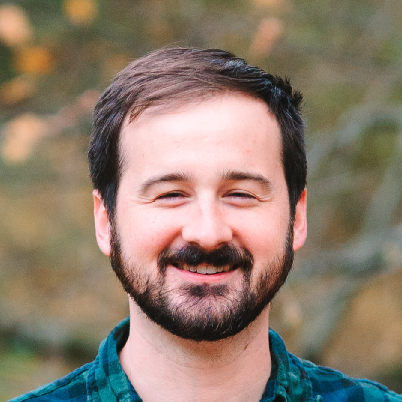
Tianqi Chen is an Assistant Professor at the Machine Learning Department and Computer Science Department of Carnegie Mellon University (CMU), with a courtesy appointment as a Professor in the Electrical and Computer Engineering Department within the College of Engineering. His research focuses on scalable machine learning systems, compiler optimization, and efficient deep learning frameworks. He holds a PhD from the Paul G. Allen School of Computer Science & Engineering at the University of Washington. Key contributions include the creation of XGBoost, Apache TVM, and MLC-LLM—widely adopted systems for machine learning and large language models. His work bridges algorithmic innovation with high-performance computing, emphasizing efficient deployment, quantization, and edge computing. Recent publications highlight advancements in LLM serving (e.g., WebLLM, Flashinfer), compiler-driven optimizations (e.g., TVM, Relax), and low-latency inference techniques (e.g., Magicdec, Tilus). These efforts address scalability, energy efficiency, and cross-platform compatibility in modern AI systems. Chen’s research has been applied to diverse domains, including music AI, browser-based inference, and microservice architectures for LLMs. His work underscores the importance of system-level thinking in advancing AI capabilities.
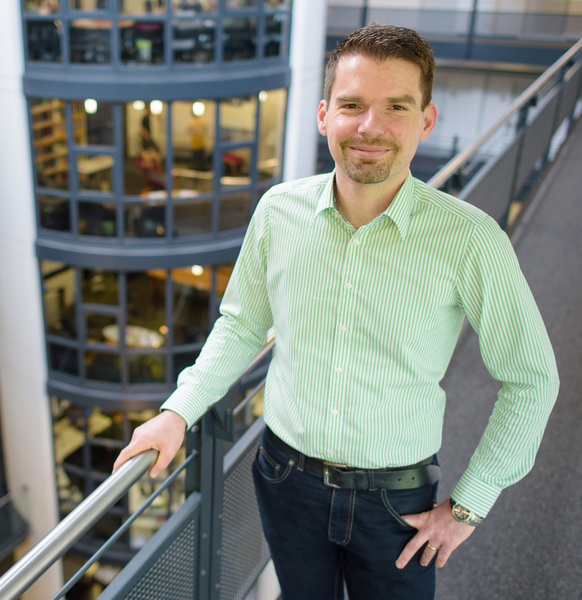
Christian Theobalt is a Professor of Computer Science at Saarland University and Scientific Director of the Visual Computing and Artificial Intelligence Department at the Max Planck Institute for Informatics . He leads the Saarbruecken Center for Visual Computing as a strategic partnership between Google and MPI. PhD in Computer Science (2005) from MPI-INF/Saarland University Postdoctoral Researcher at MPI (2005-2007) Visiting Assistant Professor at Stanford (2007-2009) His research focuses on the intersection of Computer Graphics, Computer Vision, and Artificial Intelligence , with specializations in: 3D/4D Human Reconstruction Neural Rendering Performance Capture Geometric Deep Learning Volumetric Video Quantum Visual Computing Recent article trends show emphasis on: Quantum computing applications in visual reconstruction Neural rendering with radiance fields Human motion capture from egocentric views Gesture-language interaction modeling Multi-modal scene understanding Real-time free-viewpoint rendering Scientific Awards : Fellow of EUROGRAPHICS (2022) CVPR Best Student Paper Honorable Mention (2020) ERC Consolidator Grant (2017) Karl Heinz Beckurts Award (2017) Busy Beaver Teaching Award (2016) ERC Starting Grant (2013) Advising over 50 students and researchers including: Current researchers: Viktor Rudnev, Linjie Lyu, Mohit Mendiratta Postdocs: Kwang In Kim, Kiran Varanasi Alumni: Franziska Mueller (Google), Dushyant Mehta (Qualcomm), Ayush Tewari (MIT) Grants include ERC grants, Google Glass Research Award, and multiple industry partnerships. His lab maintains cutting-edge facilities with: Multi-camera capture systems Quantum annealing infrastructure HDR radiance field technology GPU clusters for AI research Time-of-flight imaging systems Event camera arrays
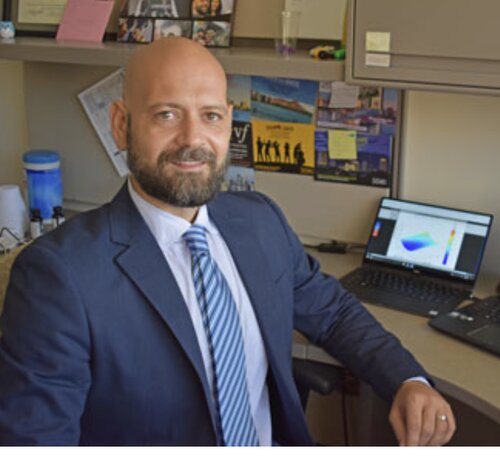
Chris Donahue is an Assistant Professor in the Computer Science Department at Carnegie Mellon University . He also serves as a part-time Research Scientist at Google DeepMind on the Magenta team. His work focuses on leveraging generative AI to enhance human creativity, particularly in music. Education: PhD in Computer Science (UC San Diego), Postdoctoral Scholar (Stanford University) His research spans controllable generative modeling of music and audio , with a focus on real-time interactive systems. Projects like Piano Genie , Beat Sage , and Copilot Arena demonstrate his commitment to real-world deployment. His Generative Creativity Lab (G-CLef) explores AI applications beyond music, including programming and natural language. Recent publications highlight advancements in multimodal music evaluation , real-time adaptation , and AI-driven sound morphing . He co-developed Magenta RealTime , an open-weight real-time music generation model, and MusicFX DJ Mode . Scientific Awards: Best Paper Award (top 1) at NAACL Student Research Workshop 2025 Best Paper Award (top 1% of submissions) at CHI 2025 Best Paper Runner-up at ISMIR 2021 He co-advises PhD students like Wayne Chi (NDSEG Fellow) and mentors Irmak Bukey . His lab receives support from the AIxArts incubator fund at CMU .
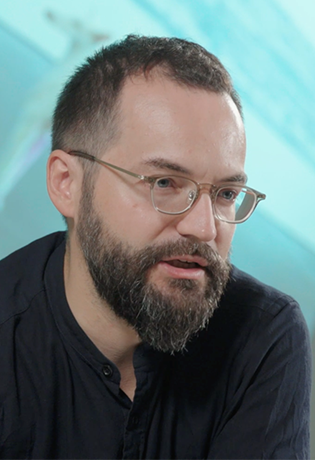
WANG Ye is an Associate Professor in the Department of Computer Science at the School of Computing, National University of Singapore (NUS). He holds a PhD in Information Technology from Tampere University of Technology, Finland, and has been a tenured faculty member at NUS since 2002, following his industry research role at Nokia Research Center. He is the director of the Sound and Music Computing Lab at NUS, leading cutting-edge research in AI-driven music and health technologies. PhD, Information Technology, Tampere University of Technology, Finland (2002) MSc, Telecommunications, Braunschweig University of Technology, Germany (1993) BSc, Telecommunications, South China University of Technology, China (1983) His research is centered on Sound and Music Computing for Human Health and Potential (SMC4HHP) , with a focus on eHealth, eLearning, mobile/wearable computing, and music information retrieval. His work spans AI for stroke rehabilitation, language learning through singing, singing voice synthesis, and automatic music transcription. He has pioneered systems like SLIONS (language learning via karaoke), CocoLyricist (AI co-creation for stroke recovery), and SinTechSVS (expressive singing voice synthesis). The latest articles highlight a strong trend in AI-driven music and health technologies , particularly in controllable lyric generation, singing voice synthesis, automatic pronunciation assessment, and multimodal music transcription. The research increasingly integrates large language models, explainable AI, fairness, and real-world deployment, reflecting a shift from theoretical exploration to practical, human-centered applications in healthcare and education. Dr. Wang has received numerous scientific honors, including: Best Paper Awards at ACM MM, ISMIR, IEEE ISM, and CHI First Prize, Asia Pacific Assistive, Rehabilitative, and Therapeutic Technologies Challenge (2015) Faculty Teaching Excellence Award, NUS School of Computing (2024) Top Paper Award, ACM Multimedia 2022 AI in Medicine Collaborative Grant for CocoLyricist project He has supervised over 11 PhD and 20 MComp students and is currently guiding six PhD candidates. His grants come from MOE, NRF, A*STAR, Nokia, and Smule. He has served as General Chair of ISMIR2017 and TPC Co-Chair of ICOT2017, and is on the editorial boards of IEEE Transactions on Multimedia and Journal of New Music Research. He has also developed and taught the first course on Sound and Music Computing in Singapore. Dr. Wang leads the Sound and Music Computing Lab (SMC Lab) , a multidisciplinary team exploring the synergy of music computing, AI, mobile technology, and cloud systems for health and education. The lab actively collaborates with medical institutions such as NUS Yong Loo Lin School of Medicine, Singapore General Hospital, and Harvard Medical School, and is currently working on projects in AI-supported language learning, stroke rehabilitation, and intelligent music interfaces.
Pasquale Bottalico serves as Associate Professor in the Department of Speech and Hearing Science at the University of Illinois, with dual appointments as Associate Professor at the Center for Latin American and Caribbean Studies and Affiliate Faculty in the School of Music. His unique interdisciplinary profile bridges engineering, music performance, and speech science, reflecting his dual academic training and professional artistry. His educational foundation includes: Bachelor's in Telecommunications Engineering from Univeristà Mediterranea di Reggio Calabria, Italy Concurrent Opera Singing degree from F. Cilea Music Academy, Reggio Calabria Master's in Telecommunications Engineering from Politecnico di Torino, Italy Ph.D. in Metrology specializing in acoustics measurement uncertainty and classroom acoustics Dr. Bottalico's research centers on vocal load quantification and professional voice techniques , with significant contributions to understanding vocal fatigue in teachers and singers. His work spans Speech Intelligibility in educational environments, Room Acoustics for performance and learning spaces, and Musical Acoustics of historical vocal styles. A distinctive thread throughout his research examines how acoustic conditions modulate voice production and perception, increasingly incorporating virtual reality and bone conduction technologies for innovative assessment and intervention approaches. His Colombian vocal health study demonstrates cross-cultural applications of his work. Analysis of his 2023-2025 publications reveals three dominant research trajectories: (1) The impact of noise and dysphonia on children's speech processing in educational settings, using multimodal assessment including EEG; (2) Virtual reality applications for voice production research and therapeutic intervention; (3) Cross-cultural validation of vocal fatigue metrics and development of biofeedback systems. His work consistently bridges engineering precision with clinical applicability, particularly for professional voice users in challenging acoustic environments. No scientific awards were documented in the available information. While specific advising relationships aren't detailed, his research collaborations span international institutions including Colombian and Italian universities, suggesting graduate mentorship in interdisciplinary projects. No grant information was provided, though his systematic reviews and cross-cultural studies imply externally funded research activities. Though no dedicated laboratory is specified, his virtual reality voice studies and acoustic parameter assessments suggest affiliations with audio engineering facilities and voice clinics, likely through the Speech and Hearing Science department's research infrastructure.
Xavier Serra is a Full Professor at the Department of Engineering at Universitat Pompeu Fabra (UPF), Barcelona. He is the founder and director of the Music Technology Group (MTG), and leads the UPF-BMAT Chair on AI and Music. He also coordinates the Master in Sound and Music Computing and serves as President of the Phonos Foundation. His research focuses on audio signal processing, sound and music computing, and computational musicology, emphasizing open science and open innovation. Education: BSc in Biology, University of Barcelona (1981) Master in Music, Florida State University (1983) PhD in Computer Music, Stanford University (1989) Research Interests: Audio Signal Processing Data-Driven and Knowledge-Driven Methodologies Music Information Retrieval Cultural Music Analysis (e.g., Carnatic/Turkish/Andalusian Music) Music Education Technology Notable Projects: CompMusic (ERC Advanced Grant, 2010-2017): Multicultural computational music analysis Open datasets: Freesound, Saraga, FSD50K Technologies: Reactable, Vocaloid, Essentia API Recent Trends in Articles: Focus on AI-driven audio processing (neural fingerprints, generative models), cross-cultural music analysis, and explainable music difficulty estimation. Awards: ERC Advanced Grant (2010) for CompMusic Project. Labs/Teams: Director of MTG, Phonos Foundation, and UPF-BMAT Chair. Active in open-source projects and international collaborations.
Elena Maria Baralis is a Full Professor at the Department of Control and Computer Science (DAUIN) at the Polytechnic University of Turin. She serves as Pro-Rector, member of the Board of Directors (without voting rights), member of the Academic Senate (without voting rights), and coordinator of the University's Permanent Observatory for Monitoring the Academic Sector. She chairs the Control and Computer Engineering Department and previously chaired the Computer Engineering School from October 2012 to October 2018. Her research interests focus on database systems and data mining, specifically explainable AI, bias detection in data analytics, and machine learning algorithms for big data. Her work spans various application domains including predictive maintenance, Industry 4.0, and healthcare. Recent publications demonstrate her expertise in speech processing, bias mitigation, and innovative neural network architectures like Kolmogorov-Arnold Networks. Her research output shows a clear trend toward addressing fairness and explainability in AI systems while exploring novel approaches to speech and language understanding. Professor Baralis has received significant recognition including becoming a Fellow of the Academy of Sciences of Turin in 2017. She has served as Editor-in-Chief for IEEE Internet of Things Journal (2016-2019) and Knowledge and Information Systems (2014-present). She actively mentors doctoral students including Claudio Savelli (researching Machine Unlearning), Eleonora Poeta, Giuseppe Gallipoli, Alkis Koudounas, and others. Her research is supported by numerous projects including AI4CTI (Artificial Intelligence for Cyber Threat Intelligence, 2025-2028), Smart manufacturing driven by Machine Learning in Industry 4.0 (2019-2020), and I-REACT (2016-2019).
Jan Herbst is a Professor of Music at the University of Huddersfield and Director of the Centre for Research in Music and its Technologies. His academic journey includes multiple doctorates (PhD, Dr. habil.) from Leuphana University Lüneburg and research expertise in popular music studies, music production, and systematic musicology. He leads AHRC-funded projects such as 'Heaviness in Metal Music Production' and 'Songwriting Camps in the 21st Century.' His work bridges practical music production and theoretical research, with over 80 publications including books like The Cambridge Companion to Metal Music and Heaviness in Metal Music Production . Herbst’s research focuses on metal music aesthetics, record production techniques, and the cultural dimensions of music technology. He has held roles at German and Swiss universities, including teaching guitar performance and music production. His editorial roles include the Cambridge Companions series and journals like Metal Music Studies . Current projects explore blockchain in music, gear acquisition syndrome, and extreme metal vocal techniques. His academic affiliations include the IASPM UK & I executive committee and editorial boards for major musicology publications. Herbst actively engages with industry through collaborations with producers and performers, maintaining a balance between academic rigor and practical music creation.
Dr. Kelsey Onderdijk is a Post-doctoral Researcher at Tilburg University in the Department of Communication and Cognition within the Tilburg School of Humanities and Digital Sciences. Her research focuses on the intersection of music cognition, virtual reality, and social connectedness, with publications spanning neuroscience, psychology, and human-computer interaction domains. Dr. Onderdijk completed her doctoral studies at Ghent University with a dissertation titled "Come together: Exploring unity in music interaction through agency and social connectedness." Her academic journey reflects a strong commitment to understanding human interaction through musical experiences, particularly examining how technological mediation affects social bonding. Her research interests include: Music cognition and embodied music interaction Virtual reality applications in musical contexts Social connectedness in digital music environments Effects of technological constraints on musical collaboration Physiological measures of emotional engagement in music Impact of external constraints on creative expression Dr. Onderdijk's publication record demonstrates a clear trajectory examining how people connect through music in both physical and virtual spaces. Her work bridges psychology, musicology, and human-computer interaction, with particular attention to the impact of the COVID-19 pandemic on musical collaboration. Recent publications have focused on concert experiences in virtual reality environments and the physiological correlates of emotional engagement during musical performance. Her research has garnered significant attention, with multiple publications receiving citations and mentions in news outlets, policy sources, and social media platforms. The "Impact of Lockdown Measures on Joint Music Making" paper has been particularly influential, accumulating 39 citation indexes and 50 Mendeley readers. Dr. Onderdijk actively collaborates with researchers across institutions, particularly with scholars from Ghent University including Marc Leman and Pieter-Jan Maes, indicating a strong network within the music cognition research community. Her work contributes to UN Sustainable Development Goals, particularly those related to well-being and innovation.
Dr. Damien Charrieras is an Associate Professor at the School of Creative Media , City University of Hong Kong, where he serves as Program Leader for the Master of Art in Creative Media and deputy program leader for the PhD in Creative Media. His work bridges cultural studies, new media theory, and the intersection of financial technologies with artistic practices through the ACIM Laboratory for Interventions in Speculative Finance . Doctoral research on digital artists' trajectories in Montreal FRQSC Postdoctoral Fellowship at McGill University Research spans game engine design , datafication of creativity , blockchain in art , and post-anthropocentric creative processes . With over HK$3.14M in grants as Principal Investigator, he explores situated digital creativity in urban contexts, critical worldbuilding pedagogy , and the mediation of technical systems in cultural production. His publications in Cities , Organized Sound , and Human Relations analyze the reconfiguration of artistic practices through software infrastructures and automation paradigms. Scientific awards include: FRQSC Postdoctoral Fellowship
Gyu Tag Lee is a Professor in the International Studies Department at George Mason University Korea, specializing in Cultural Studies with a focus on K-Pop, media criticism, and the globalization of culture. He holds a PhD in Cultural Studies from George Mason University (2013), an MA in Communication from Seoul National University, and a BA in English Language and Literature from the same institution. Having completed three years of military service in the Republic of Korea Air Force, he has been teaching at George Mason University Korea since 2014. His research interests span Cultural Studies, Media Criticism, Popular Music, K-Pop and Hallyu, Globalization of Culture, and Music Industry studies. Professor Lee is particularly recognized for his expertise on K-Pop's global expansion, cultural appropriation issues within the industry, and the relationship between Korean cultural identity and global pop music markets. His extensive publications reflect a consistent focus on K-Pop's evolution, from its historical roots to contemporary challenges and future directions. His work examines the tension between local Korean identity and global appeal, the role of digital platforms in fan engagement, and the cultural politics surrounding K-Pop's international success. Professor Lee's research demonstrates how K-Pop functions as both a cultural product and economic phenomenon with significant implications for understanding transnational cultural flows. As a respected commentator in the field, he serves on the selection committee for the Korean Music Awards and has been featured in numerous international media outlets including Wall Street Journal, South China Morning Post, Netflix's documentary Explained, and major Korean broadcasters such as KBS, MBC, and SBS. His insights on cultural appropriation in K-Pop have been particularly influential in shaping discussions about cultural sensitivity and global cultural exchange. Professor Lee teaches courses including Media Criticism, Globalization and Culture, K-Pop, Hallyu, and Korean Society, and Korean Popular Culture in a Global World, bringing his scholarly expertise directly into the classroom to educate the next generation of cultural critics and analysts.
Marc V Fuccillo is an Associate Professor of Neuroscience at the Perelman School of Medicine, University of Pennsylvania, where he leads a research laboratory focused on understanding the neural circuit mechanisms underlying behavioral control. His work bridges molecular, synaptic, and behavioral approaches to investigate how striatal circuits regulate mouse behavior from simple motor patterns to complex goal-directed actions. Fuccillo holds dual appointments in the Neuroscience and Cell and Molecular Biology Graduate Groups at Penn and maintains an active laboratory investigating the synaptic and circuit basis of neuropsychiatric disorders. Education: B.A. in Molecular and Cellular Biology and Music Performance (Violin) from Brown University (1998) Ph.D. in Developmental Genetics from New York University School of Medicine (2007) M.D. from New York University School of Medicine (2008) Fuccillo's research centers on the synaptic and circuit mechanisms of behavioral control, with particular emphasis on striatal circuits. His laboratory employs a range of technologies including mouse genetics, in vitro electrophysiology, in vivo imaging, and quantitative behavioral analysis to explore how neural circuits of the striatum regulate behavior and how disruptions in these circuits contribute to neuropsychiatric disorders. His work has particularly focused on autism-associated abnormalities in behavioral control, examining how synaptic adhesion molecules like neuroligins and neurexins shape circuit function and behavior, with significant findings regarding D1 dopamine receptor positive medium spiny neurons in the nucleus accumbens. Analysis of Fuccillo's recent publications reveals a strong focus on striatal circuit function across multiple dimensions. His work spans molecular neuroscience (examining synaptic adhesion molecules), cellular physiology (studying specific neuron types in striatal circuits), systems neuroscience (mapping circuit connectivity), and behavioral neuroscience (quantifying motor learning and decision-making). A unifying theme is how disruptions in specific molecular pathways lead to circuit-level abnormalities that manifest as behavioral phenotypes relevant to neuropsychiatric disorders, with particular attention to autism, OCD, and schizophrenia models. Scientific Recognition: Publications in high-impact journals including Nature Neuroscience, Current Biology, Cell Reports, and Neuron Research supported by multiple NIH grants including NIMH F32, NIMH K01, and HHMI Gilliam Fellowship awards for lab members Fuccillo actively mentors a diverse group of trainees including postdoctoral fellows, graduate students, and undergraduates. His laboratory has produced numerous successful alumni who have gone on to faculty positions, medical residencies, and graduate programs at prestigious institutions. His mentoring approach emphasizes technical skill development across multiple neuroscience disciplines while fostering independent scientific thinking. Current research in his lab is supported by NIH funding focused on understanding the molecular architecture of striatal circuits and their role in behavioral control, with three major research directions exploring molecular logic of striatal circuits, circuit mechanisms of behavioral control, and striatal dysfunction in neuropsychiatric disease models. The Fuccillo Laboratory operates within the Department of Neuroscience at the University of Pennsylvania, with access to state-of-the-art facilities for molecular, electrophysiological, imaging, and behavioral neuroscience research. The lab maintains active collaborations with other neuroscience research groups at Penn and beyond, creating a rich intellectual environment for studying the neural basis of behavior. Current research directions include investigating whether there is a molecular logic to striatal circuit composition, how striatal circuits shape behavioral control, and what mouse models of autism, schizophrenia, and OCD can reveal about striatal circuit dysfunction in disease pathophysiology.
Kiri Miller is a Professor of American Studies and Chair of the American Studies department at Brown University. Her research focuses on participatory culture, digital media, and performance studies, with a particular emphasis on interactive media like video games and their cultural implications. She holds a Ph.D. in Music (Ethnomusicology) from Harvard University and has held prestigious fellowships, including from the Radcliffe Institute and the American Council of Learned Societies. Her major works include Playable Bodies: Dance Games and Intimate Media (Oxford, 2017), which examines the cultural and kinesthetic impact of dance games, and Playing Along: Digital Games, YouTube, and Virtual Performance (Oxford, 2012), exploring game culture and virtual communities. She also authored Traveling Home: Sacred Harp Singing and American Pluralism (Illinois, 2008), studying participatory music traditions. Miller’s research interests span digital media, ethnography, gender studies, and popular music. Her current work investigates 'insomniac listening' through sleepcasts and meditation apps, analyzing their role in wellness culture and sonic comfort. She teaches courses such as Virtual Bodies, Music and Technoculture, and Popular Music Studies. Her awards include the de la Torre Bueno Book Award and the Alan Merriam Prize, recognizing her contributions to dance studies and ethnomusicology. Miller’s interdisciplinary approach bridges media studies, cultural anthropology, and technology, making her a leading voice in digital humanities and performance studies.
Nicholas Wiltsher is an Associate Professor at the Department of Philosophy; Aesthetics at Uppsala University since 2019. His research focuses on aesthetics, philosophy of mind, and race/gender studies, exploring topics like imagination's role in art, gender norms in aesthetics, and electronic dance music's philosophical dimensions. He holds a PhD from the University of Miami and has held academic roles at institutions including Antwerp, Auburn, Porto Alegre, and Leeds. Education: PhD in Philosophy from the University of Miami. Previous affiliations include universities in Antwerp, Auburn, Porto Alegre, and Leeds. Research interests include: the interplay between art and imagination, aesthetic norms and gender, expression theory, philosophy of race and gender, and electronic dance music aesthetics. He critiques traditional disciplinary boundaries in aesthetics and advocates for interdisciplinary approaches. His recent publications (2023–2025) emphasize imagination's epistemic role, the aesthetic constitution of gender identities, and critiques of additive imagination theories. Earlier work (2016–2019) addressed electronic dance music's cultural ontology and Collingwood's expression theory. Awards: No scientific awards explicitly listed. Grants and advising: No grants or student advisees explicitly mentioned in sources. Labs/Teams: No specific research groups or labs mentioned, though his work engages interdisciplinary collaborations in aesthetics and cultural philosophy.
Eero Hyvönen is a Professor of Computer Science at Aalto University and Director of the Helsinki Centre for Digital Humanities (HELDIG) at the University of Helsinki. He leads the Semantic Computing Research Group (SeCo), specializing in Semantic Web technologies and applications. Hyvönen holds an Adjunct Professor title at the University of Helsinki's Department of Computer Science. His work focuses on developing national-level semantic web infrastructure, with applications in digital humanities, cultural heritage, and AI. He has published over 500 research articles and books, receiving numerous awards including the Decoration of Knight, First Class, of the Order of the White Rose of Finland (2018). Hyvönen chairs editorial boards of journals like Semantic Web and serves on committees for major conferences. His research spans semantic web technologies, linked open data, and AI applications in cultural heritage domains. Key projects include Sampo portals (e.g., LetterSampo, OperaSampo) for cultural data analysis, ParliamentSampo for parliamentary data, and FindSampo for archaeological finds. His work emphasizes interdisciplinary collaboration, integrating law, history, and computing through initiatives like FIN-CLARIAH. Hyvönen advises doctoral and master's students, notably Annastiina Ahola and Jouni Tuominen, who have won awards under his supervision. He directs research infrastructures, chairs international boards, and actively contributes to open data policies and standards development.