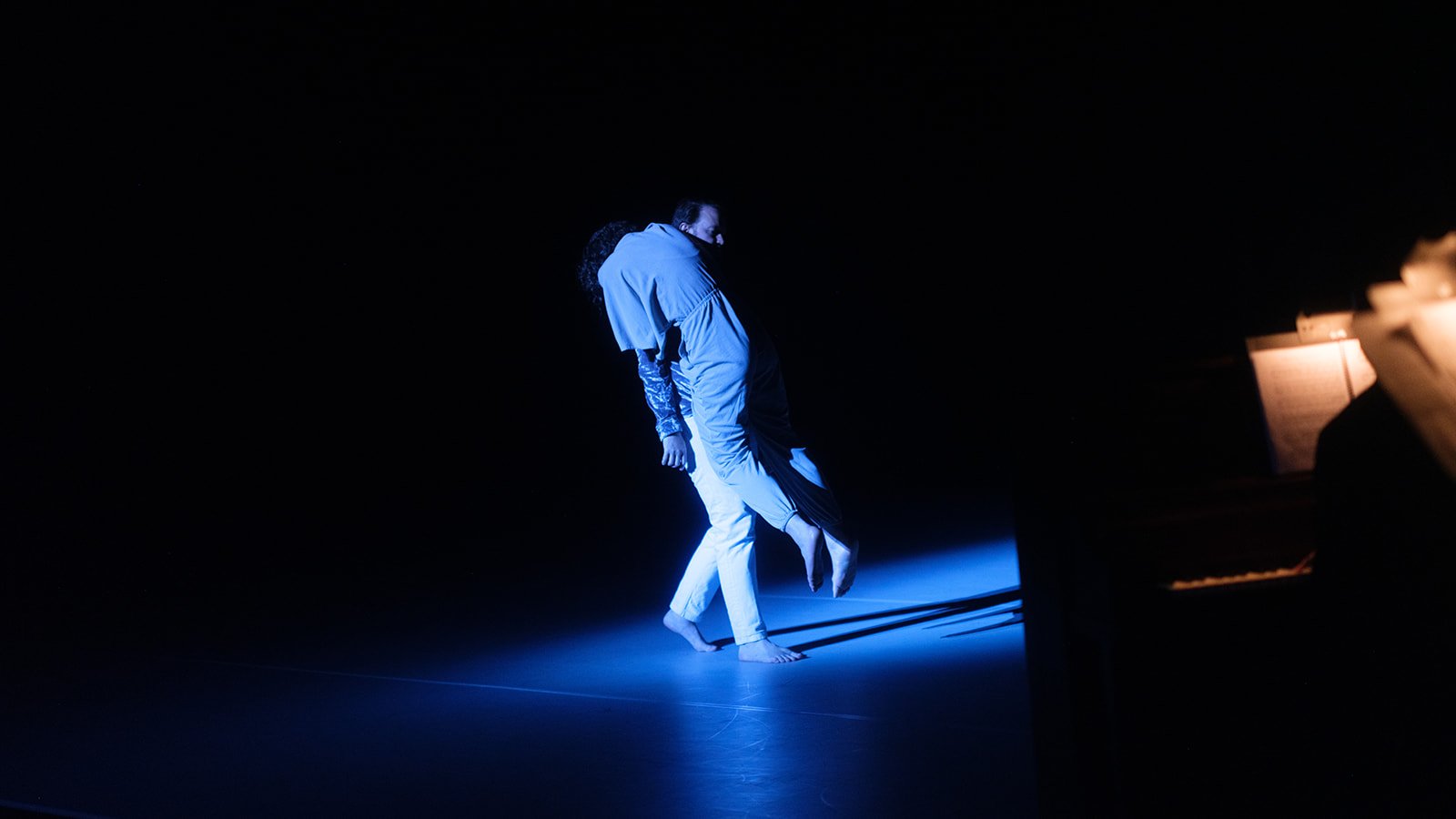
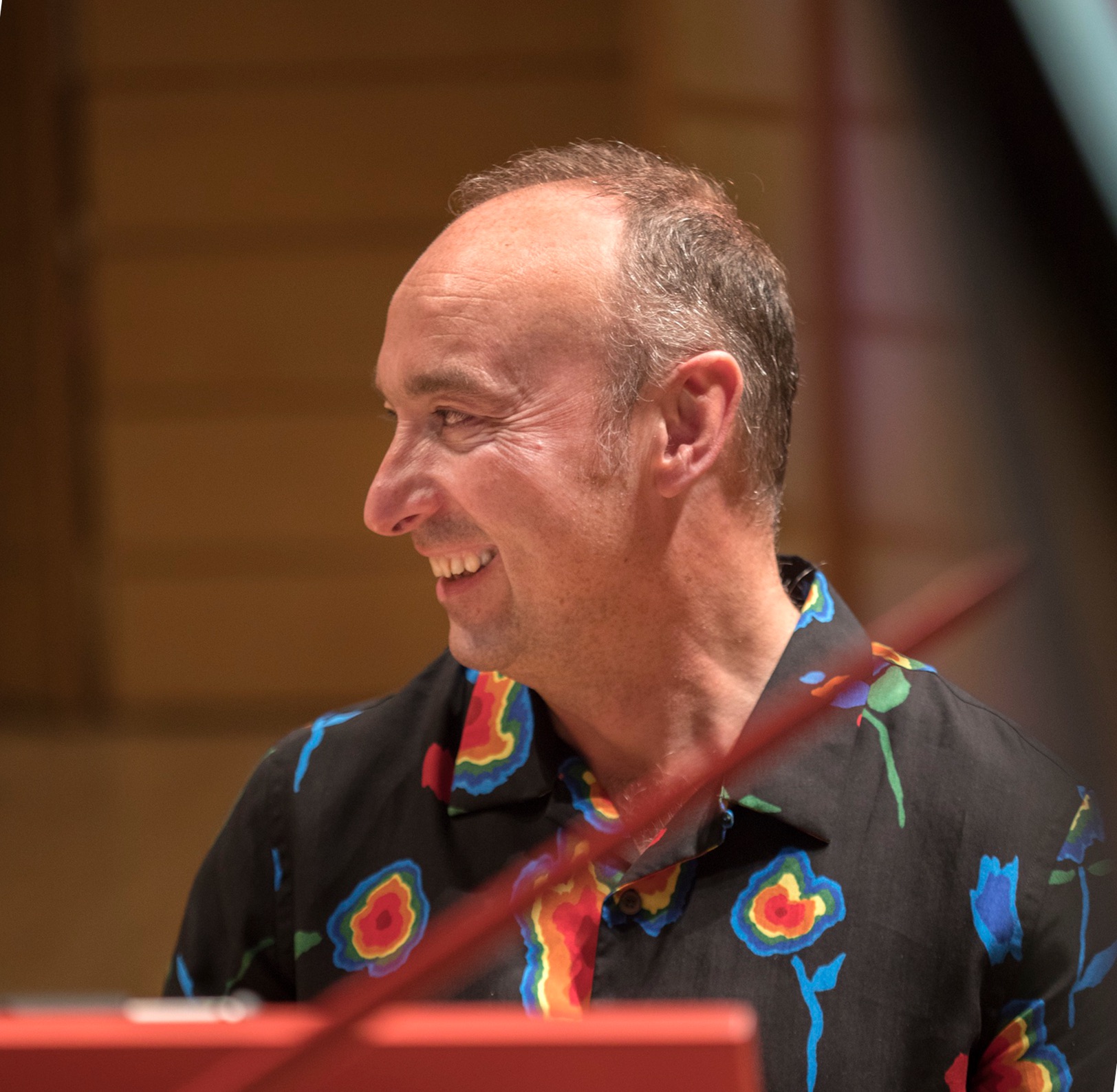
John Heginbotham is a Lecturer in Dartmouth's Theater Department and founding director of Dance Heginbotham. A Juilliard-trained choreographer and former Mark Morris Dance Group member, his creative research integrates dance, music, and visual design through collaborative processes. His company has performed at major venues including BAM, Lincoln Center, and international festivals. Creative Research: Interdisciplinary works combining choreography with live music composition Site-specific performance installations Narrative dance theater productions Notable works include collaborations with composers Ethan Iverson and Colin Jacobsen, and designer Maira Kalman. He teaches courses in dance composition and performance.
Dr Alex Chilvers is a Lecturer in Aural Skills at the Sydney Conservatorium of Music, The University of Sydney, and an Honorary Postdoctoral Fellow in Macquarie University's Department of Psychological Sciences. He holds a PhD in Composition (2019), a BMus(Hons), BIT(Hons), and is a Fellow of the Higher Education Academy (FHEA). His research focuses on music perception, intercultural musical dialogue, and the aesthetic role of folklore in Polish music. Chilvers composes for orchestras and ensembles like the Tasmanian Symphony Orchestra, and co-founded the Bark Tin Band to explore cross-cultural musical collaborations. He coordinates aural perception units at the Conservatorium and supervises postgraduate research in music performance, composition, and musicology. Current projects include 'New Music Through Dialogic Intercultural Collaboration' with Dr Lulu Liu. Chilvers' work bridges musicology, psychology, and performance, with affiliations to the Music, Sound and Performance Lab and the Australian Music Centre. His compositions and research publications address themes of cultural identity, intercultural exchange, and the psychological impact of music. Publications include analyses of Szymanowski and Górecki's use of folklore, and empirical studies on cultural sensitivity in music appreciation. His teaching emphasizes aural skills development and interdisciplinary approaches to music education.
Dr. Kathleen Nelson is an Honorary Associate Professor at the Sydney Conservatorium of Music, University of Sydney. She has held leadership roles including Associate Dean (Research Education) and HDR Director. Her academic journey includes a BMus(Hons) and MMus from the University of Adelaide, followed by a PhD in medieval music focusing on Spanish chant manuscripts. Her research specializes in medieval and early modern liturgical music of Western Europe, particularly Iberian Peninsula manuscripts. Notable areas include the Exultet text, manuscript fragment analysis, and early music notation systems. Collaborations include the Digital Analysis of Chant Transmission (DACT) project and contributions to the Cantus Database. Recent work includes studies on Sydney University's liturgical manuscripts and forthcoming publications on Zamora's musical archives. She actively supervises research students in early music and chant studies. Key grants include investigations into the Exultet's historical usage in Iberia. Teaching focuses on fostering undergraduate research through initiatives like the Sydney Undergraduate Journal of Musicology. International partnerships span institutions in Canada, Portugal, and Brazil, emphasizing digital musicology and manuscript preservation.
Natalia Ricci is a Senior Lecturer in Piano at the Sydney Conservatorium of Music, part of the University of Sydney. She holds dual appointments in the Piano and Ensemble departments and has also served as Keyboard Coordinator for the Chamber Music Program. Her teaching spans tertiary and pre-tertiary levels, including leadership of the Open Academy Rising Stars Piano Division. Education: BMus University of Cincinnati (USA), MMus Royal Northern College of Music (UK) Research Focus: Spanish piano literature (Albeniz, Granados, de Falla), Janáček's works, and chamber music performance practice She pioneered the Encuentros Españoles Festival (2013-2022), a landmark event showcasing Spanish music through concerts, workshops, and scholarly symposia. Her pedagogical approach integrates biomechanical efficiency with artistic expression, emphasizing technical mastery, sound production, and interpretive depth across diverse repertoires. Notable achievements include performances at major international festivals (Banff, London Objective, Sydney Festival), recordings for BBC/ABC radio, and mentoring students who've won top prizes in competitions like the Sydney International Piano Competition, Chopin in Wavel, and Franz Liszt Youth Competitions. Her students consistently excel in national competitions including Lev Vlassenko and Sydney Eisteddfod events. Ricci's professional engagements include adjudicating international competitions and delivering masterclasses globally, with upcoming appearances at the 2025 International Festival of Music in Iasi, Romania. She maintains active links with institutions across Australia, Europe, and Asia through teaching, performance, and research collaborations.
Dr. Monique Rooney is a Senior Lecturer in English Literature at the School of Literature, Languages & Linguistics, Australian National University. Her research focuses on melodrama, new media, US and Australian literature, and the works of Ruth Park. She holds a PhD on passing-for-white in US literature and film, exploring intersections of race, gender, and sex. Current projects include a book on 'Brow Network: Programs and Promises of Taste-making in Contemporary American Literature and Art,' and a biography of Ruth Park. She has supervised research students and contributed to over 60 publications since 2001. Her work spans film analysis (e.g., Agnès Varda’s films, *Mad Men*, and *Melancholia*), intermediality, and cultural studies. Key themes include plasticity in art and media, and the evolution of taste-making in digital networks.
Marc Benamou is a Professor of Music and Director of the Javanese gamelan ensemble at Earlham College, located in Richmond, Indiana. He holds a Ph.D. from the University of Michigan, alongside degrees from Oberlin College and Université de Paris X. His research focuses on ethnomusicology, with primary specialization in Javanese gamelan music and Peruvian saxophone orchestras. He has conducted fieldwork in Indonesia, Peru, and France, and his work explores aesthetics, musical meaning, and cross-cultural comparisons. Recent projects include a National Endowment for the Humanities-funded initiative to transcribe and analyze Javanese gamelan lyrics from cassette recordings. Benamou’s teaching emphasizes global musical traditions beyond the Western canon, including courses on African, Japanese, and South American musics. He speaks French, Indonesian, and Spanish fluently, and has presented his research internationally in countries like Argentina, Italy, and Israel. His interdisciplinary interests span music and food, gender studies in music, and the intersection of musicology and linguistics. He has collaborated with institutions such as the Institut Seni Indonesia in Surakarta and participated in faculty research initiatives in Japan and the U.S. Benamou’s career combines academic rigor with artistic practice, having performed as a singer of Javanese music and a classical trumpet player. His dedication to Earlham’s liberal arts mission is evident in his emphasis on student-centered learning and fostering cross-cultural connections among students. He has mentored students like Yasmine Lee and Tinisha Newland in research on African-American classical musicians, blending scholarly inquiry with community engagement.
Dr. Carol Chapman is Professor of Music at Missouri State University, specializing in vocal performance and pedagogy. She teaches applied voice and serves as Voice Area Coordinator, with expertise spanning opera, oratorio, and art song repertoire. Her international performances include venues like Paris Conservatoire and collaborations with major orchestras including the Springfield Symphony Orchestra. Research interests focus on French mélodie, German lied, and American art song interpretation. Dr. Chapman holds degrees from William Jewell College, Webster University, and UMKC Conservatory. She received the Scholarship Award for DMA from University of Missouri-Kansas City in 2008.
Lewis Kennedy serves as Academic Manager for the School of Popular Music and Voice at Leeds College of Music, where he coordinates the popular strand of Contextual Studies modules within the BA (Hons) Music (Popular) program. He completed his PhD in Music at the University of Hull in 2018, with a thesis focusing on functions of genre in metal and hardcore music. Dr. Kennedy's research centers on the multimodal experience of popular music in the twenty-first century, with particular expertise in metal music studies, genre theory, and cultural intersections. His work examines how genre functions as both an organizing principle in music historiography and as a creative apparatus for participants. He has made significant contributions to understanding the symbiotic relationship between metal and hardcore, the New Wave of American Heavy Metal, and the phenomenon of kawaii metal through analyses of bands like Babymetal. His publications reveal a consistent focus on how music scenes negotiate identity, heritage, and place, with particular attention to the Hull metal/hardcore scene, Chicano/Tejano influences in metal, and the transnational dimensions of metal culture. Kennedy's work often employs mixed methodologies, combining textual analysis with ethnographic approaches to understand how fans and musicians construct meaning within metal communities. As Treasurer and Membership Officer of the International Society for Metal Music Studies, Kennedy actively contributes to the institutional development of this growing academic field. His conference presentations at venues like the International Society for Metal Music Studies and Punk Scholars Network demonstrate his engagement with interdisciplinary approaches to understanding contemporary music culture.
José Picheral is a Professor at CentraleSupélec, affiliated with the Laboratory of Signals and Systems (L2S). He holds a PhD (2003) and HDR (2017) in high-resolution signal processing methods and inverse problems. His research focuses on array processing, source localization, acoustic imaging, and vibration analysis, with applications in aeroacoustics, automotive systems, and industrial monitoring. He has supervised multiple PhD students and contributed to projects like Valeo’s smartphone-based car key replacement system. Education: Engineering Degree: Supélec (1999) and Politecnico di Milano (1999, Erasmus-TIME) PhD: Paris Sud University (2003) Habilitation (HDR): Université Paris Sud (2017) Research Interests: High-resolution methods for distributed sources, sparse signal processing, acoustic imaging, asynchronous measurements, and sensor array design. Current projects include spatial source covariance estimation, EEG spectrum analysis, and automotive applications using smartphone localization. Key Contributions: Over 50 publications in top journals/conferences (e.g., IEEE Transactions, ICASSP). Notable work on MUSIC algorithm robustness, DAMAS optimization, and sparse approaches for tip-timing signals. Advising & Collaboration: Supervised 7 PhD students. Collaborations with SAFRAN, Valeo, and academic teams in Bayesian inference and inverse problems. Active in L2S’s Inverse Problems Group and SYCOMORE team. Labs/Teams: Member of L2S’s Signal Processing and Statistics group, leading research in systems and control, telecommunications, and energy systems.
Dr Michelle Paull is a Senior Lecturer in Drama at St Mary's University, London and Senior Fellow of the Higher Education Academy. Her expertise spans: Contemporary theatre and London theatre practices Irish drama and literature (Wilde, Shaw, O'Casey, McDonagh, Walsh, MacBride) Adaptations across stage/screen media Dramaturgical innovations in 20th-century Irish theatre Research Focus: Specializing in Sean O'Casey's dramaturgy, Michelle is completing her monograph Sean O'Casey: Critical Controversies . Her work examines: Gender representation in Irish drama Archival memory and marginalized histories Urban identity construction through performance Economic/political themes in modern adaptations Recent Articles analyze O'Casey's experimental forms (2020), Enda Walsh's immersive theatre (2015), and contemporary Irish stand-up comedy's identity narratives (2015). She explores: Intersections of personal trauma and performance Diasporic storytelling techniques Critical historiography of theatrical movements Scientific Awards: Senior Fellow of the Higher Education Academy Professional Experience: Former positions at Goldsmiths, University of London; University of Westminster; Open University. Current roles include: Co-supervision of PhD on theatre/performance in healthcare External examining for University of London International Programmes Curatorial work at British Library's Modern Literary Manuscripts
Robert Henke is a Professor of Drama and Comparative Literature at Washington University, serving as Director of Graduate Studies for the M.A. in Performance Studies. He holds a PhD from the University of California, Berkeley. His research focuses on Ancient and Renaissance Theater, Comparative Literature, and Dramatic Theory, with a particular emphasis on early modern theatrical networks, commedia dell’arte, and the interplay between performance and literature. Current projects include studies on Shakespearean-Italian dramatic connections, transnational theater networks, and a performance-centered sourcebook on commedia dell’arte. Henke has authored three monographs: *Pastoral Transformations: Italian Tragicomedy and Shakespeare’s Late Plays* (1997), *Performance and Literature in the Commedia dell’Arte* (2002), and *Poverty and Charity in Early Modern Theater and Performance* (2015). He co-edited volumes such as *Transnational Exchange in Early Modern Theater* (2008) and *Transnational Mobilities in Early Modern Theater* (2014), and has contributed extensively to journals and edited collections. His work explores themes like orality in performance, genre hybridity, and the cultural mobility of theatrical forms. Henke’s research highlights the interconnectedness of early modern European theater traditions, examining how performance practices, texts, and ideas circulated across borders. His recent articles analyze topics ranging from commedia dell’arte’s influence on Shakespeare to the material and spatial dimensions of Renaissance theater spaces. He is also editing the early modern volume of *A Cultural History of Western Theatre* (Bloomsbury Academic). His publications reflect a commitment to interdisciplinary approaches, blending literary analysis with performance studies, cultural history, and material culture. While no specific grants or awards are listed, his extensive editorial and monographic output underscores his leadership in early modern theater scholarship. His academic advising and institutional roles at Washington University further highlight his contributions to training the next generation of performance studies scholars.
Professor John Rink is a leading scholar in music performance studies, 19th-century music (particularly Chopin), and digital musicology. He holds the position of Professor of Music at the University of Cambridge's Faculty of Music and is a Fellow at St John's College. His research bridges historical analysis, performance practice, and digital innovation, with notable projects like the Chopin's First Editions Online and the Online Chopin Variorum Edition . He directed the AHRC-funded Centre for Musical Performance as Creative Practice (2009-2015) and serves as Editor-in-Chief of The Complete Chopin – A New Critical Edition . Education includes studies at Princeton University, King's College London, and a PhD from the University of Cambridge on Chopin's tonal structures and improvisation. He also holds performance qualifications from the Guildhall School of Music & Drama. Notable awards include the Polish Ministry of Foreign Affairs' Bene Merito distinction (2019) for contributions to Poland's international cultural standing. His work emphasizes interdisciplinary collaboration, evidenced by roles in global research networks (e.g., with the Universidade de São Paulo and institutions in China, Singapore, and the UK). Active in performance evaluation, he has served on the jury of the International Chopin Competition since 2015. His teaching focuses on performance studies, music analysis, and digital methodologies. Research outputs include monographs like Chopin: The Piano Concertos (1997) and edited volumes such as Cambridge Companion to Recorded Music (2009). Current projects explore digital editions, performance creativity, and cross-cultural choral development. He leads Cambridge Digital Humanities and has advisory roles in journals like Music & Letters and Musicologist .
Professor David McGuinness is a Professor of Practical Music at the University of Glasgow. His academic career spans research, performance, and media production. He holds a PhD on early 17th-century English church music, later pivoting to composing for theatre/TV and classical keyboard performance. He directed Concerto Caledonia for 30+ years, producing 16 albums and collaborating across genres. He was a BBC Radio 3 producer and composer for Channel 4's Skins . His research focuses on historical and traditional music, including the AHRC-funded Bass Culture in Scottish Musical Traditions (2012-15) and The Edinburgh Allan Ramsay project (2018-23). He advises students in historical music, performance research, and practice-as-research. Grants include £375k from AHRC for Scottish bass culture studies and collaborative projects with institutions like Temple University and Sydney Living Museums. Major works include Shepherds and Tea Tables: Songs of Allan Ramsay (2023), I Trawl the Megahertz (2019), and scholarly editions like Collected Works of Allan Ramsay (2022). His performance projects range from Baroque reenactments to modern interdisciplinary collaborations.
Eon Soo Lee is an Associate Professor in the Department of Mechanical and Industrial Engineering at the New Jersey Institute of Technology (NJIT). His primary research focuses on advanced materials engineering, biomedical microfluidics, and assistive technologies for individuals with disabilities. He has led federally funded projects including 'I-Corps: Multiplex Diagnostic Assay Using Interdigitated Nano-Sensing Technology' (NSF, 2023-2025) and 'Innovative Nano Catalysts for Automobile and Fuel Cell Applications' (NSF, 2018). Research Interests: Lee's work spans interdisciplinary areas including: Development of N-doped graphene/MOF composites for energy applications Microfluidic systems for blood plasma separation and antigen detection Design of accessible technologies for visually impaired users, including VR audio descriptions and remote sighted assistance systems Grants and Projects (select): National Science Foundation (2023): $500K for multiplex diagnostic assays National Science Foundation (2018): $300K for nano-catalysts in fuel cells Multiyear collaborations with industry partners on biosensor integration Innovation Highlights: Developed AIGuide: AR hand-guidance system for visual impairments Pioneered omnidirectional audio descriptions for VR music performances Published extensively in Carbon , Biomicrofluidics , and ACM/IEEE accessibility venues
Dr. Sarah Collins is a Professor in Musicology at the Conservatorium of Music, University of Western Australia (UWA). She also serves as Deputy Dean (HDR Supervision and Research Training) at UWA and holds roles including Chair of the UWA Animal Ethics Committee and Co-editor of Music & Letters (Oxford UP). Her research focuses on the intersections of music, aesthetics, and intellectual history, with notable expertise in modernism, cultural history, and political theory. Education: Collins holds a PhD in Cultural History and Musicology from the University of Queensland (2010), a Bachelor of Music (Hons) in Musicology and Performance (2006), and a Bachelor of Laws (2011), also from UQ. Research Interests: Her work examines music’s role in late-nineteenth and early-twentieth-century cultural and political contexts, including modernist ideologies, aesthetic liberalism, and the relationship between music and literature. Recent projects include an ARC-funded study on automated labor’s cultural history and collaborations with interdisciplinary groups like the UWA Tech & Policy Lab. Publications and Awards: Collins has authored acclaimed books such as Lateness and Modernism (2019) and edited volumes like Music and Victorian Liberalism (2019). She is a Fellow of the Australian Academy of the Humanities and recipient of the prestigious Dent Medal (2024), McCredie Musicological Award (2019), and other honors. Teaching and Engagement: She teaches courses on contemporary debates in music, music and society, and sound studies. Public engagements include talks on AI, generative creativity, and music’s societal roles, featured in venues like the BBC Radio and WA Museum Boola Bardip.