Johan PauwelsView profile
Lecturer
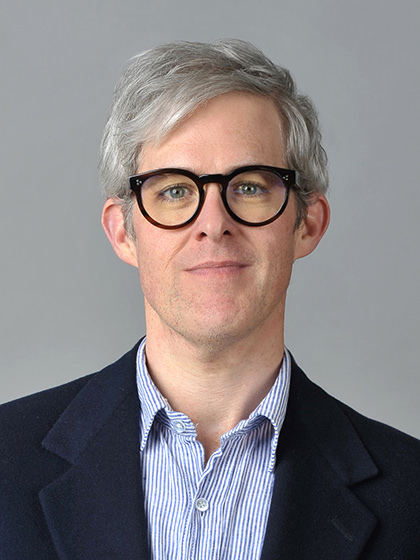
Dr. Johan Pauwels is a Lecturer in Audio Signal Processing at Queen Mary University of London's School of Electronic Engineering and Computer Science, where he is affiliated with the Centre for Digital Music and the Centre for Multimodal AI. His educational background includes: Master of Science in Electrical/Electronics Engineering from KU Leuven (2006) Master of Science in Artificial Intelligence from KU Leuven (2007) PhD from Ghent University (2016) on automatic harmony recognition from audio Johan's research focuses on making machines understand audio to the level of a trained professional. His work combines machine learning, signal processing, data science, and music theory to develop tools for musicians, listeners, and music learners. He has been working on narrowing the gap between academic research and user-centric applications, web-based music services, and the personalization of spatial and immersive audio. His specific interests include machine learning for audio, audio signal processing, music information retrieval, and binaural audio. His recent publications show a strong focus on music representation learning, with particular attention to limited data scenarios, multimodal approaches, and spatial audio processing. His work bridges theoretical music concepts with practical machine learning applications, especially in chord recognition, beat detection, and instrument recognition. He has made significant contributions to HRTF (Head-Related Transfer Function) research and development of tools for spatial audio processing. Dr. Pauwels is actively involved in research funding, with current grants including the AIM CDT Internship with Sofilab (2025), AIM CDT Studentship - Stem (2024), and AIM CDT Internship with stem.tech (2024). He currently supervises multiple PhD students, primarily through the UKRI Doctoral School in AI and Music, with research topics spanning intelligent audio editing, neural drum synthesis, source separation, graph neural networks for music recommendation, and more. In addition to PhD supervision, he typically guides 8-10 undergraduate and 8-10 master's students through their final year projects. His teaching responsibilities include ECS7013P Deep Learning for Audio and Music (MSc/PhD level) and ECS411U Signals and Information (first-year undergraduate).