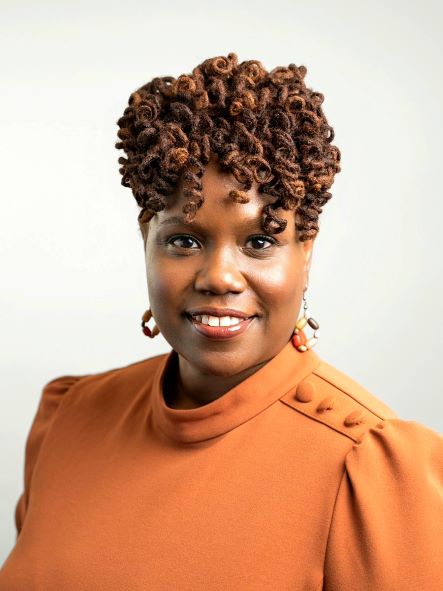
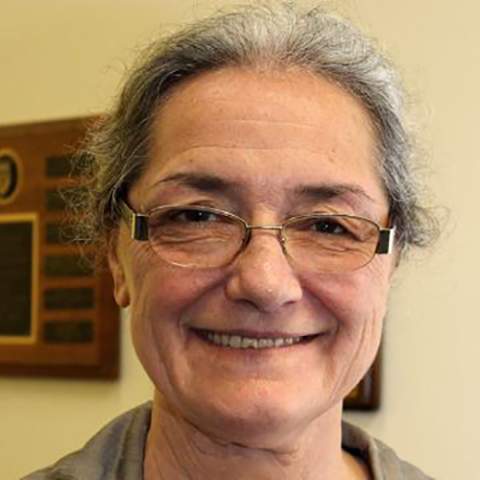
Prof. Neslihan YETKİNER is the current Dean of İzmir University of Economics and a member of the TÜBİTAK SOBAG Advisory Board. She holds a PhD in Linguistics from Groningen University (Netherlands) and has served as a research assistant at Hacettepe University and part-time lecturer at London University. Her academic career spans over two decades, with expertise in Translation Studies, Pragmatics, and Corpus-based Translation. Education: BA (Summa Cum Laude) and MA in Translation from Hacettepe University; PhD in Linguistics from Groningen University. Administrative Roles: Dean since 2023, previously Head of the Department (2006–2009). Research Interests: Focus on translation theory, critical discourse analysis, children’s literature, and cultural studies. Her work explores themes like censorship in children’s books, translator prefaces, and intercultural adaptation. Her recent articles address topics such as the impact of the pandemic on the translation industry, liminality in folk tale translations, and community interpreting professionalism. She has led three TÜBİTAK-funded projects on translation and literary analysis. Prof. YETKİNER has received multiple awards, including the TÜBİTAK Scientific Publication Encouragement Award (2012–2017), and has advised PhD student Hamide Çakır. She is actively involved in academic administration and contributes to national and international conferences.
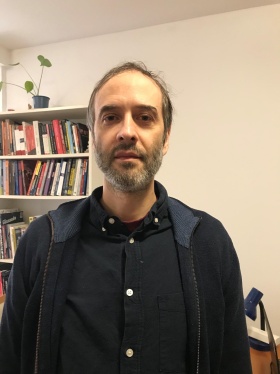
Dr. Simon A. Morrison is a Senior Lecturer in the Division of Communication, Screen & Performance within the Faculty of Arts, Humanities and Social Sciences at the University of Chester. He serves as Programme Leader for the Music Journalism degree, which he helped design, build and deliver from its first cohort in 2014. With 25 years of experience as a writer, broadcaster, and academic, Morrison brings extensive industry knowledge to his teaching and research, having worked as a music journalist reporting from locations worldwide including Beijing, Brazil, Moscow, and Marrakech. Dr. Morrison holds a PhD from the University of Leeds (completed 2018), an MA from the University of Manchester (1995-1997), and a BA Hons from the University of Manchester (1989-1992). Prior to his position at Chester, he worked as an Associate Lecturer at Manchester Metropolitan University (2012-2014) and as a Visiting Lecturer at Leeds University (2011-2013). His academic journey follows a substantial career in media where he presented TV for Rapture TV, hosted radio shows in Ibiza, produced and presented for Kiss Radio, and appeared on BBC Breakfast and BBC 5 Live. Dr. Morrison's research centers on the intersection of words and music , with particular focus on Popular Music , Musico-Literary Intermediality , and Electronic Dance Music Culture . His work explores how music subcultures, particularly rave and dance music scenes, are represented in literature and journalism. He examines the connections between different countercultural movements, notably drawing parallels between the Beat Generation writers and contemporary 'Chemical Generation' authors who write about club culture. His research also investigates the relationship between music journalism and subcultural movements across different historical periods. His recent publications reveal a clear trajectory connecting historical dance music developments across continents and eras. Morrison's work traces the evolution of electronic dance music from its American roots in Chicago and Detroit through its transatlantic journey to Europe and back again, examining how cultural exchange shaped musical innovation. His analyses of Pink Floyd demonstrate how rock bands interact with media landscapes, while his investigations of music journalism document the changing nature of music criticism in digital eras. The recurring theme across his scholarship is the examination of how subcultural experiences are translated into written form, whether through journalism, fiction, or academic analysis. Dr. Morrison actively supervises undergraduate dissertation projects and Negotiated Study production projects across all three years of undergraduate study. He has successfully supervised an MRes project to completion and examined PhDs (including one internal and two external, one being an Australian PhD by Artefact & Exegesis). He has served as an External Examiner for Music Journalism programs at Southampton Solent University (2016-2019) and BIMM London, Birmingham and Manchester (2016-2020). His teaching spans modules including Introduction to Journalism, Live Journalism, Dancing About Architecture: Popular Music Media, Histories and Technologies, The Cultural Politics of Music Journalism, The Politics of Social Media, Magazine Publishing and Music PR and Promotional Writing.
Professor Peter F. Driessen is a faculty member in the Department of Electrical and Computer Engineering at the University of Victoria, with a cross-appointment in the School of Music. He holds a BSc and PhD from the University of Victoria and is a Professional Engineer (PEng). His research focuses on communication systems, signal processing, control, and interdisciplinary projects in computer music and wireless technologies. Key areas include audio/video signal processing, radio propagation, sound recording, and multimedia systems. He leads the University of Victoria Propagation Laboratory, which explores radio wave propagation and Amateur radio integration with engineering education. His work spans theoretical research and applied projects like ECOSat satellite systems, software-defined radio (SDR), and innovative musical instruments such as the Radio Drum. He supervises undergraduate and graduate projects in these domains through ELEC 499 courses. Notable contributions include the APEGBC Editorial Board Award for Best Paper (2002) and patents in wireless networking and signal processing. His teaching includes courses in signal analysis and electromagnetics, and he collaborates on interdisciplinary programs like the Music/Computer Science degree. Education: BSc in Electrical Engineering, University of Victoria PhD in Electrical Engineering, University of Victoria Research Interests: Audio and video signal processing for music and media Software-defined radio and Amateur radio technologies Satellite communication and ground station development Gesture-based interfaces and musical instrument design Error mitigation in streaming audio/video Optical and microwave-photonic systems Labs & Collaborations: Propagation Laboratory (radio wave research) UVic Experimental Radio Group (Amateur radio club) UVic Satellite Design Team (ECOSat projects) UVic Centre for Aerospace Research Grants & Awards: APEGBC Editorial Board Award (2002) Multiple US patents in wireless systems and signal processing
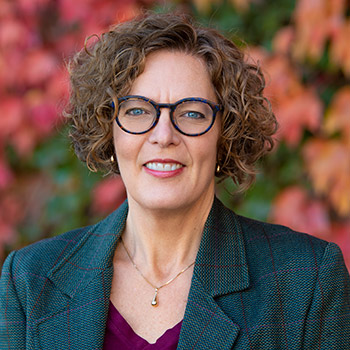
Aisha Durham is a Professor of Communication at the University of South Florida's College of Arts and Sciences, with affiliations in Humanities & Cultural Studies and Women's & Gender Studies. She holds a Ph.D. from the University of Illinois at Urbana-Champaign (2007) and has held academic positions at Texas A&M University and the University of Georgia. Her research focuses on Black feminist thought, autoethnography, and media/cultural studies. She is the award-winning author of Home with Hip Hop Feminism: Performances in Communication and Culture and a co-editor of Home Girls Make Some Noise! Key research areas include Hip Hop Feminism, intersectionality, and qualitative methodologies. Durham has received prestigious awards such as the NCA Marsha Houston Award and the Ellis-Bochner Award for autoethnography. She contributes to public scholarship through podcasts, media analyses, and international talks for outlets like CNN and NPR. Her work emphasizes democratizing knowledge and addressing systemic inequities in academia and culture. Professional activities include editorial board roles, advisory positions (e.g., Smithsonian Anthology of Hip-Hop and Rap), and keynote speaking at institutions worldwide. Her recent publications explore pedagogical resistance, hiphop literacies, and Black feminist mentorship frameworks.
Andrew Gordon is Professor of Renaissance Literature and Culture in the School of Language, Literature, Music and Visual Culture at the University of Aberdeen. He is Co-Director of the Centre for Early Modern Studies and serves as REF co-lead for English, demonstrating active leadership in research and academic governance. BA from University of Nebraska-Lincoln (UNL) MA from University of Sussex PhD from Queen Mary's, University of London His research centers on early modern literature and culture, with a focus on textual transmission , letter-writing , cultural memory , and material texts . He explores how literature interacts with cultural practices, especially in early modern London. His current project, Renaissance Cultures of the Foot , innovatively examines the cultural and literary significance of the foot, drawing on anthropological perspectives to analyze embodied experience in print and manuscript culture. The recent scholarly articles and books reflect a strong trend in interdisciplinary humanities, combining literary analysis with historical, material, and gender studies. His work frequently engages with manuscript culture, epistolary networks, and the social functions of memory, particularly in post-Reformation England. His scientific recognition includes the Hunter-Caldwell award for directing The Correspondence of Robert Beale . Hunter-Caldwell award He actively supervises graduate research and welcomes PhD students in areas related to early modern texts, cultural mobility, memory, and community. While specific grants are not listed, his funded project indicates successful grant acquisition. He has also engaged in creative collaborations with theatre professionals, bridging academic research with performance. Andrew Gordon is a central figure in Aberdeen’s Centre for Early Modern Studies, contributing to an interdisciplinary research environment that fosters collaboration across historical periods and methodological approaches.
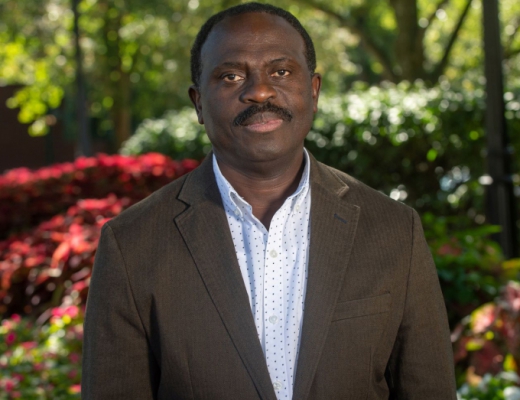
Eric Beeko is a Teaching Assistant Professor in the Department of Africana Studies at the University of Pittsburgh, affiliated with the Kenneth P. Dietrich School of Arts and Sciences. His teaching focuses on African studies, including courses like African Civilization, Liberation Movements, and Music in Africa. He holds a Ph.D. in Ethnomusicology from the University of Pittsburgh (2005), alongside advanced degrees from institutions in Ghana. His research explores African musical traditions, cultural practices, and performance aesthetics. Current projects include studies on Neo-Pentecostal/Charismatic church music in Ghana and the interplay between tradition and modernity. Future research plans involve multi-volume studies on African linguistic-cultural distribution and Black performance practices globally. Publications include analyses of Akan music rights, Ghanaian choral innovations, and African cultural heritage. He is developing works on Neo-Pentecostal worship aesthetics and the role of music in identity expression across the African diaspora. Advising and grants are not explicitly listed, but his scholarly activities emphasize collaborative research in ethnomusicology and cultural studies. He is based in Posvar Hall, Office #4152.
David Verbuč is an Assistant Professor at the Faculty of Humanities, Charles University in Prague, Czech Republic, since 2014. His research and teaching focus on socio-cultural anthropology, ethnomusicology, and popular music studies, particularly examining DIY (do-it-yourself) music scenes, Roma music in North Slovenia, and the intersections of music, community, and space. He earned his Ph.D. (2014) and MA (2010) in Ethnomusicology from the University of California, Davis, and a BA (2007) in Ethnomusicology from the Academy of Music, Ljubljana. Employment: 2014–present: Assistant Professor, Department of Social and Cultural Anthropology, Faculty of Humanities, Charles University 2024–2025: Part-time Guest Researcher, Department of Musicology, Faculty of Arts, University of Ljubljana Research Areas: Slovenian village and urban music DIY venues and scenes Electronic dance music cultures Roma music in North Slovenia Music and community dynamics His book DIY House Shows and Music Venues in the US (Routledge, 2021) explores the anthropology of DIY music spaces. His recent work investigates the social life of DIY zines, economic configurations in DIY scenes, and methodological challenges in Roma music research. Publications appear in journals like American Music , Ethnomusicology Forum , and Journal of Contemporary Ethnography . He has received the Marnie Dilling Memorial Prize (2014) and the Bilinski Fellowship (2012–2013). Current projects include a study of Roma music in Slovenia funded by the Slovenian Research and Innovation Agency (ARIS).
Kirsten Yri is an Associate Professor of Musicology at Wilfrid Laurier University, serving as Chair of Music Promotions and Appointments, and Coordinator for Music History, Theory, and Critical Analysis. She also oversees the Master of Music: Collaboration, Curation, and Creative Performance program. Her research focuses on medievalism in contemporary music and popular culture, the early music revival of the 20th century, and representations of gender in opera and music within colonial/postcolonial contexts. Yri’s research interests include analyzing how medieval themes are reinterpreted in modern contexts (e.g., film, heavy metal, and stage productions), examining the ideological underpinnings of early music revival movements, and exploring the intersection of music with gender, nationalism, and global cultural politics. Her work often critiques Western-centric narratives and highlights marginalized voices in music history. Her publications span articles in journals and edited volumes, with a focus on composers like Carl Orff and Hildegard of Bingen, as well as groups like Corvus Corax and Anonymous 4. She has contributed to interdisciplinary projects such as The Oxford Handbook of Music and Medievalism (2020). While no scientific awards are cited, her work is widely recognized in musicology and cultural studies. Yri’s teaching and research emphasize collaborative, interdisciplinary approaches to music history, blending academic rigor with creative curation. She speaks English, Swedish, and German, enhancing her ability to engage with international scholarly resources and communities.
Michael S. Horn is a Professor of Learning Sciences and Computer Science at Northwestern University, serving as Program Coordinator for Learning Sciences. He holds a PhD in Computer Science from Tufts University and a ScB in Computer Science from Brown University. His research focuses on the intersection of human-computer interaction and learning, emphasizing the use of emerging technologies in museums, classrooms, and informal settings. Notable projects include multi-touch tabletops in natural history museums, tangible programming languages for early education, and the TIDAL Lab’s innovative exhibits like Build-a-Tree and DeepTree. Education background includes: PhD in Computer Science (Tufts University, 2009) MS in Computer Science (Tufts University, 2006) ScB in Computer Science (Brown University, 1997) Research interests span tangible interaction design, computational literacy, and museum-based learning. He has led projects such as the ‘Energy Monsters’ board game and the TunePad music-coding platform. His work integrates technology with pedagogical practices to foster collaborative and exploratory learning environments. Active collaborations include the Computer History Museum and the California Academy of Sciences. Advising contributions include mentoring doctoral students like Dr. Mmachi Obiorah and Pei-Yi. His lab, TIDAL, explores interactive technologies for education, with grants from NSF and industry partnerships. Recent articles highlight innovations in computational thinking integration, music-coding hybrid practices, and AI-driven qualitative analysis.
Professor Emily S. Cross is a cognitive and social neuroscientist holding dual appointments at the University of Glasgow's School of Psychology & Neuroscience (UK) and Western Sydney University's MARCS Institute (Australia). She directs the Social Brain in Action Laboratory (SoBA), specializing in how embodied experiences shape social perception. Cross earned a BA in psychology and dance from Pomona College, MSc from University of Otago as a Fulbright Fellow, and PhD in cognitive neuroscience from Dartmouth College, followed by postdoctoral training at University of Nottingham and Max Planck Institute. Her research explores experience-dependent plasticity through dance, robotics, and neuroimaging techniques (fMRI, TMS), focusing on four key areas: neural signatures of embodied expertise, neuroaesthetics, visual learning across lifespan, and social engagement with robots. This interdisciplinary work bridges neuroscience, performing arts, and robotics. Cross's research shows strong focus on human-robot interaction dynamics, cultural perceptions of robotics, and the neural correlates of aesthetic experiences. Recent work investigates how social experience shapes human-robot interaction, cross-cultural differences in robot acceptance, and computational approaches to movement analysis. Publications consistently demonstrate methodological innovation through VR, economic games, and large-scale motion capture libraries. Honors & Awards: Jacob Brownowski Award (British Science Association, 2017) Philip Leverhulme Prize in Psychology (2018) World's 50 Most Renowned Women in Robotics (2020) Elected member: Young Academy of Europe Elected member: Royal Society of Edinburgh's Young Academy of Scotland Her ERC Starting Grant funds groundbreaking work on human-robot interaction. Cross leads the Social Brain in Action Lab with focus on mentoring next-generation scientists and research ethics training. The lab employs neuroimaging, training paradigms, and diverse methodologies to study action observation across dance, music, and robotics domains.
Dinah Ribard is a Director of Studies at the École des Hautes Études en Sciences Sociales (EHESS), working within the Centre de Recherches Historiques (CRH). She serves as Center Director for the GRIHL (Groupe de recherche interdisciplinaire sur l'histoire du libéralisme) research group. Her academic career has been dedicated to the historical study of work, intellectual practices, and cultural production from the early modern period through the 19th century. Ribard completed her thesis in December 2000 at the University of Paris III - Sorbonne Nouvelle under the direction of Alain Viala, entitled "Live Tell Think. Research on the literary status of the philosopher: the Lives of philosophers in France 1650-1766." She was formerly a student at the École Normale Supérieure (Ulm) and holds a degree in Modern Literature. Prior to her position at EHESS, she served as an ATER (Attaché Temporaire d'Enseignement et de Recherche) at Paris III University from 1999 to 2001 and taught at Lycée Jacques-Feyder in Epinay sur Seine from 2001 to 2003. Ribard's research focuses on the history of work from multiple perspectives - examining both intellectual work (1600-1900) and material labor. She investigates how work has been conceptualized, narrated, and institutionalized throughout history. Her work explores the relationship between knowledge production and labor, analyzing how different professions and social statuses have shaped intellectual and cultural practices. She examines the historical construction of disciplines, professions, and social classifications, with particular attention to how writing practices intersect with work identities. Her recent publications reveal a consistent focus on the relationship between writing, work, and social identity across the early modern and modern periods. Ribard's scholarship demonstrates how textual practices were embedded in specific work contexts, from artisanal workshops to academic institutions. Her work shows how literary forms were used to construct professional identities and how writing practices served as forms of political action. She has made significant contributions to understanding the historical relationship between intellectual labor and material production. Ribard has published extensively, including the notable 2023 book "Le Menuisier de Nevers. Poésie ouvrière, fait littéraire et classes sociales (XVIIe-XIXe siècle)" which examines how working-class poetry was historically constructed and marginalized. Her scholarship challenges traditional literary classifications and reveals how social categories have been historically produced through cultural practices. As Director of Studies at EHESS, Ribard supervises doctoral students and contributes to the academic training of historians. She co-responsible for the Grihl seminar and teaches courses at EHESS on topics including "Writings of the Past. Literature and History: Methods, Theories, Fields" and "History and stories of work." Her teaching reflects her research interests in the intersection of literary practices, historical methodology, and social analysis. Within the CRH, Ribard is affiliated with the GRIHL research group, which focuses on the interdisciplinary history of liberalism. Her work bridges historical, literary, and sociological approaches to understanding the development of social and intellectual categories. Through her research, teaching, and institutional leadership, Ribard has made significant contributions to the historical understanding of work, knowledge production, and cultural classification.
Bart Wallet is Professor of Jewish Studies specializing in Early Modern and Modern Jewish History at the University of Amsterdam's Faculty of Humanities, where he is affiliated with the Department of Semitic Languages and Cultures. His academic work focuses on the intricate relationship between Jewish communities and Dutch society throughout history, with particular emphasis on the connections between the Dutch Royal House and Jewish communities. Wallet's research interests span Dutch Jewish history from the early modern period to the contemporary era, with special attention to Yiddish studies, religious history, cultural integration, and the development of Jewish identity in the Netherlands. His scholarly output reveals a consistent focus on how Jewish communities navigated their position as a religious minority within Dutch society, particularly examining the complex dynamics between Jewish citizens and the Dutch state and monarchy. His work often explores the tension between religious tradition and modernization, and how Jewish communities maintained their identity while integrating into broader Dutch society. Analysis of his recent publications shows a strong thematic concentration on Orange-Jewish relations throughout Dutch history, Jewish military service, religious education, and the material culture of Jewish communities. His scholarship demonstrates a methodological approach that combines cultural history with religious studies, often revealing how seemingly mundane aspects of daily life reflect broader societal patterns of integration and identity formation. The geographic focus remains predominantly on the Netherlands, though with comparative perspectives on Jewish communities in other European contexts. Professor Wallet has been active in public scholarship through media appearances, radio programs, and contributions to encyclopedias. His work has appeared in both academic journals and public-facing media outlets, demonstrating his commitment to making Jewish history accessible to broader audiences. He has contributed to numerous radio programs on Jewish history for Dutch Jewish radio stations and has written for newspapers including the Reformatorisch Dagblad. His academic contributions include extensive work on Dutch-Jewish relations, particularly focusing on the relationship between Jewish communities and the Dutch Royal House throughout history. He has also produced significant scholarship on Jewish integration in Dutch society, religious education, and the development of Jewish identity in the Netherlands from the early modern period to the present day. His work often examines how Jewish communities maintained religious traditions while adapting to changing social and political contexts.
Nancy Mock is an Associate Professor in the Department of Global Health Systems and Development at Tulane University's School of Public Health & Tropical Medicine. She holds affiliated faculty status at the Stone Center for Latin American Studies. Her academic journey includes a B.S. in Biology from Yale University (1976), an M.P.H. in International Health from Tulane (1979), and a Dr.P.H. in International Health from Tulane (1985). Dr. Mock's research focuses on global health systems, evaluation methodologies, complex emergencies, and health systems in Latin America and Africa. Notable areas include Haiti's public health challenges and Rwanda's educational health programs. She has directed key institutions like the Center for International Resource Development and contributed to the Famine Early Warning System (FEWS). Her work is supported by major grants, including the Robert Wood Johnson Foundation Grant (2007), USAID's Regional Public Health Leadership Initiative (2006-2007), and Rwanda-focused projects (2000-2004). She has consulted for organizations such as the World Food Program, UNICEF, and the Pan American Health Organization. Fluent in French and Spanish, her overseas experience spans Honduras and extensive fieldwork in Africa and Asia.
Golan Levin is Professor of Electronic Art at Carnegie Mellon University's School of Art, with courtesy appointments in the School of Design, School of Architecture, School of Computer Science, and Entertainment Technology Center. From 2009 to 2022, he served as Director and Co-Director of CMU's Frank-Ratchye STUDIO for Creative Inquiry, a laboratory dedicated to supporting atypical, anti-disciplinary research at the intersection of arts, science, technology, and culture. Levin's research spans interactive art, digital fabrication, information visualization, and generative design. He explores the critical potential of visualization, generative computation for expressive form, and how abstraction connects to realities beyond language. His practice engages interactive gestural robotics, nonverbal interaction aesthetics, and tactical applications of personal digital fabrication through responsive artifacts and media provocations that highlight human-machine relationships. His publications reveal consistent innovation in real-time audiovisual systems, interactive fabrication interfaces, and pedagogic tools for artists. Key trends include slit-scan video techniques, tangible augmented-reality performance, and noise-based visualizations, demonstrating his commitment to expanding human action vocabulary through digital media while bridging artistic expression with computational systems. Levin's work has received significant recognition: Permanent collection inclusion at Museum of Modern Art (MoMA) Whitney Biennial exhibition "50 Designers Shaping the Future" by Fast Company (2012) Competitive grants from National Endowment for the Arts, National Endowment for the Humanities, Creative Capital, and Rockefeller MAP Fund As an educator, Levin teaches "studio courses in computer science" on interactive art, experimental capture, and generative design, emphasizing computation as a medium for critical inquiry. His research funding from major cultural institutions supports interdisciplinary exploration at the arts-technology nexus. The Frank-Ratchye STUDIO for Creative Inquiry, which he directed for 13 years, remains a vital hub for anti-disciplinary collaboration, continuing his legacy of fostering creative agency through technology-infused artistic practice.
Chuang Gan is an Assistant Professor at the University of Massachusetts Amherst, affiliated with the College of Information and Computer Sciences and the Department of Computer Science. His work focuses on advancing artificial intelligence, robotics, computer vision, and embodied agents through interdisciplinary research combining neural networks, physical simulations, and multimodal learning. Research interests include generative models, reinforcement learning, vision-language integration, and scalable autonomous systems. He explores topics like world modeling for robots, adaptive policy learning, and physics-driven AI. His projects often involve creating systems that learn from visual, auditory, and tactile inputs to perform complex tasks such as object manipulation, navigation, and decision-making in dynamic environments. Recent research trends emphasize embodied AI systems capable of long-horizon planning, compositional reasoning, and efficient learning from limited data. His work bridges theory and practice, with applications in robotics, simulation platforms, and multimodal generation. Key contributions include frameworks for 3D scene understanding, adaptive world models, and novel training paradigms for large language models. His research has been applied to robotics platforms like RoboDreamer and UBSoft, focusing on unbounded soft environments. Collaborations involve designing benchmarks for physical scene understanding (e.g., Physion++), and creating tools like DiffTactile for tactile simulation. His work often integrates principles from differential geometry, PDE dynamics, and game theory. Chuang Gan’s research group develops open-source tools and benchmarks, such as the SoftZoo robot co-design platform and the SOK-Bench situated reasoning benchmark. His team emphasizes scalable alignment methods beyond human supervision and explores ethical AI through principles like symmetry-enhanced training.