Haris Kittos is a Greek composer and visual artist teaching at the Royal College of Music since 2004, where he completed his DMus in 2008. His work bridges music composition , video art , and meditative drawing practices , exploring intersections between time perception , memory , and mental health . Doctor of Music (DMus), Royal College of Music (2008) Master of Music (MMus) with distinction, Guildhall School of Music and Drama (2001) Bachelor of Arts (BA), Thessaloniki music and fine art institutions His research investigates interdisciplinary art through projects like the Blue Touch Paper scheme with London Sinfonietta and RC Art exhibitions . Recent works focus on sensory memory triggers , ephemeral media , and cross-cultural collaborations with Japanese ensembles. Key trends in his 2025-2020 compositions include minimalist drawing techniques , time-based creative routines , and sound-visual integration . Major scientific awards include: First Prize, International Composition Competition Città di Udine (2016) First Prize, Greek Composers Workshops (2000) First Prize, Daryl Runswick Competition (1999) Honourable Mention, Earplay Competition (2017) Honourable Mention, Ensemble Nuove Musiche (2018) He mentors doctoral students and receives funding from AHRC , Daiwa Foundation , and RCM Research Development Fund . His 2024-2020 visual works employ frixion pens to document mental states through non-touching line patterns .
Deirdre Gribbin is a Professor of Composition at the Royal College of Music , where she contributes to the Composition faculty. She is also Artistic Director of the Venus Blazing Music Theatre Trust , a charity focused on empowering young people with learning disabilities through music and theatre. Her career spans orchestral works, operas, film scores, and interdisciplinary collaborations with scientists. Education: Queen’s University Belfast, Guildhall School of Music and Drama, Royal Holloway (PhD), and Trinity College Cambridge (Visiting Arts Fellow). Leadership Roles: External Output Assessor for REF 2020-22, and founder of Venus Blazing Music Theatre Trust. Her research and creative work bridges drama and concert music, genetics-inspired compositions, and interactive media for healthcare. Notable interests include: Music Theatre: Exploring theatrical elements in concert works, such as Venus Blazing with stage direction and lighting design. Film Scoring: Collaborations with films like My Kingdom and The Dark Gene , the latter nominated at the Berlinale Festival. Scientific Collaborations: Work with geneticists at the Wellcome Genome Campus and Toronto scientists on interactive platforms. Choral and Orchestral Works: Performed globally by institutions like BBC Symphony Orchestra and Pacifica Quartet. Recent compositions like Dark Matter Hunting and Kindersang reflect trends in scientific inspiration, interdisciplinary performance, and Jewish cultural themes. Earlier works such as My Kingdom and Unity of Being established her reputation in cinematic storytelling and post-conflict reconciliation music. Her scientific awards include: Chester Schirmer Fulbright Fellowship UNESCO International Rostrum of Composers Award Leverhulme Fellowship Sir Winston Churchill Fellowship PRS Composers’ Award (2020) PRS Woman in Music Award Deirdre emphasizes public engagement, particularly through the Venus Blazing Music Theatre Trust , which combines music and theatre with marginalized communities. She has also advocated for composers’ roles in 21st-century culture, stressing visibility and accessibility in new music.
Professor Richard Chew is Director of the Arts Academy at Federation University Australia's Camp Street Campus. A composer, pianist, and baritone, he has held academic roles at University of South Australia, Elder Conservatorium of Music, and Federation University Australia since 2018. His work spans orchestral, operatic, and interdisciplinary music-theatre forms, with commissions from English National Opera, Welsh National Opera, and international festivals. PhD in Communication Studies (UniSA, 2014) Master of Music Performance Studies (Royal College of Music London, 1991) Associate Researcher at Lythrum Press and Australian Music Centre Chew's research focuses on contemporary composition practices, blending opera, music theatre, and devised performance. His work integrates visual arts (e.g., Ford Madox Brown's painting), literature (Gerard Manley Hopkins, Michael Ende), and social justice themes. Notable projects include the oratorio Stari Most (commissioned for Salisbury Cathedral's 750th Anniversary) and founding the vocal ensemble The Shout, described by The Times as a blueprint for 21st-century choral singing. Recent publications include chamber works for Inscape Piano Trio and adaptations like Momo (2022). His music is characterized by transparent melodic lines, jazz-inflected harmonies, and collaborations with institutions such as the Art Gallery of Ballarat, Creative Victoria, and the National Theatre (London). Awards include the Royal College of Music's President's Rose Bowl and multiple international performances at venues including Southbank Centre and Her Majesty’s Theatre.
Isabelle Bloch is a full Professor at Télécom Paris (Institut Polytechnique de Paris) and Emeritus Professor at the University of Bordeaux . She heads the Image, Modeling, Analysis, Geometry, Synthesis (IMAGES) research team within the Information Processing and Communication Laboratory (LTCI) in the Image, Data, Signal (IDS) Department . Education & Affiliations Professor – Télécom Paris, Institut Polytechnique de Paris (current) Professeure Émérite – University of Bordeaux (honorary) Research Interests Her work lies at the intersection of computer science, applied mathematics and medicine . Core themes include mathematical morphology , fuzzy and bipolar logics , 3-D image interpretation , discrete 3-D geometry & topology , information fusion , structural pattern recognition , spatial reasoning and medical imaging . Recent projects extend these concepts to explainable AI , argumentation theory , computational musicology and robotic surgery guidance . Scientific Awards Blondel Medal (2008) – awarded by the French Electrical & Electronics Engineering Society to outstanding young scientists. Grants & Collaborative Projects While specific grant numbers are not listed in the text, Prof. Bloch coordinates and participates in large-scale interdisciplinary projects funded by national (ANR) and European programs, spanning medical AI, pediatric oncology imaging, neuro-informatics and ethical AI. Labs & Teams She leads the IMAGES team (≈ 25 researchers) inside the LTCI – a joint research unit of Télécom Paris and CNRS. The group develops theory and open-source software in mathematical morphology, deep learning and symbolic AI, and collaborates closely with clinical partners at Necker–Enfants Malades Hospital, AP-HP and Gustave Roussy.
Dr. Sergi Jordà is a Senior Researcher and Associate Professor at the Music Technology Group of Universitat Pompeu Fabra (UPF) in Barcelona. He obtained his B.S. in Fundamental Physics (1986) and PhD in Computer Science and Digital Communication (2005) from UPF. He leads the Music & Advanced Interaction (MAIn) team and teaches courses in Computer Music, Audio Signal Processing, Human-Computer Interaction (HCI), and Interactive Media. In 2011, he joined the tenure-track faculty at UPF. Research Interests Jordà's research focuses on the intersection of Human-Computer Interaction (HCI) and tangible musical interfaces , including applications in education, collaborative music creation, and brain-computer interfaces . His work explores how tabletop interfaces and visual feedback can enhance intuitive instrument design and real-time performance. He is best known for co-inventing the Reactable , a tangible tabletop musical instrument that gained global recognition after being used by Icelandic artist Björk in her 2007-08 world tour. Scientific Awards Prix Ars Electronica Golden Nica (2008) MIDEM Hottest Music Biz Start-Up Award (2008) Yellow Pencil, D&AD Design Awards (2008) Rolling Stone Magazine's Hot Instrument of the Year (2007) Premi Ciutat de Barcelona (1999, 2007) Möbius International Award (2001) Innova Business Ideas Contest (2008) Projects and Grants He has participated in over 30 international scientific committees, including chairing TEI'13 (Tangible, Embedded and Embodied Interaction Conference) . Jordà has secured funding from the European Commission and Spanish government for six research projects, two as Principal Investigator (IP). In 2009, he co-founded the spin-off company Reactable Systems , which launched Reactable Mobile for iOS devices in 2010.
Matthew D. Green is an Associate Professor of Computer Science at Johns Hopkins University and a member of the Johns Hopkins University Information Security Institute. He is a nationally recognized expert in applied cryptography and cryptographic engineering with significant contributions to privacy-enhanced technologies and secure communication systems. Oberlin College: BMus in Technology of Music and Related Arts and BA in Computer Science (1998) Johns Hopkins University: MS in Computer Science (2005), PhD in Computer Science (2008) Green's research focuses on practical applications of cryptography, including privacy-enhanced information storage, anonymous payment systems, and bilinear map-based cryptography. His work bridges theoretical cryptography with real-world security challenges, particularly in blockchain technologies, end-to-end encrypted communications, and privacy-preserving systems. He has made significant contributions to understanding cryptographic vulnerabilities in widely deployed systems and developing more secure alternatives. His recent publications demonstrate a strong focus on emerging cryptographic challenges including machine unlearning, privacy in encrypted messaging, compliance-enabled digital assets, and detecting synthetic content from large language models. These works show his ability to address both theoretical foundations and practical implementations of security systems. NSF CAREER Award (2017) $100,000 Google Security and Privacy Research Award Green is actively engaged in both academic research and public discourse on security issues. He is the author of the popular blog 'A Few Thoughts on Cryptographic Engineering' and has over 140,000 followers on X (formerly Twitter). His work has been instrumental in analyzing security flaws in commercial products and contributing to the development of more secure cryptographic protocols. He was one of the creators of the Zerocash protocol used by Zcash cryptocurrency and founded the encryption startup Zeutro. His research group at Johns Hopkins focuses on practical cryptographic engineering challenges, with particular emphasis on how theoretical cryptographic constructions can be implemented securely in real-world systems. The group maintains strong connections with industry partners and regularly contributes to security standards discussions.
Angel Mayr serves as Lecturer for guitar at the Faculty of Music Education and Head of the Institute for String Instruments within the Faculty of Music at JAM MUSIC LAB Private University for Jazz and Popular Music in Vienna, Austria. She has held teaching positions at JAM MUSIC LAB and the Friedrich Gulda School of Music since 2011 and is currently on maternity leave. Her academic credentials include a Diploma in IGP Guitar from the University of Music and Performing Arts Vienna and Vienna Conservatory, complemented by a Diploma in Jazz Guitar from the Gustav Mahler Conservatory Vienna, where she studied under Edi Köhldorfer, Marcus Ratka, and Peter Legat. Mayr's artistic research centers on Music Performance across Jazz , Rock , and Punk genres, with significant contributions to Music Production and Songwriting . Her work integrates string instrument techniques with contemporary styles including Funk and Soul, while her pedagogical focus emphasizes guitar instruction across diverse musical idioms. The Defjazz project exemplifies her experimental approach to genre fusion. Her recent publications demonstrate consistent evolution from the experimental göbeantn (2012) through the genre-blending potpourri (2014) to the rock-oriented Sacred cow (2018) and Slave to the music (2019), showcasing increasing sophistication in production and compositional complexity across Rock, Jazz Fusion, and Blues idioms. As Head of the Institute for String Instruments, Mayr oversees curriculum development and ensemble coordination while mentoring students in guitar performance. Her industry connections facilitate professional placements for students with major musical productions. She operates STUDIO MÄUSEPALAST in Vienna, functioning as a creative hub for recording, mixing, and production across Pop, Metal, Rock, and Punk genres. Her professional network spans international collaborations including Russkaja, Hallucination Company, and major theatrical productions like West Side Story and Camp Rock at venues including Schlossfestspiele Regensburg and Stadthalle Wien.
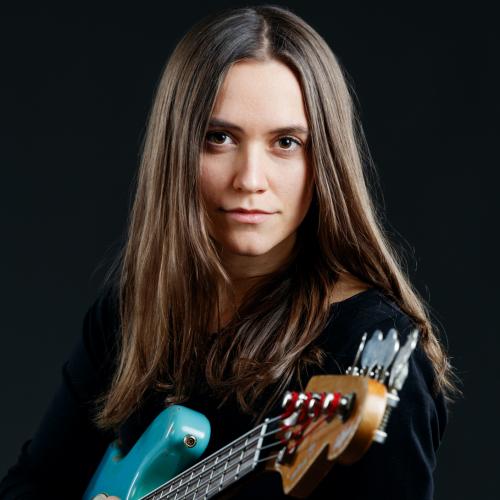
Julia Hofer serves as Lecturer for electric bass and Head of the Institute for Improvisation within the Faculty of Music Education at JAM MUSIC LAB Private University for Jazz and Popular Music. She concurrently holds teaching positions at Friedrich Gulda School of Music Vienna (since 2023) and Gustav Mahler Private University Klagenfurt (since 2021), where she instructs electric bass and music business courses. Her academic credentials include: Master's degree in Performing Artist Popular Music from Popakademie Mannheim with Prof. Frank Itt (2022) Ongoing Master's degree in Instrumental (Vocal) Pedagogy Bass Popular Music at University of Music and Performing Arts Vienna with Willi Langer Bachelor's degree in Instrumental (Vocal) Pedagogy Bass Popular Music from University of Music and Performing Arts Vienna with Willi Langer and Gina Schwarz (2017) Classical cello training with Prof. Gottfried Kitzmüller Her professional focus centers on bass performance pedagogy within popular music contexts, with specialized expertise in improvisation techniques and music business education. As head of the Institute for Improvisation, she develops curricular frameworks for creative musical exploration. Dr. Hofer maintains active teaching roles across three institutions without documented scientific awards or research grants. Her institutional leadership in the Bass Department emphasizes practical performance training and business acumen for contemporary musicians. She directs the Institute for Improvisation, establishing structured programs for developing spontaneous composition skills among students through the Bass Department's specialized curriculum.
Leszek Lorent is Professor of Musical Arts (dr hab.) and head of the New Music Studies and the Anthropology of Musical Culture Workshop at the Fryderyk Chopin University of Music in Warsaw. A celebrated percussionist, scholar, and author, he has premiered dozens of contemporary works, recorded more than a dozen critically acclaimed albums, and published extensively on the philosophy, anthropology, and theology of percussion music. Education & Training: Graduated with distinction (2008) – Fryderyk Chopin University of Music, Warsaw Post-graduate studies – Conservatoire National Supérieur de Musique et Danse de Lyon, class of Prof. Jean Geoffroy 2006–2009 – annual courses in new-music interpretation, Tallinn, Estonia Research & Artistic Interests: Lorent’s work explores the intersection of percussion performance, contemporary music creation, philosophical inquiry, and anthropological research . He specializes in multi-percussion repertoire and instrumental theatre, investigating how percussion functions in sacred rituals, shamanic traditions, and modern avant-garde aesthetics. His scholarly output spans ethnomusicology, theology, phenomenology of sound, and cultural studies , often focusing on Polish and global contemporary composers such as Marcin Błażewicz, Dariusz Przybylski, and Ignacy Zalewski. Album & Article Trends: Across 20+ albums and 25+ scholarly articles , Lorent consistently bridges the sacred and the experimental . Recordings range from solo percussion recitals to large choral-percussion works, frequently nominated for the Polish Fryderyk Award and the Global Music Awards . His writings analyze percussion as a ritual technology, philosophical metaphor, and cultural signifier , appearing in journals such as Aspirations , Zagadnienia Naukoznawstwa , and conference proceedings of the Polish Academy of Sciences. Scientific Awards & Honors: Rector’s Award, Fryderyk Chopin University of Music (2015, 2017, 2024) Global Music Award – Gold Medal Triple Winner (2019) Global Music Award – Silver Medal Triple Winner (2018) Multiple Fryderyk Award nominations (2016–2023) International Classical Music Awards nomination (2015) Scholarships: Prime Minister, Minister of Culture, Société Générale Bank, ZAiKS, Młoda Polska, Ministry of Science & Higher Education Advising & Service: As head of the Anthropology of Musical Culture Workshop , Lorent mentors graduate researchers in performance studies, music philosophy, and cultural anthropology. In 2018 he was appointed to the Advisory Team of the Minister of Higher Education and Science , evaluating scholarship applications for outstanding students and young scholars. Laboratories & Performance Teams: Lorent directs collaborative projects with the Chopin University Modern Ensemble , siXen Percussion Group , and Hashtag Ensemble , fostering interdisciplinary creation that integrates percussion, electronics, vocal performance, and multimedia staging.
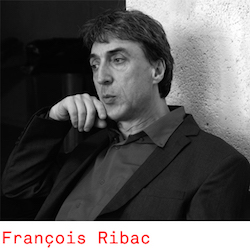
François Ribac is a Professor at the Faculty of Letters and Philosophy, University of Burgundy. His research explores the intersection of popular music, performing arts, technology history, and cultural prescription with a strong focus on Anthropocene impacts. He holds a Habilitation (HDR) from Sorbonne University and has authored significant works including the book Performing Arts and Music in the Anthropocene (2024). Research interests span cultural policy analysis, digital transformations in music, and ecological dimensions of artistic practice. Key themes include: Cultural democratization and institutional critique Technology-mediated performance practices Ecomusicology and sustainable arts Historical epistemology of sound His publications demonstrate consistent engagement with Anthropocene challenges through interdisciplinary lenses, particularly examining how digital platforms reconfigure music consumption and how performance arts respond to ecological crises. Recent work critically assesses cultural management models and sustainability frameworks.
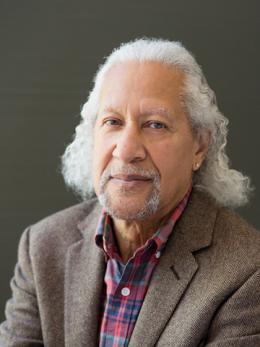
Gary Bartz, a legendary jazz saxophonist and 2024 NEA Jazz Master, has been a Professor of Jazz Saxophone at Oberlin Conservatory of Music since 2001. With over 45 solo albums and collaborations with icons like Miles Davis, Art Blakey, and McCoy Tyner, his work bridges avant-garde jazz , hard bop , funk , and African folk music . Education : Bachelor of Music, The Juilliard School Bartz’s research and creative output focuses on informal composition (a term he prefers over improvisation), blending genres to transcend categorization. His NTU Troop (1970s) explored themes of unity and social justice through Langston Hughes-inspired works like I’ve Known Rivers . Later projects, such as Coltrane Rules and collaborations with Maisha , emphasize spiritual jazz and direct-to-disc recording . His teaching philosophy at Oberlin prioritizes active listening to unlock students' musical identity, reflected in courses like Principal Private Study - Jazz Saxophone . Bartz has influenced generations of musicians through his innovative approach. Scientific Awards : 2024 NEA Jazz Master 2015 BNY Mellon Jazz Living Legacy Award 2004 Grammy (Best Jazz Instrumental Album, sideman on McCoy Tyner’s Illuminations ) 1997 Grammy (Best Latin Jazz Performance on Roy Hargrove’s Habana ) Bartz’s work with OYO Recordings (Own Your Own) and cross-generational collaborations exemplify his mission to empower artists to control their creative rights. He remains a vital force in jazz education and performance.
Alison DeSimone serves as Associate Professor of Musicology and Acting Chair of Conservatory Faculty at the University of Missouri-Kansas City Conservatory, where she teaches Renaissance and Baroque music, opera history, and eighteenth-century specialization courses. Her academic leadership extends to Faculty Senate governance and editorial roles for The Eighteenth Century: Theory and Interpretation . Her educational foundation includes a Ph.D. in Historical Musicology from the University of Michigan (2013), underpinning her research on cultural identity formation through musical practices in early eighteenth-century Britain. DeSimone's scholarly focus centers on musical miscellany's role in shaping British cultural identity during London's transformation into a cosmopolitan capital, examining pasticcio operas, public concerts, songbooks, and criticism through interdisciplinary lenses including gender studies and political history. Her work consistently reveals how marginalized voices—particularly female musicians—navigated professional landscapes through musical innovation. Analysis of her publications shows persistent investigation into London's musical ecosystem (1700-1750), with increasing emphasis on intersectional approaches combining reception theory, economic history, and performance studies to decode cultural power dynamics embedded in musical practices. Her scientific recognition includes: Faculty Excellence Award from UMKC Conservatory (2017) Ruth Solie Prize for Outstanding Article on British Music (2018) Research support from the American Musicological Society, American Handel Society, Handel Institute, and University of Missouri Research Board fuels her monograph project on musical miscellany. She actively contributes to academic communities as treasurer of AMS Midwest and board member for the Society for Eighteenth-Century Music, while maintaining performance practice as a harpsichordist in Kansas City's musical landscape.
Eric Mentzel serves as Professor of Voice at the University of Oregon School of Music and Dance, specializing in historically-informed vocal performance. An internationally acclaimed concert soloist, he has performed with leading conductors including Andrew Parrott and Howard Arman at venues such as the Amsterdam Concertgebouw and Edinburgh Festival across Europe, Japan, and Australia. His extensive discography of nearly 60 recordings for labels like Sony and Harmonia Mundi has earned multiple international awards including the Preis der deutschen Schallplattenkritik and Diapason d'Or. Mentzel earned his Master of Fine Arts in Early Music Performance from Sarah Lawrence College (1983) and Bachelor of Music in Music Education from Temple University College of Music (1980). His academic training established the foundation for his expertise in historical performance practices spanning medieval to contemporary repertoire. His research focuses on Music Performance, Vocal Performance, Choral Studies, and Historical Performance Practice, with particular emphasis on medieval and Renaissance vocal music including works by Hildegard von Bingen and 15th-century German songbooks. He has also premiered contemporary compositions by Alfred Schnittke, Henri Pousseur, and Garrett Fisher, demonstrating exceptional versatility across historical periods. Mentzel's recent recordings (2001-2016) reveal a consistent scholarly approach to medieval and Renaissance repertoire, especially German and French sources from the 12th-15th centuries, alongside significant contemporary opera projects. His critically acclaimed Vox Iberica series and Hildegard von Bingen recordings have significantly shaped modern understanding of early music performance practices. His major awards include: Preis der deutschen Schallplattenkritik (German Grammy) Diapason d'Or de l'Annee Choc de Musique Diapason d’Or Dix de Repertoire At the University of Oregon, Mentzel mentors undergraduate and graduate students in voice performance and historical practices. He has held guest professorships at the Schola Cantorum in Basel, Royal Conservatoire in The Hague, and University of Music and Performing Arts in Stuttgart, while directing workshops at Vancouver Early Music Programme and Amherst Early Music. Mentzel founded the ensemble Vox Resonat in Germany (1998), re-forming it in Oregon (2013) for innovative programs including Day of the Dead concerts in Eugene's Masonic Cemetery. Since 2015, he has served as Artistic Director of the Seattle Medieval Women’s Choir and maintains long-standing collaborations with ensembles including Sequentia and Huelgas Ensemble.
Jon Bellona is an Assistant Professor of Music Technology at the University of Oregon's School of Music and Dance. He serves as co-director of Harmonic Laboratory and specializes in digital technologies, data sonification, and environmental sound art. PhD in Music (2018), University of Virginia MA in Music (2015), University of Virginia MMus (2011), University of Oregon Professional Degree in Audio Engineering (2006), Conservatory of Recording Arts & Sciences BA in Music (2003), Hamilton College His research explores intersections of sound art , data-body interactivity , and digital musical instrument design . Recent projects like SACRIFICE ZONES: S.O.S. (2024) and Wildfire (2019) demonstrate environmental commentary through immersive installations. Earlier works focus on gesture-controlled compositions and algorithmic sound processing. Scientific awards include grants from the National Science Foundation, Andrew W. Mellon Foundation, and Oregon Arts Commission. He has received fellowships from the University of Virginia and Ford Family Foundation. Jon's practice combines academic research with artistic innovation , utilizing platforms like Kyma, Max/MSP, and custom electronics. His Accessible Oceans NSF grant (2018) exemplifies cross-disciplinary environmental sonification.
Christopher J. Smith is Professor of Musicology and founding Director of the Vernacular Music Center at Texas Tech University , where he teaches courses in American, vernacular, and 20th-century musics, directs the Tech Folk Orchestra, and leads interdisciplinary research initiatives. He holds degrees from the University of Massachusetts at Boston (BA) and the Jacobs School of Music at Indiana University (MM in Jazz Studies, PhD in Musicology). PhD in Musicology from Indiana University MM in Jazz Studies from Indiana University BA from University of Massachusetts at Boston His research focuses on the intersections of American and African-American music , oral-tradition practices, improvisation, music’s role in political movements, and performance theory. He has pioneered arts practice research and community engagement through ensembles like the Tech Folk Orchestra and Berkshire Folk Theater . Smith has received multiple institutional awards at Texas Tech for teaching, research, and leadership , including recognition for inclusive excellence and global engagement . He co-authored scores for theatrical productions that earned Kennedy Center Meritorious Achievement Awards and serves as External Examiner for PhD programs internationally. He leads the Vernacular Music Center , co-directs biennial conferences like Electric Guitar in American Culture , and contributes to music education through podcasts Sounding History and Voices from the Vernacular Music Center . His speculative fiction and academic work span global traditions, including performance on historical instruments across Africa, Europe, and the Americas.