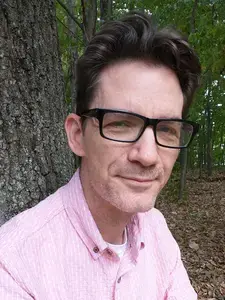
Gerd Grupe serves as Professor of Ethnomusicology and Vice Rector for Research at the University of Music and Performing Arts Graz (KUG), where he has held his faculty position since 2002. His academic career spans multiple institutions including Free University Berlin, Frankfurt am Main, Hildesheim, Bayreuth, and Krems. His educational background includes doctorate in Comparative Musicology (1990, FU Berlin) with dissertation on Afro-Jamaican Kumina music, and habilitation (1996) on Shona music published as The Art of Mbira Playing (2004). His research spans sub-Saharan African music , African-American traditions , Central Javanese gamelan , and cross-cultural comparative studies , with fieldwork in Jamaica, Zimbabwe, and India. His scholarly output reveals consistent focus on traditional African musical systems (particularly Shona mbira and Jamaican Kumina), notation challenges in oral traditions , and pedagogical approaches to non-Western music . The article corpus demonstrates progression from specific case studies (Kumina, 1990s) toward broader theoretical frameworks (2000s) examining cognitive dimensions, performance practices, and cross-cultural learning methodologies. As academic leadership, he established KUG's Central Javanese Gamelan ensemble (2004) for research and teaching, and co-edits the Translingual Discourse in Ethnomusicology journal while editing Grazer Beiträge zur Ethnomusicologie . His work bridges performance practice, cognitive analysis, and cultural context with emphasis on learning through performance methodology.
Matthias Bertsch is a faculty member with expertise spanning musical acoustics, medical acoustics, and ethnomusicology. His work bridges musicology, biomedical engineering, and clinical applications. Academic leadership in structured doctoral programs Research on brass instrument mechanics and NICU sound environments Interdisciplinary focus on music-physiology and psychoacoustics Research Interests: Specializing in the acoustic properties of musical instruments, therapeutic sound applications for premature infants, and physiological analysis of brass players. His work combines empirical measurement with clinical and cultural implications. Article Trends: Publications emphasize brass instrument biomechanics , incubator sound optimization , and music's physiological effects , with recurring themes in virtual acoustics and interdisciplinary methodologies.
Associate Professor Leow Wee Kheng is affiliated with the Department of Computer Science at the School of Computing, National University of Singapore . His career spans over three decades with expertise in medical image analysis , computer vision , and surgical simulation . Ph.D. in Computer Science, University of Texas at Austin (1994) M.Sc. in Computer Science, National University of Singapore (1989) B.Sc. in Computer Science, National University of Singapore (1985) His research focuses on medical image analysis for craniofacial surgery and stroke diagnosis, 3D modeling of anatomical structures, and computer vision techniques like robust PCA and texture analysis . Recent work includes knee joint motion modeling and forearm rotation simulation for clinical applications. Key trends in his 2017-2025 publications involve skull reconstruction algorithms , multi-objective optimization for digital media, subject-specific biomechanical modeling , and low-rank decomposition techniques in visual computing. Collaborations include institutions like Singapore General Hospital and National Taiwan University Hospital . Scientific Awards : CAIP 2017 Best Paper Award 2007 Andrew P. Sage Best Transactions Paper Award Faculty Teaching Excellence Award (AY2015/16) Annual Teaching Excellence Award (AY2015/16) He has mentored numerous students in medical imaging , computer vision , and biomedical modeling . Current and former advisees include Chen Ying , Vineta Lum Lai Fun , and Long Huizhong (Ph.D.).
Rev. Dr. hab. Piotr Wiśniewski, Professor at the John Paul II Catholic University of Lublin, serves as Vice-Rector and Head of the Department of Research on Religious Monody and Polyphony. His work focuses on liturgical musicology , Gregorian chant , and medieval Polish church music traditions . He has led projects like "Liturgical and Musical Sources of the Cistercian Abbey in Kraków-Mogila" and managed the "Musica Ecclesiastica" journal. Specializes in 12th-16th century Polish liturgical manuscripts Key interests: Psalmody Provenance , Carmelite/Pauline Chant Traditions , Post-Vatican II Liturgical Music His research spans Norwegian monumentalism , Polish organ culture , and Gregorian rhetoric in passion cantatas . Recent Coryphaeus of Polish Music 2024 award recognizes his contributions. 2024: Inner Reward 1st Degree 2018: Rector's Award at KUL 2015: Active Salary Policy Recognition He has taught at universities in Ružomberok and Bamberg, supervised over 60 diploma theses , and reviewed works for Studia Elbląskie and Liturgia Sacra . Current projects involve European liturgical codices and Polish national music heritage .
Pierrick Lotton serves as a CNRS Research Director at Le Mans University's Institute of Acoustics (LAUM), a joint research unit between CNRS and the university. He leads critical work within LAUM's Transducers team, focusing on fundamental and applied research in electroacoustics and thermoacoustics. His institutional affiliation places him at France's premier acoustics research laboratory, which maintains extensive facilities for acoustic measurements, ultrasonic experimentation, and transducer development across multiple specialized domains including materials science, opto-acoustics, and bioacoustics. Lotton's research program centers on two interconnected pillars: electroacoustics and thermoacoustics. His electroacoustic investigations pioneer advanced modeling, development, and characterization of audio transducers with particular emphasis on nonlinear behaviors in loudspeakers and electric guitar pickups. Simultaneously, his thermoacoustic research explores acoustic refrigeration systems, complex couplings between acoustic and thermal energy fields, and transient nonlinear phenomena. This dual focus enables innovative cross-pollination between audio engineering and thermal physics, driving advancements in both fundamental understanding and practical applications of acoustic energy conversion. Analysis of his 2019-2024 publications reveals a consistent trajectory in transducer physics, particularly MEMS-based piezoelectric speakers, voice coil dynamics in magnetic environments, and digital acoustic projection systems. His work demonstrates exceptional methodological diversity spanning analytical modeling, experimental validation, and educational innovation. Notable contributions include the ASKNOWN project's open-access acoustics courseware and breakthroughs in understanding transducer nonlinearities for both consumer audio and specialized applications like fish sound localization. No major scientific awards were documented in the available institutional materials, though his sustained publication record in high-impact journals and presentations at European Acoustics Association forums indicate significant peer recognition. His collaborative research network spans France, Germany, Italy, and the Czech Republic, reflecting strong international engagement. Lotton's academic supervision activities aren't explicitly detailed, but his educational initiatives like the ASKNOWN project demonstrate commitment to pedagogy. His research is supported through LAUM's institutional framework and collaborative projects including European initiatives and ANR-funded programs. Current work appears concentrated on advancing MEMS transducer technology, refining thermoacoustic cooling systems, and developing next-generation educational resources for acoustics. As a core contributor to LAUM's Transducers team, Lotton operates within one of Europe's leading acoustics laboratories. His current projects align with LAUM's strategic focus on transducer innovation and thermoacoustic applications, positioning him at the forefront of both theoretical acoustics research and practical engineering solutions. The laboratory's comprehensive infrastructure supports his work from fundamental wave propagation studies to applied device development.
Farhad Rachidi is a Full Professor at the Swiss Federal Institute of Technology (EPFL), where he serves as the Head of the Electromagnetic Compatibility (EMC) Laboratory within the School of Engineering's Department of Electrical Engineering. His research group has been active in EMC research since the early 1980s and maintains collaborations with numerous international institutions including Universities of Bologna and Rome (Italy), Uppsala University and KTH (Sweden), University of Toronto (Canada), University of Florida (USA), and others. Professor Rachidi's research spans electromagnetic compatibility, lightning electromagnetics, lightning and EMP interaction with transmission lines, electromagnetic time reversal, fault location, numerical computation of electromagnetic fields, and power line communications. His work integrates theoretical modeling with experimental validation, particularly in the context of lightning phenomena and electromagnetic interference. The research group develops innovative techniques such as electromagnetic time reversal for applications ranging from lightning detection to partial discharge localization in power systems. Analysis of his recent publications (2023-2025) reveals a strong focus on electromagnetic time reversal techniques, lightning physics and modeling, machine learning applications in electromagnetic phenomena, and advanced computational methods for electromagnetic field analysis. His work bridges fundamental electromagnetic theory with practical applications in power systems, atmospheric electricity, and security technologies. 2025 IEEE EMC Technical Achievement Award 2005 CIGRE Technical Committee Award 2006 Blondel Medal from SEE 2016 Berger Award from ICLP Best Paper Awards of IEEE Transactions on EMC (2016, 2018) Motohisa Kanda Award for most cited papers (2012-2018) 2024 Distinguished Honorary Professor at Tsinghua University 2014 Honorary Professor at Xi'an Jiaotong University Professor Rachidi has supervised numerous students through semester projects, diploma projects (equivalent to MS), and PhD programs at EPFL. His research is primarily sponsored by Swiss National Science Foundation, European Community programs, European Space Agency, Swiss Electrical Utilities, and private companies. He has served in leadership roles including President of the International Conference on Lightning Protection (2008-2014), Editor-in-Chief of IEEE Transactions on Electromagnetic Compatibility (2013-2015), and President of the Swiss National Committee of the International Union of Radio Science (2012-2020). The EMC Laboratory at EPFL, which he heads, maintains the Säntis lightning research facility and has been instrumental in advancing our understanding of lightning phenomena through direct measurements at instrumented towers. The group has developed innovative techniques including electromagnetic time reversal for fault location in power networks and lightning detection systems.
Morwaread Farbood is an Associate Professor and Associate Director of Music Technology at New York University's Steinhardt School of Culture, Education, and Human Development. She holds dual affiliations with the NYU Music and Audio Research Lab (MARL) and the Max Planck/NYU Center for Language, Music, and Emotion (CLaME). Her research bridges music cognition, computational modeling, and algorithmic composition, with a focus on real-time auditory perception phenomena like tonality and musical tension. She co-founded the Northeast Music Cognition Group and was a 2017-2018 Radcliffe Fellow in Computer Science at Harvard University. Her professional achievements include the Pro Musicis International Award and First Prize at the Prague International Harpsichord Competition. Farbood actively contributes to music accessibility through innovations in audio description systems for live theater, using reference recordings and real-time synchronization techniques. She also maintains an active performing career as a harpsichordist, with performances at venues like Carnegie Hall and major international festivals. Research interests span computational models of musical structure, cross-cultural melodic learning, and neurocognitive underpinnings of musical perception. Her work integrates methods from music theory, cognitive psychology, and computer science to advance understanding of auditory perception's temporal dynamics. Recent projects include developing automated audio description systems for theatrical performances and exploring asymmetrical scale properties' impact on musical learning. She has authored over 50 peer-reviewed articles, patents, and creative works, reflecting her dual expertise in academic research and artistic practice.
Aura Satz is a Visiting Professor at the School of Arts & Humanities, Royal College of Art , with expertise in Critical Practice and Art & Curating. Her work spans film, sound, performance and sculpture with focus on distributed voice and listening strategies. Visiting Artist, School of the Arts Institute of Chicago (2021-2025) Lectured at London Consortium, Goldsmith's College and Slade School of Fine Art Research focuses on: History of sound technology and resistance to standardization Gender roles in WWII ballistic research and computing Emergency sirens as metaphor for societal alarm fatigue Interdisciplinary collaborations with astrophysics and medical research Recent article trends show: 2023-2025 works on warning systems and emergency sound Long-term exploration of sound notation and technological history Scientific Awards: CPH Dox NEW:VISION Award (2024) St. Moritz Art Film Festival Best Feature (2024) Shortlisted at multiple international festivals (2015-2025) Key collaborations include: Warning Research Centre at UCL Nuclear Consulting Group Harvard Centre for Astrophysics Research partnerships with EMPAC and Sonic Acts
Professor Wiebke Thormählen is Director of Research and Strategic Lead for Research, Research Degrees and Knowledge Exchange at the Royal Northern College of Music (RNCM). As a historian and violinist, she explores music as a social and cultural activity at the intersection of domestic and public music-making, with particular interest in arrangements of large-scale works for small-scale performance, domestic devotional music, and audience engagement with opera across historical periods. Her research spans three historical moments: music moving between home and public spaces around 1800; institutionalization of professional music engagement around 1900; and contemporary use of sound in museum and heritage contexts. She draws on methodologies from the history of emotions, medical history, material history, and practice-based research. Professor Thormählen's scholarly work reveals significant trends across musicology, heritage studies, and education. Her publications demonstrate a consistent focus on the relationship between music, space, and identity formation, with particular emphasis on how musical practices shape and are shaped by social contexts. Her recent work increasingly intersects with digital humanities through projects like the 'Domestic Dance in Georgian Britain' database. Co-investigator on AHRC-funded project 'Music, Home and Heritage: Sounding the Domestic in Georgian Britain' (2017-2022) Steering Group Member, Sound Heritage Network (University of Southampton) Steering Group Member, Music, Medicine and History Network Core Member, Digital Humanities and Sensory Heritage Network (TORCH, Oxford University) As an educator, Professor Thormählen supervises PhD students in Sound Heritage, Eighteenth-Century Studies, and social history of the conservatoire. She has received research funding from the Arts and Humanities Research Council, Wellcome Trust, and Austrian Academic Exchange Service. Her extensive performance experience with period instrument ensembles in the US, Netherlands, and UK informs her research and teaching approach, which emphasizes tangible properties of musical materials and their interactive potential.
Mag. phil. Mag. art. Dr. phil. Stephan Hametner is a Professor at PH-OÖ (University College of Teacher Education Upper Austria) since 2014, specializing in Subject Didactics for General Music Education across elementary and secondary levels. His expertise spans Systemic-constructivist didactics Empirical research in music education Curriculum development Academic supervision Organizational development Academic background highlights include: PhD in Music Education/Pedagogy (2004, magna cum laude ) Diploma in Music Education (University of Music and Performing Arts Vienna & University of Vienna, 2000 magna cum laude ) Diploma in Rhythmics (1996 magna cum laude ) Research focuses on systemic-constructivist music pedagogy , with key contributions in Didactic frameworks for music interpretation Empirical validation of teaching methods Integration of movement and music Subject-oriented educational theory His publications analyze music's role in cognitive development and pedagogical innovation, emphasizing experiential learning. He also contributes to media education through 50 ethnomusicological radio programs (Radio Orange 94.0, 2000-2005) Interactive educational CD-ROMs Academic case studies Active in international collaborations, he serves as expert for Bern University of the Arts and contributes to the Rhythmic Expositur Biel project. Current projects include reception-aesthetic film analysis for teacher training and music identity development in educational settings.
Dr April Pudsey is a Reader in Roman History and Deputy Director at Manchester Metropolitan University's interdisciplinary Manchester Centre for Youth Studies . Her work focuses on children's and women's lives in Graeco-Roman Egypt through papyrology and material culture analysis, connecting ancient childcare practices to broader demographic and environmental patterns. Key research areas: Roman Egypt, child slavery, breastfeeding practices, ancient demography Leadership roles: Founding Chair of Post92classics, Co-Chair of Women's Classical Committee Major grants: €280,000 Marie-Sklodowska Curie Fellowship (2021-23), AHRC £380,000 project co-Investigator Her Children of Oxyrhynchos book (Palgrave MacMillan, 2025) synthesizes research on youth cultures from thousands of papyri. She also served as Historical Consultant for Ladybird Books and Hachette Children's Group publications. Recent publications span topics including: 2023 : Global history of youth 2022 : Enslaved children's experiences 2021 : 3D-replicated Roman musical instruments 2017 : Disability studies in antiquity Scientific awards include: Leverhulme Early Career Fellowship (2009-11) AHRB Studentships (2001-2006, 2003-06) External examiner roles at Exeter University and Birkbeck College
Liliia Oprysk is a Professor at the Faculty of Law, University of Bergen. She specializes in EU Intellectual Property law, digital content regulation, data protection, and IT law. Her research also explores Ukrainian legal harmonization with EU acquis and war-related legal challenges. Affiliation: Faculty of Law, University of Bergen Research Interests: EU Copyright Law, Digital Economy Regulation, EU-Ukraine Legal Integration Her research focuses on: EU copyright harmonization Digital content distribution and consumer rights Data protection in digital markets Ukraine's legal alignment with EU standards Impact of war on legal systems AI and emerging technology regulation Publications highlight her work on: Copyright exhaustion in digital markets Legal implications of streaming services War crimes accountability Ukrainian children deportation analysis EU acquis harmonization Digital consumer contract law She teaches EU Copyright Law (JUS2314/JUS3514) and GDPR & Privacy (DIGI113/DIGI613), serving as course coordinator for JUS2314 since 2025. Her practical experience includes IT operations, digital compliance, and technology contract negotiations.
Luk Vaes is an artistic researcher and pianist affiliated with the Orpheus Institute and Koninklijk Conservatorium Ghent. His work bridges piano performance, artistic research, and pedagogical innovation. University: Orpheus Institute, Royal Conservatoire Ghent Academic Role: Researcher in Artistic Research (DocARTES Liaison) Research Interests: Vaes specializes in piano performance of composed music, particularly extended techniques, historical performance practices, and the interplay between composer and performer. His collaborations with composer Hans Cafmeyer on the peyotl project aim to integrate extended techniques into pre-conservatoire pedagogy, using collaborative composition and classroom testing. Recent Work: His 2022 publications focus on Kagel’s performance practices, Cage’s studio production, and Lachenmann’s Salut für Caudwell , emphasizing score discrepancies and performer-composer dynamics. He explores Deleuzean "stratification" in archival research and critiques the REF’s impact on practice-based scholarship. Conferences & Projects: Vaes actively participates in ANPPOM and other international events, discussing the future of artistic research in Europe. His HIPEX project reconstructs historical practices for Kagel’s unfinished works.
Chris Arrell is an Associate Professor of Music and Director of the Laptop Ensemble Federation (H-CLEF) at the College of the Holy Cross. His expertise spans composition, music theory, sound synthesis, and computer music. He founded H-CLEF in 2015, fostering experimental music performance through technology. Education: D.M.A. in Music from Cornell University. Research focuses on blending acoustic and electronic elements, with works commissioned by institutions like the Fromm Foundation and Alte Schmiede. Notable honors include the Ettelson Composer’s Award and residencies at MacDowell Colony. Key works include Diptych (prepared piano duo), Breathless (piano trio), and Of Three Minds (soprano/piano/computer). His music frequently explores algorithmic processes and live electronics. Awards and recognition highlight his contributions to contemporary music, including commissions from NEXTET and the Pellegrini Festival. His collaborations, such as Walking in Altamira , reflect interdisciplinary innovation supported by the Ditson Foundation.
Richard Mulholland is a practicing paper conservator and technical art historian at Northumbria University. He holds a PhD from the Royal College of Art and has conducted post-doctoral research at the Bodleian Library, Oxford. Before joining academia, he worked at renowned institutions such as the V&A, Tate, and Harvard Art Museums. His research focuses on artists' materials and techniques from the late 18th to 20th centuries, with a particular emphasis on cultural heritage preservation in conflict zones like Afghanistan. He co-leads the University Art Collection and Montagu Collection of World Musical Instruments, and is a Fellow of the International Institute for Conservation and the Higher Education Academy. Education: Bachelor of Arts (Hons) in History of Art Master of Arts in Conservation of Fine Art Doctor of Philosophy (PhD) in Conservation Research Interests: Material and technical analysis of artists' works Cultural heritage conservation in post-conflict regions Pedagogical approaches to conservation training Grants & Projects: Funded by the British Council's Cultural Protection Fund for capacity-building initiatives in Afghanistan. Current projects include a forthcoming book on David Smith's materials (Getty Publications, 2024) and studies on Ferdinand Bauer's color charts. Labs/Teams: Manages Northumbria's University Art Collection and Montagu Collection, collaborating with global institutions on heritage preservation.