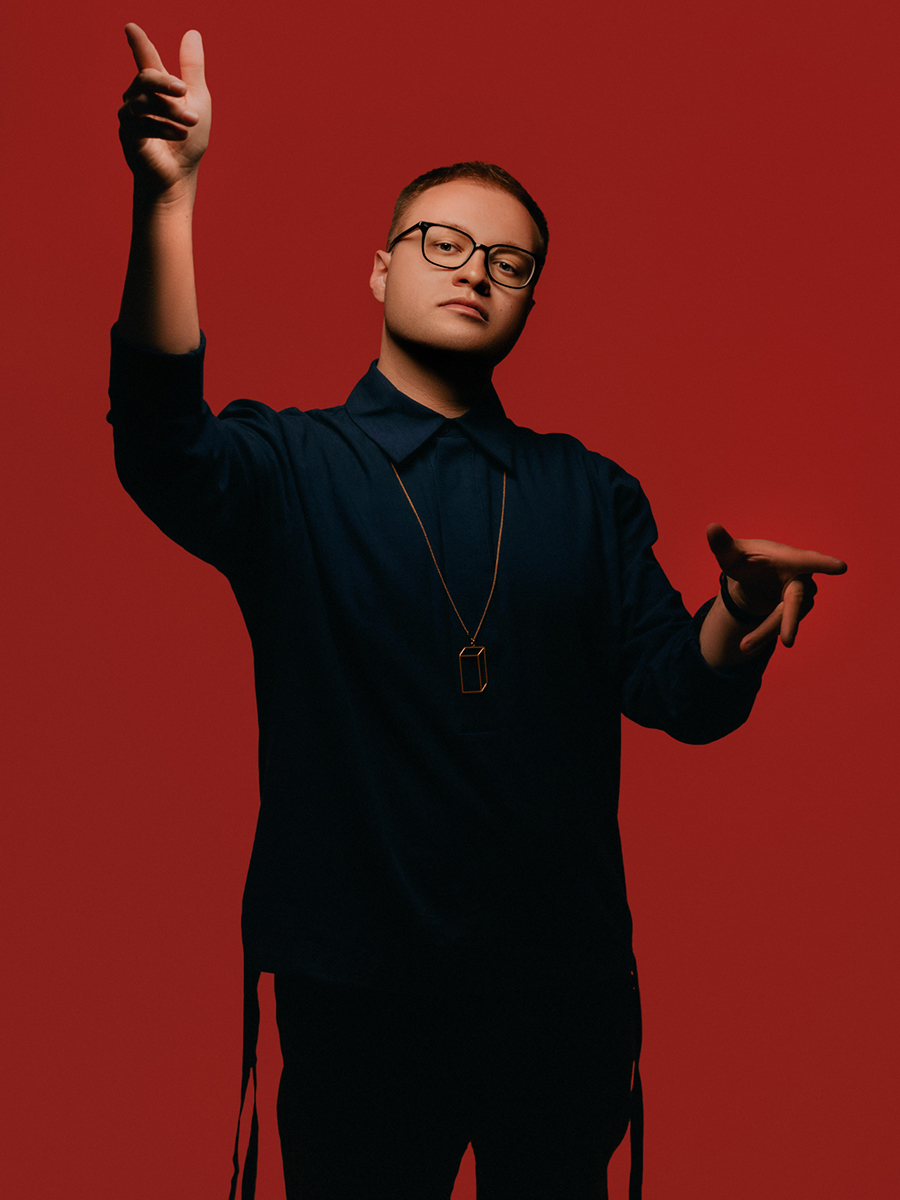
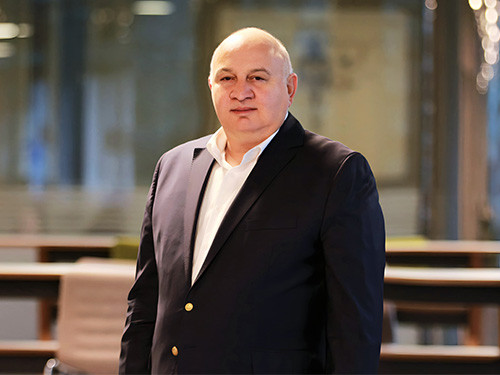
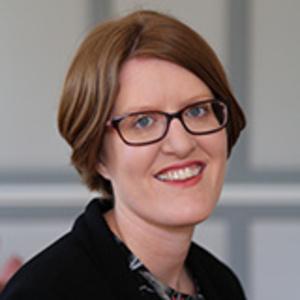
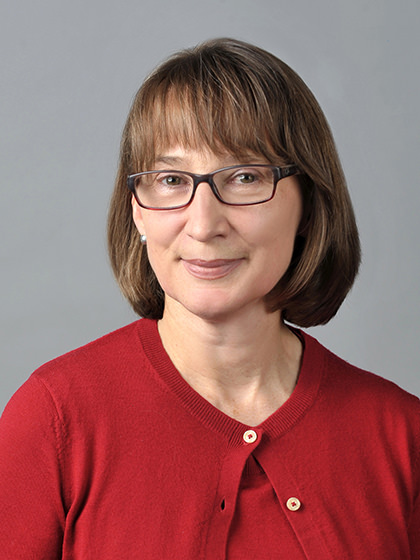
Dominic Thibault is an Assistant Professor at the Faculty of Music, Université de Montréal . His research-creation explores human-machine interaction in musical contexts, focusing on embodied cognition through electroacoustic compositions, audiovisual performances, and musical software development. Co-director, Laboratoire Formes·Ondes Active member, CIRMMT (Centre for Interdisciplinary Research in Music Media and Technology) Research axis leader, Expanded Musical Practice (CIRMMT) Member, Québecor Millénium entrepreneurship committee Scientific committee member, ACFAS
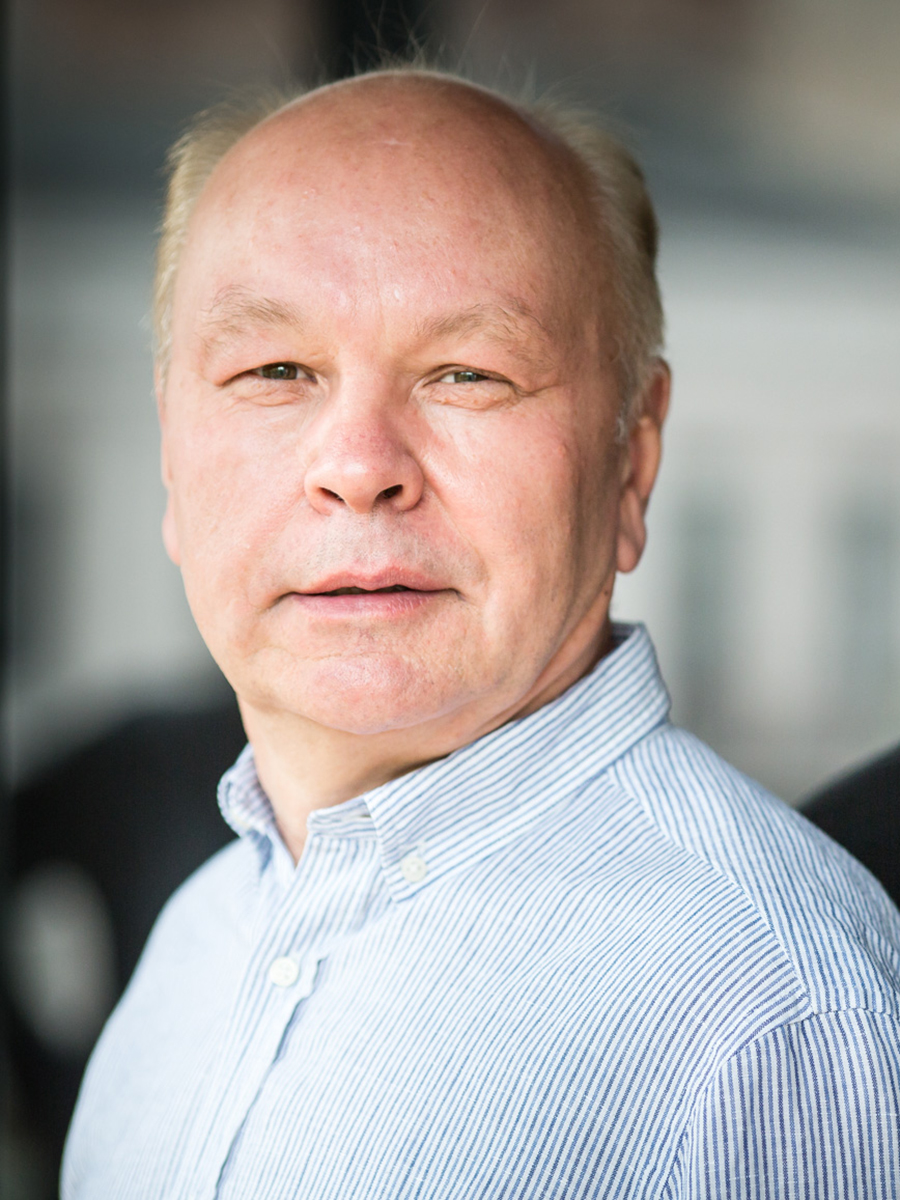
Professor David Thompson is a globally recognized expert in railway noise and vibration reduction at the University of Southampton's Institute of Sound and Vibration Research (ISVR). He holds a part-time role in ISVR Consulting while continuing full-time research. His research focuses on low-noise railway design, ground vibration control, and aerodynamic noise from high-speed trains. He leads collaborative EU projects and advises industry partners. David earned his MA and PhD from the University of Cambridge and the ISVR, respectively. His career includes roles at British Rail Research and TNO in the Netherlands, where he developed the influential TWINS rolling noise model. He has authored over 250 papers and a seminal textbook translated into Chinese, with a second edition in 2024. Awards include the 2018 Rayleigh Medal for outstanding contributions to acoustics. Research Highlights: Modelling noise sources (rolling, aerodynamic, curve squeal), vehicle interior noise transmission, and ground-borne vibration. Collaborations: Partnerships with EU initiatives, Korean Railroad Research Institute, and Chinese universities. Teaching: Courses on noise control engineering, railway systems, and acoustic design. His work bridges theoretical models with practical solutions, aiming to reduce railway noise through innovative designs and mitigation strategies.
Piotr Scholz is an award-winning jazz guitarist, composer, and conductor currently serving as an Assistant Professor at the Academy of Music in Łódź within the Institute of Jazz Instrumental Studies . He holds three specializations in jazz and pop music from Polish institutions, including a doctorate from the Karol Szymanowski Academy of Music in Katowice (2021). His academic roles include teaching jazz arrangement, composition, and conducting. Ph.D. in Composition (Karol Szymanowski Academy of Music in Katowice, 2021) Jazz Guitar (Academy of Music in Poznań, 2015) Composition with Arrangement (Academy of Music in Poznań, 2016) Conducting Jazz Bands and Popular Music (Academy of Music in Bydgoszcz, 2017) Scholz’s research focuses on jazz orchestration and symmetrical scale applications , with publications exploring these domains. His artistic work demonstrates innovative approaches to jazz harmony and ensemble leadership. Recent publications analyze: Symmetrical scales in improvisation Contemporary jazz arrangement techniques Conducting methodologies for jazz orchestras Awarded numerous honors including multiple festival Grand Prix awards and international composition accolades, Scholz has received artistic scholarships from both municipal and national Polish cultural institutions. As artistic director of the Academy of Music in Łódź Jazz Orchestra, he leads original projects like Weezdob Collective and PJPOrchestra , while collaborating with prominent artists including Jean-Luc Ponty, Stanley Jordan, and Włodek Pawlik.
Professor Sławomir Kaczorowski, Ph.D., has been a faculty member at the Grażyna and Kiejstut Bacewicz Academy of Music in Łódź since 1981, where he teaches composition and served as Head of the Department of Composition from 2011 to 2021. He previously held significant leadership roles including Vice-Rector for Artistic and Teaching Affairs (1999-2005) and Vice-Dean of the Faculty of Composition, Music Theory, Music Education and Rhythmics (1996-1999). His educational background includes diplomas in music theory (1981) and composition under Professor Bronisław Kazimierz Przybylski (1981) from the State Higher School of Music in Łódź. Awarded the title of professor by the President of Poland in 2002, he remains an active academic leader currently serving as chairman of the Art Section of the Polish Accreditation Commission. Kaczorowski specializes in contemporary composition with emphasis on instrumental works, chamber music, and choral compositions. His research interests manifest in diverse output featuring piano, accordion, and mixed ensembles, with notable focus on tango-inspired forms and liturgical reinterpretations. He pioneered the MUSICA MODERNA sessions promoting new music through biannual concerts and lectures. Analysis of his 15 most recent compositions reveals consistent exploration of Polish contemporary classical traditions with strong emphasis on instrumental timbre, cross-genre fusion (particularly tango elements), and innovative approaches to sacred music forms. His works demonstrate technical mastery across diverse ensembles from solo piano to full orchestral settings. Silver Medal for Merit to Culture – Gloria Artis (2021) Numerous national composition competition awards Jury membership at international competitions including the T. Baird Young Composers' Competition (Warsaw 2018) and National Association of Composers USA competitions (2017-2018) Professor Kaczorowski has mentored award-winning composers including Grzegorz Duchnowski and Tomasz Szczepanik. His institutional leadership includes directing the Grażyna Bacewicz International Composition Competition (2012, 2015, 2019) and serving as president of the Łódź Branch of the Polish Composers' Union until 2022. He maintains active artistic engagement through premieres across Europe, China, and the United States. His creative work is organized through departmental initiatives including the Department of Composition's performance series and collaboration with the Artur Rubinstein Łódź Philharmonic. Current activities focus on expanding Polish contemporary music's international presence through competitions and cross-border artistic exchanges.
Helle Hochscheid is a University Lecturer in antiquity and heritage at University College Roosevelt, a Liberal Arts & Sciences college within Utrecht University in Middelburg. She holds an affiliation with the Humanities Research Institute for History and Art History and the Department of Ancient History and Classical Civilization. Her academic roles include coordinating the Archaeology in the Classroom project and serving on the Scientific Advisory Board of the Netherlands Institute in Athens, the Editorial Board of PHAROS: Journal of the Netherlands Institute at Athens , and the Advisory Board of Theran Press. Her research expertise spans Greek archaeology, ancient history, cultural heritage, and women’s history, with a focus on craft production (particularly sculpture and musical instruments like auloi) in ancient Greek societies. She investigates social contexts of craftsmanship, including the roles of non-elite groups and women in Athenian artistic networks. Key themes include gender diversity, migration’s societal impact, and the intersection of craft labor with early knowledge economies. Hochscheid regularly collaborates with undergraduate students, co-editing volumes such as The World on Walcheren (2024). She teaches courses including Academic Internship , Greek Art & Archaeology , and Making Society in Archaeology , emphasizing interdisciplinary education and community-engaged learning. Her work bridges academic research and public heritage through projects like Archaeology in the Classroom , which introduces transferable skills via archaeology to primary school children. Her professional contributions include organizing sessions at the EAA Annual Conference (2024) and presenting on topics like women’s work in ancient Athens. She is a member of the Engendering Ancient Economies Network (EAEN) and the TEXNH research collaboration, exploring economic and social dimensions of ancient Mediterranean crafts.
Jon McCormack is a Professor jointly appointed in Monash University's Faculty of Art, Design & Architecture (MADA) and Faculty of Information Technology. He founded and directs SensiLab, a research facility focusing on computational creativity, human-machine interfaces, and generative systems. His work spans electronic media art, evolutionary music, and artificial life. McCormack holds a PhD in Computer Science from Monash University, along with degrees in Computer Science, Applied Mathematics, and Film/Television. Research interests include computational creativity, tangible interfaces, and cybernetic systems. Notable projects include 'Explainable Artificial Creativity' (ARC-funded) and 'Building 4.0 CRC,' addressing architectural innovation through AI. He has been recognized with awards for collaborative projects like the Blundstone Intelligent Footwear for Healthcare. McCormack's recent articles explore AI-driven art, generative systems, and interdisciplinary design. His work bridges artistic practice with technical innovation, emphasizing ethical and creative dimensions of human-AI collaboration. SensiLab serves as a hub for practice-based research in digital media and interactive systems. Education: PhD in Computer Science, Monash University (2004) Bachelor of Science (Honours), Computer Science/Applied Mathematics, Monash University (1987) Graduate Diploma in Film/TV, Swinburne University (1986) Bachelor of Science, Computer Science/Applied Mathematics, Monash University (1985) Key Projects: Lead investigator on 'Explainable Artificial Creativity' (2022–2026) Co-investigator in 'Building 4.0 CRC' (2020–2027), exploring AI-driven architectural design Awards: 2022 Designers Australia Award for Blundstone Footwear 2020 'On the Machine Condition' Prize McCormack's lab, SensiLab, fosters collaborations across disciplines, producing exhibitions, software, and theoretical frameworks for computational creativity. He actively supervises PhD students in practice-based research, emphasizing the intersection of art and technology.
Christopher Castro serves as an Assistant Professor of Composition at Chapman University's College of Performing Arts. A composer and double bassist from Brooklyn, New York, he combines academic rigor with avant-garde experimentation. Ph.D. in Composition and Theory from University of California, Davis Bachelor of Music from Juilliard School (Double Bass & Composition) His research bridges Western Art Music traditions with contemporary innovations , creating works that merge: Johannes Ockeghem's polyphonic complexity John Coltrane's spiritual intensity Modernist structural experimentation Historical reconstruction techniques Jazz-classical hybrid forms Interdisciplinary performance formats Recent compositions demonstrate trends in flexible instrumentation , text-music relationships , and genre synthesis . His output spans chamber works, orchestral pieces, and vocal compositions with equal mastery. Scientific recognition includes: 2023 Fromm Music Foundation Commission (Harvard University) Chamber Music America's 2021 Classical Commissioning Award As a new music advocate , Castro collaborates with ensembles like: Left Coast Chamber Ensemble (artistic advisory board) New Mexico Contemporary Ensemble Los Angeles Philharmonic's Upbeat Live series Lyris Quartet and Sharon Harms
Jennifer Beavers, Ph.D. , is an Associate Professor of Music Theory at the University of Texas at San Antonio (UTSA) in the College of Liberal and Fine Arts. Her research intersects early twentieth-century music analysis, timbre/orchestration studies, and music theory pedagogy, with a focus on Maurice Ravel’s compositions and curriculum innovation. Awarded Faculty Mentor Award for Undergraduate Research (2019) Co-founder of UTSA Music Theory Club initiatives Active presenter at Society for Music Theory , American Musicological Society , and College Music Society conferences Research Themes : Analytical approaches to Ravel’s neurological decline, timbre as structural marker, flipped pedagogy, and interdisciplinary collaborations. Her publications span journals like Music Theory Online and Indiana Theory Review , emphasizing timbral transformations and pedagogical innovation. Scientific Awards : Faculty Mentor Award for Undergraduate Research (2019) Teaching Contributions : Courses include Aural Skills , Basic Skills , 20th-Century Analysis , and graduate Research Methods . Her pedagogical research addresses improvisation, pitch-matching, and AP curriculum alignment.
Professor Stephen Broad is a musicologist and educator serving as Director of Research and Knowledge Exchange at the Royal Conservatoire of Scotland. He holds a DPhil from the University of Oxford and has extensive experience in historical musicology, music education, and policy development. His research focuses on Olivier Messiaen, 1930s French music culture, and music practice in Scotland. Broad has authored/co-authored influential reports like What’s Going On? , which informed the Scottish Youth Music Initiative, and chairs the European Platform for Artistic Research in Music (EPARM). Education: DPhil in Historical Musicology, University of Oxford (2001) MA in Music and Physics, University of Glasgow (1997) Research Interests: Historical Musicology: Messiaen’s early career, French musical traditions, and music historiography Music Education: Pedagogy in diverse contexts, policy development, and workforce training Practice-Based Research: Philosophical frameworks and interdisciplinary methodologies Awards & Roles: External Examiner at Royal Academy of Music, Royal College of Music, and others Editorial boards for Music Education Research and Practice-Based Research Journal Recipient of grants including the Scottish Government’s £1m Musical Instrument Fund Advising & Grants: Supervised over 10 doctoral projects in musicology, performance, and education Contributed to policy initiatives like Creative Scotland’s music development programs Labs/Teams: Leads the Sciences, Humanities and Arts Research Exchange (SHARE) and chairs EPARM, fostering international collaboration in artistic research.
Mark D. Gross is a Professor of Computer Science and Director of the ATLAS Institute at the University of Colorado Boulder, where he leads an interdisciplinary hub for creativity and invention. His academic journey began at MIT with BS and PhD degrees, followed by faculty roles at Carnegie Mellon University (2004-2013), University of Washington Seattle (1999-2004), and CU-Boulder (1990-1999, 2014-present). As co-founder of Modular Robotics Incorporated and Blank Slate Systems LLC, he bridges academia and entrepreneurship. Education: BS and PhD in Computer Science from MIT Gross’ research spans design methods, modular robotics, computational design tools, and tangible interaction. He pioneered sketch recognition software like 'The Electronic Cocktail Napkin' and explores physical computing through projects such as shape-changing interfaces, interactive construction kits, and augmented reality systems. His work integrates IoT, digital fabrication, and educational technology. Recent publications highlight innovations in AR/VR collaboration, shape-changing robotics, and interactive fabrication. Key themes include climate communication through data physicalization, AI-driven creative systems, and soft robotics for dynamic interfaces. Despite no explicit awards listed, his career demonstrates sustained impact through ACM conference leadership (Creativity and Cognition 2009, TEI 2011) and industry partnerships. Gross’ prior industry experience includes positions at Atari Cambridge Research and Logo Computer Systems. His lab at ATLAS fosters radical creativity through projects like PaperMech, DynaBlock, and WearAir, emphasizing hands-on learning and cross-disciplinary experimentation.
Cem Zafer is an academic researcher affiliated with İstanbul Okan University , specifically the Faculty of Humanities and Social Sciences . His scholarly work spans interdisciplinary topics in sociology, religious studies, and technology's societal impacts. Research Focus: Digital transformation, gender dynamics, and cultural identity. Publications: 15+ peer-reviewed articles and book contributions since 2012. Key Themes: Social media ethics, religious discourse, and labor sociology. His recent publications highlight the interplay between artificial intelligence, social justice, and historical narratives in modern Turkey. While no formal awards or grants are documented in the provided text, his academic output demonstrates sustained engagement with contemporary sociocultural challenges.
Dr. Deirdre Nic Mhathúna is a Professor at Dublin City University's Fiontar & Scoil na Gaeilge. Her research focuses on 18th-century Irish poetry, manuscript studies, and the works of Piaras Feiritéar. She holds leadership roles in Studia Hibernica and Chumann Merriman . She earned a BA in Irish and German from Trinity College Dublin and a PhD from University College Cork. Her research explores post-classical Irish manuscript culture, the poetry of Piaras Feiritéar, and the cultural heritage of Corca Dhuibhne. Recent work includes analyses of scribal transmission, accentual verse development, and the influence of place on literary expression. She has contributed to major publications like the Cambridge History of Irish Poetry and edited volumes such as Ar an Imeall i Lár an Domhain . Her articles span topics from Jacobitism to the Great Famine, Peig Sayers' life narratives, and the enduring legacy of Piaras Feiritéar. She frequently presents at international conferences, including the American Conference for Irish Studies and the Ó Thrácht go Twitter seminar series. No scientific awards are listed, but her editorial and collaborative roles highlight her contributions to Irish literary preservation and scholarly networks. Her work bridges historical and modern contexts, emphasizing cultural continuity and the interplay between oral tradition and written text. Her research often intersects with regional identity, religious thought, and transnational literary connections.
Catherine Laws is a Professor of Music at the University of York, affiliated with the School of Arts and Creative Technologies. She holds a dual role as a musicologist and pianist specializing in contemporary music, with particular focus on interdisciplinary performance practices and the relationship between music and language. Her research explores collaboration, embodiment, and subjectivity in performance, alongside studies of Samuel Beckett’s musical intermediality. Laws maintains a Senior Artistic Research Fellowship at the Orpheus Institute in Ghent, leading the 'Performance, Subjectivity, and Experimentation' research cluster. Education: PhD in Music (University of York, 1996), MA and BA in Music (University of York) Her research spans two core areas: 1) performance-based studies examining performer agency, embodiment, and interdisciplinary collaboration through works like the multimedia Player Piano ; and 2) investigations into composers’ responses to literary texts, notably Beckett’s works. Key outputs include co-authored Voices, Bodies, Practices (2019) and edited Performance, Subjectivity, and Experimentation (2020). Her recent projects with filmmaker Minyung Im reimagine piano performances through film, blending sound, visual, and spatial elements. Publications reflect her dual focus: experimental music performance, Beckett studies, and collaborative art practices. Her work often bridges theory and practice, integrating compositional, performative, and audiovisual mediums.
Danuta Mirka is a Professor at Northwestern University's Bienen School of Music in the Department of Music Theory and Cognition. She holds the Harry N. and Ruth F. Wyatt Chair in Music Theory and has been recognized with major awards for her scholarship. PhD in Musicology from University of Helsinki Senior Fulbright Fellow at Indiana University Humboldt Fellow and DFG Research Fellow at University of Freiburg Leverhulme Trust Research Fellow at University of Southampton Her research synthesizes historical music theory with contemporary cognitive approaches, focusing on metric manipulations in Haydn/Mozart, sonoristic structuralism in Penderecki, and topic theory in eighteenth-century music. She has developed analytical frameworks for textural and timbral systems in avant-garde compositions. Key trends across her publications include: cross-disciplinary application of semiotics and fuzzy logic to music analysis; systematic studies of cadential structures in Classical-era works; and innovative methodologies for analyzing non-traditional instrumental techniques. Her article on Penderecki's sonoristic style introduced groundbreaking concepts of six-dimensional textural analysis. Society for Music Theory Citation of Special Merit (2015) Wallace Berry Award (2011) Marjorie Weston Emerson Award (2023) Roland Jackson Award (2017) Mirka has edited major reference works and served on editorial boards of leading journals. Her scholarship bridges Polish avant-garde traditions with Western analytical methodologies.
Bettina Sandgathe Husebø is a Professor and Head of the Center for Geriatric and Nursing Home Medicine at the Department of Global Health and Community Medicine, Faculty of Medicine, University of Bergen (UiB). She also serves as Innovation Manager at IGS, UiB since 2019. Her extensive career spans clinical practice, research, and leadership roles in geriatric and palliative care. Dr. Husebø completed her medical education at the University of Bonn, Germany in 1988, followed by specialization in Anaesthesiology and Intensive Care in 1995. Her Norwegian qualifications include Medical Specialization in Palliative Medicine (2012) and Nursing Home Medicine (2014) from UiB, along with a PhD from the Faculty of Medicine Dentistry at UiB in 2008. She further enhanced her expertise with a Postgraduate Safety, Quality, Informatics and Leadership (SQIL) Program from Harvard University in 2021. Her research focuses on critical geriatric issues including pain assessment and management in dementia patients, behavioral disturbances in dementia, palliative care in nursing homes, and digital phenotyping applications for elderly care. She has pioneered work on the relationship between pain, agitation, and neuropsychiatric symptoms in dementia patients, particularly through the COSMOS trial and LIVE@Home.Path study. Her recent publications (2023-2025) demonstrate a strong emphasis on digital health solutions for dementia care, with particular focus on activity monitoring, pain assessment through technology, and community-based interventions for aging populations. Her work bridges clinical geriatrics, technology innovation, and patient-centered care models. Among her notable recognitions are the National Dementia Award by His Majesty King Harald of Norway (2022) and multiple awards for research excellence in pain management and palliative care. Her work has significantly influenced Norwegian healthcare policy regarding dementia care and end-of-life practices. As an educator, she lectures in English, German, and Norwegian on dementia, pain in dementia, innovation technologies for older adults, symptom management at end-of-life, systematic medication review, and advance care planning. She has received teaching awards including 'Teacher of the Year' from the Faculty of Medicine and Dentistry at UiB. Dr. Husebø leads the Center for Geriatric and Nursing Home Medicine (SEFAS) and has been instrumental in establishing Norway's first palliative care ward in a nursing home. Her research group focuses on translating evidence into practice to improve quality of life for elderly patients, particularly those with dementia.