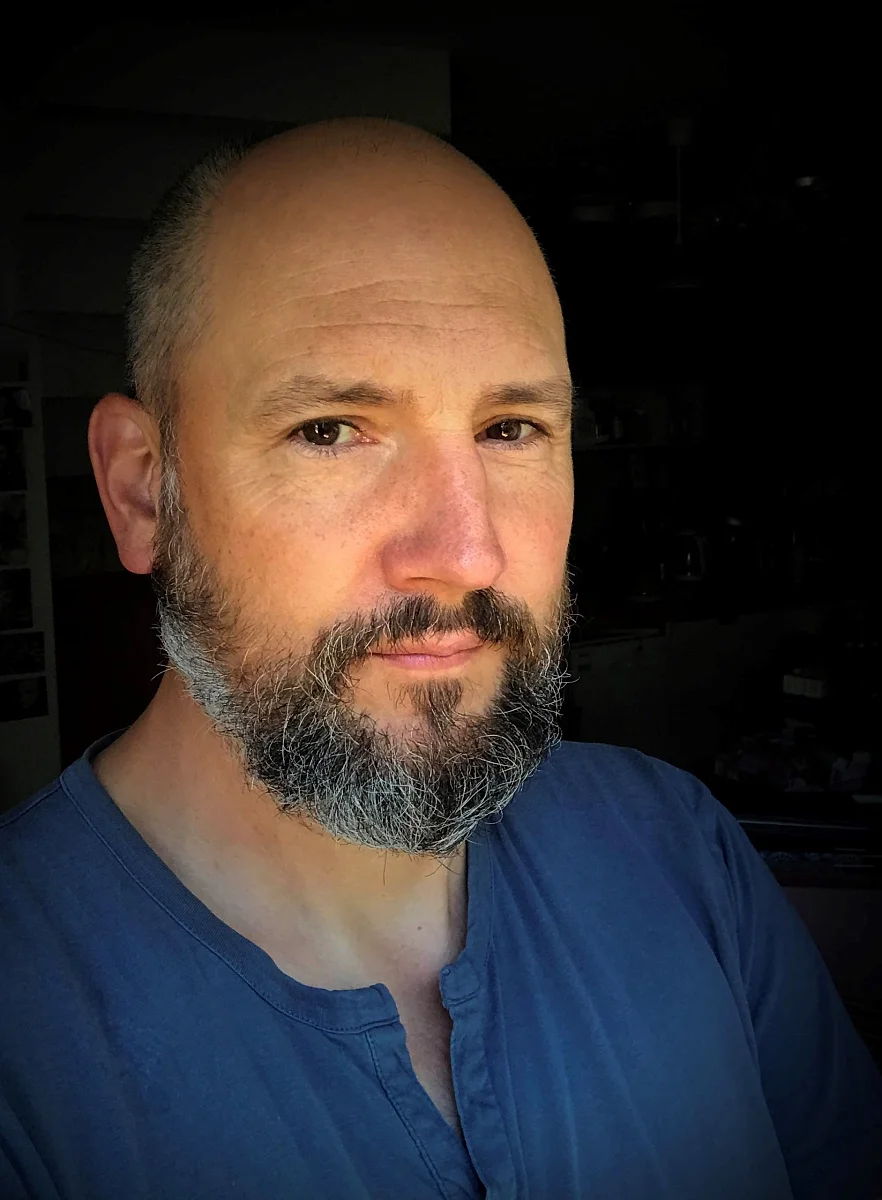
Antal Bodóczky is an assistant professor at the Department of Media Design , Moholy-Nagy University of Art and Design , where he has taught since 2000. His work spans exhibition experience design , visual design , kinetic installation , and music video direction , integrating media design with spatial storytelling. Education: Degree in Visual Communication Design from the Hungarian University of Applied Arts, currently part of the MOME Doctoral School. Research Focus: Combines exhibition design , theatre visual design , and interactive installations to create immersive cultural experiences. Professional Highlights: Designed major exhibitions like Hungarian Bride (2023) and Danube Clock (2017), emphasizing historical narratives and innovative spatial organization. Scientific Awards: 2016 Csontváry high-profile purchase award 2016 Reformation 500 design competition prize 2015 Arte Laguna Prize finalist 2014 Milan Expo special prize
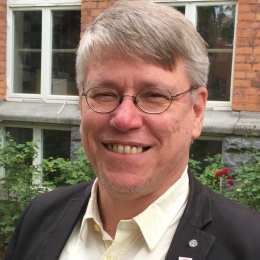
Gunnar Jinmei Linder is an Associate Professor in Japanese Language and Culture at the Department of Asian and Middle Eastern Studies, Stockholm University. His expertise bridges traditional Japanese music, particularly the shakuhachi bamboo flute, with pedagogy and cultural analysis. He has held administrative roles such as Deputy Head of Department, focusing on education and pedagogy, and previously directed doctoral studies and educational programs. PhD in Japanese Music (2012, Stockholm University) MA in Japanese Bamboo Flute (Shakuhachi) Performing Arts (1997, Tokyo National University of the Arts) His research interrogates the construction of tradition in Japanese music, focusing on the shakuhachi and its transmission. He is completing a second volume on shakuhachi solo music and co-editing an anthology with academic and practitioner perspectives on the instrument. His 2024 publication on Edo-period jiuta-sōkyoku songtexts explores historical musicology and performance practices. While no explicit scientific awards are listed in the provided text, his work has resulted in significant publications and editorial contributions. He supervises Bachelor’s, Master’s, and PhD theses, emphasizing pedagogy in language and cultural education.
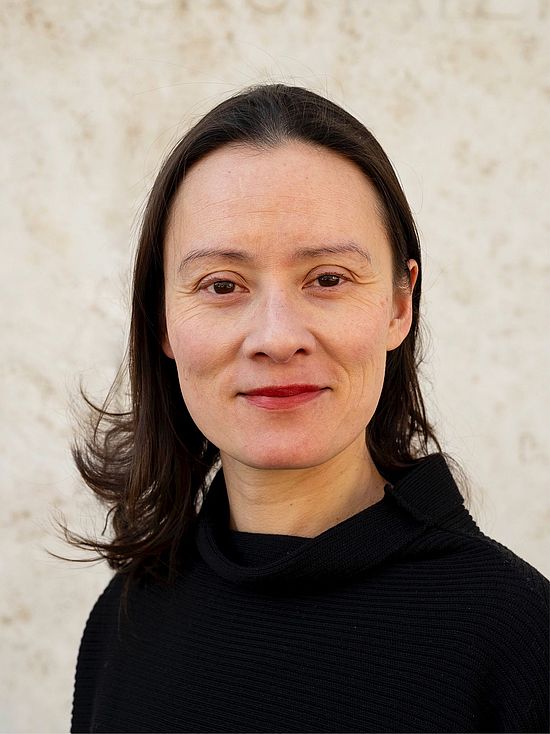
Cathryn Clayton is a Professor (Lecturer) at the School of Music, University of Utah, where she has taught since 2007. Her current roles include directing the university's harp ensemble, Crimson Harps, and teaching courses in Harp Performance, Pedagogy, World Music, and Music Theory. Doctor of Musical Arts in Harp Performance (University of Arizona, 2009) Master of Arts in Musicology (University of Utah, 2000) Bachelor of Arts in Music (University of Utah, 1997) Bachelor of Science in Biology and Human Physiology (University of Utah, 1990) Registered Respiratory Therapy and Medical Laboratory Science degrees (Weber State University) Dr. Clayton's research focuses on Welsh harp music, particularly Penillion singing, and its cultural significance in shaping Welsh national identity. Her dissertation examined harpist John Thomas's role as a nationalistic composer, and she has presented extensively on this topic, including at the Society for Ethnomusicology Regional Conference and the Malad Valley Welsh Festival. Scientific Awards DMA Document honored by American Harp Society Journal (2014) With over 25 years of private harp instruction, her students have attended prestigious institutions like the Eastman School of Music. She received the Dean's Travel Fund Award (2016) for Crimson Harps' Portland tour and a Sustainability Grant (2023) for community outreach. As President of the Society for Ethnomusicology, Southwest Chapter (2017), she championed interdisciplinary collaborations and cultural education through music.
Anne-May Krüger is a Lecturer at the Department of Musicology within the Faculty of Humanities at the University of Basel, teaching at the Musicological Seminar located at Petersgraben 27, Basel. She also holds a lectureship at the University of Music (HSM) FHNW in Basel. Dr. Krüger studied singing and musicology at the Leipzig and Karlsruhe Music Conservatories, completing her doctorate in 2020 through a cooperation between the University of Basel and HSM. Her Swiss National Science Foundation-funded dissertation examined vocal performers of the 1950s and 60s, later published as Music about Voices (Wolke Verlag, 2022), which was featured as Book of the Month at opernwelt.de. Her research centers on contemporary music performance practice, particularly the intersection of musical practice and academic research. From 2011-2021, she supervised the research focus 'Performance Practice of Contemporary Music' at HSM FHNW, and since 2021 has directed the development of two new master's programs. As a performer, she specializes in contemporary music with appearances at MaerzMusik (Berlin), Wien Modern, Darmstadt Summer Course, Lucerne Festival, and major opera houses including Stuttgart State Opera and Theater Basel. Dr. Krüger has published in Dissonance, Neue Zeitschrift für Musik, PFAU, Wißner, BrepolsPublishers, and Laaber-Verlag. Her scholarly work reflects the Department of Musicology's century-long tradition of exploring music from historical through contemporary perspectives. She has been teaching at the University of Basel since fall 2020, contributing to both bachelor's and master's programs that emphasize the connection between theoretical knowledge and practical musical experience.
Dr Fredrik Dahlqvist serves as a Lecturer in Computer Science at Queen Mary University of London's School of Electronic Engineering and Computer Science, where he contributes to the Centre for Fundamental Computing and AI. His academic profile reflects a strong commitment to theoretical foundations in computing with direct applications to artificial intelligence research. His research spans theoretical computer science with focused expertise in probabilistic programming, probability theory, category theory, and mathematical logic. Dahlqvist investigates the mathematical frameworks governing probabilistic computation, developing rigorous methodologies for uncertainty quantification in computational systems. His work establishes formal connections between abstract category theory and practical probabilistic programming implementations, creating bridges between pure mathematics and applied AI. Recent publications (2023-2024) demonstrate cohesive thematic development across probabilistic programming semantics, neural network optimization, and formal verification. Key trends include error analysis in probabilistic floating-point systems, neural network pruning techniques based on geometric similarity, and categorical foundations for graded computation. His research consistently merges theoretical depth with practical AI challenges, particularly in verification of probabilistic models and optimization of learning architectures. Dr Dahlqvist has not received any documented scientific awards or fellowships according to available sources. He actively supervises two PhD students: Gregor Meehan researching "Representation Learning For Musical Audio Using Graph Neural Network-Based Recommender Engines" and Niki Omidvari conducting theoretical work in computer science foundations. Dahlqvist currently holds a £15,000 grant from the Academy of Medical Sciences for "Learning from Each Other: Neural Networks and Finite Automata" (March 2025-March 2026), investigating formal connections between neural architectures and automata theory. As an integral member of Queen Mary's Centre for Fundamental Computing and AI, Dahlqvist collaborates within a multidisciplinary research environment focused on advancing theoretical underpinnings of artificial intelligence. His work contributes to the Centre's mission of developing mathematically rigorous frameworks for next-generation AI systems through category-theoretic approaches and probabilistic reasoning.
Kevin McKeown serves as Lecturer and conductor of the Wind Ensemble at the University of California, Irvine since 2008, while concurrently holding positions as conductor of the Santa Monica College Wind Ensemble and Director of Bands at Santa Monica High School. In 2019, he was appointed Interim Director of Athletic Bands at UCLA, directing the "Solid Gold Sound" Bruin Marching Band, Varsity Band, and Symphonic Band. McKeown earned his B.A. and M.M. degrees in music education and instrumental conducting from UCLA under mentors Dr. Thomas Lee and Gordon Henderson. His academic foundation directly supports his practical conducting expertise across educational institutions. Specializing in wind ensemble repertoire and contemporary commissions, McKeown actively advances band music through initiatives like the "Letter from Home" (Copland/Belski) and Julie Giroux's "The Ash Grove" consortium projects. His performance philosophy emphasizes international collaboration, having conducted at Carnegie Hall, Kennedy Center, and Rome's Basilica di Sant’ Ignazio while championing new compositions for wind ensembles. As an active professional, McKeown maintains memberships in CBDA, SCSBOA, NAfME, and CBDNA while regularly serving as adjudicator and clinician. His guest conducting engagements span from the United States Air Force Concert Band to Australia's SHEP All-State Honor Band, demonstrating extensive influence across academic and professional music communities.
John C. Seitz is an Associate Professor in the Department of Theology at Fordham University. His scholarly work bridges historical and ethnographic approaches to U.S. Catholicism and theoretical questions in religious study. He has contributed extensively to journals such as Church History , Material Religion , and American Catholic Studies , and co-edited Working Alternatives: American and Catholic Experiments in Work and Economy (2020). He is currently working on a book about 20th-century U.S. priesthood and serves as Program Director for Fordham’s Taking Responsibility project addressing clergy abuse legacy. Education: PhD in American Religions, Harvard University MTS in Christianity and Culture, Harvard Divinity School BA in Religious Studies, University of Colorado at Boulder (summa cum laude) Seitz’s research explores religious practice at the intersection of tradition and improvisation, with a focus on Catholic social and emotional histories. His projects include Notre Dame’s Gender, Sex, and Power initiative and Fordham’s Francis and Ann Curran Center for American Catholic Studies . He also edits the Catholic Practice in the Americas book series and chairs the Roman Catholic Studies Unit at the American Academy of Religion. Scientific Awards: Young Scholar in American Religion (Center for the Study of Religion and American Culture, IUPUI) Project Fellow, Lived History of Vatican II (Notre Dame’s Cushwa Center) Research Fellow, Gender, Sex, and Power (Notre Dame) and Taking Responsibility (Fordham)
Andreas Wehrmeyer serves as a Senior Lecturer in Musicology at the Institute of Musicology within the Faculty of Philosophy, Arts, History and Social Sciences at the University of Regensburg . Since 2007, he has also directed the Sudeten German Music Institute (sponsored by the Upper Palatinate district) in Regensburg. His academic journey includes completing his Magister and doctorate at Technical University of Berlin and habilitation at University of Salzburg, followed by postdoctoral research at Moscow Conservatory through an Alexander von Humboldt Foundation scholarship. Dr. Wehrmeyer's research spans music of the 18th to 20th centuries , with specialized focus on music theory , music aesthetics , and particularly Russian and Eastern European music traditions . His scholarly work examines the intersections of musical composition with cultural identity and political contexts, especially in Central and Eastern Europe. His publications reveal consistent engagement with Russian composers (Rachmaninoff, Taneev, Shostakovich) and Central European musical relations, particularly German-Czech connections during the interwar period and WWII occupation. The publications demonstrate expertise in both historical musicology and the cultural politics of music. Scientific Recognition: Alexander von Humboldt Foundation scholarship for postdoctoral research at Moscow Conservatory (1994/95) Dr. Wehrmeyer's dual role as institute director and academic lecturer demonstrates his commitment to both scholarly research and institutional leadership in musicology. His work bridges historical musicology with cultural and political contexts, showing particular interest in how music functions within national identities and political systems across Central and Eastern Europe. His leadership at the Sudeten German Music Institute provides a platform for research on German musical heritage in Central Europe, complementing his academic work at the University of Regensburg.
Dr. Ashley Allen is an Associate Professor and Division Chair for Music Education at the University of Southern Mississippi. She teaches undergraduate and graduate courses in music education, directs the University Singers, and supervises student teachers. Her primary role includes academic leadership and pedagogical guidance in music education programs. Education: PhD in Philosophy, University of Kansas (2014) MMED in Music Education, University of Oklahoma-Norman Campus (2008) BME in Music Education, University of Oklahoma-Norman Campus (2003) Research Interests: Dr. Allen focuses on teacher stress, job satisfaction, mental health in music education, and fostering healthy teaching practices. Her work integrates Kodály methodology and advanced research techniques in music education evaluation. Professional Activities: She holds Kodály certification at levels 1-3 from the University of Oklahoma and actively contributes to choral music education through her ensemble direction and pedagogical training. Labs/Teams: Leads the University Singers, a key performing ensemble, and oversees student teacher supervision as part of her academic responsibilities.
Dr. Adam S. Greenberg is a neuroscientist and biomedical engineer with dual appointments as Associate Professor at the Joint Department of Biomedical Engineering (Medical College of Wisconsin/Marquette University) and Secondary Appointment in the Department of Ophthalmology and Visual Sciences . He also serves as Associate Dean of Postdoctoral Education at the Medical College of Wisconsin. PhD in Psychological & Brain Sciences (Johns Hopkins University, 2010) M.S. in Biomedical Engineering (University of Alabama at Birmingham, 2001) B.S. in Biomedical Engineering (Case Western Reserve University, 1996) His research focuses on the cognitive neuroscience of attention , particularly investigating brain network dynamics using fMRI , transcranial magnetic stimulation , and computational modeling . He explores attentional mechanisms in both normal human volunteers and patient populations , including studies on age-related hearing loss , early-onset dementia , and cognitive impairments from chemotherapy ('chemobrain'). Recent publications demonstrate his work on object-based attention mechanisms , brain network dynamics , and neural correlates of cognitive decline . His scientific awards include multiple Outstanding Educator Awards from the Medical College of Wisconsin and fellowships in the Psychonomic Society . Dr. Greenberg has advised numerous graduate students and postdoctoral researchers , with a particular focus on neuroimaging studies and cognitive neuroscience research. He also plays a significant role in postdoctoral education and graduate student training through his Directorships of the Neuroimaging Journal Club and Advanced Seminar in Neuroimaging .
Cordula Hacke is a Professor of Chamber Music and Collaborative Piano at the University of Agder's Department of Classical Music and Music Pedagogy. She holds international acclaim as a pianist, chamber music partner, and musical director for theater productions. Her career spans collaborations with leading orchestras, including the New York Philharmonic and Boston Symphony Orchestra, and extensive work in contemporary and 19th/20th century repertoires. Her research includes editorial work on composers like Debussy and Laparra, and she has pioneered projects like the Trio Art Nouveau (2016) focusing on Fin de Siècle music. She regularly teaches at institutions such as the Salzburg Summer Academy and served as jury chair for the International Kuhlau Competition (2006-2023). Notable productions include directing Spatz und Engel (touring Europe 2021/2023) and founding the Wiesbaden Art Nouveau Music Competition (2022). Her discography features transcriptions of Crumb’s Vox Balaenae and collaborations with artists like Jeanne Baxtresser. Recent activities include leading workshops at Villa Musica (2023) and co-presenting Norway’s classical music programs at Western University, Canada (2023).
John Fremgen is an Associate Professor of Jazz Studies at the University of Texas at Austin, directing the Alternative Improvisation Music Ensemble (AIME). He holds a BM from Millikin University and a MM from the University of Southern California. Specializing in jazz bass performance and pedagogy, Fremgen teaches courses including Jazz Theory, Jazz Improvisation, and Jazz Bass Techniques. His research and performance focus on blending traditional jazz bass foundations with modern improvisational techniques. Active globally, Fremgen has performed in 15+ countries with artists like PJ Olsson, Christopher Cross, and Shelly Berg. He has released three albums on Viewpoint Records: Meanwhile (2002), Pieces of String (2002), and If Not Now (2005). Critics praise his versatility, citing his mastery of both upright and electric bass in diverse settings. As an educator, Fremgen has conducted masterclasses at institutions such as the Rimsky Korsakov Conservatory (Russia) and the Rhythmic Music Conservatory (Denmark). His pedagogical work emphasizes creative improvisation and technical proficiency. Current ensembles include the AIME and collaborations with Grammy-winning artists.
Guido Olivieri is a Professor of Instruction in Musicology at the Butler School of Music, University of Texas at Austin, and directs the Early Music Ensemble “Austinato.” He holds affiliations with the Society for Eighteenth-Century Music, where he serves as president. His research focuses on Neapolitan instrumental music, Baroque performance practices, and archival studies, with a particular emphasis on string sonatas and cello repertoires. Olivieri has held fellowships at the University of Liverpool and Columbia University’s Italian Academy, and was the Robert M. Trotter Visiting Distinguished Professor at the University of Oregon in 2018. His work includes critical editions of neglected manuscripts, such as Corelli’s *Sonate da camera di Assisi* and Bononcini’s cello sonatas, and contributions to scholarly volumes like *Arcomelo 2013* and *Marchitelli, Mascitti e la musica strumentale napoletana*. He actively bridges academic research and public engagement through CD projects, lectures, and collaborative performances with international ensembles. Education: Doctor of Philosophy, University of California, Santa Barbara Violin Diploma, Conservatorio di Salerno (Italy) Bachelor of Arts, Università degli Studi “Federico II” Napoli (Italy) Research Interests: Olivieri’s work explores the cultural and political contexts of Neapolitan music, emphasizing the role of string virtuosi in shaping European musical aesthetics. His studies highlight the circulation of music between Naples, Vienna, and Paris, and the interplay between performance practices, pedagogy, and patronage. Recent projects include a critical edition of Cimarosa’s *Il matrimonio segreto* and investigations into the early history of the violoncello in Naples. Publications & Projects: Olivieri has authored over 30 articles and book chapters, edited volumes on Corelli and Bononcini, and contributed to *The New Grove Dictionary of Music*. His articles analyze Neapolitan instrumental traditions, manuscript sources, and cross-European musical exchanges. He collaborates with ensembles like Ensemble Aurora and Il Pomo d’Oro on recordings reviving neglected repertoires. Teaching: Olivieri teaches courses on 18th-century music, early music performance, and musicology research methods. His courses include *History of the Concerto in the Eighteenth Century* and *Institutions and Careers in 18th-Century Italy*.
Laurie Scott is an Associate Professor of Music & Human Learning at The University of Texas at Austin, serving as Director of The University of Texas String Project and the Musical Lives program at UT Elementary School. Her career spans university teaching, K-12 orchestra direction, and advocacy for inclusive music education. Education: Doctor of Philosophy, The University of Texas at Austin Master of Music, The University of Nebraska Bachelor of Music, The State University of New York at Fredonia Research Focus: Prioritizes accessible music education for all learners, including disability-inclusive practices and adult music education. Leads initiatives like Suzuki in the Schools and mentorship for future string educators. Teaching & Advising: Teaches courses such as 'Teaching and Learning in Music' and mentors students becoming professional musicians and educators. Notable former students include top string educators and symphony musicians. Awards: 2023: Marvin J. Rabin National Award (ASTA) 2020: "Texas Ten" Alumni Recognition Creating Learning Community Award (Suzuki in the Schools project) Labs/Teams: Oversees the UT String Project and Musical Lives program, fostering community engagement through orchestral training for elementary students.
Robert Quinney is an Associate Professor and Tutorial Fellow in Music at New College, University of Oxford. He serves as Director of the renowned Choir of New College and maintains an active career as a solo organist and guest conductor. His roles include lecturing on Techniques of Composition and Choral Performance at the Oxford Faculty of Music, alongside teaching historical topics on J.S. Bach's keyboard music. Education: Undergraduate and graduate studies at King's College, Cambridge. Early career included positions at Westminster Cathedral and Westminster Abbey, followed by directorships at Peterborough Cathedral and Oxford. He directs the Edington Festival of Music within the Liturgy, blending performance with liturgical context. Research focuses on Bach's keyboard works and their reception in sacred vocal music, with New College Choir's performances of Bach cantatas in 18th-century Lutheran liturgical frameworks exemplifying this work. His recordings span Renaissance, Baroque, and Romantic repertoires, emphasizing historically informed performance practices. Performance highlights include solo organ recitals, guest conducting with BBC Singers, and collaborations with ensembles like The Sixteen. Compositions include organ works (e.g., Orgelbüchlein Project) and choral pieces such as the Short Service.