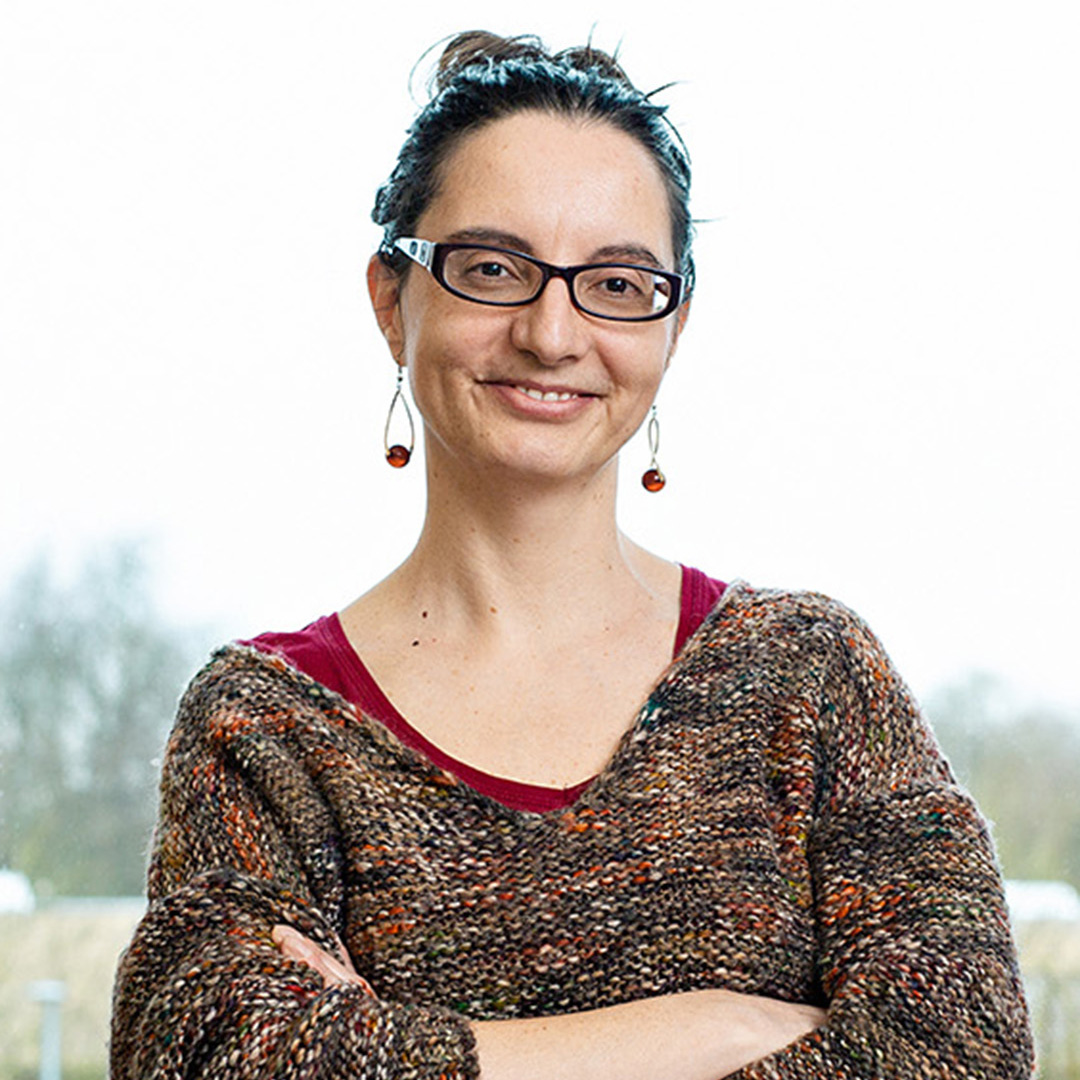
Dr. Brigitte Steger is a Senior Lecturer in Modern Japanese Studies at the University of Cambridge, where she serves as a Fellow in Asian and Middle Eastern Studies at Downing College. She teaches modern Japanese society courses and directs graduate affairs while serving as Secretary of the Degree Committee. MA, MPhil, PhD in Japanese Studies (University of Vienna) Visiting researcher at multiple Japanese universities Co-founder of Cambridge Creative Circular Plastics Centre sub-project Her research focuses on cultural anthropology of Japanese daily life, particularly sleep practices (inemuri), gender dynamics in urban spaces, disaster response rituals, and cleanliness/waste practices. She conceptualizes sleep as socio-cultural performance and examines temporal practices in premodern Japan. Recent publications analyze Heian-era sleep patterns, 2011 tsunami shelter hygiene, and plastic consumption in consumer societies. She leads international research on historical timekeeping and contemporary waste practices. Her edited volumes explore Japanese gender diversity, including 'herbivore boys' and manga girl culture. Scientific awards: Bank Austria Prize (2002) Vorarlberg Science Award (2005) University of Cambridge weekly research contributor She supervises graduate research projects and serves on the European Association for Japanese Studies and Japan Anthropology Workshop councils. Her 2025-26 sabbatical focuses on completing Heian-period sleep research.
Michael S. Horn is a Professor at Northwestern University with a joint appointment in Computer Science and the Learning Sciences. He directs the Tangible Interaction Design and Learning (TIDAL) Lab and coordinates the Learning Sciences PhD Program. His work focuses on leveraging interactive technology to design innovative learning experiences, such as tangible programming languages (e.g., Tern) and music-coding platforms (e.g., TunePad). He holds a PhD from Tufts University and has collaborated with institutions like the California Academy of Sciences and the Museum of Science, Boston. Education: PhD in Computer Science, Tufts University MS in Computer Science, Tufts University BS in Computer Science, Brown University Research Interests: Dr. Horn explores how emerging technologies can create engaging learning environments. His projects include museum exhibits (e.g., DeepTree, Build-a-Tree), educational tools for computational literacy (e.g., TunePad, Strawbies), and collaborative design with educators. Recent work emphasizes integrating music and coding to foster computational thinking. Publications: His recent work addresses computational thinking in STEM education, AI-driven qualitative analysis, and hybrid music-coding practices. Themes include equitable participation, teacher professional development, and immersive AR/VR tools for learning. Awards: Recipient of the 2018 Edith Ackermann Award for innovative work in child-computer interaction. His research has led to commercial products like Osmo Coding and Kibo Robotics. Grants & Labs: Principal investigator on NSF grants (e.g., #1612619, #1451762) and collaborator with labs like the Center for Connected Learning (CCL) and the Collaborative Technology Laboratory (CollabLab).
Mark Bocko is a Distinguished Professor of Electrical and Computer Engineering at the University of Rochester, affiliated with the Hajim School of Engineering & Applied Sciences. He holds roles as Director of the Center for Emerging and Innovative Sciences (CEIS) and Director of Audio & Music Engineering. He earned his PhD in Physics from the University of Rochester in 1984, focusing on gravitational wave detectors. His research spans audio signal processing, sensors, superconductivity, and quantum computing. Notable contributions include flat-panel loudspeaker development, non-contact ECG sensors, and quantum coherence studies in Josephson junctions. Research interests include audio and acoustic signal processing, computer audition, and sensor technologies. His work integrates interdisciplinary approaches, combining electrical engineering, physics, and computer science. Awards include the 2012 Goergen Award for Teaching and Mercer Brugler Distinguished Teaching Professor (2008–2011). Recent publications address modal crossover networks for loudspeakers, vibrational touch sensing, and room impulse response modeling. He has advised PhD students on topics like spatial audio rendering and musical vibrato analysis. His labs focus on advancing audio engineering and smart sensor systems through collaborative industry partnerships.
Séverine Dusollier is a Professor of Intellectual Property at the Law School of Sciences Po Paris and holds a Senior Chair at the Institut Universitaire de France. She serves as Director of the Law School's Research Centre and Head of the Master in Innovation Law, actively contributing to doctoral committee activities. Her expertise spans copyright law , digital rights , and intellectual property frameworks. Key roles : Research Centre Director, Master in Innovation Law Head International engagement : Founding Member of the European Copyright Society, ATRIP member Her research focuses on digital copyright issues , authorship concepts , contractual protections for creators , and the evolution of exceptions and limitations . Recent work explores generative AI implications, public domain dynamics , and inclusive property models . She has held visiting positions at Berkeley, Columbia, NYU, and Cambridge. Notable scientific awards include: ERC research grant (2014–2019) Senior Chair, Institut Universitaire de France CSPLA (French Copyright Council) membership Her publications emphasize digital transitions , IP openness , and fair remuneration in streaming , reflecting her dedication to reconciling traditional IP structures with modern technological realities.
Dr. Gary Scavone is a Professor and Department Chair in the Music department at McGill University's Schulich School of Music. He holds a PhD in Computer-Based Music Theory & Acoustics and MS in Electrical Engineering from Stanford University, alongside degrees from Syracuse University in Music and Electrical Engineering. His research focuses on music technology, including acoustic modeling, sound synthesis, and instrument design. He directs the Computational Acoustic Modeling Laboratory (CAML), which explores advanced techniques for simulating musical instruments and developing software tools. As a saxophonist, he specializes in contemporary concert music performance. Research interests include physically-based sound synthesis, wind instrument acoustics, and digital waveguide modeling. He has contributed to studies on brass and woodwind impedance measurements, violin soundpost dynamics, and free-reed instrument modeling. His work bridges engineering and artistry, with applications in music pedagogy, instrument design optimization, and virtual acoustic replication. Key contributions include open-source projects for wind instrument modeling and the development of tools for automated timbre assessment. His research often combines experimental methods with computational simulations, addressing challenges in both theoretical and applied music acoustics. Current projects focus on deep learning for friction modeling, impedance measurement systems, and cross-cultural instrument analysis.
Juan Eduardo Wolf is an Associate Professor of Ethnomusicology at the University of Oregon's School of Music and Dance. He holds a PhD in Folklore and Ethnomusicology from Indiana University (2013), alongside degrees in Chemical Engineering and Art Studio from prestigious institutions. His research focuses on music-dance traditions of Afro-descendant and Indigenous communities in Latin America and the Caribbean, exploring decolonial methodologies and cultural equity. He directs the Latin American Studies Program and coordinates the World Music Series, which hosts global music performances. His awards include grants from UO's Center for Latin American and Latinx Studies (2018) and Global Oregon (2018). Wolf teaches courses like Decolonizing Music, Music in World Cultures, and directs World Music Ensembles focusing on Andean and Puerto Rican traditions. His research examines how marginalized groups use music-dance to resist colonial legacies, with fieldwork in Chile, Puerto Rico, and Bolivia. He is a core faculty member in Folklore and Public Culture Programs and advises on Latinx Studies initiatives. Notable publications include Styling Blackness in Chile (2019), analyzing Afro-Chilean music-dance, and Un Tumbe Ch’ixi (2021), integrating Afro-descendant ideas into Andean methodologies. His work challenges colonial frameworks and advocates for socially just music science practices. He performs as a percussionist/guitarist in global ensembles and mentors students through experiential learning.
Bryan Pardo is a Professor of Computer Science at Northwestern University and head of the Interactive Audio Lab. He co-directs the Northwestern Center for Human Computer Interaction + Design and chairs the Computer Science Diversity Committee. He teaches courses in Deep Learning, Machine Learning, Generative Modeling, and Digital Music Instrument Design. PhD in Computer Science and Engineering, University of Michigan MMus in Jazz and Improvisation, University of Michigan MS in Computer Science, Ohio State University BMus in Jazz Composition, Ohio State University His research focuses on machine understanding and manipulation of sound, particularly in music and speech domains. Key areas include Machine Learning (e.g., automated gradient clipping), Signal Processing (e.g., Multi-scale Common-fate Transform), and Human Computer Interaction. Applications involve inclusive audio interfaces, audio search engines, source separation, natural language-controlled audio effects, privacy-preserving adversarial attacks on voice recognition, and music co-creation tools. Recent publications highlight advancements in neural watermarking (MaskMark), masked acoustic modeling (VampNet), and real-time adversarial privacy systems for speech. His lab's work has been applied in Adobe's AI-powered audio editor and Lexie B2 hearing aids. Scientific Awards: $1.8 million NSF Future of Work award $440K NSF grant for accessible music programming $200K Toyota grant $100K Sony grant TorchCrepe pitch tracker: 20 million+ downloads Bryan Pardo advises PhD student Max Morrison and collaborates with researchers like Patrick O'Reilly, Zeyu Jin, and Prem Seetharaman. His lab develops technologies for blind and visually impaired audio creators, including HaptEQ and Eyes-free tools.
Abel Djassi Amado is an Associate Professor in the Department of Politics and Policy at Simmons University, where he has taught since 2016. He holds a PhD in political science/African studies from Boston University, following undergraduate studies in international relations (Technical University of Lisbon) and political science (University of Massachusetts, Boston). Prior to Simmons, he taught at multiple institutions in Massachusetts and Rhode Island and co-directed the University of Rhode Island Summer Abroad in Cabo Verde. He serves on the board of the West African Research Association (WARA). His academic credentials include: BA in International Relations, Technical University of Lisbon, Portugal BA in Political Science, University of Massachusetts, Boston PhD in Political Science/African Studies, Boston University Amado's research centers on Portuguese-speaking African countries (PALOP), with three interconnected pillars: (1) language policy-democracy dynamics in post-colonial states, examining how linguistic distance undermines governance; (2) historical institutionalism of anti-colonial nationalism, particularly the PAIGC movement in Guinea-Bissau and Cabo Verde; and (3) foreign policy analysis, focusing on the militarization of U.S.-Cabo Verde relations. His work bridges political science, linguistics, and African studies to address enduring colonial legacies. His 15 most recent publications (2020-2024) demonstrate consistent focus on Cabo Verde, with recurring themes including Creole language's role in state legitimacy, diplomatic history, and anti-colonial movement impacts. A clear interdisciplinary trend connects language policy, democratic quality, and historical junctures across his scholarship, emphasizing how post-colonial linguistic choices shape contemporary governance. Professionally, Amado co-directs international education programs and actively contributes to WARA's mission of fostering transatlantic academic collaboration on West Africa. He also engages with the Cabo Verdean diaspora through community organizations and the 'Political Matter' blog, where he analyzes Cabo Verdean political affairs.
Barbara Fuchs is a Professor in the Department of English at the University of California, Los Angeles, specializing in early modern European literature across Spanish, English, French, and Italian traditions from the 15th to 17th centuries. Her work emphasizes transnational contexts, theater and performance studies, and cultural production within imperial frameworks, with significant contributions to Mediterranean and transatlantic studies. Education Ph.D. in Comparative Literature, Stanford University (1997) B.A./M.A. in Comparative Literature (English, French, Spanish), summa cum laude, Yale University (1992) Research Interests Professor Fuchs' scholarship centers on transnationalism in early modern literature, examining how theater and performance negotiated imperial identities across Mediterranean and transatlantic contexts. Her work critically engages with race and religion in the early modern world, picaresque traditions, and Cervantes studies, revealing how cultural encounters shaped literary production. She bridges historical analysis with contemporary relevance through public humanities initiatives focused on classical Hispanic theater. Publication Trends Her recent publications demonstrate interdisciplinary innovation, merging literary analysis with performance studies and material culture. Recurring themes include transnational exchange mechanisms, racial formation processes, and textual materiality, while recent work addresses pandemic-era digital performance and modern adaptations of classical works. This trajectory highlights her commitment to connecting historical scholarship with current social and artistic practices. Scientific Awards Premio Ñ from the Instituto Cervantes (inaugural award) for promotion of Spanish language and culture Advising and Leadership Professor Fuchs mentors undergraduate and graduate students in early modern studies, translation, and performance. She leads the UCLA "Diversifying the Classics" initiative and LA Escena festival, securing institutional support for these collaborative projects. Her editorial leadership includes serving as articles editor for Renaissance Quarterly and co-editing the Norton Anthology of World Literature , demonstrating field-wide influence. Projects and Teams She directs the "Diversifying the Classics" initiative, which collaborates with theater professionals to adapt Hispanic classical works for contemporary Los Angeles audiences, and founded LA Escena—the biennial festival of Hispanic classical theater. These projects unite scholars, artists, and communities to explore historical texts through modern performance lenses, emphasizing accessibility and cultural relevance.
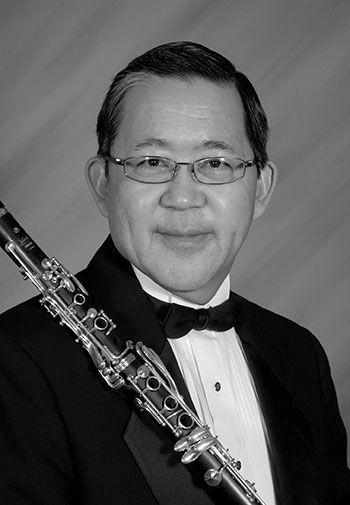
Miles M. Ishigaki serves as Professor of Music in the Department of Music within California State University, Fresno's College of Arts and Humanities. He has taught applied clarinet, chamber music, music theory, and music appreciation at Fresno State since 1987 while directing the university clarinet choir. From 1989-2017, he held the position of state chair for the National Association of College Wind and Percussion Instructors, demonstrating sustained institutional commitment. His academic credentials include: Doctor of Musical Arts in Performance, University of Oklahoma (1988) Doctoral study in Music Performance, University of Arizona (1981-1982) Master of Music in Performance, Colorado State University (1981) Dual Bachelor's degrees: Music Education and Music Performance, University of Northern Colorado (1978) Dr. Ishigaki's research centers on the dialectic between intuition and analytical understanding in musical performance, particularly regarding clarinet repertoire. His seminal work documents interpretive approaches of legendary clarinetists including Larry Combs, Stanley Hasty, and Leon Russianoff, focusing on Stravinsky's Three Pieces for Solo Clarinet. His collaborative research with Dr. Michael Rogers bridges music theory and performance practice, revealing how structural analysis informs expressive execution. This scholarly trajectory consistently examines the cognitive and technical dimensions of artistic mastery. His publications from 1988-2017 reveal evolving emphases from symposium documentation and performance analysis toward technology integration in music education, culminating in the 2017 Music Fundamentals ebook. Collectively, his work establishes clarinet pedagogy as both scientific discipline and artistic practice, with growing attention to digital learning environments while maintaining core focus on interpretive authenticity. His recognitions include: 2013 Provost's Teaching Award in Technology for innovative digital pedagogy 2006 Honorary Alumnus distinction from University of Northern Colorado Dr. Ishigaki has mentored exceptional students who have earned Fulbright Scholarships, McNair Doctoral grants, and participation in national honor ensembles. His studio consistently produces competition winners while he maintains active performance engagements with regional orchestras and international venues. Beyond academia, he serves as COO of I&M, Inc., applying sustainable technology principles to water and energy systems, demonstrating interdisciplinary impact beyond music. As founder of both the West Coast Clarinet Congress and Fresno State Faculty Clarinet Quartet, he cultivates professional communities while maintaining Yamaha Artist status. His community outreach through organizations like the Japanese American Citizen's League and Valley Children's Hospital reflects deep civic engagement alongside scholarly pursuits.
David M Feldshuh is a Professor in Performing and Media Arts at Cornell University with over 40 years of service, uniquely combining a board-certified emergency medicine physician career with theater artistry. As founding Artistic Director of the Schwartz Center for the Performing Arts, he leads a resident company of professional actors collaborating with students across Cornell. His education spans Dartmouth College (B.A. Philosophy, Phi Beta Kappa, cum laude), London Academy of Music and Dramatic Arts, and dual Ph.D. (Theatre) and M.D. (Medicine) from the University of Minnesota, followed by Emergency Medicine residency at Hennepin County Medical Center and board certification. Feldshuh’s research centers on theater as a vehicle for social change, particularly at the arts-healthcare intersection. He pioneers creativity training methodologies derived from Zen meditation, Gestalt Therapy, and martial arts to enhance professional presence. His work examines ethical dilemmas in medical practice through performance, with emphasis on cultural bias mitigation and historical trauma processing. His creative output reveals consistent focus on social justice narratives, evolving from historical adaptations like Antigone to contemporary explorations of systemic inequity. Recent works demonstrate increasing formal innovation through multi-role performance structures and transmedia storytelling approaches that bridge academic and public engagement. Major honors include: Pulitzer Prize Finalist and 5 Emmy Awards for Miss Evers' Boys Cornell’s Stephen H. Weiss Presidential Fellowship (highest teaching honor) Distinguished Service Award from Tuskegee University’s National Bioethics Center AMA “Freddy” Award for medical film excellence CINE Golden Eagle for documentary work Feldshuh mentors through honors tutorials and developed the globally adopted eCornell course Acting in Public , teaching 1,600+ students across 15 countries. His Schwartz Center leadership established institutional grant frameworks supporting large-scale productions like Bernstein’s Mass with 138 performers. Current initiatives include leadership workshops for Cornell Tech and corporate clients, extending his presence-training methodology beyond academia. He maintains active creative practice through the Schwartz Center’s resident company, directing major productions while integrating medical ethics into performance pedagogy. His stadium announcing role at Cornell commencements for 20+ years exemplifies his commitment to institutional community engagement.
Jennifer Edmond is Associate Professor of Digital Humanities and co-director of the Trinity Center for Digital Humanities at Trinity College Dublin, where she also directs the MPhil in Digital Humanities and Culture. She holds a PhD in Germanic Languages and Literatures from Yale University and specializes in applying advanced methods and infrastructures for arts and humanities research. Her research focuses on Digital Humanities, Research Infrastructures, Open Science, Cultural Heritage, and Knowledge Technologies. She has developed significant expertise in European research policy, having coordinated the €6.5m CENDARI FP7 project and participated in numerous EU initiatives including PARTHENOS, Europeana Cloud, and the Computational Literary Studies Infrastructure (CLS Infra). Dr. Edmond maintains an active publication record exploring digital scholarly editing, privacy in literary texts, open science practices, and cultural heritage narratives. Her recent work demonstrates a strong focus on the intersection of technology and democracy, digital ethics, and innovative methodologies for humanities research. Awards and Honors: Named one of Ireland's five 'Champions of EU Research' (2012) She served as President of DARIAH-EU's Board of Directors (2018-2022) and represented the organization on the European Commission's Open Science Policy Platform. Dr. Edmond has contributed to strategic developments at national and institutional levels, while actively promoting public outreach through various media formats and art installations.
Panpan Yang is a Lecturer in Arts and Visual Cultures of Modern China at the School of Arts, SOAS University of London. She joined SOAS in 2021 after completing her joint PhD at the University of Chicago under the direction of Wu Hung, Tom Gunning, W. J. T. Mitchell, Judith Zeitlin, and Dana Polan. Her interdisciplinary work bridges art history, screen studies, East Asian studies, and digital humanities, with a focus on innovative methodologies in art historical writing. Dr. Yang earned a dual BA from Peking University, double majoring in art and philosophy, followed by an MA from Tisch School of the Arts at NYU, and a PhD from the University of Chicago. During her undergraduate studies, she served as president of the Society of Dream of the Red Chamber Studies, which informed her secondary academic interest in Redology and the visual material world of the novel Hong lou meng. Panpan Yang's research explores how minor discourses can deterritorialize the terrains of both art history and screen studies. Her work demonstrates a multimethodological approach attentive to archival research, material practices, close visual analysis, computer-aided vision, and cross-cultural theorization. She is particularly interested in Chinese animation history, calligraphic imagination in contemporary art, and the intersections between traditional Chinese art forms and new media. Her publications reveal a consistent focus on Chinese visual culture across multiple media forms, with particular attention to animation, film, and calligraphy. Yang's work demonstrates how traditional Chinese art forms engage with contemporary digital media, creating new hybrid forms that challenge disciplinary boundaries. Her research shows a trajectory from historical analysis of Chinese animation to contemporary explorations of calligraphy in digital contexts, revealing the ongoing relevance of traditional Chinese aesthetics in modern media. Dr. Yang has received several prestigious awards for her scholarly and creative work: China's National Young Screenwriter Award Domitor Essay Award Dean's Distinguished Dissertation Award Nomination Honourable Mention from the Association for Chinese Animation Studies As a Principal Investigator, Dr. Yang leads the AHRC-funded research project "Stroke by Stroke: Calligraphic imagination in contemporary Chinese art and emergent media" (2023-25) with Shane McCausland. She was also a collaborating partner on the NEH-funded "Media Ecology Project." Her research has received additional support from the Getty Foundation and the Sino-British Fellowship Trust. At SOAS, she works closely with faculty and graduate students interested in Chinese arts and cultures, art theory, cinematic arts, and digital art history. Dr. Yang is currently developing innovative research at the intersection of traditional Chinese calligraphy and contemporary digital media through her AHRC-funded project. This work explores how calligraphic imagination manifests in contemporary art and emergent media contexts, creating new pathways for understanding Chinese cultural heritage in the digital age.
Cecilia Mascolo is a Professor of Mobile Systems at the University of Cambridge , specifically in the Department of Computer Science and Technology . She co-directs the Centre for Mobile, Wearable System and Augmented Intelligence and is a Fellow of Jesus College, Cambridge . Her research focuses on mobile systems , machine learning for mobile health , and earable technology . She has been awarded prestigious grants such as the ERC Advanced Research Grant (2019-2025) and the EPSRC Open Research Fellowship (2025-2030). Currently on sabbatical at Harvard University , her work bridges systems and machine learning for health applications. Education: PhD in Computer Science from the University of Bologna, Italy. Previous Affiliation: Faculty at University College London before 2008. Her research spans mobile and wearable systems for health and behavior monitoring, focusing on on-device machine learning , uncertainty-aware models , and audio-based diagnostics . Key areas include federated learning , edge computing , and respiratory disease progression analysis via wearables. She explores earable technology for physiological monitoring, gait analysis, and even toothbrushing tracking using in-ear sensors. Her recent publications highlight advancements in earable-based health monitoring , including heart rate estimation , respiratory rate detection , and ECG analysis using machine learning. She emphasizes longitudinal health data from consumer devices, advocating for scalable diagnostics beyond traditional clinical standards. Scientific Awards: ERC Advanced Research Grant EPSRC Open Research Fellowship Best Paper Award - IEEE Percom 10-Year Impact Award - ACM Ubicomp Computer Laboratory Ring Hall of Fame Best Paper Award Student: Andrea Ferlini - ACM SIGMOBILE Doctoral Dissertation Runner-up She leads the Mobile Systems Research Laboratory , mentoring a team of 15 researchers (postdocs and PhD students), and has graduated over 25 PhD students. Her teaching includes Mobile Health courses at the University of Cambridge, and she serves as Director of Studies for Computer Science at Jesus College.
Enrique Sánchez Lansch is a Professor of Media Dramaturgy at the Institute for Music and Media at Robert Schumann University of Düsseldorf, appointed in 2018. Born in Gijón, northern Spain, and raised in Cologne, he has established himself as a prominent documentary filmmaker with a strong focus on music-related subjects. His educational background includes studies in music with a focus on singing, Romance languages, philosophy, and German studies. He completed his master's thesis on adaptation of literature into music films. After gaining professional experience in fictional series production, he pursued further studies in film and screenwriting at Columbia University and UCLA. Sánchez Lansch's research and creative interests center on the intersection of music and visual media. His work explores how musical experiences can be effectively translated to film, examining the relationship between sound and image. He has particular expertise in documenting musical institutions, historical contexts of music, and the educational aspects of musical performance. His approach combines rigorous historical research with innovative visual storytelling techniques that respect the integrity of musical performance while creating compelling cinematic narratives. His filmography reveals a consistent focus on music documentaries that bridge cultural and historical contexts. Early works focused on major musical institutions and figures, while more recent projects have expanded to examine the relationship between music and broader social, political, and cultural phenomena. His films consistently demonstrate a sophisticated understanding of both musical content and cinematic storytelling. His notable awards include: German Film Award German Documentary Film Award Bavarian Film Award German Critics' Award German Kinogilde Award Franz Hofer Prize Best Documentary Film at Los Angeles Latino International Film Festival Best Documentary Film at SEMINCI Festival de Valladolid Diapason d'Or Emmy nomination for "A Celebration for Gershwin" Sánchez Lansch has served as a mentor to young filmmakers, notably curating and presenting music short films by young talents for the Beethovenfest Bonn from 2006 to 2013. His professional activities extend beyond filmmaking to include teaching at institutions such as the dffb (German Film and Television Academy Berlin) and his current professorship at Robert Schumann University. He is an active member of both the German Film Academy and the European Film Academy, contributing to the broader film community through these organizations. As Professor of Media Dramaturgy, Sánchez Lansch contributes to the academic framework of the Institute for Music and Media, bringing his extensive professional experience to bear on the education of future media creators. His work bridges the gap between academic study and professional practice in the field of music-related visual media.