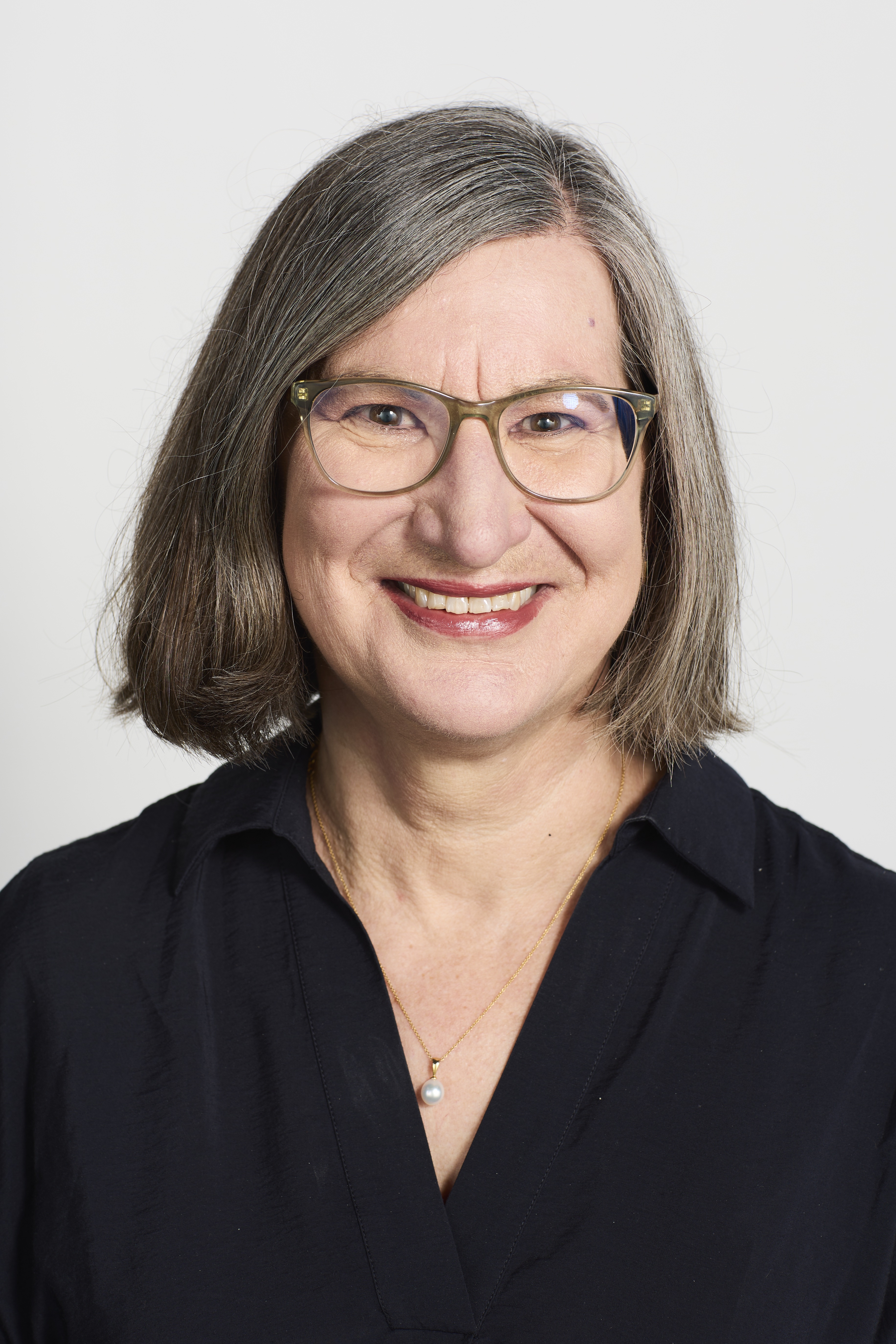
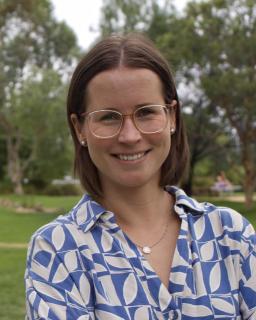
Andrew Connor is a Senior Lecturer in Archaeology and Ancient History at Monash University. He specializes in Ptolemaic and Roman Egypt, papyrology, and the social and religious history of ancient Egyptian communities. His research focuses on Egyptian temples during the Roman period, ancient economic practices, and the editing and publication of documentary papyri. Connor has particular expertise in the Fayum depression and Dakhleh Oasis regions. Connor's publications demonstrate a consistent focus on Egyptian religious institutions, economic systems, and textual evidence from archaeological sites. His recent work includes publications on temple administration, Greek papyri, and digital archaeology. He has received multiple teaching awards including the Faculty Citation for Outstanding Contribution to Student Learning (2017), Faculty Citation for Overseas Programs (2018), and Vice Chancellor's Citation for Outstanding Contribution to Student Learning (2018). Connor teaches courses on Greek and Roman history, archaeology, and ancient languages at both undergraduate and postgraduate levels. He serves as Honours Coordinator for the School of Philosophical, Historical, and International Studies.
Professor Kathy Bowrey is a leading academic in Intellectual Property Law at UNSW Sydney's Faculty of Law. Her work explores laws shaping knowledge creation, technology, and culture, with expertise in IP, Indigenous rights, and open research advocacy. She holds a Doctor of Juridical Studies from the University of Sydney and a BA LLB from Macquarie University. Her research focuses on historical and contemporary IP frameworks, including their impact on creators, Indigenous communities, and global innovation systems. Notable projects include the ARC-funded 'Producing, Managing and Owning Knowledge in the 21st Century University' (2019–2022), which shaped Australia's open research policies. Awards include the 2022 ANZLHS Book Prize for *Copyright, Creativity, Big Media & Cultural Value* and fellowships at the State Library of NSW and Museum of Applied Arts and Sciences. She co-authored *Adventures in Childhood* (2023), examining IP in toy and media industries, and *David Unaipon* (2023), exploring Indigenous innovation. Professor Bowrey co-leads the International Society for the History and Theory of Intellectual Property (ISHTIP) and advises on national research policies. Her grants include ARC Discovery Projects on Australian copyright history and IP commercialization.
Joël Brugger is a Professor of Synchrotron Geosciences at Monash University, where he is affiliated with the School of Earth, Atmosphere and Environment. He earned his PhD from the University of Basel in 1996 and has held academic and research positions at the University of Adelaide and South Australian Museum before joining Monash in 2014. His research leverages advanced synchrotron techniques to investigate geochemical processes in natural and anthropogenic systems. His research interests include: Synchrotron-based geochemistry Formation of rare earth element deposits Biogeochemical cycling of critical and toxic elements (e.g., tellurium) Environmental behavior of radioactive particles (e.g., plutonium at Maralinga) Mineral-microbe-fluid interactions Sustainable mineral extraction technologies His recent publications highlight the use of high-energy X-rays to study ore formation, nanoparticle dynamics, and environmental contamination. These works demonstrate a strong trend toward interdisciplinary, experiment-driven geochemistry with implications for renewable energy and environmental safety. His research is frequently published in high-impact science communication platforms and peer-reviewed journals. Scientific awards and recognitions include: No specific awards listed in the source material. He actively engages in research supervision, consulting, and media outreach. His work is supported by the Australian Research Council and industry partners in the mining sector. He leads a multidisciplinary team and collaborates internationally, particularly in synchrotron science facilities in Europe. He has contributed to studies involving nanoscale imaging, environmental risk assessment, and clean technology development. He is involved in research teams and labs such as: Minerals, Microbes and Solutions research group (formerly at University of Adelaide) Monash Centre for Electron Microscopy Collaborations with Diamond Light Source (UK) and European Synchrotron Radiation Facility (France)
Robert Wellington serves as Associate Professor and Director of the Centre for Art History & Art Theory at the School of Art & Design, Australian National University (ANU), within the College of Arts & Social Sciences. His academic leadership focuses on advancing art historical research and public engagement through institutional initiatives. His research spans Art History, Early Modern European Art (particularly Louis XIV's France), Museum Studies, Public Humanities, and Cultural Heritage. Wellington investigates transcultural object exchange, royal iconography, and identity construction through material culture, with emphasis on Versailles, medals, and marginalia. His work bridges historical scholarship with contemporary public humanities applications in museums and digital archives. Analysis of his 2020-2024 publications reveals concentrated exploration of Louis XIV's cultural legacy, Versailles' global impact, and the evolving role of humanities institutions. He pioneers digital critical editions while examining how objects shape identity across cultural boundaries, consistently connecting historical practices to modern museum and archival challenges. No scientific awards were documented in the provided materials. As Centre Director, Wellington oversees research programs and institutional partnerships, though specific student advisees and grant details remain unlisted in available sources. His leadership facilitates interdisciplinary projects including the Jean-Benjamin de Laborde digital edition initiative. The Centre for Art History & Art Theory functions as a research hub under Wellington's direction, driving public humanities innovation through the ANU's Art & Design Seminar Series, Visiting Artist Program, and collaborative projects with national collections. Current initiatives focus on digital heritage and community-engaged scholarship within the School of Art & Design framework.
Dr Nga Wun (Doris) Li is a Senior Lecturer at the University of Technology Sydney (UTS) within the Faculty of Design, Architecture and Building, Department of Fashion and Textiles. She leads research in seamless knitting technology, smart textiles, and sustainable fashion innovation. PhD in Fashion & Textile Design (HK PolyU, 2021) BA (Hons) in Fashion & Textiles (HK PolyU, 2012) Certifications in Wholegarment Machine (Shima Seiki, Japan) and Higher Education Pedagogy (UTS) Her research focuses on functional garments, knitting technology, and bio-informed textile design. Key projects include smart socks for DVT prevention , one-size sports bras , and buoyant swimwear for children . She combines knitting with machine learning and 3D printing for material innovation. Recent publications highlight her work on compression textiles (2025), wearable glucose sensors (2025), and knitted metasurfaces for acoustic comfort (2024). She has secured AU$52,000+ in grants across 5 funded projects. Fashion Design Award (Jeanswest, China) Outstanding Presentation & Research Paper Awards (2024) Dr Li supervises PhD and MPhil students in smart textiles and sustainable design while coordinating machine knitting courses. She collaborates with AiDLab (Hong Kong) and Powerhouse Museum (Australia).
Dr. Matthew Brookhouse is a Senior Lecturer at the Fenner School of Environment & Society, part of the Australian National University's Institute for Climate, Energy & Disaster Solutions. With a PhD in Dendroclimatology from ANU, he specializes in using forest structural complexity and tree-ring analysis to understand climate interactions and ecological responses in Australian subalpine environments. Research Focus: Sub-alpine ecology, Dendrochronology, CO2 responsiveness in eucalypt species Teaching: First-year research methods with emphasis on statistical application, advanced modeling and field botany Projects: Leading collaborative snow-gum dieback research and dendrochronological monitoring initiatives His publications span 2006-2025 with recent emphasis on machine learning applications for forest monitoring, tropical tree-ring chronologies for climate change, and climate sensitivity in Australian alpine ecosystems. Key collaborations include institutions like Australian Nuclear Science and Technology Organisation and University of Canberra researchers. Current projects focus on snow-gum woodland dieback mechanisms, high-resolution dendrometric monitoring, and integrating dendrochronology with environmental policy frameworks. He maintains active supervision of research students and contributes to both undergraduate and postgraduate curriculum development.
Alana Clifton-Cunningham is a dedicated educator and researcher in fashion and textile design at the University of New South Wales, Faculty of Arts, Design & Architecture. With over two decades of experience in higher education, she has established herself as a leader in sustainable and innovative design education. Her work bridges traditional craftsmanship with cutting-edge technologies, creating experiential learning environments that prepare students for contemporary design practice while addressing global sustainability challenges. Educational Background: 2021 | UNSW - Learn to Lead: Progress Needs Resilient Leaders 2019 | UTS - Graduate Certificate in Higher Education Transdisciplinary Learning 2008 | UNSW (COFA) - Master of Design (Hons) Research 2002 | UTS - Graduate Certificate in Higher Education Teaching and Learning 2001 | TAFE - Diploma of Marketing Management 1993 | UTS - Bachelor of Design (Hons) (Fashion and Textile Design) Clifton-Cunningham's research focuses on sustainable fashion practices, with particular emphasis on circular economy principles in textile production and garment design. Her work explores scalable models for textile remanufacturing, clothing waste reduction, and sustainable workwear systems. She is deeply engaged in addressing clothing sizing issues and standards in Australia, advocating for more inclusive approaches to fit and body diversity. Her commitment to equity, diversity, and inclusion underpins all aspects of her leadership and teaching, making her a strong advocate for responsible design futures that prioritize both environmental sustainability and social justice. Her publication record demonstrates a consistent focus on the intersection of design education, cultural exchange, and sustainable practices. Notable works include her 2022 book chapter on cross-cultural textile workshops in India, her 2018 analysis of undergarment technology evolution, and her contributions to exhibitions like 'Out of Hand' at the Powerhouse Museum. These works collectively highlight her emphasis on hands-on, experiential learning that connects students with real-world sustainability challenges and cultural contexts. Research Grants: 2024 | Redesigning Clothing Waste Using a Circular Design Framework - LP230200929 $220,473K 2024 | Department of Community and Justice - $17,900 2024 | Education Focussed Community of Practice (PVCESE) - $2,500 2023 | Department of Community and Justice - $15,900 2023 | Education Focussed Community of Practice (PVCESE) - $6,995 2017 | AbbVie Pharmaceutical Pty Ltd, HS Support Garments: Chief Investigator - $35,000 Clifton-Cunningham actively supervises research in fashion and textile design, with a focus on sustainable practices and innovative design processes. Her extensive industry network, including partnerships with major fashion labels, brings real-world insight into the classroom. She has led international global studios, including immersive programs in India where students collaborate with artisans. Her current ARC Linkage project 'Redesigning Clothing Waste Using a Circular Design Framework' represents a significant contribution to sustainable fashion research. Her creative practice is reflected in numerous exhibitions, including the Seoul International Fashion Art Biennale (2016, 2018), Wangaratta Contemporary Textile Awards, and the Powerhouse Museum's 'Out of Hand' exhibition. These artistic endeavors complement her academic work, demonstrating the practical application of her research interests in sustainable and innovative textile design.
Dr. Emily Gallagher is a Research Editor at the National Centre of Biography within the ANU College of Arts & Social Sciences. She holds a PhD in Australian History (2023) from ANU, preceded by a Bachelor of Education/Arts (2015) and a Bachelor of Arts (Hons I) (2016), both from the University of Notre Dame and ANU. Her research focuses on childhood history, folklore, and Australian social history, with a particular interest in child-authored archives and biographical methods. She has published in Journal of the History of Childhood and Youth and contributed to the Australian Dictionary of Biography . Key roles include founding editor of the ANU Historical Journal II (2017-19), social media officer for the Children’s History Society, and co-convenor of the Australasian Children’s History Reading Group. Her work bridges academic research and public engagement through reviews in Times Literary Supplement , Australian Book Review , and Inside Story . Awards include the 2024 Serle Award for her doctoral thesis on childhood imagination in early 20th-century Australia. She has reviewed exhibitions on war history and children’s agency, and her writing spans policy analysis (e.g., firearms legislation) and cultural commentary on folklore preservation.
Professor Jon Eugene von Kowallis is Professor of Chinese Studies in the School of Humanities and Languages at the University of New South Wales (UNSW), Sydney. He has held this position while also serving as President of the Australian Society for Asian Humanities and as a Fellow of both the Australian Academy of the Humanities and the Royal Asiatic Society (London). His academic career spans multiple institutions including Berkeley, UCLA, Oregon, Williams College, Karlova (Prague), and the University of Melbourne prior to UNSW. Professor von Kowallis earned his BA from Columbia University, MA in Chinese literature from the University of Hawaii, and PhD in Oriental Languages (specializing in Chinese literature) from the University of California, Berkeley. He also studied at National Taiwan University and Beijing University. His educational background reflects his deep engagement with Chinese language and literature across multiple academic traditions. His research focuses on Chinese literature, particularly modern Chinese literature, classical Chinese poetry, and Lu Xun studies. He has pioneered work on the role of classical Chinese poetry during China's modern era, challenging dominant paradigms in Chinese literary history. His book The Subtle Revolution: Poets of the 'Old Schools' in late Qing and early Republican China has been recognized as ground-breaking and has influenced an entire field of scholarship. He is also internationally acknowledged as an authority on Lu Xun, particularly for his monograph The Lyrical Lu Xun: a Study of his Classical-style Verse . His recent publications demonstrate consistent engagement with Lu Xun studies, classical Chinese poetry in modern contexts, Chinese cinema, and contemporary Chinese theatre. His work spans traditional literary scholarship, archival research on manuscripts, and analysis of contemporary cultural productions. The articles show a trajectory from early foundational work on historical literary figures to current research on contemporary adaptations and performances of Chinese literary works. Goldstar Award for research (UNSW, 2008) Ministry of Education of the People's Republic of China Prize (2014) Publication grant from Ministry of Culture of PRC (2016) Zhifang Distinguished Professor, Fudan University (2018) Fellow of the Australian Academy of the Humanities (2020) US-China Scholars Program Fellowship (2021-2022) Professor von Kowallis actively supervises graduate students working on Lu Xun's Gushi Xinbian, Shen Congwen's short stories, and classical-style verse in modern contexts. His ARC Discovery Project "The Young Lu Xun and His Early Work Written in Japan" has deepened understanding of Chinese intellectual relations with the West and Japan. He has established significant research partnerships with Chinese institutions including Beijing Lu Xun Museum, Peking University, and Fudan University, where he conducted research at Theatre Above in Shanghai, the Wuzhen Theatre Festival, and Huichang Theatre Village in Jiangxi Province (2024-5).
Professor David Nichols is a faculty member in the Melbourne School of Design at The University of Melbourne, holding the position of Professor in Urban Planning. His research focuses on urban planning history, theory, and socio-cultural planning with particular attention to 20th century Australian contexts. He has authored/co-authored significant works including Urban Australia and Post-Punk: Exploring Dogs in Space and The Alert Grey Twinkling Eyes of C. J. DeGaris . His research interests span urban and cultural heritage, architectural history, and the socio-cultural dimensions of urban development. Notable projects include the 'PastPort' mobile app for citizen heritage engagement and studies on community activism in public space conservation. Nichols teaches courses on urban planning history and has contributed to debates on postwar planning education and regional development strategies. His academic output reflects interdisciplinary engagement with topics ranging from suburban morphology to audiovisual technology in education. Current work includes exploring the legacy of Walter Burley Griffin’s urban designs and reinterpreting Australian country town dynamics. He maintains active collaborations in cultural heritage preservation and community-driven urban initiatives.
Jon McCormack is a Professor jointly appointed in Monash University's Faculty of Art, Design & Architecture (MADA) and Faculty of Information Technology. He founded and directs SensiLab, a research facility focusing on computational creativity, human-machine interfaces, and generative systems. His work spans electronic media art, evolutionary music, and artificial life. McCormack holds a PhD in Computer Science from Monash University, along with degrees in Computer Science, Applied Mathematics, and Film/Television. Research interests include computational creativity, tangible interfaces, and cybernetic systems. Notable projects include 'Explainable Artificial Creativity' (ARC-funded) and 'Building 4.0 CRC,' addressing architectural innovation through AI. He has been recognized with awards for collaborative projects like the Blundstone Intelligent Footwear for Healthcare. McCormack's recent articles explore AI-driven art, generative systems, and interdisciplinary design. His work bridges artistic practice with technical innovation, emphasizing ethical and creative dimensions of human-AI collaboration. SensiLab serves as a hub for practice-based research in digital media and interactive systems. Education: PhD in Computer Science, Monash University (2004) Bachelor of Science (Honours), Computer Science/Applied Mathematics, Monash University (1987) Graduate Diploma in Film/TV, Swinburne University (1986) Bachelor of Science, Computer Science/Applied Mathematics, Monash University (1985) Key Projects: Lead investigator on 'Explainable Artificial Creativity' (2022–2026) Co-investigator in 'Building 4.0 CRC' (2020–2027), exploring AI-driven architectural design Awards: 2022 Designers Australia Award for Blundstone Footwear 2020 'On the Machine Condition' Prize McCormack's lab, SensiLab, fosters collaborations across disciplines, producing exhibitions, software, and theoretical frameworks for computational creativity. He actively supervises PhD students in practice-based research, emphasizing the intersection of art and technology.
Peyvand Firouzeh is a Senior Lecturer in Islamic Art History at the University of Sydney, specializing in medieval and early modern Islamic art and architecture. She holds a BA and MA from the University of Art in Tehran and a MPhil/PhD from the University of Cambridge (Camb.). Her research focuses on Sufi material cultures, Indian Ocean artistic exchanges, and the intersection of art with politics and religion in the Islamic world. She is a member of the Vere Gordon Childe Centre and affiliated with the Art Gallery of New South Wales and the Sydney Asian Art Series. Dr. Firouzeh’s current projects include a monograph on Ne’matullahi shrines (Indiana UP, 2025) and a DECRA-funded study on fifteenth-century Deccan art networks. Her teaching emphasizes object-based learning, addressing contemporary issues like cultural heritage restitution and Islamophobia. She has received major grants from the Australian Research Council, Getty Foundation, and British Museum. Key Awards: DECRA (2023–2026), Getty Scholar Grant (2022–2023), Sydney Teaching Excellence Award (2022) Research Groups: Association for the Study of Persianate Societies, Power Institute’s Sydney Asian Art Series
Associate Professor Lizzie Muller serves as Director of Research in the School of Art & Design at the University of New South Wales. An accomplished curator and researcher, she specializes in audience experience and interdisciplinary collaboration, with a particular focus on the future of museums as sites of knowledge production. Her research bridges curatorial practice with theories and methods from participatory design and interaction design, developing audience-centered curatorial methodologies and innovative approaches to audience research. Her work extends to preservation and archiving, particularly experiential documentation and oral histories of media art. Co-author of Curating Lively Objects: Exhibitions Beyond Disciplines (Routledge Museum Studies Series, 2022) Elected Councillor of the Sydney Culture Network Co-founder of the bi-monthly Sydney Culture Data Salon with Keir Winesmith Muller's research output demonstrates a consistent trajectory exploring the intersection of art, science, and technology through major international exhibitions including Human Non Human (Powerhouse Museum, 2018/19) and A Working Model of the World (staged across UNSW Galleries, Parsons School of Design, and University of Dundee). Her recent work focuses on art-science collaborations, deep time history through the ARC Centre for Excellence in Australian Biodiversity and Heritage, and the development of audience-centered curatorial frameworks. Scientific Awards: 2024 ADA Deans Award for Excellence in Higher Degree Supervision Muller leads significant research initiatives as Chief Investigator on multiple ARC-funded projects including the ARC Linkage project Curating Third Space: The Value of ArtScience Collaboration and SSHRC-funded research on The Living Effect and Curating Lively Objects . She has supervised numerous PhD and MFA candidates, with a special focus on curatorial practice-based research, and currently serves as Program Director of the Master of Curating and Cultural Leadership at UNSW Art & Design.
Helen Verran is a Professorial Research Fellow at Charles Darwin University's Northern Institute within the Faculty of Arts and Society. An accomplished ethnographer with a distinguished career spanning seven universities across four continents, she has dedicated her academic life to exploring cross-cultural knowledge work, particularly with Indigenous communities. Before joining Charles Darwin University, she spent twenty-five years teaching and researching in History and Philosophy of Science at the University of Melbourne, where she collaborated extensively with Yolngu Aboriginal knowledge authorities. University of Melbourne (25 years in History and Philosophy of Science) Nigeria (8 years in the 1980s working with Yoruba teachers) Charles Darwin University (current position at the Northern Institute) Verran's research centers on ethnographic approaches to knowledge production in an era dominated by numerics, algorithms, and big data. She investigates how first-person experience and Indigenous knowledge systems can inform policy and governance, preventing crucial aspects of human experience from being lost in purely quantitative approaches. Her work spans Indigenous knowledge traditions, philosophy of science, comparative philosophy, and decolonizing practices, with particular focus on Yolngu Aboriginal Australian knowledge systems and Yoruba knowledge from Nigeria. She has developed innovative 'Ground Up' research methods that enhance Indigenous sovereignties and has made significant contributions to Science and Technology Studies (STS), especially regarding numbers and enumeration in cross-cultural contexts. Her recent publications reveal a sustained engagement with decolonizing methodologies, museum epistemology, Indigenous knowledge systems, and the philosophical implications of cross-cultural knowledge exchange. Verran's work consistently examines the tensions between different knowledge systems while developing practical approaches for working across these differences respectfully. She has made notable contributions to understanding Indigenous mathematics and the role of numbers in different cultural contexts, as evidenced by her award-winning book 'Science and an African Logic' (2001). Vice Chancellor's Award for Research Impact (2023) International prizes for 'Science and an African Logic' (2001) Referenced in Wikipedia pages Verran actively supervises postgraduate research and shares her expertise through 'Espresso Yourself!' sessions for Higher Degree by Research students. Her current projects include 'Design and evaluation as strategies/practices for exploring organisational sustainability' and 'Hope and a Decolonising Pedagogy,' reflecting her commitment to developing practical applications of her theoretical work. She has established collaborative research frameworks with Indigenous communities in Arnhem Land, particularly focused on digital technologies, environmental management, and education in remote settlements. As an active participant in academic networks, Verran organizes conferences and workshops on STS and Indigenous methodologies, including the 'Making and Doing Top End Science and Technology Studies together' event in 2024. Her work contributes significantly to Sustainable Development Goals related to quality education, reduced inequalities, and peace, justice and strong institutions.
Rachel Nordlinger is a Professor of Linguistics and Director of the Research Unit for Indigenous Language at the University of Melbourne's School of Languages and Linguistics. Her research focuses on documenting and describing Australian Indigenous languages, with a particular emphasis on syntactic and morphological theory. She has conducted extensive fieldwork with communities speaking Bilinarra, Wambaya, Gudanji, Murrinhpatha, and Marri Ngarr, contributing to language preservation efforts. She holds a PhD from Stanford University and has authored influential works including A Grammar of Wambaya and co-edited volumes like The Languages and Linguistics of Australia . Nordlinger is a Fellow of the Australian Academy of Humanities (2017) and leads major grants like the ARC Centre of Excellence for Dynamics of Language (2014-2026). Her work integrates linguistic theory with community-driven language revitalization projects, emphasizing the interconnectedness of language and cultural knowledge. Key research grants include projects on polysynthetic language processing (2021-2025), Indigenous language documentation, and cross-linguistic syntactic analysis. Nordlinger collaborates with institutions such as PARADISEC and the Kanamkek-Yile Ngala Museum to preserve endangered language materials. Her interdisciplinary approach bridges formal linguistic analysis with applied community linguistics.