Cecil DybowskiView profile
Professor
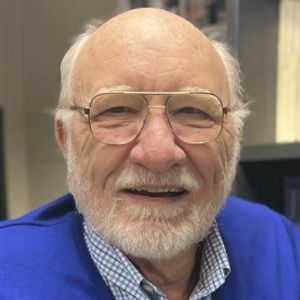
Cecil Dybowski is the Francis Alison Professor in the Department of Chemistry and Biochemistry at the University of Delaware, where he serves as Associate Chair for Undergraduate Studies. His research program bridges physical chemistry, materials science, and cultural heritage conservation, with a focus on nuclear magnetic resonance (NMR) spectroscopy of solid materials. Dr. Dybowski received his B.S. in Chemistry (honors) from the University of Texas at Austin in 1969 and his Ph.D. in Chemistry (Chemical Physics) from the same institution in 1973. Following a Research Fellowship in Chemical Engineering at Caltech (1973-1976), he joined the University of Delaware faculty, progressing from Assistant Professor (1976-1982), to Associate Professor (1982-1986), to Professor (1986-present), and finally to Francis Alison Professor (2015-present). His research centers on NMR spectroscopy of solid and semi-solid materials, particularly focusing on heavy-atom spin-1/2 nuclei such as $^{207}$Pb, $^{199}$Hg, and $^{119}$Sn. His group has developed sophisticated computational methods using density functional theory to predict NMR chemical shieldings, incorporating relativistic effects through the Zeroth Order Regular Approximation (ZORA). A significant portion of his recent work involves collaboration with the Metropolitan Museum of Art to study lead soap formation in historical paintings, applying NMR techniques to understand degradation mechanisms in cultural artifacts. An analysis of his recent publications reveals a strong focus on cultural heritage science, particularly the application of NMR to study paint degradation and conservation. His work spans fundamental NMR theory, computational chemistry, and practical applications in pharmaceutical analysis and art conservation, demonstrating remarkable interdisciplinary reach while maintaining technical depth in magnetic resonance. Among his numerous honors are the Francis Alison Award (2015), Eastern Analytical Symposium Award for Achievements in Magnetic Resonance (2010), and Gold Medal from the New York Section of the Society for Applied Spectroscopy (2010). He is also a Fellow of the American Association for the Advancement of Science, American Institute of Chemists, and Society for Applied Spectroscopy. Dr. Dybowski has maintained active research funding throughout his career, with recent projects focusing on water transport in paint films, lead soap formation mechanisms, and computational prediction of NMR parameters for inorganic nuclides. His laboratory has trained numerous graduate students and postdocs who have gone on to careers in academia, industry, and cultural heritage institutions. The Dybowski Research Group operates state-of-the-art NMR facilities at the University of Delaware, with capabilities for solid-state NMR of challenging nuclei, including specialized techniques for heavy metals. The group maintains active collaborations with the Metropolitan Museum of Art, Brookhaven National Laboratory (for synchrotron X-ray studies), and several pharmaceutical companies for materials characterization projects.