Alex Liu is a Researcher at the Department of Earth Sciences within the University of Cambridge. He specializes in palaeobiology , focusing on the origin and early evolution of animals, particularly the Ediacaran biota (~579–539 million years ago), and their co-evolution with Earth's environment. Research Focus: Refines understanding of animal body plan evolution, taphonomy, sedimentology, and macroevolutionary trends. Methodologies: Combines fieldwork, experimental studies, petrology, phylogenetics, and big-data analyses. Collaborations: Works with international museums and research teams on fossil sites in Namibia, Canada, and Brazil. Additional Interests: Explores meiofaunal evolution, paleogeography, paleoclimate, and conservation paleobiology. He supervises Cambridge NERC Doctoral Landscape Awards (DLA) projects and welcomes student contributions to taxonomic, paleoecological, and analytical studies.
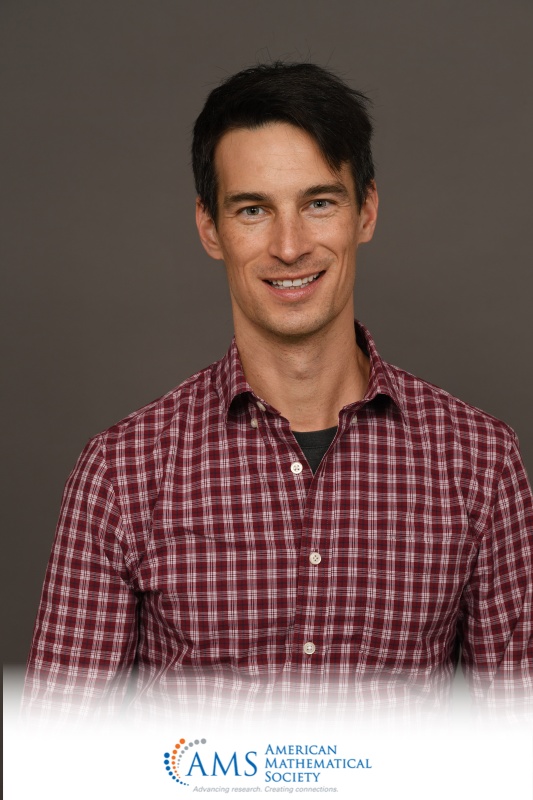
Nathan Kaplan is a Professor in the Department of Mathematics at the University of California, Irvine, where he conducts research in number theory, algebraic geometry, and combinatorics. His work spans rational points on varieties over finite fields, arithmetic statistics, coding theory, and the study of numerical semigroups. He is actively involved in the mathematical community, organizing seminars and conferences including the UC Irvine Number Theory Seminar and the Southern California Number Theory Day. Dr. Kaplan received his PhD from Harvard University in 2013 under the direction of Noam Elkies. Following his doctorate, he was a postdoctoral researcher at Yale University from 2013-2015 before joining the faculty at UC Irvine. His research interests focus on the intersection of number theory and algebraic geometry, with particular attention to problems involving rational points on varieties over finite fields, arithmetic statistics, and coding theory. He has made significant contributions to the study of numerical semigroups, cokernels of random p-adic and integer matrices, and quadratic forms and lattices. His work often bridges theoretical mathematics with applications in coding theory and cryptography. Analysis of his recent publications shows a strong trend toward combinatorial aspects of number theory, particularly in the study of numerical semigroups and their properties. He frequently collaborates with researchers across institutions, with recent work spanning algebraic geometry, combinatorics, and coding theory. His publications demonstrate expertise in both theoretical developments and computational aspects of number theory. Dr. Kaplan is deeply committed to undergraduate research and mentoring. He has experience as a mentor for undergraduate research projects through programs including SUMRY (a research program for Yale undergraduates), the University of Minnesota-Duluth REU program, and the Trinity University REU program. He actively encourages undergraduates to apply for summer research opportunities and has organized numerous outreach activities. He is an organizer of the UC Irvine Number Theory Seminar and the Southern California Number Theory Day conference series. In 2018, he co-organized the Conference on Open Questions in Cryptography and Number Theory in honor of Alice Silverberg's 60th Birthday. Dr. Kaplan has given numerous talks at mathematical venues including the Museum of Mathematics' Math Encounters series, where he presented "Error-Correcting Codes: The Mathematics of Communication" in July 2022. He has also spoken at the Yale Undergraduate Math Society, the UCI Math Circle, and various other outreach events.
Przemysław Kordos is a Professor at the University of Warsaw , affiliated with the Faculty of Liberal Arts , where he serves as Coordinator for the Development of the Modern Greek Philology Program . He holds two PhDs in Humanities (2007, 2019) and was awarded the Loukis Papaphilippou Seat of Advancement in Modern Greek scholarship. Education: MA in Ethnology and Cultural Anthropology (University of Warsaw, 2001) MS in Sociology (University of Warsaw, 2002) PhD in Humanities (University of Warsaw, 2007) Second PhD in Humanities (University of Warsaw, 2019) His research interests span: Contemporary Modern Greek and Cypriot literature Polish-Greek cultural relations (philhellenism) Social and ethnographic issues in Greece and Cyprus Travel literature analysis Fantasy literature's cultural implications His scientific work reveals a focus on linguistic assimilation in foreign language learning (via fMRI studies), historical parallels between Polish and Greek independence movements, and critical analyses of Cypriot folk culture's politicization. Key scientific awards include: Loukis Papaphilippou Seat (University of Warsaw) Internships at EKPA and IKY (Greece) Scholarships at IMXA (Greece) and MUNI (Czech Republic) His academic contributions include cataloging 60+ Polish travel accounts to Greece, analyzing the shift from travel literature to tourism discourse, and examining the Hellene-Romios dichotomy's role in modern Greek identity construction.
Dr Christian Luczanits serves as the David L. Snellgrove Senior Lecturer in Tibetan and Buddhist Art at SOAS University of London, where he also acts as Department Recruitment, Admissions and Marketing Convenor. He previously held research positions at the University of Vienna, Austrian Academy of Sciences, and Lumbini International Research Institute, followed by visiting professorships at UC Berkeley , Free University Berlin, and Stanford University. Before academia, he was Senior Curator at the Rubin Museum of Art, New York. PhD in Tibetan and Buddhist Studies (University of Vienna) under the late Maurizio Taddei Specializes in early Buddhist art (1st-5th centuries) and early Tibetan Buddhist art (7th-15th centuries) Key research topics: Maitreya iconography , development of Mahāyāna and esoteric traditions, Tibetan artistic adaptation of Indian forms, and AHRC-funded monastery collections documentation in Mustang and Ladakh His recent publications analyze transcultural dynamics in Himalayan Buddhist heritage, including monastic collections, mandala symbolism, and artistic revival movements. He co-curated the Gandhara – The Buddhist Heritage of Pakistan exhibition at Bonn's Kunst- und Ausstellungshalle der Bundesrepublik Deutschland. PhD supervisees include: Udomluck Hoontrakul (Political Economy of Marginal Polities) Qianhui Lin (Bodhisattva Conceptualization in Gandhāra) Agneta Niklasson (Esoteric Buddhism in Swat-Gilgit-Kashmir sculpture) Dr Lesley S Pullen (Angkorian Divine Adornment) Kulamitra David Zukas (Rock-Cut Buddhist Monasteries)
Peter Aronsson is the Rector of Linnaeus University since 2017, reappointed until 2026. He holds a professorship in History and has served as Pro Vice-Chancellor, Deputy Vice-Chancellor, and Dean of the Faculty of Arts and Humanities. His research focuses on local/regional history, democratic political culture, history education, and cultural heritage utilization. He coordinates international projects exploring national museums' roles in shaping historical narratives and has authored/co-authored over 100 publications, including books such as National Museums: Studies from around the World . He chairs the Swedish Council for Higher Education's board and sits on the transparency council for Kalmar and Kronoberg County Administrative Boards. His work emphasizes the societal relevance of cultural heritage and history education, advocating for museums as agents of democratic dialogue. Key contributions include founding the Center for Applied Heritage at Linnaeus University, which explores heritage's transformative societal potential. Education: PhD in History from Lund University (1992) Research Groups: Center for Applied Heritage, EuNaMus project Key Projects: EUNAMUS, HistCon, Nordic Spaces Leadership Roles: Vice-Chancellor (2017–present), Pro-Rector (2016–2017), Dean (2013–2015) His articles analyze historical consciousness, museum politics, and heritage management. Recent work addresses post-war Baltic cultural heritage, Nordic identity construction, and the political dimensions of historical narratives. He actively blogs on Open Science and academic governance, emphasizing universities' role in societal challenges.
Peter Knight is a Professor of American Studies at the University of Manchester , affiliated with the School of Arts, Languages and Cultures (English, American Studies & Creative Writing). He focuses on conspiracy theories and cultural approaches to finance , with over two decades of research grants and leadership in major interdisciplinary projects. UN Sustainable Development Goals (SDG151: United States) Co-editor of Routledge Handbook of Conspiracy Theories His research reconfigures conspiracy theory analysis through cultural lenses, challenging psychological dismissals. Key projects include Everything Is Connected (AHRC, 2016-20) and REDACT (EU CHANSE, 2022-25). Publications span Routledge, Edinburgh UP, and Cambridge UP. Recent work with Clare Birchall and Michael Butter explores coronavirus pandemic conspiracies , while his Reading the Market (2016) examines Gilded Age financial narratives. He co-curated the Show Me the Money exhibition (2014-16), visualizing financial history. Scientific Awards BAAS Book Prize (2017) Peter supervises projects on topics like 19th-20th century American literature , digital conspiracy theories , and financial epistemology . His media commentary (The Conversation, BBC) addresses public understanding of economic and conspiratorial discourse.
Scott E. Miller is Senior Biodiversity Advisor, Senior Research Entomologist, and Curator of Lepidoptera at the Smithsonian's National Museum of Natural History. He has held numerous leadership positions including Deputy Under Secretary for Collections and Interdisciplinary Support, Deputy Under Secretary for Science, Associate Director for Science at the Smithsonian's National Zoological Park, and Interim Director of Smithsonian Libraries and Archives. Prior to the Smithsonian, he held leadership roles at the International Centre of Insect Physiology and Ecology in Nairobi, Kenya, and the Bishop Museum in Honolulu, Hawaii. Miller earned his BS from the University of California at Santa Barbara and his PhD from Harvard University. His academic journey has been marked by significant contributions to entomology and biodiversity research. Dr. Miller's research focuses on the integration of systematics, ecology, biogeography and conservation of insects and plants. His current work uses museum-based taxonomy and systematics to mobilize biodiversity information to empower ecology, conservation, and agriculture. Major research themes include moth systematics, biogeography and phylogenomics (particularly Dalceridae, Geometridae, and other families), insect food web and ecology projects in Papua New Guinea, Kenya and elsewhere, and building DNA reference libraries from museum vouchers for ecological applications. He has been instrumental in developing DNA-based identification tools through initiatives like the Consortium for the Barcode of Life. His recent publications demonstrate a strong focus on biodiversity informatics, DNA barcoding, and the application of museum collections to contemporary ecological questions. Miller's work spans tropical ecology, systematics, and the development of new methodologies for biodiversity assessment, with significant fieldwork conducted in Papua New Guinea, Kenya, and other biodiversity hotspots. Dr. Miller has contributed significantly to scientific infrastructure development, including co-chairing the US Government's Interagency Working Group on Scientific Collections and helping establish the Consortium for the Barcode of Life. His leadership extends to international scientific collaboration and the development of research centers like Mpala Research Centre in Kenya. As Senior Biodiversity Advisor, he oversees major initiatives that connect museum collections with contemporary biodiversity challenges. His laboratory and team focus on leveraging the extensive moth collections at NMNH for phylogenomic studies and ecological applications, working closely with international collaborators on projects spanning multiple continents.
Professor David Nichols is a faculty member in the Melbourne School of Design at The University of Melbourne, holding the position of Professor in Urban Planning. His research focuses on urban planning history, theory, and socio-cultural planning with particular attention to 20th century Australian contexts. He has authored/co-authored significant works including Urban Australia and Post-Punk: Exploring Dogs in Space and The Alert Grey Twinkling Eyes of C. J. DeGaris . His research interests span urban and cultural heritage, architectural history, and the socio-cultural dimensions of urban development. Notable projects include the 'PastPort' mobile app for citizen heritage engagement and studies on community activism in public space conservation. Nichols teaches courses on urban planning history and has contributed to debates on postwar planning education and regional development strategies. His academic output reflects interdisciplinary engagement with topics ranging from suburban morphology to audiovisual technology in education. Current work includes exploring the legacy of Walter Burley Griffin’s urban designs and reinterpreting Australian country town dynamics. He maintains active collaborations in cultural heritage preservation and community-driven urban initiatives.
Raymond Andersen is a Professor in the Faculty of Science at the University of British Columbia, affiliated with the Department of Earth, Ocean & Atmospheric Sciences and the Department of Chemistry . His research focuses on the isolation and structural elucidation of bioactive natural products from marine and terrestrial organisms, with applications in drug discovery and chemical ecology. He has contributed to breakthroughs in anticancer agents, antiviral compounds, and inhibitors of Mycobacterium tuberculosis. Education: B.Sc. (University of Alberta, 1969), M.Sc. (Berkeley University, 1970), Ph.D. (University of California San Diego, 1975), followed by postdoctoral training at MIT (1975-76). Awards include the Killam Research Prize (1987), Rutherford Medal in Chemistry (1988), and Fellow of the Chemical Institute of Canada. Research interests span marine invertebrate-derived metabolites, phytoplankton toxins, and plant defensive compounds. His lab investigates antitumor agents, HIV latency reversal, and novel pharmacophores for cancer and infectious diseases. Recent work includes antiviral agents targeting SARS-CoV-2 and inhibitors of androgen receptor signaling in prostate cancer. Co-developed clionamine B, an autophagy-stimulating compound effective against latent tuberculosis. Identified sintokamides as androgen receptor antagonists for prostate cancer therapy. Advanced genome-mining techniques for discovering nonribosomal peptides. Overseen numerous graduate students, including notable theses on natural product synthesis, SAR studies, and bioactivity screening. Active in collaborative drug discovery projects, with patents on androgen receptor modulators, SHIP1 activators, and antiviral agents. Labs/Teams: Leads the Andersen Research Group at UBC, focusing on marine natural products and chemical genetics. Collaborates with the Pacific Museum of Earth and Bamfield Marine Sciences Centre for field studies.
Dr. Gan Sheuo Hui serves as Lecturer in Animation at LASALLE College of the Arts, Singapore, with extensive international engagement through visiting positions at National University of Singapore (NUS), Kyoto Seika University, and the Sainsbury Institute for the Study of Japanese Arts and Cultures. Her academic profile bridges Japanese animation scholarship with Southeast Asian cultural contexts through fieldwork-driven research. Her educational qualifications include: PhD in Human and Environmental Studies from Kyoto University, Japan Master of Communication (Screen Studies) from University of Science Malaysia Bachelor of Communication (Film Studies) from University of Science Malaysia Dr. Gan's research examines Japanese anime, manga, and popular culture through lenses of authorship, censorship, and cultural hybridity, with particular focus on transnational adaptations in Southeast Asia. She integrates theoretical frameworks with empirical fieldwork involving creators, curators, and fans across Asia and the West, emphasizing practical production aspects alongside critical analysis. Her interdisciplinary approach connects film studies, media theory, and cultural anthropology. Her scholarly trajectory reveals consistent exploration of animation aesthetics (especially limited/selective animation), historical evolution of Japanese animation, and hybrid cultural forms in Southeast Asia. Key thematic threads include re-evaluating animation techniques beyond Western paradigms, analyzing global anime circulation, and documenting local adaptations of manga in Malaysia. This body of work demonstrates strong methodological integration of archival research, industry analysis, and ethnographic observation. Scientific recognition includes: Two-year Japan Society for the Promotion of Science (JSPS) Grant for postdoctoral research on Japanese anime history Sainsbury Institute for the Study of Japanese Arts and Cultures Fellowship Dr. Gan has secured competitive research funding including the JSPS grant, and maintains active international collaboration through invited lectures at institutions like Sorbonne, Tokyo University, and Keio University across 20+ countries. Her teaching innovations include NUS modules incorporating Japan-based field studies, reflecting her commitment to experiential learning in Japanese visual culture. While specific student advising isn't detailed, her pedagogy emphasizes creator-fan industry ecosystems. Her research network spans the Archive Center for Anime Studies (Niigata University), Kyoto Seika University's Manga Department, and global symposia, facilitating cross-institutional knowledge exchange on animation history and contemporary media practices.
Sergiusz Michalski is a Professor at the Institute of Art History within the Faculty of Philosophy at the University of Tübingen, where he has held his position since 2001. Previously, he served as Managing Director of the Art History Institute at TU Braunschweig from 1996-2001 and completed his Habilitation at Goethe University Frankfurt in 1995. His distinguished academic career spans multiple European institutions including universities in Munich, Leipzig, Frankfurt, Kiel, Fribourg, Zurich, and Torun. Michalski's research focuses encompass Reformation and Art, Mannerism, 16th and 17th century Dutch and Flemish painting, Art theory, 18th century French painting, 20th century art, Public monuments, and Methodological questions in art history. His scholarly output includes approximately 270 publications with notable books such as 'The Reformation and the Visual Arts' (1992), 'Public Monuments' (1998), 'L'art de l'Europe Centrale' (2008), and 'Einführung in die Kunstgeschichte' (2015). His recent publications demonstrate continued engagement with contemporary issues in art history, particularly in public monument discourse, digital methodologies, and Central European art traditions. Michalski has edited several prominent art history journals including Ars Artibus et Historiae, Folia Historiae Artium, and Ikonotheka. Member of Royal Swedish Academy for Literature and Humanities Member of Polish Academy for Sciences and Arts Member of Göttingen Academy of Sciences Member of Academia Europaea / The Academy of Europe London Member of Latvian Academy of Sciences Member of Council of Experts of European Science Foundation Michalski maintains an active research profile with recent publications addressing digital methodologies in art history, contemporary monument discourse, and Central European art traditions. His international scholarly network is reflected in his editorial roles and academy memberships across Europe.
Sebastian Risi is a Professor at the IT University of Copenhagen , where he directs the Creative AI Lab and co-directs the Robotics, Evolution and Art Lab (REAL) . His work bridges computational evolution, deep learning, and collective intelligence for applications in robotics, art, and video game design. His research focuses on self-organizing AI systems that grow or assemble through local interactions, inspired by biological development. Key areas include neuroevolution , neural cellular automata , and generative modeling , with applications in adaptive robotics, game content creation, and damage-resilient AI. Recent publications highlight trends in self-assembling neural architectures (NDPs) and 3D functional machine generation (Minecraft experiments). Awards include ERC Consolidator Grant (2022), Best Paper at FDG’21 , and Google Faculty Award (2019). Scientific Awards : ERC Consolidator Grant (GROW-AI), Best Paper FDG’21, Runner-Up IEEE Games’20, GECCO 2017 Competition Winner, Sapere Aude Grant, Amazon/Google Faculty Awards He advises on projects like GROW-AI (EU-funded), AI-TESTER (game testing), and C2SIM (military systems). Media coverage includes Science , Wired , and Popular Science .
Bonnie Effros is Professor and Head of the Department of History at the University of British Columbia since 2022. With a PhD from UCLA and BA from Brandeis, her academic journey spans prestigious roles at University of Liverpool, University of Florida, Binghamton University, and Southern Illinois University. A Fellow of the Royal Historical Society and recipient of the French Colonial Historical Society’s Alf Andrew Heggoy Book Prize, she shapes historical discourse through her work on archaeology, gender, and colonial legacies. PhD, History, UCLA (1994) MA, History, UCLA (1990) BA, History, Brandeis University (1987) Her research bridges late antique/early medieval archaeology and 19th-century antiquarianism , focusing on France and its colonial possessions. Recent projects examine Père Camille de la Croix ’s contested Christian archaeology in France and Salomon Reinach ’s assimilation politics. She connects material culture to gender dynamics, Christian conversion debates, and colonial power structures through extensive fieldwork in Vatican archives and French/British collections. Key trends in her 15 most recent publications include: analyzing 19th-century museum-building in Algeria; investigating gender through Merovingian burial practices; and exploring colonial narratives via artifact circulation. Her work often intersects with museum studies , gender archaeology , and historiographical critique . French Colonial Historical Society’s Alf Andrew Heggoy Book Prize (2019) SSHRC Insight Development Grants (2023-2025, 2025-2027) Royal Historical Society Fellowship University of Florida’s International Educator of the Year (2014) As a graduate supervisor, Effros mentors students in late antique/early medieval European history with colonial contexts, emphasizing Latin proficiency and multilingual research. She co-edits the Brill Series on the Early Middle Ages and Studies in Late Antiquity , while serving on the Medieval Academy of America’s Council. Her pandemic-era work on Liverpool silversmith Joseph Mayer’s collections demonstrates continued engagement with cultural patronage and museum provenance issues.
Stefano Grivet-Talocia is a Full Professor at the Department of Electronics and Telecommunications at the Polytechnic University of Turin, where he also serves as Director of the Doctoral School and President of the Doctoral School Council. He is a member of the Interdepartmental Center SmartData@PoliTO - Big Data and Data Science Laboratory, the University Committee for Research, Technology Transfer and Services to the Territory, and the Commission for the Promotion of Library, Archive and Museum Heritage. His academic career spans over two decades at Politecnico di Torino, where he has established himself as a leading researcher in electromagnetic modeling and signal integrity. Grivet-Talocia earned his Laurea degree (summa cum laude) in Electronic Engineering in 1994 and his Ph.D. in Electronic and Communication Engineering in 1998, both from the Polytechnic University of Turin. Between 1994 and 1996, he conducted research at NASA/Goddard Space Flight Center in Greenbelt, Maryland. His educational background laid the foundation for his expertise in electromagnetic modeling, wavelet analysis, and signal processing. His research focuses on behavioral modeling, electromagnetic compatibility, macromodeling, model order reduction, numerical modeling, passivity, power integrity, signal integrity, transmission lines, and wavelets . Grivet-Talocia is particularly renowned for his work on passive macromodeling of interconnect structures, development of the TOPLine technique for transmission line simulation, and pioneering contributions to passivity enforcement algorithms. He has co-authored the first book entirely dedicated to Macromodeling (2016) and developed innovative approaches to waveform relaxation and wavelet-based signal processing. His recent publications (2024-2025) demonstrate continued leadership in model order reduction, with significant contributions to data-driven modeling of linear and nonlinear systems, power integrity analysis, and electromagnetic compatibility. His work spans both theoretical advances in numerical methods and practical applications in circuit design, with strong industry relevance particularly for semiconductor and electronic design automation companies. IEEE Fellow (2018-present) Three Intel SRS Grants (2022-2024) Three IBM SUR Grant Awards (2007-2009) Best Associate Editor Award - IEEE Transactions on Components, Packaging and Manufacturing Technology (2020) Multiple Best Conference Paper Awards (2006-2020) URSI Young Scientist Awards (1999) Ranked among the "top 2% worldwide researchers" (Stanford) since 2019 Grivet-Talocia actively supervises doctoral students including Michele Cusano, Sara Paknezhad Panahi, Antonio Carlucci, and Kun Zhao. He has secured numerous research grants from competitive national calls (PRIN) and commercial contracts with industry partners including Intel, IBM, Nokia, Hitachi, Infineon, and Cadence. His technology transfer activities include co-founding the spin-off IdemWorks (2007-2016), which was acquired by CST in 2016. He also developed the autoCircuits web service for automated circuit problem generation, widely used in electrical engineering education. He leads the EMC Group (Electromagnetic Compatibility) at DET and has been instrumental in establishing the Compact Dynamical Modeling research area. His work has practical applications in high-speed electronics design, with algorithms embedded in commercial tools like IBM PowerSPICE. Grivet-Talocia maintains strong industry connections through his research projects and serves as Associate Editor for IEEE Transactions on Components, Packaging and Manufacturing Technology.
John Finn serves as Associate Professor and Department Chair of the Department of Sociology, Social Work and Anthropology at Christopher Newport University's College of Arts and Sciences. He holds joint appointments with the Honors Program, Center for Crime Equity and Justice Research and Policy, and Center for Sustainability in Education. PhD in Geography, Arizona State University MA in Geography, University of Missouri BA in International Studies, University of Missouri Finn's research examines the socioeconomic, environmental, and health consequences of persistent racial segregation in the United States, with particular focus on Hampton Roads, Virginia and Latin American contexts including Cuba and Brazil. His work integrates urban geography, environmental justice, and human-environment interaction through field research methods. His 2024 solo exhibition 'Living Apart: Geography of Segregation in the 21st Century' at the Virginia Museum of Contemporary Art demonstrates his innovative approach to translating academic research into public engagement. Finn's recent publications reveal strong thematic focus on urban renewal impacts, environmental justice mapping, and Latin American geographies, with increasing emphasis on climate gentrification and spatial epidemiology. 2024 SCHEV Outstanding Faculty Award (Virginia's highest faculty honor) 2021 Alumni Society Award for Teaching and Mentoring 2020 Faculty Excellence Award in Scholarship Class of 2013 Faculty Development Award (2019) Finn has secured over $200,000 in research funding and delivered more than 100 invited lectures across North America, Latin America, and Europe. His work bridges academic research and practical applications through partnerships with medical schools, planning associations, and environmental organizations. He maintains active research teams focused on mapping segregation patterns and analyzing environmental health disparities in coastal Virginia.