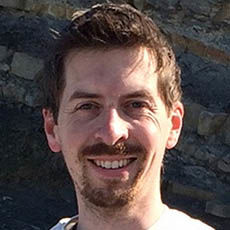
Simon Moxon is an Associate Professor in Bioinformatics at the University of East Anglia (UEA), part of the School of Biological Sciences. His research focuses on applying next-generation sequencing (NGS) technologies to study biological problems, particularly small RNA bioinformatics and mechanisms of gene regulation at transcriptional and post-transcriptional levels. He has developed tools like miRCat2 and the UEA sRNA Workbench for miRNA detection and analysis. Notable collaborations include projects funded by the British Heart Foundation, NIH, and the Natural Environment Research Council, exploring topics such as chromatin landscapes, microRNA biogenesis, and epigenetic reprogramming. His work spans plant genomics, developmental biology, and molecular mechanisms in diseases like cancer. Recent publications highlight advancements in understanding miRNA regulation in plants and animals, epigenetic marks during zygotic reprogramming, and antimicrobial resistance in Bacillus species. Moxon actively mentors PhD students and contributes to editorial roles in journals like Frontiers in Molecular Biosciences.
Prof. Dr. E. (Bert) Otten is a Professor of NeuroMechanics and Prosthetics at the University of Groningen's Faculty of Medical Sciences, affiliated with the Center for Human Movement Sciences. He holds dual roles as a biophysicist and photographer, with expertise spanning biomechanics, movement control, and fine art photography. His work includes developing prosthetic technologies and biomechanical models, alongside photographic projects and software tools like NBody and Virtual Camera. Education & Research: Otten earned his PhD at Leiden University with a thesis on fish jaw mechanics (cum laude, 1990s), later becoming a guest scientist at Harvard University. His research focuses on prosthetics, human movement biomechanics, and neuro-mechanical systems. He has authored 115+ papers and holds two patents for human body extensions. Research Interests: Combines biomechanical studies with neuroscientific principles to improve prosthetic designs and gait rehabilitation. Key areas include: Biomechanics of human movement Prosthetic limb control systems Neural mechanisms of movement Amputee gait analysis Publications Trends: Recent work emphasizes prosthetic applications for lower limb amputees, gait initiation dynamics, and biomechanical modeling of multi-body systems, reflecting his interdisciplinary approach at the intersection of engineering and medicine. Awards: Recognized for originality in his early work with the national "Kok Award" (1990s). Also a Dutch National University Cycling Champion (1991). Advising & Labs: Supervised 21+ PhD students in topics ranging from jaw joint mechanics to prosthetic foot design. Active in the Center for Human Movement Sciences and collaborates with the Frank Mohr Institute for Arts and Emerging Media.
Professor Simon M Hughes is a Professor of Developmental Cell Biology at the Randall Centre of Cell & Molecular Biophysics, King's College London. He leads the Muscle Growth and Repair Group, focusing on fundamental understanding of tissue assembly using striated muscle as a model system. His research has significant implications for population health, medicine, sport, agriculture and aquaculture. Professor Hughes completed his Doctor of Philosophy in Visual transduction in retinal rod cells, Master of Arts, and Master of Philosophy in Measurement of free divalent cations in cells and organelles, all from the University of Cambridge. He also holds an External Scientific Staff position at the MRC Medical Research Council since 1992. His research interests include developmental genetics of striated muscle and its attachments and innervation in vertebrates, studied using zebrafish and mice; control of muscle cell size and character in the adult; the role of force in muscle growth and maintenance; morphogenesis; prevention of ageing-related muscle atrophy; comparative evolution of neuromuscular system; muscle repair in disease and after injury; cardiac growth and repair; myocardial cell proliferation, differentiation and growth; trabeculation; regulation of protein synthesis by TOR signaling; and Dystrophin and associated proteins involved in muscular dystrophies. Gene families of specific interest include Hedgehog, Fgf, Wnt, Myod, Mef2, Pax3/7, p57kip2/cdkn1c, Tbx, eIF4EBP, Mtor, and Tead. Professor Hughes' recent work has focused on circadian regulation of muscle growth, stem cell heterogeneity in skeletal muscle, heart and skeletal muscle regeneration, and the interaction between genes and environment in human sarcopenia. His publications reveal a strong emphasis on zebrafish as a model organism for studying muscle development, with particular attention to molecular mechanisms controlling muscle growth, maintenance, and repair. Professor Hughes has received significant recognition for his work, including editorial positions at PL o S Biology since 2012, and has organized numerous conferences including the Company of Biologists Workshop on Fish models of muscle growth and repair, and the London Myology Forum. He was a member of the MRC College of Experts from 2006 to 2010. Professor Hughes has supervised numerous PhD students and postdoctoral researchers, including current PhD students Tapan Pipalia and Jing Zhang. His laboratory has been funded by multiple research grants from organizations including BBSRC, EPSRC, and the MRC, with projects spanning from 2016 to 2022. His laboratory investigates force sensing and growth of skeletal muscle, stem cell heterogeneity and maintenance of skeletal muscle, heart and skeletal muscle regeneration, chronobiology of muscle, and genes and environment in human sarcopenia. They use zebrafish as a primary model organism but also work with Xenopus, chicken, and mouse models.
Henry Astley is an Assistant Professor of Biology and Polymer Science at the University of Akron, with joint affiliation to the Biomimicry Research & Innovation Center (BRIC). His research integrates biology and physics to study locomotion biomechanics across diverse organisms including snakes, frogs, and early tetrapods. Dr. Astley employs motion capture, robotics, and computational modeling to investigate how morphology, neuromuscular control, and environmental interactions enable movement. His work has significant applications in biomimetic robotics, particularly for extraterrestrial exploration and underwater mobility. Recent publications demonstrate advances in understanding undulatory motion, muscle-tendon dynamics, and terrain adaptation strategies. His laboratory develops innovative instrumentation like underwater force plates and utilizes robotics to test biological hypotheses. Funded by NSF CAREER and other grants, his research program trains students in interdisciplinary approaches to organismal biomechanics.
Turid Rustad serves as a Professor in the Department of Biotechnology and Food Science at the Norwegian University of Science and Technology (NTNU), where her research centers on marine-oriented food chemistry with emphasis on protein and lipid dynamics in fish processing and quality preservation. Her work bridges fundamental biochemical investigations with practical applications for sustainable seafood utilization. Research Focus: Professor Rustad's primary expertise lies in fish protein chemistry, lipid oxidation stability, and marine by-product valorization. She systematically investigates how handling stress, freezing protocols, superchilling, and thawing impact fish quality parameters, employing advanced physiochemical and instrumental methods. Current projects explore seaweed processing effects on nutritional composition and the development of novel ingredients from fishery side streams, particularly through enzymatic hydrolysis and ultrasound-assisted technologies. Publication Trends: Analysis of her 2023-2025 publications reveals dominant themes in circular bioeconomy approaches for seafood by-products, with 65% of recent work dedicated to protein hydrolysate optimization, lipid oxidation control, and seaweed valorization. Key methodological innovations include ultrasonication, high-pressure pretreatment, and enzymatic modification techniques aimed at enhancing functionality of marine-derived ingredients while minimizing waste. Academic Contributions: Professor Rustad teaches core courses including TBT4125 Food Chemistry, BT3110 Aquatic Food Processing and Technology, and advanced food chemistry modules. Her doctoral supervision is evidenced by Line Skontorp Meidell's 2024 dissertation on whitefish residual valorization. While specific grant details aren't provided, her extensive collaborative publication record across European institutions indicates significant research funding engagement. Awards Recognition: No scientific awards were explicitly documented in the provided materials.
Christopher B. Dechet, MD, is a Professor in the Department of Surgery at the University of Utah, specializing in Urologic Oncology through the Huntsman Cancer Institute. As Director of the Section for Urologic Oncology and holder of the Anderson Family Endowed Chair, he focuses on surgical treatments for prostate, kidney, bladder, adrenal, and testicular cancers using robotic, laparoscopic, and open surgical approaches. Undergraduate: Stanford University (German Studies BA) Medical Degree: University of Pennsylvania School of Medicine Training: Mayo Clinic (Surgery/Urology Residency) His research emphasizes improving surgical outcomes via a quality-of-life database and robotic surgical innovations for high-risk prostate cancer. Clinical expertise spans complex partial nephrectomies, cystectomy with neobladder formation, and nerve-sparing prostatectomy. He has received multiple awards, including the Society of Laparoscopic Surgeons Achievement Award and Vitals Top 10 Doctor recognition. Scientific Awards Patient Choice Physician Award Most Compassionate Doctor Vitals Top 10 Doctor/Specialist Society of Laparoscopic Surgeons Achievement Award
Affiliation and Roles Prof. Dr. Alexander Blanke is Full Professor (W2 tenure track) of Evolutionary Morphology at the University of Bonn's Bonn Institute for Organismic Biology, where he serves as Head of Department II - Animal Biodiversity and Deputy Director. He leads the Evolutionary Morphology research group focusing on functional biomechanics of feeding systems in arthropods and fish. Research Focus Blanke's research integrates 3D modeling, micro-CT, and synchrotron imaging to analyze evolutionary adaptations in feeding mechanisms. His work examines: Functional morphology of insect and fish feeding apparatus Biomechanics of biting-chewing vs. piercing-sucking transitions Mechanosensory systems in arthropods Evolutionary trajectories through comparative morphometrics and mechanical simulations Publications Focus Recent publications (2021-2024) demonstrate strong emphasis on comparative biomechanics, with 73% focusing on insect functional morphology and 27% on aquatic feeding systems. Primary methodologies include 3D reconstruction (47% of studies), bite force analysis (33%), and evolutionary modeling (20%). Awards and Recognition Horst-Wiehe Prize (2015) - Best Zoology PhD in Germany Bernhard-Rensch Prize (2014) - Best Systematics PhD in Germany Grants and Advising Secured €3M+ funding including: ERC Starting Grant (2018-2023): Mechanical evolution of insect feeding ERC Proof-of-Concept (2024-2025): Microplastics filtration DFG grants (2021-2027): Neuromechanical systems Currently advises 5 PhD candidates, 8 Master's students, and 10 Bachelor's students in evolutionary biomechanics. Laboratory and Facilities Leads the Evolutionary Morphology Lab featuring micro-CT equipment with micromanipulators, force measurement systems (forceX/forceR), and synchrotron collaboration access. The team includes 2 postdocs, 3 technical assistants, and 23 students.
Christina DeWitt is a Professor at Oregon State University’s Department of Food Science and Technology and serves as Director of the OSU Seafood Lab, part of the Coastal Oregon Marine Experiment Station. Her research focuses on improving seafood quality and safety through technologies like high-pressure processing, marination, and co-product utilization. Education: B.S. (1989, Texas A&M), M.S. (1994, OSU), Ph.D. (2000, OSU). Key Research Themes: Seafood safety, waste valorization, pathogen inactivation, and sustainable processing. Her recent publications highlight advancements in high-pressure processing for viral inactivation, ohmic heating for fermentation, and seafood mislabeling analysis. Awards include Fellow of the Institute of Food Technologists (2021) and the Roy G. Arnold Leadership Award (2021). She co-edits the Journal of Aquatic Food Product Technology and leads outreach initiatives like Seafood HACCP Training.
Marion Preest is a Professor of Biology at Claremont Colleges and serves as Interim Dean. She holds a B.Sc. (Hons) from the University of Otago, New Zealand, and M.S. and Ph.D. from Cornell University. Her research focuses on comparative animal physiology, including stress responses in reptiles, ion regulation in fish, and metabolic adaptations in hummingbirds. B.Sc. (Hons), University of Otago, New Zealand M.S., Ph.D., Cornell University Her work explores animal energetics, osmoregulatory physiology of hummingbirds, ionoregulation and acid-tolerance in fish, and muscle physiology. She investigates corticosterone effects in viviparous geckos, feeding energetics in lizards, and thermoregulatory behaviors in amphibians. The 15 most recent articles span topics from quantitative reasoning in biology education to stress responses in reptiles, ion transport in fish, and amphibian classroom management. Her work bridges physiological adaptations in extreme environments and educational assessment tools. She teaches courses like Comparative Physiology (BIO 132), Vertebrate Physiology (BIO 131), and Herpetology (BIO 187), with a focus on integrative biology and physiological ecology.
Jasmina Krpo-Ćetković is a Professor at the University of Belgrade's Faculty of Biology, Department of Animal Ecology and Zoogeography, where she has served since 1989. She currently heads the Department of Animal Ecology and Geography and co-leads the doctoral studies program in Ecology. Her academic journey at the institution progressed from assistant trainee to full professor, achieving this highest rank in 2022. Her educational background includes: Graduation from Drinka Pavlović elementary school (1975) Graduation from Fifth Belgrade Gymnasium (1979) Bachelor's degree in Biological Sciences, Faculty of Marine Science, University of Belgrade (1985) Master's degree in Animal Ecology, Faculty of Biology, University of Belgrade (1993) Doctorate in Biology, Faculty of Biology, University of Belgrade (2004) Professor Krpo-Ćetković's research focuses on aquatic ecosystem health, with particular expertise in fish ecology and ecotoxicology. Her work examines idioecology and population dynamics of fish species, ecotoxicological research including bioaccumulation and biomagnification of toxic elements, and coenological research of aquatic communities. She has established herself as a leading expert in monitoring metal contamination in Danube River fish populations, developing non-lethal monitoring techniques, and studying invasive species impacts on native ecosystems. Her laboratory's research has significant implications for environmental management and human health risk assessment related to fish consumption. Analysis of her recent publications reveals a consistent focus on metal accumulation in freshwater ecosystems, particularly in the Danube River basin. Her work demonstrates sophisticated methodological approaches using ICP-OES and ICP-MS for elemental analysis across multiple fish species and tissues. A notable trend is her increasing emphasis on translating ecological findings into human health risk assessments and developing practical monitoring protocols, including non-lethal sampling techniques. Her research bridges fundamental ecology with applied environmental management, addressing critical issues of water pollution and food safety in the Balkan region. As an academic leader, Professor Krpo-Ćetković has supervised numerous students through the doctoral program in Ecology that she co-heads. While specific grant information isn't detailed in available sources, her extensive publication record spanning over 30 years indicates sustained research funding for her work on aquatic ecosystems, fish ecology, and environmental contamination. Her laboratory at the Faculty of Biology serves as a center for aquatic ecotoxicology research in Serbia. Her research group maintains strong connections with international colleagues, as evidenced by her publications in international journals and participation in cross-border research on Adriatic Sea and Danube River ecosystems. The laboratory employs advanced analytical techniques for elemental analysis and maintains field research operations along the Danube and its tributaries, contributing significantly to regional environmental monitoring efforts.
Hongbing Fan is an Assistant Professor at the University of Kentucky 's Department of Animal and Food Sciences within the Martin-Gatton College of Agriculture, Food and Environment. With a Ph.D. from the University of Alberta (2021) and MSc from China Agricultural University (2015), Dr. Fan specializes in bioactive food peptides for chronic disease mitigation. University of Kentucky (2023–Now) University of Alberta (Postdoctoral Fellow, 2021–2022) Research Focus: Development of food-derived peptides for cardiovascular health, structural analysis of bioactive proteins, and valorization of agricultural byproducts through functional food applications. His work bridges food chemistry with molecular nutrition to create therapeutic food components. Publication Trends: Recent articles emphasize antihypertensive peptides from animal proteins, prebiotic food hydrolysates , and advanced food packaging systems with antioxidant properties. The research spans in vitro mechanistic studies to in vivo efficacy trials. Nutrition Division Chair, IFT (2023–2024) Fellowship Recipient, American Oil Chemists’ Society (2020) Killam Trusts Scholar (2019) Alberta Innovates Scholar (2017) Dr. Fan teaches FSC 535: Food Analysis Honors and contributes to food safety research through cold chain simulation models. His laboratory investigates peptide-microbiota interactions and bioactive delivery systems for improved gastrointestinal stability.
Dr. Mark W. Sprague is an Associate Professor and Assistant Chair for Undergraduate Studies in the Department of Physics at East Carolina University (ECU). He holds a PhD in Physics from the University of Mississippi (1994), an MS in Physics (1991), and a BS in Physics from Rhodes College (1988). His research focuses on physical and biological acoustics, particularly underwater sound propagation and the acoustic behavior of marine organisms like fish, whales, and invertebrates. He also develops computational models for sound propagation in shallow water and contributes to physics education improvements. Dr. Sprague’s research projects include using autonomous platforms like the Wave Glider Blackbeard to map underwater soundscapes, deploying hydrophone arrays in oyster marshes, and modeling sound exposure impacts on aquatic life. His work integrates computational physics with field studies, such as developing acoustic particle velocity measurement instruments. He teaches courses in mechanics, advanced laboratory techniques, and introductory physics. His publications span topics like fish sound production mechanisms, anthropogenic noise effects on marine life, and acoustic modeling in shallow-water environments. He has advised undergraduate and graduate students on projects involving acoustic data analysis and field experiments. Dr. Sprague has served as Faculty Advisor for the ECU Society of Physics Students, Chair of the Faculty, and a delegate to the UNC Faculty Assembly. His research labs focus on interdisciplinary approaches combining acoustics, marine biology, and computational methods. Current projects emphasize understanding how human-made sounds affect underwater ecosystems and improving acoustic methodologies for studying aquatic species.
Stephan Lautenschlager is an Associate Professor in Palaeobiology at the University of Birmingham's School of Geography, Earth and Environmental Sciences. His research focuses on functional morphology and biomechanical analysis of extinct vertebrates, applying computational techniques to restore fossil morphology and reconstruct biological functions. He specializes in dinosaurs, birds, crocodiles, and mammals, with projects including the evolution of herbivory in archosaurs and brain morphology in vertebrates. Education: Diploma in Geology/Palaeontology (Ludwig-Maximilians-Universität, Munich) PhD in Palaeontology (University of Bristol) Research Interests: Stephan’s work integrates digital restoration, biomechanical modeling (FEA/MDA), and CT scanning to investigate form-function relationships in fossils. Key areas include fossil soft-tissue reconstruction, evolutionary biomechanics, and computational paleontology. His research highlights how computational methods bridge gaps in understanding extinct organisms’ behavior and ecology. Publications: Recent work includes studies on stem gnathostomes, saber-toothed predators, and dinosaur visual capabilities. These contributions underscore the application of advanced digital tools to address evolutionary and ecological questions in vertebrate paleontology. Advising & Grants: While specific grants are not detailed, his postdoctoral research at Bristol (2013–2016) and prior roles reflect engagement with funded projects. He advises students on computational and morphological research in palaeobiology. Labs/Teams: Active within the School’s Palaeobiology and Earth Sciences research groups, contributing to interdisciplinary projects on vertebrate evolution and fossil reconstruction.
Professor Roman Buckow is a Professor of Practice in Food Engineering at The University of Sydney's Centre for Advanced Food Enginomics and School of Chemical and Biomolecular Engineering. He holds a PhD in Food Process Engineering from Berlin University of Technology (Germany) and a Diploma in Brewing Engineering. His career includes leadership roles at CSIRO, where he pioneered food processing innovations for industries like meat, dairy, and legumes. He has led major collaborations with global partners and co-led CSIRO’s strategic program on precision health foods. Research focuses include high-pressure processing, sustainable food systems, and plant-based product development. He has authored over 100 publications and received awards such as the 2020 CSIRO Entrepreneurship Award, IFT Nonthermal Processing Division honors, and multiple 'Highly Cited Paper' recognitions. His work bridges academia and industry, emphasizing commercialization of novel technologies. Education: PhD (Food Process Engineering, TU Berlin), MSc (Engineering/Brewing) Leadership: Former Head of CSIRO Food Transformation Group (2014–2019); CSIRO Strategic Science Programs Affiliations: President of Australian Food Engineering Association (2014–2017), IFT Nonthermal Processing Division Chair (2012–2015) Publications span food safety, enzymology, and processing innovations. Key projects include HPP applications in meat tenderization, plant protein emulsions, and sodium-reduced meat alternatives. His work on high-pressure sterilization and enzymatic hydrolysis has advanced functional food development. Grants include CSIRO's Julius Career Award ($150k) and strategic funding for precision health foods. Current interests include nutrition engineering and consumer behavior change through food technology.
Dr. Graham Scott is a Professor in the Department of Biology at McMaster University, specializing in comparative and evolutionary physiology. His research focuses on understanding how vertebrates adapt to environmental challenges such as high-altitude hypoxia and climate change. He explores mechanisms that differentiate species capable of tolerating extreme conditions from those that cannot. Dr. Scott holds a PhD from the University of British Columbia and conducted postdoctoral research at the University of St Andrews. Education: PhD, University of British Columbia, 2009 MSc, University of British Columbia, 2004 BSc, McMaster University, 2002 Research Interests: Dr. Scott’s work investigates physiological adaptations in animals to environmental stressors, including high-altitude flight in birds, hypoxia tolerance in mammals, and the ecological impacts of climate change. His studies combine field observations with laboratory experiments to uncover evolutionary and mechanistic insights into respiratory, cardiovascular, and metabolic systems. Articles Trends: His recent publications emphasize high-altitude adaptations in species like bar-headed geese, deer mice, and diving ducks. Key themes include respiratory physiology, mitochondrial function, and genetic mechanisms underlying hypoxia resistance. He also explores the effects of environmental pollutants and temperature on fish physiology. Awards: While no personal awards are explicitly listed, he advises students such as Vanier Scholar Oliver Wearing, highlighting his mentorship impact. Advising & Grants: As a supervisor, Dr. Scott guides students in physiological ecology and evolutionary biology. His grants likely fund field studies and lab-based experiments on animal adaptation mechanisms. Labs/Teams: He leads the Scott Lab, which focuses on integrative physiology and environmental stress biology. Collaborations include work with Indigenous communities on water quality monitoring and citizen science projects.