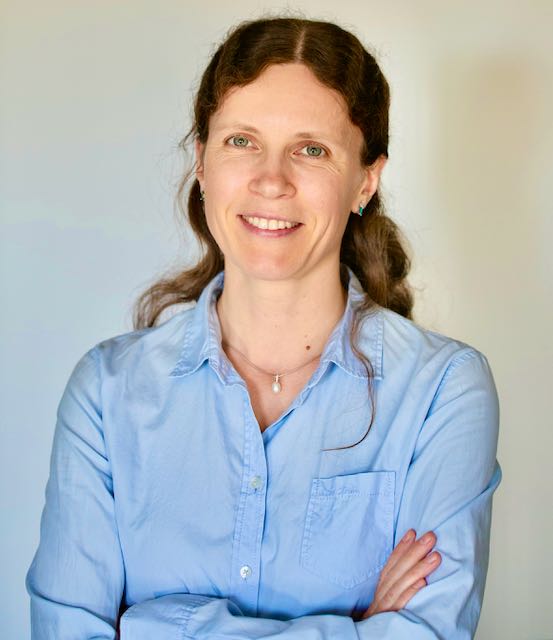
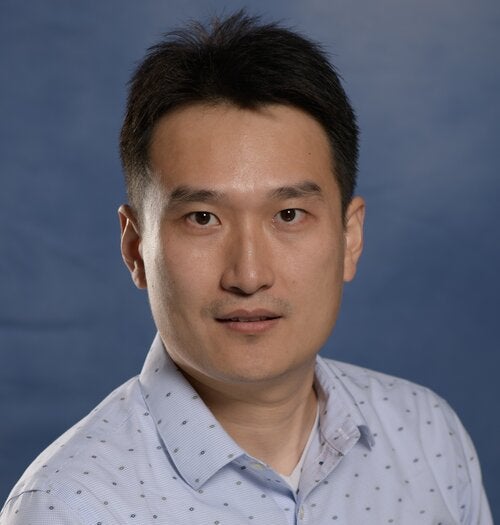
Natalia Nolde is a Professor in the Department of Statistics at the University of British Columbia, Faculty of Science. Her research focuses on multivariate extreme value theory , probabilistic modeling , and applications in quantitative risk management across finance, insurance, hydrology, and geosciences. Her work explores non-classical approaches to multivariate extremes, particularly through limit set geometry and asymptotic dependence structures , offering novel insights into tail dependence and risk assessment. Recent publications highlight her expertise in copula-based risk modeling , financial stress testing , and geohazard prediction . Current students include: Daniel Hadley Jonathan O.K. Agyeman
Senad Bećirović serves as a full Professor at the University of Education Lower Austria (Pädagogische Hochschule Niederösterreich), having progressed from assistant professor (2014) to associate professor (2017) before attaining his current rank in 2023. His academic career spans teaching research methodology, pedagogy, and advanced statistics across undergraduate, graduate, and doctoral programs at international institutions, delivered through both online and in-person formats. Bećirović's research focuses primarily on Artificial Intelligence and digital technologies in education , with significant contributions to intercultural education , gifted education , and foreign language pedagogy . His work demonstrates a consistent trajectory toward understanding how emerging technologies reshape educational practices and outcomes. Through four books published by Springer and Nova Science and over 60 articles in top-tier journals, he has established himself as a leading voice in digital educational transformation. His recent publications (2023-2025) reveal a pronounced emphasis on AI applications in education, with multiple studies examining AI literacy, policy frameworks, and implementation strategies across European higher education contexts. This research demonstrates both theoretical depth and practical relevance to current educational challenges. Bećirović actively contributes to the scholarly community as editor and reviewer for numerous Q1 journals including Smart Learning Environments (Springer), Education and Information Technologies (Springer), and TESOL Quarterly (Wiley). He participates in multiple European Commission-funded initiatives such as ENRICH (Enhancing Teaching and Research through Innovative Digital Technologies) and Erasmus+ projects focused on peace learning and English education. His professional activities extend to international collaboration through membership in the European Network Ethical Use of AI and the American Educational Research Association (AERA). He frequently delivers keynote addresses at international conferences, sharing expertise on AI in education, digital transformation, and intercultural competencies.
Associate Professor Bruno Schivinski is affiliated with RMIT University's School of Media & Communication. He specializes in online consumer behavior, quantitative research methods, and multivariate data analysis. His work bridges digital media impact, consumer psychology, and health behavior, with a focus on gaming disorder, social media engagement, and brand equity. Education and professional background include roles at Gdansk University of Technology and consulting for institutions like the Polish Ministry of Science. He serves as Associate Editor for the Journal of Management and Business Administration–Central Europe . Research interests span digital phenotyping, behavioral addictions, and sustainable consumption. Notable contributions include studies on gaming disorder measurement, food waste reduction, and influencer marketing effectiveness. His work is published in top-tier journals like Journal of Business Research and Journal of Clinical Medicine . Recognition includes the Vice-Chancellor’s Award for Research Impact (2020), Emerald Literati Outstanding Reviewer (2022), and multiple best paper awards. He supervises research projects on digital behavior, food waste, and social media's role in health. Professional memberships include the Royal Statistical Society, Higher Education Academy, and American Marketing Association. His interdisciplinary approach addresses real-world challenges in digital health, consumer behavior, and sustainability.
Pablo Durango-Cohen is an Associate Professor of Civil and Environmental Engineering at Northwestern University, located in Evanston, IL. He holds a Ph.D. in Industrial Engineering and Operations Research from UC Berkeley, following an M.S. from the same program and a B.S. in Industrial and Systems Engineering from the University of Southern California. His research focuses on developing and analyzing optimization and econometric models for transportation infrastructure systems, integrating environmental design, life-cycle assessment, and policy analysis to address decarbonization challenges in freight systems. He also explores dynamic segmentation models for nonprofit fundraising strategies. Education: Ph.D. Industrial Engineering and Operations Research, University of California, Berkeley (2006) M.S. Industrial Engineering and Operations Research, University of California, Berkeley B.S. Industrial and Systems Engineering, University of Southern California Research Interests: Prof. Durango-Cohen’s work bridges transportation engineering, environmental science, and operations research. He emphasizes infrastructure management through data-driven frameworks, including statistical process control for condition monitoring and predictive maintenance. His recent projects address decarbonization of freight rail systems, electric vehicle impacts on road infrastructure, and optimal auction designs for road concessions. He also applies mathematical models to analyze donor behavior and fundraising efficiency in universities, aiming to improve nonprofit resource allocation strategies. Awards: NSF Faculty Early CAREER Development Award (2006) Young Author Prize, 2007 World Congress on Transport Research Matthew G. Karlaftis Best Paper Awards (2020–2025) Advising & Grants: He advises current PhD candidates including Jing Yu, Adrian Hernandez, and Callahan Skiles, while mentoring former students across sustainability, infrastructure, and fundraising analytics. His research is supported by agencies like the National Science Foundation, Department of Energy (through ARPA-E), and Department of Transportation. He co-leads the LOCOMOTIVES project with ANL researchers, focusing on decarbonizing rail networks, and founded the Virtual Inter-university Symposium on Infrastructure Management (VISIM) to foster academic collaboration. Labs & Teams: As Principal Investigator (PI) on major initiatives like LOCOMOTIVES and VISIM, he collaborates with multidisciplinary teams at Northwestern and Argonne National Laboratory. His group develops tools such as the Locomotives interactive dashboard and a computational framework for input-output lifecycle assessments, accessible via repositories like CivEnv304 .
Dae-Jin Lee is an Assistant Professor at IE University’s School of Science and Technology, specializing in statistical modeling and data science. Previously, he served as a Research Line Leader at the Basque Centre for Applied Mathematics (BCAM) and coordinated the Knowledge Transfer Unit in Data Science/AI. His academic background includes a Ph.D. in Mathematical Engineering (2010) from Universidad Carlos III de Madrid and postdoctoral research at CSIRO (Australia). His research focuses on statistical methods for complex data, including penalized splines, tensor product smooths, and applications in biomedicine, epidemiology, environmental science, and sports analytics. He has led multidisciplinary projects funded by public and industry grants, collaborating globally with experts across fields like engineering, medicine, and biology. Key research themes include predictive modeling for health outcomes (e.g., SARS-CoV-2 pneumonia severity), sports injury prevention, and AI in healthcare. His work integrates machine learning with traditional statistical techniques, addressing real-world challenges like pedestrian dynamics simulations and automated medical diagnostics. He is actively involved in scientific organizations, including the Spanish Biostatistics Society and the Statistical Modelling Society. His recent publications highlight innovations in growth curve modeling, AI ethics, and spatiotemporal data analysis, reflecting his commitment to advancing both theoretical and applied statistics.
Hui Luan is an Assistant Professor in the Department of Public Health at the Peter O’Donnell Jr. School of Public Health, UT Southwestern Medical Center. He joined UT Southwestern in 2024 after serving as an Associate Professor (tenured) at the University of Oregon (2018–2024). His research focuses on spatial epidemiology, Bayesian spatiotemporal statistics, and GIS applications to address health disparities and environmental determinants of disease. Education: Ph.D. in Planning, University of Waterloo, 2017 M.S. in Cartography and GIS, Wuhan University, 2011 B.S. in GIS, Wuhan University, 2009 Research Interests: Dr. Luan investigates spatial and temporal variations in health outcomes, particularly HIV incidence, and the role of social, physical, and built environments. He develops Bayesian models and spatial analytics to inform geographically tailored interventions. Current projects include optimizing PrEP accessibility, analyzing food environment equity, and leveraging spatial data science for public health policy. Key Achievements: Lead investigator of an NIH-funded R01 project on reducing HIV incidence via spatial data science Editorial board member of Spatial and Spatiotemporal Epidemiology Recipient of the Vu Fellowship (2021–22) Teaching: Teaches courses on GIS in Public Health, Spatial Analysis, and Big Data applications in geography. Recent courses include GIS and Public Health and Spatial and Spatiotemporal Analysis at the University of Oregon. Labs/Teams: Leads the Spatial Data Science Lab focused on advancing Bayesian methods for health data analysis and promoting GIS applications in public health practice.
Ke Wu is a Professor in the Department of Computer Science and Engineering at the University of Michigan. Their research focuses on the intersection of machine learning, biostatistics, and healthcare technology, with an emphasis on mobile health interventions, causal inference, and Bayesian methods. They lead a small, hands-on research group mentoring PhD students and postdocs. Key interests include developing predictive models for health outcomes, improving treatment effect estimation, and leveraging mobile technology for caregiver support. Their work has addressed critical challenges in clinical decision-making, public health surveillance, and healthcare innovation. Research projects span synthetic data generation for electronic health records, mHealth app development for care partners of traumatic brain injury patients, and algorithmic fairness in reinforcement learning. Ke Wu emphasizes interdisciplinary collaboration and has contributed to global health studies, including analyses of pneumonia etiology in low-resource settings and the PERCH study. Their group's methodologies often integrate wearable sensor data and machine learning to address real-world health challenges. Advising priorities include fostering student independence while maintaining close mentorship, with expectations for consistent research productivity and professional development. Students are encouraged to pursue teaching roles (e.g., GSI positions) and internships aligned with career goals. Funding support for conference participation is available through institutional and external grants. Ke Wu's contributions extend to statistical methodology, including Bayesian latent class models and dynamic risk prediction frameworks. They actively engage in translational research, bridging computational methods with clinical and public health applications, and prioritize open-source software development to advance reproducible research practices.
Professor Ashish Sharma is a Professor of Hydrology and Water Resources in the School of Civil and Environmental Engineering at the University of New South Wales, Sydney, Australia. With a PhD in Civil Engineering from Utah State University and extensive experience in hydrological research, he has established himself as a leading expert in his field. Dr. Sharma's research focuses on hydrological uncertainty, with particular emphasis on the impact of climate change and variability on hydrological practice. His work spans multiple areas including remote sensing applications, stochastic hydrological modeling approaches, development of hydrological models, and addressing key hydrology challenges such as design flood estimation and water resources management. He has made significant contributions to understanding how climate change affects hydrological extremes and water availability. His publications reveal a strong trend toward advanced modeling techniques for climate change impact assessment, with recent work focusing on spectral transformation methods, multivariate bias correction in climate models, flood forecasting improvements, and the relationship between temperature and precipitation extremes. His research increasingly integrates remote sensing data with hydrological modeling to address challenges in data-scarce regions. Professor Sharma has held significant leadership positions including President of the International Commission of Hydrologic Sciences (IAHS) Commission on Statistical Hydrology (STAHY) since 2016, service on the Australian Research Council's College of Experts twice, and participation on the Technical Committee for the Australian Rainfall and Runoff Design Flood Estimation guidelines (ARR2016). In addition to his research leadership, Professor Sharma actively mentors students and collaborates with researchers globally, as evidenced by his extensive publication record across top hydrology and climate journals. His work bridges theoretical hydrology with practical applications for water resources management under changing climate conditions.
Dr. Gaël Kermarrec is a researcher at the Boundary Layer Meteorology Group , part of the Institute of Meteorology and Climatology within the Faculty of Mathematics and Physics at Leibniz University Hannover . His work focuses on atmospheric turbulence, GNSS applications, and remote sensing for environmental monitoring. Boundary layer meteorology Turbulence theory GNSS signal processing Terrestrial laser scanning Climate change impacts Geodetic time series analysis His research integrates advanced mathematical models like LR B-splines and Matérn covariance with large eddy simulations to study: Atmospheric turbulence effects on optical/GNSS signals Hydrospheric mass loading Deformation analysis of terrain/port infrastructure Climatic sea-level changes Machine learning for remote sensing The 15 most recent articles (2025-2023) demonstrate his focus on: GNSS-based turbulence detection AI-enhanced climate mapping Advanced surface approximation techniques Multi-sensor data fusion Stochastic modeling of geodetic observations Environmental impacts on optical measurements He has developed tools like the Klimascanner QGIS plugin for urban climate resilience and contributes to: Understanding atmospheric scale lengths Improving TLS/GNSS deformation monitoring Analyzing hydrospheric changes Wavefront modeling Ionospheric corrections
Ruoqing Zhu is an Associate Professor in the Department of Statistics at the University of Illinois at Urbana-Champaign, with a primary appointment in the College of Liberal Arts & Sciences. He also serves as an inaugural member of the Carle Illinois College of Medicine, a Faculty Fellow at the National Center for Supercomputing Applications, and an affiliated researcher with the Carl R. Woese Institute for Genomic Biology and the Center for Genomic Diagnostics. His roles include PhD Program Director and Advisory Board member of Prenosis Inc. Dr. Zhu holds a Ph.D. in Biostatistics from the University of North Carolina at Chapel Hill (2013), an MA in Statistics from Bowling Green State University (2008), and dual B.S. degrees in Mathematics and Financial Engineering from Nanjing University (2006, 2005). His postdoctoral training was at Yale University’s Department of Biostatistics (2013–2015). His research focuses on developing statistical methods for decision-making in personalized medicine and reinforcement learning, addressing challenges such as model interpretability, high-dimensional data, and distributional shifts. Key areas include uncertainty quantification, causal inference, and applications in bioinformatics, nutrition, and infectious diseases. He co-teaches courses at Carle Illinois, including Data Science Project and Foundations: Molecules to Populations , and contributes to interdisciplinary initiatives like the Personalized Nutrition Initiative. His recent work emphasizes trustworthy AI in healthcare, including sepsis prediction tools, metabolomic analysis, and biomarker discovery. He is actively involved in translational research, bridging computational methods with clinical and public health applications.
Dr. Debraj Roy is a Visiting Professor at the University of Amsterdam (UvA), affiliated with the Faculty of Science, Mathematics and Computer Science and the Informatics Institute. His research focuses on agent-based modeling, socio-economic dynamics, environmental resilience, and blockchain technology. He investigates complex systems such as urban slums, disaster recovery, and climate adaptation using computational methods like remote sensing and machine learning. His work bridges theory and practice, offering insights into policy design for sustainable development and social equity. Key research interests include slum dynamics, poverty traps, and the application of blockchain oracles for decentralized systems. He employs advanced techniques such as global sensitivity analysis and manifold learning to explore multi-scale socio-environmental challenges. His recent articles highlight trends in carbon pricing, flood risk valuation, and multi-agent systems. Earlier work concentrated on urban inequality in cities like Bangalore and Mexico City, leveraging geospatial and statistical tools. No scientific awards or grants are explicitly listed. His advising and team collaborations are unspecified in the provided text.
Dr. Victoria C. P. Chen is a Professor in the Industrial, Manufacturing, and Systems Engineering (IMSE) department at The University of Texas at Arlington (UTA), where she has served since 2002. She previously held positions at the Georgia Institute of Technology from 1993-2001. Dr. Chen has held several leadership roles at UTA, including Interim Department Chair (2012-2014), Director of the Center on Stochastic Modeling, Optimization, & Statistics (COSMOS) (2008-2012, and again from 2017-present), and Director of Doctoral Studies (2019-present). She was also the George & Elizabeth Pickett Professor from 2015-2017 and was inducted into the UT Arlington Academy of Distinguished Teachers in 2019. Dr. Chen is actively involved with INFORMS (Institute for Operations Research and the Management Science), where she currently serves as Secretary on the Executive Board. Dr. Chen earned her B.S. in Mathematical Sciences from The Johns Hopkins University, and her M.S. and Ph.D. in Operations Research and Industrial Engineering from Cornell University. Her academic journey includes visiting professorships at the University of Genoa, Italy, and Iowa State University. Dr. Chen's research utilizes statistical perspectives to create new methodologies for operations research problems appearing in engineering and science. Her expertise includes the design of experiments, statistical modeling, and data mining, particularly for computer experiments and stochastic optimization. Through her statistics-based approach, she has developed computationally-tractable decision-making methods for many high-dimensional complex systems. Her work spans multiple domains including sustainability, energy, water management, healthcare, and law enforcement. Specific application areas include inventory forecasting, airline optimization, water reservoir networks, wastewater treatment, air quality monitoring, green building design, nurse assignment systems, and pain management programs. Her recent publications demonstrate continued innovation in mixed integer programming for electric vehicle charging stations, vacuum ultraviolet spectroscopy prediction, and sustainable building education. Senior Member, Institute for Operations Research and the Management Sciences (INFORMS) (2024) Data Mining Prize (Lifetime Achievement Award), INFORMS Society on Data Mining (2023) College of Engineering Teaching Award, UT Arlington (2021) Third Place Award, C3.ai COVID-19 Grand Challenge (2020) Academy of Distinguished Teachers, University of Texas at Arlington (2019) George & Elizabeth Pickett Professorship (2015-2017) As an educator and mentor, Dr. Chen has advised over 25 doctoral students across diverse research topics in operations research and systems engineering. She has secured substantial research funding from multiple sources including the National Science Foundation (over $1.5 million in active projects), Environmental Protection Agency, National Institute of Justice, and industry partners like Luminant and Dallas-Fort Worth International Airport. Her current research projects focus on decision analytics for sustainable urban environments, optimization for Texas water management, and statistical methods for pain management programs. She has served as Principal Investigator or Co-PI on more than 20 externally funded research projects totaling over $3 million in funding. Dr. Chen co-founded the Center on Stochastic Modeling, Optimization, & Statistics (COSMOS) at UTA with Dr. H. W. Corley. This research center brings together faculty and students from multiple disciplines to address complex problems through advanced statistical and optimization methods. She also leads interdisciplinary research teams working on projects related to sustainable infrastructure, energy systems, and healthcare optimization, frequently collaborating with researchers from civil engineering, environmental science, and medical fields.
Karen Bandeen-Roche is a Professor and the Hurley-Dorrier Professor and Chair of the Department of Biostatistics at the Johns Hopkins Bloomberg School of Public Health, with joint affiliations in the School of Medicine and the School of Nursing. She is a leading expert in biostatistical methodology, particularly in latent variable models, longitudinal analysis, and multivariate survival methods applied to aging and gerontology. Her research focuses on developing statistical models for unobservable processes such as frailty, resilience, and functional status in older adults. She has made significant contributions to the measurement of aging-related constructs and has extensive collaborative work in ophthalmology and neurology. Her methodological work includes mixture models, measurement error correction, and latent class modeling. The recent publications highlight a strong trend in gerontological biostatistics, with a focus on frailty, dementia risk, resilience, and multisystem physiological responses in aging. Her work integrates complex data from observational cohorts and clinical studies, often employing innovative latent variable frameworks to address measurement challenges in health outcomes. Scientific Awards and Honors: Marvin Zelen Leadership Award in Statistical Science (2016) Fellow of the American Statistical Association (2001) Brookdale National Fellow (1997) Golden Apple Award for Excellence in Teaching (2010) Garland Clay Award (1999) Chair, NIH BMRD Study Section (2006–2008) President, Eastern North American Region, International Biometric Society (2011–2013) Executive Board, International Biometric Society (2015–2022) Board of Directors, National Institute of Statistical Sciences (2020–2023) Karen Bandeen-Roche has been deeply involved in advising and training the next generation of researchers. She co-directs a training program in Biostatistics and Epidemiology of Aging and has received multiple teaching and mentoring awards. She has served on numerous academic committees, including appointments and promotions, faculty senate, and ethics committees at Johns Hopkins. Her grants and collaborative research span aging, dementia, ophthalmology, and cardiovascular health, often supported by NIH and other federal agencies. She leads the Center on Aging and Health and is actively involved in interdisciplinary research initiatives that bridge biostatistics, medicine, and public health. Her lab and research team focus on developing and applying advanced statistical methods to understand the biological and social determinants of healthy aging.
Oliver Linton is the Chair of the Faculty and Professor of Political Economy at the University of Cambridge's Faculty of Economics. He coordinates the Empirical Analysis of Financial Markets theme at the Janeway Institute and holds a position at Trinity College. His research primarily focuses on econometric theory and empirical finance , with applications in market microstructure, asset pricing, and volatility modeling. His research interests span: Development of novel econometric methods for high-dimensional and dynamic data Analysis of financial market behavior, including liquidity and trading patterns Applications in policy-relevant contexts such as quantitative easing and pandemic forecasting Linton's recent publications demonstrate a strong focus on: Advanced time-series methodologies (e.g., GARCH, nonparametric regression) Financial market microstructure and high-frequency trading Economic impact analysis of major events (e.g., Brexit, COVID-19) He has received prestigious awards including: Humboldt Research Award (2015) Thousand Talents Plan recognition from Renmin University of China (2016) Linton actively advises doctoral students, with current supervisees including Xinyi Su, Zhaocheng Zhang, and Kilian Bachmair. He secured significant funding such as the European Commission FP7 grant for Nonparametric and Semiparametric Methods in Economics and Finance (2011–2014).
Patrik Hilber is a Professor at KTH Royal Institute of Technology, working in the Division of Electromagnetic Engineering and Fusion Science within the School of Electrical Engineering and Computer Science (EECS). He serves as Deputy Director of First and Second Cycle Education at EECS and heads the QED AM research group. He is also a board member of YH-electrical engineering. Research Interests: His research focuses on reliability engineering, asset management, maintenance optimization, and smart grid technologies in electric power systems. Key areas include transmission and distribution systems, dynamic line and transformer rating, wind power integration, multiobjective optimization, condition monitoring, and data quality in power systems. He applies advanced modeling and data-driven approaches to improve power system planning, operation, and resilience. The recent trends in his publications (2020–2025) highlight a strong emphasis on dynamic rating technologies (DLR and DTR), data quality and machine learning applications in outage analysis, reliability-centered planning for wind farms and distribution systems, and the integration of renewable energy and electric vehicles. His work bridges theoretical modeling with practical utility applications. Teaching and Academic Leadership: He is examiner and course responsible for several degree projects in electrical engineering, power systems, and energy innovation. He also teaches courses on reliability evaluation, asset management, and innovation in electric power engineering. Publications and Books: He has authored a book titled Reliability Analysis and Asset Management Applied to Power Distribution (2014) and a book chapter on cable segment replacement optimization. His scholarly output includes numerous peer-reviewed articles in leading journals such as IEEE Transactions on Power Systems , Reliability Engineering & System Safety , and Applied Energy . Education: He holds a Ph.D. (2008), a Licentiate degree (2005), and an M.Sc. (2000), all from KTH. He became a Docent (Associate Professor) in 2014.