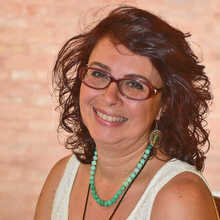
Lea Petrella is a Full Professor at the Department of Methods and Models for Economics, Territory, and Finance, Sapienza University of Rome. She teaches courses in Time Series Analysis and Advanced Statistical Methods , focusing on practical applications using R software. Research Interests: Quantile regression, Graphical models, Hidden Markov Models, Risk measures, and Time Series analysis Key Projects: Generalized Dynamic Graphical Models for pandemic impacts, Penalized quantile regression for risk assessment, Multivariate quantile regression frameworks Her recent publications include: 2025: Mid-quantile mixed graphical models for public shootings 2025: Spatial quantile random forests for economic mobility 2024: Expectile hidden Markov models for cryptocurrency returns 2024: Mixed-frequency quantile regressions for risk forecasting She supervises postdocs and PhD students including Maria Saiz, Beatrice Foroni, and Valentina Raponi. Her work spans financial risk modeling, environmental statistics, and biomedical applications. Email: Lea.Petrella@uniroma1.it or lea.petrella@uniroma1.it
Andrea Curioni is a Full Professor at the University of Padova , affiliated with the Department of Agronomy, Food and Animal Sciences (DAFNAE). His research focuses on enology, food chemistry, and sustainable processing of wine by-products, particularly wine lees and yeast-derived compounds. Academic Field: AGR/15 - Food Science Key research areas include: Antioxidant properties and bioactive peptides from yeast Mannoprotein extraction and wine stabilization Colloid formation and protein-phenolic interactions in red wines Valorization of winery waste through green chemistry Recent publications highlight his work on sustainable extraction methods, sensory interactions in wine, and molecular characterization of grape and wine compounds. His research employs advanced analytical techniques like asymmetrical flow field-flow fractionation and FTIR spectroscopy for wine composition analysis. While no specific awards are documented in this dataset, his extensive publication record demonstrates leadership in food and wine chemistry. He investigates multisensory interactions, allergenicity of grape products, and innovative applications of plant proteins in food systems.
Claudio SILVESTRI is an Associate Professor at Ca' Foscari University of Venice, affiliated with the Department of Environmental Sciences, Computer Science and Statistics. He specializes in Computer Science (INFO-01/A), with a focus on data mining, privacy in location-based services, and spatio-temporal data analysis. His research integrates computer science with environmental and biomedical applications. Teaching Responsibilities include courses on Advanced Data Management (Computer Science) and Geographic Information Systems (Environmental Sciences) at the Master's level across multiple academic years. Research Interests span: Algorithms for privacy protection in location-based services Spatio-Temporal Data Warehouses and trajectory analysis Parallel computing on GPU and cloud platforms Applications in fisheries monitoring and diabetic kidney disease modeling Funding Projects include EU initiatives like H2020 (e.g., DC-ren for kidney disease research) and regional grants (e.g., ADMIN4D on Industry 4.0). Key collaborations involve researchers like Salvatore ORLANDO and Debora SLANZI. He is affiliated with the European Center for Living Technology (ECLT) and the Research Institute for Social Innovation. Office hours are held Wednesdays 2-4 PM by email appointment.
Francesca PARPINEL serves as an Associate Professor in the Department of Economics at Ca' Foscari University of Venice, holding additional responsibilities as Department Delegate for Language Training. Her academic work spans statistical methodology development and practical applications in economics and finance. Her educational background includes a Degree in Statistics Applied to Economics (1990) and PhD in Statistics (1994), both from the University of Padua. She progressed from Assistant Professor (1996-2002) to her current Associate Professor position (2002-present), while coordinating the Bachelor's Degree Program in International Trade and Tourism from 2011-2018. Research interests focus on advanced statistical methodologies including estimation methods for regressions on complex spaces , evolutionary algorithms for regime-changing models , and statistical measures of systemic risk . Her work bridges theoretical statistics with practical financial applications, particularly in trading systems and risk assessment. Recent publications demonstrate strong interdisciplinary connections between statistics, finance, and computational methods, with increasing emphasis on machine learning applications in financial distress prediction and climate derivatives pricing. She actively supervises undergraduate and graduate theses requiring data analysis, emphasizing proficiency in R programming. Her teaching portfolio includes Statistics, Multivariate Statistics, and specialized laboratories across multiple degree programs including International Trade and Tourism, Economics and Commerce, and Global Development. PARPINEL has organized significant academic events including SIS 2015 (Statistics and Demography: the Legacy of Corrado Gini) and multiple MAF conferences, while maintaining membership in the Italian Statistical Society (SIS).
Mattia Stival is a Researcher at the Department of Economics , Ca' Foscari University of Venice , with a focus on social statistics (SSD: STAT-03/B). His work bridges Bayesian and computational statistics with applications in public health and sports science. Current statistician for the Planet4Health project Previously postdoctoral researcher for the Age-it project on multi-morbidity modeling PhD in Statistical Sciences (University of Padua, 2022) with thesis on Sports Performance Analysis with State Space Models Research Interests combine methodological innovation with real-world impact: Applied : Health inequalities, aging population dynamics, sport-for-health promotion, competitive sports analytics (talent identification, performance monitoring), diffusion models Methodological : Bayesian inference, computational statistics, spatio-temporal modeling, machine learning, Monte Carlo methods Publications demonstrate interdisciplinary trends across: Sports statistics (decathlon/heptathlon scoring, youth-to-elite transition) Bayesian spatio-temporal health modeling Missing data patterns in longitudinal athlete datasets Scientific Recognition : 2023 Honorable Mention for Best PhD Thesis in Applied Statistics by the Italian Statistical Society (SIS) Teaching includes statistics exercises for economics degrees and R coding in finance analytics. Office hours: Wednesday 10-12 by appointment.
Cristina Malegori is a Researcher in the Department of Pharmacy at the University of Genoa , specializing in chemometrics and analytical chemistry . She teaches courses such as Data Analysis and Chemometrics for Master's programs in Pharmaceutical Chemistry and Technology. Department: Pharmacy Research Focus: Chemometric methods, NIR spectroscopy, TD-NMR applications Teaching: Data analysis tools for pharmacy students Her research combines data science with spectroscopic techniques to solve analytical challenges in material characterization, environmental studies, and pharmaceutical quality control. Recent work includes chemometric modeling of soil rare-earth elements and cross-linking prediction in rubber materials. Office hours are held at the Chemistry and Pharmaceutical and Food Technologies Section (Viale Cembrano, 4) or online via MS-Teams, with appointments arranged via email.
Bartolomeo Montrucchio is a Full Professor of Information Processing Systems (ING-INF/05) at the Department of Control and Computer Engineering (DAUIN) of the Polytechnic University of Turin. He is a member of the Interdepartmental Center Photonext - PoliTo Interdepartmental Center on Applied Photonics and serves as deputy director at the Interuniversity Center of Regional Interest for the Training of Secondary School Teachers (CIFIS) since July 2012. Additionally, he has held an adjunct professor position at the University of Illinois at Chicago during July 2008. Professor Montrucchio's research spans several cutting-edge areas with a primary focus on quantum computing, computer vision, and sensor networks. His work encompasses image processing, scientific visualization, parallel and distributed systems, and wireless sensor networks. He actively contributes to European research initiatives including the EQUO (European QUantum ecOsystems) project as Scientific Responsible. His research bridges theoretical computer science with practical applications across multiple industries. His publication record shows a strong trajectory toward quantum technologies, with numerous recent publications focusing on quantum machine learning, quantum algorithms for financial applications, and quantum applications in cybersecurity. His work demonstrates increasing emphasis on practical implementations of quantum computing in real-world scenarios, particularly in industrial settings and telecommunications. Best student paper award at BIOSIGNAL2002, conferred by EURASIP, Italy (2002) Associate Editor of IEEE TRANSACTIONS ON VEHICULAR TECHNOLOGY (2019-present) Professor Montrucchio actively supervises numerous PhD students working on quantum computing applications across various domains including finance, cybersecurity, traffic optimization, and industrial use cases. His teaching portfolio includes courses on Quantum Computing, Parallel and Distributed Computing, and Image Processing and Computer Vision across multiple degree programs including Computer Engineering, Biomedical Engineering, and Quantum Engineering. He leads multiple research projects funded by both competitive calls and commercial contracts, with a significant focus on quantum technologies since 2019. His patent portfolio includes several inventions related to tire manufacturing processes and visual rehabilitation for telemedicine.
Mauro Gasparini is a Full Professor at the Department of Mathematical Sciences (DISMA) of Polytechnic University of Turin. He serves as Director of DISMA since 2019, Member of Academic Senate, and co-leader in the SmartData@PoliTO Big Data Laboratory. His career spans academia and industry, including roles at Purdue University (Assistant Professor 1992-1996) and Novartis (Senior Statistician 1996-1998). He has been Editor of Biometrical Journal (2012-2015) and maintains referee activities across international journals. PhD from University of Michigan (1992, Dirichlet process applications) Academic leadership: Department Director, Editorial boards, ISTAT Advisor Research spans Bayesian methodology with biomedical applications Maintains collaborations with Novartis, Chiesi, and research centers His research interests focus on Bayesian inference , Biostatistics , and Clinical trials methodology, particularly addressing issues in pharmaceutical development, genomic data analysis, and medical decision-making. Recent work includes vaccine efficacy modeling, optimal imaging timing for cancer diagnostics, and adaptive trial designs. Key publication trends show interdisciplinary applications in Statistics in Medicine , Biometrics , and Statistical Methods in Medical Research , with emphasis on biomedical data science, Bayesian adaptive methods, and clinical decision support systems. Scientific contributions include: Editor, Biometrical Journal (2012-2015) Advisor, Italian National Institute of Statistics (2020-2024) Leadership in multiple research projects (NODES, SORGENTE, IDEAS) As PhD advisor, he supervises students in: Shaoshi Tang (Clinical trial modeling) Saeed Sani (Biomedical data analysis) Marco Ratta (Genomic statistics) Luca Rondano (Bayesian methods) Vittorio Zampinetti (Tumor DNA sequencing) Fulvio Di Stefano (Evidence-based decision statistical methods) He leads research projects in pharmaceutical statistics, genomic surveillance, and spatial risk assessment frameworks, with recent emphasis on SARS-CoV-2 analysis and cancer progression modeling.
Chiara Brombin serves as Associate Professor of Statistics (SECS-S/01) at Vita-Salute San Raffaele University's Faculty of Psychology and contributes to the University Center for Statistics for Biomedical Sciences (CUSSB). Her academic career at the institution spans from Research Fellow (2010-2013) through fixed-term researcher positions (2013-2021) to her current role, demonstrating sustained institutional engagement and scholarly progression. Education: PhD in Statistical Sciences (2009), University of Padua Bachelor's Degree in Statistical and Economic Sciences (2005), University of Padua Research Focus: Dr. Brombin specializes in shape analysis, permutation testing, and advanced multivariate modeling with biomedical applications. Her work develops computational frameworks integrating facial expressions/biosignals (FIRB 2012 project) and applies joint latent class models to clinical subgroups. Recent publications emphasize statistical innovation in gene therapy efficacy, cancer treatment optimization, and pandemic response analytics through rigorous longitudinal/survival modeling. Publication Trends: Her 2024-2025 output in Nature, Science Translational Medicine, and specialized biostatistics journals reveals three converging themes: (1) network-based approaches for psychophysiological healthcare data, (2) joint modeling of longitudinal biomarkers with survival outcomes in immunology/oncology, and (3) shape analysis applications in genomic editing safety assessment. These works consistently integrate Bayesian networks with permutation-based validation. Scientific Recognition: Futuro in Ricerca 2012 award (MIUR) for emotion interpretation research Academic Leadership: Dr. Brombin has coordinated doctoral committees for Cognitive and Behavioral Sciences (2022-2024 cycles) and secured FIRB project funding as national coordinator. Her teaching portfolio spans undergraduate statistics methodology to graduate advanced modeling, with current responsibility for five courses including Multidimensional Data Analysis and Advanced Modeling in Psychology. She maintains active collaboration with CUSSB research teams on gene therapy and cancer imaging projects. Research Infrastructure: As core faculty in CUSSB, she leads statistical development for interdisciplinary teams in hematopoietic stem cell research and prostate cancer radiotherapy trials, applying shape analysis to [11C]-choline PET/CT imaging data and developing open-source tools for joint model implementation.
Gianfausto SALVADORI is a University Researcher in the Department of Mathematics and Physics "Ennio De Giorgi" at the University of Salento, specializing in Probability and Mathematical Statistics (SSD MAT06). His office is located on the ground floor, room 325, at the Former Fiorini College - Via per Arnesano - Lecce. Dr. SALVADORI is an applied mathematician with research interests spanning Copulas, Extreme Value Theory, and stochastic modeling applications to environmental phenomena. His work focuses on modeling multivariate dependent random variables and analyzing extreme environmental events including rainfall, floods, droughts, and sea storms. He has been involved in environmental research since 1989, initially working on Chernobyl radioactive pollution and Universal Multifractals modeling, and since 2001 has specialized in Copulas methodology. His research activities include collaboration with hydrological engineers at the Polytechnic of Milan, participation in national and European projects related to extreme environmental phenomena, and academic contributions including co-authoring the book "Extremes and Copulas" published by Springer-Verlag in 2007. He has developed course materials on Extreme Value Theory, indicating active teaching responsibilities in this specialized area of statistics. Office hours are available by prior agreement via email. His contact information includes telephone +39 0832 29 7584 and email gianfausto.salvadori@unisalento.it. His professional activities demonstrate ongoing engagement in both theoretical statistical research and practical applications to environmental challenges.
Ilaria Lucrezia Amerise is an Associate Professor in the Department of Economics, Statistics and Finance 'Giovanni Anania' (DESF) at the University of Calabria (UNICAL). Her research focuses on multivariate analysis, time series, nonparametric statistics, and statistical methods for complex/high-dimensional data including functional and spatial data. Editor-in-Chief of JP Journal of Biostatistics (ANVUR Area 13) Editorial Board Member of International Journal of Statistics and Systems (ANVUR Area 13) Recent research involves: Statistical preprocessing of crowdsourced data for Nigerian food prices Quantile regression with heteroskedasticity and non-crossing constraints Electricity demand forecasting via Reg-SARMA models Exchange rate prediction using simultaneous prediction intervals Time series outlier detection and smoothing techniques She contributes to academic governance through the Laboratorio Statistico Informatico (Statistical Informatics Lab) within DESF. Teaching includes undergraduate and graduate courses in Statistics, with materials available in both Italian and English.
Francesca Condino serves as Associate Professor of Statistics (SECS-S/01) at the University of Calabria's Department of Economics, Statistics and Finance since 2020, following her tenure as Researcher from 2012. She teaches graduate courses including Multivariate Data Analysis and Statistical Methods for Business Strategies within the Statistics for Data Science and Data Science for Business Analytics programs. Her academic qualifications include: Bachelor's degree with honors in Statistical and Actuarial Sciences from University of Calabria (2002) Master's in Economy and Statistics of Territory from G. Tagliacarne Institute, Rome (2003) Ph.D. in Statistics from University 'Federico II' of Naples (2010) Condino's research centers on dynamic classification algorithms, copula-based dependence modeling, and novel probability distributions. She develops statistical frameworks for analyzing income/consumption data, hydrological phenomena, and medical diagnostics, with particular expertise in density-valued symbolic data classification and spectral biomarker analysis. Her methodological innovations bridge theoretical statistics with applications in economic policy and clinical neuroscience. Analysis of her recent publications reveals three dominant research streams: economic inequality studies using Lorenz curves and share-density clustering; medical diagnostics through FTIR spectroscopy and multivariate analysis for multiple sclerosis/epilepsy; and theoretical contributions to unit interval distributions and copula-based modeling. Her work demonstrates consistent interdisciplinary collaboration between statisticians, economists, and medical researchers. No scientific awards were documented in the provided materials. Her research has been supported by CNR research grants (2004-2010), Calabria Region funding (2008), and University of Calabria research assignments (2012). Teaching experience spans 23 years across multiple institutions, complemented by national scientific qualification for Associate Professorship (2017). She contributes to the 'Statistica & Demografia' research group and utilizes the departmental Statistical Informatics Laboratory for computational work.
Stefania Scarsoglio is a Professor at the Department of Mechanical and Aerospace Engineering (DIMEAS) at the Polytechnic University of Turin, where she actively contributes to the College of Mechanical, Aerospace and Automotive Engineering. She serves as a member of the Interdepartmental Center PolitoBIOMed Lab - Biomedical Engineering Lab and has held significant roles in doctoral education, serving on Aerospace Engineering doctoral colleges since the 31st cycle (2015-2016). Her academic journey includes a notable Visiting Researcher position at the Massachusetts Institute of Technology (October 28 - December 21, 2011). Her research interests span Cardiovascular fluid dynamics , Complex network theory , Computational hemodynamics , Transition and turbulent flows , with significant contributions to biofluid dynamics and space medicine applications. Her work bridges engineering principles with biomedical applications, particularly focusing on cardiovascular dynamics in both terrestrial and space environments. Dr. Scarsoglio's publication record reveals a strong focus on cardiovascular modeling, particularly examining the effects of atrial fibrillation on cerebral hemodynamics, spaceflight-related physiological changes, and the application of complex network theory to fluid dynamics problems. Her recent work (2023-2025) shows increasing emphasis on space medicine applications, cardiovascular digital twins, and the neurological implications of cardiac arrhythmias. Fund for the Financing of Basic Research Activities (FFABR) from MIUR, Italy (2017) As a dedicated educator, she supervises multiple PhD students including Luca Congiu, Francesco Tripoli, Matteo Fois, and Davide Perrone, guiding research on cardiovascular modeling, space medicine applications, and turbulent flow dynamics. She leads significant research projects including CEDEAFIB (2023-2025), Risk map for SANS (2025-2028), and optimization of countermeasures for cardiovascular deconditioning in spaceflight (2023-2026). Her teaching portfolio includes advanced courses in Biofluid dynamics and space medicine, Fluid dynamics in space flight, and Thermofluid dynamics, reflecting her interdisciplinary expertise at the intersection of mechanical engineering, aerospace applications, and biomedical research. Dr. Scarsoglio's work primarily takes place within the Fluid Dynamics research group at DIMEAS, where she leads investigations into cardiovascular modeling, space medicine applications, and complex network analysis of fluid systems. Her research bridges theoretical fluid dynamics with practical biomedical applications, particularly in understanding cardiovascular responses to physiological stressors including spaceflight conditions and cardiac arrhythmias.
Ksenia Morozova is a researcher at the Free University of Bozen-Bolzano's Faculty of Agricultural, Environmental and Food Sciences. Her work focuses on food chemistry and preservation, particularly antioxidant mechanisms in plant and dairy systems. Research Areas: Food chemistry, antioxidant analysis, lipid oxidation, and waste valorization Techniques: HPLC, NMR, calorimetry, and mass spectrometry Current Projects: Antioxidant extraction from agricultural by-products, oil stabilization, and food authentication Recent research demonstrates her expertise in advanced analytical methods for food quality assessment, with publications in 2025 covering HPLC analysis of Salvia extracts, NMR-based spice authentication, and isothermal calorimetry for oxidation kinetics. She has also explored supercritical CO2 extraction applications and Maillard reaction products as preservatives. Her 2024-2025 publications reveal a strong focus on food authenticity verification (saffron, hay milk), oxidation inhibition mechanisms, and innovative oil structuring techniques for food applications. Current collaborations include VOG Products and University of Zurich researchers.
Prof. Rosario Nunzio Mantegna is a Full Professor in the Department of Physics and Chemistry - Emilio Segrè at the University of Palermo (Unipa), Italy. He has held office hours in Building 18, Viale delle Scienze, focusing on appointments via email at rosario.mantegna@unipa.it. Research Interests: Econophysics, Complex Networks, Financial Market Dynamics, Air Traffic Systems, and Statistical Physics Applications. Methodological Expertise: Network Validation, Correlation Filtering, Hierarchical Clustering, and Stochastic Modeling. His work bridges physics, finance, and data science through network-based approaches to complex systems. Key contributions include analyzing financial indices, market lead-lag relationships, and air traffic networks. Publications span interdisciplinary topics from autism spectrum disorders to volcanic impact on ATM systems.