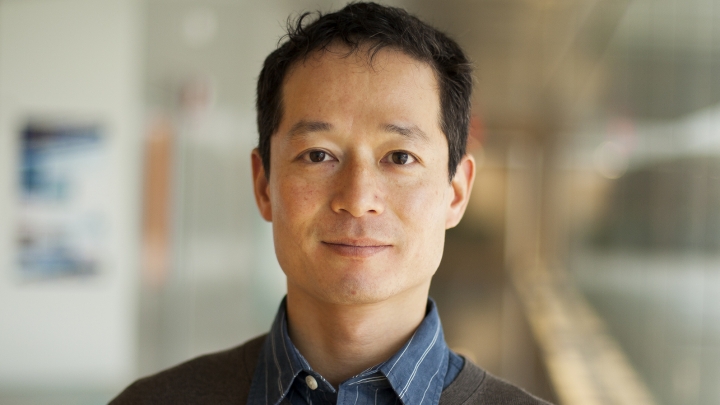
Kazuhiro Saitou is a Professor of Mechanical Engineering at the University of Michigan, affiliated with the College of Engineering. His research focuses on computational design synthesis, topology optimization, and manufacturing process integration. He leads the Algorithmic Synthesis Laboratory (ASL), advancing algorithms for automated design and optimization of mechanical systems. Education: Ph.D. (1996), MIT; M.S. (1992), MIT; B.Eng. (1990), University of Tokyo. He has held tenured positions since 1997, including roles as Founding CEO of Comnext, Inc. (2007–2012) and visiting professorships at École Centrale Paris and Donghua University. Research interests include multi-material topology optimization (M^3 TO), AI-driven design, and sustainable manufacturing. Key projects address additive manufacturing, composite structures, and energy-efficient production systems. He has pioneered methods for manufacturability-driven design and assembly optimization. Notable awards include IEEE Fellow (2018), ASME Kos-Ishii Award (2015), and NSF CAREER Award (1999). He serves as Editor-in-Chief for IEEE Transactions on Automation Science and Engineering and holds leadership roles in ASME and IEEE societies. Teaching includes courses on design optimization, CAD, and global product development. His lab has advised over 30 students, with alumni in academia and industry. Current research explores biomechanical modeling, traffic flow optimization, and medical image registration algorithms.
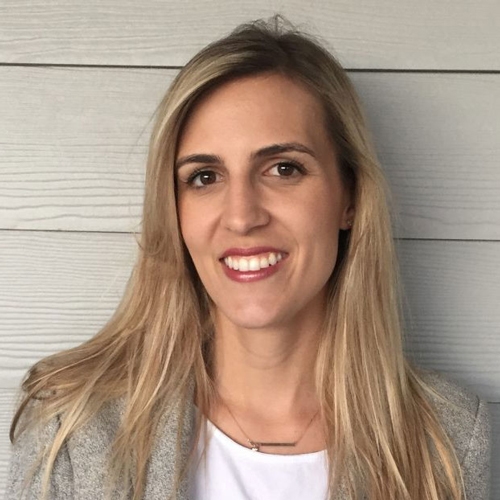
Dr. Katerina Marcoulides is an Associate Professor in the Quantitative and Psychometric Methods Program at the University of Minnesota's Department of Psychology. She is affiliated with the Minnesota Population Center and serves as Co-Chair of the Structural Equation Modeling Special Interest Group (SEM SIG) for the American Educational Research Association. Her research focuses on advanced data mining and modeling techniques for complex longitudinal data, particularly applied to developmental processes in economically disadvantaged immigrant children. She holds a PhD in Quantitative Psychology from Arizona State University, an MA from UC Davis, and a BA from UC Santa Barbara. Education: PhD: Quantitative Psychology, Arizona State University MA: Quantitative Psychology, University of California, Davis BA: Psychology (minor in Education), University of California, Santa Barbara Research Interests: Dr. Marcoulides develops and applies statistical methods such as structural equation modeling (SEM), Bayesian synthesis, and data fusion to study developmental and educational processes. Her work emphasizes longitudinal data analysis, item response theory, and multilevel modeling. Recent projects include NIH-funded research on parenting, marginalization, and well-being during the pandemic. Awards: APS Rising Star Award (2021) NIH Grant Award Teaching & Collaboration: She teaches courses on SEM, multilevel modeling, and data analysis at the University of Minnesota. Previously at the University of Florida, she contributed to workshops on educational data mining and served as an APA Advanced Training Institute presenter. Her interdisciplinary collaborations span population studies, health inequities, and workforce research. Labs & Groups: She leads the Data Analytics and Visualization Lab and actively participates in the Minnesota Population Center, integrating computational and statistical innovations with real-world applications.
Quoc Thong Le Gia is an Associate Professor in the School of Mathematics & Statistics at the University of New South Wales (UNSW), Sydney. He holds a PhD in Mathematics from Texas A&M University (2003), an MS in Mathematics from Texas A&M University (2000), and a BSc in Mathematics and Computer Science from UNSW (1998). His research focuses on Numerical Analysis , Approximation Theory , Partial Differential Equations , and Stochastic Processes , with particular expertise in problems on spherical domains. His work bridges theoretical mathematics with practical applications in computational science, data science, and machine learning. Le Gia's recent publications demonstrate a strong focus on numerical methods for PDEs on spheres, stochastic analysis, and machine learning applications. His work shows consistent progression from theoretical foundations to practical implementations, with increasing interdisciplinary applications in recent years. L. F. Guseman Prize in Mathematics, Texas A&M University (2003) As a dedicated academic mentor, Le Gia has supervised numerous PhD, Master's, and Honours students across computational mathematics and data science topics. He has secured significant research funding through ARC Discovery Projects including DP220101811 (2022-2024) and DP180100506 (2018-2020). Professionally, he serves as External Associate Editor for Frontiers in Applied Mathematics and Statistics , Secretary for ANZIAM's Computational Mathematics Group, and Co-chair of Mathematics of Computation and Optimisation (AustMS Special Interest Group).
Dr Ioannis Kalogridis is a Lecturer in Statistics and Data Analytics at the University of Glasgow , affiliated with the School of Mathematics and Statistics . He joined the university in February 2025, following a postdoctoral researcher role at KU Leuven. His research focuses on the intersection of Functional Data Analysis , Nonparametric Statistics , and Robust Statistics , emphasizing methodological development and theoretical properties of robust and efficient estimation techniques. Key areas include functional regression, penalized splines, and spatial smoothing. Recent publications highlight his work on robust penalized splines for location estimation, resistant dispersion estimation, and adaptive functional logistic regression models. These contributions span theoretical advancements and practical applications in statistical modeling.
Dae-Jin Lee is an Assistant Professor at IE University’s School of Science and Technology, specializing in statistical modeling and data science. Previously, he served as a Research Line Leader at the Basque Centre for Applied Mathematics (BCAM) and coordinated the Knowledge Transfer Unit in Data Science/AI. His academic background includes a Ph.D. in Mathematical Engineering (2010) from Universidad Carlos III de Madrid and postdoctoral research at CSIRO (Australia). His research focuses on statistical methods for complex data, including penalized splines, tensor product smooths, and applications in biomedicine, epidemiology, environmental science, and sports analytics. He has led multidisciplinary projects funded by public and industry grants, collaborating globally with experts across fields like engineering, medicine, and biology. Key research themes include predictive modeling for health outcomes (e.g., SARS-CoV-2 pneumonia severity), sports injury prevention, and AI in healthcare. His work integrates machine learning with traditional statistical techniques, addressing real-world challenges like pedestrian dynamics simulations and automated medical diagnostics. He is actively involved in scientific organizations, including the Spanish Biostatistics Society and the Statistical Modelling Society. His recent publications highlight innovations in growth curve modeling, AI ethics, and spatiotemporal data analysis, reflecting his commitment to advancing both theoretical and applied statistics.
Dr. Victoria C. P. Chen is a Professor in the Industrial, Manufacturing, and Systems Engineering (IMSE) department at The University of Texas at Arlington (UTA), where she has served since 2002. She previously held positions at the Georgia Institute of Technology from 1993-2001. Dr. Chen has held several leadership roles at UTA, including Interim Department Chair (2012-2014), Director of the Center on Stochastic Modeling, Optimization, & Statistics (COSMOS) (2008-2012, and again from 2017-present), and Director of Doctoral Studies (2019-present). She was also the George & Elizabeth Pickett Professor from 2015-2017 and was inducted into the UT Arlington Academy of Distinguished Teachers in 2019. Dr. Chen is actively involved with INFORMS (Institute for Operations Research and the Management Science), where she currently serves as Secretary on the Executive Board. Dr. Chen earned her B.S. in Mathematical Sciences from The Johns Hopkins University, and her M.S. and Ph.D. in Operations Research and Industrial Engineering from Cornell University. Her academic journey includes visiting professorships at the University of Genoa, Italy, and Iowa State University. Dr. Chen's research utilizes statistical perspectives to create new methodologies for operations research problems appearing in engineering and science. Her expertise includes the design of experiments, statistical modeling, and data mining, particularly for computer experiments and stochastic optimization. Through her statistics-based approach, she has developed computationally-tractable decision-making methods for many high-dimensional complex systems. Her work spans multiple domains including sustainability, energy, water management, healthcare, and law enforcement. Specific application areas include inventory forecasting, airline optimization, water reservoir networks, wastewater treatment, air quality monitoring, green building design, nurse assignment systems, and pain management programs. Her recent publications demonstrate continued innovation in mixed integer programming for electric vehicle charging stations, vacuum ultraviolet spectroscopy prediction, and sustainable building education. Senior Member, Institute for Operations Research and the Management Sciences (INFORMS) (2024) Data Mining Prize (Lifetime Achievement Award), INFORMS Society on Data Mining (2023) College of Engineering Teaching Award, UT Arlington (2021) Third Place Award, C3.ai COVID-19 Grand Challenge (2020) Academy of Distinguished Teachers, University of Texas at Arlington (2019) George & Elizabeth Pickett Professorship (2015-2017) As an educator and mentor, Dr. Chen has advised over 25 doctoral students across diverse research topics in operations research and systems engineering. She has secured substantial research funding from multiple sources including the National Science Foundation (over $1.5 million in active projects), Environmental Protection Agency, National Institute of Justice, and industry partners like Luminant and Dallas-Fort Worth International Airport. Her current research projects focus on decision analytics for sustainable urban environments, optimization for Texas water management, and statistical methods for pain management programs. She has served as Principal Investigator or Co-PI on more than 20 externally funded research projects totaling over $3 million in funding. Dr. Chen co-founded the Center on Stochastic Modeling, Optimization, & Statistics (COSMOS) at UTA with Dr. H. W. Corley. This research center brings together faculty and students from multiple disciplines to address complex problems through advanced statistical and optimization methods. She also leads interdisciplinary research teams working on projects related to sustainable infrastructure, energy systems, and healthcare optimization, frequently collaborating with researchers from civil engineering, environmental science, and medical fields.
Dr. Gaël Kermarrec is a researcher at the Boundary Layer Meteorology Group , part of the Institute of Meteorology and Climatology within the Faculty of Mathematics and Physics at Leibniz University Hannover . His work focuses on atmospheric turbulence, GNSS applications, and remote sensing for environmental monitoring. Boundary layer meteorology Turbulence theory GNSS signal processing Terrestrial laser scanning Climate change impacts Geodetic time series analysis His research integrates advanced mathematical models like LR B-splines and Matérn covariance with large eddy simulations to study: Atmospheric turbulence effects on optical/GNSS signals Hydrospheric mass loading Deformation analysis of terrain/port infrastructure Climatic sea-level changes Machine learning for remote sensing The 15 most recent articles (2025-2023) demonstrate his focus on: GNSS-based turbulence detection AI-enhanced climate mapping Advanced surface approximation techniques Multi-sensor data fusion Stochastic modeling of geodetic observations Environmental impacts on optical measurements He has developed tools like the Klimascanner QGIS plugin for urban climate resilience and contributes to: Understanding atmospheric scale lengths Improving TLS/GNSS deformation monitoring Analyzing hydrospheric changes Wavefront modeling Ionospheric corrections
Ming-Jun Lai is a Professor in the Department of Mathematics at the University of Georgia. His career spans decades, focusing on multivariate splines, sparse solutions of linear systems, wavelet theory, and their applications in numerical analysis and machine learning. Education: Lai received his Ph.D. from Texas A&M University and completed postdoctoral training at the University of Utah. He has supervised 22 Ph.D. students and two current Ph.D. candidates. Multivariate Splines: Applied to scattered data fitting, numerical PDE solutions, image enhancement, and surface design. Sparse Solutions: Used in compressed sensing, low-rank matrix recovery, and graph clustering. Wavelet Theory: Construction of biorthogonal and tight wavelet frames for image edge detection. Optimal Transport: Numerical solutions for Monge-Ampère equations. Research Trends (2025–2023): Recent work includes interpolating space curves with geometric continuity, spherical spline smoothing, and applications in machine learning, particularly graph clustering and optimal control in biological systems. Scientific Awards: UGA Research Medal (2002) McCay Award (2013) Advisees: Lai has mentored 24 Ph.D. students, including Zhaiming Shen (2024), Jinsil Lee (2023), and current students Valerio Palamra and Ye Tian. Laboratory & Collaborations: He collaborates with institutions like Georgia Tech, UCLA, and Zhejiang University, applying splines in aerospace engineering and biomedical imaging.
Ethan McCormick is an Assistant Professor in the School of Education at the University of Delaware, specializing in longitudinal and psychometric modeling. He holds a Ph.D. in Psychology from the University of North Carolina at Chapel Hill (2020) and a B.S. in Biochemistry from the University of Arkansas (2013). His research focuses on integrating short-term and long-term longitudinal models to study behavioral and cognitive changes across the lifespan, with recent emphasis on educational data analysis and nonlinear random effects modeling. He is a Resident Faculty member of the University of Delaware’s Data Science Institute and previously served as an Assistant Professor of Methodology & Statistics at Leiden University (2022–2024). Dr. McCormick’s grants include the NWO Veni SSH Grant (2024–2027) for tracking educational outcomes via statistical modeling and the Jacobs Foundation Fellowship (2024–2026) for studying complex growth in math ability. His work bridges methodological rigor with applied neuroscience, examining brain-behavior relationships in developmental contexts through large-scale collaborations. Professional Experience : Assistant Professor, University of Delaware (2024–present); Assistant Professor, Leiden University (2022–2024) Key Research Themes : Longitudinal modeling, time series analysis, psychometrics, developmental cognitive neuroscience Awards : NWO Veni SSH Grant, Jacobs Foundation Fellowship His recent articles emphasize improving time-series methodologies, addressing limitations of two-time-point studies, and advancing models for asymmetric temporal dynamics. He collaborates internationally on projects simulating developmental datasets and analyzing neural correlates of behavior.
Dr. Matteo Fasiolo is a Senior Lecturer in the School of Mathematics at the University of Bristol, specializing in Statistical Science. His research focuses on advanced statistical modeling with significant applications in electricity demand forecasting and medical statistics, leveraging Generalized Additive Models (GAMs) as a core methodology. His primary research interests span: Generalized Additive Models and their extensions for complex data structures Covariance matrix modeling for high-dimensional energy forecasting Probabilistic forecasting techniques for uncertainty quantification Statistical machine learning including variational inference and contrastive learning Applications in electricity grid management and medical diagnostics Recent publications (2023-2025) reveal a dual focus: developing scalable statistical methods for electricity net-demand prediction in Great Britain using additive covariance models, and applying distributional regression to medical challenges like kidney function decline and cardiovascular risk prediction. His work on SoftCVI demonstrates innovation in variational inference, while extensions to GAMs address both mean modeling and full distributional forecasting. Dr. Fasiolo has supervised at least one student as indicated by university records. His research outputs include 16 publications and 2 publicly available datasets, reflecting active contributions to methodological statistics and domain-specific applications in energy systems.
Angelo Elmi is an Associate Professor at the Milken Institute School of Public Health , The George Washington University , affiliated with the Department of Biostatistics and Bioinformatics . His work bridges biostatistical methodology with applications in women's and child health sciences. Education: Ph.D. in Biostatistics, University of Pennsylvania (2009) Research Focus: Dr. Elmi specializes in Mixed Effects Models , Joint Modeling , and Longitudinal Data analysis, with emphasis on addressing complex statistical challenges in biomedical research. Publication Trends: His recent work explores advanced statistical frameworks for analyzing longitudinal and event-time data, applying nonlinear mixed-effects models and spline-based techniques. Notably, he has contributed to joint modeling methodologies for paired outcomes in public health contexts. Contact: Email: Angelo.Elmi@gwu.edu | Office Phone: 202-994-8416 | Location: Science & Engineering Hall, 800 22nd Street NW, Washington DC 20052.
Peter Massopust is a Privatdozent at the Technical University of Munich (TUM), where he is affiliated with the School of Computation, Information and Technology and the Department of Mathematics. His research spans multiple areas of mathematical analysis with a focus on fractal geometry, wavelet theory, and approximation methods. His educational background includes: Habilitation in 2011 from Technical University of Munich Ph.D. in Applied Mathematics from Georgia Institute of Technology (1986) MS in Mathematics from Georgia Institute of Technology (1985) MS in Physics from Georgia Institute of Technology (1981) Dr. Massopust's research interests primarily focus on Wavelets and Frames, Harmonic and Functional Analysis, Fractal Geometry and Fractal Interpolation Theory, and Splines and Approximation Theory. His work bridges theoretical mathematics with practical applications in signal processing, image analysis, and computational methods. His approach often combines classical mathematical techniques with innovative fractal-based methods to solve complex problems in approximation theory and functional analysis. His research has significantly contributed to the development of fractal interpolation functions, complex splines, and wavelet theory, with applications spanning from pure mathematics to engineering problems. His publication record demonstrates a consistent focus on fractal-based mathematical methods, with recent work expanding into quaternionic analysis, complex B-splines, and applications in signal processing. His research shows a clear trajectory from foundational work in fractal geometry to increasingly sophisticated applications in multidimensional signal analysis and computational mathematics. His scientific achievements have been recognized through several prestigious awards: Fulbright Scholarship (1980-1981) GIAN (Global Initiative for Academic Network) Award from the Republic of India (2016, 2017) Dr. Massopust has secured substantial research funding from various national and international sources, including the German Research Foundation (DFG), Bayerische Forschungsallianz, VolkswagenStiftung, and collaborations with Sandia National Laboratories and the National Science Foundation. His research program has consistently focused on advancing mathematical methods for signal and image processing, with particular emphasis on fractal-based approaches and wavelet theory. He has also been instrumental in fostering international collaborations, particularly through the EuroTech network and with institutions in Australia and India. Among his notable contributions is the GHM (Geronimo-Hardin-Massopust) Scaling Vector and DGHM (Donovan-Geronimo-Hardin-Massopust) Multiwavelet, developed at the Georgia Tech Research Institute in 1995. This work has had significant impact in the field of wavelet analysis and its applications.
Bin Han is a Professor of Mathematics at the Department of Mathematical and Statistical Sciences , University of Alberta, Canada. He holds a PhD (1998), MSc (1994), and BSc (1991) in Mathematics from the University of Alberta, Chinese Academy of Sciences, and Fudan University, respectively. Research Interests: Computational Mathematics: High-order finite difference methods, numerical solutions of PDEs (Helmholtz, elliptic interface, Burgers' equations), and Fourier/wavelet-based algorithms. Applied Harmonic Analysis: Framelets/wavelets with applications in image processing, data sciences, and deep learning, focusing on directional and quasi-tight properties. Wavelet Theory: Construction of wavelets on bounded intervals for boundary value problems, Gibbs phenomenon analysis, and stability of refinable functions. Computer Aided Geometric Design (CAGD): Subdivision schemes, spline approximation, and isogemetric analysis. Article Trends: His recent work (2021-2022) emphasizes high-order finite difference methods for Helmholtz and interface problems, directional tensor product complex tight framelets for image processing, and quasi-tight framelets with balancing orders for robustness and sparsity. Scientific Awards: NSERC Postdoctoral Fellowship (1999-2000) Advising & Grants: He has supervised PhD students Qiwei Feng, Michelle Michelle, Ran Lu, and Chenzhe Diao. His research is supported by NSERC, Westgrid, Compute Canada, and MITACS.
Pradeep U. Kurup is a Distinguished University Professor in the Department of Civil and Environmental Engineering at the Francis College of Engineering, University of Massachusetts Lowell. He has been serving at UMass Lowell since 1997, progressing from Assistant Professor to Associate Professor (2001), Full Professor (2005), and ultimately to University Professor (2014), which is the highest faculty honor at UMass Lowell. Dr. Kurup's educational background includes: Ph.D. in Civil and Environmental Engineering (1993) from Louisiana State University M.Tech. in Civil Engineering (1987) from Indian Institute of Technology - Madras, India B.Tech. in Civil Engineering (1985) from University of Kerala, India Dr. Kurup's research focuses on the intersection of geotechnical engineering and advanced sensing technologies. His work spans multi-sensor data fusion for site characterization, novel sensing technology applications, finite element modeling, artificial neural networks for soil mechanics, calibration chamber testing, soil-structure interaction, and "Seeing-Ahead Techniques" for trenchless technologies. His recent publications demonstrate a strong trend toward integrating machine learning techniques with geotechnical instrumentation, particularly in developing electronic noses and tongues for environmental monitoring and contamination detection. Dr. Kurup has received numerous awards and honors, including University Professor (2014), Diplomat Geotechnical Engineering (2012), NSF CAREER Award (1999-2003), and CERF Career Development Award (1999). Dr. Kurup has secured substantial research funding from NSF, Federal Highway Administration, EPA, and U.S. Army Research Office. His research collaborations span academia, industry, and government agencies globally, including partnerships with Geoprobe Systems Inc., Fugro Engineers Inc., Norwegian Geotechnical Institute, and several international universities. Dr. Kurup leads research in innovative sensing technologies for geoenvironmental applications, including electronic noses for detecting hazardous chemicals and explosives, electronic tongues for heavy metal detection, and advanced cone penetrometer systems for subsurface characterization.
Michal Abrahamowicz, PhD is a Senior Scientist at the Research Institute of the McGill University Health Centre (RI-MUHC) and Professor in the Department of Epidemiology, Biostatistics and Occupational Health at McGill University's Faculty of Medicine and Health Sciences. He is affiliated with the Cardiovascular Health Across the Lifespan Program and the Centre for Outcomes Research and Evaluation (CORE) at RI-MUHC. His research focuses on developing innovative statistical methodologies for clinical and biomedical data analysis, particularly in survival analysis. Key areas include modeling time-varying and cumulative effects of risk factors and treatments, and addressing biases in observational studies. He co-founded and co-chairs the international STRATOS initiative (www.stratos-initiative.org), involving over 100 statisticians from 18 countries, aimed at improving analyses of observational studies. From 2011-2019, he served as Principal Investigator of the CAN-AIM network, funded by the Canadian Institutes for Health Research, which brought together over 45 faculty members from 12 Canadian universities for drug safety and effectiveness research. His recent publications demonstrate a strong focus on methodological advances in biostatistics, particularly in survival analysis, causal inference, and flexible modeling techniques. His work spans applications in cardiovascular diseases, cancer epidemiology, pharmacoepidemiology, and arthritis research, with an increasing emphasis on practical implementation of statistical methods in clinical research. Abrahamowicz leads major collaborative research initiatives including large clinical trials and longitudinal population-based studies. His research methodology work directly informs applications in real-world clinical and epidemiological studies, creating a strong bridge between theoretical statistics and practical healthcare research.