Emmanuel Guerre is a Professor at the School of Economics and Finance at Queen Mary University of London. His research focuses on theoretical and applied econometrics, with emphasis on nonparametric methods, auction models, quantile regression, and time series analysis. He has contributed to advancements in nonparametric identification and inference for auctions, particularly through rate-optimal estimation techniques and quantile-based approaches. His work has been published in leading journals such as the Annals of Statistics , Econometrica , and the Review of Economic Studies . Education: PhD in Statistics, University of Paris (Paris 6, Université Pierre et Marie Curie) BSc in Economics and Statistics, ENSAE Research interests include nonparametric identification in auctions, optimal testing for time series, and quantile methods. He is an associate editor for Econometric Theory and the Journal of Econometrics . Awards: Journal of Econometrics Zellner Award (2022-23) for the paper Quantile regression methods for first-price auctions Publications highlight contributions to auction modeling, quantile regression, and nonparametric estimation techniques, reflecting his expertise in both theoretical and applied econometrics.
Arnab Maity is an Associate Professor in the Department of Statistics at North Carolina State University (NC State). His research focuses on functional data analysis, kernel machine regression, and semiparametric methods with applications in environmental epidemiology and epigenetics. He holds a Ph.D. in Statistics from Texas A&M University (2008), an M.S. from the same institution (2005), and a B.Stat. (Honors) from the Indian Statistical Institute (2003). Education: Ph.D. in Statistics, Texas A&M University, 2008 M.S. in Statistics, Texas A&M University, 2005 B.Stat. (Honors), Indian Statistical Institute, 2003 Research interests span functional data analysis, kernel methods, semiparametric inference, and their applications in genomic studies, environmental health, and epigenetics. He has contributed to statistical tools for analyzing high-dimensional gene-environment interactions and longitudinal data. Recent work includes advancements in robust kernel association testing and functional concurrent models. His publications reflect interdisciplinary collaboration, addressing challenges in genetic epidemiology, biostatistics, and environmental health. Notable grants include NIH-funded projects on imprint regulatory regions in childhood obesity and functional data integration in genomics. Awards include the ASA Noether Young Researcher Award (2014) and the Cavell Brownie Mentoring Award (2020). He has advised十余名博士生 and served on numerous editorial and review boards. Active in academic service, he chairs committees and organizes seminars on functional data analysis and statistical genetics.
Professor Jian Zhang is a Professor of Statistics at the University of Kent's School of Mathematics, Statistics and Actuarial Science. His research focuses on non-parametric and high-dimensional statistics, bioinformatics, computational biology, statistical genetics, neuroimaging methods, and Bayesian modeling. He has advised students including Jie Li and Tong Wang. His work spans theoretical advancements and applied methodologies across diverse fields such as genomics, neuroimaging, and biomedical data analysis. Publications highlight contributions to Bayesian inference, neuroimaging techniques, and statistical genetics. Notable collaborations include studies on mixture models for genetic association analysis and beamforming methods for functional connectivity. He holds an ORCID iD and is based at Canterbury Campus, University of Kent.
Daniel Kowal is an Associate Professor in the Department of Statistics and Data Science at Cornell University, effective July 2024. Previously, he served as the Dobelman Chair Assistant Professor at Rice University. His research focuses on Bayesian methodology for complex dependent data, including functional, time series, and spatial datasets, with applications in environmental health, epidemiology, finance, and astronomy. He develops scalable algorithms for high-dimensional data and interpretable uncertainty quantification. His work has been recognized with the Blackwell-Rosenbluth Award (2021) and ARO Young Investigator Award (2020). Education: Ph.D. in Statistics (Cornell University), M.S. in Statistics (Cornell University), B.A. in Mathematics (Washington University in St. Louis). Research interests include Bayesian models for prediction/inference, decision theory, discrete data analysis, and scalable approximations. Key areas of application: environmental health policy, wearable devices, economics, biomedical engineering, and astronomy. Recent grants include NSF-funded projects on adaptive dependent data models and Army Research Office initiatives on Bayesian approximations. He has supervised multiple Ph.D. students, including Yunan Gao, Thomas Sun, and Brian King. His software contributions include R packages like countSTAR, SeBR, and lmabc for Bayesian regression and data synthesis. Awards include Lindley Prize Honorable Mention (2024), Arnold Zellner Thesis Award (2018), and numerous student paper awards from ASA sections.
Sze Ming Lee is a Researcher in the Department of Statistics at the London School of Economics and Political Science (LSE). His research focuses on Social Statistics, with expertise in large-scale data analysis, latent variable modelling, survival analysis, and quantile regression. Lee holds a BSc in Mathematics, an MPhil in Risk Management Science, and a postgraduate diploma in Education, all from the Chinese University of Hong Kong. His academic supervisors are Dr. Yunxiao Chen and Professor Fiona Steele. His research interests emphasize methodological advancements in statistical modelling, particularly in handling high-dimensional data and latent variables. Recent publications (2023-2025) highlight contributions to quantile regression, factor analysis stability, and longitudinal data methodologies. Lee’s work bridges theoretical statistics with practical applications in social sciences and biostatistics. No scientific awards or grants are explicitly mentioned in the provided texts. He is affiliated with LSE’s Social Statistics research group and contributes to the department’s focus on data-driven social science research.
Yu Cheng is a Professor and Chair of the Department of Statistics at the University of Pittsburgh, affiliated with the Dietrich School. She holds secondary appointments in Biostatistics and Psychiatry. Her research focuses on dynamic treatment regimes, SMART trials, causal inference, and multiple endpoints analysis. She leads a PCORI-funded method grant on SMART studies and co-investigates projects on cardiovascular disease and maternal/child health outcomes. Her awards include ASA Fellow (2024) and Pittsburgh Chapter Statistician of the Year (2020). Dr. Cheng earned her PhD in Statistics from the University of Wisconsin-Madison (2006), following MS (National University of Singapore, 2001) and BS (University of Science and Technology of China, 1999) degrees. She has held leadership roles including ASA LiDS Section Treasurer (2021–2023), Department Chair (2014–present), and Director of Graduate Studies (2016). Her research integrates methodological innovation with clinical collaboration, addressing topics like HIV, smoking cessation, lupus, depression, and cystic fibrosis. Her 150+ publications span journals like Biometrics , Journal of the American Statistical Association , and Biostatistics . Teaching includes courses in Survival Analysis, Probability, and Statistical Consulting. She actively mentors students through supervised consulting programs.
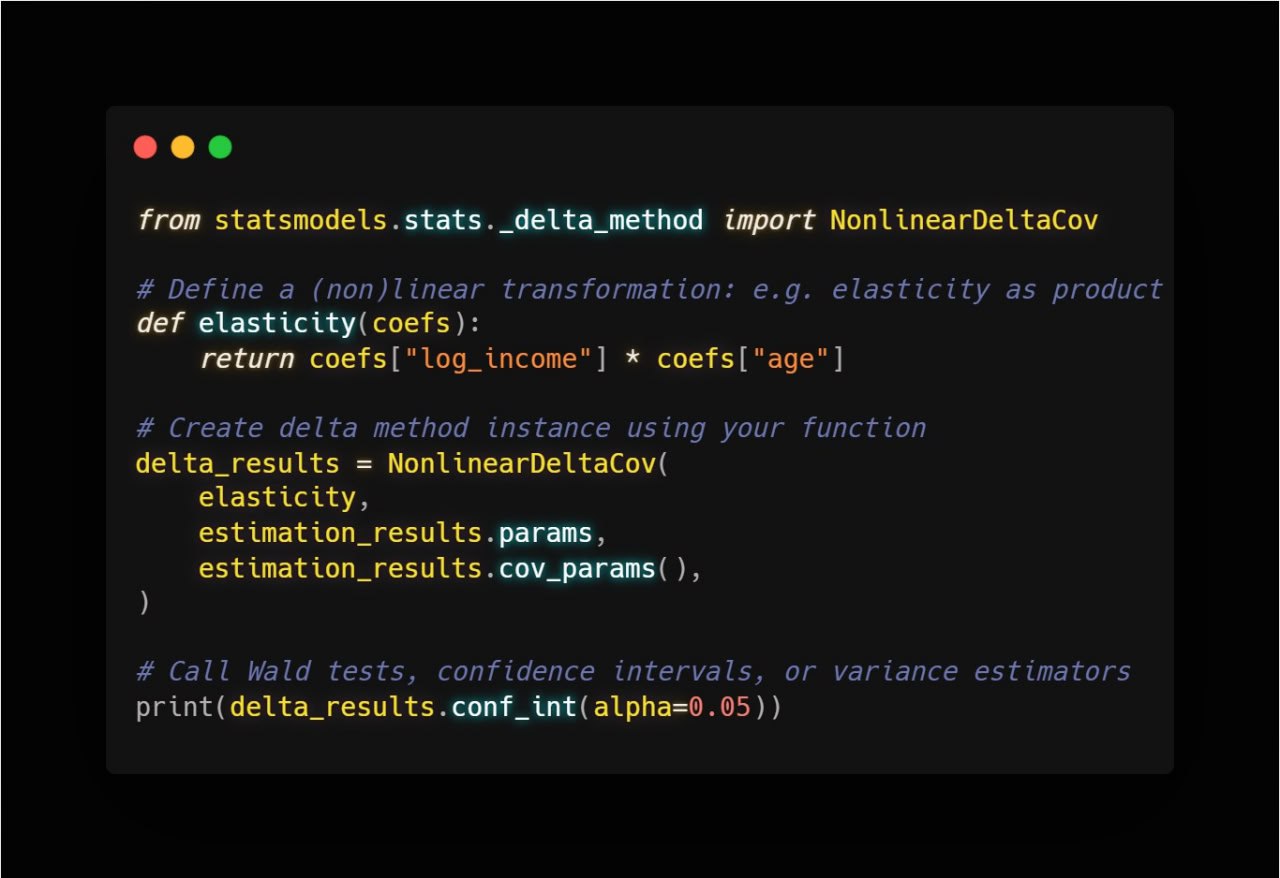
Vladislav Morozov is a tenure track Assistant Professor (W1) of Econometrics and Statistics at the Institute for Financial Economics and Statistics within the Department of Economics at the University of Bonn. He holds a PhD in econometrics from Universitat Pompeu Fabra, Barcelona, and maintains an active research program focused on developing practical statistical methods for handling unobserved heterogeneity in economic applications. His research interests encompass Econometrics , Nonparametric Statistics , Semiparametric Statistics , and methods for addressing Unobserved Heterogeneity . Dr. Morozov investigates how unobserved differences between economic agents affect causal inference, with particular attention to heterogeneous treatment effects and parameters that vary across populations. His work demonstrates that even with limited data (such as just two periods of panel data), it's possible to identify average causal effects despite infinitely many unobserved differences between individuals. His recent publications and blog posts reveal a strong focus on practical statistical methods, including applications of the delta method in statsmodels, visualization of statistical convergence concepts, and critical examinations of common econometric practices like fixed effects modeling and hypothesis testing procedures. His work bridges theoretical econometrics with practical implementation for empirical researchers. Dr. Morozov maintains active engagement with the academic community through his lecture notes on econometrics with unobserved heterogeneity, which cover topics from linear models with heterogeneous coefficients to nonparametric approaches. He has recently shifted from LaTeX Beamer to Quarto Reveal.js for creating reproducible, maintainable presentations that integrate code execution directly into slides. He is an active contributor to methodological discussions in econometrics, particularly regarding the challenges posed by unobserved heterogeneity in non-experimental settings, which can lead to significant bias and invalid inference if not properly addressed. His work provides robust methods for handling these pervasive issues in economic research.
Hyunjoo Kim Karlsson is a researcher at the Department of Economics and Statistics, School of Business and Economics, Linnaeus University. Her work focuses on statistics and finance, particularly in high-dimensional data analysis, wavelet decomposition, and machine learning applications. Doctoral thesis: Dynamics of macroeconomic and financial variables in different time horizons (2012), Jönköping International Business School. Her research spans shrinkage estimators, outlier detection, time series modeling, and multivariate analysis under multicollinearity. Recently, she has expanded into statistical learning and mixed data sampling (MIDAS) for economic nowcasting. Key publication trends include oil price impacts on economies, exchange rate dynamics, and nonlinear financial modeling using wavelet methods and machine learning. She collaborates with researchers like Krister Månsson and R. Scott Hacker. Hyunjoo is part of the Deterministic and Stochastic Modelling group within Linnaeus University's Data Intensive Sciences and Applications (DISA) center, contributing to interdisciplinary sustainable co-creation projects.
Jonathan Hill serves as a Professor in the Department of Economics at the University of North Carolina at Chapel Hill. His academic career focuses on theoretical and methodological advancements in econometric and statistical frameworks. His educational background includes: Ph.D. in Economics, University of Colorado at Boulder (2001) Research interests encompass: Econometrics Econometric Theory Statistical Theory High Dimensional Inference Weak Identification Robust Inference Semi-parametric Models His work addresses challenges in heavy-tailed data analysis, robust estimation techniques, and complex inference problems, with recent contributions to volatility spillover measurement and multivariate quantile regression methodologies.
Dr. Andrés Modesto Alonso is an Associate Professor in the Department of Statistics at Universidad Carlos III de Madrid, affiliated with the Energy Analytics research group and Flores de Lemus Institute. His work spans computer science, economics, and statistics through advanced time series analysis and energy forecasting methodologies. Primary affiliation: Department of Statistics, UC3M Research groups: Energy Analytics, Flores de Lemus Institute His research focuses on time series analysis , energy forecasting , and statistical clustering with applications in electricity markets, smart grids, and environmental data. Recent publications emphasize deep learning models for energy prediction, dynamic factor models, and market-based distance metrics. Scientific output trends show 15 recent articles (2018-2024) covering topics like: Electricity market price forecasting Smart grid optimization through clustering Adaptive control charts for industrial processes Precision matrix estimation in high-dimensional statistics Extreme value analysis for environmental monitoring Dr. Alonso has supervised multiple theses on time series modeling and classification techniques, while collaborating on grants related to stochastic optimization and responsible AI applications in economic forecasting.
Maria Helena Lopes Moreira da Veiga is a Full Professor at Universidad Carlos III de Madrid, affiliated with the Macroeconomic and Financial Prediction and Analysis Research Group within the Statistics Department. Her work bridges economics, statistics, and financial engineering with focus on volatility modeling and macroeconomic forecasting. Principal investigator for geopolitical risk and financial contagion projects (2024-2026, 2019-2020) Key research areas: stochastic volatility models, energy markets, Bayesian methods, outlier detection Collaborates with institutions across Denmark, Portugal, France, Spain, and Canada Her publications demonstrate expertise in financial econometrics, particularly asymmetric volatility models and their applications in energy and stock markets. She employs advanced computational techniques like data cloning and wavelet analysis to address model uncertainty and risk measurement. Current projects focus on climate risk indices, AI-driven economic valuation, and high-dimensional time series prediction. She has received continuous funding from national agencies for uncertainty modeling in macroeconomic and financial contexts since 2006.
Emily Berg is an Associate Professor in the Department of Statistics at Iowa State University. Her research focuses on small area estimation, Bayesian hierarchical models, and statistical applications in agriculture and environmental science. She holds a Ph.D. in Statistics from Iowa State University (2010), an M.S. in Statistics (2008), and a B.A. in Mathematics from Middlebury College (2005). Education: Ph.D. Statistics, Iowa State University, 2010 M.S. Statistics, Iowa State University, 2008 B.A. Mathematics, Middlebury College, 2005 Her research interests include developing statistical methodologies for small area estimation, analyzing agricultural and environmental data, and addressing challenges in informative sampling and missing data. She has contributed to applications in transportation safety, veterinary practices, and environmental monitoring. Dr. Berg’s work emphasizes practical solutions for data integration and estimation under complex scenarios, including the use of Bayesian models and quantile regression techniques. She collaborates on projects such as the Conservation Effects Assessment Project and has developed web applications for data visualization and quality assessment. No scientific awards have been explicitly mentioned in the provided materials. She has advised or collaborated on numerous statistical methodologies but no specific student names are listed. Her research extends to agricultural economics, environmental modeling, and public health surveillance.
Paul Eisenberg is an Assistant Professor at the Institute for Statistics and Mathematics at Vienna University of Economics and Business. He holds a doctorate in Mathematics and has held positions at the University of Liverpool, Vienna University of Technology, and Technical University of Dortmund. His research focuses on probability theory and financial mathematics, particularly stochastic processes, term structure modeling, and applications to financial markets. He teaches courses in Probability, Quantitative Methods, and Business Mathematics. Research outputs concentrate on stochastic processes in finance, including term structure modeling, stochastic optimization, market microstructure, and applications to cryptocurrency markets. Recent work shows emphasis on regime-switching models and high-dimensional stochastic systems.
Giancarlo Manzi is an Associate Professor of Statistics at the Department of Methods and Models for Economics, Territory, and Finance, University of Rome La Sapienza. He holds a PhD from the University of Milan-Bicocca and conducted thesis research at the University of Toronto. His career includes roles at the Medical Research Council Biostatistics Unit in Cambridge and the University of Milan. University of Rome La Sapienza (Current) Medical Research Council Biostatistics Unit (Former Researcher) University of Milan (Former Researcher and Associate Professor) University of Milan-Bicocca (PhD) University of Toronto (Thesis collaboration) His research spans Machine Learning , Bayesian Statistics , and Smart Mobility , with a focus on Covid-19 analytics , data visualization , and epidemiological modeling . He integrates Multivariate Statistics with Public Health to address complex challenges in health systems and urban environments. The 15 most recent publications highlight expertise in quantile regression , Bayesian networks , time-series analysis , and smart mobility optimization . His methodological contributions include wavelet analysis, cross-correlation models, and SIRD modeling frameworks applied to pandemic dynamics and bike-sharing systems. Scientific awards and honors are not explicitly mentioned in the provided texts. Giancarlo Manzi has taught at the University of Verona, Catholic University of the Sacred Heart, and Universidad Carlos III in Madrid, maintaining strong ties with Italy's academic institutions.
Arnold Polanski is an Associate Professor in Economics at the School of Economics, University of East Anglia (UEA), where he is an active member of the Applied Econometrics and Finance, Economic Theory, and Statistics research groups. He is currently accepting PhD students and supervising research in socio-economic networks, game theory, financial economics, and financial tail risk. His academic journey includes a PhD from the University of Alicante, postdoctoral research at the University of Minnesota, and prior teaching at Queen’s University Belfast. PhD in Economics, University of Alicante (2004) Postdoctoral Studies, University of Minnesota (2005) Postgraduate Certificate in Higher Education Teaching, Queen’s University Belfast (2007) Arnold Polanski's research focuses on socio-economic networks , game theory , information economics , and financial tail risk , with a growing emphasis on integrating machine learning into economic modeling. His work explores how network structures influence cooperation, information diffusion, and financial interdependencies, particularly during extreme market events. He investigates the role of homophily, influence, and strategic behavior in shaping economic outcomes. His recent publications (2019–2025) reveal a consistent trend toward analyzing tail risk interdependence , network stability , and information flows using advanced econometric and computational methods. Many of his articles apply machine learning and axiomatic frameworks to bargaining and financial risk, published in journals like Journal of Economic Theory , Journal of Applied Econometrics , and Computational Economics . His work bridges theoretical economics with empirical and computational approaches. Arnold Polanski has received research funding from prestigious institutions including the British Academy and the Institut Europlace de Finance Louis Bachelier . He leads the Economic Theory Group at UEA and serves in key administrative roles such as Plagiarism Officer and Chair of the Faculty Appeals and Complaints Panel. He actively contributes to the academic community as co-organizer of an annual international workshop on the economics of networks. His research supervision includes PhD projects on socio-economic networks, game theory, and financial tail risk. He collaborates with scholars such as E. Stoja, F. Vega-Redondo, and J. Sikora, and his work often involves interdisciplinary methods combining economics, statistics, and computer science. Arnold Polanski is involved in the Economic Theory Group and contributes to collaborative research within UEA’s School of Economics. His projects emphasize network-based modeling, financial risk analysis, and the application of machine learning in economic contexts. He fosters academic exchange through organizing international workshops and leading research initiatives focused on the intersection of networks and economic behavior.