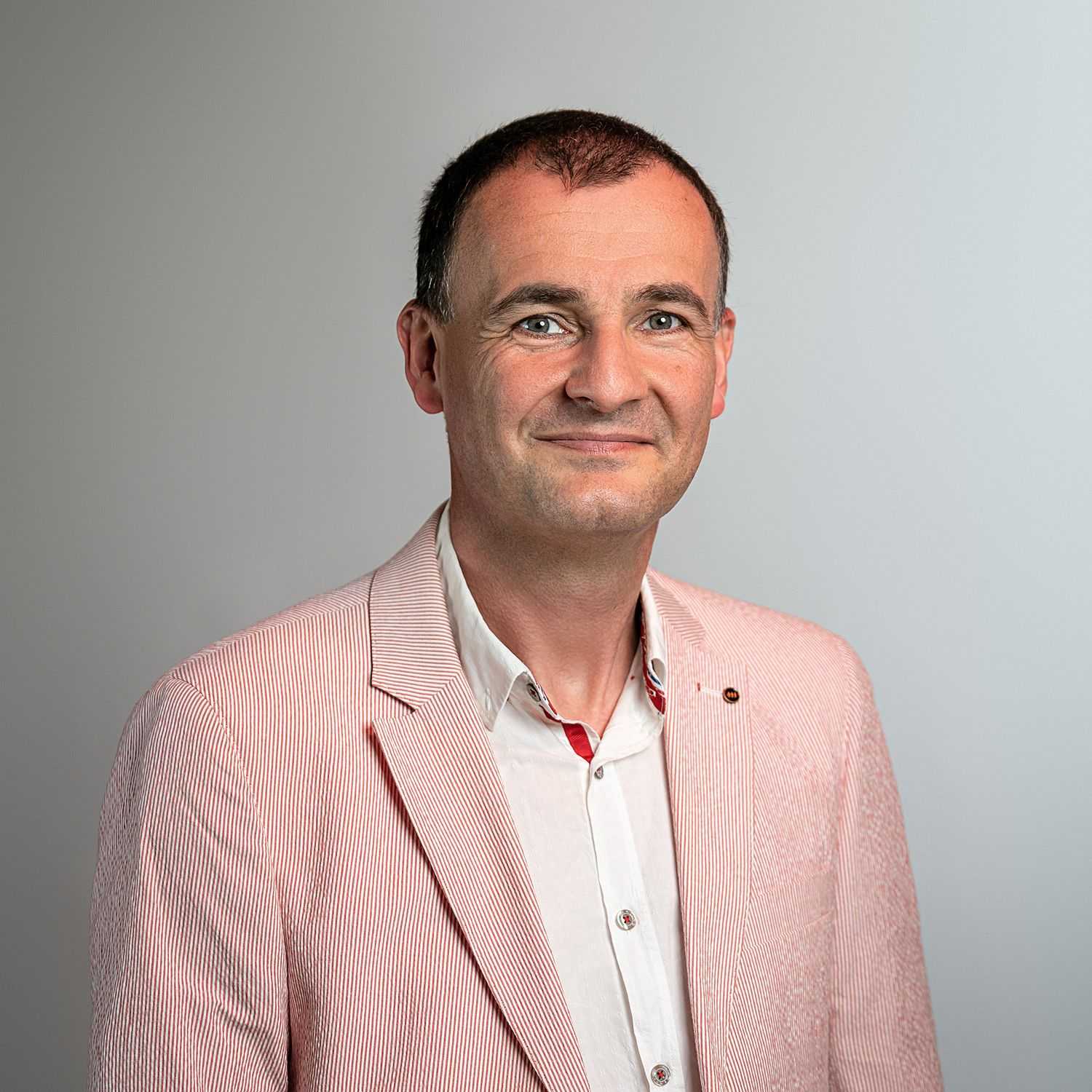
Paul Marriott is a Professor in the Department of Statistics and Actuarial Science at the University of Waterloo. His research focuses on integrating geometric principles, particularly differential and convex geometry, into statistical methodologies, with a recent emphasis on mixture models and information geometry. He has published extensively across diverse journals such as Biometrika, Annals of Statistics, and Psychological Medicine, bridging theoretical and applied statistics. Education: PhD, University of Warwick (1989) MA, University of Oxford (1984) Research Trends: His work explores geometric frameworks for statistical inference, mixture model parameterization, and robustness analysis. Recent publications highlight causal modeling, neural spike train analysis, and high-dimensional data applications. Contact: Office: Mathematics & Computer Building (M3) 4204, Phone: 519-888-4911 x35545, Email: pmarriot@math.uwaterloo.ca
Orla Murphy serves as an Assistant Professor within the Department of Mathematics and Statistics at Dalhousie University's Faculty of Science, actively contributing to academic and research initiatives in Halifax, Nova Scotia. Her educational foundation includes a BSc from Saint Francis Xavier University followed by advanced degrees (MSc and PhD) from McGill University, establishing expertise in statistical theory and methodology. Dr. Murphy's research program centers on cutting-edge statistical challenges, with particular emphasis on: Modeling complex dependencies through copula frameworks Developing clustering and mixture model techniques for heterogeneous datasets Advancing methodologies for high-dimensional and mixed-type data analysis Specialized applications in extreme value theory and multivariate shrinkage estimation
Dr. Jeongjin Lee is a Senior Research Associate at Lancaster University's School of Mathematical Sciences . His research focuses on statistical methods for modeling multivariate extremes and projecting environmental risks. Department: School of Mathematical Sciences Email: j.lee58@lancaster.ac.uk Dr. Lee's work explores extreme value theory , multivariate statistical modeling , and climate change risk assessment . He has developed innovative approaches like X-vine copula models for extremal dependence and calibration techniques for future projections. His recent publications in Journal of the Royal Statistical Society Series B and Environmental and Ecological Statistics highlight applications in environmental risk analysis , stochastic modeling , and climate data interpretation .
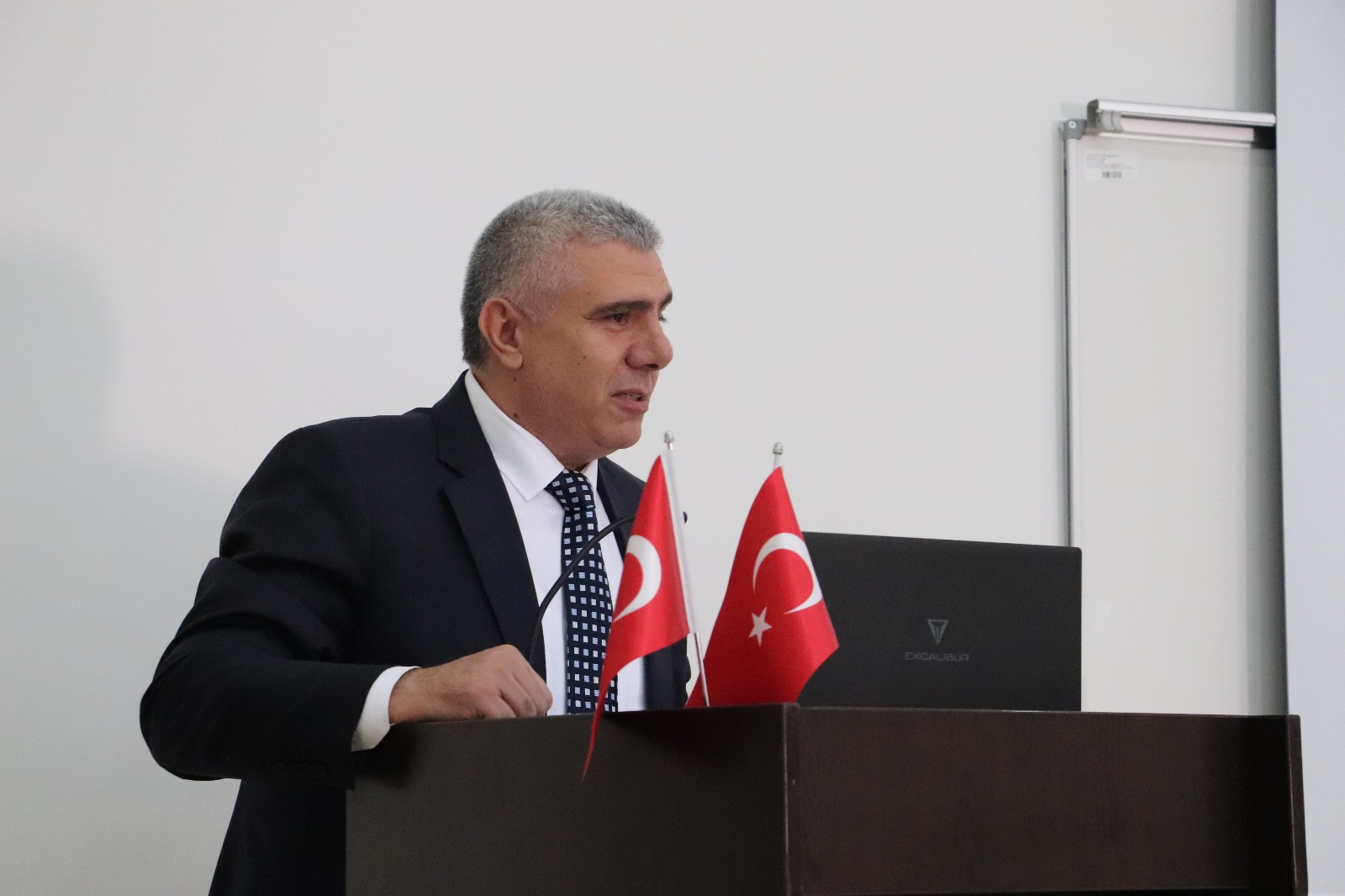
İsmihan Bayramoğlu is Professor of Mathematics and Statistics and former Dean of the Faculty of Arts and Sciences at Izmir University of Economics, Turkey, serving in the deanship from 2001 to 2022. His academic career spans Azerbaijan State University, the Azerbaijan Academy of Sciences, and Ankara University, where he became a Turkish citizen in 1999. His educational background includes: Applied Mathematics at Baku State University (1976-1981) PhD in Computational Mathematics, Theory of Probability and Mathematical Statistics at National Taras Shevchenko University of Kiev (1984-1988) Bayramoğlu's research centers on order statistics , copulas , and reliability analysis , with significant contributions to distribution characterization and statistical inference. His work bridges theoretical probability with practical applications in engineering and data science, emphasizing bivariate and multivariate models. Recent publications (2020-2023) reveal a focus on bivariate distributions, exceedance statistics, and reliability applications, demonstrating consistent innovation in statistical methodology. His articles frequently address coherent systems, random threshold models, and distributional properties. His scientific recognition includes: Ankara University Science Award (2001) Bayramoğlu serves as Editor-in-Chief of the Journal of Turkish Statistical Association and has organized major international conferences including the International Conference on Advances in Statistics (ICAS), which he chairs. His editorial work spans multiple journals as associate and guest editor. He leads the ICAS symposium series, fostering global collaboration through events in Helsinki, Zagreb, Athens, and St. Petersburg, and has delivered keynote addresses at conferences across 10+ countries.
Ayşe Sevtap Kestel is a full-time faculty member at the Department of Mathematics , Middle East Technical University. With over 133 publications in Web of Science and extensive international conference participation, her research spans actuarial science, financial mathematics, and risk modeling. Her work focuses on: Copula theory for dependence modeling Stochastic processes in insurance and pensions Machine learning applications for fraud detection Natural hazard risk assessment Reinsurance strategies and exposure curves Recent publications highlight her expertise in time-varying risk models, hybrid AI methods for asset pricing, and chronic disease comorbidity analysis. She has presented at major conferences like Insurance Mathematics & Economics and European Actuarial Journal conferences.
Manuel Fernández Delgado is an Associate Professor at the University of Santiago de Compostela (manuel.fernandez.delgado@usc.es). His research spans Machine Learning , Pattern Recognition , and Computer Vision with applications in medical diagnostics, agricultural monitoring, and gender-inclusive education. PhD in Computer Science (1999) Developed software tools: Govocitos , CystAnalyser , STERapp Research highlights: Medical Imaging : Breast cancer and oral leukoplakia analysis via image segmentation/classification Agricultural AI : Nutrient deficiency detection in wheat, marbling analysis in ham Gender Equality : Pioneering computational thinking education with gender perspectives Robotics : Fault diagnosis systems for antenna arrays Key methodologies include Extreme Learning Machines, Support Vector Machines, and Deep Learning. He collaborates with teams in TELGalicia and TecAnDaLi networks.
Gianfausto SALVADORI is a University Researcher in the Department of Mathematics and Physics "Ennio De Giorgi" at the University of Salento, specializing in Probability and Mathematical Statistics (SSD MAT06). His office is located on the ground floor, room 325, at the Former Fiorini College - Via per Arnesano - Lecce. Dr. SALVADORI is an applied mathematician with research interests spanning Copulas, Extreme Value Theory, and stochastic modeling applications to environmental phenomena. His work focuses on modeling multivariate dependent random variables and analyzing extreme environmental events including rainfall, floods, droughts, and sea storms. He has been involved in environmental research since 1989, initially working on Chernobyl radioactive pollution and Universal Multifractals modeling, and since 2001 has specialized in Copulas methodology. His research activities include collaboration with hydrological engineers at the Polytechnic of Milan, participation in national and European projects related to extreme environmental phenomena, and academic contributions including co-authoring the book "Extremes and Copulas" published by Springer-Verlag in 2007. He has developed course materials on Extreme Value Theory, indicating active teaching responsibilities in this specialized area of statistics. Office hours are available by prior agreement via email. His contact information includes telephone +39 0832 29 7584 and email gianfausto.salvadori@unisalento.it. His professional activities demonstrate ongoing engagement in both theoretical statistical research and practical applications to environmental challenges.
Mehmet İshak Yüce is a Professor in the Department of Hydraulics within the Faculty of Engineering at Gaziantep University. His career spans over 30 years, starting as a Research Assistant in 1993 and achieving professorship in 2021. He holds a PhD in Civil Engineering from the University of Manchester (2005), an MSc in Water Engineering from Istanbul Technical University (1995), and a BSc in Civil Engineering from Middle East Technical University (1992). Research Focus: Dr. Yüce specializes in hydrology, fluid mechanics, and climate impacts on water systems. His work integrates computational modeling, statistical hydrology, and sustainable resource management. Key themes include: Drought prediction using copula models and machine learning Hydrokinetic turbine design for renewable energy Hydraulic transients and pollutant transport Climate-driven hydrological variability in Mediterranean basins Awards & Recognition: Gaziantep University 2015 Second Best Doctoral Thesis Award Academic Leadership: He has supervised 6 doctoral and 32 master's students, focusing on hydrology, energy systems, and hydraulic infrastructure. His grants include projects on hydrokinetic turbines (2012-2022) and drought analysis (2015-2019), funded by national agencies. Administrative Roles: Former Dean of Engineering (2021), Institute Director (2020-2023), and multiple terms as Department Deputy Head.
Prof. Dr. Bihrat Önöz serves as Head of the Civil Engineering Department and full-time faculty at Işık University's Faculty of Engineering and Natural Sciences. She specializes in water resources engineering with extensive contributions to hydrological modeling and drought analysis across Turkish river basins. Her academic credentials include: 1974-1977: B.Sc. in Civil Engineering, Ege University 1984-1986: M.Sc. in Hydraulics, Istanbul Technical University 1988-1992: Ph.D. in Water Engineering, Istanbul Technical University Research focuses on hydrological extremes, featuring pioneering work in statistical streamflow estimation for ungauged basins, multivariate drought indexing, and climate change impacts on water resources. Her methodologies integrate wavelet analysis, copula-based modeling, and machine learning to address water scarcity challenges in Mediterranean ecosystems. She actively supervises graduate research and leads hydrological projects, with recent work emphasizing seasonal drought prediction and reservoir management under changing climate conditions. Notable supervision includes 58 graduate students across doctoral and master's programs, with thesis topics spanning low-flow analysis, flood frequency modeling, and renewable energy-water nexus studies. Current projects include hydrostatistical flow estimation models for ungauged basins and drought characterization in Eastern Black Sea watersheds.
Tzavelas Georgios is an Associate Professor at the Department of Statistics and Actuarial Science, School of Finance and Statistics, University of Piraeus. With a distinguished academic career spanning several decades, he has established himself as a prominent researcher in statistical theory and methodology, with particular expertise in estimation theory, characterization problems, environmental statistics, and biostatistics. His educational background includes a Ph.D. in Mathematical Statistics (1994), Master of Arts (1991), both from the University of Maryland at College Park, and a Bachelor's Degree in Mathematics (1984) from the University of Patras. His academic journey began with exceptional promise, as he ranked in the top 5% of students throughout his undergraduate studies. Professor Tzavelas' research focuses on advanced statistical methodologies with applications across multiple domains. His work in estimation theory has produced significant contributions to understanding parameter estimation in complex models, particularly with biased and size-biased samples. His research in environmental statistics has addressed critical issues related to environmental monitoring and assessment, while his biostatistics work has contributed to medical research methodology. Recent research trends show a strong emphasis on weighted distributions, characterization theorems, and the application of statistical methods to biomedical and environmental data. His scholarly output demonstrates consistent productivity with numerous publications in prestigious journals including Journal of Applied Statistics, Biometrical Journal, Metrika, and Journal of Statistical Computation and Simulation. His work often bridges theoretical developments with practical applications, particularly in healthcare and environmental contexts. Exemplary Teaching Award, University of Maryland at College Park (1993) Ranked in the top 5% of students at University of Patras (1981-1983) Throughout his career, Professor Tzavelas has participated in numerous research programs funded by various institutions, addressing diverse topics from healthcare quality assessment to environmental statistics. His collaborative approach is evident in his extensive co-authorship with researchers across different disciplines. He has also contributed significantly as a reviewer for international journals including Applied Statistics, Journal of Statistical Computation and Simulation, and Communication in Statistics. His teaching portfolio spans both undergraduate and graduate levels, with courses in sampling methods, statistical estimation, clinical trials, and biostatistics. His research program continues to advance statistical methodology while addressing real-world problems in healthcare, environmental science, and social research.
Assistant Professor Aljaž Zalar is affiliated with the University of Ljubljana at the Faculty for Computer and Information Science . His research focuses on Real Algebraic Geometry , Truncated Moment Problems , and Matrix Polynomials , with applications in Operator Theory and Positive Linear Maps . PhD in Mathematics, University of Ljubljana (2017) MSc and BSc in Mathematics, University of Ljubljana (2013, 2011) Zalar's work bridges theoretical mathematics and computational applications, including copositive matrices , positive semidefinite matrix completions , and noncommutative polynomial positivity . His recent projects address truncated moment problems on curves and algebraic structures in optimization . His publications from 2016–2025 span journals like Linear Algebra and its Applications , SIAM Journal on Applied Algebra and Geometry , and Integrable Equations and Operator Theory , emphasizing polynomial operator analysis and matrix inequalities . Zalar supervises postdoctoral and graduate students, including PhD candidate Rajkamal Nailwal and Igor Zobovič, and mentors undergraduate researchers. He leads the ARIS grant project J1-60011 on real algebraic geometry approaches to moment problems.
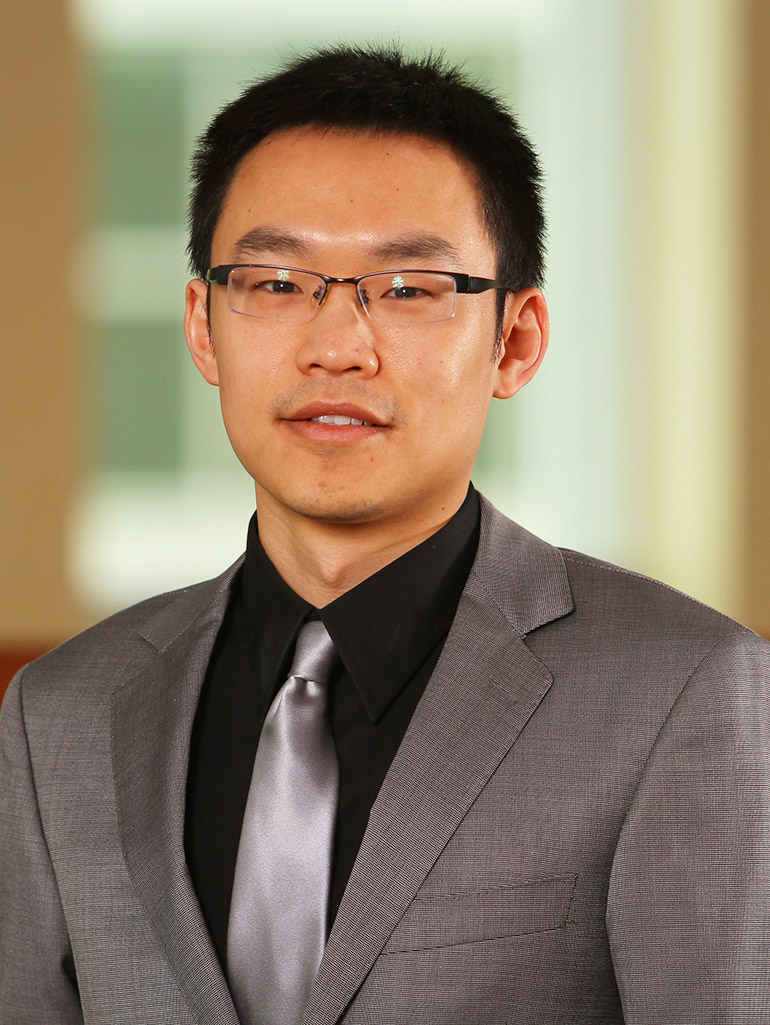
Muer Yang is a Professor in the Department of Operations and Supply Chain Management at the University of St. Thomas Opus College of Business. He holds a PhD in Operations Management from the University of Cincinnati, an MS in Management Science and Engineering, and a BS in Management Information System from Tsinghua University. His research applies simulation optimization to critical challenges in health care, public policy, and voting systems. His educational background includes: PhD in Operations Management, University of Cincinnati MS in Management Science and Engineering, Tsinghua University BS in Management Information System, Tsinghua University Professor Yang's research centers on simulation optimization techniques for health care management and public policy operations , with key focus areas: Voting systems and election operations Health care delivery and ICU management Affordable Care Act policy analysis His interdisciplinary work bridges operations research with real-world policy implementation. His 14 publications (2005-2018) reveal strong trends in public service operations research : Voting machine allocation models reducing voter wait times Health care operations for diabetic patients and ICU admissions Simulation-optimization for policy evaluation under uncertainty Work appears in premier journals including Production and Operations Management and Omega . Key honors include: Susan E. Heckler Research Excellence award (2015) INFORMS SPPSN best paper competition second place (2011) Professor Yang mentors students through operations management and analytics courses, with research attracting media coverage and election law expert testimony. His work aligns with: National Science Foundation-funded policy research Health care innovation grants He collaborates through the Behavioral Research Center and Risk Leadership Initiative, partnering with researchers like S. Kumar and M.J. Fry across institutions.
Haeran Cho is Professor of Statistical Science in the School of Mathematics at the University of Bristol, holding a BSc and PhD in Statistics. Her research focuses on developing foundational methodologies for detecting structural changes in complex high-dimensional data streams, with applications spanning finance, environmental monitoring, and biomedical engineering. Her primary research interests include changepoint detection in non-sparse regression frameworks, factor model diagnostics for tensor time series, and robust nonparametric segmentation techniques. She pioneers approaches that handle heavy-tailed distributions, temporal dependence, and high-dimensional scaling—addressing critical limitations in classical change point theory through adaptive covariance scanning and multiscale inference frameworks. Professor Cho received the Research Prize in 2013 for her contributions to statistical theory. She currently leads the £1.2M EPSRC-funded project Statistical Foundations for Detecting Anomalous Structure in Stream Settings (DASS, 2024-2029), developing real-time anomaly detection systems for industrial applications. Previous projects include quantile factor modeling for high-dimensional time series (2019). Her software implementations ( CptNonPar , mosum , fnets ) have become standard tools in statistical computing, with over 500 citations. She actively collaborates through Horizon Europe initiatives and supervises postgraduate researchers in statistical methodology development.
Dr. Ralf Weisse is a leading researcher at the Institute of Coastal Systems - Analysis and Modeling within Helmholtz-Zentrum Hereon, Germany. As Department Head for Coastal Climate and Regional Sea Level Changes, his work focuses on Marine climate dynamics Storm surge mechanisms Ocean wave modeling Regional sea level change analysis Climate change adaptation for coastal regions . His research spans three decades with significant contributions to understanding German Bight storm surges , Baltic Sea extreme events , and North Sea coastal dynamics . Recent work combines machine learning with Earth system models for decadal-scale predictions. Key projects include: WAKOS (2020–present): Climate services for coastal adaptation EXTREMENESS (2016–2019): Storm surge impact assessment ALADYN (2021): Tidal dynamics in German Bight His publications address compound flood events , statistical downscaling , and historical storm surge comparisons . Affiliated with Universität Hamburg and DKRZ, he applies neural networks and ensemble climate modeling to improve coastal protection strategies.
Mehrdad Naderi is a Lecturer in Statistics at the Department of Mathematics, Physics, and Electrical Engineering , Northumbria University . His academic journey includes a PhD in Mathematical Statistics from Shahid Bahonar University of Kerman (2017) and postdoctoral research at National Chung Hsing University (Taiwan), Ferdowsi University of Mashhad (Iran), and University of Pretoria (South Africa). Education: PhD in Mathematical Statistics, Shahid Bahonar University of Kerman (2017) His research focuses on applied statistical inference with emphasis on classification , cluster analysis , factor analysis , finite mixture models , and EM algorithm for robust estimation. He has contributed to multivariate and matrix-variate analysis, particularly in handling outliers and asymmetrical data structures. Recent work includes three-way data clustering using matrix-variate normal distributions and robust Bayesian inference for censored mixture models. His publications demonstrate expertise in distribution theory, statistical computation, and applications to financial data, environmental modeling, and astrophysics. Current collaborations span multiple institutions, focusing on heavy-tailed distributions and computational methods for complex data structures.