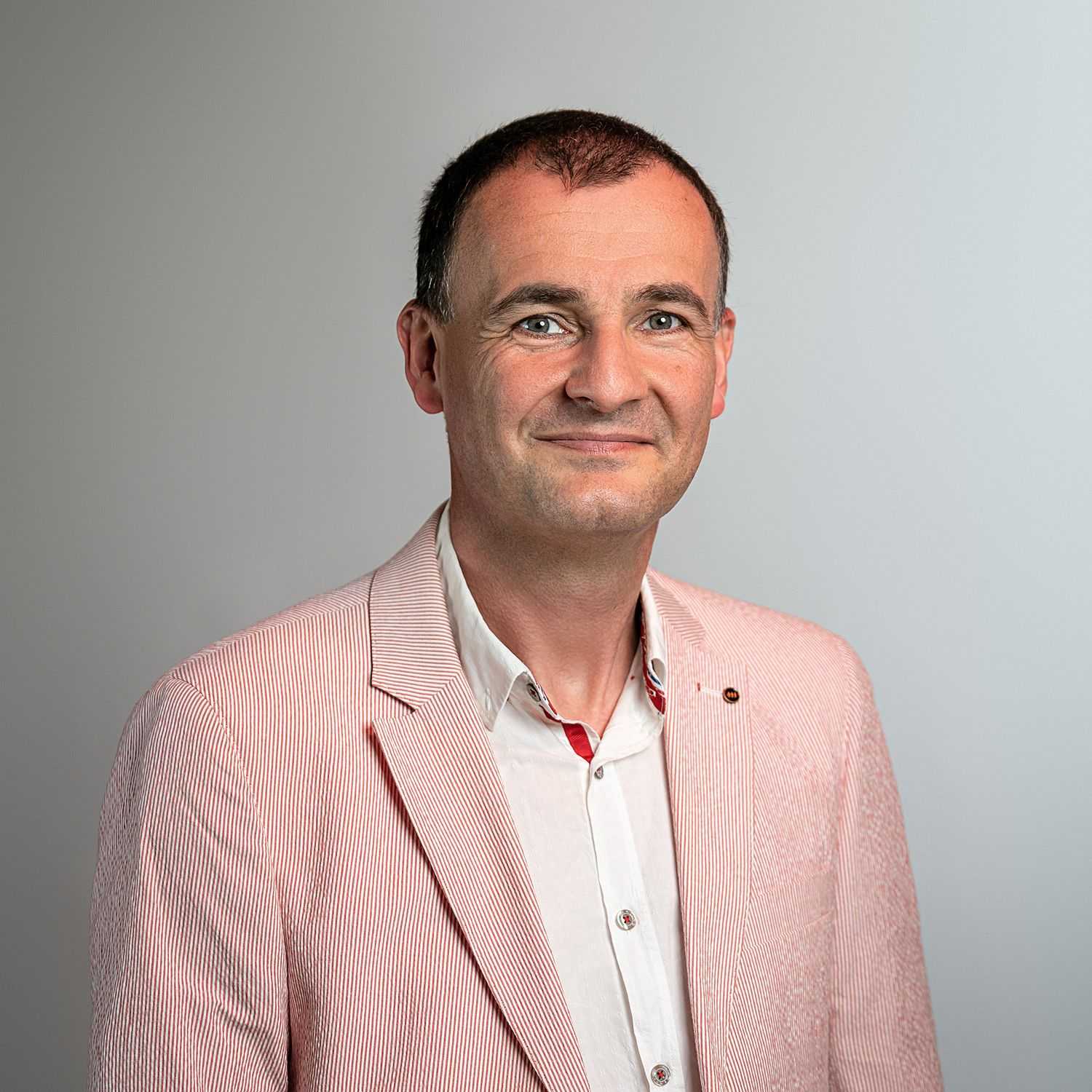
Martin Geroldinger is a researcher at the Research Program of Biomedical Data Science at Paracelsus Medical University. His work focuses on statistical methodologies for clinical trials in rare diseases, particularly Epidermolysis Bullosa, and biomedical data science applications. Key roles: Co-author in clinical trials, contributor to AI-based diagnostic pathways, organizer of biomedical data science colloquia Research interests: He specializes in optimizing clinical trial designs for rare genetic disorders, analyzing count and binary data in cross-over studies, and leveraging machine learning for medical research. His work addresses challenges in patient burden reduction and outcome measurement. Projects: Active in AI-driven medical knowledge extraction, 'long COVID' diagnostic pathways, and statistical approaches for rare epilepsies. Collaborates with Prof. Zimmermann and Dr. Thiel on rare disease trials. Activities: Organized the 2nd Biomedical Data Science Colloquium (2024), presented on statistical inference for rare disease trials (2022)
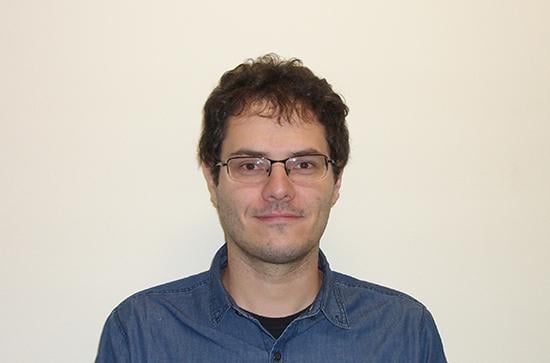
Manuel Fernández Delgado is an Associate Professor at the University of Santiago de Compostela (manuel.fernandez.delgado@usc.es). His research spans Machine Learning , Pattern Recognition , and Computer Vision with applications in medical diagnostics, agricultural monitoring, and gender-inclusive education. PhD in Computer Science (1999) Developed software tools: Govocitos , CystAnalyser , STERapp Research highlights: Medical Imaging : Breast cancer and oral leukoplakia analysis via image segmentation/classification Agricultural AI : Nutrient deficiency detection in wheat, marbling analysis in ham Gender Equality : Pioneering computational thinking education with gender perspectives Robotics : Fault diagnosis systems for antenna arrays Key methodologies include Extreme Learning Machines, Support Vector Machines, and Deep Learning. He collaborates with teams in TELGalicia and TecAnDaLi networks.
Rafael de Andrade Moral is a Professor of Statistics at Maynooth University's Faculty of Science & Engineering (since 2025), with prior roles as Associate Professor (2023-2025) and Assistant Professor (2018-2023). He holds a PhD in Statistics (University of São Paulo, 2014-2017) and dual bachelor's degrees in Biology and Education. His work bridges Statistical Ecology , Computational Biology , and Data Science , focusing on modeling ecological systems, agricultural pest dynamics, and biodiversity-ecosystem function relationships. Key research themes include Bayesian modeling , multivariate ecological forecasting , and machine learning applications . He founded the Theoretical and Statistical Ecology Research Group and serves on committees like the Young-ISA Chair . His recent articles span topics like insect abundance forecasting , weed-crop competition under climate change , and neuroinformatics-based learning analysis , reflecting interdisciplinary engagement. Scientific accolades include the Young Statistician Showcase Prize (2018), A-mu-sing Competition First Place (2021), and Maths Week Award (2022). He has advised three PhD students and contributed to over 50 peer-reviewed publications. Active in teaching innovation (e.g., Teaching Statistics through Music ), he also provides statistical consultancy to organizations like NIBIO and Jomakol .
Sylvain Sardy is an Associate Professor in the Department of Mathematics at the University of Geneva, where he conducts research at the intersection of statistics, optimization, and machine learning. He is affiliated with the Analysis, Mathematical Physics and Probability research group and has held significant editorial positions including Associate Editor for Computational Statistics and Data Analysis since 2020. Professor Sardy's research focuses on statistical machine learning, sparsity, and optimization with applications spanning astronomy, chemometrics, finance, and tomography. His work develops innovative methods for high-dimensional data analysis, particularly using wavelet-based approaches and LASSO regularization techniques for feature selection, denoising, and model selection. His publications reveal a consistent focus on finding sparse signals in complex datasets across diverse scientific domains. Professor Sardy has mentored numerous graduate students, currently supervising PhD candidate Maxime van Cutsem and having previously guided Dr. Xiaoyu Ma, Dr. Pascaline Descloux, Prof. Jairo Diaz Rodriguez, and Dr. Caroline Giacobino. His Master's students include Jairo Diaz (now Professor at Universidad del Norte, Colombia), Jean-Luc Baeriswyl, and others who have pursued careers in academia, industry, and education. His academic service includes leadership roles as Swiss representative at the European Regional Committee of the Bernoulli Society (2014-2018), President of the Doctoral School of Applied Statistics and Probability (2010-2013), and Student Advisor for the Mathematics Section (2008-2015). His teaching portfolio includes Optimization with Applications I, Statistical Machine Learning, and Pharmaceutical Statistics and Methodology, reflecting his expertise in statistical methodology and its practical implementation.
Dr. Mahdi Shafiee Kamalabad is an Assistant Professor in the Department of Methodology and Statistics at Utrecht University's Faculty of Social and Behavioural Sciences. His research focuses on developing advanced statistical and machine learning methods for complex data analysis, particularly in social and behavioral sciences, life sciences, and bioinformatics. Applied Data Science Network Analysis Bayesian Statistics Longitudinal Data Analysis He specializes in Dynamic Bayesian Network Models, Relational Event Models, and Change Point Detection algorithms. His work spans interdisciplinary collaborations, combining educational psychology, applied linguistics, and data science to improve understanding of multilingual classroom interactions and epidemic prediction models. He has contributed to R software packages like remify, remstats, and remstimate for relational event history data analysis. Notable projects include "Better Together: A Social Network Analysis of Multilingual Interactions in the Classroom" (2022) and methodological developments for malaria dynamics analysis in Cameroon. His teaching includes Data Wrangling and Data Analysis courses. Funding sources include Utrecht University's Faculty of Social and Behavioural Sciences.
Panagiotis Papastamoulis serves as Assistant Professor at the Department of Statistics within the School of Information Sciences and Technology at Athens University of Economics and Business (AUEB). He joined AUEB in April 2020 after working as an Adjunct Lecturer from 2018-2019 and completing extensive postdoctoral research at prestigious institutions including the University of Manchester (2012-2018) and INRA in France (2011-2012). His educational background includes a BSc in Mathematics from the University of Patras (2003), an MSc in Applied Statistics (2006), and a PhD in Statistics (2010) from the University of Piraeus. His doctoral thesis addressed the label switching problem in Bayesian analysis of mixtures of distributions under the supervision of Professor G. Iliopoulos. Dr. Papastamoulis's research program centers on Bayesian and computational statistics, with particular expertise in finite mixture models, model-based clustering, and bioinformatics applications. His methodological contributions span theoretical developments in label switching solutions, reversible jump MCMC algorithms, and practical implementations for RNA-seq data analysis. His work demonstrates a consistent trajectory from foundational statistical theory to real-world biological applications. Analysis of his publication record reveals a strong focus on developing statistical methodology for complex data structures, with significant contributions to mixture modeling, Bayesian factor analysis, and bioinformatics. His most recent work (2023-2025) extends into cure rate modeling, directional data analysis, and multinomial mixture models for spatial data, showing continued innovation while maintaining connections to his core research themes. As an educator, he teaches undergraduate courses including Linear Models and Bayesian Inference Methods, and graduate courses such as Statistical Genetics-Bioinformatics and High Dimensional Statistics. He has also developed multiple open-source R packages that have become standard tools in the statistical community, including label.switching, BayesBinMix, and fabMix, which address fundamental challenges in mixture model analysis. Dr. Papastamoulis actively contributes to the academic community through organizing research seminars at AUEB and participating in conference committees, including the 22nd European Young Statisticians Meeting in 2021. His research integrates theoretical statistical development with practical computational implementations, creating tools that advance both methodology and application in multiple scientific domains.
Yong Kong is a Senior Research Scientist in the Department of Biostatistics at the Yale School of Public Health , affiliated with the W.M. Keck Foundation Biotechnology Laboratory and the NIDA Neuroproteomics Center . His research bridges computational biology, infectious disease modeling, and genomic data science with applications to public health. PhD in Computational Biology (Washington University School of Medicine, 1997) BA in Biomedical Engineering/Computer Science (Tsinghua University) MS in Neurobiology (Shanghai Institute of Physiology, Chinese Academy of Sciences) Research Interests: Host-pathogen interaction profiling using multidimensional data Microbiome dynamics in respiratory and gastrointestinal infections Statistical methods for genomic sequence analysis Computational modeling of inflammatory and immune response pathways Public health applications of combinatorics and run statistics Recent Publication Trends: Focus on bat virus immune evasion mechanisms, multivariate run statistics, and microbiome-resistome interactions across veterinary and human health contexts. Collaborates extensively with immunologists (A. Iwasaki, M. Pettigrew) and infectious disease specialists. Labs & Collaborations: Core member of the Keck Biotechnology Laboratory at Yale, contributing to bioinformatics infrastructure and interdisciplinary research initiatives.
Zhangsheng Yu is an Adjunct Professor in the Biostatistics Department at Yale School of Public Health , Yale University. He specializes in clinical statistics methods and health science collaborations. Research Interests : Advanced survival analysis for disease risk Panel count and cure rate models Deep learning in medical imaging High-dimensional mediation analysis Spatial transcriptomics algorithms AI in psychiatric clinical trials Publications : Recent work spans multimodal cancer prognosis, neurodegenerative disease modeling, and spatial gene expression analysis, with methodologies applied to liver/kidney diseases and psychiatric conditions. Professional Service : Serves as Associate Editor for Statistics in Medicine , Heart Rhythm , and Journal of Digestive Disease . Former President of Central Indiana Chapter of American Statistical Association and current Vice-President of Clinical Statistics Chapter of World Congress of Chinese Medicine.
Stéphanie M. van den Berg is an Associate Professor at the University of Twente , affiliated with the Digital Society Institute and TechMed Centre . Her research spans interdisciplinary domains including Psychology , Genetics , Statistics , and Artificial Intelligence , with a focus on educational achievement, mental health assessment, and data-driven methodologies. Key Themes : Heritability analysis, machine learning applications, educational technology, longitudinal data modeling, and personalized medicine. Recent Work : In 2025, she investigated measurement invariance in child behavior phenotypes, while 2024 saw her contribute to personalized medicine through intensive longitudinal data. Methodologies : Expertise in item response theory, text mining, and statistical model selection, as demonstrated in her 2017 publications. She actively collaborates across disciplines, with recent work involving biomedical informatics and behavioral genetics. Her research outputs (97 total) reflect a sustained focus on integrating data science with psychological and health-related applications.
Enes Karaman serves as a Lecturer in the Department of Gynecology and Obstetrics at Niğde Ömer Halisdemir University's Faculty of Medicine, where he concurrently holds the position of Head of Department starting in 2025. His research program focuses on critical intersections of reproductive medicine, gynecological surgery, and obstetrics, with particular emphasis on ovarian reserve preservation, infertility mechanisms, and the physiological impacts of environmental stressors and medical interventions on female reproductive health. His educational trajectory includes a Licence in Medicine from Hacettepe University (2008-2015), Medical Specialization in Obstetrics/Gynaecology from Erciyes University (2022) with thesis on hyperbaric oxygen and metformin effects in ovarian torsion, and ongoing Doctorate studies in Histology-Embryology at Erciyes University (2023-). Complementing this, he holds dual Associate Degrees in Justice (Atatürk University, 2014-2016) and Labor/Veterinary Health (Anadolu University, 2013-2016). Dr. Karaman's research expertise spans reproductive toxicology , ovarian physiology , and molecular gynecology , demonstrated through extensive investigations into vaccine impacts on fertility, boron's protective effects against chemotherapy toxicity, and biomarker discovery in endometrial carcinoma. His methodological approach integrates rat models with clinical trials and bioinformatics, particularly examining ischemia-reperfusion injury, oxidative stress pathways, and hormonal regulation in conditions like PCOS and endometriosis. Recent work reveals sophisticated analysis of environmental toxin interactions (ethanol, nonylphenol) with reproductive tissues and innovative exploration of nutraceutical interventions (boric acid, pergol) for fertility preservation. Analysis of his 15 most recent publications (2023-2025) demonstrates three dominant research streams: (1) Experimental therapeutics for ovarian protection using hyperbaric oxygen, metformin, and boric acid; (2) Molecular diagnostics for gynecological cancers through biomarker discovery; and (3) Clinical epidemiology of reproductive health impacts from vaccines, environmental factors, and healthcare system variables. His work consistently bridges basic science with translational applications, featuring rigorous histopathological validation and innovative statistical approaches like CHAID analysis. Securing multiple Higher Education Institution grants, Dr. Karaman currently leads eight active research projects including boron treatment for endometriosis, metabolic syndrome in PCOS, and HPV's psychological impacts, while completing seven vaccine and torsion-related studies. His editorial contributions to six international health science publications and collaborative projects with institutions like Erciyes University demonstrate significant academic leadership beyond direct research output.
Lili Yu is the Karl E. Peace Endowed Chair of Biostatistics and Professor in the Department of Biostatistics, Epidemiology & Environmental Health Sciences at Georgia Southern University, where she has been faculty since 2007. Her academic appointments include serving as Principal Investigator for the Office of International Chinese Statistical Association (2007-2017) and as Co-Principal Investigator for current research projects including 'Hierarchical Bayes Regression Models for Geospatial Inquiries' at Georgia Southern University. Dr. Yu's educational background is highly interdisciplinary, with degrees spanning medicine and statistics: PhD in Biostatistics from Ohio State University (2007) MS in Statistics from Ohio State University (2004) MS in Neuroscience from Capital Medical University (2001) MD in Clinical Medicine from Tianjin Medical University (1995) Her research interests focus on biostatistical methodology development and application, particularly in survival analysis, categorical data analysis, and multivariate data analysis. Dr. Yu has made significant contributions to accelerated failure time models, Bayesian statistics, and spatiotemporal modeling. Her work often addresses important public health questions related to disease modeling, mortality risk factors, and health outcomes assessment. Analysis of her publication trends shows a consistent trajectory from methodological development in survival analysis to applied studies addressing significant health issues. Dr. Yu has received recognition for her scholarly contributions, with an h-index of 11 according to Scopus data, and 1,876 citations across her publications. Her work has appeared in numerous high-impact journals across biostatistics, epidemiology, and public health disciplines. Her research funding includes multiple successful grant awards, demonstrating her ability to secure competitive research support. Notable projects include 'Hierarchical Bayes Regression Models for Geospatial Inquiries' (2022-2023), 'Efficient statistical methods in AFT model for cancer data' (2009-2010), and leadership of the Office of International Chinese Statistical Association (2007-2017). Dr. Yu's collaborative network is extensive, with co-authors from multiple institutions across the United States and internationally. Her work bridges methodological statistics with practical applications in public health and medicine, contributing to United Nations Sustainable Development Goals related to health and well-being.