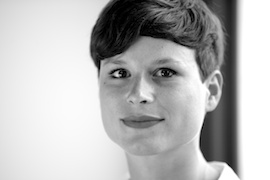
Eva Hornecker is a Professor at the Faculty of Media , Bauhaus-Universität Weimar, specializing in Human-Computer Interaction. Her work bridges technology, design, and social sciences. Current affiliation: Bauhaus-Universität Weimar (Faculty of Media) Academic rank: Professor Email: eva.hornecker@uni-weimar.de Research lab: Human-Computer Interaction Research Focus : Eva explores 'beyond the desktop' interaction, including multitouch surfaces, tangible interaction, whole-body interaction, mobile devices, and urban space installations. She emphasizes social and societal implications of technology and has conducted studies on museum visitor behavior. Prior Positions : Lecturer (assistant professor) at the University of Strathclyde (UK), post-doctoral roles at University of Sussex, The Open University (UK), TU Vienna (Austria), and HitLabNZ (New Zealand). Editorial Roles : Editorial Board, Interacting with Computers journal Editorial Advisory Board, CSCW Journal Forum Editor, ACM's Interaction Magazine
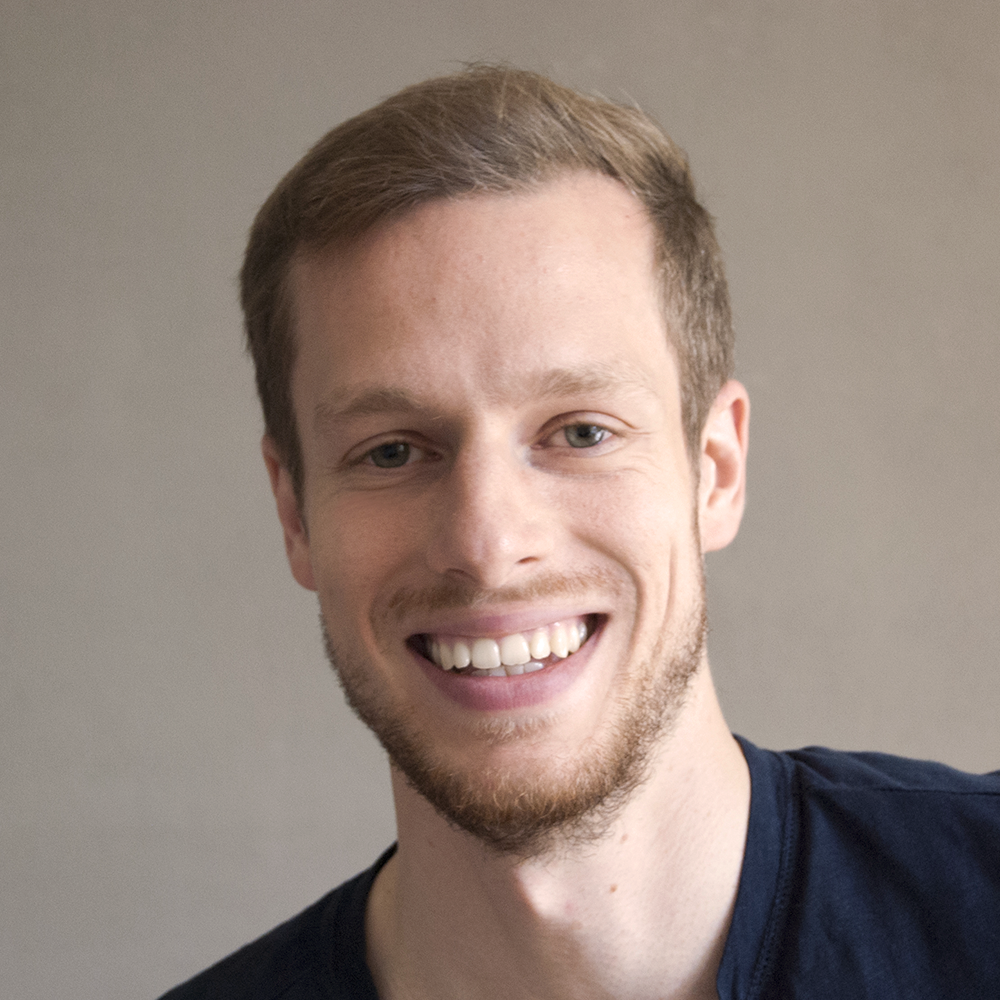
Eva Artinger is a Researcher at the Chair for Computer Aided Medical Procedures & Augmented Reality within the Faculty of Informatics at Technical University of Munich . Her work focuses on Human-Computer Interaction with specific emphasis on Multitouch and gestural User Interfaces , Information Visualization , and Tangible User Interfaces . Current position: Researcher at TUM Degree: Master of Science Her research particularly addresses the challenges of designing user interfaces for emergency response systems , including applications for Mass Casualty Incidents (MCIs) where she has developed innovative map interaction techniques and gesture-based text input systems like Gestyboard 2.0. Eva has contributed to multiple publications analyzing usability in high-stress environments and exploring interaction paradigms for augmented reality applications in medical and architectural contexts. Her recent work has focused on designing interfaces that maintain functionality while being operated in unstable conditions, with research trends showing increasing specialization in emergency response UI/UX , mobile device interaction , and real-time data visualization . Eva has also been actively involved in teaching activities at TUM, covering topics in Augmented Reality applications and Human-Computer Interaction for both desktop and mobile platforms.
Werner König is affiliated with the Interdisciplinary Center for Digital Experience Design (IZEd) at Worms University of Applied Sciences. His research focuses on User Experience (UX), Human-Computer Interaction (HCI), and immersive technologies. He leads projects such as the Immersive Flight Simulation platform, emergency response tools like the KESSEL project, and cultural storytelling apps ( SchUM , Experience Worms ). He has collaborated with institutions like the German Red Cross and 8devs GmbH, and his work is funded by organizations including the German Foundation for Engagement and Volunteering. Key projects include the development of mobile apps for aviation communication training, gamified heritage exploration, and AR-based training systems. He holds a European patent for Adaptive Pointing technology. König advises numerous students on topics ranging from eye-tracking systems for disabled users to AR applications. His research has been exhibited in venues like the ZKM in Karlsruhe (e.g., CloudBrowsing and Globorama ), blending art and technology. Awards include the European Patent EP2226707, recognizing innovations in adaptive input devices.
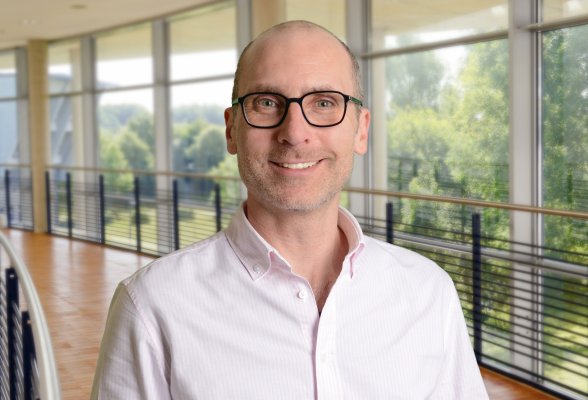
Olga Özbek is a researcher at the Leibniz Institute for Knowledge Media (IWM) in Tübingen, affiliated with the University of Tübingen. Since 2016, she has been part of the Multimodal Interaction Lab under Prof. Dr. Gerjets, focusing on hypermedia content development for interactive displays. She holds an M.A. in Art History and Empirical Cultural Studies from the University of Tübingen and is pursuing a PhD in Philosophy, examining visual representation theories. Her research spans AI integration in education, museum visitor interaction, and multitouch table technologies. Key projects include 'EyeVisit' (museum visitor guidance systems) and 'WR-AI-TING' (AI-driven creative writing tools). She actively organizes workshops on VR/AR in art education and future classroom technologies. Olga has contributed to conferences addressing AI in writing, instructional design, and cultural education. Her work bridges humanities and technology, emphasizing practical applications in educational and museum contexts.
Dr. Uwe Oestermeier serves as a Researcher and Head of the Software Development Group at the Leibniz Institute for Knowledge Media (IWM) in Tübingen, Germany. Leading a specialized team since 2003, he designs and implements experimental software and research prototypes using Python, JavaScript/HTML5, and Swift. His technical leadership spans multiple high-impact projects including the Interactive Ward Round Table for medical contexts and innovative educational tools like LEGO Music. His research focuses on haptic interactions, multimodal interfaces, and the visualization of abstract concepts including causal reasoning, statistical inference, and musical structures. Dr. Oestermeier's work bridges cognitive science theory with practical applications, creating intuitive user interfaces that enhance knowledge transfer and artificial intelligence integration across diverse domains. His publication record demonstrates consistent contributions to human-computer interaction, with recent work examining multiple document comprehension, clinical decision support systems, and tangible interfaces for education. The research trajectory shows evolution from foundational work on causal arguments to contemporary applications of AI in psychological research and medical contexts. As an active participant in multiple IWM research labs including Multimodal Interaction, Realistic Depictions, and Perception and Action, Dr. Oestermeier develops software tools that enable cutting-edge research across cognitive science domains. His technical expertise supports both experimental research and practical applications in medical, educational, and museum settings.
Dr. Thiemo Leonhardt serves as a Professor leading the Department of Learning Technologies within the Faculty of Computer Science at Dresden University of Technology. His academic career spans over 15 years with continuous research contributions to computer science education, focusing on innovative pedagogical approaches for diverse learner populations. Leonhardt's research program centers on computer science education with particular emphasis on serious games , virtual reality applications , and gender-inclusive teaching strategies . His work bridges theoretical frameworks with practical classroom implementations, developing tools like the MTLG framework for educational game creation and investigating collaborative learning through multitouch tabletops. He has pioneered approaches for teaching complex concepts like regular expressions and finite automata through gamified environments. Analysis of his publication trajectory reveals consistent focus on k-12 computer science education , with significant contributions to understanding gender dynamics in STEM, developing immersive learning technologies, and creating adaptable teaching frameworks. His research spans all educational levels from elementary (e.g., 'Zauberschule Informatik' for primary students) through secondary education. Leonhardt maintains active leadership in the German educational technology community through the DELFI conference series, where he has served as proceedings editor. His work with the InfoSphere student laboratory at RWTH Aachen University demonstrates long-standing commitment to practical outreach and talent development, particularly in initiatives targeting girls in STEM like the go4IT! project.
Benedikt Etzold is a Researcher at the Professorship of Media Informatics , part of the Faculty of Computer Science at Chemnitz University of Technology , Germany. His work focuses on bridging virtual and physical environments through human-computer interaction, with particular emphasis on multi-device systems and collaborative interfaces. Research Interests: Human-Computer Interaction Multi-screen and multi-device applications Visualization and user interfaces Multi-user scenarios Mobile devices Tabletops and public displays Etzold is actively involved in the DFG-funded research training group CrossWorlds , which investigates the integration of virtual and real social worlds. His dissertation project titled "Digital Tangibles – Connecting Multitouch Tabletops to Physical Environments" explores hybrid communication systems.
Ingmar Rothe is a Researcher at the Institute for Media Research, Faculty of Humanities, Chemnitz University of Technology, and concurrently serves as a Lecturer in Social and Cultural Studies at the University of Applied Sciences Fulda. His academic foundation includes a Diploma in Speech Science and Phonetics with a minor in German Philology (2001–2009). He is presently completing his dissertation titled "Communication and Interaction at Multi-touch-systems" under Prof. Dr. Claudia Fraas, focusing on human-computer interaction in exhibition environments. Rothe's research integrates qualitative methodologies across multiple domains: Human-Computer Interaction : Analyzing user engagement with multitouch systems in public spaces. Conversation Analysis : Examining linguistic patterns in professional contexts like call centers. Applied Linguistics : Optimizing communication frameworks for service industries. Social Research : Investigating technology-mediated social behaviors. His publications emphasize practical applications of communication theory in digital interfaces and service optimization. Since 2015, he has contributed to the DFG-funded research training group "CrossWorlds" , an interdisciplinary initiative connecting virtual and real social worlds through computer science and social sciences collaborations (2012–2018). Professional timeline includes prior roles in corporate training (2007–2015) and academic assistance at Halle’s Institute for Speech Science (2004–2007). No awards or advised students are documented.
Kalja Kanellopoulos serves as a Researcher at the Institute for Media Research within the Faculty of Philosophy at Chemnitz University of Technology. Since April 2012, she has been integral to the DFG-funded Research Training Group 'CrossWorlds' (Connecting Virtual and Real Social Worlds), conducting interdisciplinary work at the intersection of social sciences and computer science to overcome constraints in media-mediated communication through studies of communication, emotions, sensomotorics, and learning. Her academic foundation includes a Magister degree (Master's equivalent) in Sociology, General Rhetoric, and Modern German Literature (2004-2011), featuring an international semester at the National and Kapodistrian University of Athens (2007-2008). Prior professional experience encompasses research assistance for the 'Historical Dictionary of Rhetoric' at Tübingen University (2010-2012) and industry work at CeveyConsulting GmbH (2006-2010). Kanellopoulos specializes in Qualitative Social Research, Science and Technology Studies, and Human-Computer Interaction, with concentrated focus on museum contexts. Her ethnographic doctoral project examines innovative communication at interactive museum interfaces under Prof. Claudia Fraas' supervision. She develops frameworks merging design thinking with social inquiry to investigate materialities and aesthetics of digital systems, emphasizing playful interaction and user experience in cultural spaces. Her 2012-2014 publications reveal strong thematic cohesion around interactive museum technologies, particularly multitouch and tabletop systems. These works demonstrate consistent application of Human-Computer Interaction principles to cultural education, with recurring emphasis on collaborative interfaces, visitor experience optimization, and interdisciplinary co-design. The research consistently emerges from CrossWorlds' collaborative environment, reflecting integration of social science methodologies with technical development. As an active member of ACM, Deutsche Gesellschaft für Soziologie (including its Qualitative Methods section), European Sociological Association, and Gesellschaft für Informatik (including Human-Computer Interaction groups), she bridges computational and social domains. Her DFG-funded CrossWorlds work (2012-2018) established platforms for examining virtual-real social connections through interdisciplinary teamwork. Kanellopoulos operates within CrossWorlds' interdisciplinary network of computer scientists and social scientists, contributing to projects that analyze communication constraints across virtual-real boundaries. Her team develops methodological approaches for studying interaction in cultural contexts, producing collaborative outputs for ACM conferences and INTERACT, while advancing understanding of digital systems in educational and heritage settings through materiality-focused investigations.
Michael Storz is a Researcher at the Chair of Media Informatics within the Faculty of Computer Science at Chemnitz University of Technology. He has served as a scientific employee in the junior research group "Nebeneinander wird Miteinander" since January 2015, following prior work in the Research Training Group "Crossworlds" from May 2012 to December 2014. His academic credentials include a Master's degree in Intelligent Media and Virtual Reality (2010-2012) and a Bachelor's degree in Applied Computer Science (2006-2010), both completed at Chemnitz University of Technology. His Master's thesis analyzed machine learning workflows for object detection with focus on facial recognition, while his Bachelor's thesis implemented Henry Schneiderman's object detection method for face detection. Storz's research centers on Human-Computer Interaction with specialized expertise in collaborative tabletop systems and computer vision applications. His work bridges virtual and physical social environments, particularly through museum-focused interactive installations that promote relaxed user engagement. He has developed methodologies for machine learning workflows in object detection and created frameworks for automated multimedia production pipelines. His 2013-2014 publications reveal a strong interdisciplinary trajectory combining tabletop interaction design for cultural institutions with computer vision techniques. These works demonstrate consistent application of HCI principles to museum contexts while advancing machine learning tooling for object detection – reflecting the CrossWorlds group's mission to connect virtual and real social worlds through technology. Storz actively contributes to the Research Training Group "Connecting Virtual and Real Social Worlds" (CrossWorlds), an interdisciplinary initiative funded from April 2012 to November 2018. This group investigates communication, emotions, sensomotorics, and learning through collaborative networks of computer scientists and social scientists, with Storz focusing on perception-aware multitouch systems within the Communication research area.
Joachim Nitschke serves as a Research Fellow at the University of Hamburg within the Faculty of Mathematics, Informatics and Natural Sciences (MIN), specifically in the Department of Informatics' Human-Computer Interaction research group. His work bridges academic research with practical applications in critical infrastructure through the XR Lab and iPlanB project. Education: Master's degree in Computer Science and Communication Design from University of Hamburg and Hamburg University of Applied Sciences (2014) His research focuses on transformative Human-Computer Interaction domains: Tangible User Interfaces merging physical objects with digital functionality for maritime operations Cooperative Multitouch Systems enabling collaborative planning on shared tabletop surfaces Data Visualization techniques for complex port traffic and construction planning User-Centered Design methodologies applied to nautical environments Publication analysis (2014-2018) reveals consistent specialization in maritime HCI applications, particularly the development of the 'Peiltisch' digital planning table for Hamburg Port Authority. His work demonstrates iterative refinement of tangible interfaces for ship traffic management, emphasizing real-world usability in high-stakes operational environments like port control centers. Nitschke actively contributes to the iPlanB project developing multitouch applications for construction planning, collaborating with industry partners including Hamburg Port Authority under the smartPORT initiative. While no formal student advising is documented, his role involves mentoring within research teams. As a core member of the XR Lab, he advances extended reality applications for infrastructure planning, with current work focusing on integrating physical and digital elements for construction site management.
Professor Frank Jacob is a Professor of Interface Design at the Muthesius Academy of Art and Design in Kiel, where he has been developing this specialized focus within the Industrial Design program since 2005. He is also a member of the Cluster of Excellence for Inflammation Research 'Inflammation at Interfaces' since 2011, conducting interdisciplinary research with students in medical and bioinformatics fields. Frank Jacob's research interests center around interface design, user experience, usability, and interaction design, with particular expertise in motion graphics, affordance theory, and the relationship between aesthetics and usability. His work bridges design theory with practical applications in medical informatics and bioinformatics. His research demonstrates a consistent focus on how design principles can enhance user interaction with technology across various domains from consumer products to medical applications. His publications from 2005-2011 reveal a strong trajectory in understanding the intersection of usability and aesthetic design, with particular emphasis on motion graphics, touch interfaces, and conceptual design frameworks. The publications show progression from foundational work on affordances and usability in industry toward more specialized applications in mobile interfaces and natural user interfaces. 2012 red dot communication design award, category: Mobile & Apps 2011 Nomination for the Design Award of the Federal Republic of Germany 2012 (4x) 2011 iF communication design award, category: Product Interfaces (2x) 2010 red dot award for highest design quality: 'red dot: best of the best' (2x) 2010 iF communication design award, category: Product Interfaces 2009 Best Session Award from the Usability Professionals Association UPA 2009 Nomination for the Design Award of the Federal Republic of Germany 2010 2008 red dot award for highest design quality: 'red dot: best of the best' 2006 Best Session Award from the Usability Professionals Association UPA Professor Jacob has been actively involved in advising students through his research projects, particularly within the Cluster of Excellence for Inflammation Research. His professional activities extend to numerous international conferences where he has presented on topics ranging from multitouch interaction to the innovation potential of interaction design for product design. He maintains his own design office 'human interface.design' in Hamburg, which specializes in user-centered design of technical devices and interactive media. He is an active member of several professional organizations including the Usability Professionals Association (UPA), the German Society for Design Theory and Research (DGTF), the German Informatics Society (GI), and the Association for Computing Machinery (ACM). He also serves on the advisory board of iCom – Journal for Interactive and Cooperative Media.
Sven Bertel is a Professor at Flensburg University of Applied Sciences in the Faculty of Information and Communication, where he leads the CIVU – Center for Interaction, Visualization and Usability. His research focuses on Human-Computer Interaction, particularly in usability engineering, spatial cognition, and educational technology applications. Professor Bertel's research interests span several interconnected domains. His primary focus is on spatial cognition and mental rotation, where he investigates how people solve spatial problems and how these abilities can be trained through technology. A significant portion of his work applies these principles to medical ultrasound training through the development of SonoGame, a serious game designed to improve visuospatial skills for medical professionals. He also explores digital competencies development, particularly how user-centered software development can be integrated into educational contexts to prepare students for a digital world. His publication trends reveal a consistent focus on spatial abilities and educational technology since 2017, with recent work (2021-2024) increasingly emphasizing medical applications of spatial cognition research. His collaborations span multiple disciplines, particularly with medical researchers in ultrasound imaging and educators working on digital transformation in teaching. Professor Bertel is actively involved in several research projects related to digital competencies and medical training technologies. His leadership of the CIVU center indicates his role in coordinating interdisciplinary research efforts focused on interaction design, visualization techniques, and usability engineering. His teaching responsibilities include courses in the Applied Informatics program, with a specific focus on usability engineering. Through his work, he bridges theoretical research in spatial cognition with practical applications in medical training and educational technology.