Michael Stroud is a Professor of Psychology at Merrimack College's School of Arts & Sciences. His research focuses on visual attention mechanisms and pedagogical innovation in teaching and learning. He investigates how eye movements reveal cognitive processes during multitarget visual searches, with applications to airport security and medical diagnostics. Ph.D., Cognitive Psychology, University of Massachusetts Amherst M.A., Psychological Science, California State University, Chico B.S., Biopsychology, University of California, Santa Barbara Research interests include: - Multitarget search efficiency and cognitive load - Educational strategies enhancing student comprehension - Eye tracking as a tool for understanding attentional processes Recent work highlights ineffective note-taking methods and APA citation barriers for novice readers, as well as working memory's role in dual-target search. His 2017 Apple Distinguished Educator award recognizes innovative use of technology in teaching. Advising and grants: No specific advisees listed. Active in educational technology research collaborations.
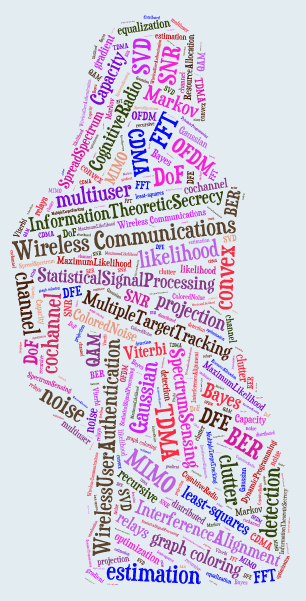
Jitendra K. Tugnait is the James B. Davis Professor in the Department of Electrical and Computer Engineering at Auburn University’s College of Engineering. He has been a faculty member at Auburn since 1989 and holds a Ph.D. in Electrical Engineering from the University of Illinois, Urbana-Champaign. Ph.D., Electrical Engineering, University of Illinois, Urbana-Champaign (1978) E.E., Electrical Engineering, Syracuse University (1974) M.S., Electrical Engineering, Syracuse University (1973) B.Sc. (Hons.), Electronics and Electrical Communications Engineering, Punjab Engineering College, India (1971) His primary research interests lie in Statistical Signal Processing and Machine Learning for Signal Processing , with a focus on conditional independence graphs, graphical modeling of multivariate time series and random matrices, and robust and high-dimensional statistical methods. His past work includes significant contributions to wireless physical layer security, massive MIMO, cognitive radio, and multisensor multitarget tracking. His recent publications reflect a strong trend in developing advanced statistical and machine learning techniques for estimating sparse, high-dimensional graphical models from dependent and multi-attribute data, often employing non-convex penalties for improved accuracy. These works appear in premier journals such as IEEE Transactions on Signal Processing and IEEE Open Journal of Signal Processing, as well as top conferences like ICASSP and Asilomar. Fellow of IEEE (1994) Fellow of AAIA (2021) IERE Benefactors Premium (1996) Auburn Alumni/Sigma Xi Research Award (1997) Auburn Alumni Engineering Council Senior Faculty Research Award (2000) Alumni Professorship, Auburn University (2000) 2002-03 Distinguished Graduate Faculty Lectureship Prof. Tugnait has been a prolific grant recipient, serving as sole PI on numerous National Science Foundation (NSF) grants, including the current CIF: Small grant (CCF-2308473) on learning sparse vector and matrix graphs from time-dependent data. He has also served as co-PI on collaborative NSF and DoD grants. He has advised graduate students and is currently recruiting for a post-doctoral research position. His editorial service includes senior or associate editor roles for IEEE Transactions on Signal Processing, IEEE Wireless Communications Letters, and several other IEEE journals. He is actively involved in professional service, having chaired technical programs for IEEE workshops and served on the Board of Governors of the IEEE Control Systems Society.
Dr. David Safronetz is a principal investigator at the Public Health Agency of Canada's National Microbiology Laboratory and an adjunct professor at the University of Manitoba's Max Rady College of Medicine. His research program focuses on highly pathogenic zoonotic viruses, including hantaviruses, Lassa virus, Lujo virus, and Crimean-Congo hemorrhagic fever virus. University of Manitoba, PhD (Medical Microbiology & Infectious Diseases) University of Manitoba, MSc (Medical Microbiology & Infectious Diseases) University of Saskatchewan, BSc (Medical Microbiology & Immunology) Dr. Safronetz's research involves developing and characterizing in vitro and in vivo disease models to understand viral pathogenesis and evaluate medical countermeasures. Notable achievements include creation of a non-human primate model for hantavirus pulmonary syndrome and advancement of a Lassa fever vaccine candidate through pre-clinical trials. His publications from 2015-2025 demonstrate sustained expertise in hemorrhagic fever virology, with recent focus on antiviral therapies (cidofovir/brincidofovir efficacy against Monkeypox) and mucosal immunity mechanisms in influenza. Articles span disease modeling, immunobiology, and public health interventions. 2015 NIH Director’s Award 2014 NIAID Merit Award 2013 NIH Performance Award 2011-2012 NIH Fellows Association Research Excellence Award 2008-2012 NIH Visiting Fellowship Dr. Safronetz currently does not accept graduate students but collaborates extensively with international research teams across virology, immunology, and public health domains. His work receives funding from multiple NIH and Canadian health agencies.
Dr. Amirali Khodadadian Gostar is a Senior Lecturer at the School of Engineering, RMIT University. His research focuses on machine learning, data analytics, multi-object tracking, sensor management, and data-driven manufacturing. He has contributed to advancements in autonomous systems, anomaly detection, and multi-agent coordination through projects like distributed information fusion for connected vehicles and geometrically-informed tracking algorithms. Research Interests : Image processing, sensor fusion, robotics, control systems, and industrial automation. Key Projects : Development of electronic pre-tension systems for seatbelts, AI-driven logistics optimization, and stereo vision systems for defect detection. Publications : Over 60 peer-reviewed articles in top journals/conferences such as IEEE Transactions on Intelligent Transportation Systems and ISA Transactions, focusing on tracking algorithms, anomaly detection, and multi-agent systems. His work bridges theoretical frameworks (e.g., random finite set theory) with practical applications in robotics, transportation, and manufacturing. He actively supervises PhD/Master's students on topics ranging from quantum AI in logistics to eye gaze tracking for visual attention modeling.
Stuart Jonathan Russell is a Distinguished Professor of Computer Science, Cognitive Science, and Computational Precision Health at the University of California, Berkeley. He holds the Smith-Zadeh Chair in Engineering and is also a Professor of Computational Precision Health at the University of California, San Francisco. Russell is the founder and leader of the Center for Human-Compatible Artificial Intelligence (CHAI) at UC Berkeley and serves as an Honorary Fellow of Wadham College, Oxford. His academic journey began with a B.A. in Physics from the University of Oxford, followed by a Ph.D. in Computer Science from Stanford University. Throughout his distinguished career, Russell has received numerous prestigious honors including the IJCAI Computers and Thought Award (1995), IJCAI Award for Research Excellence (2022), Fellow of the Royal Society (2025), and Member of the National Academy of Engineering (2025). Russell's research spans multiple domains within artificial intelligence, with a recent focus on ensuring AI systems remain beneficial to humanity. His work includes significant contributions to machine learning, probabilistic reasoning, knowledge representation, planning, real-time decision making, and inverse reinforcement learning. In recent years, his research has increasingly focused on AI safety, value alignment, and developing frameworks for human-compatible AI systems that maintain human control as AI capabilities advance. His publication record shows a clear trend toward addressing the long-term challenges of AI development, particularly the control problem and value alignment. The research spans theoretical foundations of AI, practical applications in robotics and decision making, and critical examinations of the societal implications of increasingly capable AI systems. Russell's work has evolved from foundational AI research to increasingly focus on the alignment problem and mechanisms for ensuring AI systems remain beneficial. Russell has received numerous scientific awards recognizing his contributions to the field: IJCAI Computers and Thought Award (1995) AAAI Fellow (1997) ACM Fellow (2003) AAAS Fellow (2011) Blaise Pascal Chair (2012) Reith Lectures (2021) Officer of the Order of the British Empire (OBE) (2021) Fellow of the Royal Society (2025) Member of the National Academy of Engineering (2025) Russell has advised numerous doctoral students including Marie desJardins, Eric Xing, and Shlomo Zilberstein, and has mentored many postdoctoral researchers who have become leaders in the field. His research has been supported by various grants from organizations including the National Science Foundation, Defense Advanced Research Projects Agency, and other funding bodies focused on advancing AI research with careful consideration of safety and societal impact. He has been particularly active in securing funding for research on human-compatible AI and value alignment. He founded and leads the Center for Human-Compatible Artificial Intelligence (CHAI), which brings together researchers from multiple disciplines to address the challenge of creating AI systems that reliably do what humans want them to do. The center collaborates with other research groups including the Berkeley Artificial Intelligence Research (BAIR) lab, the Kavli Center for Ethics, Science, and the Public (KCESP), and the Institute for Cognitive and Brain Sciences (ICBS), creating a rich interdisciplinary environment for addressing the challenges of AI safety and human compatibility.