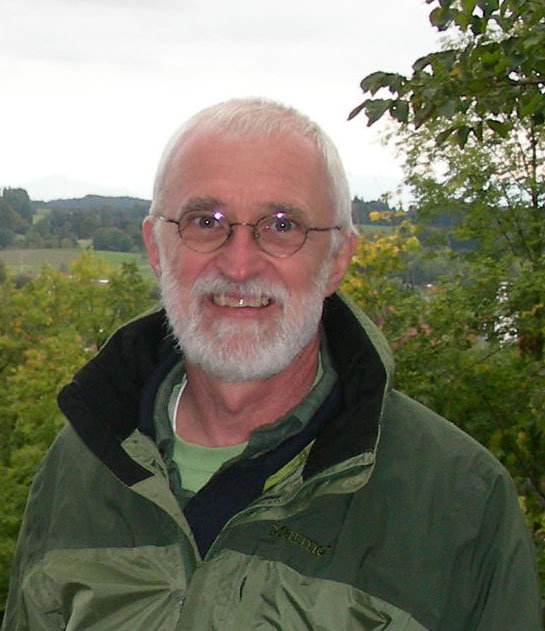
Dr. Shaoyu Zhao is a Research Fellow (Level A) at RMIT University's School of Engineering. His research focuses on advanced composite structures, mechanical metamaterials, graphene nanocomposites, and molecular dynamics simulations. He holds an ARC DECRA Fellowship and has over 40 journal publications with 2000+ citations (h-index 26). Awards include the ICES2024 Best Paper Award and 2025 DECRA. He supervises Masters/PhD students in areas like metaconcrete and functionally graded structures. Editorial roles include Early Career Board Member for Engineering Structures (Q1), International Journal of Structural Integrity (Q1), and others. Teaching includes the course MIET1076 - Mechanical Vibrations. His work bridges nanoscale simulations (e.g., graphene interfaces) with macro-scale engineering applications (e.g., 3D-printed composites and metamaterial energy absorption). Research spans multi-physics phenomena in perovskite materials and machine learning-driven material analysis. Key Projects: Metaconcrete composites, origami metamaterials, graphene-reinforced nanocomposites Lab Focus: Multiscale modeling for aerospace composites and smart materials
Dr. Bernardo Meza-Torres is a postdoctoral researcher at the University of Oxford's Nuffield Department of Primary Care Health Sciences (CIHORG). His work focuses on developing quality indicators using real-world evidence from electronic health records, particularly examining organizational impacts on care for type-2 diabetes and chronic liver disease through advanced statistical methods. DPhil in Medicine and Biosciences from the University of Surrey (2022) Master’s in Health Economics and Bioethics from the Universities of Heidelberg and KU Leuven Medical degree from the National Autonomous University of Mexico (UNAM) Bernardo’s research spans healthcare delivery evaluation, digital technology implementation for managing non-communicable diseases, and ethical considerations in real-world data use. He brings expertise from roles as a health-economics consultant in Mexico and NGO sector experience in digital health systems for disease monitoring, including collaboration with UNICEF Innovation Fund. His academic background and current work emphasize health economics, outcome research, and the development of fit-for-purpose composite indicators to improve healthcare quality.
Jeremy M G Taylor is the Pharmacia Research Professor of Biostatistics and holds professorships in the Department of Radiation Oncology in the School of Medicine and the Department of Computational Medicine and Bioinformatics at the University of Michigan. He serves as the Associate Director for Biostatistics at the Comprehensive Cancer Center and directs both the University of Michigan Cancer Center Biostatistics Unit and the Cancer/Biostatistics training program. His educational background includes: B.A. in Honours Mathematics from Cambridge University (1978) Dip. Stat. in Statistics from Cambridge University (1979) PhD in Statistics from University of California, Berkeley (1983) Professor Taylor's research focuses on the theory and application of statistics to biomedical problems, with an emphasis on data-driven, robust, and flexible statistical methods that incorporate scientific knowledge from specific research domains. His theoretical interests span Box-Cox power transformations, robust methods, causal inference, nonparametrics, and smoothing techniques. His applied work centers on cancer and AIDS research, particularly in radiation oncology, where he has developed methods involving mixture models, stochastic processes, multistate models, and multiple imputation. His extensive publication record demonstrates a continued focus on survival analysis, longitudinal data modeling, biomarker evaluation, and clinical trial design. Recent work explores time-varying effects, joint modeling approaches, multiple imputation techniques, and the integration of external information into statistical models, with applications across various cancer types including prostate, head and neck, and liver cancers. Awarded the Mortimer Spiegelman Award from the American Public Health Association, the Michael Fry Award from the Radiation Research Society, and the Jerome Sacks Award from the National Institute of Statistical Sciences, Professor Taylor has established himself as a leading biostatistician in cancer research methodology. With over 35 years of academic experience (UCLA 1983-1998, University of Michigan 1998-present), Professor Taylor has maintained an active research program while mentoring numerous students and collaborating extensively with clinical researchers. His work bridges sophisticated statistical methodology with practical applications in cancer treatment and outcomes research. As director of the Cancer Center Biostatistics Unit and the Cancer/Biostatistics training program, he leads a significant research team focused on advancing statistical methods for cancer research and training the next generation of biostatisticians.
Han Pu is a Professor in the Department of Physics and Astronomy at Rice University, specializing in theoretical ultracold atomic physics. His work focuses on quantum properties of atoms/molecules at near-absolute-zero temperatures, exploring wave-particle duality and quantum systems' controllability. He joined Rice in 2003 after postdoctoral research at the University of Arizona (1999-2002). Education: PhD in Physics, University of Rochester, 1999 Research Interests: Spin-orbit coupled quantum gases Quantum magnetism in atomic gases Non-equilibrium dynamics of quantum gases One-dimensional quantum gas behavior Spin-charge separation phenomena Quantum simulation with trapped ions Research Contributions: Dr. Pu's work bridges atomic physics with quantum optics and condensed matter physics. Recent studies include developing protocols for entanglement quantification using spin squeezing, simulating electron transfer models via trapped ions, and exploring phase transitions in Dicke systems. His team also investigates exact solutions for the Hubbard model and employs machine learning to approximate quantum spin systems. Lab Affiliation: Core member of the Rice Laboratory for Ultracold Physics (RLUP), advancing experimental/theoretical collaborations in quantum systems.
Liqun Diao is an Associate Professor (Tenured) in the Department of Statistics and Actuarial Science at the University of Waterloo. He holds affiliations with the Health Data Science Lab and the Waterloo Artificial Intelligence Institute. His research focuses on developing statistical methods and machine learning algorithms for applications in medicine, public health, and insurance. Education: B.Econ. in Statistics, Renmin University of China (2007) M.Math. in Statistics (Biostatistics), University of Waterloo (2009) Ph.D. in Statistics (Biostatistics), University of Waterloo (2013) Research Interests: Recursive partitioning and tree-based methods for survival and health data Causal inference and missing data methodologies Bayesian nonparametric models and copula dependence structures Mortality forecasting and actuarial science applications Awards: 2013 Pierre Robillard Award (best doctoral thesis in Canadian statistics) 2024 Outstanding Performance and Teaching Awards at UW Professional Activities: Led research groups in health data science and AI Recipient of multiple grants from NSERC and industry partners Advises graduate students in statistics and actuarial science Labs/Teams: Active contributor to the Health Data Science Lab and Waterloo AI Institute, focusing on applying statistical innovations to real-world health and insurance challenges.
Tian Hong is an Associate Professor at the Department of Biological Sciences, The University of Texas at Dallas , with a joint appointment as Research Associate Professor at the Department of Biochemistry & Cellular and Molecular Biology, The University of Tennessee, Knoxville . His research focuses on systems biology, bioinformatics, cancer biology, and mathematical biology , particularly the plasticity and heterogeneity of epithelial and immune cells during development and cancer progression . He develops computational and mathematical models for gene regulatory networks, pattern formation, and dynamical systems. Education : PhD in Genetics, Bioinformatics and Computational Biology from Virginia Tech; MS in Bioinformatics from Nanyang Technological University, Singapore; BS in Biological Sciences from Nanyang Technological University, Singapore. Previous Appointments : Associate Professor (2023–2024) and Assistant Professor (2017–2023) at The University of Tennessee, Knoxville. His recent publications explore noncoding RNA-driven oscillations , Turing pattern formation without feedback , and epithelial-mesenchymal transitions using single-cell transcriptomics and mathematical modeling . He has received the Professional Promise in Research and Creative Achievement Award (2024) and the Transdisciplinary Team Science Fellow (2009). His work is funded by NIH grants including R35GM149531 (PI) and R01GM140462 (completed PI). Dr. Hong advises PhD and Master’s students and collaborates with researchers at the Center for Systems Biology, UT Dallas . His lab ( link ) actively seeks undergraduate, graduate, and postdoctoral researchers interested in interdisciplinary computational biology .
Mohammad Zunoubi is an Associate Professor in the Department of Engineering Programs at SUNY New Paltz, part of the School of Science & Engineering. He holds an undergraduate degree from the University of Mississippi and a postgraduate degree from the University of Illinois at Urbana-Champaign. His research focuses on High-Performance Computing solutions for electromagnetic problems, Nonlinear Optics, and Microwave/Antenna Design. He has conducted extensive work in Computational Electromagnetics, utilizing methods like FDTD and FEM. His teaching interests span Electromagnetics, Numerical Methods, and EMC/EMI. He has been recognized with multiple awards, including the SUNY Provost’s Research Award (2005) and several United States Air Force Summer Faculty Fellowships (2009–2017). His research often involves collaboration with the Air Force, focusing on advanced electromagnetic modeling and high-power microwave effects. Dr. Zunoubi’s publications highlight contributions to antenna design, electromagnetic compatibility, and high-performance computing techniques. His work bridges theoretical electromagnetics with practical applications in aerospace, medical physics, and material science.
Yichuang Sun is a Professor of Communications and Electronics at the University of Hertfordshire, leading the Communications and Intelligent Systems Research Group and the Electrical and Electronic Engineering Department. He holds a PhD from the University of York (1996) and has over 450 peer-reviewed publications, 5 authored books, and 40+ supervised PhD students. His research focuses on wireless communications (5G/6G, RIS-aided systems), RF/microwave circuits, neuromorphic computing, and machine learning applications. He serves as Editor or Guest Editor for 12+ IEEE/IET journals and chairs technical committees for IEEE conferences. Notably ranked in the World's Top 2% Scientists since 2019, he also advises global institutions like Oxford and the Royal Academy of Engineering. Education: PhD in Electronics, University of York, UK (1996) Research Interests: Wireless/Mobile Communications and Networks RF and Microelectronic Circuits Neuromorphic Computing and Machine Learning Memristor-based Systems Secure and Energy-Efficient Communications Grants & Projects (selected): Advanced mmWave MIMO 4D Radar for Traffic Detection (2024–2027) Wireless Power Transfer for Implantable Medical Devices (2023–2025) RFID System for Sample Management (2021–present) Labs/Teams: Leads the Communications and Intelligent Systems Research Group, collaborating on 6G, neuromorphic hardware, and IoT systems.
Paul Dickman is a Professor of Biostatistics at the Department of Medical Epidemiology and Biostatistics (MEB) at Karolinska Institutet in Stockholm. He has been employed there since 1999, serving as deputy head of department, head of the MEB Biostatistics group, and programme director for the Master's Programme in Biostatistics and Data Science. His research focuses on developing and applying statistical methods for population-based cancer survival analysis, particularly relative/net survival estimation and modeling. Education: PhD in Statistics (1997), University of Newcastle, Australia B.Math (Honours Class 1) (1992), University of Newcastle, Australia Research Interests: Cancer epidemiology Survival analysis Statistical methods for register-based studies Awards: Statistical Promoter of the Year 2023 Grants and Fundings: Swedish Cancer Society grants for developing statistical methods in cancer epidemiology Swedish Research Council grant for register-based research Advising and Mentorship: Supervised 8 doctoral students as primary supervisor and 18 as co-supervisor, covering topics like cancer survival, health technology assessment, and epidemiology. Labs/Teams: Leads the Statistical methods in epidemiology – Paul Dickman's research group , focusing on biostatistical methods for cancer survival analysis and policy applications.
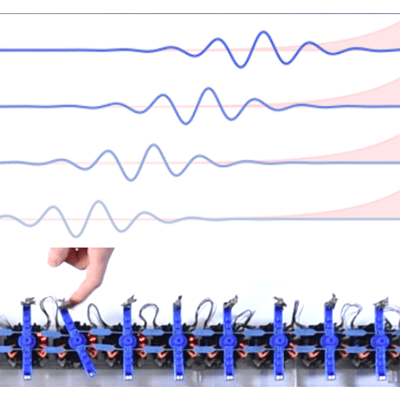
Dr. Corentin Coulais is a Professor in the Department of Physics at the University of Amsterdam's Faculty of Science. He leads the Machine Materials Laboratory, focusing on cutting-edge research at the intersection of physics, materials science, and engineering. His work explores the fundamental mechanics of structured materials and their applications in robotics, sensing, and programmable matter. Dr. Coulais's research interests center on mechanical metamaterials, active matter, and topological materials. His laboratory investigates how to design materials with unprecedented properties by leveraging mechanical instabilities, nonlinearity, and topology. His work spans from fundamental theoretical concepts to practical applications in soft robotics, shape-morphing structures, and energy absorption systems. The research combines experimental approaches with computational modeling and increasingly incorporates machine learning techniques for design optimization. His recent publications reveal a strong trend toward increasingly sophisticated control of material behavior through topological principles, active components, and learning algorithms. His work has evolved from basic mechanical metamaterials to systems incorporating non-reciprocity, active matter principles, and machine learning for design. The research spans fundamental physics of mechanical systems to practical applications in robotics and programmable matter. Dr. Coulais has established the Machine Materials Laboratory as a leading center for mechanical metamaterials research. His team develops innovative experimental setups and theoretical frameworks to explore the rich behavior of structured materials. The laboratory maintains strong connections with other research groups internationally and collaborates across disciplines including physics, engineering, and computer science.
Yun-Hee Choi is a Professor at the Department of Epidemiology and Biostatistics, Schulich School of Medicine & Dentistry, Western University. Her research focuses on advanced statistical methodologies for complex biomedical data, particularly in genetic and cancer epidemiology contexts. BSc in Statistics MA in Statistics PhD in Biostatistics She specializes in joint modeling , dynamic prediction , correlated survival data analysis , and statistical genetics , with applications to Lynch syndrome and familial colorectal cancer . Her methodological work includes copula models , frailty models , and multistate models for analyzing competing risks and recurrent events. Recent publications demonstrate expertise in genetic risk estimation , cancer progression modeling , and family-based survival analysis . She develops computational tools like the FamEvent R package for time-to-event data in genetic studies. NSERC: Statistical methods for joint modeling (2019-2024) CIHR: Risk prediction models for HBOC (2019-2023, Co-PI) CANSSI: Genetic data analysis (2019-2022, Co-I) NSERC: Competing risks modeling (2014-2019) CIHR: Multistate models for Lynch syndrome (2013-2016) CBCF-Ontario: BRCA1/2 family screening (2014-2017) NSERC: Correlated survival data (2009-2014) Her work bridges biostatistical theory with cancer prevention applications , particularly in hereditary cancer syndromes.
John Rinzel is a Professor of Neural Science and Mathematics at New York University, affiliated with the Center for Neural Science and the Courant Institute. He holds academic positions within the College of Arts and Science and the Graduate School of Arts and Science. His research focuses on computational neuroscience, integrating biophysical mechanisms with mathematical modeling to understand neural computations at cellular and network levels. Education: Ph.D. in Mathematics (1973) and M.S. in Mathematics (1968) from NYU’s Courant Institute, and a B.S. in Engineering from the University of Florida (1967). Ph.D. in Mathematics, NYU Courant Institute (1973) M.S. in Mathematics, NYU Courant Institute (1968) B.S. in Engineering, University of Florida (1967) Research Interests: Rinzel studies biophysical mechanisms underlying neural computations, including dendritic computation, neuronal excitability, auditory pathway modeling, perceptual bistability, and rhythmic timing. His work combines theoretical models with experimental collaborations, emphasizing reduced biophysical models for cellular and network-level dynamics. Recent research trends include auditory streaming, perceptual dynamics, and rhythmic beat generation in music. His models explore gamma oscillations, thalamic spindle rhythms, and sleep-related neural excitability. Publications highlight applications in sensory processing, neural network oscillations, and cognitive functions like attention and memory coordination. No scientific awards explicitly listed. Rinzel leads a research group focusing on computational neuroscience, collaborating on projects involving auditory neuroscience, mathematical biology, and theoretical neurophysiology. His lab is part of NYU’s Center for Neural Science, fostering interdisciplinary approaches to brain function.
Sangita Kulathinal is a Professor in the Department of Mathematics and Statistics at the University of Helsinki and holds an Associate Professor position at Tampere University since 2008. Her research integrates statistics, public health, and sociology, focusing on survival analysis, multistate models, and health outcomes. Statistics Public health, environmental and occupational health Sociology Bayesian methods Health informatics Recent publications highlight her work on: Medical statistics for age-related macular degeneration Gestational weight trajectories in Indian populations Longitudinal studies of marital stability and well-being Colorectal cancer modeling with misclassified data Statistics communication in postgraduate education She has received the Excellence in Doctoral Supervision Award (2024) and leads two major projects: Mathematical and statistical modeling of communicable/noncommunicable diseases (2025-2027) Algebraic statistics and multistate models (2025)
Prof. Dr. Alexander Schütz is a faculty member at the Faculty of Psychology, Philipps-Universität Marburg , leading the Sensorimotor Learning research group. His work explores the interplay between eye movements and visual perception , focusing on trans-saccadic integration, dynamic signal integration, and perceptual stability. Academic Affiliation: Department of General and Biological Psychology Key Collaborators: Karl Gegenfurtner, David Souto, Miriam Spering Research Interests Integration of bottom-up salience and top-down value signals in eye movement control Trans-saccadic information calibration and perceptual adaptation Individual differences in multistable perception and motor learning His 2024-2025 publications reveal trends in: Visual processing in rod vision and occlusion Optical flow models for eye movement prediction Neural mechanisms of cost-benefit trade-offs in visual search Perceptual biases in autism-psychosis spectra Visuotactile integration during spatial judgments Grants ERC Starting Grant PERFORM (2015-2020): Calibration of peripheral and foveal vision ERC Consolidator Grant SENCES (2021-2025): Processing of inferred vs. sensory visual information Laboratory Equipment : EyeLink 1000+ eye trackers, ViewPixx stereoscope, ProPixx projector, and Vizard VR platform for behavioral studies.
Kathleen Adelgais, MD, MPH, is a Professor at the University of Colorado Anschutz Medical Campus School of Medicine in the Department of Pediatrics-Emergency Medicine. She serves as Project Director for the Colorado EMS for Children Program and holds board certifications in Pediatrics (1998), Pediatric Emergency Medicine (2004), and Emergency Medical Services (2022). Her research focuses on pediatric emergency care , EMS for children , simulation training , and child abuse recognition . Recent work explores AI-powered speech recognition in emergency settings, sepsis management, trauma triage protocols, and health equity in pain medication administration. Notable contributions include: Co-developer of the PECARN cervical spine imaging prediction rule Advocate for standardized pediatric disaster triage simulations Research on smart glasses in EMS workflows Leadership in statewide EMS guideline implementation Awards include Fellow status at the American Academy of Pediatrics and National Association of EMS Physicians. She collaborates extensively with organizations like PECARN and NAEMSP, and her work appears in journals such as Lancet Child & Adolescent Health and Academic Emergency Medicine .