Stephen Tripodi is a Professor and Doctoral Program Director at Florida State University's College of Social Work, where he also serves as Faculty Director of Academic Dissemination at the Institute for Justice Research and Development. He holds a PhD in Social Work from the University of Texas and a BA in Psychology from Michigan State University. His research examines: Trauma histories of incarcerated populations Mental health and substance use interventions in correctional settings Recidivism pathways for women and youth Reentry program efficacy Quality of life in prison healthcare systems Dr. Tripodi's publications (2013-2019) demonstrate strong focus on gender-specific trauma interventions, recidivism correlates, and randomized trials of prison-based therapies. Key thematic clusters include: Trauma-informed care adaptations for incarcerated women Intersections of mental health, substance use, and reoffending Health disparities in correctional settings Methodological rigor through RCTs and latent variable modeling He leads significant grants including: A $1.2M NIJ trial on trauma reentry services for youth $480K Arnold Ventures project on therapeutic communities $250K jail-based trauma care evaluation Co-PI on $7.5M multistate reentry initiative Through the Institute for Justice Research and Development, he advances translational research on evidence-based criminal justice reforms.
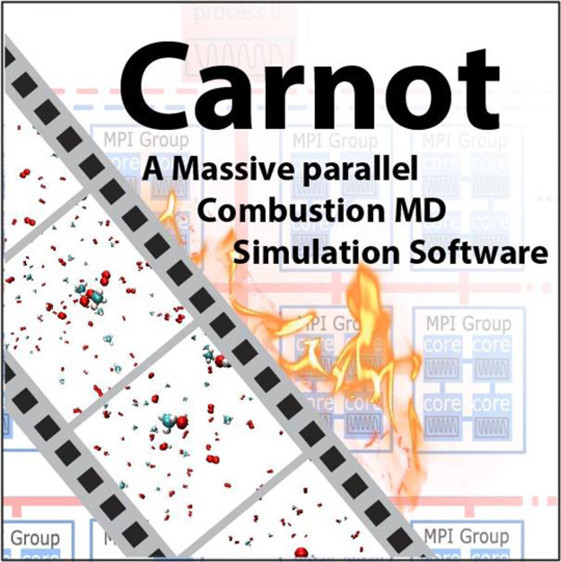
Professor Jiali Gao is a faculty member in the Department of Chemistry at the University of Minnesota, where he holds the position of Professor. His research program focuses on developing computational methods to study complex biological systems through the integration of quantum mechanics and molecular mechanics (QM/MM) approaches. Professor Gao's research interests span multiple interconnected areas: Development of novel combined QM/MM methods for studying chemical and biological reactions Understanding the physical origins of enzyme catalysis Modeling diffusion and interactions of macromolecular particles in cellular environments Application of computational methods to energy-related problems including photosynthesis and combustion His recent publications demonstrate a consistent focus on advancing computational methodologies while applying them to significant biological and chemical problems. Professor Gao's work bridges theoretical development with practical applications across multiple domains including protein dynamics, spectroscopy, and reaction mechanisms. Notable contributions include the development of the CARNOT simulation package for reactive systems and significant advances in multistate density functional theory. Professor Gao maintains an active research program with numerous publications each year in high-impact journals such as Nature Communications, Journal of Chemical Physics, and Journal of Chemical Theory and Computation. His interdisciplinary approach, connecting computational and experimental work, strengthens the impact of his research by providing molecular-level interpretations of experimental observations.
Michael Ariens is a distinguished Professor at St. Mary's University School of Law, where he has established himself as a leading scholar in legal ethics, American legal history, and the evolution of the legal profession. His scholarship spans several decades, with publications dating from the early 1990s through 2024, demonstrating his sustained contribution to legal academia. Professor Ariens' research interests focus on the historical development of legal ethics rules, particularly examining pivotal moments such as the Watergate scandal's impact on the American Bar Association and the subsequent creation of the Model Rules of Professional Conduct. He has made significant contributions to understanding David Hoffman's influence on early American legal ethics and has critically examined contemporary challenges facing legal ethics regulation, including his recent call to 'Abolish the MPRE' in 2024. His scholarly output reveals consistent engagement with themes of professional responsibility, legal education reform, and constitutional interpretation. Analysis of his recent publications shows a trajectory from historical examinations of legal ethics development toward increasingly critical assessments of current regulatory frameworks, suggesting an evolution from purely historical scholarship toward more normative analysis of how the legal profession should regulate itself. Professor Ariens' work has been published consistently in the St. Mary's Law Journal and St. Mary's Journal on Legal Malpractice & Ethics, reflecting his deep connection to the institution. His scholarship demonstrates both breadth across legal disciplines and depth in specific historical periods and ethical challenges facing the legal profession.
Dr. Ifrah Abdullahi is a Research Fellow at La Trobe University's Olga Tennison Autism Research Centre (OTARC) and Victorian Autism Specific Early Learning and Care Centre (ASELCC), holding a PhD in Medicine from the University of Western Australia. Her work bridges clinical epidemiology, public health, and developmental psychology to advance equity for autistic children from immigrant, refugee, and minority backgrounds. She specializes in population-based data linkage studies and early intervention systems within Australian healthcare contexts. Education PhD in Medicine, University of Western Australia Postdoctoral Fellowship, La Trobe University (2022-2025) Dr. Abdullahi's research investigates neurodevelopmental disparities through interdisciplinary lenses, focusing on autism spectrum disorders and intellectual disability in culturally and linguistically diverse (CALD) populations. Her methodology combines epidemiological rigor with community-engaged approaches to examine diagnostic pathways, early surveillance systems, and intervention accessibility. Key themes include migrant maternal health influences, cross-cultural adaptation of screening tools, and mental health comorbidities in autistic youth, reflecting her commitment to dismantling systemic barriers in developmental healthcare. Her 15 most recent publications (2020-2025) reveal consistent focus on cultural determinants of autism outcomes, with 60% addressing CALD populations and 40% covering broader epidemiological methods. Major trends include validation of early surveillance tools in primary care (3 articles), mental health comorbidities in autistic adolescents (2 articles), and international collaborations extending to China and refugee communities. This body of work demonstrates strategic alignment with global health equity goals while generating actionable evidence for Australian policy reform. Recognized as an award-winning science communicator, Dr. Abdullahi actively translates complex research for public audiences through media engagements including SBS World News. Her advocacy specifically centers immigrant and refugee communities, with documented impact through policy submissions to government committees. Dr. Abdullahi supervises multiple research students on autism in diverse communities and teaches 'Understanding and Support for Autism' (PSY3ASD). Her current Early Intervention Postdoctoral Fellowship (2022-2025) funds community-based studies on culturally responsive early support systems, complemented by her leadership role as co-chair of the International Society for Autism Research Early Career Committee. As a core member of OTARC's research collective, she collaborates with national healthcare networks and international teams including China's Tianjin autism research group. Her current projects integrate Somali language capabilities to improve service access for East African communities, while her participation in the 2023 Lindau Nobel Laureate Meeting reflects emerging leadership in global science policy.