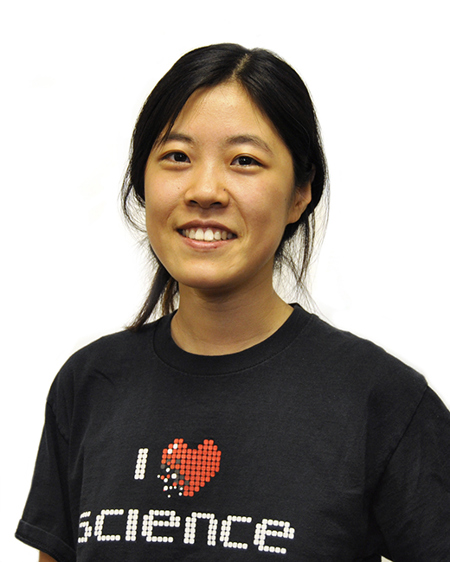
Mengsen Zhang is an Assistant Professor at Michigan State University (MSU) in the Department of Computational Mathematics, Science and Engineering and the Neuroscience Program. She bridges complex systems science, neuroscience, computational mathematics, and topological data analysis (TDA) to study brain dynamics and coordination mechanisms across scales. Education: B.S. in Psychology and Pharmaceutical Sciences (Peking University); M.S. in Criminology (University of Pennsylvania); Ph.D. in Complex Systems and Brain Sciences (Florida Atlantic University, with Drs. Emmanuelle Tognoli and J. A. Scott Kelso). Postdoctoral Training: Stanford University (with Dr. Manish Saggar) and University of North Carolina at Chapel Hill (with Dr. Flavio Frohlich). Her research focuses on the intersection of topological data analysis and dynamical systems, particularly in understanding brain oscillations, neural networks, and social coordination dynamics. She explores how third-party interventions can stabilize or disrupt coordination in biological and social systems, using both empirical and theoretical approaches. Her recent publications (2022–2025) highlight applications of transcranial alternating current stimulation (tACS) in psychiatric disorders, metastability in brain dynamics, and novel computational methods for analyzing neural and behavioral data. These works span neuroscience, psychiatry, and computational modeling. She teaches courses such as CMSE 381: Fundamentals of Data Science Methods (MSU) and STT 381: Fundamentals of Data Science Methods, integrating computational tools into academic training.
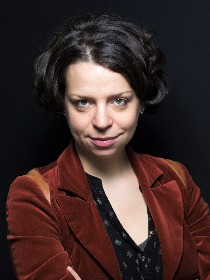
Giovanni Petri is a Professor in the Network Science Institute at Northeastern University London, where he joined in June 2023. Previously, he held positions at CENTAI as a Principal Researcher and at IMT Lucca as a Guest Scholar, with earlier affiliations at ISI Foundation and Imperial College London. His educational background includes a PhD in Complex Networks from Imperial College London (2012), an MSc in Theoretical Physics from the University of Pisa (2008), and a BSc in Physics from the University of Pisa (2005). Petri's research spans the analysis of neuroimaging data and AI systems with topological techniques, the formalization of cognitive control models with tools of statistical mechanics and network theory, and the study of the predictability of socio-technical systems. His work in Topological Neuroscience explores brain architecture using algebraic topology, while his research in Cognitive Neuroscience focuses on neural mechanisms underlying human cognition. He is particularly known for his work on higher-order networks, using mathematical frameworks like hypergraphs and simplicial complexes to model systems with multi-way interactions. His recent publications (2023-2025) demonstrate a strong focus on higher-order network theory applied to neuroscience, with particular emphasis on topological approaches to brain connectivity, social contagion models, and the physics of complex systems. These works reveal consistent themes in understanding how multi-body interactions shape system dynamics across biological, social, and technological domains. European Research Council Consolidator Grant (RUNES: Reconstruction and unification of neural and ecological systems, 2024) As Principal Investigator of the NPLab, Petri advises numerous PhD and postdoctoral researchers including Marilyn Gatica, Andrea Santoro, and Simone Poetto. His RUNES project, funded by the ERC Consolidator Grant, represents a significant research initiative. The lab maintains active collaborations with CENTAI, Project CETI (Cetacean Translation Initiative), and various international institutions. The NPLab investigates the role of topology and geometry in the collective dynamics of complex systems, ranging from neuroscience to society, using statistical mechanics, algebraic topology, and innovative computational approaches. Current projects include Topological Neuroscience, Cognitive Neuroscience, Higher-order Networks, Project CETI, and RUNES.
Peter D. Ditlevsen is a Professor at the Niels Bohr Institute , University of Copenhagen, specializing in Physics of Ice, Climate and Earth (PICE) . With a background in theoretical physics, he transitioned to climate dynamics and turbulence. Dr. Scient (2004), University of Copenhagen PhD (1991), Technical University of Denmark Research Interests : Focuses on Tipping Points in the Earth System , especially AMOC collapse , using stochastic dynamical systems , alpha-stable processes , and nonlinear climate modeling . His work bridges climate physics , dynamical meteorology , and time series analysis . Recent Publications : 2025 work on ice-core-based Dansgaard–Oeschger event modeling , 2024 studies on AMOC multistability and complex system predictability , and 2023 Nature Communications paper on AMOC collapse early warning (cited 4000+ times in media). Scientific Leadership : Leads CriticalEarth H2020 (2021-24) and contributed to TiPES (2019-23). Holds Carlsberg Fellowship and Ole Rømer Prize . Outreach : Produces weekly climate science podcast with David Trads, delivers 4-6 public lectures/year, and has appeared in 40+ media outlets. Teaches Electrodynamics , Thermodynamics , and Turbulence courses.
Professor Tomasz Kapitaniak is a distinguished academic in the field of nonlinear dynamics and theoretical mechanics. He serves as a Professor of Theoretical and Applied Mechanics and Head of the Division of Dynamics at the Faculty of Mechanical Engineering, Technical University of Lodz, Poland. His career spans over three decades at the university, where he has made significant contributions to the understanding of nonlinear systems, chaos theory, and mechanical oscillations. Professor Kapitaniak holds advanced degrees in both mechanics and applied mathematics from the Technical University of Lodz and the University of Lodz. His educational background includes: M.Sc. in mechanics, Faculty of Mechanical Engineering, Technical University of Lodz (1982) M.Sc. in applied mathematics, Faculty of Mathematics, Physics and Chemistry, University of Lodz (1985) Ph.D. in mechanics, Faculty of Mechanical Engineering, Technical University of Lodz (1985) D.Sc. in mechanics, Faculty of Mechanical Engineering, Technical University of Lodz (1988) Professor of technical science, title given by the President of Poland (1995) His research focuses on nonlinear dynamics, with particular emphasis on mechanical oscillations, stability, bifurcations and chaos, stochastic dynamics, and applications of nonlinear dynamics in mechanical engineering. Professor Kapitaniak is renowned for his work on the development of methods for controlling chaos without feedback, identification of new types of bifurcations, synchronization mechanisms in coupled mechanical oscillators, and explaining the origin of randomness in mechanical systems. His research has evolved from fundamental theoretical work to increasingly applied studies involving complex networks, biological systems, and engineering applications. Professor Kapitaniak has published over 300 scientific papers in renowned journals, cited over 8,000 times. His work exhibits a consistent focus on understanding complex nonlinear phenomena across various physical systems. The trend in his recent publications shows continued exploration of synchronization phenomena, extreme events in dynamical systems, and applications of nonlinear dynamics to biological, mechanical, and physical systems. His most recent work demonstrates a growing interest in multistability, chimera states, and the prediction of tipping phenomena in complex systems. Among his notable scientific achievements and distinctions are: Election as a member of the Polish Academy of Sciences (corresponding member in 2013, ordinary member in 2019) Election to Academia Europaea in 2021 Honorary doctorates from Saratov State University (Russia, 2001) and Lublin University of Technology (Poland, 2014) Multiple prestigious fellowships including the British Council Fellowship (1989), King Abdul Aziz Award Fellowship (1990), and Fulbright Fellowship (1997) Editorial roles including Associate editor of Chaos, Solitons and Fractals since 1990 and member of editorial boards of several other prestigious journals Throughout his career, Professor Kapitaniak has been actively involved in mentoring the next generation of researchers, having supervised numerous PhD students including Jerzy Wojewoda, Anton van Wyk, Barbara Błażejczyk-Okolewska, Andrzej Stefański, Andrzej Kozłowski, and Przemysław Szumiński. He has secured significant research funding from various national and international sources including the Ministry of Science and Higher Education (Poland), Deutscher Akademischer Austauschdienst, The Royal Society of London, and others. His research team has maintained strong international collaborations with institutions worldwide, including universities in the United States, United Kingdom, Germany, Brazil, Russia, and Ukraine. He leads the Division of Dynamics at the Technical University of Lodz, which serves as a hub for research in nonlinear dynamics, mechanical oscillations, and related fields. The division maintains strong international collaborations with institutions worldwide and continues to produce cutting-edge research in the field of nonlinear dynamics and its applications.
Nathalie Katsonis is a Professor of Chemistry at the University of Groningen, affiliated with the Faculty of Science and Engineering and the Molecular Active Systems department within the Stratingh Institute of Chemistry. Her research focuses on understanding and designing active molecular systems inspired by biological mechanisms, emphasizing the transmission of movement across molecular to macroscopic scales, particularly in liquid crystals, supramolecular chemistry, and molecular machines. She holds a Ph.D. in Chemistry from Sorbonne Université (2004), followed by postdoctoral research at the University of Groningen (2004–2007) and a Veni Fellowship (2009–2011). Prior to her current position, she held academic roles at the University of Twente, including Professor, Associate Professor, and Assistant Professor from 2011–2020. Her research explores molecular motion mechanisms, chirality control, and the creation of functional materials like light-responsive polymers and self-actuating systems. Key contributions include studies on rotaxane-based liquid crystal switches and macroscopic motion driven by molecular dynamics. She leads an international research group and chairs committees such as the Binding Study Advice Commission (FSE) and the Van't Hoff Foundation. Notable awards include the Professor-Werdelmann Award (2022), Koninklijke Hollandsche Maatschappij der Wetenschappen membership (2021), and an ERC Consolidator Grant (2017). Her work bridges fundamental science and applications in soft robotics, smart materials, and origins-of-life research.
Corrado Maurini is a Professor in Mechanics at Sorbonne University , Paris, France. He leads two international master programs: Mécanique des Solides (Solid Mechanics) and Computational Mechanics .
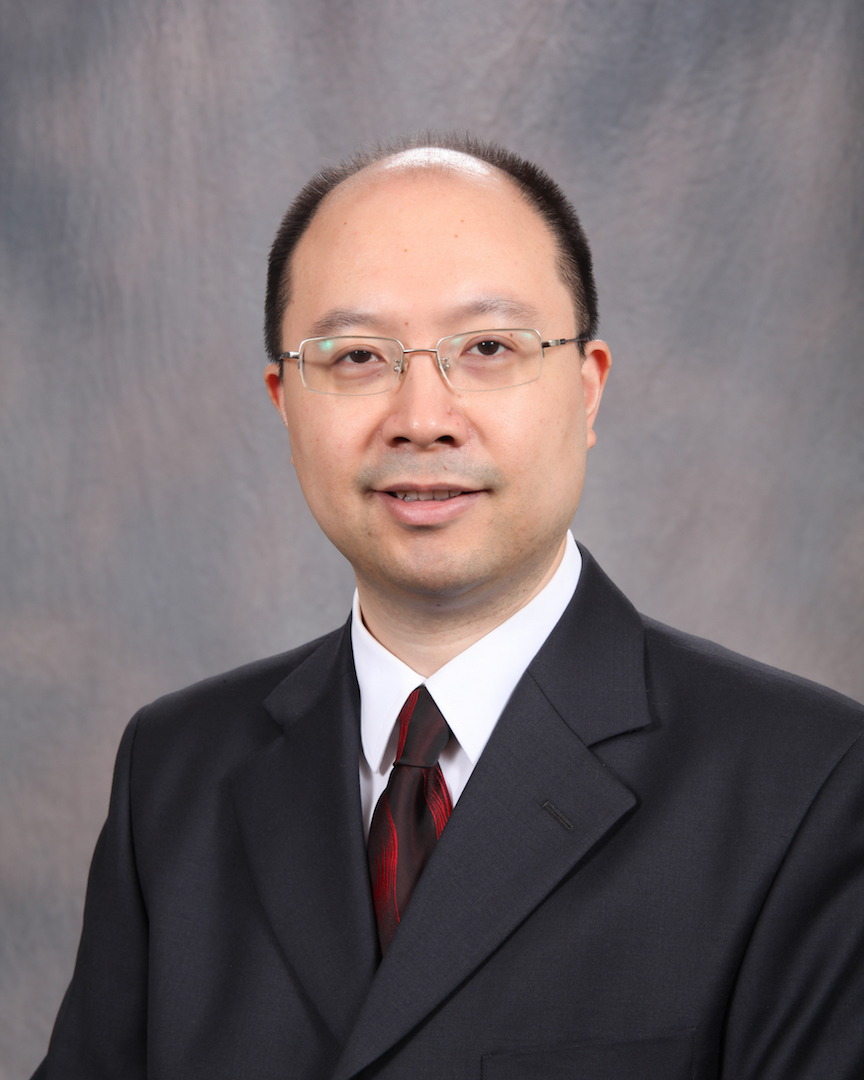
Sheng Sang is an Assistant Professor in the Department of Engineering Sciences at Bethany Lutheran College. His research lies at the intersection of Mechanical Engineering and Biomedical Engineering, with a strong emphasis on machine learning applications in composite materials and elastic metamaterials. His research interests include: Mechanical & Biomedical Engineering Machine Learning on Composites Elastic Metamaterials and Composites Optimization of Medical Devices Finite Element Modeling and Simulation Dr. Sang's recent publications demonstrate a consistent focus on integrating deep learning techniques with mechanical systems, particularly in predicting composite microstructures, tracking particles in complex systems, and optimizing wave propagation in metamaterials. His work frequently employs 3D CNNs and other neural architectures to solve inverse problems in material science. Scientific awards and recognition include: Dr. Lehtola Fellowship Research Grant ($9,000, PI), 2021–2023 Graco Engineering Lab Development Grant ($60,000), 2020–2022 He has been actively involved in teaching a wide range of engineering courses such as Fluid Mechanics, Solid Mechanics, Thermodynamics, and Computer-Aided Design. His research is supported by external grants, indicating active supervision and project leadership. Dr. Sang has collaborated with researchers across disciplines, including neuroscience and medical imaging, particularly in studies involving deep brain stimulation and fMRI. He is affiliated with research teams working on: Active elastic metamaterials design Machine learning for material characterization Optimization of biomedical devices using swarm intelligence Development of advanced simulation tools for composite systems
Meritxell Sáez Cornellana serves as a Contracted Professor of Ph.D in the Department of Mathematics and Data Analytics at IQS School of Engineering, part of Universitat Ramon Llull in Barcelona, Spain. She leads the ADAMIQS (Applied Data Analytics and Modelling IQS) research group funded by AGAUR, and participates in multiple interdisciplinary projects including CERTERA (advanced therapies development), NFT value drivers research, and international collaborations with China on sustainable development in population medicine. Her research focuses on applying mathematical modeling to biological systems, particularly in understanding cell fate decisions through dynamical landscapes and chemical reaction networks. She has developed geometrical frameworks for analyzing gene regulatory dynamics and cell differentiation processes, bridging mathematical theory with biological applications. Her work spans mathematical biology, dynamical systems theory, and data analytics, with particular expertise in bifurcation analysis, model reduction techniques, and statistical approaches to biological decision-making. Analysis of her publication record reveals a clear trajectory from foundational mathematical work in algebraic geometry toward increasingly biological applications, with a significant shift around 2016 toward systems biology. Her most impactful work involves creating geometrical landscapes that capture decision-making dynamics during cell fate transitions, which has been cited over 60 times. Recent publications show expansion into statistical approaches for university education and continued development of mathematical frameworks for understanding biological networks. Research leadership and funding: Principal Investigator for ADAMIQS project (Applied Data Analytics and Modelling IQS) funded by AGAUR (2022-2025) Researcher in CERTERA consortium for advanced therapies development (Carlos III Health Institute, 2024-2026) Researcher in NFT value drivers project (Fundación Ramón Areces, 2023-2026) Researcher in PoPMeD-SuSDeV project on sustainable development and global health (2023-2026) Researcher in 2IDLATRL project on learning analytics tools (2022-2023) Professor Sáez Cornellana directs the Applied Data Analytics and Modeling research line at IQS, supervising multiple research projects that integrate mathematical theory with practical applications in biology and education. Her team collaborates across disciplines, connecting mathematical modeling with biological experimentation and educational innovation, creating a unique interdisciplinary research environment focused on extracting meaningful insights from complex data systems.
Yang Shen is an Associate Professor in the Department of Electrical and Computer Engineering at Texas A&M University, affiliated with the Department of Computer Science and Engineering and the Institute of Biosciences and Technology. He holds a B.E. in Automation from the University of Science and Technology of China (2002) and a Ph.D. in Systems Engineering from Boston University (2008). His research focuses on algorithms for modeling biological molecules, systems, and data, with applications in protein docking, drug design, systems biology, and omics. He has received prestigious awards such as the NSF CAREER Award (2020) and MIRA Award (2017). His work integrates machine learning, optimization, and graph theory to address challenges in computational biology. Notable contributions include generative AI for protein design, interpretable models for compound-protein affinity prediction, and Bayesian active learning for protein docking. Shen has advised numerous students, including Yuning You, Mostafa Karimi, and Arghamitra Talukder, who have received awards like the Chevron Scholarship and NSF Graduate Fellowships. His lab actively collaborates on projects in drug discovery, synthetic biology, and precision medicine. Shen has led funded projects totaling over $3.5 million from NIH and NSF, exploring topics like molecular mechanisms of cancer mutations and AI-driven drug design. He serves on editorial boards for journals like the Journal of Biological Systems and has organized workshops such as the International Workshop on Biomedical Informatics with Optimization and Machine Learning (BOOM). His research bridges computational methods and biological systems, advancing both theory and practical applications in healthcare and biotechnology.
Leah Christensen serves as Professor of Legal Writing at the University of San Diego School of Law, where she joined the faculty in 2018 after teaching positions at Thomas Jefferson School of Law, University of St. Thomas School of Law, and University of Wisconsin School of Law. Her educational background includes a JD from the University of Iowa College of Law (1995) and BA from the University of Chicago (1992). Her academic journey began with a clerkship for Justice William A. Bablitch of the Wisconsin Supreme Court, followed by legal practice in medical malpractice, environmental law, and public education law. Her research focuses on innovative legal pedagogy with special emphasis on neurodiverse learners, professional responsibility training, and evidence-based learning strategies for law students. Christensen's scholarly output reveals consistent thematic development across 13 publications from 2006-2018, demonstrating evolving expertise in legal education psychology. Her work increasingly addresses learning differences in legal training while maintaining strong connections to professional ethics and practical lawyering skills, reflecting both theoretical depth and practical application in legal education reform. Among her distinctions: Professor of the Year (2006-2013) Lewis and Clark Award for Innovation (2013) Awards from Black Allied Law Students Association (BALSA) Awards from Women Law Students Association (WLSA) She has received research grants from the Legal Writing Institute and Association of Legal Writing Directors. Christensen actively contributes to legal education discourse through presentations at American Association of Law Schools (AALS), Legal Writing Institute, and Law School Admissions Council conferences. Her empirical research methodology, particularly regarding student learning patterns and editorial processes in legal scholarship, demonstrates rigorous academic approach to improving legal education outcomes.
Joseph J. Beaman is Professor and Cockrell Family Dean's Chair in Engineering Excellence in the Walker Department of Mechanical Engineering at The University of Texas at Austin, where he has served since 1979 and chaired the department from 2000-2011. A pioneer in additive manufacturing, he coined the term Solid Freeform Fabrication (SFF) in 1987 and initiated academic research in the field in 1985, developing the foundational Selective Laser Sintering (SLS) process in his laboratory. His educational background includes: B.S.M.E. with high honors from The University of Texas at Austin (1972) Sc.D. in nonlinear control from Massachusetts Institute of Technology Professor Beaman's research spans additive manufacturing, control systems, and materials engineering, with seminal contributions to SFF technology that enabled rapid prototyping and manufacturing across medical, automotive, and industrial applications. His work encompasses materials processing, laser scanning, thermal control, direct metal fabrication, and biomedical applications, driving the emergence of a global industry. Analysis of his publications (2004-2012) reveals evolving focus from core SLS development to cross-disciplinary applications in metallurgical process control (electroslag remelting) and energy systems (fuel cell membrane modeling), while maintaining additive manufacturing as the central theme. Keywords consistently include materials science, control theory, and advanced manufacturing across diverse subfields. His distinguished honors include: National Science Foundation Presidential Young Investigator Award (1984, inaugural year) Distinguished Mechanical Engineer (2011) DuPont Young Faculty Award and Engineering Foundation Awards (1984, 1988) Multiple Best Paper Awards across engineering journals As an academic entrepreneur, Beaman co-founded DTM Corporation (now 3D Systems) and served as Advanced Development head (1990-1992), mentoring graduate students who became key inventors in SLS commercialization. His research has been supported by NSF and industry grants, while his leadership extended to chairing the World Technology Evaluation Center panel on Additive/Subtractive Manufacturing (2003) and serving on international assessment panels. His laboratory established UT Austin as the birthplace of academic SLS research, fostering industry-academia collaboration that directly enabled commercialization of rapid manufacturing systems now used globally for complex part production impossible with conventional methods.
Paul Nolette is Professor of Political Science at Marquette University and Director of the Les Aspin Center for Government. He serves as co-editor of Publius: The Journal of Federalism , a leading academic publication in federalism studies. His academic career spans over a decade at Marquette, where he has established himself as a prominent scholar of American federalism and intergovernmental relations. Professor Nolette's research focuses on the dynamics of contemporary American federalism with particular emphasis on the role of state attorneys general in national policymaking. His influential book Federalism on Trial: State Attorneys General and National Policymaking in Contemporary America (University Press of Kansas, 2015) examines how state litigators use lawsuits against corporations and the federal government to shape national policy. His current work explores the emergence of executive federalism, investigating how polarization and executive-centered governance affect state-federal relations, while also studying the politics of the American legal profession and the global spread of constitutional courts. His scholarly contributions appear in top journals including Publius: The Journal of Federalism , Law & Social Inquiry , and Polity . His research has been cited in major national media outlets such as the New York Times , Washington Post , Wall Street Journal , Governing Magazine , and Public Radio International , demonstrating the real-world impact of his academic work. Ph.D. in Political Science, Boston College (2011) J.D., Georgetown University Law Center (2004) B.A., Saint Anselm College (2001) Before entering academia, Professor Nolette worked at a litigation law firm and served as legal counsel for the Labor and Workforce Development Committee in the Massachusetts House of Representatives, providing him with practical legal and governmental experience that informs his scholarly work. As Director of the Les Aspin Center, he oversees Marquette's Washington, D.C. program, connecting students with federal government opportunities while continuing his research on the evolving dynamics of American federalism.
Dr. Xiong Yi is an Assistant Professor at the School of System Design and Intelligent Manufacturing (SDIM) at Southern University of Science and Technology (SUSTech) in Shenzhen, China. He leads the Computational Design and Fabrication (CoDeFab) research group, focusing on the integration of computational design methods with advanced manufacturing technologies, particularly in the field of additive manufacturing. Dr. Xiong has established himself as a leading researcher in computational design for additive manufacturing, with a strong international research background spanning Europe and Asia. Dr. Xiong's educational journey includes: Doctor of Science (DSc) in Engineering Design and Production from Aalto University, Finland (2012-2016) Master of Science (MSc) in Machine Automation from Tampere University of Technology, Finland (2010-2012) Bachelor of Engineering (BEng) in Mechanical Engineering from Hubei University of Technology, China (2006-2010) Dr. Xiong's research primarily focuses on computational design and fabrication methodologies, with particular emphasis on design for additive manufacturing (DfAM), intelligent manufacturing systems, and smart materials. His work bridges the gap between theoretical design principles and practical manufacturing constraints, developing novel approaches for the production of complex engineered products. He has pioneered research in continuous fiber-reinforced composite additive manufacturing, developing innovative process planning and optimization techniques that enable the production of high-performance structural components. His research in electrothermally controlled origami and 4D printing of smart materials represents cutting-edge work at the intersection of materials science, mechanical engineering, and computational design. Dr. Xiong's recent publications reveal a strong focus on continuous fiber-reinforced composites, with significant contributions to 4D printing, metamaterials, and intelligent process planning. His work integrates computational design with manufacturing constraints, creating novel approaches for topology optimization, toolpath planning, and structural design that consider both performance requirements and manufacturability limitations. The research demonstrates increasing sophistication in materials science applications, particularly in programmable materials and multi-functional structures. Dr. Xiong has received multiple prestigious awards for his research contributions, including: Best Presentation Award at the 24th Chinese Conference on Mechanisms and Machine Science (IFToMM CCMMS2024) Best Presentation Award at the International Conference on Frontiers of Additive Manufacturing Research (RAAM 2024) Best Paper Award at the International Conference on Design for 3D Printing (ICD3DP 2023) PhD Scholarship from Aalto University (2016) Research Travel Grant from the International Association for Vehicle System Dynamics (IAVSD) (2013) National Scholarship from the Ministry of Education (2008) As a dedicated educator and mentor, Dr. Xiong serves as a PhD supervisor at SUSTech and has successfully guided students who have gone on to pursue advanced studies and careers at prestigious institutions including Hong Kong Polytechnic University, Beihang University, DJI Innovations, and Singapore's A*STAR research institute. His research is supported by multiple competitive grants, including key projects from the National Key R&D Program of China, the National Natural Science Foundation of China, and provincial and municipal funding agencies. Dr. Xiong also serves on the editorial board of the Journal of Engineering Design and as a guest editor for Composites Communications, contributing to the advancement of his field through scholarly service. Dr. Xiong leads the CoDeFab research group, which maintains a strong collaborative culture focused on 'design leading manufacturing, manufacturing driving design, and digital-intelligent integration.' The group has developed several advanced manufacturing platforms, including multi-axis continuous fiber-reinforced composite additive manufacturing systems, smart composite additive manufacturing platforms, and multifunctional soft matter open manufacturing platforms. With a focus on practical applications and innovation, the CoDeFab group actively collaborates with industry partners and has established a joint laboratory to bridge academic research with industrial implementation.
Dr. Bernardo Meza-Torres is a postdoctoral researcher at the University of Oxford's Nuffield Department of Primary Care Health Sciences (CIHORG). His work focuses on developing quality indicators using real-world evidence from electronic health records, particularly examining organizational impacts on care for type-2 diabetes and chronic liver disease through advanced statistical methods. DPhil in Medicine and Biosciences from the University of Surrey (2022) Master’s in Health Economics and Bioethics from the Universities of Heidelberg and KU Leuven Medical degree from the National Autonomous University of Mexico (UNAM) Bernardo’s research spans healthcare delivery evaluation, digital technology implementation for managing non-communicable diseases, and ethical considerations in real-world data use. He brings expertise from roles as a health-economics consultant in Mexico and NGO sector experience in digital health systems for disease monitoring, including collaboration with UNICEF Innovation Fund. His academic background and current work emphasize health economics, outcome research, and the development of fit-for-purpose composite indicators to improve healthcare quality.
Han Pu is a Professor in the Department of Physics and Astronomy at Rice University, specializing in theoretical ultracold atomic physics. His work focuses on quantum properties of atoms/molecules at near-absolute-zero temperatures, exploring wave-particle duality and quantum systems' controllability. He joined Rice in 2003 after postdoctoral research at the University of Arizona (1999-2002). Education: PhD in Physics, University of Rochester, 1999 Research Interests: Spin-orbit coupled quantum gases Quantum magnetism in atomic gases Non-equilibrium dynamics of quantum gases One-dimensional quantum gas behavior Spin-charge separation phenomena Quantum simulation with trapped ions Research Contributions: Dr. Pu's work bridges atomic physics with quantum optics and condensed matter physics. Recent studies include developing protocols for entanglement quantification using spin squeezing, simulating electron transfer models via trapped ions, and exploring phase transitions in Dicke systems. His team also investigates exact solutions for the Hubbard model and employs machine learning to approximate quantum spin systems. Lab Affiliation: Core member of the Rice Laboratory for Ultracold Physics (RLUP), advancing experimental/theoretical collaborations in quantum systems.