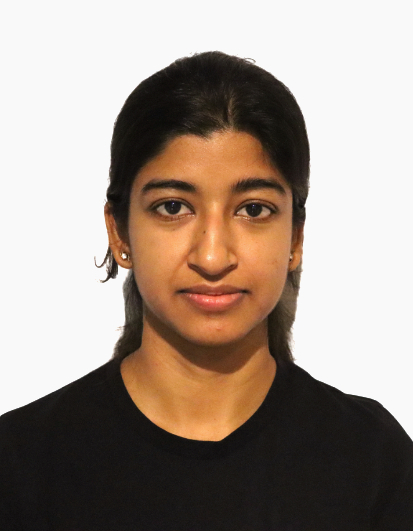
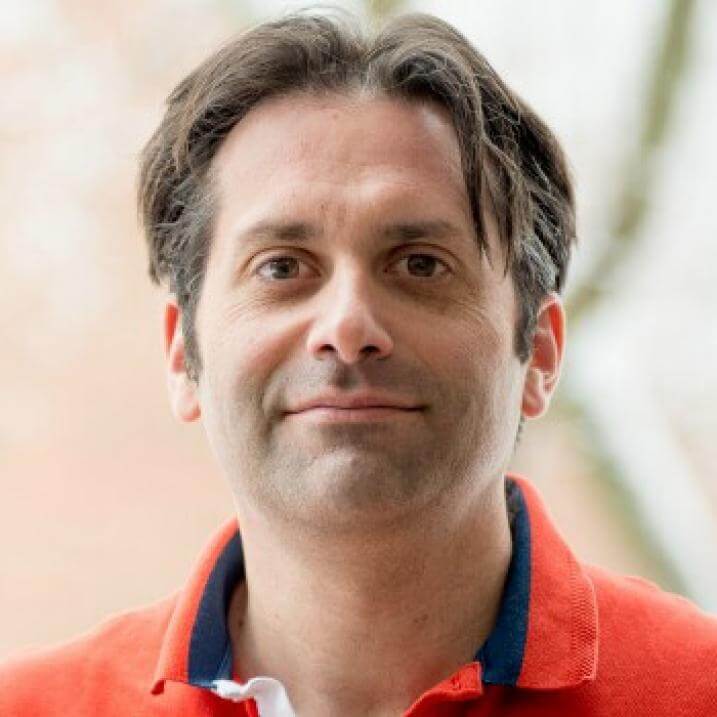
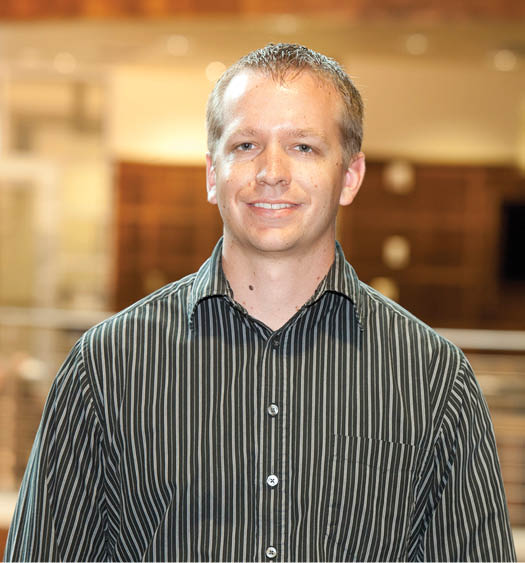
George Koutsantonis is a Professor in the School of Molecular Sciences at the University of Western Australia. His research focuses on synthetic chemistry, organometallic and inorganic materials, molecular electronics, and supramolecular systems. He holds a BSc(Hons) and PhD from the University of Adelaide. Previously, he conducted postdoctoral research at the University of Kentucky and Griffith University, and has been at UWA since 1995. He serves as Co-Editor-in-Chief of the Australian Journal of Chemistry . Education: BSc(Hons), University of Adelaide PhD, University of Adelaide Research Interests: Molecular electronics and nanoscale materials Metallomicelles and redox-active complexes Host-guest supramolecular systems Transition metal organometallic chemistry Awards: Leighton Memorial Medal (2022) RACI Organometallic Chemistry Prize (2004) Grants and Projects: Over 50 grants, including leadership in Building a CO2 Foundry and Nickel Catalysed Electrochemical C-H Activation . Active in molecular electronics and sustainable materials research. Collaborates internationally on crystallography, catalysis, and materials design. Labs & Teams: Leads teams in molecular rectification, metallomicelle systems, and supramolecular host-guest interactions. Engages in collaborative projects with institutions globally.
Dr. Betsy Greene is a Professor and Extension Horse Specialist in the Department of Animal and Comparative Biomedical Sciences at the University of Arizona, College of Agriculture and Life Sciences. She has held this position since 2015, following previous extension roles at the University of Vermont (2000–2015) and Washington State University (1993–2000). Her work is deeply rooted in cooperative extension, focusing on equine health, safety, youth education, and biosecurity. Ph.D., Animal Science, Kansas State University M.S., Animal Science, University of Arizona B.S., Animal Science, Morehead State University A.A.S., Veterinary Technology, Morehead State University Dr. Greene's research and extension interests center on equine science, biosecurity, nutrition, pasture management, and youth agricultural education. She emphasizes practical, community-based applications, particularly through 4-H and tribal extension programs. Her work bridges scientific research with outreach, focusing on preventive care, disaster preparedness, and environmental sustainability in equine operations. She has developed innovative educational tools, including the 'Barn Smarts for Biosecurity' series, which uses humor and visuals to improve horse owner knowledge. Her recent publications and creative works reflect a strong trend in digital and accessible education, with a focus on biosecurity, equine health monitoring, and online learning effectiveness. Many of her articles address practical challenges such as sand colic, rabies prevention, and shade use in desert environments, demonstrating a commitment to regionally relevant, impactful science communication. Heart of Extension Award, University of Arizona, 2021 NAE4HYDP Excellence in Animal Science Award, 2021 NACAA Search for Excellence in 4-H Programming Award, 2021 Equine Science Society Fellow, 2017 JCEP Professional of the Year, 2015 ASAS/ESS Equine Science Award, 2013 Dr. Greene has advised undergraduate honors students through ACBS 498H and has led numerous funded extension projects, including those with eXtension and the USDA Multistate Project NE-1041 on environmental impacts of equine operations. She has collaborated widely with state agencies, veterinary partners, and tribal communities to develop educational resources. Her leadership in the 'Extension Horses, Inc.' initiative during the pandemic highlights her adaptability and commitment to supporting the equine industry through crises. She leads and contributes to interdisciplinary teams such as the 'AZ Cooperative Extension Fusion Project' and has developed multimedia educational content including podcasts ('Tack Box Talk'), YouTube videos ('AZ 4-H Ag at Home'), and interactive webinars. Her work with tribal extension programs (Navajo, San Carlos, Hualapai) underscores a deep commitment to equity and community engagement in agricultural education.
Gudmund Horn Hermansen is an Associate Professor at the University of Oslo, affiliated with the Department of Mathematics within the Faculty of Mathematics and Natural Sciences. His research focuses on advanced statistical methodologies, including Bayesian analysis, time series modeling, and applications in fields such as conflict dynamics, neuroscience, and environmental science. He is a member of the Statistics and Data Science research group and collaborates with interdisciplinary teams on projects involving uncertainty quantification and statistical inference. Key research interests include change-point analysis, hidden Markov models, astrocytic calcium signaling in Alzheimer’s research, and probabilistic forecasting. His work bridges theoretical statistics with practical applications, such as analyzing democratization processes and reservoir parameter interactions. Hermansen has contributed to over 30 peer-reviewed publications, emphasizing methodological innovations and interdisciplinary collaborations. Notable publications include studies on Bayesian hidden Markov models in conflict research, astrocytic signaling mechanisms in sleep regulation, and statistical frameworks for temporal heterogeneity analysis. He maintains an active role in academic service, including editorial contributions and conference participation.
Dr. Mousumi Roy is a Research Fellow at the NUS Saw Swee Hock School of Public Health in Singapore. Her work focuses on the intersection of infectious disease modeling , human mobility patterns , and Bayesian statistics , with a particular emphasis on analyzing complex disease transmission dynamics using advanced computational methods. Education: M.Sc. (2014) and Ph.D. (2022) in Applied Mathematics from University of Calcutta Her research leverages network science and machine learning to address critical challenges in public health, including: Predicting multistability in disease transmission patterns Analyzing synchronization phenomena in epidemiological networks Modeling complex interactions between human mobility and disease spread The four publications listed (2020-2022) demonstrate expertise in nonlinear dynamics , neuronal network modeling , and computational epidemiology , with a consistent focus on applying echo state networks to public health challenges. As part of NUS's public health research ecosystem, she collaborates with multidisciplinary teams working on strategic initiatives including collaborative solutions targeting antimicrobial resistance and national cohort studies .
Bianca Strohmaier serves as a Lecturer in the Department of Sociology at the University of Education Schwäbisch Gmünd, Germany. Her academic work bridges educational practice and sociological research within Germany's teacher education framework. Education: 2007: First State Examination in Mathematics and Biology 2008: First State Examination in Sport 2009: Second State Examination for Higher Teaching Certification 2017: Doctorate (PhD) in Educational Sociology Dr. Strohmaier's research centers on the sociological analysis of community schools ( Gemeinschaftsschule ) in Baden-Württemberg, with particular emphasis on quantitative assessment of socio-ecological success factors. Her work examines how school structures interact with social environments to influence educational outcomes, employing rigorous statistical methodologies to evaluate institutional effectiveness. This research directly informs teacher training and educational policy development in regional contexts. Scientific Awards: Promotionsstipendium des Landes Baden-Württemberg (2013) She actively contributes to educational development through projects including 'Quo vadis?' for teacher training in preparation classes ( VKL ) and vocational preparation ( VABO ), and the longitudinal study 'Gemeinsam fit für die Grundschule' evaluating kindergarten support effectiveness. Her 2013 doctoral scholarship from Baden-Württemberg enabled foundational research on community school models that continues to shape her current grant-funded initiatives.
Professor Viktor Avrutin is an extraordinary professor (Apl. Prof.) at the University of Stuttgart, Germany, affiliated with the Institute for Systems Theory and Automatic Control. He holds a Dr. rer. nat. habil. degree in Computer Science from the University of Stuttgart, where he was appointed as an extraordinary professor in 2020 after obtaining his Privatdozent status in 2011. Avrutin completed his academic journey with a B.Sc. from St. Petersburg State Polytechnical University (1992), an M.Sc. in Computer Science with Mathematics from the University of Stuttgart (1997), and a Ph.D. from the University of Stuttgart (2003) with a thesis on piecewise-smooth dynamical systems. His research focuses on nonlinear dynamics with particular emphasis on bifurcation theory for piecewise smooth systems, border collision and homoclinic bifurcations, low-dimensional chaos, and bifurcations of chaotic attractors (crises). He also investigates numerics, simulation software, algorithms, and neural networks. His work spans multiple disciplines including electrical engineering (power converters and inverters), mechanical systems (vibration machines), biological modeling (Goodwin's oscillator), and ecological systems (predator-prey models). Analysis of his recent publications reveals a consistent focus on piecewise smooth dynamical systems, with particular attention to border collision bifurcations, chaotic attractors, and their transformations. His research demonstrates strong interdisciplinary applications, connecting theoretical mathematics with practical engineering problems in power electronics, mechanical systems, and biological modeling. The recurring themes across his work include the study of complex nonlinear phenomena in systems with discontinuities, transformation of attractors, and the interplay between deterministic and stochastic elements in nonlinear systems. Professor Avrutin teaches courses including Nonlinear Dynamics and Chaos Theory I (summer term), Dynamics of Nonsmooth Systems, and Nonlinear Dynamics and Chaos Theory II (winter term) at the University of Stuttgart.
Nancy L. Fleischer, PhD, MPH is an Associate Professor at the University of Michigan School of Public Health, specializing in epidemiology. She co-directs the Center for Social Epidemiology and Population Health and the Certificate in Social Epidemiology. Her research focuses on social and policy determinants of health equity, particularly tobacco control policies, structural racism, and post-COVID-19 recovery. She collaborates with the Michigan Department of Health and Human Services on the Michigan COVID-19 Recovery Surveillance Study (MI CReSS) and participates in the Center for the Assessment of Tobacco Regulations. Education: PhD in Epidemiologic Science (University of Michigan, 2010), MPH in Epidemiology and Biostatistics (UC Berkeley, 2006), BS in Chemistry (University of Minnesota, 1999), BA in Spanish (University of Minnesota, 1999) Her research examines how tobacco control policies affect health disparities, structural racism's impact on birth outcomes among Black women, and longitudinal associations between tobacco use and cardiovascular/respiratory diseases. She employs mixed-methods approaches, including population-based surveys and multistate Markov models. Recent publications (2023-2025) analyze discrimination's role in substance use disorders, tobacco policy effectiveness, long COVID dynamics, and sociodemographic disparities in tobacco use. Her work spans nicotine replacement therapies, structural racism indicators, and public health interventions.
Yves Dubief is an Associate Professor in the Department of Mechanical Engineering at the University of Vermont (UVM), affiliated with the College of Engineering and Mathematical Sciences. He holds a Ph.D. and M.Sc. in Fluid Mechanics from the Institut National Polytechnique de Grenoble. His research focuses on turbulence control by complex fluids, flow-surface interactions, biophysics of blood coagulation, and lubrication in articular joints. He collaborates on projects involving elasto-inertial turbulence and polymer drag reduction, and contributes to fluid mechanics and computing-related courses like ME 144 (Heat Transfer) and ME 280 (Cooperative Education). Dr. Dubief's expertise spans fluid mechanics, turbulence dynamics, numerical simulation, and non-Newtonian flows. His work bridges engineering applications (e.g., erosion modeling, biomedical lubrication) with advanced computational methods. Notable awards include a CNRS doctoral scholarship (1997) and a postdoctoral fellowship at Stanford University's Center for Turbulence Research (2001–2002). His recent research explores polymer-induced turbulence modification, lipid bilayer mechanics, and snow storage optimization. Collaborations with the Vermont Advanced Computing Center leverage high-performance computing for complex fluid dynamics problems. His articles highlight innovative approaches to understanding and controlling turbulent flows in both natural and engineered systems.
Chase Stratton, Ph.D., is an Assistant Professor at Delaware State University (DSU) and Director of the Data Science Research and Education Hub at DSU Downtown. He holds a B.S. from Virginia Commonwealth University and a Ph.D. from the University of Vermont, followed by postdoctoral training in crop protection ecology and data science at The Land Institute. His research focuses on sustainable pest management, plant-insect-microbe interactions, and data science applications in agriculture and ecology. He is developing aiNsect, an artificial intelligence system to translate research into agricultural and ecological outcomes, and leads efforts to enhance machine learning infrastructure for faculty and students. Dr. Stratton’s expertise spans cheminformatics, bioinformatics, and artificial intelligence, with a patent pending on uafR, a software tool for automating chemical analysis workflows. He collaborates with the Aromatic Plants Research Center and has secured grants totaling over $900,000, including roles as PI on an NSF HBCU Excellence in Research grant and co-PI on USDA and NIH projects. His research interests include phytochemicals, insect behavior, and machine learning applications in agriculture. He has published extensively on topics like swede midge management, plant defense mechanisms, and the efficacy of essential oils in pest control. Grants: NSF HBCU Excellence in Research Planning Grant ($99,138, PI) USDA-NIFA Multistate Hatch/Evans-Allen Grant (co-PD) NIH RCMI Data Science Supplement ($602,576, co-PD) Labs/Teams: Director of DSU’s Data Science Research and Education Hub.
Satoru Suzuki is a Professor and Director of Graduate Studies in the Department of Psychology at Northwestern University . He leads research in cognitive and affective neuroscience, focusing on visual perception, attention, and neural dynamics. Research spans psychophysical investigations of global form perception, multistable visual awareness, and computational modeling of cortical mechanisms. Uses paradigms like binocular rivalry, rapid flicker, and stochastic resonance to study perceptual integration and metastability. Contact: satoru@northwestern.edu , Cresap 303, Northwestern University, 847-467-1271.
Julie Roin is a Professor at the University of Chicago Law School, where she has established herself as a leading scholar in tax law and policy. Her work spans multiple dimensions of taxation, with particular expertise in income tax, international taxation, state and local tax systems, and constitutional tax issues. As evidenced by her substantial scholarly output and participation in high-profile amicus briefs before the Supreme Court, Professor Roin plays an active role in shaping contemporary tax policy debates. Professor Roin's research interests focus on the structural complexities of tax systems across multiple jurisdictions. Her work examines how tax policies create incentives and distortions in economic behavior, with particular attention to issues of tax competition between states, international tax coordination challenges, and the constitutional limitations on taxation. She has made significant contributions to understanding tax expenditures, realization principles in income taxation, and the implications of tax boundary effects across geographic and political jurisdictions. Her scholarship often bridges theoretical economic analysis with practical legal and policy considerations, providing insights valuable to both academics and policymakers. Analysis of Professor Roin's publication history reveals a consistent focus on the intersection of tax law with constitutional principles and economic theory. Her work demonstrates growing engagement with international tax issues in recent years, alongside continued attention to state and local tax systems. The evolution of her scholarship shows increasing attention to the temporal dimensions of taxation, particularly regarding the realization principle and timing distortions in the income tax system. Professor Roin frequently collaborates with other leading tax scholars, as evidenced by her participation in multiple amicus briefs addressing significant tax cases before the Supreme Court. Professor Roin has actively contributed to major tax litigation through her participation in amicus briefs for cases including South Dakota v. Wayfair and Loudoun County v. Dulles Duty Free. Her scholarly work has been widely downloaded through SSRN, with her brief in South Dakota v. Wayfair receiving over 500 downloads, demonstrating the practical relevance of her scholarship to current tax debates. While specific grant information isn't provided in the available materials, her extensive publication record suggests sustained research activity supported by institutional and potentially external funding sources.
Dawid Dudkowski is a Professor at the Department of Dynamics of Machines, Faculty of Mechanical Engineering, Lodz University of Technology. His research focuses on nonlinear dynamics, synchronization phenomena, and multistable systems in coupled mechanical and physical systems. Key research areas include synchronization of spring pendula, traveling chimera states, and hidden attractors in dynamical systems. His work spans both theoretical and experimental studies, particularly in coupled pendula and Kuramoto oscillators with inertia. Recent publications analyze basin stability, extreme transient dynamics, and multi-headed loop chimera states.
John Cleary serves as Associate Professor and Chair of the Department of Civil, Coastal, and Environmental Engineering within the College of Engineering at the University of South Alabama. His leadership encompasses departmental administration, teaching core courses in structural analysis and design, and directing research on infrastructure resilience in coastal environments. His academic credentials include: Ph.D. in Civil Engineering from Case Western Reserve University M.S. in Civil Engineering from Cleveland State University Bachelor of Civil Engineering from Cleveland State University Dr. Cleary's research centers on structural engineering challenges in coastal zones, with emphasis on hurricane-induced damage, wave load effects on bridges, and forensic analysis of structural failures. He investigates concrete deterioration, construction vibrations from pile driving, and low-cost retrofit solutions for disaster resilience. His work bridges theoretical analysis with practical applications in Gulf Coast infrastructure. Publication trends (2013-2018) reveal concentrated work on hurricane impacts (Katrina and Harvey), pile-driving vibration monitoring, and coastal bridge engineering. His output spans journal articles, conference proceedings, and government reports for agencies like the Alabama Department of Transportation, demonstrating strong industry-academia collaboration on climate adaptation and infrastructure safety. As Faculty Advisor for Chi Epsilon Civil Engineering Honor Society, Dr. Cleary mentors high-achieving students. His research is supported through partnerships with the Alabama Center for Insurance Information and Research and state transportation departments, focusing on projects like Mobile River Bridge vibration monitoring and safe room retrofits.
Antzoulakos Dimitrios is an Associate Professor in the Department of Statistics and Actuarial Science at the University of Piraeus. His academic career spans over two decades, with progressive appointments from Lecturer (1998-2000) to Assistant Professor (2000-2006) and finally Associate Professor (since 2006). He has held significant administrative roles including Chairman of the Department (2013-2015) and Director of the Postgraduate Program 'Applied Statistics' (2013-2017). Dr. Antzoulakos earned his Degree (1986) and PhD (1990) from the Department of Mathematics at the University of Patras. His teaching portfolio includes undergraduate courses such as Probabilities I & II and Actuarial Life Event Models II, as well as postgraduate courses in Data Analysis, Survival Analysis, and Statistical Quality Control. His research focuses on Applied Probability with particular emphasis on success flow theory, k-order distributions, component reliability, control charts, composite distributions in risk theory, and Fibonacci applications. His work bridges theoretical probability with practical applications in quality control and actuarial science. His publications from 2001-2016 demonstrate a clear trajectory from theoretical probability distributions toward practical applications in quality control and reliability engineering, appearing in top journals including Journal of Applied Probability and Journal of Quality Technology. Dr. Antzoulakos serves as a reviewer for numerous prestigious journals including Journal of Applied Probability, Journal of Statistical Planning and Inference, and The Fibonacci Quarterly, demonstrating his standing in the academic community. He has authored textbooks on probability exercises and developed extensive university notes for courses in life insurance, survival analysis, and quality control, contributing significantly to educational resources in his field.
Dr. Ariel Greiner is an NSERC Postdoctoral Fellow in the Department of Biology at the University of Oxford and Pennsylvania State University, supervised by Dr. Katrina Davis and Dr. Katriona Shea. Her interdisciplinary research applies mathematical and statistical modeling to conservation challenges, with current focus on optimizing coral reef management in Melanesia through value-of-information frameworks and socioeconomic integration. Her academic foundation includes: PhD in Ecology and Evolutionary Biology from the University of Toronto (supervised by Dr. Martin Krkošek, Dr. Marie-Josêe Fortin, and Dr. Emily Darling) Bachelor of Science from McGill University (research with Dr. Andrew Gonzalez on ecosystem functioning debts and global genetic diversity patterns) Dr. Greiner's research centers on coral reef resilience under anthropogenic pressures, employing network theory and dynamical systems to model connectivity, regime shifts, and climate impacts. Her work bridges theoretical ecology with practical conservation, emphasizing equity in scientific practice. Recent publications demonstrate methodological innovation in state-space modeling, macrogenetics, and disease epidemiology while maintaining consistent focus on coral reef sustainability. Analysis of her 15 most recent publications reveals dominant themes in coral reef dynamics (73% of works), with significant contributions to disease modeling (13%) and conservation genetics (13%). Temporal trends show increasing integration of socioeconomic factors since 2021, while mathematical approaches consistently emphasize network connectivity and stability analysis across all publications. Her accolades include: Excellence in Doctoral Research Award (Canadian Society of Ecology and Evolution) Harold H. Harvey Prize for Academic Leadership NSERC Doctoral Scholarship NSERC Postdoctoral Fellowship Supported by NSERC funding throughout her career, Dr. Greiner has collaborated extensively with the Wildlife Conservation Society (WCS) Fiji and Melanesia, including fieldwork surveying Fijian reefs. While no formal advisees are documented, her work demonstrates strong mentorship through collaborative publications and educational contributions like the 'Ten Simple Rules' modeling guide. Her current Melanesian reef project exemplifies her signature approach: integrating mathematical optimization with community engagement to develop context-specific conservation strategies that balance ecological resilience and human needs.