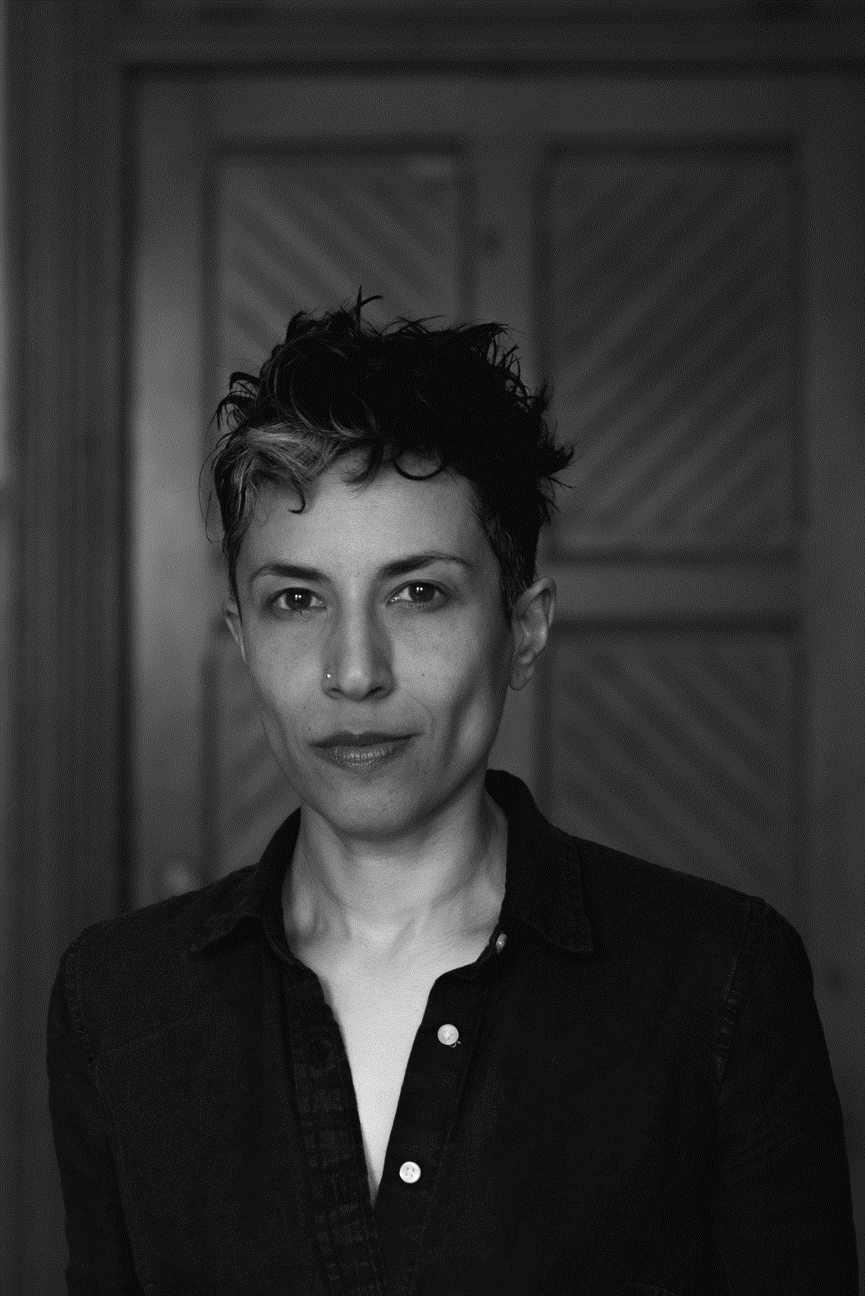
Miriam Waltz is an Assistant Professor in gender justice and health technologies at Leiden University, with a joint appointment between the Institute for Cultural Anthropology and Development Sociology and the African Studies Centre. Her research focuses on interdisciplinary health technologies in Africa, pesticide use in Western Kenya, and perinatal healthcare in South Africa. Education: BA in Anthropology and Development Studies, University College Utrecht (2012) Honours and MA in Social Anthropology, University of Cape Town (2013–2015) Joint PhD in Anthropology (Aarhus University & University of Oslo, 2022) Research Interests: Examines pesticide use among smallholder farmers in Kenya, exploring socio-ecological dynamics and non-human entanglements. Investigates perinatal health care navigation and technological interventions in Cape Town. Explores multispecies ethnography and science-policy interfaces in African contexts.
London School of Economics and Political Science (LSE)United Kingdom
Dr Alison Powell is an Associate Professor in the Department of Media and Communications at the London School of Economics and Political Science (LSE), serving as Programme Director for the MSc Media and Communications (Data and Society). Her research focuses on technology design, public sector technology, and digital futures. She is known for her book Undoing Optimization: Civic Action in Smart Cities (2021) and her participatory research method, data walking. From 2019–2023, she directed the JUST AI network, supported by the Ada Lovelace Institute and UKRI, advancing AI ethics research. Her work integrates critical theory, participatory methods, and interdisciplinary collaboration. Education: PhD in Communication from Concordia University (Canada), MA in Media Studies from Toronto Metropolitan University, and postdoctoral research at the Oxford Internet Institute. Prior to academia, she worked in the film and TV industry. Research interests include civic engagement in data-driven governance, ethical AI, and participatory urbanism. She has advised projects like Africa Just AI and Operationalising Ethics for AI, funded by Horizon Europe, AHRC, and the Open Society Foundations. Her articles address topics such as AI governance, urban light ecology, feminist research praxis, and the ethical implications of technology for marginalized communities. She contributes to blogs like Media@LSE and leads initiatives at Polis and the LSE’s Digital Futures for Children project. Grants and collaborations include work with Projects by IF, Open Rights Group, and the Human Data Interactions Network (EPSRC). She explores intersections of technology, justice, and sustainability, emphasizing equitable and inclusive innovation.
Marisol De La Cadena is a Professor in the Department of Anthropology at the University of California, Davis, with affiliations in Science and Technology Studies (STS). Her work bridges anthropology, political theory, and environmental thought, focusing on ontological divergence and multispecies relations in Latin America, particularly in Peru and Colombia. Department: Department of Anthropology School: College of Letters and Science University: University of California, Davis Email: mdelac@ucdavis.edu Office: Young Hall 315 Her research centers on the intersection of modern politics and non-modern or ahistorical ontologies, especially through what she calls "ontological openings." Drawing from deep ethnographic engagement with Quechua-speaking interlocutors in the Andes, she explores how earth-beings, humans, and nonhumans co-constitute worlds that exceed Western categories. Her theoretical contributions challenge conventional boundaries between nature and culture, history and timelessness, and politics and cosmology. Her recent fieldwork in Colombia examines human-cow relations on cattle ranches and in veterinary schools, situating these practices within broader ecological crises and post-conflict transitions. Her publications reveal a consistent interest in how ethnographic concepts function as both empirical observations and theoretical tools. The body of her work, including key articles like "Uncommoning Nature" and "Runa: Human but not only," reflects a deep commitment to rethinking anthropological method and theory. Her research trends emphasize ontological politics, multispecies ethnography, and the decolonization of knowledge, contributing significantly to contemporary debates in STS and anthropology. Her scientific honors include: John Simon Guggenheim Memorial Foundation Fellow (2008) Lewis H. Morgan Lecture Series Invited Speaker, University of Rochester (2011) Invited Researcher, Center for Advanced Studies, Norwegian Academy of Sciences (2015) Guest Speaker, Mellon-Sawyer Seminar, University of Cape Town (2010) She has been principal investigator on several major grants, including the John E. Sawyer Mellon-Sawyer Seminar on the Comparative Study of Cultures (2012–2016), a Wenner-Gren Conference Support Grant (2009–2010), and multiple research fellowships from the Guggenheim, Wenner-Gren, and American Philosophical Societies. These grants have enabled collaborative, transdisciplinary research on cosmopolitics, indigeneity, and the anthropology of worlds. She is affiliated with research initiatives such as the Sawyer Seminar on the Comparative Study of Cultures and contributes to global academic networks in anthropology and STS. Her work fosters dialogue between indigenous thought, continental philosophy, and ethnographic practice, creating spaces for alternative modes of knowing and being.
University of California , Santa Barbara (UCSB)United States
Alenda Y. Chang serves as an Assistant Professor in Film and Media Studies at the University of California, Santa Barbara. With a multidisciplinary background spanning biology, literature, and film, she integrates ecocritical theory with contemporary media analysis. Her scholarly work appears in journals including Interdisciplinary Studies in Literature and Environment , Qui Parle , and electronic book review , focusing on sustainable media practices and ecological frameworks for digital engagement. Her educational background includes: M.A. and Ph.D. in Rhetoric from the University of California, Berkeley M.A. in English Language and Literature from the University of Maryland Chang specializes in environmental media and game studies, developing theoretical frameworks for ecological game design. Her research examines how digital games model environmental systems and foster player engagement with climate change through concepts like "slow violence" and "rambunctious play." She advocates for sustainable design patterns that address gaming's carbon footprint while creating immersive ecological narratives. Analysis of her 15 most recent publications reveals a consistent trajectory from foundational ecological game theory (2013-2018) to current work on thermal contexts of play and sustainable infrastructure (2022-2024). Her scholarship increasingly bridges data-driven activism with critical game design, emphasizing multispecies entanglements and infrastructural play as tools for environmental awareness. As co-founder of Wireframe—a collaborative media studio at UCSB—Chang cultivates critical game design practices through initiatives like growinggames.net . The studio supports data-driven global media art, environmental activism, and experimental pedagogy, serving as a hub for translating ecological theory into tangible digital interventions that challenge anthropocentric perspectives in gaming.
Massachusetts Institute of TechnologyUnited States
Stefan Helmreich is the Elting E. Morison Professor of Anthropology at MIT, where his research examines how scientists conceptualize fundamental phenomena—especially waves—across oceanography, biology, acoustics, and computing. His interdisciplinary work bridges anthropology, science studies, and media theory. Core research themes include: Cultural and scientific constructions of ocean waves Marine microbial ecologies and alien oceans Sound studies and transduction theories Multispecies ethnography Scientific visualization practices Helmreich's publications demonstrate consistent engagement with wave phenomena as both physical forces and cultural symbols, exploring how scientific representations of waves shape environmental understanding. His award-winning books trace connections between marine science, cosmology, and media technologies. He has received numerous prestigious awards including a Guggenheim Fellowship and multiple book prizes from anthropological associations. Helmreich maintains creative collaborations through projects like 'Wave Count'—a musical exploration of wave representations across genres.
Michael R. Dove is the Margaret K. Musser Professor of Social Ecology and Professor of Anthropology at Yale University, where he also serves as Curator of Anthropology at the Peabody Museum and Co-Coordinator of the Combined YSE/Anthropology Doctoral Program. With over forty years of research experience, his work focuses on environmental anthropology, particularly the environmental relations of local communities in South and Southeast Asia. Dove earned his B.A. from Northwestern University and his M.A. and Ph.D. from Stanford University. His academic journey has spanned decades of field research in Asia, including more than a dozen years conducting long-term studies on human ecology in Borneo and Java, developing government research capacity in Indonesia, and advising the Pakistan Forest Service on social forestry policies. Professor Dove's research interests encompass the anthropology of climate change, cultural and political aspects of natural hazards and disasters, indigenous environmental knowledge and practice, environmental institutions and movements, history of environment-related sciences, and multispecies ethnography. His work often examines how local environmental systems interact with national and global markets, politics, and ideologies, with a focus on problematizing orthodox approaches to conservation and development. He has made significant contributions to understanding human-environment relations through both theoretical frameworks and practical applications. Dove's recent scholarly output demonstrates a progression toward more integrated approaches to environmental challenges, blending historical perspectives with contemporary issues. His publications increasingly focus on the intersections of climate change, social justice, and indigenous knowledge systems, while maintaining his longstanding interest in Southeast Asian environmental relations. The work shows a growing emphasis on post-humanist approaches and multispecies ethnography, reflecting broader trends in environmental anthropology while maintaining his distinctive focus on political ecology and institutional analysis. As an educator, Professor Dove has supervised numerous doctoral and master's students, many of whom have gone on to win research awards and secure prestigious positions. He organizes separate research labs for doctoral students from Yale School of the Environment and other departments, as well as for joint YSE/Anthropology doctoral students. His advisees typically conduct international research and have excellent records of obtaining research support both within and beyond Yale. The Dove Lab at Yale School of the Environment serves as a hub for environmental anthropology research, focusing on topics including natural resource management, property rights, power struggles, household energy transitions, and human-wildlife interactions. The lab fosters a collaborative environment with 30-50 students working on related issues each year, characterized by supportive peer dynamics rather than competition. It also contributes to policy and social change through its research and the work of its alumni.
Samantha King is a Professor in the Department of Kinesiology and Health Studies at Queen's University. She holds a PhD from the University of Illinois at Urbana-Champaign. Her interdisciplinary research integrates feminist, queer, and critical race theories to examine the intersections of health, sport, and the body. She leads the King Research Group, based in KINE 206J & 301V offices. King's research interests span topics such as drug cultures, food politics, and the sociology of sport. Her influential work includes the book Pink Ribbons, Inc: Breast Cancer and the Politics of Philanthropy , adapted into an NFB documentary. She explores themes like pharmaceutical use in professional sports, the ecological dimensions of embodiment, and multispecies approaches to sport studies. Her recent publications analyze racial capitalism in NFL pain management, pandemic-era human-animal relations, and the sociological implications of whey protein consumption. She has co-edited volumes on food ethics and bodily embodiment, reflecting her commitment to interdisciplinary dialogue. Her work bridges cultural studies, sociology, and health studies, addressing contemporary issues in sport, medicine, and everyday life. King’s academic contributions include over 30 peer-reviewed articles and edited collections. She has received international attention for critiquing corporate philanthropy in health activism and challenging normative frameworks in sport studies. Her current projects explore multispecies methodologies and the political economies of meat production.
Jerry Zee is Assistant Professor of Anthropology and the High Meadows Environmental Institute at Princeton University. His research examines environmental emergence through political, meteorological, and geopolitical lenses, with focus on China's ecological transformations and transpacific entanglements. Publications analyze dust governance, aerosol politics, and racialized ecologies, employing interdisciplinary approaches from feminist STS and environmental humanities. Current work investigates planetary-scale infrastructural projects and necrotic politics.
Priti Narayan is an Assistant Professor in the Department of Geography at the University of British Columbia (UBC), Faculty of Arts. Her research and teaching focus on urban processes and politics in India, with an emphasis on state-society relations, feminist methodologies, and public scholarship. Prior to joining UBC, she was a postdoctoral fellow at Princeton University’s Mellon Initiative in Architecture, Urbanism, and the Humanities. PhD in Geography, Rutgers University (2019) Narayan’s research explores how marginalized communities in Chennai, India, negotiate slum evictions through collective action. She collaborates with the Pennurimai Iyakkam (“Women’s Rights Movement”) to document working-class activists’ lived experiences and theorize their contributions to urban studies. Her work bridges academic and activist knowledge, advocating for interdisciplinary approaches to environmental justice and labor rights. Recent projects examine urban development in Tamil Nadu, labor codes, and occupational health for construction workers. Her academic publications span journals like Gender, Place & Culture , Urban Studies , and Environment and Planning D: Society and Space , often co-authored with local activists. She emphasizes ethnography, archival analysis, and collaborative methods. Scientific Awards : SSHRC Insight Development Grant (2023) UBC PRE Fund Award (2023) CIHR Operating Grant (Co-PI, 2021-23) Hampton New Faculty Research Grant Narayan supervises graduate students in Geography and Interdisciplinary Studies, including Varun Panickar and Paroma Wagle (postdoctoral). She currently does not accept new supervisees. Her courses at UBC include topics like urban environmental politics and climate change.
Stine Krøijer is an Associate Professor in the Department of Anthropology at the University of Copenhagen, Faculty of Social Sciences. Her research focuses on political anthropology, nature-culture relations, cosmology, time, multispecies ethnography, anarchism, autonomy, and indigenous peoples, with regional expertise in the Amazon and Scandinavia. She is actively involved in major research projects such as 'Lokale Landvindinger' (2021–2025) and 'Fire and Political Alterity in Amazonia' (2023–), funded by the Velux Foundation and the Danish Research Council, respectively. Her educational background includes a PhD in Anthropology from the University of Copenhagen, awarded in 2011. Prior to her academic career, she worked with Oxfam_IBIS on forest, climate, and indigenous rights issues in the Amazon basin from 2002 to 2007 and again from 2010 to 2014. Stine Krøijer’s research explores the political agency of non-human entities like trees, the performative aspects of climate activism, and the temporalities of radical politics. Her work bridges anthropology with environmental studies, political theory, and indigenous epistemologies. She investigates how radical environmental change—such as deforestation, peatland restoration, and forest fires—reshapes political subjectivities and social futures. Her recent publications reflect a strong trend in climate politics, environmental activism, and the ontological status of nature. Themes include the agency of trees, dystopian imaginaries in environmental movements, and the co-creation of landscapes in Denmark. Her research combines ethnographic depth with theoretical innovation, particularly in understanding how ecological crises generate new forms of political alterity. Member, Expert Council on Nature National Parks, Ministry of Environment, Denmark Coordinator, Green Solution Centre, University of Copenhagen Editor, Tidsskriftet Antropologi She teaches courses on climate, nature, environment, global flows, project design, and fieldwork methods. Her advisory and grant activities are centered on externally funded research projects focusing on climate change, indigenous rights, and environmental transformation. She is also involved in public engagement through lectures and exhibitions such as 'Amazon Trails' and 'Climate/Kettle: Aesthetics of Resistance'. Stine Krøijer leads and participates in research groups focused on nature, environment, and climate. She collaborates with interdisciplinary teams across Denmark and Latin America, particularly in the Amazon region. Her work is embedded in both academic and policy-oriented networks, contributing to the Green Solution Centre and national environmental councils.
Shiho Satsuka is an Associate Professor of Anthropology at the University of Toronto, Canada, specializing in sociocultural anthropology with regional expertise in East Asia and North America. Her research focuses on the politics of knowledge production , cultural translation of nature , and capitalism-environment relations . She is currently developing a book project titled The Charisma of Wild Mushrooms: Undoing the Long Twentieth Century , examining how mushroom science can destabilize industrial modernity. Ph.D. in Anthropology (University of California, Santa Cruz, 2004) Her ethnographic work spans: Transnational translation of ecological knowledge in Japanese tourism (book: Nature in Translation , Duke 2015) Satoyama forest revitalization movements Matsutake mushroom's role in reimagining interspecies coexistence Comparative studies of Canadian multiculturalism and Japanese coexistence models Publications demonstrate trends in: Multispecies entanglements Environmental knowledge pluralism Decolonizing scientific frameworks Ontological multiplicity in cultural analysis Anthropocene ethnography Collaborative research methodologies Awards and grants include: SSHRC Insight Grant (2016-2022) for Matsutake Worlds research Carson Fellowship (2012) at Rachel Carson Center She supervises graduate students in areas of environmental anthropology and science studies while maintaining a collaborative research network across Japan, North America, and Europe.
Dr. Jonathan Skinner is a Reader (equivalent to Associate Professor) in English and Comparative Literary Studies at the University of Warwick's Faculty of Arts, where he researches and teaches ecocriticism, contemporary poetry, and creative writing. He founded and edits the journal ecopoetics , exploring intersections between writing and ecology. His research examines: Ecopoetic theory and environmental literature Intersections of sound studies and ethnopoetics North American avant-garde poetry (Olson, Kyger, Eigner) Translation and transnational poetics Third Landscape theory and urban wildness He leads a research network facilitating cross-cultural poetry exchanges along avian migration routes. Skinner's publications predominantly explore ecocritical frameworks through poetry analysis, with recent work examining climate change poetics, multispecies communication, and Anthropocene aesthetics. His scholarship connects literary studies with environmental science, acoustics, and landscape theory. He currently supervises five PhD students researching multispecies poetics and environmental literature through AHRC-funded projects, and has successfully supervised two doctoral candidates studying deindustrialization and extractive urbanism. Previously supervised MA theses span modernist poetry, ecocriticism, and creative writing.
Matthew Gandy is a Professor of Cultural and Historical Geography at the University of Cambridge and a Fellow of King’s College. He holds affiliations with the Infrastructural Geographies and Vital Geographies research groups. His work spans urban metabolism, epidemiology, critical landscape studies, and cinematic methodologies. Gandy earned a BA (First Class) from St. Catharine’s College, Cambridge, and a PhD in Geography from the London School of Economics. His research explores intersections of nature, culture, and infrastructure in cities like Mumbai, Berlin, and Lagos. Notable contributions include The Fabric of Space (2014) and Natura Urbana (2022), award-winning works analyzing urban water systems, biodiversity, and ecological constellations. He has held visiting roles at institutions including Columbia University and UCLA, and founded the UCL Urban Laboratory (2005–2011). Key honors include the AAG Meridian Award (2014), British Academy Fellowship (2016), and John Brinckerhoff Jackson Prize (2023). Gandy’s films, such as Liquid City (2007) and Natura Urbana (2017), blend documentary techniques with academic research. He is actively involved in urban biodiversity initiatives, including Hackney Biodiversity Partnership. Teaching focuses on global urbanism, cultural landscapes, and the Anthropocene. Editorial roles include co-editing The International Journal of Urban and Regional Research (2012–2018). His work addresses urban political ecologies, multispecies urbanism, and the socio-cultural dimensions of urban environments.
Naisargi N. Dave is a Professor in the Department of Anthropology at the University of Toronto. Her work spans sociocultural anthropology, queer theory, and animal studies, with a regional focus on India. She is affiliated with the Centre for South Asian Studies and the Bonham Centre for Sexual Diversity Studies. PhD, University of Michigan (2006) Research interests include interspecies ethics, affect theory, and the politics of imagination in South Asia. Her ethnographic work explores how activists navigate legal systems, emotional exhaustion, and intersectional inequalities. She has published extensively on queer communities and animal rights in India, arguing for ethics of indifference and creative relationality. Key awards: 2024 Gregory Bateson Prize for Indifference , 2013 Ruth Benedict Prize for Queer Activism in India , and an honorable mention for the Ruth Benedict Prize for her latest book. Advises graduate students in queer anthropology and animal activism Teaches courses on animality, literary anthropology, and affect Current projects include a book titled Murder: The Social Life of Violent Death in Queer India , examining violence against queer communities.
Steven Devleminck is an Associate Professor in the Department of Computer Science at KU Leuven's Faculty of Engineering Technology, concurrently serving as coordinator of the School of Arts (Associated Faculty) in Brussels. His dual appointment bridges engineering and arts through the Human-Computer Interaction (HCI) group at Group T Leuven Campus and Unit Art & Technology in Brussels, with active membership in DigiSoc – KU Leuven Digital Society Institute. His research centers on human-centered computing and speculative design methodologies , with core expertise in tangible interaction for emotion regulation and multispecies futures. Key themes include biofuturing as co-creative response to climate crises, squeeze-based interfaces for workplace stress, and artistic AI collaborations. His work uniquely integrates computer science with choreography, film studies, and anthropology through projects like “Youth TikTok production as public pedagogy” and “Imagining the Post-Anthropocene in BioFutures Living Lab”. Analysis of recent publications reveals three dominant trajectories: (1) Advancement of squeeze interaction techniques for affective computing, (2) Development of biofuturing frameworks for multispecies speculation, and (3) Critical examinations of AI's role in artistic mediumship. Cross-cutting themes include post-anthropocentric design, climate-responsive technologies, and decolonial approaches to digital pedagogy. Devleminck actively mentors doctoral candidates including Ula Sickle (choreographic exhibitions) and J. Verbesselt (cinema studies), while leading major funded projects such as: Living Corpora (2025-2029): Pioneering human-AI collaboration in digital humanities as Co-promotor Experiential Futuring (2022-2026): Co-creative methodology for social media outage response as Co-promotor Deradicalizing the City (2021-2025): Urban intervention research as Promotor He serves on the Computer Science Department Council and Doctoral Committee for the Associated Faculty of Arts. His laboratory ecosystem spans the HCI Group T Leuven Campus for technical development, Brussels-based Unit Art & Technology for artistic integration, and BioFutures Living Lab for participatory multispecies experimentation. This tripartite structure enables transdisciplinary work connecting squeeze sensor engineering with climate futures speculation and museum interface design.