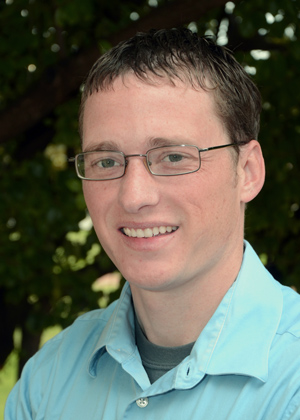
Eric Greenlee is an Associate Professor in the Department of Psychological Sciences at Texas Tech University, specializing in Human Factors. His research focuses on neuroergonomics, particularly the neurological and physiological impacts of attention-demanding tasks requiring sustained vigilance, such as driving and interacting with automated systems. Using an applied neuroscience approach, Dr. Greenlee investigates objective metrics like cerebral hemodynamics and cardiac vagal tone to assess task-related stress, workload, and fatigue. His work integrates subjective and performance measures to enhance individual and team performance in real-world scenarios. His recent publications (2024–2022) emphasize automation reliability, spatial uncertainty in auditory/visual displays, and neurophysiological responses during vigilance tasks. Topics span automated driving, tactile/auditory perception, and supramodal resource depletion. Dr. Greenlee’s lab employs tools like transcranial Doppler sonography for real-time cognitive load analysis.
Ferran Escriva Llorca is an Assistant Professor at the Universitat de València's Department of Didactics of Physical, Artistic and Musical Education, Faculty of Teacher Training. His research focuses on historical soundscapes, musicology, and early modern cultural history, often examining the intersection of music, urban ceremonial, and the Borgia family's patronage. He earned his Ph.D. from Universitat Politècnica de València in 2015 with the thesis 'Eruditio, Pietas et Honor: Joan de Borja i la música del seu temps (1533-1606).' His work explores Iberian music from the 15th to 17th centuries, emphasizing sacred and public music, polyphony, and the role of confraternities. His recent publications analyze soundscapes around events like the Battle of Lepanto and the circulation of Rudolf II's chapel composers' works in Iberia. He frequently studies the Borgia family's musical legacy and the interplay between music, politics, and religious rituals. Notable collaborations include research on Wolfgang Rumpf's music library and 16th-century manuscripts like Archive Regne de València CLERO 3016. His articles address urban acoustic transformations, the impact of Islamic culture on Iberian soundscapes, and the ceremonial use of psalms and motets in Valencia's processions.
Ann-Sophie Lehmann is Professor of Art History at the University of Groningen, specializing in material culture, artistic practices, and the intersection of media studies with historical visual culture. She studied at the Universities of Vienna and Utrecht, becoming assistant/associate professor at Utrecht’s Department of Media & Culture Studies before her current role. Focuses on materials as active components in artistic meaning-making Editor of Studies in Art & Materiality (Brill) and board member for Netherlands Yearbook for History of Art , Kunstschrift Has received international fellowships (Warburg Institute, Getty Research Institute, Max Planck Institute) Active in digital humanities initiatives and co-editor of multiple art theory volumes Her recent publications analyze material literacy across historical and contemporary art practices, with particular attention to transnational material exchanges and sensory learning in artistic contexts. She explores how materials shape artistic identity, environmental representation, and institutional categorization systems. Scientific Awards & Grants: Getty Research Institute Fellowship Warburg Institute Fellowship Max Planck Institute for the History of Science Fellowship Multiple editorial board positions
Raquel Dosil Lago is an Assistant Professor at the University of Santiago de Compostela, affiliated with the Department of Electronics and Computing within the Higher Technical School of Engineering. Her research focuses on Artificial Vision, Computer Vision, and Robotics, with applications in environmental monitoring and medical imaging. She holds a PhD in Computer Science from the University of Santiago de Compostela (2005), supervised by Dr. José Ramón Fernández Vidal and Dr. José Manuel Pardo López. Her research interests emphasize multisensory systems, drone-based environmental surveillance, visual attention models, and feature detection in 3D medical imaging. Recent work includes drone payloads for maritime pollution detection and biologically inspired vision systems. Earlier contributions span saliency detection, photogrammetry, and composite feature integration for motion analysis. Publications reflect a progression from early medical imaging and 3D pattern partitioning (2000s) to modern drone and environmental applications (2020s). Key themes include sensor fusion, CNN-based detection, and human-like visual attention mechanisms. She is part of the Artificial Vision research group, collaborating on projects like BIVSEE and AVSS challenges. No scientific awards are explicitly mentioned. Her academic advising includes her doctoral thesis committee. Research grants and future work details are not provided in the source text.
Ana-Isabel Ribera Ruiz de Vergara is a Lecturer at the University of Rouen Normandy, affiliated with the UFR Letters and Human Sciences and the ERIAC Research Unit (UR 4705) . She holds a Doctorate in Foreign Languages and Literature. Her work focuses on applied linguistics , Spanish language teaching in French contexts , and educational theatre . She has coordinated multiple publications, including Discursive genres in the teaching of specialized Spanish (2018) and Practices and issues in language teaching today (2013). Her research emphasizes phonetics , neuroscience in language learning , and multimedia resources for teaching Spanish as a foreign language. She has organized several international conferences, such as the Rencontres sur la Didactique des Langues (since 2011), and serves on editorial boards for journals like Education and Multilingual Societies and Didáctica de E/LE . Her publications span topics like advertising analysis in language classes, kinesthetic learning for pronunciation, and avant-garde literature in pedagogy. She actively contributes to ERIAC’s research axes, particularly in Linguistic and didactic approaches (Axis 4).
Anna Harrison is a Senior Lecturer at the School of Education, specializing in digital literacy and children's literature. Her work explores how picturebook apps and classic texts can enhance children's writing and reading experiences. HEA Fellowship (2017–) Research Interests Digital Literacy: Investigating the role of technology in education, particularly through interactive digital books and apps. Picturebook Apps: Analyzing their impact on children's access to literature and multimodal engagement. Children's Writing: Using classic novels and poetry as inspiration for creative literacy practices. Recent projects focus on trainee teachers' perceptions of reading for pleasure and digital literacy integration in classrooms. Her 2025 publications highlight trends in educational technology and family-based literacy practices. Scientific Awards HEA Fellowship (Higher Education Academy, 2017) Anna collaborates with the United Kingdom Literacy Association and serves as Link Tutor at St Mary's University, Twickenham (2014–), contributing to academic workshops, outreach programs, and media discussions on literacy.
Lisa Blalock serves as Professor and Chair of the Department of Psychology within the Usha Kundu, MD College of Health at the University of West Florida. Her academic home is Building 41, Room 253, where she leads the Visual Cognition Lab. Her educational background includes a B.S. in Psychology from the University of Central Florida and Ph.D. in Cognitive Psychology from Colorado State University. These foundations support her expertise in visual information processing. Dr. Blalock's research centers on visual and spatial working memory mechanisms , examining how humans encode, maintain, and retrieve visual information. Her work bridges basic cognitive processes with real-world applications like driving safety and training systems. Key interests include the interaction between visual working memory and attentional systems, the role of long-term memory in short-term processing, and how expertise development affects cognitive performance. Her lab actively investigates how familiarity with stimuli enhances memory consolidation and how cognitive load impacts situational awareness. Analysis of her recent publications reveals strong continuity in visual working memory research with expanding applications to educational technology and human factors. Her work increasingly integrates crossmodal cues and practical training systems while maintaining rigorous experimental cognitive methodology. Dr. Blalock mentors undergraduate students through hands-on research experiences in the Visual Cognition Lab, emphasizing practical skill development. Her teaching portfolio includes Research Methods I, Professional Development in Psychology, Memory & Cognition, and Sensation & Perception courses that bridge theoretical knowledge with applied practice. The Visual Cognition Lab focuses on how humans process and represent visual information, particularly examining object memory in short-term systems and how attentional and long-term memory processes influence these representations. The lab provides opportunities for student involvement through volunteering and study participation.
Michael Witthöft is a Professor of Clinical Psychology and Psychotherapy at the Ruhr University Bochum , where he leads research on somatic symptom disorders, health anxiety, and interoception. His career includes prior professorships at Johannes Gutenberg-University Mainz (2014–2025) and Universität Mannheim (2013). He specializes in experimental psychopathology, cognitive-behavioral therapy, and mechanisms of mental disorders. Key Research Areas: Somatic symptom disorders, health anxiety, interoception, emotion regulation, and placebo effects. Awards: Multiple teaching awards (2016–2018), Mercator Science-Policy Fellowship (2019–2024), and DGVT Förderpreis (2012). Publications: Recent work focuses on interoception, cyberchondria, and climate anxiety, with 15 articles (2022–2025) in journals like Psychological Medicine and Clinical Psychology Review . Leadership Roles: Co-editor of Zeitschrift für Klinische Psychologie und Psychotherapie , editorial board member for several journals, and program committee roles in EAPM and DGVT conferences.
Dr. Marianne Patera is a Senior Lecturer in Animation at Manchester Metropolitan University's School of Digital Arts. With over 15 years of higher education experience, she supervises postgraduate dissertations and PhD theses while maintaining a practice-based research focus. Senior Lecturer in Animation PhD in Art & Design from Glasgow School of Art MPhil in Advanced 2D/3D Motion Graphics Her research bridges 3D animation, VR, and color theory with applications in education and cross-disciplinary fields: 3D visualization for learning VR environments for creative writing Automotive interface design Cultural identity in digital art Scientific awards include: Senior Fellow of the Higher Education Academy (SFHEA) As a practitioner, she produces commercial animations for: Architectural visualization Medical imaging Interactive simulations VR game environments Current collaborations span computer science, psychology, engineering, and medicine. Her business ventures include 3D design and printing services.
Nico Ehrhardt is a Scientist and Research Associate at the Leibniz-Institut für Wissensmedien (IWM) in Tübingen, Germany, where he is a member of the Everyday Media Lab . He joined the institute on June 1, 2023, and is actively engaged in multiple research projects investigating human-AI interaction, particularly focusing on trust, fairness, and motivational biases in AI decision-making systems. He holds academic degrees in Molecular Biology from FAU Erlangen and Cognitive Neuroscience from Marburg. Prior to joining IWM, he worked for 14 months at the Center of Child and Adolescent Psychiatry, University of Zurich, contributing to neuroimaging studies on multisensory integration in children with developmental language disorders. During his studies, he also served as a tutor and student advisor. His research focuses on understanding how individuals perceive fairness and trust in AI systems, especially those designed to replace human professionals. He combines theoretical modeling with empirical assessments to identify the psychological and cognitive factors that influence AI acceptance. His work spans disciplines including cognitive science, psychology, AI ethics, and educational technology. The recent publications reflect a strong trend toward developing and validating tools (like the AIM-FAIR scale) to assess AI fairness, analyzing psychological influences on AI use, and exploring longitudinal dynamics in human-AI interaction. These works demonstrate a consistent focus on real-world applications of AI in decision-making contexts and the subjective human experience of algorithmic systems. Scientific Awards: No awards listed. Nico is currently pursuing his PhD on trust perception in AI expert systems. He is involved in externally funded projects such as Egocentric Biases Meet Biased Algorithms (DFG-funded, 2023–2026) and Better informed or more creative by using ChatGPT? (ongoing). These projects examine how psychological biases interact with algorithmic outputs and how generative AI impacts human cognition and creativity. He is a core member of the Everyday Media Lab at IWM, which investigates how digital media are integrated into daily life, with a focus on AI, learning, and societal implications. He also collaborates with the Multimodal Interaction , Perception and Action , and Knowledge Construction labs on interdisciplinary projects.
Professor Paul Downing is a leading academic in the Department of Psychology at Bangor University , specializing in social vision and cognitive neuroscience . His career includes a PhD from Princeton University (1998) and postdoctoral work at MIT before joining Bangor in 2000. He was promoted to Professor of Cognitive Neuroscience in 2010 and has held administrative roles such as Deputy Head of College (Research) and Acting Dean for the College of Health and Behavioral Sciences. His research focuses on how the brain processes visual information about faces, bodies, and actions to construct social understanding. Projects funded by BBSRC, Leverhulme Trust , and ESRC explore topics like sex and emotion discrimination from bodies , neural representations of social interactions , and visual attention in social contexts . He oversees Bangor's 3T MRI system and maintains a lab website with further details. Recent publications highlight his work on cortical motor mapping , social brain responses , and visual categorical discrimination . His methodological toolkit includes fMRI, TMS, ERP , and psychophysics , emphasizing neural network analysis and cognitive theory validation . The "Social Brain" module he teaches engages students with primary research through critical analysis and presentations.
Hugo Critchley is a Professor and Chair in Psychiatry (Honorary Consultant) at Brighton and Sussex Medical School (BSMS), University of Sussex. He is co-director of the Sackler/Sussex Centre for Consciousness Science and was inaugural head of the BSMS Department of Neuroscience from 2016 to 2022. His work bridges clinical psychiatry, cognitive neuroscience, autonomic physiology, and neuroimaging. BSc (Hons) in Physiology, University of Liverpool (1987) MBChB, University of Liverpool (1990) DPhil in Psychological Studies, University of Oxford (1996) MRCPsych, Royal College of Psychiatrists (1997) CCST, General Medical Council (2003) FRCPsych, Royal College of Psychiatrists (2012) Hugo’s research focuses on brain-body interactions , particularly interoception , autonomic control , and emotional regulation in psychiatric and neurodevelopmental conditions. His work integrates neuroimaging, physiological monitoring, and patient studies to understand disorders such as autism, anxiety, schizophrenia, and fibromyalgia. He has pioneered research on the neural basis of self-awareness and bodily signals in mental health. The most recent articles reflect a strong trend in interoceptive neuroscience , exploring how bodily signals influence emotion, agency, empathy, and self-perception. Topics include cardiac awareness in exercise, vagus nerve stimulation and body ownership, breathing interventions for anxiety, and neural links between joint hypermobility and anxiety. These studies employ advanced neuroimaging, psychophysiology, and experimental psychology to uncover mechanisms in both clinical and healthy populations. Wellcome Trust Senior Research Fellow in Clinical Science (2004) Advanced Grant, European Research Council (2013) Hugo has led numerous research grants from major funders including the Wellcome Trust, Medical Research Council (MRC), European Research Council, Leverhulme Trust, and MQ: Transforming Mental Health. His projects include EM-BODY, HeartRater, ADIE, and studies on fibromyalgia and PoTS. He supervises research students and collaborates widely across neuroscience and psychiatry. His clinical work includes being an Honorary Consultant Psychiatrist at Sussex Partnership NHS Foundation Trust, where he co-founded the Neurodevelopmental Service for adults with autism, ADHD, and Tourette Syndrome. He is affiliated with the Sackler Centre for Consciousness Science, a leading interdisciplinary hub applying neural models of consciousness to clinical disorders. His lab integrates cognitive neuroscience, psychophysiology, and clinical psychiatry to translate findings into therapeutic innovations.
Maher Georges Elmashhara is a Senior Lecturer in Marketing at Manchester Metropolitan University's SW2 Business School. He holds a Ph.D. in Business Administration with a specialization in Marketing and Strategy, focusing on consumer behavior, retailing, and interactive marketing. Education: Ph.D. in Business Administration (Marketing & Strategy) Research interests include consumer psychology, retail strategy, immersive customer experiences, sensory marketing, and digital marketing. His work explores how virtual environments, gamification, and AI shape consumer behavior and user experience. Key contributions span micromobility user behavior, VR tourism engagement, and AI gamification in retail. His research has been presented at prestigious conferences like Academy of Marketing Science and AIRSI. Recent publications examine non-human sales agent cues, time-pressure-driven retail outcomes, VR fashion tourism, and AI gamification effects. These works reflect trends in digital transformation and sensory-driven marketing innovation. Scientific awards: Best Participant Award (2025): AIRSI2025 (The Metaverse Conference - Virtual) Best Participant Award (2023): AIRSI2023 (The Metaverse Conference - Zaragoza) Outstanding Reviewer (2022): International Journal of Retail & Distribution Management Best Participant Award (2020): Academy of Marketing Science Annual Conference Teaching & supervision: He teaches Digital Marketing Essentials, Applied Marketing Research, and Contemporary Retail Strategies. Supervises master’s and PhD students on topics like consumer behavior, AI/VR in marketing, and customer experience. Affiliated projects: EasyRide (2020–2021): Market research for Bosch micromobility user experience UNINTEGRA (2018–2019): Academic validation protocol development
Dr. Susanna Kola-Palmer is a Senior Lecturer in Health Psychology and Deputy Director for Graduate Education in Psychology at the School of Human and Health Sciences, University of Huddersfield . Her research focuses on preventive health behaviors, cervical screening, and vaccine hesitancy, with applications to mental health, pain perception, and youth risk behaviors. Education : PhD in Health Psychology, National University of Ireland, Galway Her research examines psychosocial factors in health decision-making, including cognitive-emotional influences on pain/anxiety, wellbeing in students/athletes, and interventions for invasive procedures. Recent work emphasizes pandemic vaccine attitudes and cervical screening optimization. Key scientific contributions include analyses of vaccine hesitancy (2025) and cervical screening attitudes (2023), with methodological strengths in mixed-methods and experimental designs. She actively supervises PhD projects on preventive health behaviors. Awards : Fellow of the Higher Education Academy (FHEA) Associate Fellow, British Psychological Society (AFBPsS) Chartered Psychologist (CPsychol) Research outputs (15 most recent) span vaccine policy analysis, childhood play development, and clinical pain distraction techniques. She leads media commentary on vaccine hesitancy and pandemic health behaviors.
Petros Katsioloudis is the Associate Dean for Faculty Affairs and Research at Old Dominion University's Darden College of Education & Professional Studies, with a focus on STEM Education , Technology Education , and Engineering Technology . He holds an Ed.D. in Technology Education from North Carolina State University (2007), an M.Ed. in Technology Education (2004), a B.S. in Industrial Technology (2003), and specialized diving certifications from IANTD/PADI. Education: Ed.D., Technology Education, North Carolina State University (2007) M.Ed., Technology Education, California University of Pennsylvania (2004) B.S., Industrial Technology, California University of Pennsylvania (2003) A.S., Pennsylvania Gunsmith School (1998) His research explores the intersection of spatial visualization , pedagogical techniques , and non-conventional learning styles , often integrating virtual reality and dynamic visualizations to enhance educational outcomes. His 15 most recent publications (2004–2018) address topics like holographic modeling, music's impact on technical drawing, and game-based port logistics simulations. Scientific Awards include: Distinguished Technology and Engineering Professional (2017), New Investigator Grants Award (2010), DELOS Best Paper Award (2012), and multiple Outstanding Graduate Student Citations (2004, 2006). He has secured over $4.5 million in grants for projects such as Research Experiences for Teachers ($500,000) and VisPort port logistics visualization ($21,888). His work bridges academia and practical application through initiatives like Project SEARCH 2.0 , Maritime Mechatronics Technician Training , and Policy-Ready Citizen Science , reflecting a commitment to experiential learning and workforce development.