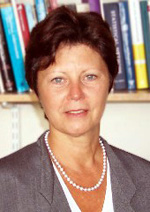
Lucia M. Vaina is a Professor of Biomedical Engineering at Boston University, with primary affiliation in the Chobanian & Avedisian School of Medicine. She holds a dual appointment as Research Professor of Neurology. Her research focuses on computational visual neuroscience, including neuronal mechanisms of spatial representation, motion perception, and functional neuroimaging. She earned a PhD in Mathematical Logic from Sorbonne University and a Doctorat d’Etat in Human & Computational Vision from Toulouse, France. Her work integrates neuroimaging (fMRI/MEG) with computational tools to analyze brain data. Key areas include motion perception during self-motion, neuroplasticity, and multisensory integration. She leads the Brain and Vision Laboratory, developing algorithms for real-time neurofeedback and analyzing large neuroimaging datasets. Recent studies examine cortical dynamics during attention tasks and the effects of aging on sensory integration. Publications span 40+ years, emphasizing motion-related neural mechanisms and clinical applications like migraine research. Her methodologies bridge theoretical engineering and clinical neuroscience, with contributions to both basic science and translational medicine.
Jennifer Stephenson is an Associate Professor and Honorary Associate Professor at the Macquarie School of Education, Macquarie University, and a core member of the Macquarie University Special Education Centre (MUSEC). Her research focuses on autism spectrum disorder, special education, and inclusive practices, with a strong emphasis on supporting students with disabilities and their educators. She has led or collaborated on multiple projects, including studies on decision-making in schools supporting students with disabilities, immunization in neurodiverse populations, and technological advancements in aided AAC for severe intellectual disabilities. Her research interests include autism interventions, educational policy, teacher training, and the transition to employment for individuals on the autism spectrum. Notable projects include the adaptation of COMPASS for autism-specific schools and investigations into the efficacy of narrative interventions for children with language disorders. Stephenson has authored over 195 publications, spanning peer-reviewed articles, reviews, and books, reflecting her dedication to advancing evidence-based practices in special education. Her work often involves collaboration with international and interdisciplinary teams, addressing topics such as sensory integration therapy, parental coaching for communication development, and systemic reviews of educational interventions. Stephenson’s contributions have shaped policy and practice in inclusive education, particularly in Australia and New Zealand.
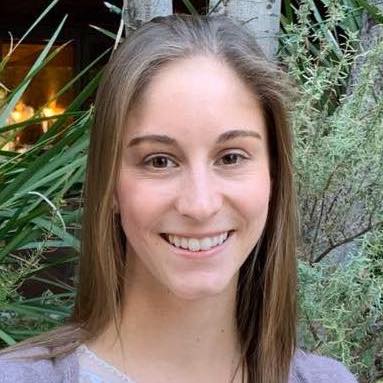
Polly Kellner is a Clinical Research Specialist at the University of Southern California (USC) Chan Division of Occupational Science and Occupational Therapy. She holds a Master of Science in Occupational Therapy from Washington University in St. Louis (2016) and a Bachelor of Arts in Psychology and Educational Studies from Carleton College (2014). Her research focuses on optimizing neonatal intensive care unit (NICU) environments through sensory interventions, particularly the Supporting and Enhancing NICU Sensory Experiences (SENSE) program. She investigates how parental involvement and sensory exposures impact neurodevelopmental outcomes in preterm infants, as well as barriers and facilitators to program implementation. Kellner’s work bridges clinical practice and research, addressing topics such as NICU discharge timing, parent-infant co-occupational engagement, and disparities in early therapy enrollment. Her contributions include refining evidence-based guidelines for multisensory interventions and evaluating the SENSE program’s impact on infant development and parental mental health. She collaborates with interdisciplinary teams to advance care standards in neonatology and occupational therapy. Her research highlights the importance of early sensory experiences and family-centered care in mitigating developmental risks for preterm infants. Kellner’s studies emphasize translating research findings into practical strategies for healthcare providers to improve long-term outcomes for infants and families.
Sander Begeer is a Full Professor at the Vrije Universiteit Amsterdam (VU), affiliated with the Faculty of Behavioural and Movement Sciences, and holds academic roles in the APH - Mental Health and APH - Methodology departments. He leads the Netherlands Autism Register (NAR), a longitudinal cohort study focused on understanding differences between autistic and non-autistic individuals. His research aims to enhance societal understanding and improve support systems for autistic individuals. Begeer coordinates courses on developmental disorders and autism research, supervising bachelor, master, and research master theses. He advises clinical and educational organizations such as GGZ Centraal and Stichting Dimence Groep. His work aligns with UN Sustainable Development Goals, particularly those addressing health and well-being (SDG 3) and quality education (SDG 4). Research interests include autism spectrum disorder (ASD), developmental psychology, and clinical methodologies. Notable projects include Autism Works , exploring employment solutions for autistic individuals, and the EGAL project investigating genetic and environmental factors in ASD. Key publications from 2025 focus on educational outcomes, executive functioning differences, and diagnostic assessment improvements. Begeer has received awards such as the Endeavour Research Fellowship (2012) and grants supporting studies on sex differences in autism. He collaborates internationally, emphasizing interdisciplinary approaches to ASD research and policy.
Dr. Caro Verbeek is an Assistant Professor in the Department of Art and Culture, History, Antiquity at the Faculty of Social Sciences and Humanities, Vrije Universiteit Amsterdam. She serves as an embedded researcher of olfactory heritage across multiple institutions including VU Amsterdam, the Rijksmuseum, and International Flavours & Fragrances. With over a decade of experience in curating exhibitions and conserving collections (including prints, drawings, and scents), Verbeek specializes in sensory art and education across museums, art academies, and universities. Her research interests encompass olfaction, sensory history, tactilism, synaesthesia, heritage reconstruction, and cultural memory. Verbeek has pioneered approaches to documenting ephemeral sensory history and has created numerous olfactory tours and interventions for major museums including the Rijksmuseum, Van Abbemuseum, Bijbels Museum, and Amsterdam Museum. Her work bridges art history with sensory science, focusing particularly on reconstructing historical scents and developing methodologies for sensory documentation in cultural heritage contexts. Analysis of her recent publications reveals a strong focus on reconstructing historical sensory experiences, particularly related to Dutch cultural history. Her work spans from the Dutch Golden Age (examining what Rembrandt might have smelled) to royal history (the scents surrounding William of Orange) and avant-garde art movements (Futurism and Surrealism). Verbeek consistently applies interdisciplinary approaches, combining art history, museum studies, chemistry, and sensory science to create tangible sensory experiences from historical sources. Art & Olfaction Awards (2015) Public Appreciation Award (2nd) (2012) Public Appreciation Award for Museumnight (2012) Story-lines at the Van Abbemuseum: Inhaling Art (2014) VCAS-VU Talent Award (2020) Verbeek supervises various research projects focused on sensory heritage, including "Marinetti and Futurism: a manifesto for a new world," "Big Questions in the Senses," and "Knowing by Sensing." She teaches 'The Other Senses' at the Royal Academy of Arts The Hague and serves as curator-in-chief of the olfactory culture program 'Odorama' at Mediamatic Amsterdam. Her work extends to public engagement through radio programs like 'De nacht van... Caro Verbeek,' where she explores the importance of scent in past, present, and future contexts. Verbeek also serves as a conservator at Kunstmuseum Den Haag (since 2021) and as an advisor for immaterial heritage projects at Mondriaan Fonds.
Dr. Kylie Bradfield is a Lecturer at Monash University's School of Curriculum Teaching & Inclusive Education, specializing in literacy education and pedagogical content knowledge. She previously held roles at Queensland University of Technology (2009–2013) and the University of Stirling (Scotland), where she contributed to national teacher education frameworks and international curriculum reforms in Croatia. Her research focuses on primary classroom literacy practices, children’s literature, and teacher knowledge development. Education & Career: Transitioned from primary teaching to academia, with extensive experience in teacher education programs. Currently teaches in undergraduate and postgraduate courses at Monash, including EDF1084, EDF2049, EDF5817, and EDF4009. Research Interests: Examines how teachers teach literacy, language, and literature, with recent projects analyzing children’s literature and EAL pedagogy. She co-edits the Literacy Learning: the Middle Years journal and collaborates on initiatives like the 2025 English as an Additional Language (EAL) pedagogy project for secondary schools. Recent Contributions: Published in Curriculum Journal , Practical Literacy , and Reflective Practice , focusing on topics like e-portfolios, economics education through children’s texts, and multimodal literacy in picturebooks. Her work aligns with UN SDG 4 (Quality Education).
Shimako Iwasaki is a Senior Lecturer in the School of Languages, Cultures and Linguistics at Monash University's Faculty of Arts. Her research focuses on conversation analysis and cross-cultural multimodal interactions, particularly in Japanese language studies and deafblind communication. She has led or contributed to multiple research projects, including the 31st Japanese/Korean Linguistics Conference (2024–2025) and initiatives addressing intercultural dialogue and professional competencies in tactile signing (2021–2024). Her work aligns with UN Sustainable Development Goals, emphasizing global challenges through intercultural exchange programs and disability-inclusive communication studies. Research Projects: Japanese/Korean Linguistics Conference (PCI), Online Intercultural Exchange Programs (CI), Deafblind Communication (CI) Key Collaborations: Global partnerships in Japan, Australia, and beyond Her research interests include sociolinguistic variation in Japanese women's discourse, multimodal interaction analysis, and the adaptation of sign languages for deafblind communities. Recent studies explore pandemic impacts on intercultural exchanges and methodological challenges in tactile signed interaction analysis. Her projects and publications reflect a commitment to advancing theoretical and applied linguistics, with a focus on marginalized communication systems and cross-cultural dialogue.
Michele Kaschub is a Professor of Music and Director of Music Teacher Education at the Osher School of Music, part of the College of Arts, Humanities, and Social Sciences at the University of Southern Maine. Her work focuses on composition pedagogy, choral music education, and curriculum design. She holds a Ph.D. from Northwestern University, an MM from the University of Maine, and a BS from the University of Southern Maine. Her research explores children’s composition, teacher professional development, and creative music pedagogy. Recent publications include The Oxford Handbook of Music Composition Pedagogy (2024) and co-authored textbooks addressing K-12 music composition education. Her work emphasizes innovative teaching strategies and interdisciplinary approaches. Dr. Kaschub has held leadership roles including Maine Music Educators Association President, Director of USM’s Center for Collaboration & Development, and Academic Editor of the Music Educators Journal. She has presented widely in North America and Europe, leading workshops on music pedagogy and choral conducting. Her professional networks span educational organizations like the American Choral Directors Association and National Association for Music Education, reflecting her commitment to advancing music education standards nationally and internationally.
Michela Candini is an Adjunct Professor and Research Fellow at the Department of Psychology 'Renzo Canestrari', University of Bologna. Her research focuses on cognitive and social neuroscience, with a particular emphasis on time perception, interpersonal space, autism spectrum disorders, and neural mechanisms underlying mental time travel. She holds affiliations in both academic and research capacities within the university's psychology division. Her work explores how social identity, cultural factors, and neurological conditions like autism influence spatial and temporal cognition. Recent studies include investigations into the role of the ventromedial prefrontal cortex (vmPFC) in mental time travel, interpersonal distance preferences in deaf signers, and the psychological impacts of lockdowns during the pandemic. She also examines physiological and neural correlates of social behavior, such as self-recognition and spatial perception in clinical populations. Candini’s research integrates methodologies from neuroscience, psychology, and clinical studies, often employing fMRI, behavioral experiments, and neuropsychological assessments. Her contributions address both fundamental and applied questions, such as how brain lesions affect time perception or how social distancing behaviors relate to perceived risks during health crises. She actively publishes in high-impact journals, reflecting her interdisciplinary approach to understanding human cognition and behavior.
Dr. Richard Ramsey is a Lecturer at the Department of Health Sciences and Technology at ETH Zürich. His research focuses on social cognition, cognitive control mechanisms, and the intersection of artificial intelligence with human behavior. He teaches courses like 'The Social Brain: Critical Perspectives on Science, Society and Neurodiversity.' Key research areas include neurophysiological correlates of imitation, AI ethics, loneliness in neurorehabilitation contexts, and methodological advancements in psychological data analysis. His work often employs computational models and neuroimaging techniques to explore decision-making processes and social perception. Developed Bayesian methods for analyzing time-to-event data in psychological studies Investigated anthropomorphic perceptions of humanoid robots Explored how art education impacts aesthetic and cognitive functions No scientific awards are explicitly listed in the provided materials. His academic contributions span experimental psychology, neuroscience, and interdisciplinary applications of cognitive science.
James Johnson serves as Associate Head of School for Tourism and Accounting & Finance at the University of Sunderland's School of Business, Management, and Tourism. With 20 years of teaching and research experience, he leads academic teams across Tourism, Aviation, Events, Hospitality, Esports, Finance and Accounting, focusing on strategic growth, high-quality teaching, and impactful research. He also leads Transnational Education initiatives and serves as Global Partnership Leader for international collaborations in Singapore and Tashkent. Dr. Johnson completed his PhD in 2013 with the thesis 'Backpacker Mobilities: Train Travel in Central and Eastern Europe,' which pioneered mobile ethnographic methods grounded in the new mobilities paradigm. His academic journey reflects deep engagement with how movement shapes social experiences and tourist behaviors. His research centers on the intersection of tourism, place, planning, and development, with particular attention to event experiences, embodiment, and transportation mobilities. Methodologically innovative, his work often employs ethnographic approaches that emphasize mobility rather than stationary observation, challenging traditional research paradigms in tourism studies. His studies of VW Campervan tourists' sonic experiences demonstrate attention to multisensory aspects of travel that extend beyond visual tourism studies. His publication trajectory shows evolution from traditional tourism contexts toward digital environments, with recent work (2024-2025) exploring sense of place in video games. This represents an innovative extension of tourism studies into virtual realms while maintaining focus on spatial experience and embodiment. Senior Fellow of the Higher Education Academy (SFHEA) Dr. Johnson has successfully supervised seven PhD students to completion and currently oversees five more doctoral candidates. His leadership extends to strategic academic direction, curriculum development, and quality assurance for tourism and events programs. Through international partnerships, he connects academic work with global industry practices, preparing students for international careers in tourism and hospitality sectors. His work with urban planning documents demonstrates engagement with real-world applications of tourism research, while his focus on embodied experiences contributes theoretical depth to understanding how tourists engage with places through multiple senses and forms of movement.
Francesca Brown-Cornwall is a Lecturer at Staffordshire University within the Health, Education, Policing and Sciences faculty. She has held both part-time and full-time roles since joining in 2013, specializing in innovative teaching methods that blend technology and tactile learning. She is a Microsoft Certified Educator and holds MIE Expert status, emphasizing digital pedagogy in her work. Prior to academia, she spent over a decade in early years education, achieving Outstanding Ofsted ratings and leading teams in early childhood services. Education: PhD Candidate in Education (Expected 2024) PGcHPE (2017) MA in Education (2014) BA(Hons) Early Childhood Studies (2011) Foundation Degree in Early Years Education (2009) Her research bridges psychology and education, focusing on higher-order thinking in toddlers, tech-tactile pedagogy, and computational thinking in early years. She leads the Staffordshire Centre of Learning and Pedagogic Practice’s ‘Tech and Tactile Approach’ project and has secured two grants for pedagogic innovation. Francesca is a Senior Fellow of the HEA and DigiLearn Certified Member, with expertise in Equality, Diversity, and Inclusion in education. Awards and Recognition: Teaching Excellence Fellow Senior Fellow of the HEA Microsoft Innovative Educator Expert (MIE Expert) Featured in IPiHE Journal and multiple national conferences Francesca teaches across undergraduate programs, including BA Education Studies, Early Childhood Studies, and PGCE courses. She develops CPD programs for early years practitioners and has been recognized for her work in making learning memorable through blended approaches. She is actively involved in the Staffordshire University Multi-Academy Trust and collaborates with local nurseries and schools.
Professor Christopher Headleand heads the Games Design and Technology Department at Staffordshire University. A National Teaching Fellow (2021) and Senior Fellow of the Higher Education Academy, he specializes in virtual reality, games development, and digital innovation. With 20+ years in education, his career includes founding VR game studios and developing social media-based curricula. Research explores VR simulations, ethical AI, data visualization, and the metaverse. Recent publications analyze motion simulation, gendered representation in games, and accessibility in virtual environments. Awards: National Teaching Fellowship (2021) He leads commercial projects with organizations like the American Museum of Natural History and supervises PhD candidates in applied games research.
Laura Carnevali is a Researcher at the Department of Psychology, University of Cambridge. Her work focuses on developmental psychology, autism spectrum disorders, and the interplay between sensory experiences (e.g., touch) and social-cognitive development. She investigates topics such as agency, reward systems, motor synchrony, and face processing across neurotypical and atypical developmental trajectories. Her research often employs behavioral paradigms and neuroimaging techniques to explore how early experiences shape social and emotional competencies. Recent projects include studying touch-mediated attention in infants, motor coordination in autism, and the impact of the pandemic on developmental milestones. Laura contributes to interdisciplinary collaborations, including work with the Cambridge Babylab and multimedia interventions for neurodiverse populations. Publications highlight her expertise in systematic reviews (e.g., on motor synchrony in autism) and innovative methodologies for assessing developmental disorders. She advocates for evidence-based practices in early childhood education and therapeutic interventions.
Dr. Kanad Mandke is a Researcher in the Department of Psychology at the University of Cambridge. His work focuses on developmental neuroscience, particularly investigating the neural mechanisms underlying speech processing and language acquisition in children with and without developmental disorders like dyslexia. His research employs advanced neuroimaging techniques including EEG, MEG, and computational modeling to explore how auditory and multisensory information is encoded in the brain. Key research areas include: Rhythmic auditory processing and its role in literacy development Neural correlates of speech perception deficits in dyslexia Development of binaural hearing capabilities Machine learning applications in decoding neural speech representations His publications demonstrate a strong focus on understanding atypical brain responses to speech stimuli in pediatric populations. Recent studies have explored beta-band EEG oscillations, low-frequency cortical encoding, and temporal fine structure sensitivity in dyslexia. Collaborative work includes multilayer network analysis of brain connectivity in musicians and infants' early language acquisition processes. Dr. Mandke's research also addresses translational aspects such as identifying neurophysiological markers for developmental disorders and advancing our understanding of cognitive reserve mechanisms through informational complexity analysis.