Dr. Ed Brambley is a Reader at the University of Warwick specializing in aeroacoustics, computational methods, and industrial mathematics. His research combines theoretical fluid dynamics with applied industrial challenges, particularly in acoustic liner optimization for aerospace and mathematical modeling of metal forming processes. Recent work advances boundary layer acoustics, wave propagation algorithms, and rolling process simulations. Collaborations span aerospace engineering and manufacturing sectors.
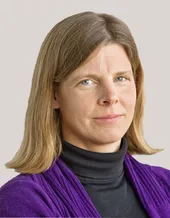
Professor Marie-Therese Wolfram holds a faculty position at the Mathematics Institute of the University of Warwick. Her research focuses on applied partial differential equations, mathematical modeling in socio-economic and life sciences, and inverse problems. She is actively involved in organizing international workshops and serves on editorial boards for journals like ESAIM M2AN and Kinetic and Related Models. Her academic journey includes grants such as the Royal Society International Exchange (2022-2024) and the EPSRC First Grant (2017-2019). Notable awards include the Excellence in Gender Equality Award (2023) and the Whitehead Prize (2023). She co-leads the EDI committee at Warwick and contributes to initiatives like the Young Academy of the Austrian Academy of Sciences. Her research spans opinion dynamics, crowd modeling, and optimal transport theory. Recent work explores consensus-breaking in social networks and applications of mean-field games to knowledge growth. She collaborates internationally on projects such as the 'Multiscale Modelling of Crowded Transport' and the 'Wasserstein Gradient Flows' initiative. Teaching responsibilities include MA265 Methods for Mathematical Modelling and MA4M2 Inverse Problems. Her work bridges theoretical analysis with practical applications, reflecting her dual expertise in pure mathematics and interdisciplinary modeling.
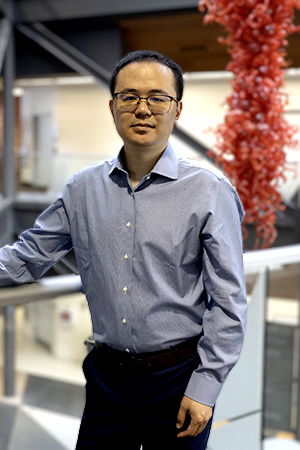
Mingtao Xia is a Courant Instructor at the Courant Institute of Mathematical Sciences, New York University (2023–present). He holds a PhD in Applied Mathematics from UCLA (2019–2023) and a B.S. in Information and Computing Science from Peking University’s School of Mathematical Sciences (2015–2019). His research focuses on mathematical modeling, numerical methods, and machine learning applications in kinetic theories, stochastic systems, and unbounded-domain differential equations. He has contributed to interdisciplinary areas including biological systems, environmental science, and epidemic control through computational methods. Education: PhD in Applied Mathematics, UCLA, 2019–2023 B.S. in Information and Computing Science, Peking University, 2015–2019 His work integrates advanced numerical techniques like spectral methods and Wasserstein-distance frameworks with real-world problems such as gene regulation dynamics, solar wind analysis, and ozone pollution impacts. Recent publications emphasize efficient algorithms for high-dimensional systems and uncertainty quantification in stochastic models. While no awards are listed, his research demonstrates strong contributions to mathematical modeling across diverse domains. Advising and grant details are currently unavailable. His affiliation with the Courant Institute positions him at the forefront of computational mathematics and its applications in interdisciplinary research.
Dr. Joana Fonseca is a Senior Lecturer in Geotechnical Engineering at City St George's, University of London, within the Department of Civil Engineering in the School of Mathematics, Computer Science and Engineering. She holds a PhD from Imperial College London and has extensive research experience in multiscale geomechanics, image-based characterization, and granular media behavior. Her research interests include: Multiscale mechanics Image-based geotechnics using X-ray tomography and microscopy Experimental geomechanics of soils and rocks Micromechanics of granular media Centrifuge modelling Localized deformation and grain breakage Characterization of semi-solid alloys Her recent publications focus on advanced imaging techniques to understand soil fabric evolution, particle-scale interactions in sand-rubber mixtures, and microstructural modeling of carbonate sands for offshore foundations. These works span disciplines from geotechnical engineering to materials science, emphasizing computational and experimental integration. Scientific honors include: Chartered Member, Portuguese Institution of Engineers Principal Investigator on EPSRC-funded MuMShell project (2016) Associate Editor, Canadian Geotechnical Journal Member, Advisory Panel of Géotechnique She has advised several research students including Sadegh Nadimi, Deqiong Kong, and Ciaran Kennedy. She teaches core civil engineering courses such as Soil Mechanics (CV2401), Geotechnical Engineering (CV3401), and the Major Project (CVM412). She also serves as Guest Editor for special issues on image-based geotechnics and women in the built environment. Her research lab integrates advanced imaging, computational modeling, and experimental techniques to study geomaterials across scales, with applications in offshore engineering, sustainable construction, and materials science.
Marco Giometto is an Assistant Professor of Civil Engineering and Engineering Mechanics at Columbia University, affiliated with the Columbia School of Engineering and Applied Science. His research focuses on fluid dynamics and turbulence, particularly in environmental flows, atmospheric boundary layers, and wind engineering. He employs supercomputing and physics-data-driven methods to advance understanding of natural systems and urban infrastructure resilience. Education: PhD in Civil Engineering (Braunschweig TU University and University of Florence, 2014); PhD in Mechanical Engineering (École Polytechnique Fédérale de Lausanne, 2016, EDME Award recipient). Experience: Postdoctoral roles at UBC and the Center for Turbulence Research (Stanford/NASA Ames); Amazon Visiting Academic (2020–present). Research Interests: Environmental Engineering, Wind Engineering, Smart Cities, Sustainable Infrastructure, and Computational Mechanics. His work bridges fundamental fluid dynamics with applied challenges in urban sustainability and climate resilience. Awards/Grants: NSF CAREER Award (2024), NSF Physical & Dynamic Meteorology Program grant (2024), Army Research Office DURIP Award (2023). Collaborations include Amazon Prime Air and field campaigns like CoURAGE. Lab & Outreach: Leads the Environmental Flow Physics Laboratory, advancing computational tools and field experiments. Teaches at Columbia and mentors students like Gurpreet Hora (PhD Teaching Fellow).
Xin Xing is an Assistant Professor at the University of Nebraska at Omaha, College of Information Science & Technology, Department of Computer Science. Their research bridges machine learning, neuroscience, and biomedical applications. Education: Ph.D. in Computer Science (2023), University of Kentucky M.S. in Information Technology (2016), University of Stuttgart B.S. in Communications Engineering (2011), Shandong University Research Interests: Medical Imaging AI: Developing models for Alzheimer's disease diagnosis using 3D PET/MRI and transformers (e.g., ADViT, CAT-XPLAIN) Gut-Brain Axis: Investigating microbiome impacts on neurodegeneration, particularly in APOE4 carriers Computer Vision: Innovating diffusion models, self-supervised learning, and attention mechanisms for biomedical and geospatial applications Publication Trends: Recent work focuses on neuroimaging biomarkers for Alzheimer's, microbiome interventions, and scalable vision-language architectures. They integrate cutting-edge ML techniques with clinical data analysis. Collaborations: Engaged in interdisciplinary projects spanning genetics, nutrition, and traffic safety. Their work appears in journals like Communications Biology and explores real-world applications such as roadway hazard detection via satellite imagery.
Myeongju Kang is an Assistant Professor in the Department of Finance and Big Data at Gachon University, Republic of Korea. He leads the HYKE RESEARCH GROUP: HWARANG focused on advanced mathematical modeling. Research interests include asymptotic analysis, numerical methods for aggregation phenomena, and rigorous transitions between microscopic, mesoscopic, and macroscopic systems. His work spans continuous/discrete many-body systems and non-convex stochastic optimization challenges. No specific awards or grants are mentioned in the provided text. For detailed education and professional history, refer to his CV available on Google Sites. He is affiliated with the HWARANG research team exploring collective dynamics and complex system behaviors.
Miriam Schulte is a Professor at the University of Stuttgart’s Institute for Parallel and Distributed Systems, leading the Institute for the Simulation of Large Systems. She holds a Carl von Linde Junior Fellowship and has held academic roles since 2002, including heading the CFD Group at TUM. Her expertise spans computational fluid dynamics (CFD), high-performance computing (HPC), and numerical methods for PDE solvers. She earned her diploma (1997) and PhD (2001) in mathematics from TUM, followed by habilitation in Computer Science (2010). Her research focuses on optimizing algorithms for efficient simulation software, integrating mathematics and computer science. Key areas include fluid-structure interactions, multi-physics coupling, and scalable parallel computing. She has contributed to frameworks like Peano for adaptive Cartesian grids and developed methodologies for partitioned fluid-structure interaction simulations. Publications highlight advancements in HPC, multi-physics coupling, and parallel algorithms. Awards include the Bayerische Begabtenfoerderung (1993–1997). Her work bridges computational methods with real-world applications, emphasizing scalability and efficiency in large-scale simulations.
Dr. Pierre-Louis Bazin is a Researcher in the Department of Neurophysics at the Max Planck Institute for Human Cognitive and Brain Sciences. He holds a PhD from INRIA Rocquencourt (France) and conducted postdoctoral research at Brown University and Johns Hopkins University in the US. His work focuses on advanced neuroimaging techniques, including high-resolution MRI parcellation, quantitative MRI, and subcortical structure analysis. Key projects involve developing automated segmentation tools (e.g., Nighres), exploring cerebellar and subcortical anatomy, and investigating neurodegenerative markers using multi-modal approaches. Education 1995-1998: Electrical Engineering Diploma, SUPELEC (France) 1998-2001: PhD in Computer Vision & Graphics, INRIA Rocquencourt (France) 2001-2003: Postdoc in Computer Vision & Archaeology, Brown University (USA) 2003-2006: Postdoc in Neuroimaging, Johns Hopkins University (USA) Research Interests High-field MRI (7T+) applications in structural and functional brain mapping Development of neuroimaging software tools (e.g., Nighres) Subcortical and cerebellar morphometry in health and disease Quantitative MRI techniques for histology correlation Connectivity analysis in psychiatric disorders (e.g., schizophrenia) Awards Royal Netherlands Academy of Arts and Sciences (KNAW) membership (2020, 2024) Grants & Labs : Directs the Neurophysics lab at MPI-CBS. Active in large-scale projects like the Amsterdam Ultra-high field adult lifespan database (AHEAD). Collaborates on tools like MP2RAGEME for multi-parametric MRI. Labs/Teams : Leads neuroimaging method development and clinical translation efforts in Leipzig, Germany.
Markus Grasmair is a Professor at the Department of Mathematical Sciences at the Norwegian University of Science and Technology (NTNU). His research focuses on inverse problems, mathematical methods in image processing, and optimization. He has contributed to nonsmooth variational methods and Lavrentiev regularization for ill-posed problems. Education: Habilitation in Mathematics (University of Vienna, 2011), PhD in Mathematics (University of Innsbruck, 2006), MSc in Mathematics (University of Innsbruck, 2003). Markus's research spans mathematical imaging, biomedical applications, and PDE-based modeling. He has developed regularization techniques for inverse problems, including Lavrentiev and L1 methods, and applied these to medical imaging and cervical cancer risk stratification. His work integrates sparse optimization, shape analysis, and data-driven approaches. Recent publications highlight interdisciplinary trends, combining inverse problems with medical imaging (X-ray calibration, cervical cancer prediction) and extending variational methods to PDEs, multiscale modeling, and graph-based systems. Key subfields include monotone operators, matrix factorization, and elastic shape analysis. He teaches courses in optimization and has held academic positions at the University of Vienna, Catholic University of Eichstätt-Ingolstadt, and University of Innsbruck. Contact: markus.grasmair@ntnu.no. Current Role: Professor (NTNU) Past Roles: Substitute Professor (Catholic University of Eichstätt-Ingolstadt, 2012-2013), Assistant Professor (University of Vienna, 2009-2012)
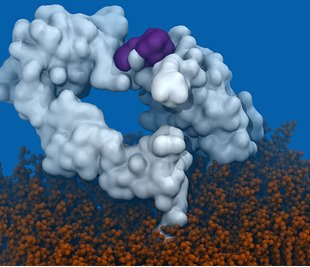
Laura Orellana is an Assistant Professor at the Karolinska Institute , Department of Oncology-Pathology. Her research bridges computational biophysics and structural biology to study protein conformational dynamics in cancer and mendelian diseases . Education : PhD in Physics (summa cum laude, University of Barcelona), MD in Medicine (University of Barcelona), MSc in Biophysics and Structure & Function of Proteins, BSc in Biochemistry Research Interests focus on protein dynamics , evolutionary mutational patterns , and conformational profiling of tumors. She develops multiscale simulation methods (normal modes, molecular dynamics, machine learning) to identify dynamically hot mutations and conformation-specific drug targets . Her 15 recent publications span topics from oncogenic EGFR mutations to ribosomal protein dysplasias , emphasizing computational approaches to decode protein structure-function relationships across cancer and genetic disorders . Scientific Awards : Extraordinary Prize for Academic Excellence in Biochemistry (2006) EMBO Biomolecular Simulation Bursary (2012) Biophysical Society Travel Award (2016) EMBRACE-Rigaku-EBI Bursary (2009) IUBMB-FEBS Young Scientist Program Fellow (2012) She leads the Protein Dynamics and Cancer Lab , advising PhD students like Knut-Rasmus Bergendahl and Gustav Lind. Grants include the Swedish Research Council Starting Grant (2022), Cancerfonden Junior Investigator Award (2021), and KI Tenure-track Faculty Position (2019).
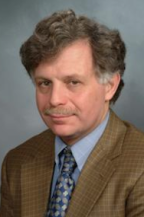
Jonathan D Victor is Professor of Computational Neuroscience in Computational Biomedicine at the Institute for Computational Biomedicine, Professor of Neuroscience at the Brain and Mind Research Institute, and Fred Plum Professor of Neurology within the Department of Neurology at Weill Cornell Medical College (Cornell University). He serves as an Attending Neurologist at NewYork-Presbyterian Hospital and directs the Division of Systems Neurology and Neuroscience. His educational background includes: B.A. from Harvard University (1973) Ph.D. in Neurophysiology from The Rockefeller University (1979) M.D. from Cornell University Medical College (1980) Victor's research integrates computational neuroscience with clinical neurology, focusing on neural coding in sensory systems (vision, taste, smell), disorders of consciousness, and eye movement dynamics. He employs information theory, statistical modeling, and electrophysiology to decode how the brain processes natural stimuli and recovers from injury, with emphasis on perceptual spaces and neural network signatures. Analysis of his 2023-2025 publications reveals three dominant trends: computational modeling of sensory-motor transformations in natural behaviors (e.g., Drosophila locomotion), geometric frameworks for perceptual spaces (visual texture, depth processing), and EEG-based biomarkers for traumatic brain injury recovery (alpha coherence, thalamic stimulation). No scientific awards were explicitly documented in the source material. He secures major NIH/Foundation grants as Principal Investigator or Co-Investigator, including National Eye Institute projects on fixational eye movements (2022-2026), James S. McDonnell Foundation's Covid-19 consciousness recovery consortium (2020-2025), and National Cancer Institute's NeuroNex olfactory behavior study (2020-2026). These fund translational work bridging neural coding theory with clinical applications. Victor leads the Division of Systems Neurology and Neuroscience, leveraging collaborations with Weill Cornell's Brain and Mind Research Institute and Institute for Computational Biomedicine. His external relationships include consulting for Elsevier and Springer Science and Business Media on scientific publishing and data analysis.
Hagen Radtke is a Researcher at the Leibniz Institute for Baltic Sea Research (IOW) under the University of Rostock's Faculty of Mathematics and Natural Sciences . His work focuses on physical and biogeochemical modeling of the Baltic Sea , with emphasis on salinity dynamics , sediment-water interactions , and element cycling in marine ecosystems. Key Research Areas: Decadal variability in Baltic Sea salinity Mechanistic sediment process modeling Element tagging methods for nutrient pathways Numerical stability in ecosystem models Code generation tools for marine simulations Model validation through "Validator" software Publication Trends demonstrate expertise in Baltic Sea climate projections , microplastics transport , and coupled atmosphere-ocean modeling . His work intersects oceanography , biogeochemistry , and environmental informatics , with significant contributions to ERGOM SED (a benthic-pelagic coupled model) and BMIP (Baltic Model Intercomparison Project). Teaching includes "Fundamentals of Marine Biology - Oceanography" in the University of Rostock's Master's program, covering physical oceanography principles. He developed open-source model validation tools and pioneered mechanistic sediment modules for marine ecosystem projections.
Marc HOFFMANN is a Professor at Université Paris Dauphine-PSL and holds the Fundamental Chair at the Institut Universitaire de France since 2024. His academic journey includes roles at institutions such as INRIA (2020-2022), École Polytechnique (2007-2015), and Université Gustave Eiffel (2003-2012). Research Focus: Statistics of random processes, nonparametric statistics, and applications in financial modeling and population biology. Key Contributions: Adaptive estimation, confidence bands, inverse problems, rough volatility modeling, and growth-fragmentation processes. Advising: Supervised 19 PhD students with topics spanning statistical inference, Hawkes processes, and stochastic volatility. Collaborations include CIFRE grants with EDF, SCOR, and Banque de France. Scientific Awards : Fundamental Chair at Institut Universitaire de France (2024).
Dr. Shila Ghazanfar is an Australian Research Council DECRA Fellow at the University of Sydney, Faculty of Science. She is an expert in statistical and computational analysis of spatial transcriptomics and single-cell RNA-seq data, with a focus on developing bioinformatic approaches for integrating complex biological datasets across various omics modalities. Her educational background includes: Undergraduate studies in statistics and statistical bioinformatics at The University of Sydney PhD in statistics and statistical bioinformatics at The University of Sydney Royal Society Newton International Fellowship at The University of Cambridge under Dr. John Marioni in computational biology Dr. Ghazanfar's research interests center on developing statistical bioinformatic and biomedical data science approaches for meaningful integration of complex and high-dimensional biological datasets. Her multidisciplinary expertise spans statistics, statistical bioinformatics, and computational biology, enabling her to devise strategies to jointly model processes generating diverse data sources. Her work aligns with the University of Sydney Faculty of Science Research Strengths in Complex Systems, Precision and Digital Health, and Data and Decisions. Analysis of her recent publications (2021-2025) reveals strong focus areas including spatial transcriptomics infrastructure development, single-cell data integration methodologies, and applications in cancer research and cardiovascular biology. Key trends show progression from foundational method development to increasingly sophisticated multi-modal integration approaches, with significant emphasis on creating open-source computational tools for the research community. Her scientific recognition includes: Australian Research Council DECRA Fellowship Royal Society Newton International Fellowship Dr. Ghazanfar actively mentors research students, including Angel GUAN working on melanoma immunotherapy research. Her grant portfolio demonstrates substantial research support: 2023: Statistical Bioinformatics for Single Cell, Spatial and Multiomic Biotechnologies (Faculty of Science) 2022: Defining spatiotemporal mechanisms for peripheral nerve regeneration (Partnership Collaboration Award) 2022: Multiscale data integration for single cell spatial genomics (Chan Zuckerberg Initiative) Australian Research Council DECRA for statistical approaches in spatial genomics As a member of the Charles Perkins Centre, Dr. Ghazanfar participates in interdisciplinary research addressing complex health challenges through computational biology approaches, with collaborations spanning multiple domains from basic science to clinical applications.