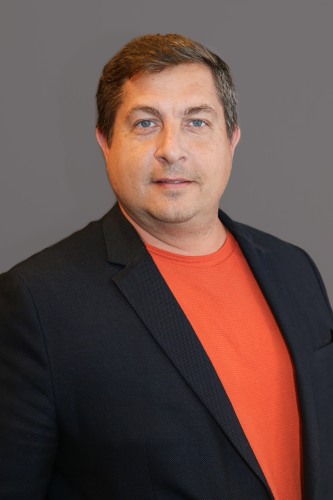
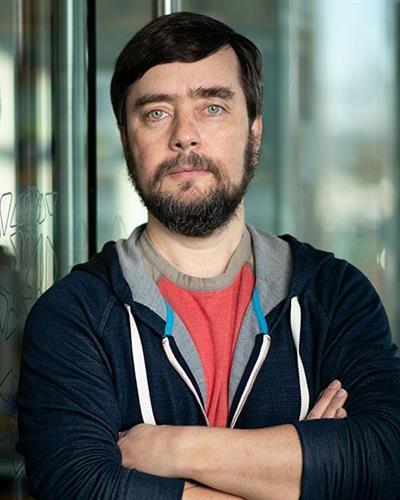
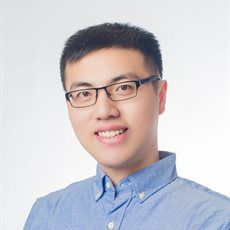
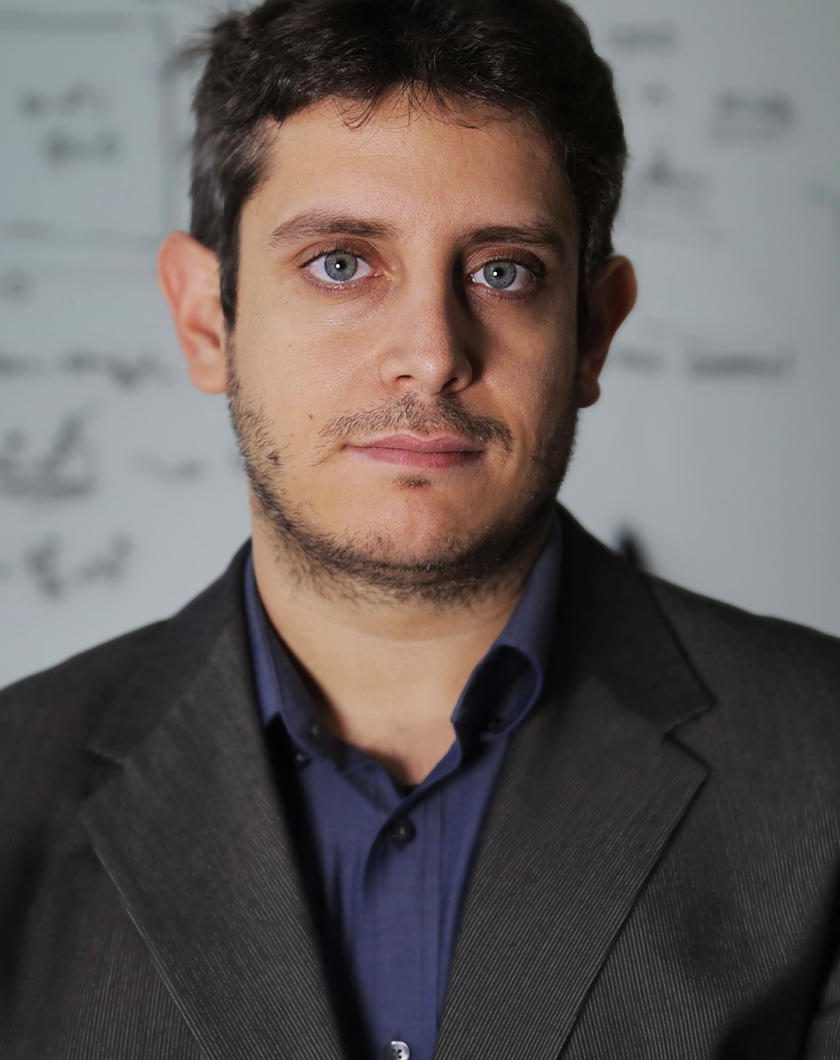
Leonardo Chamorro is a Professor in the Department of Mechanical Science and Engineering at the University of Illinois at Urbana-Champaign (UIUC), with affiliations in Earth Science and Environmental Change, Aerospace Engineering, and Civil and Environmental Engineering. His research focuses on fluid dynamics, renewable energy systems, and turbulence modeling. He holds a Ph.D. in Civil Engineering from the University of Minnesota (2010) and has held academic positions at UIUC since 2013, advancing to Full Professor in 2024. Chamorro's work spans experimental and theoretical investigations of wind and hydrokinetic energy, geophysical flows, and particle dynamics. His research group, the Renewable Energy & Turbulent Environment Group (RE-TE-G), explores topics like tidal flow multifractality, vortex dynamics, and bio-inspired robotics. Key achievements include Nature and Lab on a Chip cover articles, and contributions to turbulence modeling for tidal energy systems. He has received awards such as the Best Paper Award in Energies (2018) and recognition for pandemic-related research (2021). His editorial roles include associate editorships at journals like Journal of Renewable and Sustainable Energy and Frontiers in Energy Research . Chamorro has supervised numerous graduate students and postdocs, contributing to over 150 peer-reviewed publications since 2009.
Yuri Bazilevs is the E. Paul Sorensen Professor of Engineering at Brown University's School of Engineering and Co-Director of the Mechanics of Undersea Science and Engineering Center. His research focuses on computational mechanics, isogeometric analysis, fluid-structure interaction, and high-performance computing. Prior to Brown, he held positions at UC San Diego, where he advanced to Full Professor in 2014 after a rapid tenure. He earned his PhD in 2006 and postdoc training in computational engineering at UT Austin's ICES. Research interests span computational fluid dynamics, solid mechanics, and advanced discretization methods like isogeometric analysis (IGA) and meshfree approaches. He has developed novel formulations for complex phenomena such as underwater explosions, composite material failure, and hypersonic flow dynamics. His work integrates cutting-edge numerical methods with practical engineering applications in aerospace, energy, and biomedical systems. Recent publications highlight advancements in IGA for architected materials, RKPM-based crack modeling, and stabilized formulations for compressible flows. His contributions bridge theoretical mechanics with computational innovation, addressing challenges in multiphysics coupling and large-scale simulations. Collaborations span academia and industry, emphasizing practical validation and real-world impact. Bazilevs' expertise includes variational multiscale methods, peridynamics for fracture mechanics, and immersive particle methods for fluid-structure interaction. His work has been applied to wind turbine aerodynamics, gas turbine optimization, and cardiovascular flow analysis. He actively contributes to computational infrastructure development, such as the tIGAr software framework for IGA automation.
Konstantinos Karapiperis is a Tenure Track Assistant Professor at EPFL's Laboratory of Multiscale Modeling of Materials (LMD), within the School of Architecture, Civil and Environmental Engineering (ENAC). His research integrates mechanics , multiscale modeling , and data science to study geomaterials and structural materials. PhD in Applied Mechanics (minor in Applied Mathematics), Caltech Postdoctoral Researcher & Lecturer, ETH Zürich (Marie Skłodowska-Curie Fellowship) Research focuses on granular materials , architected materials , and nonlocal modeling using techniques like Level-Set Discrete Element Method (LS-DEM) and machine learning . Recent work explores fracture control via graph neural networks and thermodynamics-informed models. Selected scientific award: Marie Skłodowska-Curie Fellowship Teaches courses in Soil Mechanics and Multiscale Modeling . PhD students include Thomas Henzel and Hrishikesh Gopakumar Menon. His Data-Driven Mechanics Laboratory (LMD) develops predictive tools for granular and structured material behavior.
John C. Doyle is the Jean-Lou Chameau Professor of Control and Dynamical Systems, Electrical Engineering, and BioEngineering at the California Institute of Technology (Caltech), where he holds appointments in the Division of Engineering and Applied Science with primary affiliation in the Control and Dynamical Systems Department. His research bridges theoretical foundations with applications across biological, technological, medical, and ecological networks. He earned a BS and MS in Electrical Engineering from MIT (1977) and a PhD in Mathematics from UC Berkeley (1984), followed by consultancy at Honeywell Systems and Research Center (1976-1990). MIT: BS & MS in Electrical Engineering (1977) UC Berkeley: PhD in Mathematics (1984) Doyle's research centers on universal laws and architectures in complex systems, emphasizing robustness-efficiency tradeoffs, speed-accuracy tradeoffs (SATs), diversity-enabled sweet spots (DeSS), bowtie/hourglass structures, and evolvability. His work pioneers System Level Synthesis (SLS) for control systems with sparse, local, saturating, delayed, noisy, quantized, and distributed (SLSDNQD) components, integrating control theory, computation, communication, and machine learning to address challenges from neural networks to infrastructure resilience. Key concepts include virtualization, horizontal transfer, and virality in multiscale systems. Analysis of his publication trends reveals consistent interdisciplinary impact across neuroscience (brain connectivity modeling), systems biology (metabolic oscillations), network science (internet topology), and physics (turbulence, earthquakes), with recurring themes of robust-efficiency limits and architectural principles governing complex networks. His work demonstrates exceptional translation from abstract theory to practical tools like the Matlab Robust Control Toolbox and Systems Biology Markup Language (SBML). His scientific recognition includes: 1990 IEEE Baker Prize (ranked among top 10 most important mathematics papers 1981-1993) Three IEEE Automatic Control Transactions Awards (1998, 1999, 2021) ACM Sigcomm Paper Prize (2004) and Test of Time Award (2016) IEEE Control Systems Field Award (2004) Multiple early-career honors including IEEE Centennial Outstanding Young Engineer (1984) Doyle has mentored generations of students whose contributions include foundational software tools adopted globally. His research has secured sustained funding from NSF, NIH, and other agencies supporting theoretical advances in control frameworks and their applications to biomedical systems, network infrastructure, and environmental modeling. The SBML initiative exemplifies his group's impact in standardizing computational biology research. He leads a highly collaborative research ecosystem at Caltech that integrates engineers, biologists, neuroscientists, and computer scientists to develop universal principles for complex networks. Current efforts focus on translating theoretical insights into health technologies, resilient infrastructure, and climate-responsive systems through the application of robust-efficiency frameworks to emerging challenges in cyber-physical and biological domains.
Thomas Yizhao Hou is the Charles Lee Powell Professor of Applied and Computational Mathematics at the California Institute of Technology, where he has served as a faculty member since 1998 and as Executive Officer of Applied and Computational Mathematics from 2000-2006. His research spans fundamental mathematical problems with significant implications for fluid dynamics and computational science. Hou received his B.S. in Mathematics from South China University of Technology in 1982, followed by an M.S. in 1985 and Ph.D. in 1987 from UCLA under the supervision of Prof. Bjorn Engquist. His academic journey includes positions at the Courant Institute and the Institute for Advanced Study before joining Caltech. Hou's research focuses on multiscale analysis and computation, interfacial problems, stochastic PDEs and uncertainty quantification, and the Millennium Problem concerning global regularity of 3D incompressible Euler and Navier-Stokes equations. His work on adaptive data analysis has led to significant methodological innovations. His research is characterized by the integration of rigorous mathematical analysis with computational approaches to tackle problems that have resisted traditional methods. His recent publications reveal a consistent focus on singularity formation in fluid equations, particularly the Euler and Navier-Stokes equations, with increasing sophistication in analyzing potential blowup scenarios. His work spans theoretical analysis, numerical verification, and the development of innovative mathematical frameworks for multiscale problems. Member of the National Academy of Sciences (2024) William Benter Prize in Applied Mathematics (2024) SIAM Ralph E. Kleinman Prize (2023) SIAM Outstanding Paper Prize (2018) Fellow of the American Mathematical Society (2012) Fellow of the American Academy of Arts and Sciences (2011) Hou has served in significant editorial roles including Founding Editor-in-Chief of the SIAM Journal on Multiscale Modeling and Simulation and Co-Editor-in-Chief of Research in Mathematical Sciences. His professional service includes membership on the SIAM Council and leadership roles at the Institute of Mathematics and its Applications. His research has been supported by numerous grants focusing on multiscale modeling, fluid dynamics, and computational mathematics.
Professor Manolis Gavaises is a leading academic in the field of mechanical engineering and computational fluid dynamics at City St George's, University of London, where he holds the position of Professor in the School of Engineering and Mathematical Sciences. He earned his PhD from Imperial College London and has been a faculty member since 2001, progressing to full Professor in 2009. His research is centered on advanced modeling of multi-phase flows, cavitation, and fuel injection systems, with extensive collaborations across Europe and industry partners such as Delphi, Caterpillar, and BP. Education: DIC, Mechanical Engineering, Computational Fluid Dynamics, Imperial College London, 1997 PhD, Mechanical Engineering, Computational Fluid Dynamics, Imperial College London, 1997 Diploma (5 years), Mechanical Engineering, National Technical University of Athens, 1992 His research interests span computational fluid dynamics, cavitation, fuel injection, atomization, high-pressure and supercritical flows, and alternative fuels . He has developed advanced numerical models and experimental techniques, including X-ray phase contrast imaging and high-pressure test rigs. His work integrates fundamental DNS and LES simulations with industrial applications in automotive, marine, aerospace, and medical devices such as heart valves. The recent publications reflect a strong trend toward real-fluid thermodynamic modeling (e.g., PC-SAFT), multi-component fuel behavior, cavitation erosion, and advanced diagnostics . His research increasingly incorporates machine learning and high-fidelity imaging to understand complex flow phenomena across energy, transportation, and biomedical domains. Scientific Awards and Recognitions: Richard Way Prize (1998) Arch T. Collwell Merit Award (1998) Best Oral Paper, SAE World Congress (2006) PE Publication Award, IMechE (2007) Best Presentation Award, Engine Combustion Processes (2009) Fellow, IMechE (2013) Fellow, IMA (2015) As a dedicated mentor, Professor Gavaises has supervised 13 PhDs to completion and currently guides 23 doctoral students. He has secured over €16 million in EU and UK funding, including multiple Horizon 2020 Marie Skłodowska-Curie ITN projects (CAFÉ, HAOS, IPPAD), which support 46 early-career researchers globally. He has created academic opportunities for post-docs and junior faculty, significantly advancing the research profile of his institution. He leads the International Institute of Cavitation Research (IICR), co-founded in 2011 with partners from Loughborough University, TU Delft, and Imperial College, supported by The Lloyd’s Register Foundation. His lab maintains strong experimental capabilities, including a 2000bar pressure flow rig with micro-transparent nozzles and collaborations with Argonne National Laboratory for X-ray imaging.
Michael Levin is a Vannevar Bush Professor and Distinguished Professor at Tufts University, affiliated with the School of Arts and Sciences (Department of Biology) and School of Engineering (Biomedical Engineering). His research focuses on bioelectricity, developmental biology, and collective intelligence. He leads the Allen Discovery Center and the Tufts Center for Developmental and Regenerative Biology. Education: PhD in Genetics from Harvard Medical School (1996); BS in Computer Science and Biology from Tufts University (1992). Research Interests: Integrates developmental biology, computer science, and cognitive science to study morphogenesis, regeneration, and cancer. Explores bioelectric signaling, synthetic organisms, and AI-driven discovery. Key areas include regenerative medicine, cancer reprogramming, and collective intelligence in biological systems. Publications: Over 600 articles, with recent work on xenobots, neuroevolution, and bioelectric therapies. Themes include bioelectric control of form, AI in biology, and collective intelligence. Awards: INNS Donald O. Hebb Award, AAAS Fellow, and Vox Future Perfect 50 List recognition. Frequently invited to speak at conferences on biology, AI, and consciousness. Advising & Labs: Mentored numerous postdocs and students, including pioneers in bioelectricity and synthetic biology. Lab focuses on interdisciplinary approaches to biological pattern formation and regeneration.
Endre Süli FRS is Professor of Numerical Analysis at the University of Oxford and Fellow of Worcester College. He also holds the position of Professor Hospitus Universitatis Carolinae Pragensis at Charles University, Prague. Süli leads research within the Oxford Centre for Nonlinear Partial Differential Equations (OxPDE) and the Numerical Analysis Group at Oxford. His research focuses on mathematical and numerical analysis of nonlinear partial differential equations and finite element methods , with particular expertise in kinetic models for polymers, Navier-Stokes-Fokker-Planck systems, non-Newtonian fluid flow, implicitly constituted material models, free-discontinuity problems, computational fracture modeling, adaptive algorithms, and multiscale finite element methods. Süli has received numerous prestigious honors including Fellowship in the Royal Society (2021), the London Mathematical Society Naylor Prize (2021), SIAM Fellowship (2016), and membership in the Academia Europaea (2020). He has delivered distinguished lectures worldwide including the John von Neumann Lecture (2016) and the Charlemagne Distinguished Lecture (2011). Foreign Member of Serbian National Academy of Sciences and Arts (2009) Fellow of European Academy of Sciences (2010) London Mathematical Society Forder Lecturer (2015) Oxford University Teaching Excellence Award (2009) Professor Süli has supervised over 40 doctoral students throughout his career and currently advises Stefano Fronzoni and Olav Haaland. He serves on multiple editorial boards including as Editor-in-Chief of Springer's Universitext Series (2023-) and previously co-edited Oxford University Press's Monograph Series in Numerical Mathematics (1994-2023). Süli has held significant leadership roles including Chair of the Society for Foundations of Computational Mathematics (2002-2005) and President of SIAM UKIE Section (2013-2015). He is actively involved in the international mathematics community, organizing workshops at the Mathematisches Forschungsinstitut Oberwolfach and participating in major conferences through 2025, including the upcoming EFEF XXII in Trieste.
Kai A. James is an Associate Professor in the Department of Aerospace Engineering at the University of Illinois at Urbana-Champaign (UIUC), with affiliations in Computational Science and Engineering. He holds a Ph.D. (2012) and M.A.Sc. (2006) from University of Toronto, and B.A.Sc. (2004) in Engineering Science. His research focuses on multidisciplinary design optimization, topology optimization, aeroelasticity, and nonlinear mechanics, with applications to aerospace structures, additive manufacturing, and smart materials. He teaches courses such as Structural Design Optimization (AE 498), Nonlinear Solid Mechanics (AE 598), and Finite Element Analysis (ME 471). His honors include the NSF CAREER Award (2018), Scott White Aerospace Engineering Fellow (2020), and UIUC Teacher of the Year (2017). His work spans academic publications (over 50 journal/conference articles listed) and innovations in topology optimization frameworks for complex systems. Recent research emphasizes bi-stable structures (e.g., cardiovascular stents, morphing airfoils), thermomechanical design of shape-memory alloys, and spatial packing optimization for engineering systems. His lab, located in Talbot Laboratory, develops computational tools for multiphysics and multiscale design optimization.
Xiaocheng Shang is an Associate Professor in Mathematical Optimisation and Data Science at the University of Birmingham's School of Mathematics. His research focuses on numerical methods for stochastic differential equations, with applications in computational mathematics, statistics, physics, and data science. He is affiliated with the Optimisation and Numerical Analysis Group, Statistics and Data Science Group, and the Institute for Data and AI. Shang holds a PhD in Applied and Computational Mathematics from the University of Edinburgh (2016) and completed postdocs at the University of Edinburgh, Brown University, and ETH Zurich before joining Birmingham in 2019. His academic achievements include fellowships from The Alan Turing Institute, the LMS Emmy Noether Fellowship, and the EUniWell Leadership Fellowship. He has secured funding from EPSRC, the Royal Society, and the Isaac Newton Institute. Shang is actively involved in supervising PhD students and co-organizing research initiatives such as the Data Science and Computational Statistics Seminar. Research interests include structure-preserving integrators, Bayesian sampling techniques, and machine learning applications in dynamical systems. His work bridges numerical analysis, probability theory, and multiscale modeling in materials science. Recent projects involve neural networks for complex dynamical systems and numerical algorithms for deterministic/stochastic systems.
Parviz Moin holds the Franklin P. and Caroline M. Johnson Professorship in Stanford University's School of Engineering. As founding director of the Center for Turbulence Research (CTR)—a NASA-Stanford consortium established in 1987—he has pioneered computational methods for turbulence physics, including direct numerical simulation and Large Eddy Simulation (LES) techniques. CTR serves as an international hub for turbulence studies across engineering, mathematics, and physics disciplines. Moin's research encompasses computational physics of turbulent flows, with emphasis on boundary layer control, hypersonic aerodynamics, propulsion systems, and aircraft icing. His recent work advances high-fidelity simulations for aerospace applications, particularly developing wall models for LES that accurately capture separation phenomena under complex pressure gradients and Reynolds number effects. Recent publications demonstrate extensive applications of LES to aircraft design challenges, including transonic buffet prediction, high-lift configuration analysis, and icing aerodynamics. Investigations consistently address fundamental turbulence physics while developing practical computational tools for aerospace engineering, with particular focus on hypersonic boundary layers, flow separation mechanisms, and conjugate heat transfer in iced environments.
Themistoklis Sapsis is a Professor in the Department of Mechanical Engineering at the Massachusetts Institute of Technology (MIT), where he also holds an affiliation with the MIT Institute for Data, Systems, and Society. He earned his Ph.D. in Mechanical Engineering from MIT in 2011 and previously served as an Assistant Research Scientist at NYU’s Courant Institute of Mathematical Sciences. His research focuses on developing analytical, computational, and data-driven methods to predict and quantify extreme events in high-dimensional nonlinear systems, such as turbulent fluid flows and mechanical systems. Key areas include probabilistic modeling of climate extremes, machine learning for climate simulation corrections, and uncertainty quantification in complex dynamical systems. Recent work emphasizes applications in ocean engineering (e.g., vortex-induced vibrations, wave energy systems) and environmental science (e.g., spatially resolved climate extremes, bias correction in Earth system models). His methodologies combine stochastic emulators, Bayesian experimental design, and neural networks to address challenges in data sparsity and model fidelity. Notable contributions include frameworks for correcting coarse-scale climate simulations using machine learning, real-time ocean temperature reconstruction from satellite data, and data-driven modeling of hydrodynamic interactions in marine risers. His research bridges theoretical developments with practical applications in energy systems, structural monitoring, and autonomous systems. Prof. Sapsis collaborates with interdisciplinary teams and has contributed to initiatives such as FIRSTLING-DIGIMAR (a marine riser digital twin) and multi-fidelity frameworks for autonomous seakeeping. His work is supported by grants focused on advancing machine learning in scientific modeling and extreme event prediction.
Chun Liu is Chair and Professor of Applied Mathematics at the Department of Applied Mathematics, Illinois Institute of Technology (IIT), within the College of Computing. His research focuses on Nonlinear Partial Differential Equations , Complex Fluids , and Multiscale Modeling , with applications in electrophysiology and materials science. He earned a Ph.D. from New York University’s Courant Institute, an M.S. from Duke University, and a B.S. from Fudan University. Prof. Liu leads projects on General Diffusion Systems , Ion Channel Dynamics , and Viscoelastic Fluids . He has secured grants from NSF, BSF, and DAAD for research in energetic variational approaches, multiscale materials modeling, and biomolecular systems. Key contributions include the development of Poisson-Boltzmann models , coarse-grained dynamics , and energetically stable numerical methods . He serves on editorial boards for Communications in Mathematical Sciences , SIAM Journal on Mathematical Analysis , and others. His work bridges applied mathematics with engineering and biophysics, addressing challenges in fluid mechanics, ion transport, and nonlinear systems.
Franklin Goldsmith serves as Associate Professor of Engineering within Brown University's School of Engineering, where his research bridges fundamental chemical kinetics with practical combustion applications. His work directly impacts energy conversion technologies and emission reduction strategies through rigorous investigation of reaction mechanisms. His academic foundation includes: PhD in Chemical Engineering from Massachusetts Institute of Technology (2010) BS in Chemical Engineering from North Carolina State University (2003) BA in Chemistry from University of North Carolina at Chapel Hill (1998) Goldsmith's research program centers on radical reaction kinetics and low-temperature oxidation phenomena , employing both computational master equation modeling and experimental techniques like shock tube spectroscopy and synchrotron photoionization. His investigations into non-Boltzmann energy distributions and pressure-dependent rate coefficients have established new frameworks for understanding ignition chemistry. The Thermochemistry for Combustion Database project exemplifies his commitment to foundational data resources for the field. Analysis of his publication record reveals three dominant research thrusts: (1) detailed kinetic modeling of hydrocarbon oxidation, particularly propane systems; (2) development of computational methodologies for pressure-dependent rate estimation; and (3) fundamental studies of radical-molecule interactions. His work consistently integrates high-precision experimental validation with theoretical frameworks, as evidenced by collaborations with national laboratories. Goldsmith teaches Brown's core chemical engineering curriculum including ENGN 1120 (Reaction Kinetics and Reactor Design) and ENGN 1130 (Chemical Engineering Thermodynamics), alongside specialized graduate courses in heterogeneous catalysis (ENGN 2751) and chemically reacting flow (ENGN 2910Q). His educational approach emphasizes the connection between molecular-scale kinetics and reactor design principles. His research group maintains active collaborations with Argonne National Laboratory (Klippenstein), MIT (Green), and Sandia National Laboratories (Taatjes), focusing on multiscale informatics for complex reaction systems. Current projects investigate biomass-derived fuel combustion and catalytic partial oxidation mechanisms using spatially resolved experimental techniques.
Gustav Amberg is a Professor at KTH Royal Institute of Technology, affiliated with the Flow Mechanics research group within the School of Engineering Sciences. His primary appointment is in the Department of Mechanics, where he focuses on fluid dynamics, multiphase flow, and interfacial phenomena. He holds a permanent full professorship with no indication of兼职 roles. Research interests center on dynamic wetting mechanisms, phase-field modeling, and computational fluid dynamics applied to complex fluid systems. His work explores contact line behavior, microstructured surface interactions, and material phase transformations. Notable areas include rapid droplet spreading, viscoelastic fluid dynamics, and boiling heat transfer on engineered surfaces. Recent studies investigate the interplay between surface topography and wetting dynamics, oscillatory contact line phenomena, and numerical benchmarking across molecular and continuum models. He has pioneered methods for simulating surfactant effects in multiphase flows and developed novel approaches for analyzing weld pool behavior during sintering processes. No academic awards or grants are explicitly listed in the provided materials. His advising record remains undisclosed, though his prolific publication history suggests active research supervision. Laboratory affiliations are not detailed, but his work aligns with KTH's broader initiatives in computational mechanics and materials science.