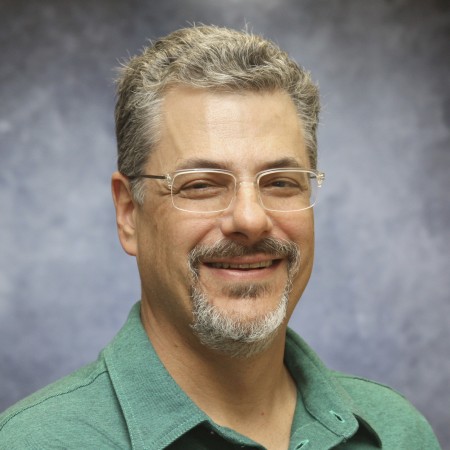
Dr. Giorgio Bornia is an Associate Professor in the Department of Mathematics and Statistics at Texas Tech University. He holds a PhD in Energy Engineering from the University of Bologna and specializes in computational methods for partial differential equations. His research focuses on: Optimal control for fluid dynamics and MHD systems Finite element and boundary element methods Multigrid and domain decomposition algorithms Parallel computing in scientific applications He received the 2018 President's Excellence in Teaching Award and multiple student-nominated teaching awards. Doctoral students supervised include Sureka Pathmanathan (boundary optimal control) and Ali Rezaei (poroelasticity). Grant support includes NSF and Royal Society funding.
Marcus Sarkis-Martins is a Professor in the Department of Mathematical Sciences at Worcester Polytechnic Institute (WPI). His research focuses on numerical analysis, domain decomposition methods, finite element methods, and computational fluid dynamics. He holds a PhD from the Courant Institute (New York University) and has conducted postdoctoral research at the University of Colorado Boulder. Education: BS (Instituto Tecnologico de Aeronautica, Brazil, 1984), MS (Pontificia Universidade Catolica-Rio de Janeiro, Brazil, 1989), PhD (Courant Institute, NYU, 1994) His research spans numerical methods for partial differential equations, with emphasis on domain decomposition techniques, immersed boundary methods, and multiscale finite element approaches. He collaborates on applications in multiphase flow, petroleum engineering, and inverse scattering problems. Selected publications highlight advancements in FETI-DP preconditioners, DG methods, and stochastic partial differential equations. His work emphasizes scalable algorithms for high-performance computing environments.
Adrian Florin Radu is a Professor in the Department of Mathematics at the University of Bergen, Norway. His research focuses on numerical analysis, applied mathematics, and computational methods for porous media systems, with particular emphasis on flow, transport, and coupled processes in complex environments. He has contributed to iterative schemes, upscaling techniques, and error estimation in multiphysics models. Key research areas include porous media flow, reactive transport, poromechanics, and numerical methods for coupled systems. His work addresses challenges in geosciences, environmental engineering, and mechanical systems through advanced mathematical modeling and simulation. Notable contributions include iterative coupling strategies for poroelasticity, adaptive time-stepping methods, and global random walk solvers for biodegradation processes. Radu's publications span topics such as dynamic capillary effects, fracture network modeling, and error analysis in wave equations. He has been involved in projects funded by the Research Council of Norway, including the FRACFLOW initiative. His research bridges theoretical developments with practical applications in environmental and energy systems.
Jayathi Y. Murthy is a Professor in the Department of Mechanical and Aerospace Engineering at the UCLA Henry Samueli School of Engineering and Applied Science. She served as the Ronald and Valerie Sugar Dean of the school from January 1, 2016, to July 31, 2022, becoming the first woman to hold this position. Her leadership emphasized transformative growth in areas such as engineering in medicine, artificial intelligence, sustainable urban systems, and advanced materials. Research Interests: Murthy's research spans nanoscale heat transfer , computational fluid dynamics (CFD) , and multiscale multi-physics simulations of micro- and nano-electromechanical systems (MEMS/NEMS). She also investigates uncertainty quantification in simulations, particularly in sub-micron thermal transport. Her work bridges fundamental thermal sciences with industrial applications, including energy systems and microelectronics. The 15 most recent articles reflect a strong focus on thermal modeling at micro- and nanoscales , advanced numerical methods in CFD , and uncertainty-aware simulations . Keywords include nanotechnology, heat transfer, computational engineering, and materials science. Subfields span phonon transport, adaptive mesh refinement, hybrid numerical schemes, and inverse methods, showing a consistent trajectory toward high-fidelity, predictive modeling in thermal systems. Scientific Awards and Honors: National Academy of Engineering (NAE) Member Foreign Fellow, Indian National Academy of Engineering (INAE) Fellow, American Society of Mechanical Engineers (ASME) ASME Heat Transfer Memorial Award (2016) ASME Electronics and Photonics Packaging Division Clock Award Advising and Grants: While no specific students are listed, Murthy has led major research centers, including the $21 million NNSA-supported PRISM Center at UT Austin. She has authored over 330 publications and edited the second edition of the Handbook of Numerical Heat Transfer . Her editorial roles include service on Numerical Heat Transfer and the International Journal of Thermal Sciences . Labs and Research Teams: Murthy led the Center for Prediction of Reliability, Integrity and Survivability of Microsystems (PRISM), a multidisciplinary research hub. Her work involves collaborations across mechanical engineering, materials science, and computational modeling, often integrating industrial and academic partners.
Professor Prashant Valluri is a Personal Chair in Fluid Dynamics at the University of Edinburgh's School of Engineering, where he also serves as Director of Discipline and Head of Graduate School (since 2018). His research focuses on developing mathematical models for complex multiphase flow patterns to address industrial challenges including oil-gas transport, slurry transport, distillation, absorption, thermal management of microdevices, and biological problems such as cerebral temperature regulation and lung function. Professor Valluri earned his PhD in Chemical Engineering from Imperial College London in 2004 with a thesis on "Multiphase fluid dynamics in structured packings" and holds a Bachelor of Technology (Distinction) in Chemical Engineering from Dr. BA Technological University, Lonere, India (1998). He is an active member of several professional organizations including the American Association for Advancement of Science, American Physical Society, and Indian Society for Surface Science Technologists. His research expertise spans multiphase and single-phase fluid dynamics , transport phenomena , stability theory and turbulence , and biological fluid dynamics . Professor Valluri has developed several open-source computational tools including the Two Phase Level Set (TPLS) Solver for high-resolution DNS of multiphase flows, the Vascular Porous (VaPor) Solver for simulating biological temperatures, and the Gerris Immersed Solid Solver (GISS) for solid-fluid flow simulations. His work has significant applications in industrial cleaning, oil-gas transport, thermal management of microdevices, and cerebral temperature regulation. Professor Valluri's recent research publications demonstrate a strong focus on multiphase flows, droplet dynamics, boiling heat transfer, and computational fluid dynamics. His work combines theoretical modeling with high-performance computing to solve complex fluid dynamics problems across various scales, from microdevices to industrial applications. The research shows particular strength in Direct Numerical Simulation (DNS) techniques applied to multiphase systems. Member of American Association for Advancement of Science Member of American Physical Society Member of Indian Society for Surface Science Technologists Associate Member of IChemE Invited JSPS Fellow at Kyushu University (2018) Extraordinary Professor at University of Pretoria (2019) Professor Valluri has supervised numerous PhD students to completion, including Dr. Pedro J Sáenz (2014), Dr. Pei Shui (2015), Dr. Patrick Schmidt (2017), Dr. Stephen Blowers (2018), and several others through 2021. He has secured significant research funding for projects including ACoolTPS (Advanced Cooling of high power microsystems using Two-Phase Flows Systems) and ThermaSMART (Smart Thermal Management Of High-power Microprocessors Using Phase-change). His research group, the Institute for Multiscale Thermofluids, focuses on Multiphase Flows and Transport Phenomena. Professor Valluri leads the Multiphase Flows and Transport Phenomena Special Interest Group of the UK Fluids Network and has established extensive international collaborations with institutions including Imperial College London, University College Dublin, Université de Lyon, Université Pierre et Marie Curie, MIT, Stanford University, and Kyushu University.
Dr. Michael Schlottke-Lakemper is a Professor of High-Performance Scientific Computing at the University of Augsburg, Faculty of Mathematics, Natural Sciences, and Materials Engineering. He previously held positions as an Interim Professor of Computational Mathematics at RWTH Aachen University (2022–2024) and led a research group at the High-Performance Computing Center Stuttgart (HLRS) from 2021 to 2024. His career includes postdoctoral roles at the University of Cologne and RWTH Aachen University/FZ Jülich. Education: Ph.D. in Mechanical Engineering, RWTH Aachen University (2017) Diplom in Aerospace Engineering, University of Stuttgart (2011) His research focuses on adaptive multi-physics simulations, research software engineering for high-performance computing (HPC), and scientific machine learning. Applications span fluid mechanics, aeroacoustics, and astrophysics, with recent work emphasizing robust high-order summation-by-parts methods and Julia-based computational frameworks like Trixi.jl and TrixiParticles.jl. His publications highlight advancements in discontinuous Galerkin methods, entropy stable schemes, and HPC optimization for compressible flows. Scientific contributions include Developing dynamic load balancing algorithms for multiphysics simulations Creating hybrid computational aeroacoustics methods Advancing Julia's adoption in HPC communities Improving error-based step size control in numerical solvers Current teaching activities include graduate seminars on Maschinelles Lernen in Theorie und Praxis and undergraduate courses in Numerische Lineare Algebra . He leads a research team at the University of Augsburg with collaborators across Germany, including Simon Candelaresi, Valentin Churavy, and Niklas Neher.
Marco ten Eikelder is a postdoctoral researcher and teacher in the Numerical Mechanics group at the Technical University of Darmstadt. His work centers on numerical analysis and mathematical modeling of partial differential equations, with applications in computational mechanics and fluid dynamics. He develops advanced discretization techniques, including finite element and isogeometric analysis methods, to improve the accuracy and stability of computer simulations for complex mechanical systems. His educational qualifications are as follows: B.S. in GitHub, GitHub University, 2012 M.S. in Jekyll, GitHub University, 2014 Ph.D. in Version Control Theory, GitHub University, expected 2018 Ten Eikelder's primary research interests include: Computational Mechanics Numerical Analysis Fluid Dynamics Partial Differential Equations Finite Element Methods Isogeometric Analysis His research aims to develop thermodynamically consistent models for multiphase flows, eliminate numerical artifacts such as the Gibbs phenomenon, and create efficient discretization techniques for both incompressible and compressible flows. Recent work extends to multiscale-multiphysics frameworks for biological applications, such as liver tissue modeling. The trends in his publications over the last few years show a progression from foundational work on energy stability in stabilized methods to advanced modeling of multiphase flows and biomechanical systems. Key themes include phase-field modeling, divergence-conforming discretizations, and the integration of variational multiscale methods with entropy principles for discontinuity capturing. No scientific awards are mentioned in the provided information. Teaching and professional activities: Teaches undergraduate and workshop courses in numerical analysis Active presenter at international conferences including ECCOMAS, GAMM, and USNCCM Member of 43 different Slack teams (indicating active collaboration) He is affiliated with the Numerical Mechanics research group at TU Darmstadt, which focuses on the development and analysis of numerical methods for engineering problems.
Lukas Exl is a Senior Lecturer at the University of Vienna and a Research Director at the Wolfgang Pauli Institute (WPI), where he leads the Mathematical AI/ML Research Division. He holds a habilitation (venia docendi) in Computational Science from the University of Vienna, the first in this interdisciplinary field. Research Platform MMM Mathematics-Magnetism-Materials Wolfgang Pauli Institute (WPI), Vienna His research integrates Applied Mathematics, Computational Physics, and Scientific Machine Learning, focusing on numerical methods for PDE-based simulations, data-driven modeling, and reduced-order approaches. Key applications include computational micromagnetism for green energy materials and developing physics-informed neural networks (PINNs) with interpretable architectures. Recent publications emphasize machine learning techniques for magnetic material optimization, stray field computation, and trustworthy AI (TAI/XAI). He supervises students in Computational Science, Applied Mathematics, and Physics, with a focus on Extreme Learning Machines (ELMs), PINNs, and tensor decomposition methods. Data-driven Reduced Order Approaches for Micromagnetism (FWF Project, €484k, 2024-2028) Design of Nanocomposite Magnets by Machine Learning (FWF Project, €254k, 2022-2027) Reduced Order Approaches for Micromagnetics (FWF Project, €402k, 2018-2024) His team includes researchers like Dr. Sebastian Schaffer (PhD graduate), Kein Gjordeni, and Caroline Maitz. Collaborations span Danube University Krems and Technical University of Denmark's Energy Conversion and Storage department.
Michael T. Heath is a Professor and Fulton Watson Copp Chair Emeritus in the Department of Computer Science at the University of Illinois at Urbana-Champaign (UIUC). He holds a Ph.D. in Computer Science from Stanford University (1978). His research focuses on scientific computing, numerical linear algebra, optimization, and parallel computing with notable contributions to sparse matrix computations and parallel algorithm design. Heath has directed major initiatives such as the Computational Science and Engineering Program (1996–2012) and the Center for Simulation of Advanced Rockets (1997–2010), securing over $52M in research funding. He is an ACM Fellow, SIAM Fellow, and European Academy of Sciences member. Teaching excellence defines his career, highlighted by awards including the IEEE Taylor L. Booth Education Award (2009) and UIUC's Campus Award for Excellence in Graduate Teaching (2002). He developed interactive educational modules in scientific computing and teaches courses like CS 450 (Numerical Analysis) and CS 554 (Parallel Numerical Algorithms). His research spans parallel performance visualization, numerical optimization, and mathematical software, with over 50 years of contributions to computational science. Education: Ph.D. Computer Science, Stanford University (1978) Affiliations: Department of Computer Science, UIUC; former Interim Head (2007–2009) Key Roles: Director, Computational Science and Engineering Program; Director, Center for Simulation of Advanced Rockets His publications emphasize parallel algorithms, numerical methods, and computational frameworks for multiphysics simulations. Heath’s work bridges academic research and practical applications, exemplified by his leadership in high-performance computing and rocket propulsion modeling.
Anthony P. Austin is an Assistant Professor in the Department of Applied Mathematics at the Naval Postgraduate School . His research focuses on numerical linear algebra, high-performance computing, approximation theory, and GPU-accelerated algorithms. He has held prior positions at Virginia Tech and Argonne National Laboratory as a J. H. Wilkinson Fellow. His work includes contributions to Chebfun, a software system for numerical computation. Education: D.Phil. in Mathematics , University of Oxford Mathematical Institute (2016) Ph.D. studies with active development in the Chebfun project Research Interests : Numerical methods for large-scale problems, high-order methods for PDEs, and computational techniques leveraging GPUs. His work emphasizes algorithmic innovation and stability in numerical simulations. Recent Contributions : Publications include advancements in spectral factorization, adversarial signal perturbations, and parallel algorithms for partial spectral computations. His seminar co-organization highlights collaboration in early-career faculty research initiatives. Professional Activities : Co-organizer of the NPS Junior Faculty Research Seminar (AY2022/Q3), focusing on fostering interdisciplinary collaboration among early-career faculty.
Dr. Zhilang Zhang is a Professor at ETH Zurich, holding the Professorship for Advanced Manufacturing within the Department of New Manufacturing Technologies. His research focuses on computational mechanics, numerical simulation methods (SPH, FEM), advanced manufacturing processes, and process modeling. He specializes in high-fidelity modeling of complex phenomena such as additive manufacturing, material sintering, and fluid-structure interactions. Key research areas include multiscale modeling, CFD-DEM coupling, and novel numerical methods for extreme mechanics problems. His work integrates advanced computational techniques with experimental validations, addressing challenges in manufacturing, materials science, and fluid dynamics. Recent projects involve operando synchrotron tomography for melt pool analysis and parallelized SPH frameworks for large-scale simulations. Notable contributions include developing the Direct FE2 method for multiscale simulations and improving hydroelastic modeling via meshless methods. He actively explores applications of physics-informed neural networks and surrogate models in engineering optimization. His research group collaborates on cutting-edge projects at the intersection of computational engineering and advanced manufacturing, with a focus on sustainable and high-performance materials processing.
Petter E. Bjørstad is a Professor of Computer Science and Mathematics at the University of Bergen, Norway, where he has served as Head of the Department of Informatics since 2010. Previously, he was Director of the Bergen Center for Computational Science (2000-2010) and Professor in both the Department of Mathematics (2006-2010) and Department of Informatics (1985-2005). He also held a position as Professor of Mathematics at the University of Minnesota during 1996-1997 on unpaid leave from Bergen. Dr. Bjørstad earned his PhD in Computer Science from Stanford University in 1980, following which he completed a postdoctoral fellowship at the Courant Institute of Mathematical Sciences at New York University. Before entering academia, he worked as a Principal Engineer at Det Norske Veritas from 1981-1985. Dr. Bjørstad's research focuses on numerical analysis and high-performance computing, with particular expertise in domain decomposition methods, parallel algorithms for elliptic partial differential equations, and scientific computing. His work bridges theoretical mathematics with practical computational challenges, especially in industrial applications. He has led significant research projects including 'Multiscale Domain Decomposition: Algorithms and Analysis' (2010-2014), funded by the Research Council of Norway and the University of Bergen. His publication record demonstrates consistent contributions to the field of numerical methods and parallel computing over several decades. The research trends show a strong focus on developing efficient algorithms for solving partial differential equations through domain decomposition techniques, with applications spanning structural analysis, reservoir simulation, semiconductor device modeling, and other industrial contexts. His work increasingly emphasizes practical implementation on modern parallel architectures including SIMD and MIMD systems. Large number of research grants from Norway and the European Union Dr. Bjørstad has been actively involved in mentoring students and collaborating with industry through projects like the Europort effort, where industrial codes were ported to parallel computing platforms. His laboratory for parallel computing (Parallab) has been instrumental in advancing practical applications of high-performance computing since its establishment in 1985 with Europe's first 64-processor Intel hypercube. The lab has evolved to include multiple MIMD machines including an Intel Paragon, Parsytec GC/Power-Plus, and DEC α-cluster. As Head of the Department of Informatics, Dr. Bjørstad leads one of Norway's premier computing research units with expertise spanning theoretical computer science, numerical methods, and practical applications in various scientific domains. His leadership has helped establish Bergen as a significant center for computational science in Europe.
Luis Felipe Pereira is a Professor in the Department of Mathematical Sciences at the School of Natural Sciences and Mathematics, University of Texas at Dallas. His research focuses on mathematical modeling and numerical simulation of multiphase flows in porous media, uncertainty quantification, CO2 storage, oil recovery, contaminant transport, and high-performance scientific computing. He specializes in developing advanced multiscale methods and parallel algorithms to address complex subsurface flow problems. His work combines computational mathematics with applications in energy and environmental systems, including reservoir engineering and geomechanics. Key contributions include the development of multiscale mixed methods, Bayesian frameworks for subsurface characterization, and efficient parallel implementations for billion-cell reservoir simulations. Recent research trends emphasize improving algorithm scalability, integrating machine learning techniques, and addressing challenges in heterogeneous media. His computational tools enable predictive modeling of subsurface processes under uncertainty, with applications in CO2 sequestration, groundwater contamination, and enhanced oil recovery. No scientific awards or grants are explicitly listed in the provided texts. Advising information is not documented here, though his research group likely engages in graduate student mentorship in applied mathematics and computational science. He collaborates on interdisciplinary projects involving porous media flow across multiple scales.
Karel Matouš is a Professor in the Department of Aerospace and Mechanical Engineering at the University of Notre Dame , where he also serves as the Director of the Center for Shock-Wave Processing of Advanced Reactive Materials (C-SWARM) . His research is centered on computational mechanics and engineering, with a focus on multiscale and multiphysics modeling of heterogeneous materials. Education: Ph.D. in Theoretical and Applied Mechanics, Czech Technical University in Prague (2000) M.S. in Theoretical and Applied Mechanics, Czech Technical University in Prague Research Interests: Matouš’s work spans computational science and engineering , data-driven modeling , high-performance computing , and statistical micromechanics . He develops advanced numerical methods for modeling complex systems such as solid propellants, reactive materials, and particulate composites, often integrating microtomography data for realistic material reconstruction. Publication Trends: His recent publications emphasize reduced-order modeling , image-based simulations , and uncertainty quantification in multiscale systems. Many studies combine experimental data with computational frameworks to predict macroscopic behavior from microstructural features, particularly in reactive and heterogeneous materials. Scientific Awards: Fellow of ASME (2013) Visiting Professor at Eindhoven University of Technology with 10,000 EUR research grant (2016) Rector's Award, Czech Technical University (1999) Academician Z. Bazant's Prize (1996, 1997) Multiple recognitions for high-impact publications (ScienceDirect Top 25 Hottest Articles) Student awards including the Robert J. Melosh Medal and USNCCM9 presentation prize Advising and Grants: He has advised numerous Ph.D. and M.S. students in computational mechanics and materials science. His research is supported by major grants from the Department of Energy (e.g., C-SWARM: $11.6M), NSF , DoD (STTR/SBIR programs), and industry partners like 3M and ATK . These projects focus on adaptive modeling, shock-wave processing, and microstructural characterization of advanced materials. Labs and Teams: He leads the Computational Physics Group and the C-SWARM center, which involves collaboration with institutions including Purdue University, Indiana University, and the University of Illinois. The group utilizes high-performance computing and experimental validation to advance predictive modeling of extreme material behaviors.
Eleuterio F. Toro is a Professor at the University of Trento, Italy, affiliated with the Department of Civil, Environmental and Mechanical Engineering within the College of Engineering. He is internationally recognized for his pioneering work in computational fluid dynamics and numerical methods for partial differential equations, particularly hyperbolic balance laws. His development of high-order schemes such as ADER, HLLC, and WAF has significantly advanced simulation capabilities in science and engineering. BSc Honours in Pure Mathematics, University of Warwick (1977) MSc in Applicable Mathematics, University of Dundee (1978) PhD in Computational Mathematics, University of Teesside (1982) Doctor Honoris Causa, Universidad de la Frontera, Chile (2012) His research focuses on high-resolution numerical methods, shock-capturing techniques, and more recently, the mathematical modeling of cranio-spinal fluid dynamics and its implications in neurodegenerative diseases such as Multiple Sclerosis, Parkinson’s, and Meniere’s disease. He promotes a holistic modeling approach integrating arterial blood, venous blood, interstitial fluid, cerebrospinal fluid, and the brain’s lymphatic system. The analysis of his recent publications reveals a strong trend toward interdisciplinary applications of numerical methods in biomedical contexts, especially neurofluid dynamics. His earlier works laid the foundation for modern computational fluid dynamics, while recent efforts bridge mathematics, engineering, and medicine. Scientific Awards: Doctor Honoris Causa, Universidad de la Frontera (2012) Officer of the Order of the British Empire (OBE) Toro has advised numerous students and postdoctoral researchers and has collaborated extensively with academics and medical professionals across Europe, the USA, and Chile. His work is supported by international conferences, workshops, and research collaborations. He has organized and taught intensive short courses, such as the Trento Winter School on Numerical Methods, and delivered plenary lectures at major conferences including ISMRM and CMBE. He leads research initiatives centered on mathematical modeling of body-fluid interactions, particularly in the central nervous system. His team develops computational frameworks to simulate neurovascular dynamics and test hypotheses linking venous anomalies to neurological diseases.