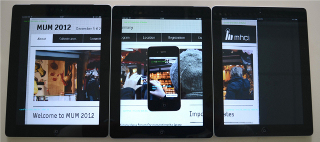
Dr. Ming Li is a researcher at RWTH Aachen University , focusing on interdisciplinary research spanning Human-Computer Interaction (HCI) and Geotechnical Engineering . His work on mobile devices and augmented reality has led to practical applications like MobileVideoTiles for multi-device video display and ACTUI for tangible interfaces using commodity hardware. Email: mingli@informatik.rwth-aachen.de In 2012 , he contributed to Dynamic Tiling Display and Segway AR-Tactile Navigation , emphasizing visual synchronization and vibro-tactile feedback. His recent publications (2020–2025) pivot toward soil mechanics , foamed concrete , and machine learning applications in geotechnical modeling, including Bayesian optimization for soil parameter calibration and multiscale fracture modeling for composites. He received the Best Paper Award at MUM12 . His work explores both mobile technologies and civil engineering materials , suggesting a broad technical scope.
Zhenkun Li is a Postdoctoral Researcher at Aalto University’s Department of Civil Engineering, specializing in structural health monitoring (SHM) and computational methods. His research focuses on indirect SHM techniques, leveraging vehicle responses and machine learning for bridge damage detection. Research Interests: Structural Engineering, Bridge Health Monitoring, Machine Learning, Signal Processing, and Drive-By Inspection Methods. His work integrates convolutional neural networks, deep learning, and physics-guided models to analyze bridge dynamics via shared scooters, smartphones, and instrumented vehicles. Publication Trends: Recent articles (2023–2025) emphasize data-driven SHM, explainable machine learning for asphalt modeling, and innovative frameworks for bridge frequency identification. Techniques include multisynchrosqueezing transforms, Mel-frequency cepstral coefficients, and crowdsensing for real-time damage detection.
Prof. Vittorio Romano (b. 1966) is a Full Professor of Mathematical Physics at the Department of Mathematics and Computer Science, University of Catania, Italy. He obtained his Laurea Magna cum Laude (1989) and PhD in Mathematics (1994) from Catania. His research focuses on charge/phonon transport modeling in semiconductors and graphene , non-equilibrium thermodynamics , and numerical methods for hyperbolic systems . Research areas include relativistic fluid dynamics, nonlinear wave propagation, stability of shock waves, and applications in cosmology. He has led major EU projects like COMSON (FP6) and AMBEATION (MSCA-RISE), and developed MEP-based hydrodynamic models for nanoscale devices. Scientific leadership : Director of A.M. Anile Interdepartmental Center, ECMI Council member, GNFM Co-Chair Key publications : 24 (Scopus) and 35 (Google Scholar) H-index with over 3900 citations International collaborations : Autonomous University of Barcelona, Kaiserslautern University, ST-Microelectronics, Synopsys He has supervised 9 PhD students in topics ranging from quantum transport to Monte Carlo simulations, and organized conferences like SCEE 2018 and ICTT 2015. His editorial roles include associate editor for Frontiers in Applied Mathematics and Statistics and guest editor for Entropy.
Dominic A. von Terzi is a Professor in the Faculty of Aerospace Engineering at Delft University of Technology, specializing in Wind Energy through the TU Delft Wind Energy Institute (DUWIND). His work bridges fundamental fluid dynamics research with practical wind turbine engineering applications, focusing on enhancing operational reliability and performance in challenging environments. His research centers on Wind Energy and Aerospace Engineering, with deep expertise in Turbulence modeling, Large Eddy Simulation, and Wind Turbine Aerodynamics. He investigates critical phenomena including rain erosion on blade leading edges, transonic flow effects at turbine tips, and innovative concepts like floating offshore wind systems and airborne wind energy. His approach combines advanced computational modeling with real-world validation to address industry challenges in turbine durability and energy yield optimization. Recent publications reveal strong trends toward solving operational challenges in extreme conditions (erosion, transonic flow) and system-level innovations (wind-storage integration, airborne energy). These works emphasize computational rigor while exploring frontier concepts like hydrogen production from offshore wind and floating turbine platforms, reflecting a strategic shift toward holistic energy system design beyond standalone turbine optimization. Professor von Terzi chairs the European Research Community on Flow Turbulence and Combustion (ERCOFTAC) and leads research within the EU-funded MERIDIONAL project on multiscale wind farm modeling. He has supervised two students and maintains active industry engagement through media discussions on floating wind technology and grid integration. Embedded within DUWIND's collaborative ecosystem, his work leverages partnerships with institutions like ERCOFTAC and industry stakeholders to advance wind energy technology. Current efforts focus on erosion-safe operational modes, transonic flow management, and scaling airborne wind energy systems, positioning him at the forefront of next-generation wind energy solutions.
Ryan L. Truby is an Assistant Professor at Northwestern University in both the Department of Materials Science and Engineering and the Department of Mechanical Engineering. He leads the Robotic Matter Lab, focusing on advancing machine intelligence through material design for soft robotics and multifunctional systems. Northwestern University: 2021–Present Core Member, Center for Robotics and Biosystems Education Ph.D. in Applied Physics, Harvard University B.S. in Biomedical Engineering, University of Texas at Austin Postdoctoral Research, Massachusetts Institute of Technology Research Interests : Truby's work bridges soft robotics , multimaterial 3D printing , and bioinspired actuation . His lab develops materials with distributed sensorimotor capabilities, integrating machine learning-based control strategies and rheological characterization to create autonomous systems for healthcare and environmental applications. Scientific Awards DARPA Young Faculty Award (2023) CESR Seed Funding Award (2023) Air Force Young Investigator Research Program Award (2021) Contact : rtruby@northwestern.edu
Manfred Kaltenbacher is a University Professor at Vienna University of Technology, specifically in the Institute of Fundamentals and Theory in Electrical Engineering. He holds multiple prestigious positions and has received significant recognition including a Doctor Honoris Causa from Budapest University of Technology and Economics and election to the Austrian Academy of Sciences. His research spans computational electromagnetics, acoustics, and materials science with over 200 publications and numerous active research projects. Professor Kaltenbacher's research interests focus on advanced computational methods for electromagnetic and acoustic phenomena. His work encompasses finite element analysis for magnetics and acoustics, hysteresis modeling, aeroacoustics, and computational physics. He has made significant contributions to the simulation of electromagnetic devices, noise propagation, and the development of numerical methods for multiphysics problems. His research bridges theoretical developments with practical engineering applications across multiple domains including Advanced Materials Science, Information and Communication, Mobility & Production, and Sustainable Systems. His recent publications show a strong trend toward integrating machine learning with traditional physics-based modeling, particularly in magnetics and acoustics. There's significant focus on developing advanced numerical methods like the Discontinuous Galerkin method for outdoor noise propagation and improving hysteresis models for electromagnetic devices. His work often addresses multiphysics challenges, combining electromagnetics with acoustics, fluid dynamics, and structural mechanics, with applications spanning from electric motors to noise barriers and energy systems. Professor Kaltenbacher has received notable scientific recognition: Doctor Honoris Causa (Dr. h.c.) from Budapest University of Technology and Economics (2020) Election to the Austrian Academy of Sciences (Österreichische Akademie der Wissenschaft) (2017) He actively leads multiple research projects including "Verlust E-Blech" (focusing on loss models for electrical sheets), "VAMM" (noise barriers), "ECHODA" (energy efficient cooling), and "eMotorWinding" (eMotor winding design). His research funding spans multiple domains including electromagnetics, acoustics, and energy efficiency applications. While the text mentions "Supervised Work (1)", specific student names aren't provided in the available information. Professor Kaltenbacher collaborates extensively across institutions, with recent activities showing collaboration with Budapest University of Technology and Economics and other international partners. His research group appears to focus on computational methods for electromagnetic and acoustic phenomena, with particular expertise in finite element methods and multiphysics simulations, as evidenced by his numerous publications and active projects through 2025.
Bernhard Saske serves as a Research Associate at the Chair of Virtual Product Development within Dresden University of Technology, where he has been affiliated since completing his mechanical engineering studies in 2002. Holding a doctorate (Dr.-Ing.) earned in 2008 for research on 'Augmented Reality in Maintenance,' he specializes in virtual and augmented reality applications integrated with product lifecycle management systems. His academic credentials include: Master's degree in Mechanical Engineering from Dresden University of Technology (2002) Doctorate (Dr.-Ing.) from Dresden University of Technology (2008) focusing on Augmented Reality in Maintenance Saske's research centers on digital transformation in engineering workflows, with core expertise in virtual/augmented reality implementation, product lifecycle management (PLM), and model-based systems engineering (MBSE). Recent investigations address generative AI applications in CAD processes, sustainable product development frameworks, and component reuse optimization in industrial plant design. His work consistently bridges theoretical methodologies with practical industry implementation challenges. Analysis of his 2023-2025 publications reveals a strategic shift toward artificial intelligence integration in engineering design, particularly generative models for CAD and computer vision systems. Concurrently, his research maintains strong emphasis on sustainability-driven PLM strategies and MBSE adaptation for circular economy principles, reflecting evolving industry priorities in resource efficiency and digitalization. Scientific Awards: No documented awards, fellowships, or major honors were identified in the source materials. Dr. Saske actively contributes to collaborative research projects within the Chair of Virtual Product Development, frequently co-authoring with Prof. Paetzold-Byhain and interdisciplinary teams. While specific student supervision is unrecorded, his publications indicate mentorship roles in conference papers and journal articles. Project funding appears aligned with German academic-industry partnerships focused on digital engineering solutions, though grant details remain unspecified. As a core member of the Chair of Virtual Product Development, Saske operates within a research ecosystem dedicated to advancing virtual prototyping, digital twin technologies, and immersive maintenance solutions. The chair maintains active industry collaborations to implement VR/AR methodologies in real-world manufacturing and product development contexts across European industrial partners.
Prof. Dr. Gert Lube is a faculty member at the Institute for Numerical and Applied Mathematics (NAM) within the Faculty of Mathematics and Computer Science at Georg-August-University Göttingen. His research focuses on numerical methods for partial differential equations , with emphasis on stabilized finite element methods , turbulence modeling , and magnetohydrodynamics (MHD) . Workshops Organized : Calibration of Viscosity Models for Turbulent Flows (2010), Variational Multiscale Methods (2008), Local Projection Stabilization (2008), BAIL Conferences. His academic contributions include 15+ publications since 2010 on topics like Navier-Stokes simulations , LES/VMS methods , stabilized FEM , and FEM-BEM coupling . Collaborations span institutions like TU Graz, Saarbruecken University, and DLR Göttingen. Key Research Areas : Finite Element Methods, Turbulence Modeling, MHD, Incompressible Flows, Singularly Perturbed Problems, Parallel Computing. Advisees include PhD candidates working on topics such as non-isothermal flows , mass conservation , hybrid RANS/LES , and domain decomposition .
Frédéric Gibou is a Professor in the Department of Mechanical Engineering, Department of Computer Science, and Department of Mathematics at the University of California, Santa Barbara. He is also a core faculty member in the Computational Science and Engineering program. His academic journey began with a PhD in Applied Mathematics from UCLA, followed by post-doctoral research in the Departments of Mathematics and Computer Science at Stanford University. PhD in Applied Mathematics, UCLA Post-doctoral research, Stanford University (Mathematics and Computer Science) Professor Gibou's research sits at the interface between Applied Mathematics, Computer Science and Engineering Sciences, focusing on the design of high resolution computational methods for large scale computations. His work spans Computational Materials Science, Computational Fluid Dynamics, and Computational Image Analysis. The common thread across these applications is that they involve complex/free boundaries and similar classes of nonlinear partial differential equations. His group develops computational strategies on spatially adaptive grids for massively parallel environments, increasingly incorporating Machine Learning algorithms to solve forward and inverse problems. His research output shows a clear trend toward integrating traditional numerical methods with machine learning approaches, particularly for solving partial differential equations with complex interfaces. The publications reveal a strong focus on developing sharp interface methods, adaptive grid techniques, and novel computational paradigms that can handle multiscale phenomena across various scientific domains. Alfred P. Sloan Fellowship in Mathematics Regent's Junior Faculty Fellowship NSF Mathematical Sciences Postdoctoral Fellowship Robert Sorgenfrey Distinguished Teaching award Professor Gibou leads a multidisciplinary research group called Computational Applied Science Laboratory (CASL), which has strong collaborations with experimentalists at UCSB and worldwide. His group has received substantial funding from various agencies, enabling them to tackle challenging problems in computational science. CASL focuses on designing computational methods on Quad-/Oc-trees grids in the level-set formalism for solving previously intractable problems in science and engineering. The group's work spans Computational Materials Science (including nanostructured polymeric materials and high temperature multicomponent alloys), Computational Fluid Dynamics (including flow over superhydrophobic surfaces, flow in reactive porous media, and multiphase flows), and Computational Image Analysis (including image guided surgery and image segmentation).
Ioana Ciotir is an Associate Professor (Maître de Conférence) in the Department of Mathematical Engineering at INSA Rouen, France, where she has been employed since 2014. She previously served as an Assistant Professor at the Institute of Mathematics at the University of Neuchâtel, Switzerland (2012-2014) and as an Assistant at the Department of Mathematics at "Alexandru Ioan Cuza" University of Iasi, Romania (2008-2012). Her research focuses on stochastic partial differential equations, homogenization theory, and optimal control problems, with applications to porous media flow, traffic modeling, and financial mathematics. Dr. Ciotir earned her Ph.D. in Mathematics from "Alexandru Ioan Cuza" University of Iasi, Romania in 2010, with a thesis titled "Stochastic Porous Media Equations." She later obtained her Habilitation à Diriger des Recherches (HDR) from the University of Rouen, France in 2022. Her academic journey includes additional training in educational methodologies and summer schools in mathematical finance. Her primary research interests span stochastic analysis and partial differential equations, with a focus on stochastic porous media equations, homogenization of stochastic processes, optimal control theory, and probabilistic representations. She investigates the behavior of stochastic processes with singular diffusivity, including fast and super-fast diffusion equations with various types of noise (Stratonovich, Itô, gradient-type). Her work extends to applications in physics (plasma diffusion), engineering (porous media flow), and social sciences (traffic flow modeling, pandemic economic impacts). Dr. Ciotir's publication record demonstrates consistent contributions to high-impact mathematical journals, with recent work focusing on regularity theory for stochastic diffusion equations, state-constrained control systems for porous media, and non-local models for traffic flow. Her research often involves international collaborations with institutions in Switzerland, Germany, Japan, and China, reflecting the interdisciplinary nature of her work. Among her scientific recognitions are the Thesis Prize for Applied Mathematics from ROMAI (2011) and the Doctoral and Research Supervision Bonus (PEDR) for the periods 2018-2021 and 2022-2025. She has successfully supervised multiple doctoral students through completion of their theses and currently mentors several Ph.D. candidates working on topics related to stochastic PDEs and control theory. Dr. Ciotir has secured significant research funding through projects such as Scale Op (2024-2028, with Siemens Gamesa Renewable Energy), DEFHY3GEO (2022-2025), M2SiNum (2018-2021), M2Num (2015-2019), and the ANR Project QUantum Turbulence Exploration by High-Performance Computing (ANR-18-CE46-0013). She serves as the Sustainable Development Representative for the LMI laboratory and the GM Department since May 2020, and has been elected to the LMI laboratory council (2017-2021 and 2021-2025). She is actively involved in the Mathematics Laboratory (LMI) at INSA Rouen, where she serves as the SMAI correspondent and Mathrice correspondent via FR CNRS 3335. Her international collaborations include partnerships with Siemens-Gamesa, ENSTA Paris, universities in Romania, Switzerland, Germany, and Japan, demonstrating her position within a broad academic network focused on applied mathematics and stochastic analysis.
Dr. Gustavo M. Castelluccio (ORCID) is a Reader (Associate Professor) in Mesoscale Mechanics at Cranfield University . With a PhD from Georgia Institute of Technology and prior experience at Sandia National Laboratories , his work bridges microstructural mechanics with macroscopic mechanical behavior through physics-based modeling. Current research targets fatigue and fracture in engineering components, integrating microstructural attributes with reliability assessments Specializes in hydrogen-sensitive deformation , dislocation substructure modeling , and computational micromechanics Recent publications (2025-2022) demonstrate expertise in: Hydrogen diffusion-crystal plasticity coupling for crack tip analysis Material-invariant parameterization across FCC metals (Cu, Ni, Al) Overload fatigue response prediction without recalibration Abnormal grain growth mechanisms in ultrafine-grained systems His studentship opportunities focus on multiscale predictive approaches and corrosion-sensitive fatigue modeling .
Ramón Cuadrado del Burgo is a Permanent Researcher at the Instituto de Ciencia de Materiales de Madrid (ICMM), part of the Spanish National Research Council (CSIC). He is affiliated with the Multiscale Materials Modelling research group, contributing to the institute's core mission in advanced materials research. His research focuses on Multiscale Modelling and Computational Materials Science , specializing in bridging atomic-level simulations with macroscopic material behavior. This work enables predictive design of novel materials through integrated simulation frameworks, addressing challenges in structural integrity, functional properties, and manufacturing processes.
Professor Eric J Palmiere at the University of Sheffield's School of Chemical, Materials and Biological Engineering is a world-leading expert in ferrous physical metallurgy and thermomechanical processing with over 35 years of experience. His research focuses on microstructural evolution during metalworking and has collaborated with industries in automotive, aerospace, energy, and construction sectors. POSCO Chair in Iron and Steel Technology Research Theme Lead - Materials Discovery and Characterisation Research Interests: Specializes in microstructural evolution of ferrous and non-ferrous alloys, particularly examining strain-induced precipitation, recrystallization kinetics, and phase transformations under industrial processing conditions. Key projects include: Development of high-modulus steels for automotive Friction effects in multipass hot deformation Fusion energy steel development Advanced pipeline steel processing (API X70-X100) Scientific Contributions: Over 170 high-impact publications with focus on austenite decomposition, strain reversal effects, and niobium-based precipitation. Key methodologies involve EBSD analysis, thermomechanical simulation, and multiscale modeling. Awards: Recipient of the 2024 Tom Colclough Medal and IOM3's Charles Hatchett Award (1995).
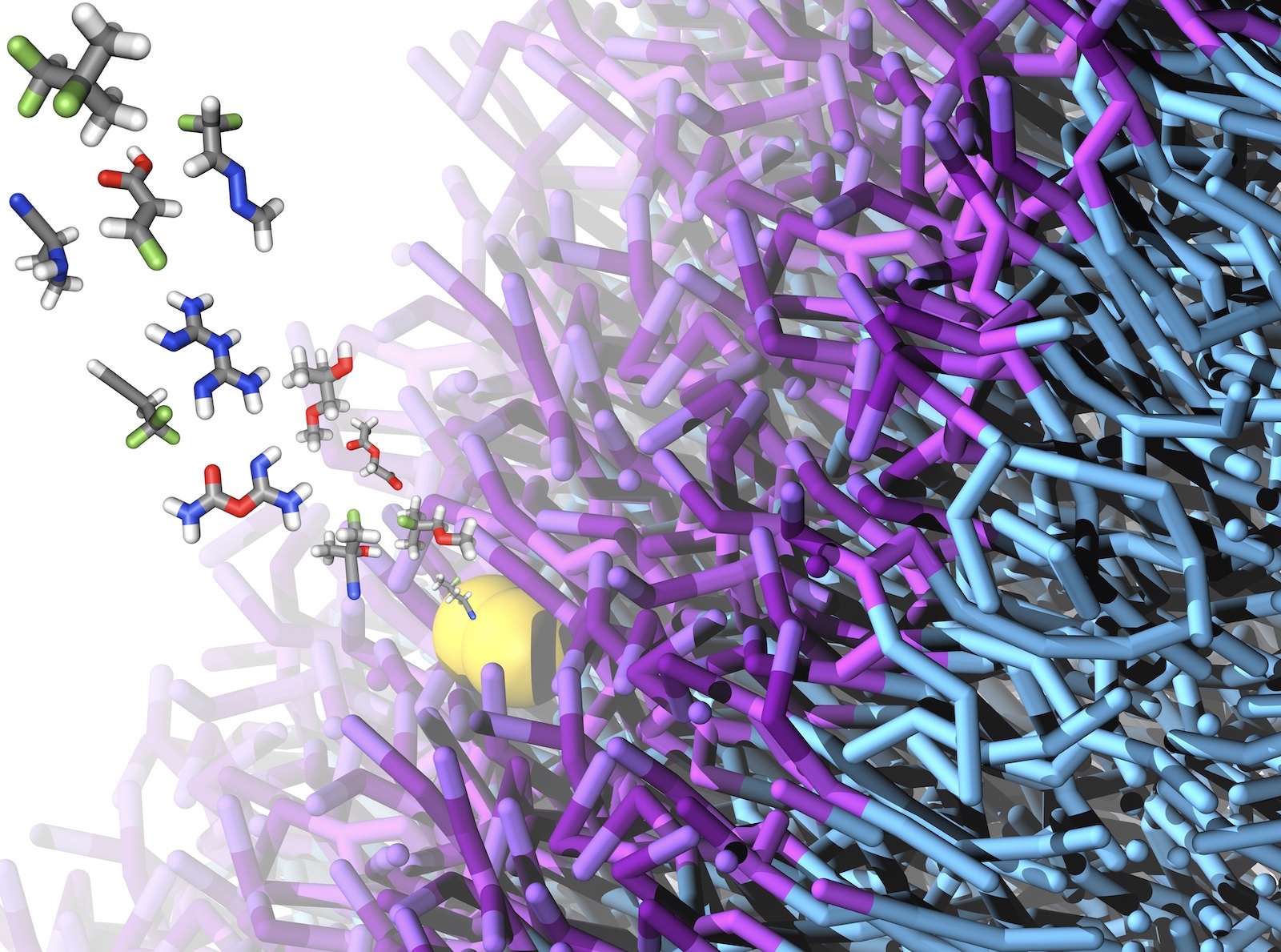
Tristan Bereau is a Professor at Heidelberg University, affiliated with the Institute for Theoretical Physics. His research focuses on computational physics and multiscale modeling of soft matter and biomolecules, integrating physics-inspired machine learning techniques. Current affiliation: Professor, Institute for Theoretical Physics, Heidelberg University Research themes: Multiscale modeling, coarse-graining, data-centric materials science Research interests center on multiscale modeling , machine learning for molecular systems , and chemical space exploration . Key trends in his recent publications include physics-based diffusion models , high-throughput computational screening , and data-driven design of biomolecular systems . His lab has produced 15 recent works spanning free-energy estimation , coarse-grained parameterization , and machine learning for membrane interactions , with a focus on reproducibility and FAIR data principles in materials science.
Dr. Martin Lenz is a researcher at the Institut für Numerische Simulation at the University of Bonn , specializing in numerical methods for materials science and mechanics. His work bridges computational mathematics with applications in magnetic-shape-memory materials, microstructure optimization, and multiscale modeling. Teaching: Lecturer for Ingenieurmathematik III (module M43), Ingenieurmathematik II (module B42), and Ingenieurmathematik (Master module M22). Current Research: Leads Numerical optimization of shape microstructures (Project C06, DFG SFB 1060) focusing on two-scale optimization of elastic materials. Past Research: Developed continuum models for magnetic-shape-memory materials (Project A6, DFG priority program 1239) and studied multiscale phase separation with elastic misfit. His recent publications (2023-2012) emphasize shape-memory alloys , microstructure dynamics , and adaptive numerical schemes . Key methodologies include finite volume methods, homogenization, and phase field modeling. Education: PhD (2007) and Diploma in Mathematics (2002) from the University of Bonn.